19th Century Prints and Multiples

to
582
8,314
1,601
372
101
101
Overall Width
to
Overall Height
to
5,712
560
192
74
68
35
31
19
12
2
309
132
125
121
114
4,819
57,562
24,976
714
975
2,278
2,321
2,437
4,983
7,753
13,518
8,024
4,233
3,983
6,088
4,348
50
6,577
3,229
2,482
2,099
1,863
1,343
1,216
747
705
691
643
623
581
378
325
322
311
284
276
271
5,684
3,099
1,087
883
744
672
6,550
4,949
2,231
Period: 19th Century
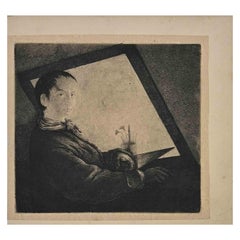
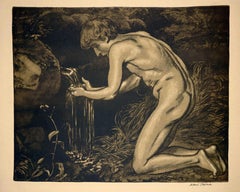
Boy at the source / - Elixir of Life -
Located in Berlin, DE
Hans Thoma (1839 Bernau - 1924 Karlsruhe), Boy at the source, 1897. Algraph on strong wove paper after a drawing from 1897, published by Breitkopf und Härtel in Leipzig as ‘Zeitgenös...
Category

Realist 19th Century Prints and Multiples

Materials

Paper

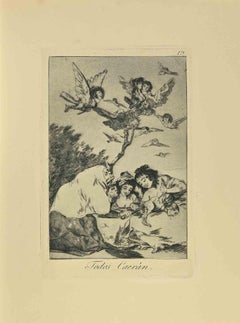
Todos Caeran - Etching by Francisco Goya - 1881
Located in Roma, IT
Todos Caeran is a black and White aquatint, drypoint, and etching printed in blue-black ink on laid paper from Caprichos realized after Francisco Goya in 1881-1886. 6th Edition.  T...
Category

Modern 19th Century Prints and Multiples

Materials

Etching

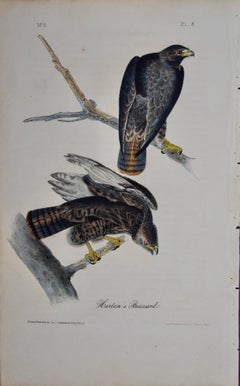
Harlan's Buzzard Birds: An Original 19th C. Audubon Hand-colored Bird Lithograph
Located in Alamo, CA
This is an original 1st edition John James Audubon hand-colored lithograph entitled "Harlan's Buzzard", No. 2, Plate 8 from Audubon's "Birds of America, lithographed, printed and col...
Category

Naturalistic 19th Century Prints and Multiples

Materials

Lithograph

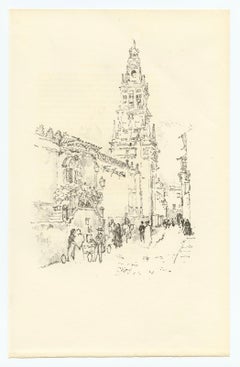
"Alhambra" original lithograph
Located in Henderson, NV
Medium: original lithograph. This impression on cream wove paper was printed in 1896 for the deluxe large paper edition of "The Alhambra" by Washington Irving. Sheet size: 10 x 6 1/2...
Category

19th Century Prints and Multiples

Materials

Lithograph

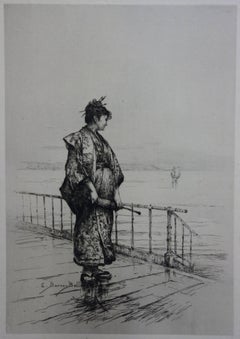
Woman in Traditional Japanese Suit Looking at the Sea - Original etching
By Étienne Prosper Berne-Bellecour
Located in Paris, IDF
Etienne Prosper BERNE BELLECOUR (1838-1910) Woman in Traditional Japanese Suit Looking at the Sea Original etching Printed signature i...
Category

Realist 19th Century Prints and Multiples

Materials

Etching

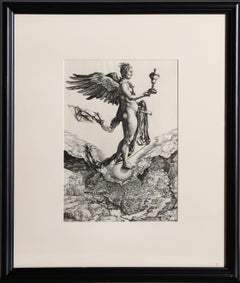
La Grande Fortune, Old Masters Etching by Amand Durand after Albrecht Durer
Located in Long Island City, NY
Artist: Charles Amand-Durand, French (1831 - 1905) after Albrecht Dürer, German (1471 - 1528) Title: La Grande Fortune Year: 1873 (original circa 1502) Medium: Heliogravure on thin l...
Category

Old Masters 19th Century Prints and Multiples

Materials

Engraving

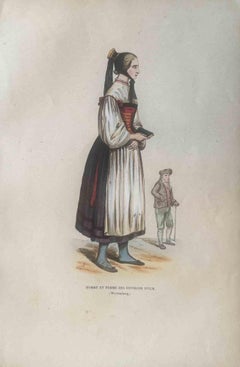
Uses and Customs - Wurtemberg - Lithograph - 1862
Located in Roma, IT
Uses and Customs - Wurtemberg is a lithograph on paper realized in 1862. The artwork belongs to the Suite Uses and customs of all the peoples of the universe: " History of the gover...
Category

Modern 19th Century Prints and Multiples

Materials

Lithograph

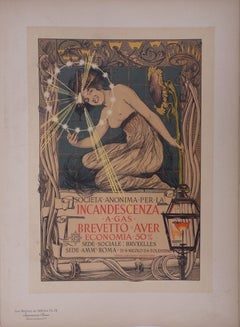
Incandescence - Lithograph, 1897
Located in Paris, IDF
Giovanni Mataloni Incandescence, 1897 Original lithograph Printed signature in the plate Printed on paper vélin Size 40 x 29 cm (c. 15.7 x 11.4") INFORMATION : Plate 72 of "Les Maîtres de l'Affiche", Paris, 1897, printed by l'Imprimerie Chaix. Bears the blind stamp of the editor bottom right. This image was created for an Italian advertisement...
Category

Art Nouveau 19th Century Prints and Multiples

Materials

Lithograph

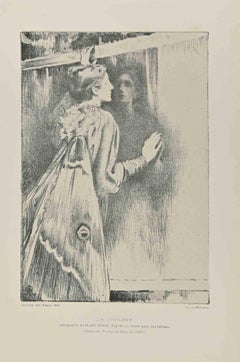
La Phalane - Lithograph by Mary Renan - 1895
Located in Roma, IT
La Phalane is a print realized by Mary Renan in 1895. Lithograph on paper. Stamped on the plate on the lower. Good condition with slight foxing.
Category

Modern 19th Century Prints and Multiples

Materials

Lithograph

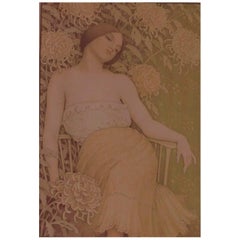
Paul Berthon Original Color Lithograph, 1899. “Les Chrysanthemes”
Located in Phoenix, AZ
Wonderful original color lithograph by Paul Berthon (1872-1909). In excellent condition with great color. Unframed. Presents in a 4-Ply Archival Mat. Titled: "Les Chrysanthemes.” Cre...
Category

19th Century Prints and Multiples

Materials

Paper

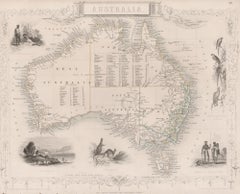
Australia, Tallis antique map, 1851
Located in Melbourne, Victoria
'Australia' With decorative border surrounds and vignettes including a view of Sydney, Kangaroos, Natives of Australia Felix, Australian Parrots and Cockatoos and Natives of the Tri...
Category

Naturalistic 19th Century Prints and Multiples

Materials

Engraving

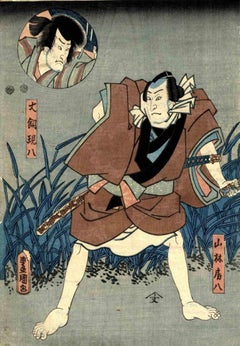
Yamabayashi Fusahachi - Woodcut Print by Utagawa Kunisada - 1860s
Located in Roma, IT
Yamabayashi Fusahachi is an original modern artwork realized by Utagawa Kunisada in 1861. Woodcut print Oban from a multi-heet, 1861 Actor in the role of Yamabayashi Fusahachi sta...
Category

Modern 19th Century Prints and Multiples

Materials

Woodcut

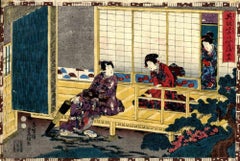
Wakana (Gengjie) - Original Woodcut Print by Utagawa Kunisada - 1850s
Located in Roma, IT
Wakana (Gengjie) is an original modern artwork realized by Utagawa Kunisada in 1850s. Woodcut print Oban yokoe format From the series "Sono sugata yukari no utsushie" (Faithful im...
Category

Modern 19th Century Prints and Multiples

Materials

Woodcut

19th century color lithograph landscape figures horseback house scene trees sky
Located in Milwaukee, WI
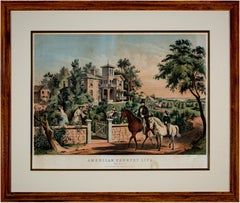
The present print is one of several examples produced for Nathaniel Currier by his longtime collaborator Frances F. "Fanny" Palmer. Harry T. Peters wrote of her: "There is no more interesting and appealing character among the group of artists who worked for Currier & Ives than Fanny Palmer. In an age when women, well-bred women in particular, did not generally work for a living Fanny Palmer for years did exacting, full-time work in order to support a large and dependent family ... Her work ... had great charm, homeliness, and a conscientious attention to detail." One of a series of four prints showing American country life in different seasons, the image presents the viewer with a picturesque view of a successful American farm. In the foreground, a gentleman rides a horse with a young boy before a respectable Italianate country house. Two women and a young girl pick flowers in the garden and several farm workers attend to their duties. Beyond are other homes and a city on the coast. 16.63 x 23.75 inches, artwork 28.13 x 33.38 inches, frame Entitled bottom center "American Country Life - May Morning" Signed in the stone, lower left "F.F. Palmer, Del." Signed in the stone, lower right "Lith. by N. Currier" Copyrighted lower center "Entered according to Act of Congress in the year 1855 by N. Currier in the Clerk's office of the Southern District of N.Y." Inscribed bottom center "New York, Published by N. Currier 152 Nassau Street" Framed to conservation standards using silk-lined 100 percent rag matting and Museum Glass with a gold gilded liner, all housed in a stained wood moulding. Nathaniel Currier was a tall introspective man with a melancholy nature. He could captivate people with his piercing stare or charm them with his sparkling blue eyes. Nathaniel was born in Roxbury, Massachusetts on March 27th, 1813, the second of four children. His parents, Nathaniel and Hannah Currier, were distant cousins who lived a humble yet spartan life. When Nathaniel was eight years old, tragedy struck. Nathaniel’s father unexpectedly passed away leaving Nathaniel and his eleven-year-old brother Lorenzo to provide for the family. In addition to their mother, Nathaniel and Lorenzo had to care for six-year-old sister Elizabeth and two-year-old brother Charles. Nathaniel worked a series of odd jobs to support the family, and at fifteen, he started what would become a life-long career when he apprenticed in the Boston lithography shop of William and John Pendleton. A Bavarian gentleman named Alois Senefelder invented lithography just 30 years prior to young Nat Currier’s apprenticeship. While under the employ of the brothers Pendleton, Nat was taught the art of lithography by the firm’s chief printer, a French national named Dubois, who brought the lithography trade to America. Lithography involves grinding a piece of limestone flat and smooth then drawing in mirror image on the stone with a special grease pencil. After the image is completed, the stone is etched with a solution of aqua fortis leaving the greased areas in slight relief. Water is then used to wet the stone and greased-ink is rolled onto the raised areas. Since grease and water do not mix, the greased-ink is repelled by the moisture on the stone and clings to the original grease pencil lines. The stone is then placed in a press and used as a printing block to impart black on white images to paper. In 1833, now twenty-years old and an accomplished lithographer, Nat Currier left Boston and moved to Philadelphia to do contract work for M.E.D. Brown, a noted engraver and printer. With the promise of good money, Currier hired on to help Brown prepare lithographic stones of scientific images for the American Journal of Sciences and Arts. When Nat completed the contract work in 1834, he traveled to New York City to work once again for his mentor John Pendleton, who was now operating his own shop located at 137 Broadway. Soon after the reunion, Pendleton expressed an interest in returning to Boston and offered to sell his print shop to Currier. Young Nat did not have the financial resources to buy the shop, but being the resourceful type he found another local printer by the name of Stodart. Together they bought Pendleton’s business. The firm ‘Currier & Stodart’ specialized in "job" printing. They produced many different types of printed items, most notably music manuscripts for local publishers. By 1835, Stodart was frustrated that the business was not making enough money and he ended the partnership, taking his investment with him. With little more than some lithographic stones, and a talent for his trade, twenty-two year old Nat Currier set up shop in a temporary office at 1 Wall Street in New York City. He named his new enterprise ‘N. Currier, Lithographer’ Nathaniel continued as a job printer and duplicated everything from music sheets to architectural plans. He experimented with portraits, disaster scenes and memorial prints, and any thing that he could sell to the public from tables in front of his shop. During 1835 he produced a disaster print Ruins of the Planter's Hotel, New Orleans, which fell at two O’clock on the Morning of the 15th of May 1835, burying 50 persons, 40 of whom Escaped with their Lives. The public had a thirst for newsworthy events, and newspapers of the day did not include pictures. By producing this print, Nat gave the public a new way to “see” the news. The print sold reasonably well, an important fact that was not lost on Currier. Nat met and married Eliza Farnsworth in 1840. He also produced a print that same year titled Awful Conflagration of the Steamboat Lexington in Long Island Sound on Monday Evening, January 18, 1840, by which melancholy occurrence over One Hundred Persons Perished. This print sold out very quickly, and Currier was approached by an enterprising publication who contracted him to print a single sheet addition of their paper, the New York Sun. This single page paper is presumed to be the first illustrated newspaper ever published. The success of the Lexington print launched his career nationally and put him in a position to finally lift his family up. In 1841, Nat and Eliza had their first child, a son they named Edward West Currier. That same year Nat hired his twenty-one year old brother Charles and taught him the lithography trade, he also hired his artistically inclined brother Lorenzo to travel out west and make sketches of the new frontier as material for future prints. Charles worked for the firm on and off over the years, and invented a new type of lithographic crayon which he patented and named the Crayola. Lorenzo continued selling sketches to Nat for the next few years. In 1843, Nat and Eliza had a daughter, Eliza West Currier, but tragedy struck in early 1847 when their young daughter died from a prolonged illness. Nat and Eliza were grief stricken, and Eliza, driven by despair, gave up on life and passed away just four months after her daughter’s death. The subject of Nat Currier’s artwork changed following the death of his wife and daughter, and he produced many memorial prints and sentimental prints during the late 1840s. The memorial prints generally depicted grief stricken families posed by gravestones (the stones were left blank so the purchasers could fill in the names of the dearly departed). The sentimental prints usually depicted idealized portraits of women and children, titled with popular Christian names of the day. Late in 1847, Nat Currier married Lura Ormsbee, a friend of the family. Lura was a self-sufficient woman, and she immediately set out to help Nat raise six-year-old Edward and get their house in order. In 1849, Lura delivered a son, Walter Black Currier, but fate dealt them a blow when young Walter died one year later. While Nat and Lura were grieving the loss of their new son, word came from San Francisco that Nat’s brother Lorenzo had also passed away from a brief illness. Nat sank deeper into his natural quiet melancholy. Friends stopped by to console the couple, and Lura began to set an extra place at their table for these unexpected guests. She continued this tradition throughout their lives. In 1852, Charles introduced a friend, James Merritt Ives, to Nat and suggested he hire him as a bookkeeper. Jim Ives was a native New Yorker born in 1824 and raised on the grounds of Bellevue Hospital where his father was employed as superintendent. Jim was a self-trained artist and professional bookkeeper. He was also a plump and jovial man, presenting the exact opposite image of his new boss. Jim Ives met Charles Currier through Caroline Clark, the object of Jim’s affection. Caroline’s sister Elizabeth was married to Charles, and Caroline was a close friend of the Currier family. Jim eventually proposed marriage to Caroline and solicited an introduction to Nat Currier, through Charles, in hopes of securing a more stable income to support his future wife. Ives quickly set out to improve and modernize his new employer’s bookkeeping methods. He reorganized the firm’s sizable inventory, and used his artistic skills to streamline the firm’s production methods. By 1857, Nathaniel had become so dependent on Jims’ skills and initiative that he offered him a full partnership in the firm and appointed him general manager. The two men chose the name ‘Currier & Ives’ for the new partnership, and became close friends. Currier & Ives produced their prints in a building at 33 Spruce Street where they occupied the third, fourth and fifth floors. The third floor was devoted to the hand operated printing presses that were built by Nat's cousin, Cyrus Currier, at his shop Cyrus Currier & Sons in Newark, NJ. The fourth floor found the artists, lithographers and the stone grinders at work. The fifth floor housed the coloring department, and was one of the earliest production lines in the country. The colorists were generally immigrant girls, mostly German, who came to America with some formal artistic training. Each colorist was responsible for adding a single color to a print. As a colorist finished applying their color, the print was passed down the line to the next colorist to add their color. The colorists worked from a master print displayed above their table, which showed where the proper colors were to be placed. At the end of the table was a touch up artist who checked the prints for quality, touching-in areas that may have been missed as it passed down the line. During the Civil War, demand for prints became so great that coloring stencils were developed to speed up production. Although most Currier & Ives prints were colored in house, some were sent out to contract artists. The rate Currier & Ives paid these artists for coloring work was one dollar per one hundred small folios (a penny a print) and one dollar per one dozen large folios. Currier & Ives also offered uncolored prints to dealers, with instructions (included on the price list) on how to 'prepare the prints for coloring.' In addition, schools could order uncolored prints from the firm’s catalogue to use in their painting classes. Nathaniel Currier and James Merritt Ives attracted a wide circle of friends during their years in business. Some of their more famous acquaintances included Horace Greeley, Phineas T. Barnum, and the outspoken abolitionists Rev. Henry Ward, and John Greenleaf Whittier (the latter being a cousin of Mr. Currier). Nat Currier and Jim Ives described their business as "Publishers of Cheap and Popular Pictures" and produced many categories of prints. These included Disaster Scenes, Sentimental Images, Sports, Humor, Hunting Scenes, Politics, Religion, City and Rural Scenes, Trains, Ships, Fire Fighters, Famous Race Horses, Historical Portraits, and just about any other topic that satisfied the general public's taste. In all, the firm produced in excess of 7500 different titles, totaling over one million prints produced from 1835 to 1907. Nat Currier retired in 1880, and signed over his share of the firm to his son Edward. Nat died eight years later at his summer home 'Lion’s Gate' in Amesbury, Massachusetts. Jim Ives remained active in the firm until his death in 1895, when his share of the firm passed to his eldest son, Chauncey. In 1902, faced will failing health from the ravages of Tuberculosis, Edward Currier sold his share of the firm to Chauncey Ives...
Category

Romantic 19th Century Prints and Multiples

Materials

Watercolor, Lithograph

Jupiter embrassant l'Amour, Heliogravure by Marcantonio Raimondi
Located in Long Island City, NY
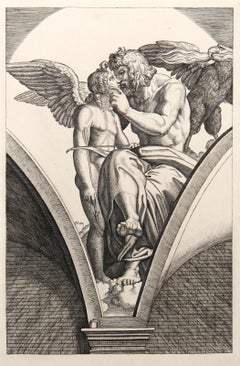
Marcantonio Raimondi, After by Amand Durand, Italian (1480 - 1534) - Jupiter embrassant l'Amour, Year: 1875, Medium: Heliogravure, Size: 13.5 x 8.5 in. (34.29 x 21.59 cm), Printer...
Category

Old Masters 19th Century Prints and Multiples

Materials

Etching

Alphonse Mucha Flirt Biscuits Lefevre Utile Poster
Located in Dallas, TX
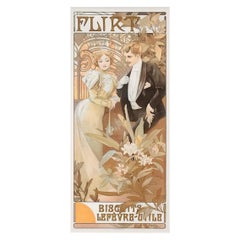
Alphonse Mucha (Czech, 1860-1939) Flirt Biscuits Lefevre Utile. 1899, Lithograph in colors on wove paper. Linen backed. Imp F. Champenois Paris. Measures : sheet: 24.75 x 11.75 inche...
Category

Art Nouveau 19th Century Prints and Multiples

Materials

Paper

Portrait of a Samurai - Woodcut by Utagawa Kunisada - 1860s
Located in Roma, IT
Oriental Warrior is an original print realized in the first half of the XIX century by Utagawa Kunisada. Beautiful colored woodblock print. This wonderful woodcut by Utagawa Kunisa...
Category

Modern 19th Century Prints and Multiples

Materials

Woodcut

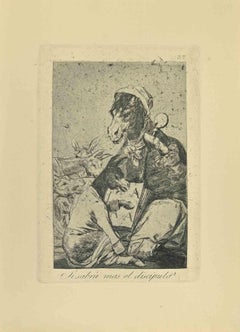
Si Sabrá Mas - Etching by Francisco Goya - 1881
Located in Roma, IT
Si Sabrá Mas is a black and White aquatint, drypoint, and etching printed in blue-black ink on laid paper from Caprichos realized after Francisco Goya in 1881-1886. 6th Edition.  T...
Category

Modern 19th Century Prints and Multiples

Materials

Etching

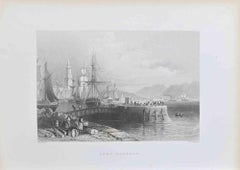
Port Glasgow - Lithograph By W.H. Bartlett - 19th Century
Located in Roma, IT
Port Glasgow is a lithograph on paper realized by the artist W.H. Bartlett . Signed on the plate on the lower left. Titled on the lower center. The state of preservation is good, only a yellowed paper along the edge. William Henry Bartlett...
Category

Modern 19th Century Prints and Multiples

Materials

Lithograph

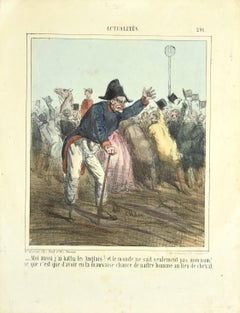
Actualités - Original Lithograph by Cham - 1840
Located in Roma, IT
Actualités is an amusing satirical illustration by the French illustrator and caricaturist, Cham (alias Count Amédée de Noé, 1818-1879) realized in 1840. Beautiful Hand-colored lith...
Category

19th Century Prints and Multiples

Materials

Lithograph

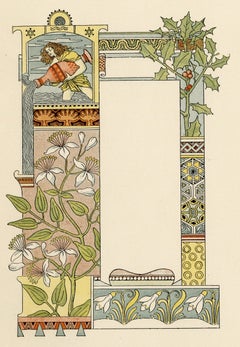
Aquarius-The Water Bearer
Located in Fairlawn, OH
Aquarius-The Water Bearer From: Les Douze Mois de 1889 As published in Vol. 9, No. 425 of Les Hommes d'Aujourd'hui. Published by Sagot, Paris Proof before letters without the calend...
Category

Art Nouveau 19th Century Prints and Multiples

Materials

Lithograph

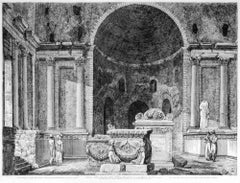
Interno della Basilica della Fortuna Prenestina - by L. Rossini - 1826
Located in Roma, IT
Interno della Basilica della Fortuna Prenestina Image dimensions: 40x53 cm. From the collection “Le antichità de’ contorni di Roma (...)”, published in Rome, 1826 an artist's proof w...
Category

Old Masters 19th Century Prints and Multiples

Materials

Etching

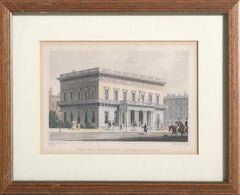
The New Athenaeum, Waterloo Place - Hand-Colored Engraving after Thomas Shepherd
By Thomas Hosmer Shepherd
Located in Long Island City, NY
Thomas Hosmer Shepherd, After by James Tingle, British (1793 - 1864) - The New Athenaeum, Waterloo Place, Medium: Hand Colored Engraving, Image Size: 3.75 x 5.75 inches, Frame Siz...
Category

Old Masters 19th Century Prints and Multiples

Materials

Engraving

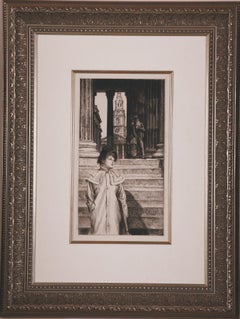
"Le Portique de la Galerie Nationale a Londres" etching by Tissot
Located in Hinsdale, IL
TISSOT, JAMES JACQUES JOSEPH (1836 - 1902) "Le Portique de la Galerie Nationale a Londres" (The Portico of the National Gallery, London) Wentworth 40 Etching and Drypoint on imitation Japanese paper, C. 1878 Only state published, from the edition of 100 Signed 1878 J.J. Tissot on the step, lower right 14 7/8” x 8 1/4” Excellent crisp impression This etching is related to the painting London Visitors exhibited at the Royal Academy in 1874, no. 116. The setting is the portico of the National Gallery, looking toward the Church of St. Martin’s-in-the-Fields. Such works give Tissot a minor but distinguished position as a predecessor of the school of architectural etchers...
Category

Impressionist 19th Century Prints and Multiples

Materials

Etching

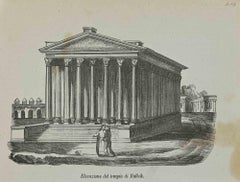
Elevation of the Temple of Balbek - Lithograph - 1862
Located in Roma, IT
Elevation of the Temple of Balbek is a  lithograph realized in 1864. Good conditions. The artwork belongs to the Suite Uses and customs of all the peoples of the universe, or Histo...
Category

Modern 19th Century Prints and Multiples

Materials

Lithograph

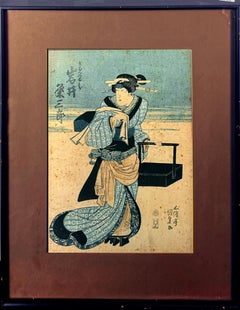
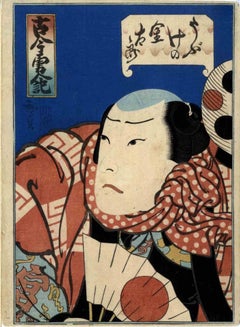
Ichimura Uzaemon XIII - actor as Okaji of Gion, 1862 "The Six Poetry Immortals"
Located in Soquel, CA
Ichimura Uzaemon XIII - actor as Okaji of Gion, 1862 "The Six Poetry Immortals" A Japanese Ukiyo-e woodcut print created circa 1862 by artist Utagawa Kunisada (Japanese, 1786-1864). ...
Category

Realist 19th Century Prints and Multiples

Materials

Printer's Ink, Rice Paper, Woodcut

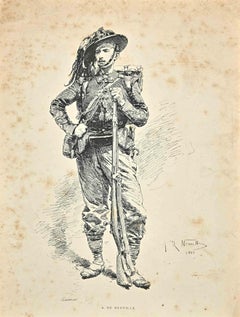
Soldier - Lithograph by Alphonse de Neuville - 1883
Located in Roma, IT
Soldier is an lithograph realized by Alphonse de Neuville in 1883. Signed on Plate. Good conditions. The Artwork is depicted through soft strokes.
Category

Modern 19th Century Prints and Multiples

Materials

Lithograph

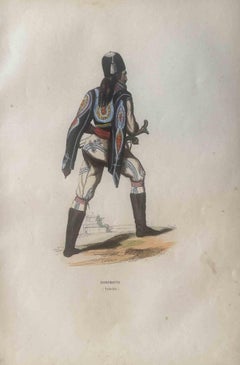
Uses and Customs - Valachie - Lithograph - 1862
Located in Roma, IT
Uses and Customs - Valachie is a lithograph on paper realized in 1862. The artwork belongs to the Suite Uses and customs of all the peoples of the universe: " History of the governm...
Category

Modern 19th Century Prints and Multiples

Materials

Lithograph

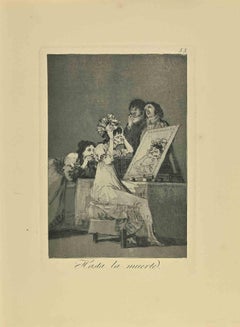
Hasta La Muerte - Etching by Francisco Goya - 1881
Located in Roma, IT
Hasta La Muerte is a black and White aquatint, drypoint, and etching printed in blue-black ink on laid paper from Caprichos realized after Francisco Goya in 1881-1886. 6th Edition. ...
Category

Modern 19th Century Prints and Multiples

Materials

Etching

Kabuki - Woodcut by Utagawa Kunisada II - 1862
Located in Roma, IT
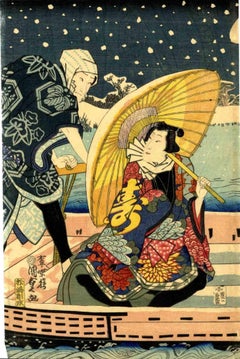
Kabuki is an original artwork realized in 1862 by Utagawa Kunisada II (1823-1880). Boatman with elegant passenger in snowy landscape. Sign: Kochoro Kuni...
Category

Modern 19th Century Prints and Multiples

Materials

Woodcut

Quema La Casa - Etching by Francisco Goya - 1881
Located in Roma, IT
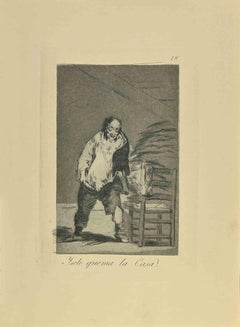
Quema La Casa is a black and White aquatint, drypoint, and etching printed in blue-black ink on laid paper from Caprichos realized after Francisco Goya in 1881-1886. 6th Edition.  ...
Category

Modern 19th Century Prints and Multiples

Materials

Etching

Harvesting Young Cedars - Woodcut by Utagawa Hiroshige - 19th Century
Located in Roma, IT
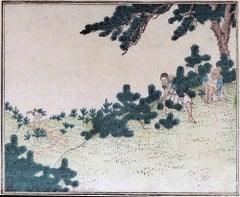
Harvesting Young Cedars is a lovely original woodcut print from the work of the famous Japanese master Utagawa Hiroshige from an early 19th century edition. It represents an agricult...
Category

Modern 19th Century Prints and Multiples

Materials

Woodcut

Here Comes the Bogey-Man - Etching by Francisco Goya - 1881
Located in Roma, IT
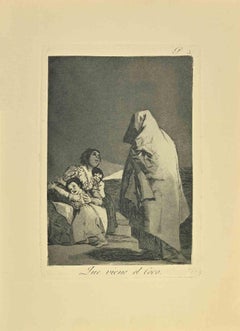
Here comes the bogey-man is a black and White aquatint, drypoint, and etching printed in blue-black ink on laid paper from Caprichos realized after Francisco Goya in 1881-1886. 6th ...
Category

Modern 19th Century Prints and Multiples

Materials

Etching

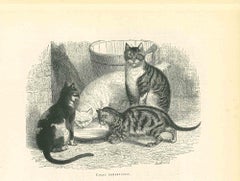
The Cats and Kitty - Lithograph by Paul Gervais - 1854
Located in Roma, IT
The Cats and Kitty is an original lithograph on ivory-colored paper, realized by Paul Gervais (1816-1879). The artwork is from The Series of "Les Trois Règnes de la Nature", and was ...
Category

Modern 19th Century Prints and Multiples

Materials

Lithograph

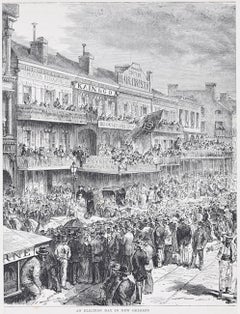
An Election Day in New Orleans - Original Lithograph by H.-T. Hildibrand - 1880
Located in Roma, IT
Image dimensions: 18 x 14.9 cm. An Election Day in New Orleans is a wonderful black and white lithograph on paper, realized in 1880 by Henry Théophile Hildibrand...
Category

Modern 19th Century Prints and Multiples

Materials

Lithograph

Gerlach's Allegorien Plate #37: "Music" Lithograph
Located in Palm Beach, FL
Koloman Moser (1868 –1918), AUSTRIAN Instead of applying his flair and art education solely to painting, Koloman Moser embodied the idea of Gesamt Kunstwerk (all-embracing art w...
Category

Vienna Secession 19th Century Prints and Multiples

Materials

Lithograph

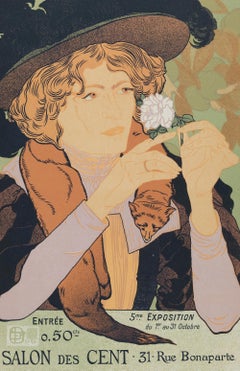
Salon des Cents: A 19th C. Lithograph from Maitres de l'Affiche by Feure/Cheret
Located in Alamo, CA
This is a 19th century color lithograph entitled "Expo Salon des Cents" (Salon of the Hundred) created by Georges de Feure and published between 1898 in Paris, France by Jules Cheret...
Category

Art Nouveau 19th Century Prints and Multiples

Materials

Lithograph

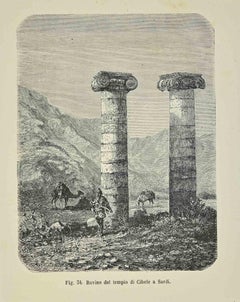
Ruins of the Temple of Cybele in Sardis - Lithograph - 1862
Located in Roma, IT
Uses and Customs - Ruins of the Temple of Cybele in Sardis is a lithograph on paper realized in 1862. The artwork belongs to the Suite Uses and customs of all the peoples of the uni...
Category

Modern 19th Century Prints and Multiples

Materials

Lithograph

Arashi Rinosuke II - Woodcut Print by Utagawa Hirosada - 1848
Located in Roma, IT
Arashi Rinosuke II is an original modern artwork realized by Utagawa Hirosada (Japanese, active 1825–75) in 1848. Woodcut Print Chuban format, 1848 From the series "Kokon yujin ki"...
Category

Modern 19th Century Prints and Multiples

Materials

Woodcut

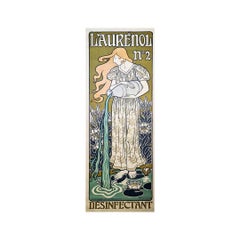
1898 Original Poster - Laurénol N°2 Désinfectant - Art Nouveau - Advertising
By Maurice Pillard Verneuil
Located in PARIS, FR
Very nice original poster from 1898 by Maurice Pillard Verneuil. Standing on dark blue water lilies, a pretty woman with flowing orange hair pours water from a gray jug. The essence ...
Category

Art Nouveau 19th Century Prints and Multiples

Materials

Linen, Paper, Lithograph

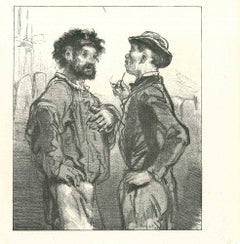
The Delightful Chit-Chat - Original Lithograph - 1881
Located in Roma, IT
The delightful chit-chatis an original lithograph artwork on ivory-colored paper, realized by the French draftsman Paul Gavarni (after) (alias Guillaume Sulpice Chevalier Gavarni, 18...
Category

Modern 19th Century Prints and Multiples

Materials

Lithograph

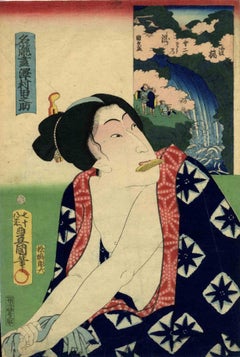
Famous Waterfalls - Woodcut by Utagawa Kunisada - 1850s
Located in Roma, IT
Famous Waterfalls is an original artwork realized in the 1850s by Utagawa Kunisada (1786-1865). From the series "Meitaki ga". Bust portrait of the actor Sawamura Tanosuke in Onnaga...
Category

Modern 19th Century Prints and Multiples

Materials

Woodcut

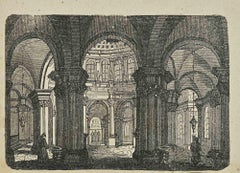
Uses and Customs - Interior - Lithograph - 1862
Located in Roma, IT
Interior is a lithograph on paper realized in 1862. The artwork belongs to the Suite Uses and customs of all the peoples of the universe: " History of the government, of the laws, o...
Category

Modern 19th Century Prints and Multiples

Materials

Lithograph

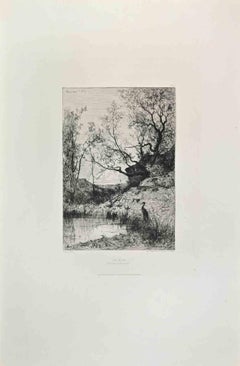
Une Mare (Environs de Roussillon) - Etching by Appian - 1864 ca.
Located in Roma, IT
Etching on laid paper. Signed and dated in plate upper left: Appian 1867. Published by Cadart & Luquet, Éditeurs, 79 Rue Richelieu, Paris With the blindstamp of the Société des Aquaf...
Category

Modern 19th Century Prints and Multiples

Materials

Etching

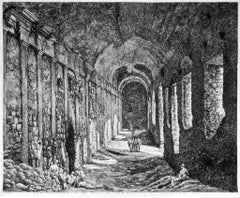
Veduta interna delle Sostruzioni ... - Etching by Luigi Rossini - 1824
Located in Roma, IT
Veduta interna delle Sostruzioni dei Portici del tempio d'Ercole in Tivoli (...) is an original etching realized by Luigi Rossini. From the series “Le antichità de’ contorni di Roma (...)” it is an artist's proof with real technical virtuosity, with sharp details, representing the walkways under the portici of Hercules Temple in Tivoli. Signed on plate “Rossini dis. e inc.” lower-left corner, with indication of date and place “Roma, 1824”. In very good conditions. Luigi Rossini (1790 – 1857) Like Giovanni Battista Piranesi, Luigi Rossini was an architect and his etchings have the same tendency to emphasize the massive constructions of the Ancient Rome. He became famous thanks to his etchings representing Roman landscapes and antique monuments...
Category

Modern 19th Century Prints and Multiples

Materials

Etching

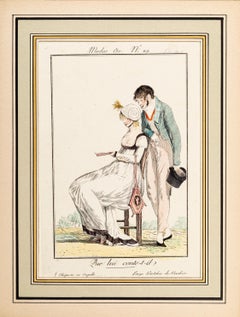
Que lui conte-t-il? - From Modes et Manières du jour à Paris...
Located in Roma, IT
Que lui conte-t-il? is a hand-watercolored etching on paper realized in 1800 by the French artist Louis-Philibert Debucourt (1755-1832). This is an original illustration (plate n. ...
Category

Modern 19th Century Prints and Multiples

Materials

Etching

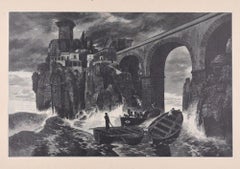
Pirates attack the Castle on the Sea - Original Woodcut by J.J. Weber - 1898
Located in Roma, IT
Image dimensions: 23 x 35 cm. Original Title: Von Piraten überfallene Burg am Meer Pirates attack the Castle on the sea is a black and white xylograph on Japon applied on ivory-colored paper, after Arnold Böcklin...
Category

Symbolist 19th Century Prints and Multiples

Materials

Woodcut

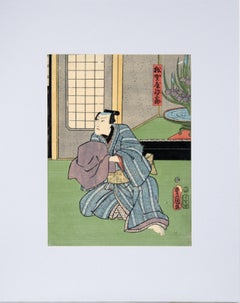
"Sun Saburo Matsugaya" - Mid 19th Century Figurative Japanese Woodblock Print
Located in Soquel, CA
"Sun Saburo Matsugaya" - Mid 19th Century Figurative Japanese Woodblock Print Beautiful mid 19th century figural Japanese woodblock print of a seated man with lilies in the background by Utagawa Toyokuni III (Kunisada) (Japanese, 1786-1864/5). Artist's chop is in the lower right corner of the piece. The actor is Magosaburo Matsugaya from the play "Katakiuchi Rumors" Presented in a new grey-blue mat with foamcore backing. Mat size: 21"H x 16"W Paper size: 14"H x 9.75"W During his lifetime Kunisada Utagawa...
Category

Edo 19th Century Prints and Multiples

Materials

Paper, Ink, Woodcut

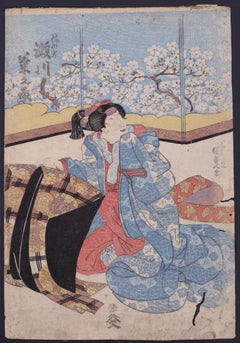
Kabuki Theatre Scene - Original Woodblock print by Utagawa Toyokuni II - 1810 ca
Located in Roma, IT
Kabuki Theatre Scene is a color woodblock print on paper, realized by Utagawa Toyokuni II around 1810 ca. This lovely ukiyo-e print depicts a kneeling actress, more precisely a geis...
Category

19th Century Prints and Multiples

Materials

Paper

Self- Portrait - Etching by J.-P. Norblin de La Gourdaine
Located in Roma, IT
Self- Portrait is an etching on creamy-colored paper realized by Jean-Pierre Norblin de La Gourdaine artist in the Early 19th Century. Good Conditions. The artwork is depicted thr...
Category

Modern 19th Century Prints and Multiples

Materials

Etching

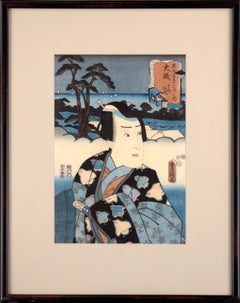
"Juro Sukenari, Station #9: Oiso", Mid 19th Century Japanese Ukiyo-e Woodblock
Located in Soquel, CA
Beautiful mid 19th century Japanese woodblock print of a samurai by Utagawa Toyokuni III (Kunisada) (Japanese, 1786-1864/5). This piece is from a series of "The 53 Stations of the To...
Category

Edo 19th Century Prints and Multiples

Materials

Paper, Ink

Por Que Fue Sensible - Etching by Francisco Goya - 1881
Located in Roma, IT
Por Que Fue Sensible is a black and White aquatint, drypoint, and etching printed in blue-black ink on laid paper from Caprichos realized after Francisco Goya in 1881-1886. 6th Edit...
Category

Modern 19th Century Prints and Multiples

Materials

Etching

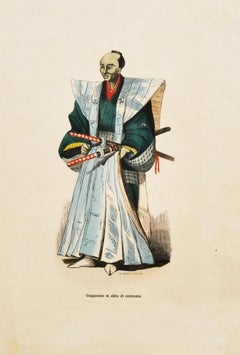
Samurai - Original Lithography - 19th Century
Located in Roma, IT
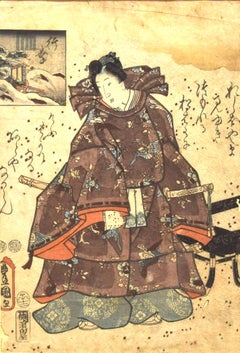
Samurai, " Japanese man in the costume of ceremony", is an original Hand-colored lithograph on paper, realized by an Anonymous artist of the 19th Century....
Category

Modern 19th Century Prints and Multiples

Materials

Lithograph

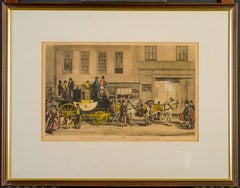
Quicksilver Royal Mail and The Blenheim
Located in Douglas, Isle of Man
James Pollard 1792-1867, was an English painter and watercolourist. Pollard was born in North London he was the son of a painter and publisher. He exhibited at the Royal Academy, Suf...
Category

19th Century Prints and Multiples

Materials

Paper, Printer's Ink, Watercolor

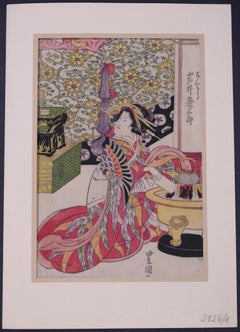
The Japanese Tea Ritual - Woodcut print - 1850s
Located in Roma, IT
The Japanese tea ritual is a breathtaking ukiyo-e, a original woodblock print on paper, realized at the half of trhe 19th century by the great master, Utagawa Toyokuni II...
Category

Modern 19th Century Prints and Multiples

Materials

Paper, Woodcut

A Set of Six Bust Portraits of Beauties - Jidai Kagami (Mirror of the Ages).
Located in London, GB
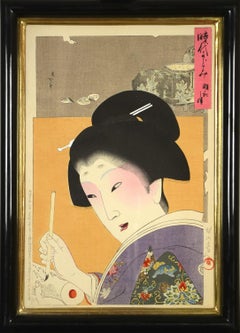
CHIKANOBU, Yoshu (1838–1912) A Set of Six Bust Portraits of Beauties - Jidai Kagami (Mirror of the Ages). 1896-1898 A Set of Six oban tate-e woodblock prints of okubi-e (bust portraits) of beauties, titled Jidai kagami (Mirror of the Ages), documenting the fashions of former times (from the Keicho to the Meiji era) in chronological order, each sheet with a beautiful woman in sumptuous costume depicted at the lower section and a rectangular panel at the top which makes a reference to the era, some sheets with lacquer and embossed details, published by Matsuki Heikichi, variously dated Meiji 29, 30 and 31 (1896-8), all signed Yoshu Chikanobu. Each sheet approx. 36 x 23.7 cm (14 1/8 x 9 3/8 in). oyohara Chikanobu (1838–1912), better known to his contemporaries as Yōshū Chikanobu, was one of the most successful woodblock print artists of Japan's Meiji period. He lived at a time when Japan saw the reinstatement of the emperor as ruler and underwent rapid westernization. He worked both with traditional subjects, such as actors, courtesans, scenes of famous sites, beautiful women, and with topical subjects, such as the Satsuma Rebellion (1877) and the Sino-Japanese War (1894-1895). Chikanobu used the flat planes and decorative patterning of the ukiyo-e tradition to striking effect, adding brilliant colors, especially reds, purples, and blues to his compositions. More precisely, Ukiyo-e, or ukiyo-ye (in Japanese: "pictures of the floating world"), is a genre of woodblock prints and paintings that flourished in Japan from the 17th through 19th centuries. It was aimed at the prosperous merchant class in the urbanizing Edo period (1603–1867). Amongst the popular themes were depictions of beautiful women, as is the case here with these okubi-e prints (i.e. bust portraits); kabuki actors and sumo wrestlers; scenes from history and folk tales; travel scenes and landscapes; flora and fauna; and erotica. One of Chikanobu’s best series, A Mirror of the Ages shows women by fashion and hair style throughout history. Despite a sense of longing for the past, these prints are unmistakably modern and of their time. Each print depicts a beauty from a certain period in the lower part and customs at that time, in grisaille, in the upper part - a way to tell viewers about the latest fashion and historical backgroud at that time. The quality of printing is outstanding, especially in Chikanobu’s use of white for the rendering of the powdered faces. Indeed, Chikanobu was known as a master of bijinga (images of beautiful women), and for illustrating changes in women's fashion, including both traditional and Western clothing...
Category

Other Art Style 19th Century Prints and Multiples

Materials

Wood

La Terrasse de la Villa Brancas, Sevres (The Terrace of the Villa Brancas)
Located in Fairlawn, OH
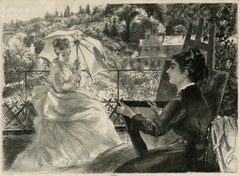
La Terrasse de la Villa Brancas, Sevres (The Terrace of the Villa Brancas) etching & drypoint, 1876 Signed in the plate bottom right corner (see photo) in plate, at lower left: xbre ...
Category

Impressionist 19th Century Prints and Multiples

Materials

Etching

Costumes of the 17th century - Lithograph - 1862
Located in Roma, IT
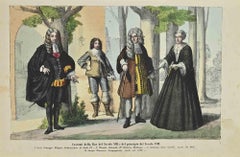
Costumes of the 17th century is a lithograph on paper realized in 1862. The artwork belongs to the Suite Uses and customs of all the peoples of the universe: " History of the govern...
Category

Modern 19th Century Prints and Multiples

Materials

Lithograph

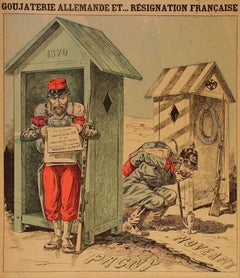
Goujaterie Allemande et... Résignation Française - Original Lithograph 1888
Located in Roma, IT
Goujaterie Allemande et... Résignation Française is an satyrical original lithograph realized by the italian illustrator and engraver Giuseppe Tarantino...
Category

19th Century Prints and Multiples

Materials

Lithograph

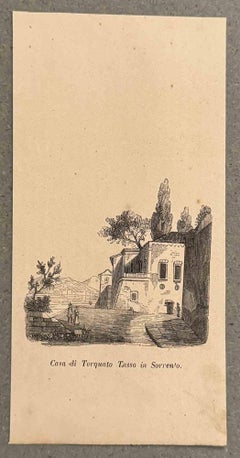
Torquato Tasso's House - Lithograph - 19th Century
Located in Roma, IT
Torquato Tasso's House is a lithograph on paper realized in the 19th Century. The artwork is represented in a well-balanced composition with strong strokes. Very good condition.
Category

Modern 19th Century Prints and Multiples

Materials

Lithograph

Still Thinking About These?

All Recently Viewed