Art Dealers Association of America
Art Dealers Association of America (ADAA)
Founded in 1962, the Art Dealers Association of America is a vetted community of more than 180 top-tier galleries across the United States. Working with these member galleries, ADAA appraisers offer assessment services for artworks spanning from the Renaissance to the present day. The ADAA also arranges public forums on important art-related topics and hosts The Art Show, presented each year at New York’s Park Avenue Armory, which stands out among art fairs for its acclaimed selection of curated booths — many of which are one-artist exhibitions.
to
35
982
739
353
319
764
Overall Width
to
Overall Height
to
1
130
874
1,843
4
3
14
20
24
73
93
121
109
130
1,133
213
117
35
27
16
12
7
4
3
2
1
1,407
1,149
408
1,069
658
539
512
429
351
236
230
216
192
172
169
168
167
153
153
140
117
115
114
853
543
535
493
470
76
72
68
65
60
368
217
3,222
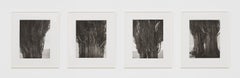
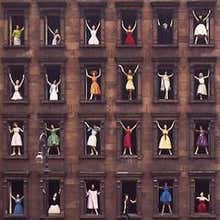
Untitled (Airport Paris)
By Peter Fischli & David Weiss
Located in New York, NY
Peter Fischli / David Weiss Untitled (Airport Paris) 2008 Offset lithograph on three sheets Each sheet: 51 1/4 x 32 5/8 inches; 130 x 83 cm Edition of 100 Signed and numbered in ink ...
Category

Early 2000s Contemporary Art Dealers Association of America
Materials

Lithograph

Grace Jones
By Antonio Lopez
Located in New York, NY
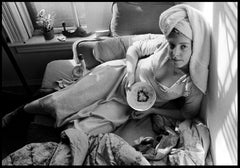
Listing includes framing with UV plexi, free express shipping and a 14-day return policy. Four 4.5 x 3.25 inch unique vintage Kodak prints. Prints are on active consignment from the estate of Antonio Lopez. Purchase includes certificates of authenticity from the estate of Antonio Lopez. These Kodak prints are not signed by Antonio Lopez. Artist Biography - The foremost fashion illustrator of the 1970s and 80s, Antonio (as he signed his work) was and remains one of the most highly regarded and influential figures in the fashion world. While not initially known as a photographer, Antonio was rarely without his favorite Instamatic camera, and as his career progressed he turned increasingly to photography to create fashion stories, portraits, and elaborate mise-en-scènes. A serial Svengali, as the writer Karin Nelson noted: “Lopez brilliantly transformed the women in his world. Under his tutelage, Jerry Hall, a long tall Texan he met at Paris’s Club Sept, evolved into a golden goddess. He put Jessica Lange in gold lamé evening dresses after discovering her in Paris studying mime, and gave aspiring model Tina Lutz her start (and an introduction to future husband Michael Chow...
Category

1970s Art Dealers Association of America

Materials

Photographic Paper, Polaroid

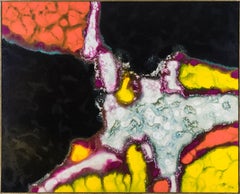
No. 12-1957
By Stanley Twardowicz
Located in New York, NY
Stanley Twardowicz (1917–2008), a one-time orphan, Golden Gloves boxer, professional baseball player and auto worker, emerged from a hardscrabble upbringing in Detroit to become a po...
Category

Mid-20th Century Abstract Art Dealers Association of America

Materials

Enamel

Mr. Blu
By Carol A. Cook
Located in Dallas, TX
After receiving her BFA from the Otis Art Institute in Los Angeles, Carol Cook earned a Master of Occupational Therapy degree from Texas Woman’s University in Denton. In 2000, Cook e...
Category

2010s Contemporary Art Dealers Association of America

Materials

Acrylic, Clay, Glaze

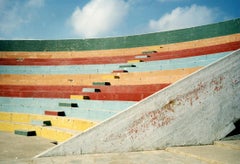
Ampitheater, Havana, Cuba
By David Graham
Located in New York, NY
This image, taken in Cuba during the artist's visit in 1997, was part of a collaboration with author Andrei Codrescu, and resulted in the publication of a 1999 book entitled "Ay Cuba...
Category

1990s Contemporary Art Dealers Association of America

Materials

C Print

Untitled from "On The Acropolis"
Located in New York, NY
Listing includes free shipping in the US and a 14-day return policy. All prints are made to order and will arrive in mint condition directly from Tod Papageorge...
Category

1980s Art Dealers Association of America

Materials

Silver Gelatin, Photographic Paper

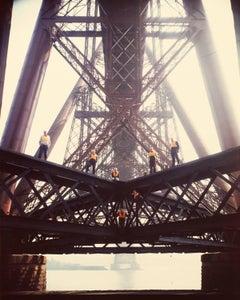
Painters of the Forth Rail Bridge, Firth of Forth, Scotland
By Neal Slavin
Located in New York, NY
24 x 19.25 inch digital chromogenic print Edition 15 + 3AP Signed, titled, dated and editioned on frame label provided Neal Slavin, a native New Yorker, began photographing grou...
Category

1980s Contemporary Art Dealers Association of America

Materials

Digital

Autobiography
By Robert Rauschenberg
Located in Houston, TX
Robert Rauschenberg Autobiography, 1968 Three panel offset lithograph on three sheets of paper 66 1/4 x 48 3/4 inches each Ed. 2000, unsigned Unframed Can be displayed horizontally o...
Category

20th Century Contemporary Art Dealers Association of America

Materials

Lithograph

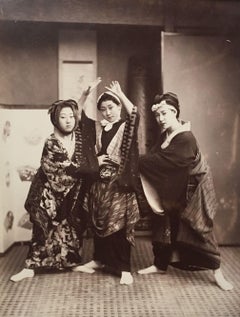
Dancing Party, c 1870
Located in Santa Monica, CA
Titled on recto Vintage hand painted albumen print Paper 13 x 9 1/2 inches; Image 11 x 8 inches
Category

Late 19th Century Art Dealers Association of America

Materials

Photographic Paper

Hong Kong, November 2016
By Luca Campigotto
Located in New York, NY
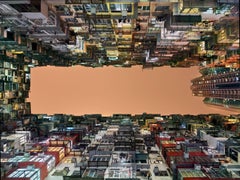
19.75 x 25 inch Canson pure pigment print, framed to 28.5 x 33.5 inches. Edition 15. Signed, titled, dated and editioned on label verso. Luca Campigotto uses big equipment to captur...
Category

2010s Contemporary Art Dealers Association of America

Materials

Pigment

Los Ojos
By Brian Cobble
Located in Dallas, TX
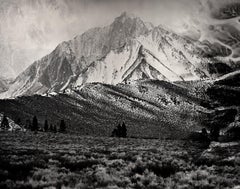
Brian Cobble’s landscapes tend to particularly focus on the interplay of man and his surroundings, whether natural or built. A signature attention to the liminal aspects of a scene, ...
Category

21st Century and Contemporary Photorealist Art Dealers Association of America

Materials

Pastel

Untitled (A)
By Thomas Nozkowski
Located in New York, NY
Thomas Nozkowski (b. 1944, Teaneck, New Jersey; d. 2019, New York) was recognized for his richly colored and intimately scaled abstract paintings, drawings, and prints that push the...
Category

Early 2000s Abstract Art Dealers Association of America

Materials

Color, Aquatint

Sweet Peas, 1907
Located in New York, NY
Listing includes framing with UV plexiglas, free shipping and a 14 day return policy. Lora Webb Nichols Sweet Peas, 1907 15 x 12 inch gelatin silver print Image Size: 14 x 8.5 inches Frame size: 22.5 x 17.5 x 2 Edition of 15 Lora Webb Nichols was born in 1883 and grew up in the small mining town of Encampment, Wyoming. At the age of 16 Lora received her first camera and from that moment and for the next few decades she produced work that is both stunning in its singular voice and revealing in the world it opens up for us. At first Nichols photographed her family, friends, and the landscape around Encampment, but when the town experienced a copper mining boom Nichols expanded her scope to become a photographer for hire shooting portraits and industrial photographs. When the boom collapsed, Nichols took the risk of opening her own business in Encampment - The Rocky Mountain Studio - which opened in 1925. The studio ran for ten years, accumulating 24,000 negatives that illustrate the lives and environment of the people living in and around the town while creating a distinctive and surprising body of work. If one was to attempt an analogy – Nichols’ pictures fit somewhere between Lartigue and Lange - joyful and generous while objectively intimate. In particular what seems to distinguish Nichols’ work is the way she sees the world from a female perspective. As Vince Aletti...
Category

Early 1900s Other Art Style Art Dealers Association of America

Materials

Silver Gelatin

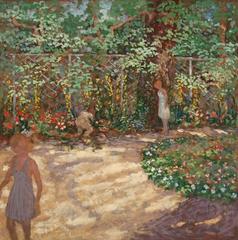
Greenhouse
By Donald S. Vogel
Located in Dallas, TX
Donald Vogel’s paintings reflect his interest in seeking beauty in life and in sharing pleasure with his viewers. Vogel entreats us to "rejoice and celebrate each new day, knowing it...
Category

Late 20th Century American Impressionist Art Dealers Association of America

Materials

Oil, Panel

The Blind Woman
By Miles Cleveland Goodwin
Located in Dallas, TX
"The Blind Woman" by artist Miles Cleveland Goodwin is oil on canvas, and measures 72 5/8 x 44 5/8 inches. Including the artist-made frame, the overall dim...
Category

2010s Realist Art Dealers Association of America

Materials

Canvas, Oil

Art Visions #2
By Gail Norfleet
Located in Dallas, TX
Gail Norfleet earned her BFA at The University of Texas at Austin, and her MFA at Southern Methodist University in Dallas. Among others, she has had solo exhibitions in Dallas at The...
Category

21st Century and Contemporary Contemporary Art Dealers Association of America

Materials

Glass

Rinsing the Eye
By Terrell James
Located in Houston, TX
Terrell James "Rinsing the Eye" 2019 Oil on linen 64 x 78 inches
Category

21st Century and Contemporary Abstract Expressionist Art Dealers Association of America

Materials

Linen, Oil

Three Flowers
By Joseph Stella
Located in New York, NY
Joseph Stella was a visionary artist who painted what he saw, an idiosyncratic and individual experience of his time and place. Stella arrived in New York in 1896, part of a wave of ...
Category

20th Century American Modern Art Dealers Association of America
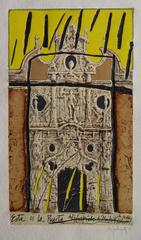
Materials

Paper, Crayon

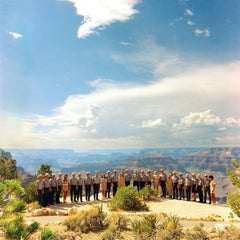
Grand Canyon National Park, National Park Service
By Neal Slavin
Located in New York, NY
24 x 24 inch digital chromogenic print Edition 15 +3AP Signed, titled, dated and editioned on frame label provided Neal Slavin, a native New Yorker, began photographing groups in 1972. He quickly realized that shooting in color yielded greater nuance and detail, placing him among the first generation of photographers, along with William Eggleston and Joel Meyerowitz, to fully embrace color. Over the past four decades, Slavin has recorded hundreds of groups from the most obscure to the most celebrated, both in the US and abroad: Sabrett Hot Dog vendors, NYC; The Silurian Border Morris Men, Herefordshire; the Mormon Tabernacle Choir, Salt Lake City; Elephant Keepers with Katie and Kumara, Bedfordshire; and the Mahayana Buddhist Service, NYC. He has published three books: “Portugal” (Lustrum Press, 1971), “When Two or More Are Gathered Together” (Farrar Straus Giroux, 1974); and “Britons” (Aperture, 1986). His prints have been acquired by the Metropolitan Museum of Art, New York; the Centre Pompidou, Paris; the International Center of Photography (ICP), New York; the National Portrait Gallery and the National Museum of American Art, Washington, DC; the National Media Museum, London; and the John Paul Getty...
Category

1970s Contemporary Art Dealers Association of America

Materials

Digital

The Writer
By Edmund Quincy
Located in New York, NY
Signed (lower right): Quincy
Category

20th Century American Realist Art Dealers Association of America

Materials

Canvas, Oil

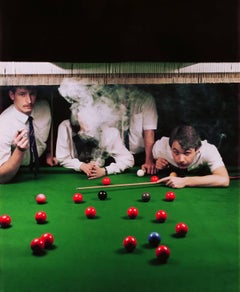
Hatton Garden Snooker Club, London, UK
By Neal Slavin
Located in New York, NY
24 x 19.25 inch digital chromogenic print Edition 15 + 3 AP Signed, titled, dated and editioned on frame label provided Neal Slavin, a native New Yorker, began photographing gro...
Category

1980s Contemporary Art Dealers Association of America

Materials

Digital

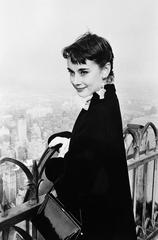
Audrey Hepburn, Rockefeller Tower, New York
By George Douglas
Located in Santa Monica, CA
This is all about the work of George Douglas, a brilliant photographer of the mid 20th Century. In the 1940s, 50s and 60s he worked for leading magazines of the day, both in Britain...
Category

1950s Art Dealers Association of America

Materials

Silver Gelatin

East Woods Park
By John Cobb
Located in Dallas, TX
“What he has learned from the art of the museums, Cobb has fully assimilated and modified in the development of his own personal vision. And while enriched by these historical perspe...
Category

21st Century and Contemporary Contemporary Art Dealers Association of America

Materials

Acrylic, Panel

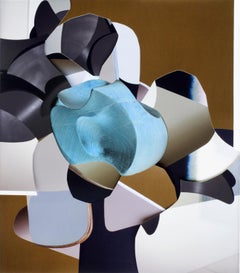
Absence No. 12
By Denis Darzacq
Located in New York, NY
In his "Absence" series, Denis Darzacq’s mines his own work for raw material. By cutting and tearing recent photographic prints of his own work, he generated a wealth of formal mater...
Category

2010s Contemporary Art Dealers Association of America

Materials

Digital Pigment

Still Life
By Vera Barnett
Located in Dallas, TX
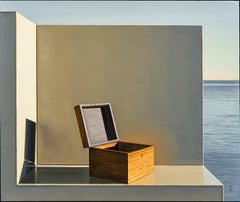
Vera Barnett is best known for creating elements of her composition—by sewing and painting plastic, building objects with cardboard and tape, and assembling found objects—then settin...
Category

2010s Contemporary Art Dealers Association of America

Materials

Oil, Panel

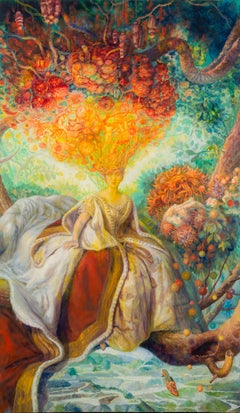
Self-Portrait as Mad Queen
By Julie Heffernan
Located in New York, NY
Oil on canvas
Category

2010s Abstract Art Dealers Association of America

Materials

Canvas, Oil

Untitled from "On The Acropolis"
Located in New York, NY
Listing includes free shipping for an unframed print in the US and a 14-day return policy. All prints are made to order and will arrive in mint condition directly from Tod Papageorge...
Category

1980s Art Dealers Association of America

Materials

Silver Gelatin

Epic Western No. 4
By Jim Krantz
Located in New York, NY
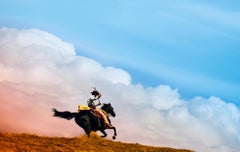
Edition 5 of 7. Signed on signature label. Produced by Jim Krantz. Krantz occupies a unique place in the history of contemporary art for his imagery blending western landscape photography with the figure of the cowboy as depicted and romanticized in American popular culture. The technical underpinning of his work was established when he studied with Ansel Adams and Paul Caponigro, but perhaps more importantly, Krantz’s work reflects a dictum that he learned from Adams: “Technical proficiency leads to artistic freedom.” His range and versatility are his forte, working with ease in demanding and ever-changing conditions. If Krantz’s work looks familiar, it is not surprising. Krantz, had been documenting the cinematic vistas of the American West for 20 years on commercial assignments and these much published images caught the eye of appropriation artist, Richard Prince, known for re-photographing advertisements and presenting the resulting images in a new “conceptual” context. Prince’s most famous series is his large scale reproductions of the cowboy images from Marlboro ads, and in something of an ironic compliment, when Prince had his mid-career retrospective at the Guggenheim Museum not only were Krantz’s re-photographed images included in the exhibit but the image on all the banners flying along 5th Avenue was also one of Krantz’s. All uncredited. Krantz’s art has been embraced by the worlds of fashion and popular culture with collaborations with Supreme, Adam Kimmel...
Category

2010s Art Dealers Association of America

Materials

Photographic Paper, Archival Pigment

Like Ice in the Sunshine No. 08
By Simone Rosenbauer
Located in New York, NY
Archival pigment print. Framing available at additional cost. Signed, titled, dated and editioned on label verso. In the latest series by Simone Rosenbauer, entitled Like Ice in the Sunshine...
Category

2010s Contemporary Art Dealers Association of America

Materials

Archival Pigment

Human and Animal Locomotion. Plate 576.
By Eadweard Muybridge
Located in New York, NY
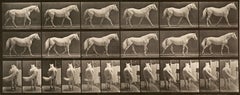
Human and Animal Locomotion. Plate 576. Walking; free; light-gray horse Eagle. 14 x 20 inch original vintage collotype print from 1887 Image size 6 3/4 x 16 7/8 inches Muybridge cop...
Category

1880s Art Dealers Association of America

Materials

Photographic Paper

Francesca Woodman, Providence, RI
By George Lange
Located in New York, NY
Francesca Woodman in Providence, Rhode Island (1976) photographed by George Lange. 11 x 14" archival pigment print 17 x 21 x 2" frame with UV plexgias Edition 2 of 10, signed and e...
Category

1970s Art Dealers Association of America

Materials

Archival Pigment, Digital Pigment

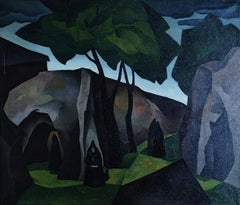
Study for Old Canal, Red and Blue (Rockaway, Morris Canal)
By Oscar Florianus Bluemner
Located in New York, NY
Oscar Bluemner was a German and an American, a trained architect who read voraciously in art theory, color theory, and philosophy, a writer of art criticism both in German and English, and, above all, a practicing artist. Bluemner was an intense man, who sought to express and share, through drawing and painting, universal emotional experience. Undergirded by theory, Bluemner chose color and line for his vehicles; but color especially became the focus of his passion. He was neither abstract artist nor realist, but employed the “expressional use of real phenomena” to pursue his ends. (Oscar Bluemner, from unpublished typescript on “Modern Art” for Camera Work, in Bluemner papers, Archives of American Art, Smithsonian Institution, as cited and quoted in Jeffrey R. Hayes, Oscar Bluemner [1991], p. 60. The Bluemner papers in the Archives [hereafter abbreviated as AAA] are the primary source for Bluemner scholars. Jeffrey Hayes read them thoroughly and translated key passages for his doctoral dissertation, Oscar Bluemner: Life, Art, and Theory [University of Maryland, 1982; UMI reprint, 1982], which remains the most comprehensive source on Bluemner. In 1991, Hayes published a monographic study of Bluemner digested from his dissertation and, in 2005, contributed a brief essay to the gallery show at Barbara Mathes, op. cit.. The most recent, accessible, and comprehensive view of Bluemner is the richly illustrated, Barbara Haskell, Oscar Bluemner: A Passion for Color, exhib. cat. [New York: Whitney Museum of American Art, 2005.]) Bluemner was born in the industrial city of Prenzlau, Prussia, the son and grandson of builders and artisans. He followed the family predilection and studied architecture, receiving a traditional and thorough German training. He was a prize-winning student and appeared to be on his way to a successful career when he decided, in 1892, to emigrate to America, drawn perhaps by the prospect of immediate architectural opportunities at the Chicago World’s Fair, but, more importantly, seeking a freedom of expression and an expansiveness that he believed he would find in the New World. The course of Bluemner’s American career proved uneven. He did indeed work as an architect in Chicago, but left there distressed at the formulaic quality of what he was paid to do. Plagued by periods of unemployment, he lived variously in Chicago, New York, and Boston. At one especially low point, he pawned his coat and drafting tools and lived in a Bowery flophouse, selling calendars on the streets of New York and begging for stale bread. In Boston, he almost decided to return home to Germany, but was deterred partly because he could not afford the fare for passage. He changed plans and direction again, heading for Chicago, where he married Lina Schumm, a second-generation German-American from Wisconsin. Their first child, Paul Robert, was born in 1897. In 1899, Bluemner became an American citizen. They moved to New York City where, until 1912, Bluemner worked as an architect and draftsman to support his family, which also included a daughter, Ella Vera, born in 1903. All the while, Oscar Bluemner was attracted to the freer possibilities of art. He spent weekends roaming Manhattan’s rural margins, visiting the Bronx, Brooklyn, Queens, and New Jersey, sketching landscapes in hundreds of small conté crayon drawings. Unlike so many city-based artists, Bluemner did not venture out in search of pristine countryside or unspoiled nature. As he wrote in 1932, in an unsuccessful application for a Guggenheim Fellowship, “I prefer the intimate landscape of our common surroundings, where town and country mingle. For we are in the habit to carry into them our feelings of pain and pleasure, our moods” (as quoted by Joyce E. Brodsky in “Oscar Bluemner in Black and White,” p. 4, in Bulletin 1977, I, no. 5, The William Benton Museum of Art, Storrs, Connecticut). By 1911, Bluemner had found a powerful muse in a series of old industrial towns, mostly in New Jersey, strung along the route of the Morris Canal. While he educated himself at museums and art galleries, Bluemner entered numerous architectural competitions. In 1903, in partnership with Michael Garven, he designed a new courthouse for Bronx County. Garven, who had ties to Tammany Hall, attempted to exclude Bluemner from financial or artistic credit, but Bluemner promptly sued, and, finally, in 1911, after numerous appeals, won a $7,000 judgment. Barbara Haskell’s recent catalogue reveals more details of Bluemner’s architectural career than have previously been known. Bluemner the architect was also married with a wife and two children. He took what work he could get and had little pride in what he produced, a galling situation for a passionate idealist, and the undoubted explanation for why he later destroyed the bulk of his records for these years. Beginning in 1907, Bluemner maintained a diary, his “Own Principles of Painting,” where he refined his ideas and incorporated insights from his extensive reading in philosophy and criticism both in English and German to create a theoretical basis for his art. Sometime between 1908 and 1910, Bluemner’s life as an artist was transformed by his encounter with the German-educated Alfred Stieglitz, proprietor of the Little Galleries of the Photo-Secession at 291 Fifth Avenue. The two men were kindred Teutonic souls. Bluemner met Stieglitz at about the time that Stieglitz was shifting his serious attention away from photography and toward contemporary art in a modernist idiom. Stieglitz encouraged and presided over Bluemner’s transition from architect to painter. During the same period elements of Bluemner’s study of art began to coalesce into a personal vision. A Van Gogh show in 1908 convinced Bluemner that color could be liberated from the constraints of naturalism. In 1911, Bluemner visited a Cézanne watercolor show at Stieglitz’s gallery and saw, in Cézanne’s formal experiments, a path for uniting Van Gogh’s expressionist use of color with a reality-based but non-objective language of form. A definitive change of course in Bluemner’s professional life came in 1912. Ironically, it was the proceeds from his successful suit to gain credit for his architectural work that enabled Bluemner to commit to painting as a profession. Dividing the judgment money to provide for the adequate support of his wife and two children, he took what remained and financed a trip to Europe. Bluemner traveled across the Continent and England, seeing as much art as possible along the way, and always working at a feverish pace. He took some of his already-completed work with him on his European trip, and arranged his first-ever solo exhibitions in Berlin, Leipzig, and Elberfeld, Germany. After Bluemner returned from his study trip, he was a painter, and would henceforth return to drafting only as a last-ditch expedient to support his family when his art failed to generate sufficient income. Bluemner became part of the circle of Stieglitz artists at “291,” a group which included Marsden Hartley, John Marin, and Arthur Dove. He returned to New York in time to show five paintings at the 1913 Armory Show and began, as well, to publish critical and theoretical essays in Stieglitz’s journal, Camera Work. In its pages he cogently defended the Armory Show against the onslaught of conservative attacks. In 1915, under Stieglitz’s auspices, Bluemner had his first American one-man show at “291.” Bluemner’s work offers an interesting contrast with that of another Stieglitz architect-turned-artist, John Marin, who also had New Jersey connections. The years after 1914 were increasingly uncomfortable. Bluemner remained, all of his life, proud of his German cultural legacy, contributing regularly to German language journals and newspapers in this country. The anti-German sentiment, indeed mania, before and during World War I, made life difficult for the artist and his family. It is impossible to escape the political agenda in Charles Caffin’s critique of Bluemner’s 1915 show. Caffin found in Bluemner’s precise and earnest explorations of form, “drilled, regimented, coerced . . . formations . . . utterly alien to the American idea of democracy” (New York American, reprinted in Camera Work, no. 48 [Oct. 1916], as quoted in Hayes, 1991, p. 71). In 1916, seeking a change of scene, more freedom to paint, and lower expenses, Bluemner moved his family to New Jersey, familiar terrain from his earlier sketching and painting. During the ten years they lived in New Jersey, the Bluemner family moved around the state, usually, but not always, one step ahead of the rent collector. In 1917, Stieglitz closed “291” and did not reestablish a Manhattan gallery until 1925. In the interim, Bluemner developed relationships with other dealers and with patrons. Throughout his career he drew support and encouragement from art cognoscenti who recognized his talent and the high quality of his work. Unfortunately, that did not pay the bills. Chronic shortfalls were aggravated by Bluemner’s inability to sustain supportive relationships. He was a difficult man, eternally bitter at the gap between the ideal and the real. Hard on himself and hard on those around him, he ultimately always found a reason to bite the hand that fed him. Bluemner never achieved financial stability. He left New Jersey in 1926, after the death of his beloved wife, and settled in South Braintree, Massachusetts, outside of Boston, where he continued to paint until his own death in 1938. As late as 1934 and again in 1936, he worked for New Deal art programs designed to support struggling artists. Bluemner held popular taste and mass culture in contempt, and there was certainly no room in his quasi-religious approach to art for accommodation to any perceived commercial advantage. His German background was also problematic, not only for its political disadvantages, but because, in a world where art is understood in terms of national styles, Bluemner was sui generis, and, to this day, lacks a comfortable context. In 1933, Bluemner adopted Florianus (definitively revising his birth names, Friedrich Julius Oskar) as his middle name and incorporated it into his signature, to present “a Latin version of his own surname that he believed reinforced his career-long effort to translate ordinary perceptions into the more timeless and universal languages of art” (Hayes 1982, p. 189 n. 1). In 1939, critic Paul Rosenfeld, a friend and member of the Stieglitz circle, responding to the difficulty in categorizing Bluemner, perceptively located him among “the ranks of the pre-Nazi German moderns” (Hayes 1991, p. 41). Bluemner was powerfully influenced in his career by the intellectual heritage of two towering figures of nineteenth-century German culture, Johann Wolfgang von Goethe and Georg Wilhelm Friedrich Hegel. A keen student of color theory, Bluemner gave pride of place to the formulations of Goethe, who equated specific colors with emotional properties. In a November 19, 1915, interview in the German-language newspaper, New Yorker Staats-Zeitung (Abendblatt), he stated: I comprehend the visible world . . . abstract the primary-artistic . . . and after these elements of realty are extracted and analyzed, I reconstruct a new free creation that still resembles the original, but also . . . becomes an objectification of the abstract idea of beauty. The first—and most conspicuous mark of this creation is . . . colors which accord with the character of things, the locality . . . [and which] like the colors of Cranach, van der Weyden, or Durer, are of absolute purity, breadth, and luminosity. . . . I proceed from the psychological use of color by the Old Masters . . . [in which] we immediately recognize colors as carriers of “sorrow and joy” in Goethe’s sense, or as signs of human relationship. . . . Upon this color symbolism rests the beauty as well as the expressiveness, of earlier sacred paintings. Above all, I recognize myself as a contributor to the new German theory of light and color, which expands Goethe’s law of color through modern scientific means (as quoted in Hayes 1991, p. 71). Hayes has traced the global extent of Bluemner’s intellectual indebtedness to Hegel (1991, pp. 36–37). More specifically, Bluemner made visual, in his art, the Hegelian world view, in the thesis and antithesis of the straight line and the curve, the red and the green, the vertical and the horizontal, the agitation and the calm. Bluemner respected all of these elements equally, painting and drawing the tension and dynamic of the dialectic and seeking ultimate reconciliation in a final visual synthesis. Bluemner was a keen student of art, past and present, looking, dissecting, and digesting all that he saw. He found precedents for his non-naturalist use of brilliant-hued color not only in the work Van Gogh and Cezanne, but also in Gauguin, the Nabis, and the Symbolists, as well as among his contemporaries, the young Germans of Der Blaue Reiter. Bluemner was accustomed to working to the absolute standard of precision required of the architectural draftsman, who adjusts a design many times until its reality incorporates both practical imperatives and aesthetic intentions. Hayes describes Bluemner’s working method, explaining how the artist produced multiple images playing on the same theme—in sketch form, in charcoal, and in watercolor, leading to the oil works that express the ultimate completion of his process (Hayes, 1982, pp. 156–61, including relevant footnotes). Because of Bluemner’s working method, driven not only by visual considerations but also by theoretical constructs, his watercolor and charcoal studies have a unique integrity. They are not, as is sometimes the case with other artists, rough preparatory sketches. They stand on their own, unfinished only in the sense of not finally achieving Bluemner’s carefully considered purpose. The present charcoal drawing is one of a series of images that take as their starting point the Morris Canal as it passed through Rockaway, New Jersey. The Morris Canal industrial towns that Bluemner chose as the points of departure for his early artistic explorations in oil included Paterson with its silk mills (which recalled the mills in the artist’s childhood home in Elberfeld), the port city of Hoboken, Newark, and, more curiously, a series of iron ore mining and refining towns, in the north central part of the state that pre-dated the Canal, harkening back to the era of the Revolutionary War. The Rockaway theme was among the original group of oil paintings that Bluemner painted in six productive months from July through December 1911 and took with him to Europe in 1912. In his painting journal, Bluemner called this work Morris Canal at Rockaway N.J. (AAA, reel 339, frames 150 and 667, Hayes, 1982, pp. 116–17), and exhibited it at the Galerie Fritz Gurlitt in Berlin in 1912 as Rockaway N. J. Alter Kanal. After his return, Bluemner scraped down and reworked these canvases. The Rockaway picture survives today, revised between 1914 and 1922, as Old Canal, Red and Blue (Rockaway River) in the collection of the Hirshhorn Museum and Sculpture Garden, Smithsonian Institution, Washington D. C. (color illus. in Haskell, fig. 48, p. 65). For Bluemner, the charcoal expression of his artistic vision was a critical step in composition. It represented his own adaptation of Arthur Wesley’s Dow’s (1857–1922) description of a Japanese...
Category

20th Century American Modern Art Dealers Association of America

Materials

Paper, Charcoal

Francesca Woodman, Providence, RI
By George Lange
Located in New York, NY
Francesca Woodman in Providence, Rhode Island (1976) photographed by George Lange. 14 x 11" archival pigment print 21 x 17 x 2" frame with UV plexgias Edition 2 of 10, signed and e...
Category

1970s Art Dealers Association of America

Materials

Archival Pigment, Digital Pigment

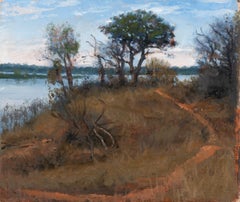
Old Cottonwood
By Brian Cobble
Located in Dallas, TX
Brian Cobble’s landscapes tend to particularly focus on the interplay of man and his surroundings, whether natural or built. A signature attention to the liminal aspects of a scene, ...
Category

21st Century and Contemporary Contemporary Art Dealers Association of America

Materials

Etching

Horse Blinders (south) and Horse Blinders (east)
By James Rosenquist
Located in New York, NY
Lithograph and screenprint with collage (silver foil) Prints are different sizes: 36 1/2 x 68 inches (92.7 x 172.7 cm) and 36 5/8 x 64 inches (93 x 162.6 cm) Published by Multiples...
Category

1970s Pop Art Art Dealers Association of America

Materials

Silver

Untitled
By Charles Houghton Howard
Located in New York, NY
Charles Houghton Howard was born in Montclair, New Jersey, the third of five children in a cultured and educated family with roots going back to the Massachusetts Bay colony. His father, John Galen Howard, was an architect who had trained at M.I.T. and the École des Beaux-Arts in Paris and apprenticed in Boston with Henry Hobson Richardson. In New York, the elder Howard worked for McKim, Mead and White before establishing a successful private practice. Mary Robertson Bradbury Howard, Charles’s mother, had studied art before her marriage. John Galen Howard moved his household to California in 1902 to assume the position of supervising architect of the new University of California campus at Berkeley and to serve as Professor of Architecture and the first Dean of the School of Architecture (established in 1903). The four Howard boys grew up to be artists and all married artists, leaving a combined family legacy of art making in the San Francisco Bay area that endures to this day, most notably in design, murals, and reliefs at the Coit Tower and in buildings on the Berkeley campus. Charles Howard graduated from the University of California at Berkeley in 1921 as a journalism major and pursued graduate studies in English at Harvard and Columbia Universities before embarking on a two-year trip to Europe. Howard went to Europe as a would-be writer. But a near-religious experience, seeing a picture by Giorgione in a remote town outside of Venice, proved a life-altering epiphany. In his own words, “I cut the tour at once and hurried immediately back to Paris, to begin painting. I have been painting whenever I could ever since” (Charles Howard, “What Concerns Me,” Magazine of Art 39 [February 1946], p. 63). Giorgione’s achievement, in utilizing a structured and rational visual language of art to convey high emotion on canvas, instantly convinced Howard that painting, and not literature, offered the best vehicle to express what he wanted to say. Howard returned to the United States in 1925, confirmed in his intent to become an artist. Howard settled in New York and supported himself as a painter in the decorating workshop of Louis Bouché and Rudolph Guertler, where he specialized in mural painting. Devoting spare time to his own work, he lived in Greenwich Village and immersed himself in the downtown avant-garde cultural milieu. The late 1920s and early 1930s were the years of Howard’s art apprenticeship. He never pursued formal art instruction, but his keen eye, depth of feeling, and intense commitment to the process of art making, allowed him to assimilate elements of painting intuitively from the wide variety of art that interested him. He found inspiration in the modernist movements of the day, both for their adherence to abstract formal qualities and for the cosmopolitan, international nature of the movements themselves. Influenced deeply by Surrealism, Howard was part of a group of American and European Surrealists clustered around Julien Levy. Levy opened his eponymously-named gallery in 1931, and rose to fame in January 1932, when he organized and hosted Surrealisme, the first ever exhibition of Surrealism in America, which included one work by Howard. Levy remained the preeminent force in advocating for Surrealism in America until he closed his gallery in 1949. Howard’s association with Levy in the early 1930s confirms the artist’s place among the avant-garde community in New York at that time. In 1933, Howard left New York for London. It is likely that among the factors that led to the move were Howard’s desire to be a part of an international art community, as well as his marriage to English artist, Madge Knight...
Category

20th Century American Modern Art Dealers Association of America

Materials

Paper, Watercolor, Gouache, Graphite

Korubo, Amazonas, Brazil
By Sebastião Salgado
Located in Santa Monica, CA
Signed, titled & dated in pencil on verso; Photographer's blindstamp on recto.
Category

2010s Art Dealers Association of America

Materials

Silver Gelatin

Kunsthaus Garden
By Mary Vernon
Located in Dallas, TX
"In the world of still life and landscape, conceptual events meet one another – the structural meets the narrative, the small stands in the space of the large, and color has a chance...
Category

2010s Contemporary Art Dealers Association of America

Materials

Graphite, Oil, Panel

The Race
By William John Hennessy
Located in New York, NY
William John Hennessy was born in Ireland. He came to America in 1849 with his mother and brother a year after his father had fled their homeland after taking part in the unsuccessful Young Ireland Party uprising. The Hennessys settled in New York, and when young William came of age, he decided upon a career as an artist. At the age of fifteen, he enrolled at the National Academy of Design, where he learned to draw from the antique, and the following year he was granted admission to the Academy’s life-drawing class. Hennessy first exhibited at the National Academy in 1857, starting a continuous run of appearances in their annuals that lasted until 1870, when he expatriated himself to Europe. During his time in America, Hennessy was principally known as a genre painter and prolific illustrator for such publications as Harper’s Weekly and a number of books, including illustrated works of William Cullen Bryant...
Category

19th Century American Realist Art Dealers Association of America

Materials

Canvas, Oil

Grop #2
By Valton Tyler
Located in Dallas, TX
In The New York Times Arts in America column, Edward M. Gomez wrote of Valton Tyler, "visionary seems the right word for describing his vivid, unusual and technically refined paintin...
Category

1970s Surrealist Art Dealers Association of America

Materials

Canvas, Oil

Up Here Down There
Located in New York, NY
"Up Here Down There" by JR, Oliver Jeffers. 2016. Hand embellished lithograph in colours on 270 grm BFK Rives paper 28.9 x 20.3 inches unframed (please inquire about framed dimensio...
Category

2010s Street Art Art Dealers Association of America

Materials

Acrylic, Lithograph

Ties
By Dan Wingren
Located in Dallas, TX
"My head is somewhere near the intersections of the fields of art, history, psychology, engineering, and religion," Dan Wingren was quoted as saying, when he was named the Meadows Di...
Category

1980s Modern Art Dealers Association of America

Materials

Canvas, Oil

Distant Voices
By John Moore
Located in New York, NY
John Moore was born in St. Louis, MO in 1941. He received a BFA from Washington University in St. Louis (1966) and an MFA from Yale University (1968). Over a career spanning forty ye...
Category

2010s Contemporary Art Dealers Association of America

Materials

Canvas, Oil

Saint-Malo, Brittany
By William Stanley Haseltine
Located in New York, NY
The career of William Stanley Haseltine spans the entire second half of the nineteenth century. During these years he witnessed the growth and decline of American landscape painting, the new concept of plein-air painting practiced by the Barbizon artists, and the revolutionary techniques of the French Impressionists, all of which had profound effects on the development of painting in the western world. Haseltine remained open to these new developments, selecting aspects of each and assimilating them into his work. What remained constant was his love of nature and his skill at rendering exactly what he saw. His views, at once precise and poetic, are, in effect, portraits of the many places he visited and the landscapes he loved. Haseltine was born in Philadelphia, the son of a prosperous businessman. In 1850, at the age of fifteen, he began his art studies with Paul Weber, a German artist who had settled in Philadelphia two years earlier. From Weber, Haseltine learned about Romanticism and the meticulous draftsmanship that characterized the German School. At the same time, Haseltine enrolled at the University of Pennsylvania, and took sketching trips around the Pennsylvania countryside, exploring areas along the Delaware and Susquehanna rivers. Following his sophomore year, Haseltine transferred to Harvard University. After graduating from Harvard in 1854, Haseltine returned to Philadelphia and resumed his studies with Weber. Although Weber encouraged Haseltine to continue his training in Europe, the elder Haseltine was reluctant to encourage his son to pursue a career as an artist. During the next year, Haseltine took various sketching trips along the Hudson River and produced a number of pictures, some of which were exhibited at the Pennsylvania Academy of the Fine Arts in the spring of 1855. Ultimately, having convinced his father that he should be allowed to study in Europe, Haseltine accompanied Weber to Düsseldorf. The Düsseldorf Academy was, during the 1850s, at the peak of its popularity among American artists. The Academy’s strict course of study emphasized the importance of accurate draftsmanship and a strong sense of professionalism. Landscape painting was the dominant department at the Düsseldorf Academy during this period, and the most famous landscape painter there was Andreas Achenbach, under whom Haseltine studied. Achenbach’s realistic style stressed close observation of form and detail, and reinforced much of what Haseltine had already learned. His Düsseldorf training remained an important influence on him for the rest of his life. At Düsseldorf, Haseltine became friendly with other American artists studying there, especially Emanuel Leutze, Worthington Whittredge, and Albert Bierstadt. They were constant companions, and in the spring and summer months took sketching trips together. In the summer of 1856 the group took a tour of the Rhine, Ahr, and Nahe valleys, continuing through the Swiss alps and over the Saint Gotthard Pass into northern Italy. The following summer Haseltine, Whittredge, and the painter John Irving returned to Switzerland and Italy, and this time continued on to Rome. Rome was a fertile ground for artists at mid-century. When Haseltine arrived in the fall of 1857, the American sculptors Harriet Hosmer, Chauncey B. Ives, Joseph Mozier, William Henry Rinehart...
Category

19th Century American Realist Art Dealers Association of America

Materials

Canvas, Oil

San Francisco 37° 48’ 30’’ N 2010-10-09 lst 20:58
By Thierry Cohen
Located in New York, NY
Framing included in listing price ($1,500 value), free art transport to the continental U.S., and a 14 day return policy. Please note there is some repaired damage to the frame noted in the images. San Francisco from Thierry Cohen...
Category

2010s Art Dealers Association of America

Materials

Photographic Paper, Color

Untitled
By Allison Gildersleeve
Located in Dallas, TX
"Behind my canvases, collages, and drawings lies a singular proposition: places are not inert; they are repositories for all that passes through them. My work is an inquiry into the ...
Category

2010s Contemporary Art Dealers Association of America

Materials

Paper, Ink, Acrylic

Home 2
By Elizabeth Turk
Located in New York, NY
Born in Pasadena and raised in Orange County, Elizabeth Turk earned her M.F.A. at the Rinehart School of Sculpture, Maryland Institute College of Art in Baltimore. In Turk’s work, the shape of the line is created by extreme loss. That is, the reductive process of carving creates a positive, fragile form in which the absence of the original material is a focus. Turk encourages us to consider how nature has shaped these organic materials long before the artist’s manipulation of them into new forms. When viewed as components in a complex natural system, their singular beauty and inherent mystery is revealed. Turk compels us to view works of art not only as objects to be coveted and collected, but also as expressions of the natural world and our evolving relation to it. A recipient of numerous awards, including a MacArthur Foundation Fellowship (2010), a Barnett and Annalee Newman Foundation Fellowship (2010), and a Smithsonian Artist Research Fellowship (2011), Turk is internationally recognized for transforming her signature medium of marble into strikingly intricate objects that defy convention and challenge our preconceptions of what marble can do. Through the use of electric grinders, dental tools...
Category

2010s Contemporary Art Dealers Association of America

Materials

Marble

Made with Pride by a Queen
Located in New York, NY
Nayland Blake Made with Pride by a Queen 1989 Silkscreen on canvas 8 x 10 inches; 20 x 25 cm Edition of 50 Initialed, dated, and numbered in ink (lower ...
Category

1980s Contemporary Art Dealers Association of America

Materials

Screen, Canvas

Mata Tea Plantation Worker, Rwanda
By Sebastião Salgado
Located in Santa Monica, CA
signed, titled and dated by artist in pencil on verso
Category

Late 20th Century Art Dealers Association of America

Materials

Silver Gelatin

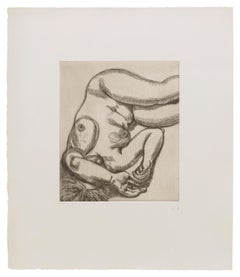
Woman on a Bed
By Lucian Freud
Located in New York, NY
Lucian Freud Woman on a Bed 1991-92 Etching on Somerset Satin White paper 17 1/2 x 15 1/2 inches; 44 x 39 cm Edition of 30 Initialed and numbered in graphite (lower recto) Frame available upon request Published by Matthew Marks Gallery...
Category

1990s Contemporary Art Dealers Association of America

Materials

Etching

A Mythology
By Otis Huband
Located in Dallas, TX
Born in 1933, and reared in Virginia, Otis Huband began his formal art education after 4 years in the Navy. He earned his BFA and MFA at Richmond Professional Institute of the Colleg...
Category

21st Century and Contemporary Contemporary Art Dealers Association of America

Materials

Canvas, Oil

We're All Here
By Valton Tyler
Located in Dallas, TX
In The New York Times Arts in America column, Edward M. Gomez writes of Valton Tyler, "visionary seems the right word for describing his vivid, unusual and technically refined painti...
Category

1970s Surrealist Art Dealers Association of America

Materials

Rag Paper, Etching

Portraits: Alba
By Alex Katz
Located in New York, NY
Alex Katz uses outline drawings, called “cartoons”, as templates to transfer full size images onto the canvas prior to painting. Rendered in red chalk or charcoal on brown paper, th...
Category

Early 2000s Contemporary Art Dealers Association of America

Materials

Etching

In the Studio
By Cornelia Foss
Located in New York, NY
Cornelia Foss is renowned for her expressive landscapes, intimate portraits, and still lifes. Born in Berlin in 1931, she spent her early years in Rome before emigrating to the Unite...
Category

2010s Contemporary Art Dealers Association of America

Materials

Canvas, Oil

Bark Framed #2
By Maria Elena González
Located in New York, NY
Cuban-born artist María Elena González is an internationally recognized sculptor based in Brooklyn, NY, and San Francisco, CA. González interweaves the conceptual with a strong dedic...
Category

2010s Contemporary Art Dealers Association of America

Materials

Driftwood, Ink, Cardboard

Why Me
By Valton Tyler
Located in Dallas, TX
In The New York Times Arts in America column, Edward M. Gomez writes of Valton Tyler, "visionary seems the right word for describing his vivid, unusual and technically refined painti...
Category

1990s Abstract Art Dealers Association of America

Materials

Canvas, Oil

Red in the Sky
By Valton Tyler
Located in Dallas, TX
In The New York Times Arts in America column, Edward M. Gomez writes of Valton Tyler, "visionary seems the right word for describing his vivid, unusual and technically refined painti...
Category

1970s Surrealist Art Dealers Association of America

Materials

Linen, Oil

Spill (The Fall)
By Julie Heffernan
Located in New York, NY
Oil on canvas
Category

2010s Abstract Art Dealers Association of America

Materials

Canvas, Oil

Japanese Children with Tortoise
By Harry Humphrey Moore
Located in New York, NY
Harry Humphrey Moore led a cosmopolitan lifestyle, dividing his time between Europe, New York City, and California. This globe-trotting painter was also active in Morocco, and most importantly, he was among the first generation of American artists to live and work in Japan, where he depicted temples, tombs, gardens, merchants, children, and Geisha girls. Praised by fellow painters such as Thomas Eakins, John Singer Sargent, and Jean-Léon Gérôme, Moore’s fame was attributed to his exotic subject matter, as well as to the “brilliant coloring, delicate brush work [sic] and the always present depth of feeling” that characterized his work (Eugene A. Hajdel, Harry H. Moore, American 19th Century: Collection of Information on Harry Humphrey Moore, 19th Century Artist, Based on His Scrap Book and Other Data [Jersey City, New Jersey: privately published, 1950], p. 8). Born in New York City, Moore was the son of Captain George Humphrey, an affluent shipbuilder, and a descendant of the English painter, Ozias Humphrey (1742–1810). He became deaf at age three, and later went to special schools where he learned lip-reading and sign language. After developing an interest in art as a young boy, Moore studied painting with the portraitist Samuel Waugh in Philadelphia, where he met and became friendly with Eakins. He also received instruction from the painter Louis Bail in New Haven, Connecticut. In 1864, Moore attended classes at the Mark Hopkins Institute in San Francisco, and until 1907, he would visit the “City by the Bay” regularly. In 1865, Moore went to Europe, spending time in Munich before traveling to Paris, where, in October 1866, he resumed his formal training in Gérôme’s atelier, drawing inspiration from his teacher’s emphasis on authentic detail and his taste for picturesque genre subjects. There, Moore worked alongside Eakins, who had mastered sign language in order to communicate with his friend. In March 1867, Moore enrolled at the prestigious École des Beaux-Arts, honing his drawing skills under the tutelage of Adolphe...
Category

Late 19th Century Art Dealers Association of America

Materials

Oil, Wood Panel

Stargazer Still Life - Night Heron
By Mark Messersmith
Located in Dallas, TX
In lushly-colored paintings, Mark Messersmith creates dense narratives packed with animals, birds, plants, and insects that express his concern for the shrinking world they inhabit. ...
Category

2010s Contemporary Art Dealers Association of America

Materials

Canvas, Mixed Media, Oil

Recently Viewed

View All