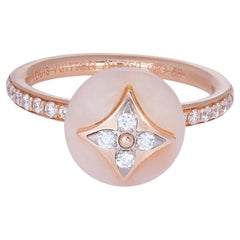
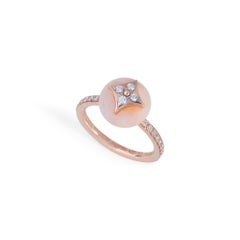
Louis Vuitton for sale on 1stDibs
The story behind iconic luxury brand Louis Vuitton — best known for its esteemed handbags, crossbody bags, leather goods, ready-to-wear clothing and more — is one of craft and innovation in the worlds of fashion, jewelry and furniture.
The company’s modest origins can be traced back to when its founder, Louis Vuitton (1821–92), wishing to free himself from the conventional lifestyle in his provincial French city of Anchay as well as a difficult stepmother, left in the early 1830s to make a new life in Paris. The young Vuitton was 13 at the time and would need to travel on foot to get to the capital, which was hundreds of miles away. With stops along the way to make money so that he could forge ahead, the journey took a couple of years, but reward was close at hand.
When he arrived in Paris, Vuitton made a living with his hands. He toiled as a box maker and packer for more than a decade and built relationships with royals and members of the upper class while working for the empress of France, Eugenie de Montijo. In 1854, Vuitton launched his namesake company. The craftsman opened a humble workshop on rue Neuve des Capucines and advertised his services with a small poster that read: “Securely packs the most fragile objects. Specializing in packing fashions.”
Long before his brand would become known globally for its exemplary top-handle bags and stylish totes, Vuitton produced stackable and rectangular trunks. The most common trunks of the era were round, which weren’t ideal for toting and storing. In 1858, Vuitton debuted his lightweight, handcrafted canvas trunks, which were sturdy, rugged and equipped with convenient compartments. Travel’s popularity broadened in the late 19th century, and Vuitton’s trunks could easily be packed into train cars and ships — upright trunks meant hanging wardrobe storage that would allow his clients to transport their sophisticated garments without worry. Demand increased and the company grew. When Louis Vuitton died in 1892, control of the luxury house was passed onto his only son, Georges Vuitton.
In 1914, a Louis Vuitton store opened at 70 Champs-Élysées. The largest travel-goods store in the world at the time, it became the company’s flagship.
The Louis Vuitton brand embodies all the attributes of luxury, from the craftsmanship, exclusivity and relevance to heritage. It’s only appropriate that it boasts one of the most recognizable insignias — the imaginative interlocking of letters and fleurettes — in the fashion world. The famous LV monogram was first used in 1896 as part of an initiative by Georges to prevent counterfeiting of his coveted new line of travel trunks. It’s one of the earliest examples of fashion branding.
The LV monogram would soon appear on everything from bags and various fashion accessories to alligator-skin champagne cases, from stylish apparel and earrings to teddy bears and airplane models.
On 1stDibs, the unmistakable insignia can be found on both modern and vintage Louis Vuitton shoulder bags, suitcases, original 19th-century trunks, jackets and more.
A Close Look at Contemporary Jewelry
Contemporary jewelry is inextricably linked with the moment in which it is created, frequently reflecting current social, cultural and political issues such as environmental consciousness, identity and sustainability. It’s informed by fashion trends, from the chokers of the 1990s to the large chain necklaces of the early 2000s.
Jewelry is one of the oldest forms of adornment. Lockets made of silver or gold have been treasured gifts for hundreds of years, for example, and charm bracelets, which have existed since prehistoric times, didn’t become especially popular until the 19th-century reign of Queen Victoria. For many centuries, fine jewelry was used primarily to express wealth or status through lavish materials. Then, in the 1960s, a concept known as the “critique of preciousness” emerged, with jewelers creating pieces that did not get their value from gemstones or precious metals. Instead, it was the jeweler’s artistic vision that was prized and elevated.
This shift still informs Contemporary jewelry being made by artists today. Whether they are using cheap, found materials and working with provocative geometric shapes or seeking out the rarest stones, they are imbuing their work with meaning through their skills, techniques and ideas. Innovative designers such as Elsa Peretti, who popularized sculptural sterling-silver jewelry for Tiffany & Co., and David Yurman, who twisted metal into the simple yet striking Cable bracelet, have also influenced the direction of Contemporary jewelry’s forms and aesthetics.
Meanwhile, technological advancements like metal alloys and laser engraving have led to new possibilities in jewelry design. Now, edgy makers and brands as well as minimalist designers are pushing Contemporary jewelry forward into the 21st century.
Find a collection of Contemporary rings, earrings, necklaces and other jewelry on 1stDibs.
The Legacy of Diamond in Jewelry Design
Antique diamond rings, diamond tiaras and dazzling vintage diamond earrings are on the wish lists of every lover of fine jewelry. And diamonds and diamond jewelry are primarily associated with storybook engagements and red-carpet grand entrances — indeed, this ultra-cherished gemstone has a dramatic history on its hands.
From “A Diamond Is Forever” to “Diamonds Are a Girl’s Best Friend,” pop culture has ingrained in our minds that diamonds are the most desired, the most lasting and the most valuable gemstone. But what makes the diamond so special? Each stone — whether it’s rubies, sapphires or another stone — is unique and important in its own right. April babies might claim diamonds for themselves, but just about everyone wants this kind of sparkle in their lives!
There are several factors that set diamonds apart from other stones, and these points are important to our gem education.
Diamonds are minerals. They are made up of almost entirely of carbon (carbon comprises 99.95 percent; the remainder consists of various trace elements). Diamonds are the hardest gemstones, ranking number 10 on the Mohs Hardness Scale. Even its name, diamond, is rooted in the Greek adamas, or unconquerable. The only object that can scratch a diamond is another diamond. Diamonds are formed deep within the earth at very high temperatures (1,652–2,372 degrees Fahrenheit at depths between 90 and 120 miles beneath the earth’s surface) and are carried up by volcanic activity. Diamonds are quite rare, according to the Gemological Institute of America, and only 30 percent of all the diamonds mined in the world are gem quality.
In the 1950s, the Gemological Institute of America developed the 4Cs grading system to classify diamonds: clarity, color, cut and carat weight. Not all diamonds are created equal (there are diamonds, and then there are diamonds). The value of the diamond depends on the clarity (flawless diamonds are very rare but a diamond's value decreases if there are many blemishes or inclusions), color (the less color the higher the grade), cut (how the diamond’s facets catch the light, certain cuts of diamonds show off the stone better than others) and carat weight (the bigger, the better).
When you start shopping for a diamond engagement ring, always prioritize the cut, which plays the largest role in the diamond's beauty (taking the time to clean your diamond ring at least every six months or so plays a role in maintaining said beauty). And on 1stDibs, a range of buying guides can be found for those in the market for antique engagement rings, vintage engagement rings or Art Deco engagement rings.
Shop antique and vintage diamond rings, diamond necklaces and other extraordinary diamond jewelry on 1stDibs.
Finding the Right Fashion-rings for You
Throughout history, people have worn rings as symbols. They represented wealth and power for kings. Rings, whether fine jewelry or vintage fashion rings, have been given as gifts to mark significant occasions and accomplishments in life. They are also seen as a sign of love when worn on a certain finger.
For enthusiasts of costume jewelry, which is typically designed to accessorize with current fashions and made of inexpensive materials, there has been no shortage of coveted rings created over the years by the likes of J Dauphin, Miriam Haskell and others. A range of fashion rings created in ceramic or embellished with rhinestones — the latter a source of instant, affordable glamour — have also been designed at Chanel. The founder of the internationally revered luxury house, Gabrielle “Coco” Chanel, loved costume jewelry but couldn’t resist designing jewelry with diamonds.
Signet rings are one of the oldest types of rings. They often have a family crest or seal engraved on the ring that the wearer can imprint into melted wax. Although most people don’t use wax seals anymore, signet rings are an enduring style.
The type of metal chosen for a ring is an important factor in its design. Gold is a classic choice for fine jewelry, and, for costume jewels, gold offers a range of hues that includes yellow gold, white gold and rose gold. Platinum is becoming a popular choice for its elegance. For fashion jewelry lovers, silver rings remain a must-have accessory, particularly those embellished with turquoise or coral.
A stone can add a pop of color or allure to a ring. Many people choose to wear rings featuring their birthstone. Diamonds are popular with those seeking the perfect engagement ring (a search that can prove intimidating), and they also make beautiful fashion rings, from solitaire rings with single stones to rings with groups of stones.
Zircon rings are similar to diamonds and come in various colors. Some rings feature a large stone surrounded by smaller stones in a halo. They can all be the same stone, or they can have different stones to include more colors.
Fashion rings are an easy way to add jewelry to any outfit. Find a collection of vintage fashion rings on 1stDibs that have glitz and glamour to match your style.