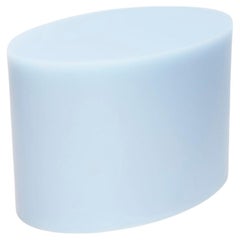
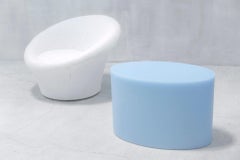
Candy Column oval side table by Sabine Marcelis
By Sabine Marcelis
Located in Barcelona, ES
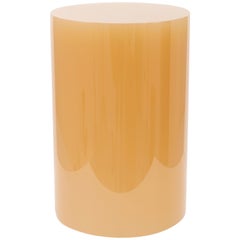
Candy Column oval side table by Sabine Marcelis High polished single cast resin
Category
2010s Dutch Side Tables
Materials
Resin
Candy Column oval side table by Sabine Marcelis
By Sabine Marcelis
Located in Barcelona, ES
Candy Column oval side table by Sabine Marcelis High polished single cast resin
Resin
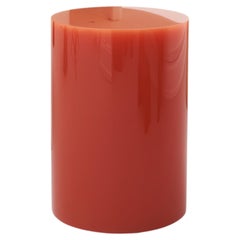
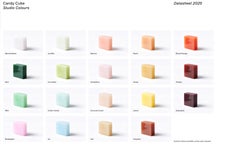
Candy Columns by Sabine Marcelis, various sizes and colours
By Sabine Marcelis
Located in Copenhagen, DK
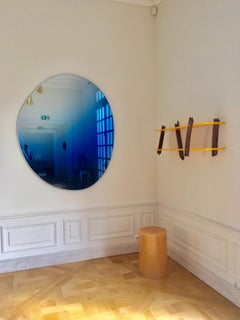
Multi use Candy Column by Sabine Marcelis TYPE Freestanding table ENVIRONMENT Indoor MATERIAL Polyester resin FINISH mat / polished DIMENSIONS / WEIGHT PRICE (excl.
Resin
Sold
H 19.69 in Dm 13.39 in
Contemporary Candy Column Stool / Side Table by Sabine Marcelis, Polished Resin
By Sabine Marcelis
Located in Copenhagen, DK
Sabine Marcelis’ new candy column side table and stools were first unveiled at Life in Vogue in Milan, creating a dynamic mise-en-scéne with yellow and caramel tones.
Resin
Sold
H 18.9 in Dm 13.39 in
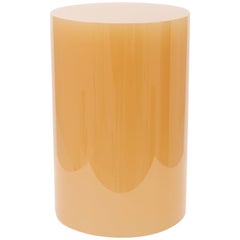
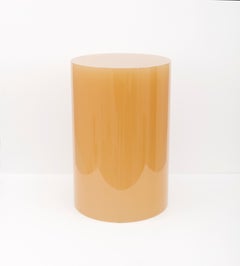
Contemporary Candy Column Stool / Side Table by Sabine Marcelis, Polished Resin
By Sabine Marcelis
Located in Copenhagen, DK
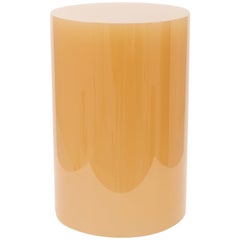
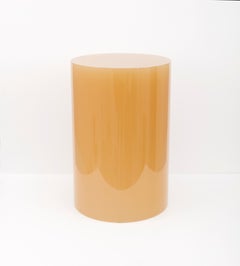
Sabine Marcelis’ glossy resin candy column side table and stools were first unveiled at Life in Vogue in Milan, creating a dynamic mise-en-scéne with yellow and caramel tones.
Resin
Sold
H 18.9 in Dm 13.39 in
Contemporary Candy Column Stool / Side Table by Sabine Marcelis, Polished Resin
By Sabine Marcelis
Located in Copenhagen, DK
Sabine Marcelis’ glossy resin candy column side table and stools were first unveiled at Life in Vogue in Milan, creating a dynamic mise-en-scéne with yellow and caramel tones.
Resin
Dutch-Kiwi designer Sabine Marcelis’s work is at the forefront of contemporary material innovation in product and installation design. She works with glass manufacturers and more, forging partnerships across her industry to bring her ambitiously experimental projects to fruition.
Marcelis’s focus is on allowing happenstance sensory experiences to emerge by juxtaposing combinations of unlikely materials and colors. She was educated at the Design Academy Eindhoven and since founding her eponymous studio in 2011 in Rotterdam in the Netherlands, she has built a remarkable roster of clients in fashion, architecture and art.
Marcelis has created signature pieces for the likes of Rem Koolhaas’s architecture firm OMA, high-fashion labels Fendi and Isabel Marant and luxury beauty brand Aēsop. She has also exhibited at the Salone del Mobile in Milan and won Wallpaper* magazine’s Designer of the Year award for 2020.
Marcelis was invited to create a sculptural intervention for the interiors of Ludwig Mies van der Rohe and Lilly Reich’s iconic Barcelona Pavilion, which saw the debut of the pair’s timeless Barcelona chair in 1929. For her “No Fear of Glass” exhibition, the designer subverted the original request made to van der Rohe to “not use too much glass” by designing chaise longues, pillar lights and a fountain that feature glass as the main material. The rest of her work is informed by a similarly sophisticated playfulness, as evident in the charming forms she creates — she has designed doughnut-shaped rugs, the multifunctional resin Candy Cube side tables and colorful asymmetrical glass mirrors.
Marcelis has the rare ability to create dynamic and fluid experiences by pushing the limits of craftsmanship. While her enchanting seating, lighting and other furnishings may appear effortless due to their fluid and simple forms, they are the result of relentless attention to detail and venturesome experiments with materiality.
Shop a variety of Sabine Marcelis's designs on 1stDibs.
Postmodern design was a short-lived movement that manifested itself chiefly in Italy and the United States in the early 1980s. The characteristics of vintage postmodern furniture and other postmodern objects and decor for the home included loud-patterned, usually plastic surfaces; strange proportions, vibrant colors and weird angles; and a vague-at-best relationship between form and function.
ORIGINS OF POSTMODERN FURNITURE DESIGN
CHARACTERISTICS OF POSTMODERN FURNITURE DESIGN
POSTMODERN FURNITURE DESIGNERS TO KNOW
VINTAGE POSTMODERN FURNITURE ON 1STDIBS
Critics derided postmodern design as a grandstanding bid for attention and nothing of consequence. Decades later, the fact that postmodernism still has the power to provoke thoughts, along with other reactions, proves they were not entirely correct.
Postmodern design began as an architectural critique. Starting in the 1960s, a small cadre of mainly American architects began to argue that modernism, once high-minded and even noble in its goals, had become stale, stagnant and blandly corporate. Later, in Milan, a cohort of creators led by Ettore Sottsass and Alessandro Mendini — a onetime mentor to Sottsass and a key figure in the Italian Radical movement — brought the discussion to bear on design.
Sottsass, an industrial designer, philosopher and provocateur, gathered a core group of young designers into a collective in 1980 they called Memphis. Members of the Memphis Group, which would come to include Martine Bedin, Michael Graves, Marco Zanini, Shiro Kuramata, Michele de Lucchi and Matteo Thun, saw design as a means of communication, and they wanted it to shout. That it did: The first Memphis collection appeared in 1981 in Milan and broke all the modernist taboos, embracing irony, kitsch, wild ornamentation and bad taste.
Memphis works remain icons of postmodernism: the Sottsass Casablanca bookcase, with its leopard-print plastic veneer; de Lucchi’s First chair, which has been described as having the look of an electronics component; Martine Bedin’s Super lamp: a pull-toy puppy on a power-cord leash. Even though it preceded the Memphis Group’s formal launch, Sottsass’s iconic Ultrafragola mirror — in its conspicuously curved plastic shell with radical pops of pink neon — proves striking in any space and embodies many of the collective’s postmodern ideals.
After the initial Memphis show caused an uproar, the postmodern movement within furniture and interior design quickly took off in America. (Memphis fell out of fashion when the Reagan era gave way to cool 1990’s minimalism.) The architect Robert Venturi had by then already begun a series of plywood chairs for Knoll Inc., with beefy, exaggerated silhouettes of traditional styles such as Queen Anne and Chippendale. In 1982, the new firm Swid Powell enlisted a group of top American architects, including Frank Gehry, Richard Meier, Stanley Tigerman and Venturi to create postmodern tableware in silver, ceramic and glass.
On 1stDibs, the vintage postmodern furniture collection includes chairs, coffee tables, sofas, decorative objects, table lamps and more.
While the range of styles and variety of materials have broadened over time, the priceless functionality of side tables has held true.
Antique and vintage side tables are an integral accent to our seating and provide additional, necessary storage in our homes. They can be a great foundation for that perfect focal piece of art that you want all your guests to see as you congregate for cocktails in the living room. Side tables are indeed ideal as a stage for your decorative objects or plants in your library or your study, and they are a practical space for the novel or stack of design magazines you keep close to your sofa.
Sure, owning a pair of side tables isn’t as imperative as having a coffee table in the common area, though most of us would struggle without them. Those made of metal, stone or wood are frequently featured in stylish interiors, and if you’re shopping for side tables, there are a couple of things to keep in mind.
With respect to the height of your side tables, a table that is as high as your lounge chair or the arm of your couch is best.
Some folks are understandably fussy about coherence in a living room area, but coherence doesn’t necessarily mean you can’t mix and match. Feel free to introduce minimalist mid-century modern wooden side tables designed by Paul McCobb alongside your contemporary metal coffee table. If you think it isn’t possible to pair a Hollywood Regency–style side table with a contemporary sofa, we’re here to tell you that it is. Even a leggy side table can balance a chunky sofa well. Try to keep a limited color palette in mind if you’re planning on mixing furniture styles and materials, and don’t be afraid to add a piece of abstract art to shake things up.
As far as the objects you’re planning to place on your side tables, if you have heavy items such as stone or sculptures to display, a fragile glass-top table would not be an ideal choice. Think about what material would best support your collectibles and go with that. If it’s a particularly small side table, along with a tall, sleek floor lamp, it can make for a great way to fill a corner of the room you wouldn’t otherwise easily be able to populate.
Whether you are looking for an antique 19th-century carved oak side table or a vintage rattan side table (because rattan never went away!), the collection on 1stDibs has you covered — find Art Deco side tables, bamboo side tables, travertine side tables and more today.