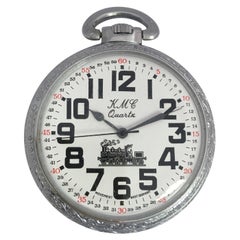
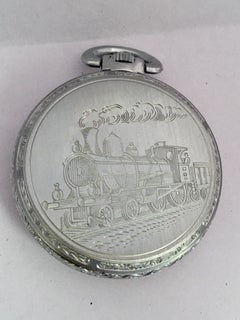
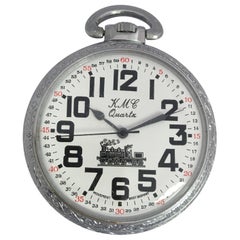
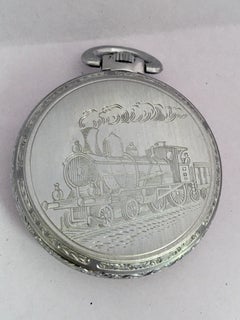
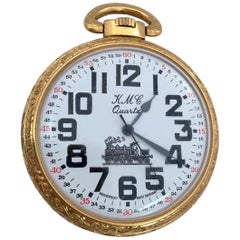
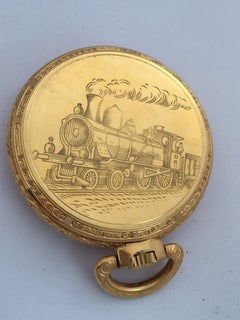
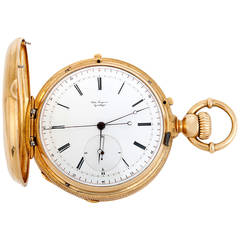
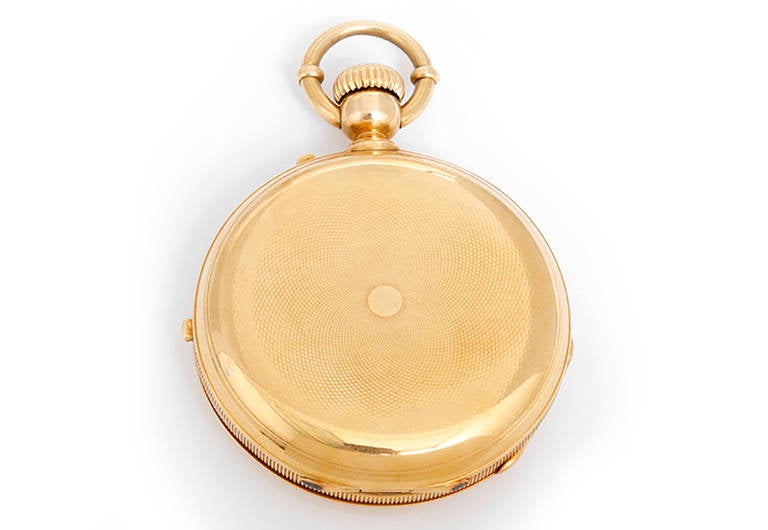
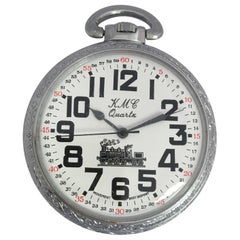
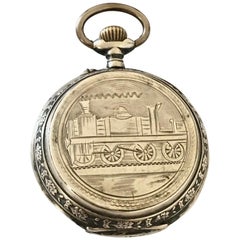
You are likely to find exactly the train pocket watch you’re looking for on 1stDibs, as there is a broad range for sale. Frequently made of
gold,
yellow gold and
18k gold, this item was constructed with great care. You’re likely to find the perfect train pocket watch among the distinctive items we have available, which includes versions made as long ago as the 19th Century as well as those produced as recently as the 20th Century. Finding an appealing train pocket watch — no matter the origin — is easy, but
Waltham,
Vacheron Constantin and
Agassiz each produced a popular version that is worth a look. While most can agree that any train pocket watch from our collection can easily elevate most outfits, but the choice of a
diamond version from the 3 available is guaranteed to add a special touch to your ensemble. See these pages for an
antique cushion cut iteration of this accessory, while there are also
old european cut cut and
round cut cut versions available here, too. Most of our train pocket watch for sale are for
men, but there are 30 pieces available to browse for
women.
Can you pull off a vintage pocket watch? Of course you can. With a suit and a waistcoat, a pocket watch can be a refreshing alternative to a wristwatch.
The earliest pocket watches were luxury items, and, owing to cost, they weren’t commonplace until the 19th century. Artfully crafted pocket watches were a symbol of wealth, and manufacturers such as Vacheron Constantin and Patek Philippe became known for theirs. (Today, they’re among the most sought after by collectors and enthusiasts.)
At the onset, pocket watches resembled small round table clocks, and pulling your small round table clock — perhaps of the silver variety — out of your breast pocket in front of someone else demonstrated unequivocally that you cared about punctuality. For collectors, pocket watches are big, and that means a larger canvas provided for functions without crowding the dial. For example, the Marius Lecoultre pocket watch — made circa 1890 — does everything but uncork your wine.
In the late 1800s, the open-face pocket watch became a staple on the American railroad. It was a requirement for railway workers to wear a pocket watch, as the timepieces were responsible for keeping conductors on schedule. This was a boon to the watchmaking industry, with companies like Hamilton, the Elgin National Watch Company and the Waltham Watch Company producing high-grade and workingman’s watches.
By the 1930s, wristwatches comprised the bulk of watch manufacturing in America, superseding the pocket watch. Suddenly, if you wanted to know the time, you merely glanced at your wrist. But given their vintage charm and our general appetite for good design, pocket watches are a piece of statement-making jewelry and today can prove complementary to your formal attire in a manner that is stylish and unconventional.
Let time take its course — browse a vast selection of antique and vintage pocket watches available on 1stDibs designed by legendary brands such as IWC, Cartier and more.