Albrecht Dürer Art

German, 1471-1528

Albrecht Dürer revolutionized woodcut printmaking as an artform and his influence over the medium's practitioners has endured for centuries. Revered for his masterfully detailed prints and drawings, the German artist was driven by boundless curiosity. Dürer was the Renaissance personified in 16th-century northern Europe — he was more deeply engaged in the pursuits of the era’s Italian painters than any other artist from the region, an attribute that earned him the title “Leonardo of the North.”

Trained initially as a goldsmith in his father’s workshop, Dürer’s talent for art materialized early, in a self-portrait at the age of 13 in 1484. Held in the Albertina Museum in Vienna, this silverpoint drawing is one of the oldest extant self-portraits in European art. 

While Dürer traveled extensively, his two stays in Venice, which took place during the turn of the 16th century, were among the most influential. There he became increasingly acquainted with the work of great Italian artists including Gentile and Giovanni Bellini, Antonio Pollaiuolo, Leonardo da Vinci and a young Raphael. Naturally, Dürer found great inspiration in the Venetians’ theoretical interests, techniques, use of color and more.

Over the course of his career, Dürer received commissions from Frederick the Wise-Elector of Saxony, Emperor Maximilian I and the Holy Roman Emperor Charles V. At one point he was commissioned to draw the first living rhinoceros seen in Europe since the Roman Empire. Despite having never actually seen the animal, Dürer made the now-famous c. 1515 woodcut based on one written account and brief sketch. For years it remained the common interpretation of what rhinos looked like to Europeans.

Dürer’s woodcuts were widely disseminated during his time, and he is the best known artist associated with the Northern Renaissance. His breathtaking technical prowess is most prominent in his three master engravings — Saint Jerome in His Study, Melencolia I and Knight, Death, and the Devil — profoundly influential works that are characterized by rich textures and meticulously detailed imagery.

Dürer’s work is in the collections of many museums, including the National Gallery in London and the Metropolitan Museum of Art in New York, while his former home in Nuremberg, Germany, has been converted into a museum dedicated to his legacy. Important works like Hare and Praying Hands can be found in the Albertina, while his second famous self-portrait from 1500 — which depicts Dürer in a fur-trimmed robe — is on display in the Alte Pinakothek in Munich.

Find original Albrecht Dürer prints and other art on 1stDibs.

to
4
1
4
3
1
1
1
1
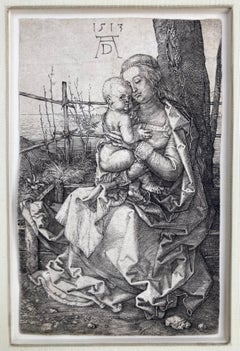
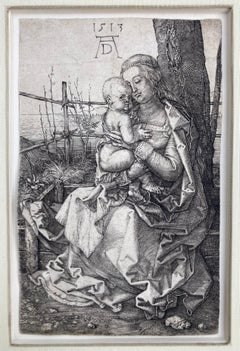
THE VIRGIN AND CHILD SEATED BY A TREE
By Albrecht Dürer
Located in Santa Monica, CA
ALBRECHT DURER (1471-1528) THE VIRGIN AND CHILD SEATED BY A TREE 1513 (Bartsch 35; Meder 34 c-d, Hollstein 34) Engraving a generally good impression. Trimmed slightly into the i...
Category

16th Century Old Masters Albrecht Dürer Art
Materials

Engraving

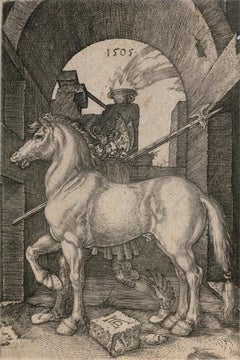
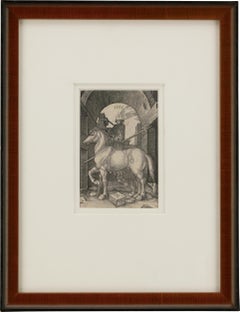
The Small Horse by Albrecht Dürer
By Albrecht Dürer
Located in New Orleans, LA
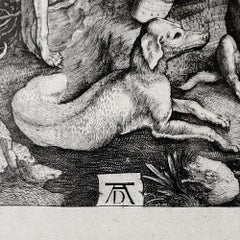
Albrecht Dürer 1471-1528 German The Small Horse Dated in the plate on upper center; monogrammed in the plate lower center: AD Meder state a Copperplate engraving on laid paper “W...
Category

16th Century Renaissance Albrecht Dürer Art

Materials

Laid Paper, Engraving

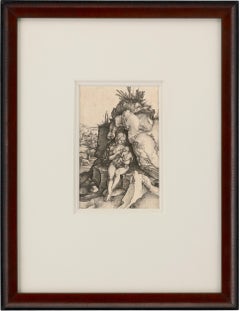
The Penance of St. Chrysostom by Albrecht Dürer
By Albrecht Dürer
Located in New Orleans, LA
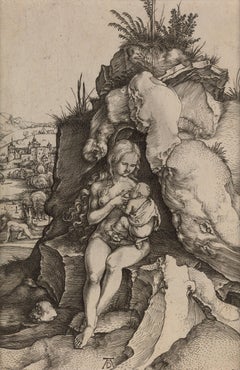
Albrecht Dürer 1471-1528 German The Penance of St. Chrysostom Monogrammed in the plate lower center "AD" Copper engraving on laid paper “Whatever was mortal in Albrecht Dürer li...
Category

15th Century and Earlier Old Masters Albrecht Dürer Art

Materials

Copper

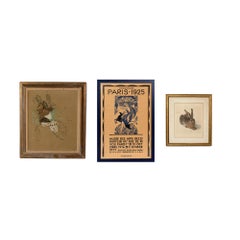
Selection of Early Modernist Art - Lautrec Durer et al
By Albrecht Dürer, Henri de Toulouse-Lautrec
Located in Atlanta, GA
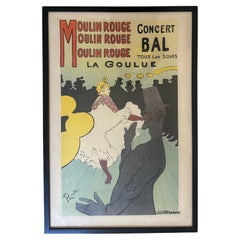
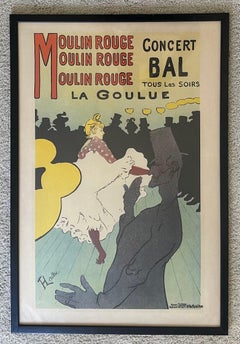
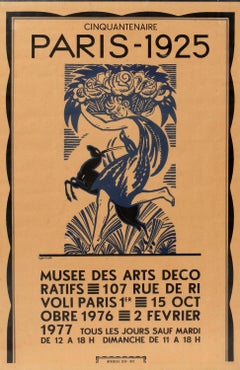
Selection of early Modernist Art, mostly French, 20th century. From left to right, as seen in the first photo, they are: 1) Henri de Toulouse-Lautrec color lithograph or print, circa 1960s. It measures 26.5"H x 23"W. 2) 50th Anniversary of the Legendary 1925 Exposition Art...
Category

1960s French Art Nouveau Vintage Albrecht Dürer Art

Materials

Glass, Wood, Paper

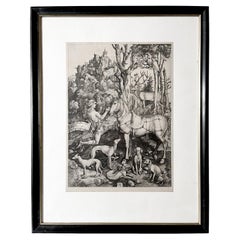
Albrecht Dürer - Saint Eustace
By Albrecht Dürer
Located in Paris, FR
Albrecht Dürer, Saint Eustace. Wood engraving, 1501. Signed with the monogram A.D (Albrecht Dürer) Why not having on a wall a Masterpiece which is also ...
Category

16th Century German Renaissance Antique Albrecht Dürer Art

Materials

Paper

Related Items
The South East Prospect of Westminster Bridge
By Alfred Benjamin Cole
Located in Middletown, NY
After Giovanni Antonio Canal, called Canaletto Copper plate engraving with hand coloring on cream laid paper with the Arms of France watermark (a crown in shield topped by a fleur-de-lys and the letters GR), 22 3/4 x 15 3/4 inches (576 x 400 mm), wide to full margins. Multiple vertical and horizontal creases from folding and rolling; none appear to be particularly hard, there is however some associated cockeling. While there is some minor mat tone visible around the perimeter of the sheet, the extensive handcoloring remains extremely fresh and saturated in the intended areas. There are edge tears at each the right and left sheet edge (outside of the image area) due to an improper effort to mount the sheet to a mat. Otherwise in very good condition with all issues being consistent with age. The print is wrongly titled "The South East Prospect of Westminster Bridge...
Category

Mid-18th Century English School Albrecht Dürer Art

Materials

Laid Paper, Engraving, Watercolor

Francesco Albani Circle Italian Mythological Painting
Located in Roma, IT
Francesco Albani Circle Italian Mythological Painting This important oil painting on wood depicts a subject that is very rare in the iconography of ancient mythological paintings: the birth of Erittonio. Erichthonius who succeeded Amphictyon becoming the fourth mythological king of Athens and married the naiad Praxithea who made him the father of Pandion. The extremely high quality of this very rare painting suggests that it was painted by an artist who frequented Francesco Albani's studio. The period, the mythological subject, the harmony of the colours and, above all, the sublime quality of the flesh tones all point in this direction. This artwork, never before on the market, comes from an important Italian private collection Every item of our Gallery, upon request, is accompanied by a certificate of authenticity issued by Sabrina Egidi official Expert in Italian furniture for the Chamber of Commerce of Rome and for the Rome Civil Courts. ERYTHTONIOS (᾿Ερυχϑόνιος, Erychthonios) Born of Hephaestus' love for Athena, from the breast of Ghe, who was impregnated by the god; welcomed by Athena, who placed him in a basket together with one or two snakes, entrusting him to the care of Cecrops' three daughters. Against the goddess's wishes, they opened the chest, from which emerged, according to different versions of the myth, either the child wrapped in snakes or a snake, which, in some versions, killed the girls, while in others, they threw themselves from the Acropolis in fear. Erittonio, in the form of a snake, is welcomed by Athena into her temple and curls up under the goddess's shield. Alongside this myth, of Ionian origin, are others due to the doubling of the figures of E. and Erechtheus The scene of the birth appears in figurative tradition: in a Melian terracotta relief from the early 5th century, Ghe, half-emerging, holds out the baby Erittonio. to Athena, who welcomes him in the presence of Cecrops; the same scene appears on various painted vases, such as a red-figure kölix by the Painter of Kodros, from Tarquinia, in the Berlin Museums, dating from around 440 BC, where Hephaestus also appears alongside Cecrops. A modest red-figure vase from Camiro, in the British Museum, depicts the moment when the fleeing Cecropids discover the cista, from which the infant Erittonio. emerges between two snakes, greeting Athena. The moment when the chest was opened was depicted by Phidias on the xiii and xiv S metopes of the Parthenon, where Cecrops and Pandrosus appear in the first and Erisichthon and Aglaurus with the chest uncovered in the second. A kölix in the style of the Brygos Painter in Frankfurt, on the other hand, depicts the large snake E. chasing the fleeing Cecropids towards their father's palace. Luciano (De dom., 27) recalls a painting depicting the scene of the birth and the representation of the myth in pantomime on the theatre (De salt., 39). Bibliography: Engelmann, in Roscher, cc. 1303-1308, s. v. Erichthonios; P. Jacobstahl, Die Melischen Reliefs, Berlin 1931, pp. 96-98, plate 75 a; W. Züchner, in Jahrbuch, LXV-LXVI, 1950-51, p. 200 ff., figs. 34-35; J. D. Beazley, Red-fig., p. 720; G. Becatti, Problemi fidiaci, Florence 1951, p. 22. Questo Francesco Albani (Bologna, August 17, 1578 – Bologna, October 4, 1660) was an Italian painter. Albani was born in Bologna, Papal States, in 1578. His father was a silk merchant who intended his son to go into his own trade. By the age of twelve, however, he had become an apprentice to the competent mannerist painter Denis Calvaert, in whose studio he met Guido Reni. He soon followed Reni to the so-called "Academy" run by Annibale, Agostino, and Ludovico Carracci. This studio fostered the careers of many painters of the Bolognese school, including Domenichino, Massari, Viola, Lanfranco, Giovanni Francesco Grimaldi...
Category

Late 17th Century Old Masters Albrecht Dürer Art
Materials

Oil, Wood Panel

Portrait of Lady, Barbara Herbert, Countess of Pembroke c.1708, Large Painting
Located in London, GB
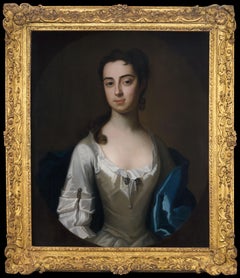
Portrait of Barbara Herbert, Countess of Pembroke c.1708 Charles d’Agar (1669-1723) This magnificent large-scale portrait, presented by Titan Fine Art, depicts the British court of...
Category

17th Century Old Masters Albrecht Dürer Art
Materials

Cotton Canvas, Oil

Vespera; Der Abend (Evening; The Evening) /// Johann Daniel Preissler Old Master
Located in Saint Augustine, FL
Artist: (after) Johann Daniel Preissler (German, 1666-1737) Title: "Vespera; Der Abend (Evening; The Evening)" Portfolio: Die Vier Tageszeiten (The Four Times of Day) Year: 1723 Medium: Original Etching and Engraving on laid paper Limited edition: Unknown Printer: likely Johann Balthasar Probst, Augsburg, Germany Publisher: Jeremias Wolff (Erben), Augsburg, Germany Reference: Le Blanc No. 255, 38; Nagler No. 23 Sheet size: 22.5" x 16.63" Image size: 17.38" x 13.63" Condition: Soft handling creases and folds to sheet. Some scattered foxmarks in left margin. Two small tears skillfully repaired from verso in margins. Has been professionally stored away for decades. It is otherwise a strong impression in good condition with full margins Extremely rare Notes: Provenance: private collection - Aspen, CO. Engraved by German artist Johann Balthasar Probst (1673-1750) after a drawing by German artist Johann Daniel Preissler (1666-1737). Comes from Preissler's 1723 "Die Vier Tageszeiten (The Four Times of Day)" portfolio of four etchings and engravings. Printed from one copper plate in one color: black. Descriptions of the portrayed image are printed in Latin and German. Biography: Johann Daniel Preissler, or Preisler (1666–1737) was a German painter and director of Nuremberg's Academy of Fine Arts. He was a notable member of a German artistic family, originating in Bohemia. His children included Johann Justin Preissler (1698–1771), Georg Martin Preisler (1700–1754), Barbara Helena Preisler (1707–1758; married to Oeding), Johan Martin Preisler (1715–1794), and Valentin Daniel Preisler (1717–1765), all in their time renowned artists. Most notable for his portraits, nudes and history paintings, Johann Daniel Preissler also produced drawings and frescoes. He was particularly known beyond his native Nuremberg for his "Die durch Theorie erfundene Practic", a sequence of works on art theory – the individual works were translated into several other languages and served as textbooks for students such as the Swiss Salomon Gessner...
Category

1720s Old Masters Albrecht Dürer Art

Materials

Laid Paper, Engraving, Etching

Aurora sive Tempus Matutinum; Der Wohl und Übel angewandte Morgen /// Old Master
Located in Saint Augustine, FL
Artist: (after) Johann Daniel Preissler (German, 1666-1737) Title: "Aurora sive Tempus Matutinum; Der Wohl und Übel angewandte Morgen (Dawn or Morning Time; The Morning Used for Better or For Worse)" Portfolio: Die Vier Tageszeiten (The Four Times of Day) Year: 1723 Medium: Original Etching and Engraving on laid paper Limited edition: Unknown Printer: likely Johann Balthasar Probst, Augsburg, Germany Publisher: Jeremias Wolff (Erben), Augsburg, Germany Reference: Le Blanc No. 255, 38; Nagler No. 23 Sheet size: 22.57" x 16.38" Image size: 17.75" x 14" Condition: Soft handling creases, folds, and scattered faint areas of discoloration to sheet. Three tears skillfully repaired from verso. Has been professionally stored away for decades. It is otherwise a strong impression in good condition with full margins Extremely rare Notes: Provenance: private collection - Aspen, CO. Engraved by German artist Johann Balthasar Probst (1673-1750) after a drawing by German artist Johann Daniel Preissler (1666-1737). Comes from Preissler's 1723 "Die Vier Tageszeiten (The Four Times of Day)" portfolio of four etchings and engravings. Printed from one copper plate in one color: black. Descriptions of the portrayed image are printed in Latin and German. Biography: Johann Daniel Preissler, or Preisler (1666–1737) was a German painter and director of Nuremberg's Academy of Fine Arts. He was a notable member of a German artistic family, originating in Bohemia. His children included Johann Justin Preissler (1698–1771), Georg Martin Preisler (1700–1754), Barbara Helena Preisler (1707–1758; married to Oeding), Johan Martin Preisler (1715–1794), and Valentin Daniel Preisler (1717–1765), all in their time renowned artists. Most notable for his portraits, nudes and history paintings, Johann Daniel Preissler also produced drawings and frescoes. He was particularly known beyond his native Nuremberg for his "Die durch Theorie erfundene Practic", a sequence of works on art theory – the individual works were translated into several other languages and served as textbooks for students such as the Swiss Salomon Gessner...
Category

1720s Old Masters Albrecht Dürer Art

Materials

Laid Paper, Engraving, Etching

Meridies; Der Mittag (Noon; The Midday) /// Johann Daniel Preissler Old Master
Located in Saint Augustine, FL
Artist: (after) Johann Daniel Preissler (German, 1666-1737) Title: "Meridies; Der Mittag (Noon; The Midday)" Portfolio: Die Vier Tageszeiten (The Four Times of Day) Year: 1723 Medium: Original Etching and Engraving on laid paper Limited edition: Unknown Printer: likely Johann Balthasar Probst, Augsburg, Germany Publisher: Jeremias Wolff (Erben), Augsburg, Germany Reference: Le Blanc No. 255, 38; Nagler No. 23 Sheet size: 22.5" x 16.32" Image size: 18.13" x 14.32" Condition: Soft handling creases and folds to sheet. A few light areas of staining and scattered small areas of discoloration in margins. Two small tears skillfully repaired from verso in margins. Has been professionally stored away for decades. It is otherwise a strong impression in good condition with full margins Extremely rare Notes: Provenance: private collection - Aspen, CO. Engraved by German artist Johann Balthasar Probst (1673-1750) after a drawing by German artist Johann Daniel Preissler (1666-1737). Comes from Preissler's 1723 "Die Vier Tageszeiten (The Four Times of Day)" portfolio of four etchings and engravings. Printed from one copper plate in one color: black. Descriptions of the portrayed image are printed in Latin and German. Biography: Johann Daniel Preissler, or Preisler (1666–1737) was a German painter and director of Nuremberg's Academy of Fine Arts. He was a notable member of a German artistic family, originating in Bohemia. His children included Johann Justin Preissler (1698–1771), Georg Martin Preisler (1700–1754), Barbara Helena Preisler (1707–1758; married to Oeding), Johan Martin Preisler (1715–1794), and Valentin Daniel Preisler (1717–1765), all in their time renowned artists. Most notable for his portraits, nudes and history paintings, Johann Daniel Preissler also produced drawings and frescoes. He was particularly known beyond his native Nuremberg for his "Die durch Theorie erfundene Practic", a sequence of works on art theory – the individual works were translated into several other languages and served as textbooks for students such as the Swiss Salomon Gessner...
Category

1720s Old Masters Albrecht Dürer Art

Materials

Laid Paper, Engraving, Etching

Dutch Old Master Portrait of Maurits, Prince of Orange-Nassau, Oil on Panel
Located in London, GB
In 1607, the Delft city council decided to commission a portrait of Stadholder Maurits of Nassau for the town hall, with Michiel van Mierevelt as the chosen artist due to the passing...
Category

17th Century Old Masters Albrecht Dürer Art
Materials

Oil, Wood Panel

Oil Portrait of a Victorian Lady, c. 1850
Located in Chicago, IL
Painted in the 19th century, this exquisite miniature portrait wonderfully exemplifies realism in traditional oil painting. The small artwork is painted in the conventional portraiture style of the Old Masters, and achieves soft realism with fine brushwork and a subdued, neutral palette. The half length portrait depicts a fine Victorian woman dressed in all black with a delicate lace collar and bonnet. She wears a ruby broach...
Category

Mid-19th Century Old Masters Albrecht Dürer Art
Materials

Oil

Oil Portrait of a Victorian Lady, c. 1850
$1,480
H 13.75 in W 11.5 in D 1.75 in
"Que pico de Oro" (What a Golden Beak) - Etching and Aquatint on Paper
By Francisco Goya
Located in Soquel, CA
"Que pico de Oro" (What a Golden Beak) - Etching and Aquatint on Paper 5th or 8th edition print of "Que pico de Oro" from the Los Caprichos with burnished aquatints, drypoints etchi...
Category

1790s Northern Renaissance Albrecht Dürer Art

Materials

Engraving, Etching, Aquatint, Laid Paper

'Still Life, Red Tulips with Japanese Porcelain', Belgian Lace, Japonaiserie
Located in Santa Cruz, CA
A finely-drawn, pastel still-life showing red tulips informally arranged in a Chelsea soft paste porcelain Chocolate pot decorated in the Japanese style and set beside a cup and sauc...
Category

1890s Academic Albrecht Dürer Art

Materials

Gold Leaf

Street Booth, Tokyo, New Year's Eve
By Martin Lewis
Located in Middletown, NY
A superb impression of Martin Lewis's consummate image of Japan. Etching with drypoint on fine cream laid paper, 13 7/8 x 10 3/8 inches (352 x 265 mm); sheet 17 3/4 x 14 1/4 inches ...
Category

Mid-20th Century American Modern Albrecht Dürer Art

Materials

Handmade Paper, Laid Paper, Drypoint, Etching

Rare Jacobean Portrait on Panel Lady Elizabeth Wheeler née Cole 1623 Historical
By Cornelius Johnson
Located in London, GB
A Rare Jacobean Portrait of Lady Elizabeth Wheeler (née Cole), 1623 Attributed to Cornelius Johnson (1593–1661) This remarkably rare early oil on panel, presented by Titan Fine Art, has emerged as far more than an anonymous “Portrait of a Lady.” Preserved in outstanding condition—its surface retaining exceptional clarity in the lace and textiles—it has only recently been reunited with the identity of its sitter: Elizabeth Cole (1607–1670), later Lady Elizabeth Wheeler, a Westminster gentlewoman whose later life brought her into intimate royal service as laundress for His Majesty’s person. That combination—high quality, uncommon survival, a newly identified sitter, and a life that intersects directly with the last acts of Charles I—places this portrait in a category of genuine rarity. It is not simply a beautiful Jacobean likeness; it is a rediscovered historical document - legible and compelling. The sitter is presented half-length against a dark ground, enclosed within a painted sculpted oval surround that functions like an architectural frame. This device, fashionable in the 1620s, concentrates the viewer’s attention and heightens the sense of social presentation: the sitter appears both physically and symbolically “set apart,” as if viewed through a refined aperture. The portrait’s immediate power, however, lies in the costume—an ensemble of striking modernity for c. 1623 and rendered with a precision that survives with remarkable crispness. She wears a deep green gown—a fitted overgown with open sleeves—over a finely embroidered linen jacket (a stiffened bodice/waistcoat garment). The sleeves form pronounced “wings” at the shoulder, a structurally assertive fashion detail of the early 1620s that enlarges the silhouette and signals sophistication. Beneath the green overlayer, the white linen jacket is richly ornamented in gilt embroidery. The goldwork is arranged as scrolling foliate forms—looping, curling tendrils punctuated by seed-like stippling—organised into balanced compartments across the bodice and sleeves. The motifs read as stylised botanical forms with rounded fruit-like terminals and leaf elements: not literal naturalism, but controlled abundance. The technique is described with extraordinary intelligence, mimicking couched metallic thread through patterned, “stitched” marks, while tiny dots and short dashes create a lively tactile shimmer. This embroidered jacket sits above a newly fashionable high-waisted, sheer apron or overskirt. The translucent fabric falls in soft vertical folds and is articulated with narrow lace-edged bands, giving the skirt a crisp rhythm of alternating sheer and patterned strips. At the neck, a fine ruff frames the face: a disciplined structure of pleated linen finished with delicate lace. Draped diagonally across the torso are long gold chains, painted to suggest weight and metallic gleam; they function both as ornament and as a further signifier of status. The cumulative effect is controlled luxury: she is not overloaded with jewels, but clothed in textiles whose cost and craftsmanship speak unmistakably. The recent sitter’s identification rests on heraldic and genealogical analysis: the arms shown on the painting correspond to those recorded for several families in armorial sources, but when the lines of descent are tested against survival and chronology, the viable bearer by 1623 resolves to Cole, and—crucially—to the London branch. That resolution matters because it anchors the portrait to a very specific social world: London/Westminster civic gentry and Crown administration, the milieu in which portraiture served as both self-fashioning and social instrument. The recent identification of the sitter (the London Cole branch of the family) is not merely genealogical; it has direct implications for authorship. A London-based mercantile or civic-gentry family would have ready access to leading immigrant artists, familiarity with heraldic display conventions, and the means to commission oil on panel, still standard among Netherlandish-trained painters. In that context, the portrait’s age inscription and date become especially revealing. The painting states the sitter to be nineteen years of age. Yet Elizabeth Cole’s birth in 1607 suggests she would be younger if the portrait is dated as early as 1623. The key insight is that the “incorrect” age is best understood not as a mistake but as a deliberate social adjustment, a performative statement rather than a documentary one. The most persuasive explanation is strategic. Portraits of high-status unmarried women were frequently made in connection with marriage negotiations. In the early 1620s, Elizabeth’s future husband, William Wheeler, was resident abroad at Middelburg in Zeeland in the Dutch Republic. If a portrait was intended to support or facilitate a match with an educated, ambitious man—“a man of learning and letters,” —then presenting a seventeen-year-old as nineteen would subtly reposition her as more mature and more nearly a peer in age, Wheeler being around twenty-two. The portrait thus becomes an instrument of alliance, not merely a likeness: an image designed to persuade, reassure, and elevate. This reading aligns perfectly with the period’s wider conditions. The early 1620s in England were charged with anxiety and expectation: James I’s later reign was marked by court faction, diplomatic tension, and the pressures of European conflict. The so-called “art market” was inseparable from these dynamics. Portraiture flourished because it served multiple functions: it fixed lineage, advertised alliance, signalled readiness for marriage, and projected the stability of elite households in an uncertain world. For Westminster families whose power came through office, portraiture was also a declaration of belonging—proof that administrative elites possessed the cultural polish traditionally associated with older aristocratic rank. Elizabeth’s later life vindicates the portrait’s impression of steadiness. Although no record survives of her marriage ceremony to William Wheeler, wills suggest she had married him by the mid-1630s, and there are strong grounds—consistent with the portrait’s implications—for a union already in place by the early 1630s, possibly earlier. Wheeler himself rose rapidly. By 1639 he held a manor at Westbury Leigh in Wiltshire and sought letters of denization due to overseas birth, enabling him to stand as Member of Parliament for Westbury. He leased the principal manor of Westbury the following year, coinciding with his election. In government service he became Remembrancer of the Exchequer and held office across regime change, a testament to administrative skill and political pragmatism. It is Elizabeth, however, who makes this portrait exceptional. She became laundress for His Majesty’s person, responsible for the washing and oversight of the King’s personal linen—an office that, despite its domestic description, required unusual trust, discretion, and access. Her role becomes visible in 1643 when she was granted a warrant signed by the Speaker of the House of Commons to follow the King to Oxford with her servant after the outbreak of the Civil War. She continued to serve during the King’s captivity after 1646, and at Carisbrooke Castle in 1647 she and her maid were implicated in smuggling secret correspondence to and from Charles I, in service of escape plans. After the King’s failed attempt to escape in March 1648, she was removed—yet the King’s trust persisted: he was permitted to send her remaining jewels in an ivory casket...
Category

17th Century Old Masters Albrecht Dürer Art
Materials

Oil, Panel

Previously Available Items
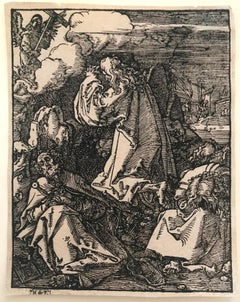
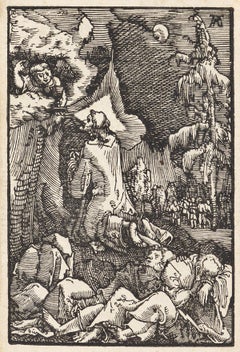
The Betrayal of Christ from Large Passion by Albrecht Dürer
By Albrecht Dürer
Located in New Orleans, LA
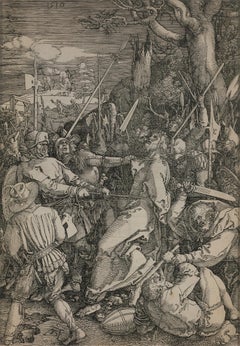
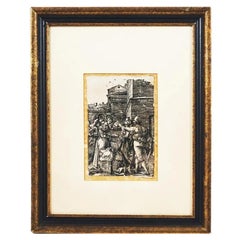
Albrecht Dürer 1471-1528 German The Betrayal of Christ Monogrammed in the block “AD” (lower left) Woodcut on laid paper with a tower and crown watermark “Whatever was mortal in A...
Category

16th Century Old Masters Albrecht Dürer Art
Materials

Laid Paper, Woodcut

Ship of Fools Diptych, Old Masters Woodcut and Engraving by Albrecht Dürer
By Albrecht Dürer
Located in Long Island City, NY
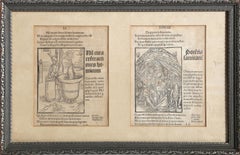
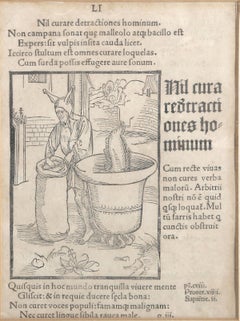
Albrecht Dürer, German (1471 -1528) - Diptych from First Edition of The Ship of Fools, Year: 1494, Medium: Woodcut and Engraving, Image Size: 7 x 12.25 inches, Frame Size: 10.75 ...
Category

15th Century and Earlier Old Masters Albrecht Dürer Art

Materials

Engraving, Woodcut

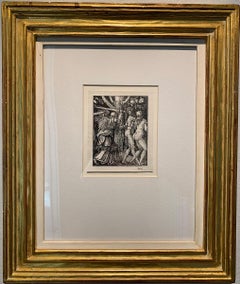
'Adam and Eve Expelled from Eden' by Albrecht Dürer, Woodcut Print
By Albrecht Dürer
Located in Oklahoma City, OK
This 18.75" x 15.75" framed, woodblock print was produced by German Renaissance artist, Albrecht Dürer, circa 1511. The 5.75" x 4.63" print floats on white mat board and is presented...
Category

16th Century Renaissance Albrecht Dürer Art

Materials

Woodcut

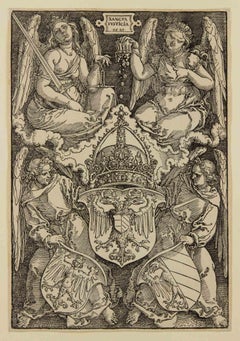
The Arms of the Holy Roman Empire and of the...-Woodcut by Albrecht Durer - 1521
By Albrecht Dürer
Located in Roma, IT
Also called "The Justice", this woodcut print depicts The Arms of the Holy Roman Empire and of the City of Nuremberg. Realized by Durer in 1521, as dated in the top center of the pl...
Category

16th Century Modern Albrecht Dürer Art

Materials

Woodcut

Saint Thomas
By Albrecht Dürer
Located in Greenwich, CT
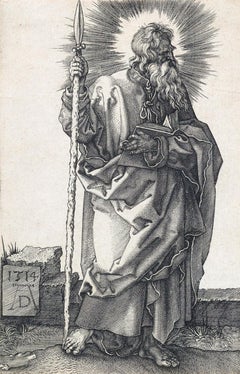
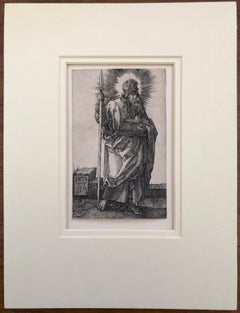
Albrecht Dürer (1471 – Nuremberg – 1528), St. Thomas , 1514, engraving 118x70 mm; 4 ½ x 2 ¾ inches matted : approx. 9 x 7 inches Bartsch 48 ; Meder 50 Provenance: Private colle...
Category

16th Century Albrecht Dürer Art

Materials

Engraving

Saint Thomas
Saint Thomas
H 4.5 in W 2.75 in D 1 in
Salome And Herod Woodcut After Albrecht Durer
By Albrecht Dürer
Located in Long Island City, NY
Woodcut print on paper, a reproduction of an original 1511 artwork titled The Head of Saint John the Baptist Brought to Herod by Albrecht Durer, 1471 to ...
Category

16th Century German Renaissance Antique Albrecht Dürer Art

Materials

Paper

Beheading of St John Woodcut After Albrecht Durer
By Albrecht Dürer
Located in Long Island City, NY
Woodcut print on paper, a reproduction of an original 1510 artwork titled Beheading of John the Baptist by Albrecht Durer, 1471 to 1528, a German painter and printmaker of the Northern Renaissance. The print depicts an executioner holding the head of St. John, which Salome waits to receive on a plate. Monogram AD...
Category

16th Century German Renaissance Antique Albrecht Dürer Art

Materials

Paper

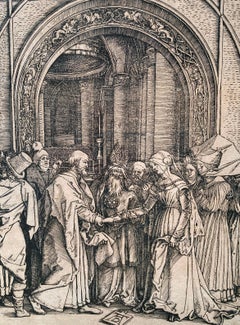
Dürer, Life of Virgin, Marriage of Virgin, Woodcut
By Albrecht Dürer
Located in Greven, DE
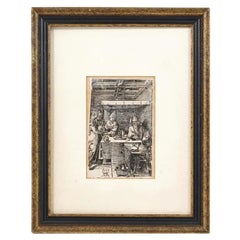
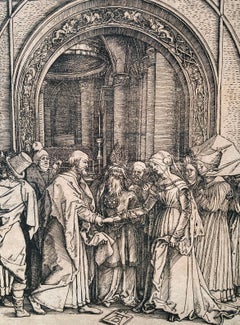
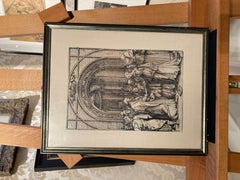
Dürer Marriage of the Virgin One of the series of 20 woodcuts, without text, before a temple, a priest uniting the right hands of the Virgin Mary and St Joseph, on the right behind t...
Category

16th Century Northern Renaissance Albrecht Dürer Art

Materials

Woodcut

Dürer, Life of Virgin, Marriage of Virgin, Woodcut
By Albrecht Dürer
Located in Greven, DE
Dürer Marriage of the Virgin One of the series of 20 woodcuts, without text, before a temple, a priest uniting the right hands of the Virgin Mar...
Category

16th Century Northern Renaissance Albrecht Dürer Art

Materials

Woodcut

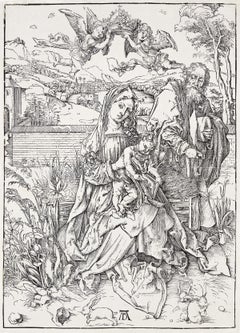
The Holy Family with the Three Hares
By Albrecht Dürer
Located in New York, NY
A very good, evenly-printed Meder h impression of this woodcut. Strong contrasts and the breaks in the border line but with less wear in the subject.
Category

15th Century and Earlier Northern Renaissance Albrecht Dürer Art

Materials

Woodcut

Saints Stephen, Sixtus, and Laurentius
By Albrecht Dürer
Located in Middletown, NY
circa 1504 Woodcut on cream laid paper, 8 1/2 x 5 7/8 inches (215 x 148 mm), thread margins. Significant expert repairs to lower right sheet edge, and center right sheet edge. Mino...
Category

16th Century Old Masters Albrecht Dürer Art
Materials

Laid Paper, Woodcut

THE ADORATION OF THE MAGI - from Life of the Virgin (see also posted M Raimondi)
By Albrecht Dürer
Located in Santa Monica, CA
ALRECHT DURER (1471 - 1528) THE ADORATION OF THE MAGI - 1503 (11).( Meder 199, Hollstein 199, Bartsch 87). Original Woodcut, Plate 12 from the series "The Life of the Virgin" (Meder...
Category

16th Century Old Masters Albrecht Dürer Art
Materials

Woodcut

Albrecht Dürer art for sale on 1stDibs.
Find a wide variety of authentic Albrecht Dürer art available for sale on 1stDibs. You can also browse by medium to find art by Albrecht Dürer in engraving, woodcut print, laid paper and more. Much of the original work by this artist or collective was created during the 18th century and earlier and is mostly associated with the Old Masters style. Not every interior allows for large Albrecht Dürer art, so small editions measuring 4 inches across are available. Customers who are interested in this artist might also find the work of Wenceslaus Hollar, Cornelis Bega, and William Hogarth. Albrecht Dürer art prices can differ depending upon medium, time period and other attributes. On 1stDibs, the price for these items starts at $1,500 and tops out at $114,283, while the average work can sell for $28,724.
Artists Similar to Albrecht Dürer

Christoffel Jegher
Giovanni Benedetto Castiglione
Crispin de Passe II
Jean François Millet
Francesco Cecchini