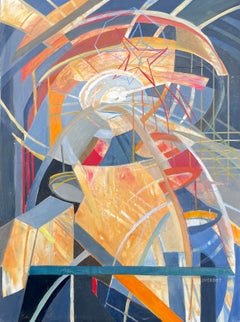
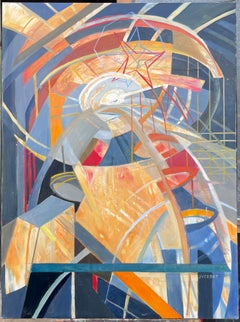
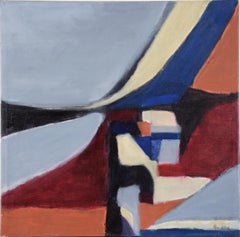
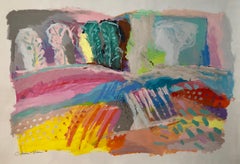
By Calman Shemi
Located in Surfside, FL
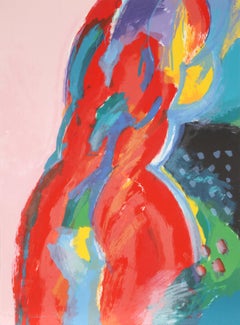
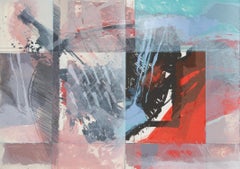
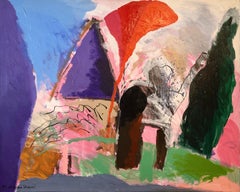
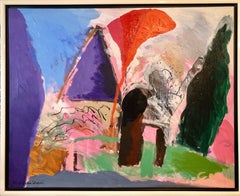
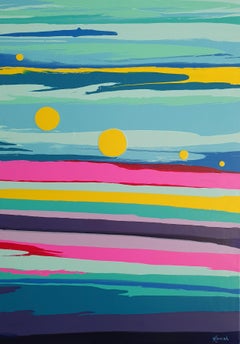
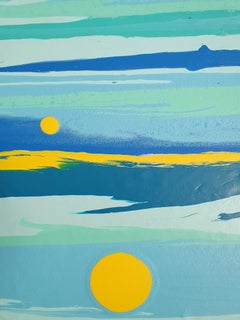
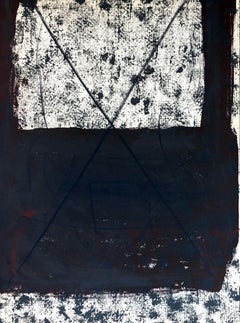
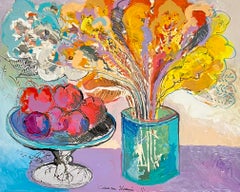
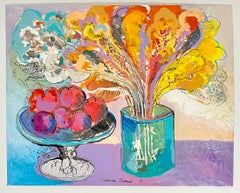
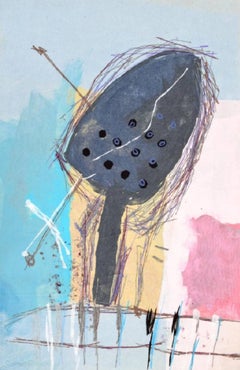
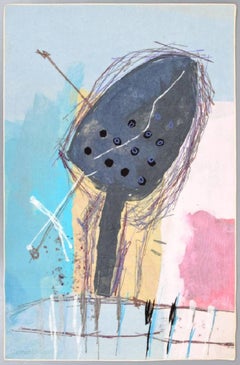
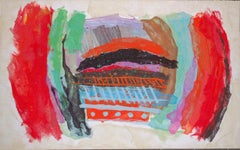
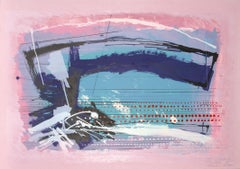
Fruit and Flowers monoprint by Calman Shemi
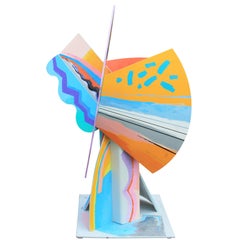
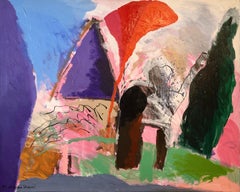
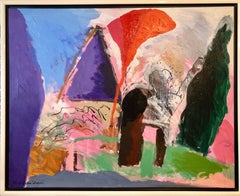
Calman Shemi, sculptor and painter, was born in Argentina in 1939. A graduate of the School of Sculpture and Ceramics in Mendoza, he studied under the Italian-Argentinean sculptor Libero Badii whom he credits with putting him on the right path. “He taught me principals, not only related to sculpture, but human and philosophic principals. Shemi also carefully studied the work of such masters as Pablo Picasso, Caravaggio, Frank Stella and Henri Matisse. “From each one of these great artists I learned something from observing them,” he says.
In 1961, at the age of 20, Shemi immigrated to Israel and joined Kibbutz Carmia of which he was a member for twenty years. There he worked in agriculture and also as a sculptor working with wood and clay. Several of his large-scale fiberglass and polyester sculpture projects are situated in public buildings. He was a student of German-Israeli sculptor Rudi Lehmann, a pioneer of the artistic movement known as “Canaanism.”
Canaanite art was an effort to create a direct relationship with the land, bypassing historic Jewish connotations—hence the land’s primordial name is used. Canaanite works, with an emphasis on the inter-action of simple shapes, bear a deliberate resemblance to the sculpture and ritual art of early civilizations of the Middle East prior to Judaism, always with an eye to the fusion of man and the land itself.
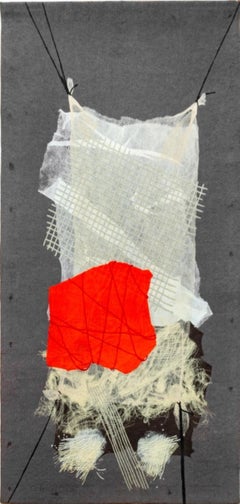
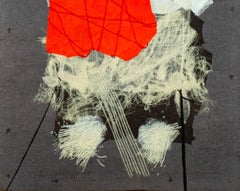
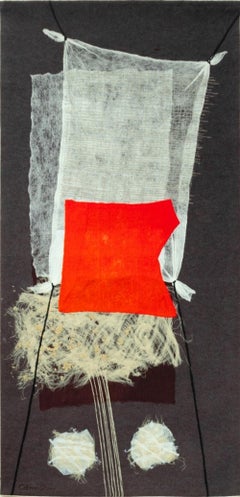
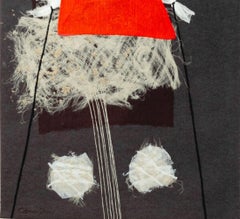
Though sculpture dominated his early years as an artist, in the mid ’70s Shemi developed the idea of the “soft painting” medium. Beginning with a color drawing done to scale, Shemi layers onto the drawing irregularly shaped pieces of variously textured and colored fabrics. Using a threadless 9,000-needle sewing machine, the fabrics are meshed to one another and to the background, resulting in vibrant wool tapestry carpet compositions infused with exuberant color and explosive movement.
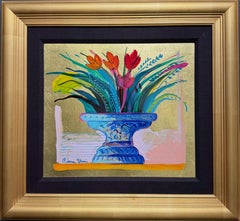
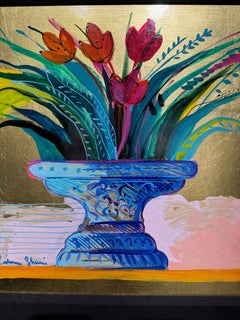
Over the years, Shemi has continued to challenge himself with new artistic mediums, developing two more techniques of painting: “Lacquer paintings” and “window paintings.” He also works in monotype, lithograph and silkscreen techniques. He creates his Lacquer Painting by applying vibrant colors to wood or metal panel that has been gilded with gold or silver leaf, and sometimes both. After the oil paint has thoroughly dried, many layers of lacquer are applied to the surface giving it a glowing effect. Between each layer of lacquer the piece is hand-polished to give the surface its very shiny look.
Shemi’s “lacquer” and “window” paintings are reminiscent of ancient techniques used centuries ago in Japan and China.
Shemi concludes, “All of the art that I create is full of optimism and beauty. That’s all. Simple, very simple.”
During the past eighteen years Shemi has held more than seventy one-man shows in the U.S., Japan, Germany, Spain, Belgium and Israel. His works can be seen in many public and private collections around the world. He is of a generation of contemporary Israeli artists, somewhat influenced by pop art that include Alex Pauker...
Category
20th Century Abstract Expressionist Calman Shemi Art