Helder Batista Art

French, b. 1964
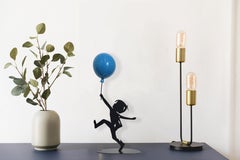
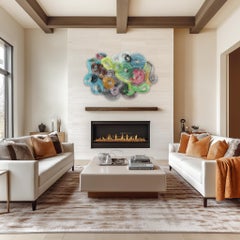
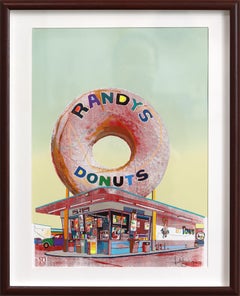
Helder Batista is a self taught artist who works predominantly in sculptural medium. Born in 1964 in Paris and now living and working near Cahors, he describes the genesis of his artistic career as an epiphany. Batista is intrigued by the complexity and potential of everyday objects, even those as mundane as bicycle’s tires. Batista decided to insert himself and interrupt societal structures that destine such objects to “a vocation of waste.” In his exploration of materials, Batista discovered that his ‘found’ objects could function as support, medium and subject, or as self sustained complete works of art. Batista avoids polluting his found objects even through his own curatorial presence, arguing that assigning value to some over others creates contaminating waste. Instead Batista sublimates, recycles and allows his materials space to articulate themselves. Often a simple clear acrylic mold utilized in works like Lego or Red Shoes is enough of a change in context to infuse everyday objects with artistic poignancy. In constant communication with Pop art, most of his pieces are intentionally ambiguous. Batista’s work cuts in multiple directions depending on context and audience. His series of Flag Guns, where he uses the form of a revolver wrapped in a flag and solidified with a fiber rising coat, has multivalent layers of meaning. When ’Second Amendment’ or ‘Made in America’ are displayed together they can be read as playful subversions of a symbol of power. To others they are biting political satire on American Imperialism, or high rates of gun ownership. Meanwhile, when they are paired with the Soviet Union Flag Guns they become historical and charged with Cold War symbolism and the arms race. However, when wrapped in a checkered flag, his Flag Gun becomes a Starting Gun and any abstruse political symbolism is lost. Batista himself refuses to elaborate on the symbolism of his flags beyond admitting that he is toying with the power of symbols. On this most fundamental level, Batista is visually demonstrating that art has no political borders. Batista’s larger oeuvre explores themes of nonsense, consumerism, globalization and overconsumption without searching for concrete explanations. By toying rather than pontificating, Batista can be playful while also gesturing at serious dissonances in society; Batista welcomes discussion, but resists projections of specific programs onto his pieces
to
1
1
Overall Width
to
Overall Height
to
1
1
1
1
1
1
1
10,225
2,785
2,504
1,383
1
Artist: Helder Batista
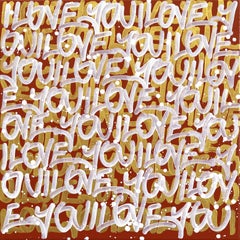
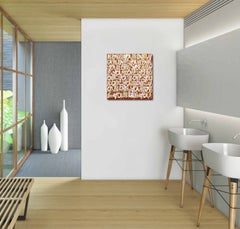
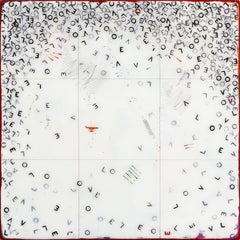
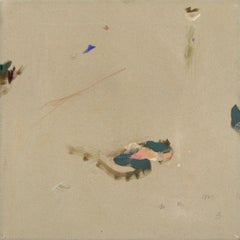
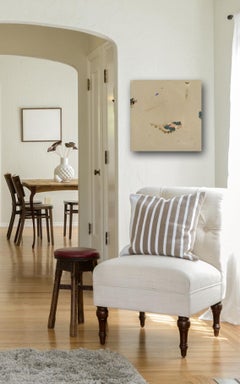
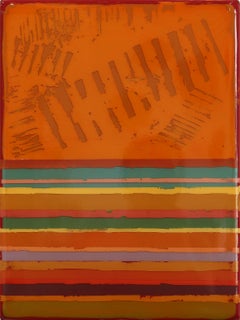
Rubber on Wood wall Sculpture by French Artist 55x 55
By Helder Batista
Located in West Palm Beach, FL
Helder Batista is a self-taught artist who works both sculpture and painting. He was born in 1964 in Paris where he attended the evening classes of the Beaux-arts. He lives and works...
Category

21st Century and Contemporary Abstract Helder Batista Art

Materials

Rubber, Wood

Related Items
Mixed Media 3D Artwork 'Mariupol Rising from the Ashes' in Pop Art
By Mauro Oliveira
Located in LOS ANGELES, CA
**NEW YEAR FINAL 90 DAYS SUPER SALE UNTIL MARCH 31ST** **STORE CLOSURE - UP TO 80% OFF - TAKE ADVANTAGE OF IT** **EVERYTHING MUST GO UNTIL APRIL1ST!** ...
Category

21st Century and Contemporary Pop Art Helder Batista Art

Materials

Resin, Rubber, Cotton Canvas, Acrylic

Choke: Gibraltar – Land (left) Water (right)
By Gregor Turk
Located in Atlanta, GA
Gregor Turk’s new series titled “CONFLUX” features wall-mounted box-like maps of global choke points, strategic locations where passage by land or sea is constricted. Coastlines are ...
Category

21st Century and Contemporary Contemporary Helder Batista Art

Materials

Rubber, Wood

PRICK - Red, Monochrome Wall Hanging Sculpture w/ Found Objects
Located in Signal Mountain, TN
This piece was created using carefully curated materials that were then bound together. The materials used were all discarded and would otherwise have gone to a landfill. I repurpose...
Category

2010s Contemporary Helder Batista Art

Materials

Fabric, Yarn, Plastic, Rubber

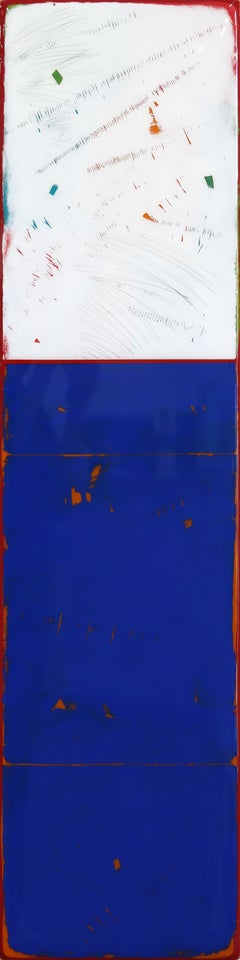
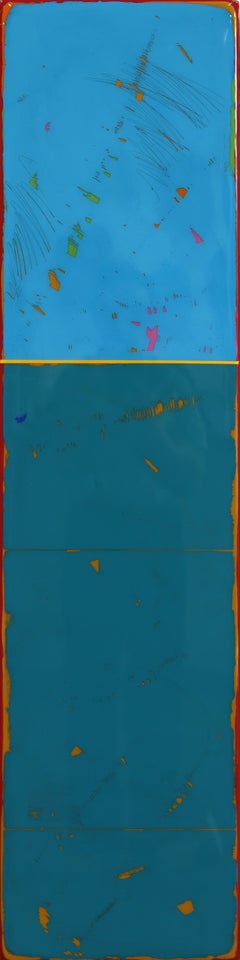
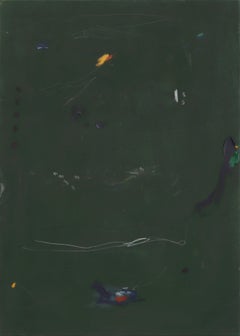
"Abare" Jules Olitski, Color-Field, Abstract Expressionist, Gestural Painting
By Jules Olitski
Located in New York, NY
Jules Olitski Abare, 1987 Signed and dated on the reverse Oil-based acrylic and water-based acrylic on plexiglass 44 3/4 x 23 5/8 inches Provenance The artist Andre Emmerich Gallery...
Category

1980s Abstract Expressionist Helder Batista Art

Materials

Plexiglass, Oil, Acrylic

On the Rocks - Luxurious Black and Silver Sculptural Tactile Metallic Artwork
By Ryan Shane Owen
Located in Los Angeles, CA
Collectors searching for a statement contemporary mixed media artwork with crushed crystals, mirrored surfaces, black textures, and metallic sculptural elements will be captivated by...
Category

21st Century and Contemporary Abstract Geometric Helder Batista Art

Materials

Metal

Bound Globe 28 (Choke Points)
By Gregor Turk
Located in Atlanta, GA
Known for his public art installations, ceramic sculpture, photography, and mixed-media constructions, Gregor Turk often incorporates mapping imagery and cultural markings into his a...
Category

21st Century and Contemporary Contemporary Helder Batista Art

Materials

Metal

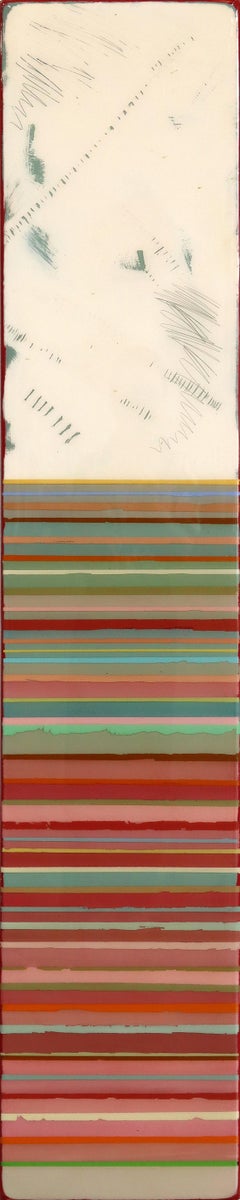
Double Panel Monumental Pink and Purple Dyed and Painted Stretched Rubber Canvas
By Jack Drummer
Located in Buffalo, NY
This two panel stretched and dyed rubber piece was created by American contemporary artist John Drummer in the early 2000's. This work was featured in the exhibition "Jack Drummer" organized by BT&C Gallery and which coincided with the Burchfield Penney Art Center's exhibition "The Effects of Time". This is currently the only work available for acquisition. The Burchfield Penney exhibition that featured these rare pieces was voted one of the best 10 exhibitions that year in ArtForum's 2016 Top Ten by Matthew Higgs, who would later curate an exhibition of Drummers work for White Columns gallery that was reviewed by Art in America in 2017. John E. (aka “Jack”) Drummer (1935-2013) was an itinerant and mercurial figure. Self-taught as an artist, his earliest works from the late 1950s and early 1960s were included in several key exhibitions in Buffalo and New York City, including the first of Allan Kaprow’s legendary ‘New Forms, New Media’ exhibitions that he curated for Martha Jackson’s gallery in 1960. Drummer’s 1962 solo exhibition at the Gordon Gallery, New York received a rapturous review from critic Brian O’Doherty in The New York Times, who praised Drummer for his ability to “make something out of nothing”, describing his work from this time as “screens for the imagination,” a notion that could equally be applied to his later works on view at White Columns in a 2017 solo exhibition. Despite this early success, Drummer would soon leave New York City, returning initially to Buffalo, before moving to New Orleans and then California, before eventually settling in Hawaii. Very little of Drummer’s early work has survived, including almost none of the 300-odd, often large-scale, styrofoam-based sculptures he produced in Hawaii. On returning to his home-town of Buffalo in the early 1980s, Drummer would embark on an extraordinary body of work that would preoccupy him for the next two decades. Drummer’s late work is clearly related to, and expands upon, the histories of minimal, post-minimal and process-orientated art. His approach is empathetic with that of the Italian Arte Povera artists, sharing their interest and investment in ‘poor’ and quotidian materials. Working almost exclusively with ‘found’ materials, and specifically materials that had previously been employed and subsequently discarded in industrial and manufacturing processes, Drummer’s work of the 1980s-early 2000s was largely overlooked and unexhibited during his lifetime. Drummer’s late works employ the rubber ‘blankets’ – used in offset printing to remove excess ink during the printing process – as supports. These ‘ready-made’ supports often revealed aspects of their ‘histories’: their surfaces are typically marked with ghostly images and texts resulting from the printing process. Drummer would then work directly onto and into these ‘pre-prepared’ supports. Drummer’s late works often incorporate impressions taken directly from the surfaces of walls, floors, and fencing, etc. – ‘images’ created by laying the rubber sheets face down onto a desired surface, and then applying pressure from the back of the sheet to create a subsequent negative impression or image of that surface, likely a physically demanding process, akin to making a ‘brass rubbing...
Category

1980s Contemporary Helder Batista Art

Materials

Rubber, Paint, Dye

Seven from Logo Suite (Pink Blue) - 3D signed mixed media multiple #65/100
By Richard Smith
Located in New York, NY
Richard Smith Seven from Logo Suite (Pink Blue), 1971 Silkscreen on 3-D Molded Plastic Over Wood Pencil signed, dated and numbered 65 from the edition of 75 on the front 23 1/2 × 19 ...
Category

1970s Abstract Geometric Helder Batista Art

Materials

Plastic, Wood, Mixed Media, Screen

Assemblage #5 (Ornithology Illustrations & Glass Slide with Silver, Gold Paint)
By Michael Pauker
Located in Soquel, CA
Abstract expressionist found object assemblage on wood with highly expressive silver and gold paint by Bay Area artist Michael Pauker (American, b. 1957). Against the raw woodgrain, the artist has attached several objects, including paper fragments of ornithological illustrations of birds...
Category

21st Century and Contemporary Abstract Expressionist Helder Batista Art

Materials

Glass, Plastic, Wood, Paper, Oil, Found Objects, Acrylic

Pangea III
Located in Lincoln, RI
Pangea III is part of a series of paintings on plexiglass that depicts land masses. The maze like patterns are created using a router (woodworking tool...
Category

2010s Abstract Helder Batista Art

Materials

Plexiglass, Acrylic, Wood

Pangea III
Pangea III
$3,900 Sale Price
40% Off
H 61 in W 50 in D 2 in
"Relic", abstract sculpture, torched wood, granite base, bicycle rubber tube
Located in Toronto, Ontario
"Relic" is a sculpture of geometric abstraction by Stan Olthuis composed of fire-torched pine wood, plywood, and reclaimed bicycle inner tube, mounted wit...
Category

21st Century and Contemporary Abstract Helder Batista Art

Materials

Granite, Metal

Neopolitan
By Lana Shuttleworth
Located in Fairfield, CT
Shuttleworth's work is noted for her use of traffic cones and other found materials. Lana describes her work as representing the "common ground aspirations for diverse societies by depicting idealized landscapes transforming cross-cultural bi-products into works of art. Across the global commons, once diverse landscapes and the societies they support are synchronizing with the ideology of progress in plastic consumption. Plastics are nature-transformed from ancient life remains buried deep beneath the foot of our cultural landscape. Born into service to progress, recovered water bottles, x-ray film and safety cones...
Category

2010s Helder Batista Art

Materials

Rubber, Wood Panel

Helder Batista art for sale on 1stDibs.
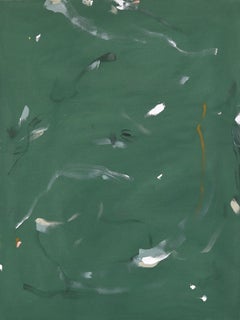
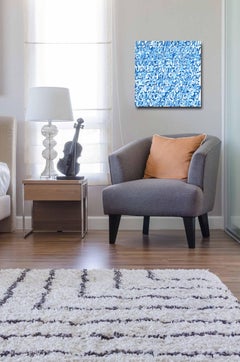
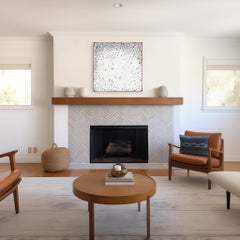
Find a wide variety of authentic Helder Batista art available for sale on 1stDibs. If you’re browsing the collection of art to introduce a pop of color in a neutral corner of your living room or bedroom, you can find work that includes elements of blue and other colors. You can also browse by medium to find art by Helder Batista in acrylic polymer, mixed media, organic material and more. Much of the original work by this artist or collective was created during the 21st century and contemporary and is mostly associated with the Pop Art style. Not every interior allows for large Helder Batista art, so small editions measuring 1 inch across are available. Customers who are interested in this artist might also find the work of Gillie and Marc Schattner, Delphine Brabant, and Patrick Brun. Helder Batista art prices can differ depending upon medium, time period and other attributes. On 1stDibs, the price for these items starts at $323 and tops out at $15,538, while the average work can sell for $5,283.

Artists Similar to Helder Batista