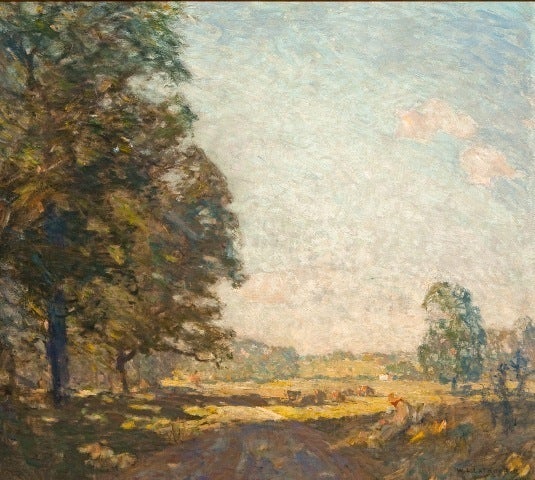
William Langson Lathrop Art

American, 1859-1938

William Langson Lathrop, deemed the Father of the New Hope Art Colony, was born in Warren, Illinois. He was largely self-taught, having only studied briefly with William Merritt Chase in 1887 at the Art Students League. Lathrop first moved east in the early 1880s and took a job at the Photo-engraving Company in New York City. While there, he befriended fellow employee, Henry B. Snell. The two men became lifelong friends and ultimately, both would be considered central figures among the New Hope Art Colony. Lathrop’s early years as an artist were ones of continuing struggles. His efforts to break through in the New York art scene seemed futile, so he scraped enough money together and traveled to Europe with Henry Snell in 1888. There, he met and married an English girl, Annie Burt. Upon returning to New York, he tried his hand at etching, making tools from old saw blades. Even though his prints were extremely beautiful, he remained impoverished.

Lathrop would return to his family in Ohio, before once again attempting the New York art scene. In 1899, with great trepidation, he submitted five small watercolors to an exhibit at the New York Watercolor Club. He won the Evans Prize, the only award given, and four of the five paintings were sold the opening night. At age 40, Lathrop’s career would finally take off as he became an overnight success. Lathrop came to Phillips Mill for the first time in 1898 to visit his boyhood friend, Dr. George Marshall. Shortly after, he and his family purchased the old miller’s house from Dr. Marshall. The Lathrop’s home became a social and artistic center for the growing New Hope artists’ community. Tea and fascinating conversation were the “order of the day” every Sunday. This was a scene fondly recalled by many younger art students who Lathrop taught privately at Phillips Mill. It was common to see groups of his students painting and sketching along the banks of the canal or aboard his boat. He had previously taught in the Poconos and at the Lyme Summer School in Lyme, Connecticut in 1907, but Phillips Mill always remained Lathrop’s permanent address.

In 1928, a committee headed by Lathrop was formed to purchase the old Phillips Mill building as a place to hold community gatherings and art exhibitions. The committee had success and in 1929, the Phillips Mill Community Association was formed. This became the center of the New Hope Art Colony, holding annual exhibitions, and continues its operations today. In 1930, Lathrop built a sailboat, which he named the “Widge”. For eight consecutive seasons, he sailed it along the coast of Long Island, painting as he cruised. In 1938, while trying to ride out a storm off of Montauk, he died aboard his beloved “Widge” during the hurricane. Lathrop is remembered not only for his leading role as founder of the New Hope Art Colony, but as one of the most talented artists to emerge from this group of painters. His atmospheric and tonalist works as well as his colorful Impressionist landscapes are highly sought after by collectors. Relatively prolific throughout his career, Lathrop’s paintings still remain one of the greatest values among the important New Hope painters. His work is in the permanent collections of over 20 museums throughout the United States. William Lathrop exhibited at the Pennsylvania Academy of the Fine Arts (1922 Gold Medal), the Art Institute of Chicago, the Boston Art Club, the American Watercolor Society, the New York Watercolor Club (1899 prize), the National Academy of Design, the Philadelphia Art Club (Gold Medal), the Society of American Artists (1899 prize), the Worcester Art Museum (1904 prize), the Corcoran Gallery Biennials and the Panama-Pacific Exposition in San Francisco (1915 Gold Medal).

to
1
1
1
1
Overall Width
to
Overall Height
to
4
1
1
4
3
1
1
1
1
3
3
3
3
1
4
10,096
2,779
1,379
1,375
4
4
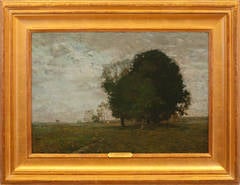
Artist: William Langson Lathrop
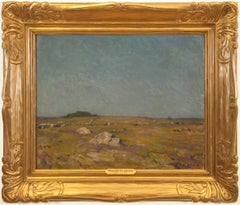
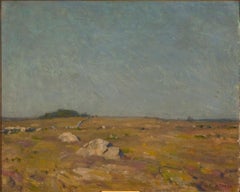
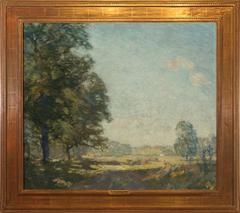
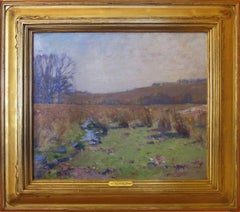
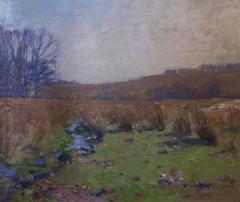
"Solebury Valley"
By William Langson Lathrop
Located in Lambertville, NJ
Signed lower right. Complemented by a period frame. William L. Lathrop (1859-1938) Deemed “Father of the New Hope Art Colony”, William Langson Lathrop was born in Warren, Illinois. He was largely self-taught, having only studied briefly with William Merritt Chase in 1887, at the Art Students League. Lathrop first moved east in the early 1880s, and took a job at the Photoengraving Company in New York City. While there, he befriended a fellow employee, Henry B. Snell. The two men became lifelong friends and ultimately, both would be considered central figures among the New Hope Art Colony. Lathrop's early years as an artist were ones of continuing struggle. His efforts to break through in the New York art scene seemed futile, so he scraped enough money together to travel to Europe with Henry Snell in1888. There he met and married an English girl, Annie Burt. Upon returning to New York, he tried his hand at etching, making tools from old saw blades...
Category

1910s American Impressionist William Langson Lathrop Art

Materials

Canvas, Oil

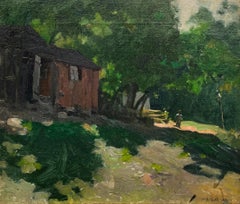
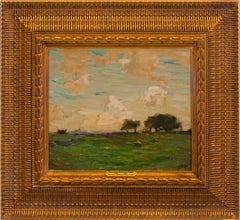
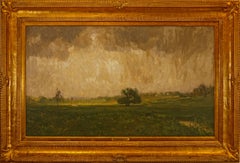
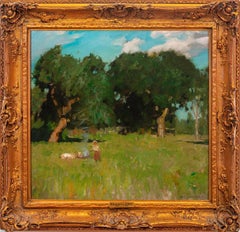
"The Old Pasture"
By William Langson Lathrop
Located in Lambertville, NJ
Jim’s of Lambertville is proud to offer this artwork. Signed lower right. Complemented by a hand carved and gilt frame. William L. Lathrop (1859-1938) Deemed “Father of the New Hope Art Colony”, William Langson Lathrop was born in Warren, Illinois. He was largely self-taught, having only studied briefly with William Merritt Chase in 1887, at the Art Students League. Lathrop first moved east in the early 1880s, and took a job at the Photoengraving Company in New York City. While there, he befriended a fellow employee, Henry B. Snell. The two men became lifelong friends and ultimately, both would be considered central figures among the New Hope Art Colony. Lathrop's early years as an artist were ones of continuing struggle. His efforts to break through in the New York art scene seemed futile, so he scraped enough money together to travel to Europe with Henry Snell in 1888. There he met and married an English girl, Annie Burt. Upon returning to New York, he tried his hand at etching, making tools from old saw blades...
Category

20th Century American Impressionist William Langson Lathrop Art

Materials

Canvas, Oil

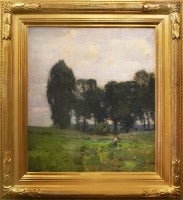
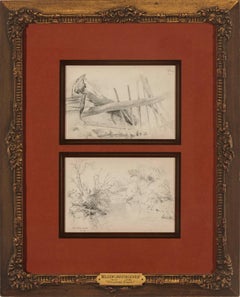
"Bonfire"
By William Langson Lathrop
Located in Lambertville, NJ
Jim’s of Lambertville is proud to offer this artwork by: William Langson Lathrop (1859 - 1938) Deemed the “Father of the New Hope Art Colony”, William Langson Lathrop was born in Warren, Illinois. He was largely self-taught, having only studied briefly with William Merritt Chase in 1887 at the Art Students League. Lathrop first moved east in the early 1880s and took a job at the Photo-engraving Company in New York City. While there, he befriended fellow employee, Henry B. Snell. The two men became lifelong friends and ultimately, both would be considered central figures among the New Hope Art Colony. Lathrop’s early years as an artist were ones of continuing struggles. His efforts to break through in the New York art scene seemed futile, so he scraped enough money together and traveled to Europe with Henry Snell in 1888. There he met and married an English girl, Annie Burt. Upon returning to New York, he tried his hand at etching, making tools from old saw blades...
Category

1920s American Impressionist William Langson Lathrop Art

Materials

Canvas, Oil

"Central Park"
By William Langson Lathrop
Located in Lambertville, NJ
Jim’s of Lambertville is proud to offer this artwork. Signed. Complemented by a hand carved and gilt frame. William L. Lathrop (1859-1938) Deemed “Father of the New Hope Art Colony”, William Langson Lathrop was born in Warren, Illinois. He was largely self-taught, having only studied briefly with William Merritt Chase in 1887, at the Art Students League. Lathrop first moved east in the early 1880s, and took a job at the Photoengraving Company in New York City. While there, he befriended a fellow employee, Henry B. Snell. The two men became lifelong friends and ultimately, both would be considered central figures among the New Hope Art Colony. Lathrop's early years as an artist were ones of continuing struggle. His efforts to break through in the New York art scene seemed futile, so he scraped enough money together to travel to Europe with Henry Snell in1888. There he met and married an English girl, Annie Burt. Upon returning to New York, he tried his hand at etching, making tools from old saw blades. Even though his prints were extremely beautiful, he still was impoverished. Lathrop would return to his family in Ohio, before once again attempting the New York art scene. In 1899, with great trepidation, he submitted five small watercolors to an exhibit at the New York Watercolor Club. He won the Evans Prize, the only award given, and four of the five paintings were sold the opening night. At age forty Lathrop’s career would finally take off and he became an “overnight success Lathrop came to Phillips Mill for the first time in1898, to visit his boyhood friend, Dr. George Marshall. Shortly after, he and his family purchased the old miller’s house from Dr. Marshall. The Lathrop’s home became a social and artistic center for the growing New Hope colony. Tea and fascinating conversation was the “order of the day” every Sunday. This was a scene fondly recalled by many younger art students that Lathrop taught privately at Phillips Mill. It was common to see groups of his students painting and sketching along the banks of the canal or aboard his canal boat. He had previously taught in the Poconos and at the Lyme, Connecticut Summer School in1907, but Phillips Mill always remained Lathrop’s permanent address. In 1928, a committee headed by Lathrop was formed to purchase the old Phillips Mill building as a place to hold community gatherings and art exhibitions. The committee had success and in 1929 the Phillips Mill Community Association was formed. This became the center of the New Hope Art Colony holding annual exhibitions and still operating today. In 1930, Lathrop had built a sailboat he named the “Widge”. For eight consecutive seasons he sailed it along the coast of Long Island...
Category

Early 20th Century American Impressionist William Langson Lathrop Art
Materials

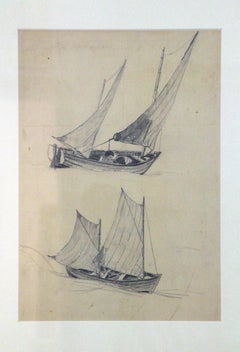
Paper, Graphite

Related Items
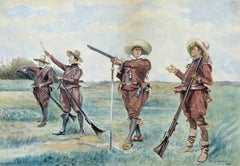
"Arquebusiers En Manoeuvre", After Marchetti
Located in Soquel, CA
Figurative landscape of four infantrymen in formation with their long arquebus guns by Adolphe Ancker (Dutch, 19th Century), after Marchetti. Signed and dated "Adolph Ancker 1888" lo...
Category

1880s American Impressionist William Langson Lathrop Art
Materials

Paper, Watercolor, Pencil

“Village Street” by Mary Nicholena MacCord, American Impressionist European Town
By Mary Nicholena MacCord
Located in Yardley, PA
A wonderful view of a charming European town. This work captures the quiet intimacy of a cobbled lane, its golden stones leading the viewer toward a cluster of whitewashed and brick ...
Category

Early 20th Century American Impressionist William Langson Lathrop Art
Materials

Canvas, Oil, Board

Snowy Landscape w Cardinal
By Manuel Garza
Located in Austin, TX
"Snowy Landscape w Cardinal" by Manuel Garza Oil on Canvas 16 x 20 inches Framed size 24 x 28" A serene, naturalistic rendition of a forested Texas l...
Category

Late 20th Century American Impressionist William Langson Lathrop Art
Materials

Canvas, Oil

Hawley Nell original American Antique Painting Impressionist Maine Gruppe framed
Located in Buffalo, NY
An original American impressionist oil painting of a country road in Maine by Emile Gruppe's cousin, American artist Haley B. Nell. Not much else is known about Nell, although the a...
Category

Late 19th Century American Impressionist William Langson Lathrop Art
Materials

Canvas, Oil

“Autumn Landscape, c. 1910” American Impressionist New England Fall Oil Signed
Located in Yardley, PA
Warm air seems to move through this scene as the eye wanders along a gentle swale dotted with granite boulders, low stone walls and scrubby autumn color. A ribbon of meadow pulls us ...
Category

Early 20th Century American Impressionist William Langson Lathrop Art
Materials

Canvas, Oil

George Elbert Burr 1924 Drawing – Storm over Arizona Desert Landscape, Southwest
By George Elbert Burr
Located in Denver, CO
This rare 1924 colored pencil drawing by renowned American artist George Elbert Burr (1859–1939) beautifully captures the raw, untamed drama of the Arizona de...
Category

Early 20th Century American Impressionist William Langson Lathrop Art
Materials

Paper, Color Pencil

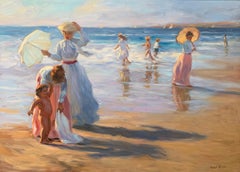
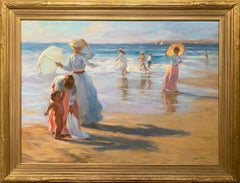
In the Flower Fields
By Frank S. Herrmann
Located in New York, NY
Rare to find this subject matter in turn of the century paintings! By 1895, Herrman had honed his artistic skills in Paris under the renowned academic painter William Bourguereau. Th...
Category

1890s American Impressionist William Langson Lathrop Art
Materials

Canvas, Oil

In the Flower Fields
$9,000
H 29.75 in W 43.75 in D 4 in
“Covered Bridge, Kingston, NY, 1927” by Walter Koeniger, Snowy Winter Landscape
By Walter Koeniger
Located in Yardley, PA
Known for his evocative, snow-covered landscapes, Koeniger brings this subject to life with his bold, confident brushwork and keen eye for natural light. The composition centers arou...
Category

1920s American Impressionist William Langson Lathrop Art
Materials

Canvas, Oil

1950s Denver Skyline Painting – Graphite & Watercolor Colorado Cityscape Art
Located in Denver, CO
A captivating midcentury cityscape titled "Denver Skyline", this original 1950s watercolor and graphite painting offers a rare industrial-era view of lower downtown Denver, Colorado....
Category

1950s American Impressionist William Langson Lathrop Art
Materials

Watercolor, Graphite

19th Century Maritime Seascape, USS Steam Frigate Niagara
Located in Soquel, CA
19th century maritime seascape of a naval ship similar to those used in the war of 1812, by William B. Hoff (American, 1846-1903). This miniature wat...
Category

19th Century American Impressionist William Langson Lathrop Art
Materials

Paper, Watercolor, Graphite

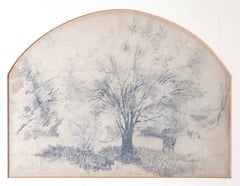
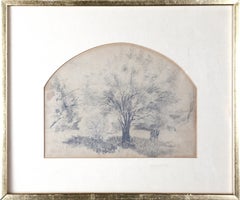
Late 19th Century Boats at San Francisco Port Seascape Drawing
By Raymond Dabb Yelland
Located in Soquel, CA
San Francisco moorings, a late 19th century double-sided pencil sketch by Raymond Dabb Yelland (American, 1848 - 1900), 1987. Signed "R.D. Yelland" lower right. Dated "87" lower left. Drawing on both sides of paper. Wood frame. Image size, 8.5"H x 12"L. A master marine painter, Yelland painted in Gloucester Harbor. He sailed to San Francisco in 1874 to take a teaching position in art at Mills College in Oakland. From 1877 to 1894, he taught at the California School of Design. He was a decisive influence on a younger generation of California artists. Full Bio: Raymond Dabb Yelland was born in London, England on February 2, 1848. At the age of three, he immigrated with his family to New York City where he was raised and attended public schools. By the age of twelve, he had settled on art as a career. He was born as Raymond Dabb, but due to the negative connotation of his name, his mother's maiden name, Yelland, was added. After serving under Sheridan in the Federal Army during the Civil War, Yelland attended Pennington Seminary in New Jersey. He studied art at the National Academy of Design from 1869 to 1871 with Page and Brevoort, and then taught at the Academy for one year. With his new bride, he sailed around the Horn in 1874 to San Francisco where he would assume the position of an art instructor at Mills College in Oakland. In 1877, he traveled to England, and later continued his studies in Paris with Luc Oliver Merson. Upon his return to California, Yelland became assistant director of the San Francisco School of Design, and in 1888, assumed its directorship. While at that school, he also taught at the University of California, Berkeley, for many years. His many pupils included Homer Davenport, Alexander Harrison...
Category

1880s American Impressionist William Langson Lathrop Art
Materials

Paper, Pencil

Melting Snow in Ploughed Field. American Impressionist Painting Winter Scene.
Located in Marco Island, FL
A lovely little Impressionist landscape of Melting Snow in a Ploughed Field, painted by William Samuel Horton (1856-1936). William Horton, primarily a landscape painter, lived and...
Category

Early 20th Century American Impressionist William Langson Lathrop Art
Materials

Oil, Canvas

Previously Available Items
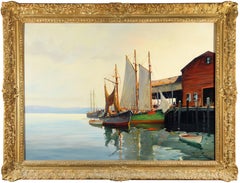
"Fishers Island"
By William Langson Lathrop
Located in Lambertville, NJ
Jim’s of Lambertville is proud to offer this artwork by: William Langson Lathrop (1859 - 1938) Deemed the “Father of the New Hope Art Colony”, William Langson Lathrop was born in ...
Category

1930s American Impressionist William Langson Lathrop Art
Materials

Oil, Board

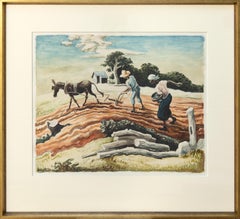
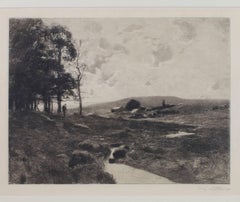
"Walking the Land, " an Etching signed by William Langson Lathrop
By William Langson Lathrop
Located in Milwaukee, WI
"Walking the Land" is an original etching signed in the lower right by the artist William L. Lathrop. It depicts a man on the left underneath the trees walking through the farmland. ...
Category

1880s American Impressionist William Langson Lathrop Art
Materials

Fabric, Etching

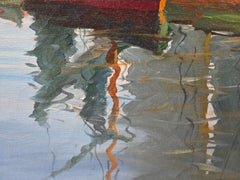
Twilight After Rain
By William Langson Lathrop
Located in Lambertville, NJ
Oil on canvas Signed lower right *Original period Whistler frame Illus. "Intimate Vistas"
Category

Early 1900s American Impressionist William Langson Lathrop Art
Materials

Oil

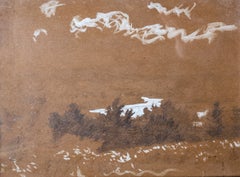
"Summer Clouds"
By William Langson Lathrop
Located in Lambertville, NJ
Jim’s of Lambertville is proud to offer this artwork. Signed lower right. Complemented by a hand carved and gilt frame. William L. Lathrop (1859-1938) Deemed “Father of the New Hope Art Colony”, William Langson Lathrop was born in Warren, Illinois. He was largely self-taught, having only studied briefly with William Merritt Chase in 1887, at the Art Students League. Lathrop first moved east in the early 1880s, and took a job at the Photoengraving Company in New York City. While there, he befriended a fellow employee, Henry B. Snell. The two men became lifelong friends and ultimately, both would be considered central figures among the New Hope Art Colony. Lathrop's early years as an artist were ones of continuing struggle. His efforts to break through in the New York art scene seemed futile, so he scraped enough money together to travel to Europe with Henry Snell in1888. There he met and married an English girl, Annie Burt. Upon returning to New York, he tried his hand at etching, making tools from old saw blades...
Category

1910s American Impressionist William Langson Lathrop Art
Materials

Oil, Canvas

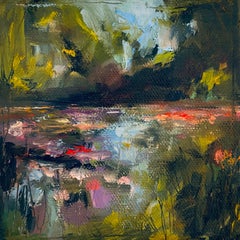
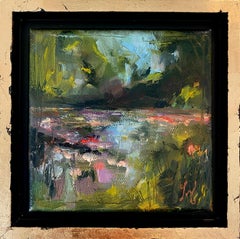
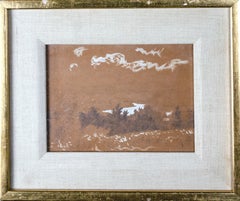
The Green Swale
By William Langson Lathrop
Located in Lambertville, NJ
Oil on canvas; landscape trees, signed lower right
Category

20th Century William Langson Lathrop Art
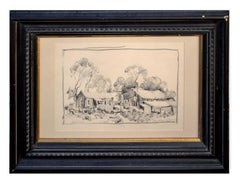
"Edge of the Woods"
By William Langson Lathrop
Located in Lambertville, NJ
Signed lower right. Complemented by a hand carved and gilt frame. William L. Lathrop (1859-1938) Deemed “Father of the New Hope Art Colony”, William Langson Lathrop was born in ...
Category

1910s American Impressionist William Langson Lathrop Art
Materials

Canvas, Oil

William Langson Lathrop art for sale on 1stDibs.

Find a wide variety of authentic William Langson Lathrop art available for sale on 1stDibs. You can also browse by medium to find art by William Langson Lathrop in canvas, fabric, oil paint and more. Much of the original work by this artist or collective was created during the 20th century and is mostly associated with the Impressionist style. Not every interior allows for large William Langson Lathrop art, so small editions measuring 13 inches across are available. Customers who are interested in this artist might also find the work of Irving Ramsey Wiles, Gifford Beal, and William Lester Stevens. William Langson Lathrop art prices can differ depending upon medium, time period and other attributes. On 1stDibs, the price for these items starts at $3,700 and tops out at $243,750, while the average work can sell for $102,813.
Artists Similar to William Langson Lathrop

Still Thinking About These?

All Recently Viewed