Want more images or videos?
Request additional images or videos from the seller
1 of 9

Spode Neo-classical Greek Pattern Blue Soup Plates- Set of Ten

$3,000per set
£2,312.63per set
€2,628.60per set
CA$4,274.56per set
A$4,650.28per set
CHF 2,453.88per set
MX$55,927.63per set
NOK 30,954.76per set
SEK 28,808.31per set
DKK 19,631.33per set

About the Item

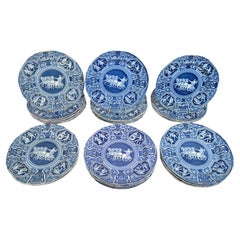
Greek Revival Dining: Set of 10 Spode "Phliasian Horseman" Soup Plates (c. 1806–1820) A fine set of 10 early 19th-century blue and white transfer-printed pottery soup plates by Spode, featuring a distinct scene from their celebrated "Greek" pattern series. The central tondo depicts "Refreshment for Phliasian Horseman," illustrating a triumphant moment from the Peloponnesian War where a mounted warrior is offered a drink by a maiden. This central narrative is framed by Spode's signature floral ground border, interspersed with four classical urns and shaped reserves containing further Neoclassical figures. The design source is historically documented: the images were adapted from "Outlines from the Figures and Compositions upon the Greek, Roman and Etruscan Vases of the late Sir William Hamilton," engraved by Mr. Kirk. This pattern is notable in Spode's history as likely the first "multi-scene" service, where different shapes (like soup plates vs. dinner plates) featured different central subjects. Condition: Good antique condition. Glaze remains glossy and the blue transfer is crisp. Note: One plate has a hairline crack (as mentioned). The remaining 9 appear free of significant damage. Markings: Impressed: Various workman's tally marks including "1", "2", and "4". Painted: Blue workman's marks to the underside. Measurements: Diameter: 9 1/4 inches (23.5 cm) Height: 1 1/2 inches (3.8 cm) Literature & Reference: Drakard & Holdway, Spode Transfer Printed Ware 1784-1833: Pages 248–250, Pattern Number P906-10. Spode Museum Trust: Documented as part of the "Greek" series introduced in 1806 to cater to the Regency taste for antiquity. Provenance: Private New Jersey Collection (Ref: VM98408)
  • Creator:
    Spode (Manufacturer)
  • Dimensions:
    Height: 1.25 in (3.18 cm)Diameter: 9.25 in (23.5 cm)
  • Sold As:
    Set of 10
  • Style:
    Neoclassical (Of the Period)
  • Materials and Techniques:
  • Place of Origin:
  • Period:
  • Date of Manufacture:
    1810
  • Condition:
    Wear consistent with age and use. Good antique condition. Glaze remains glossy and the blue transfer is crisp. Note: One plate has a hairline crack (as mentioned). The remaining 9 appear free of significant damage.
  • Seller Location:
    Downingtown, PA
  • Reference Number:
    Seller: VM984081stDibs: LU861047813802

More From This Seller

View All
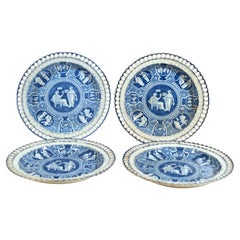
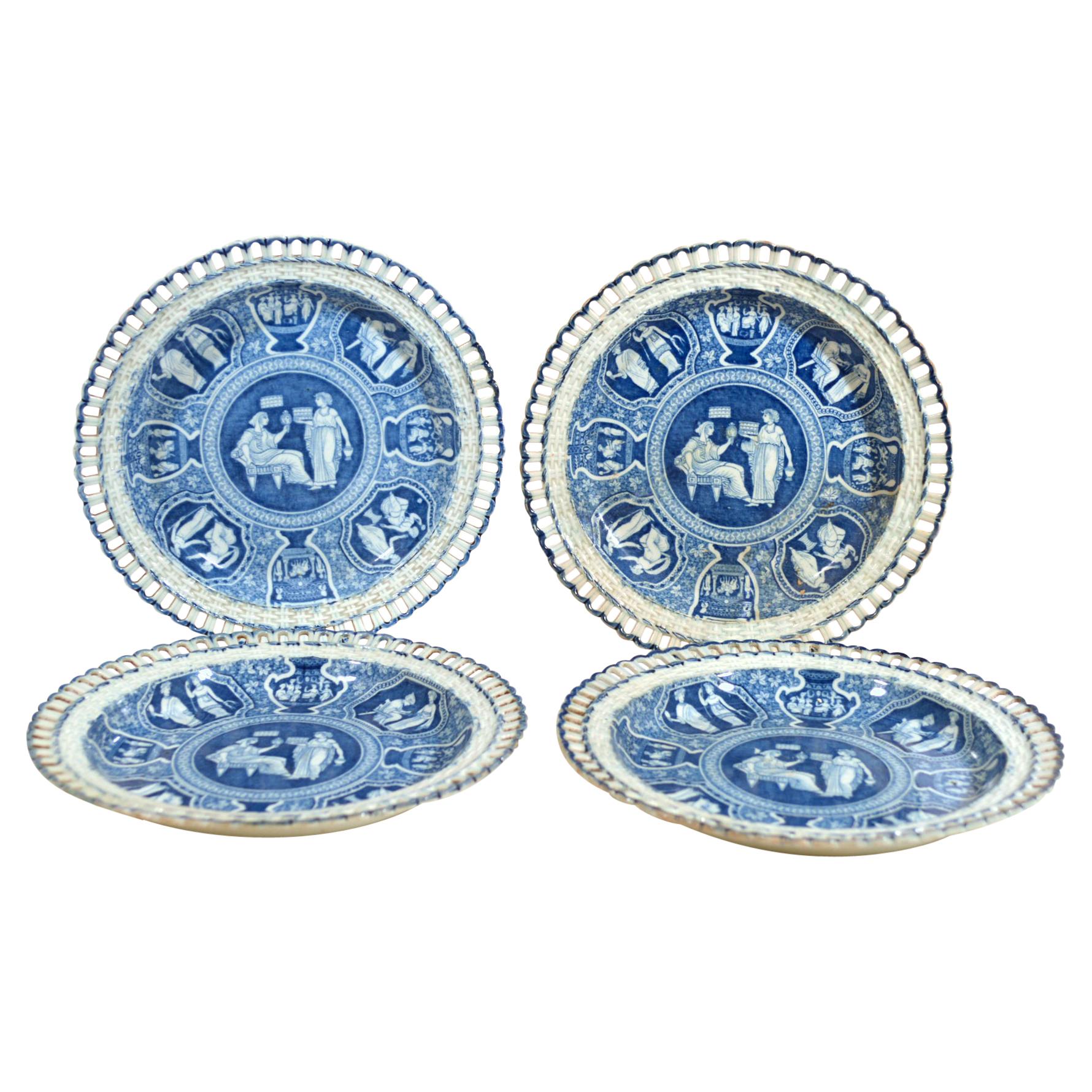
Spode Neo-Classical Greek Pattern Blue Openwork Dessert Plates
By Spode
Located in Downingtown, PA
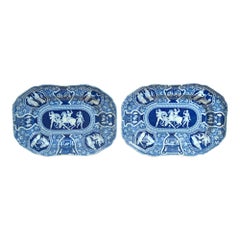
Spode neo-classical Greek pattern blue openwork dessert plates, Ceres with a Priestess, Four plates (4) Early 19th century From a large collection of Greek pattern Spode- more pi...
Category

Antique Early 19th Century English Neoclassical Pottery

Materials

Pearlware, Pottery

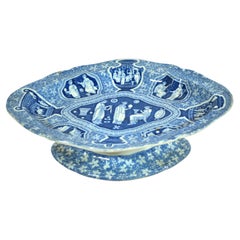
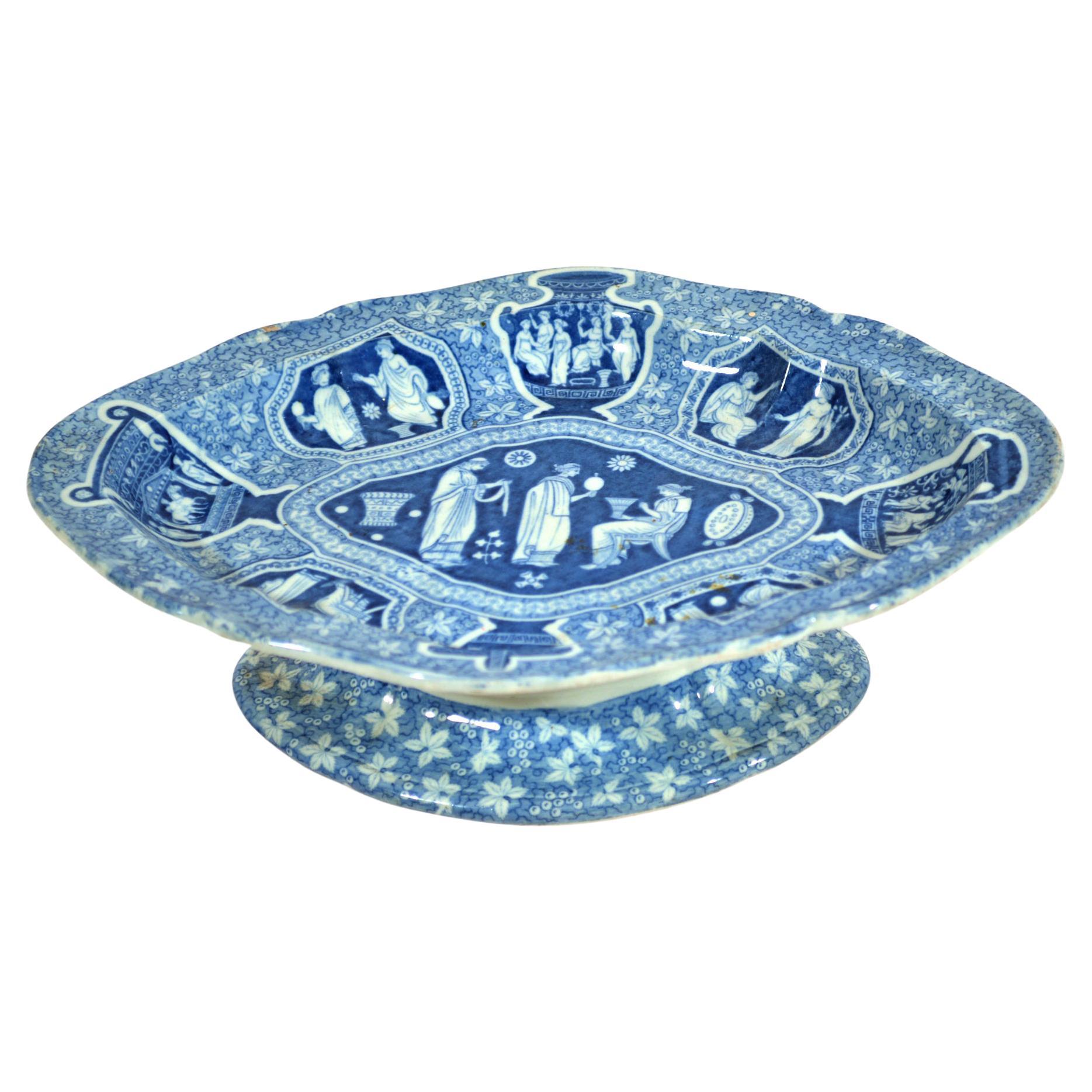
Regency Spode Neo-Classical Greek Pattern Blue Tazza
By Spode
Located in Downingtown, PA
Spode Neo-Classical Greek Pattern Tazza Early-19th century The Spode pottery underglaze blue Greek pattern has an oval shaped top with a central des...
Category

Antique Early 19th Century English Regency Pottery

Materials

Pearlware, Pottery

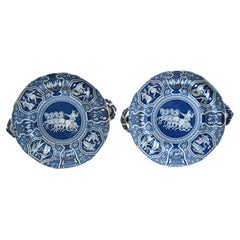
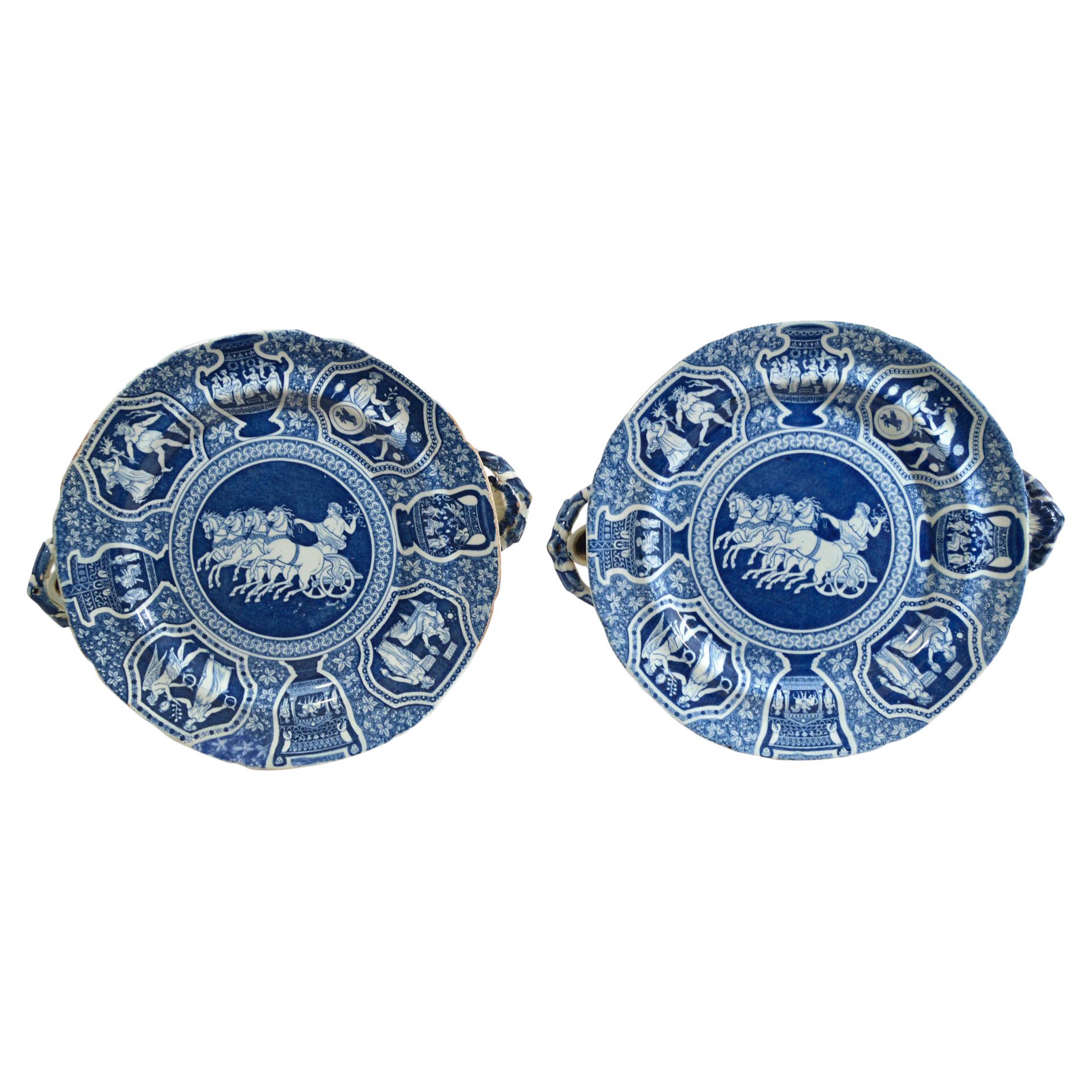
Spode Neo-classical Greek Pattern Blue Printed Hot Water Dishes
By Spode
Located in Downingtown, PA
Spode Neo-classical Greek pattern blue printed hot water dishes, Zeus in his Chariot, A pair, Early 19th century (We have five in all-two pairs and a single) The Spode pottery...
Category

Antique Early 19th Century Neoclassical Pottery

Materials

Pearlware, Pottery

Regency Period Spode Neo-classical Greek Pattern Blue Dessert Dishes- a Pair
By Spode
Located in Downingtown, PA
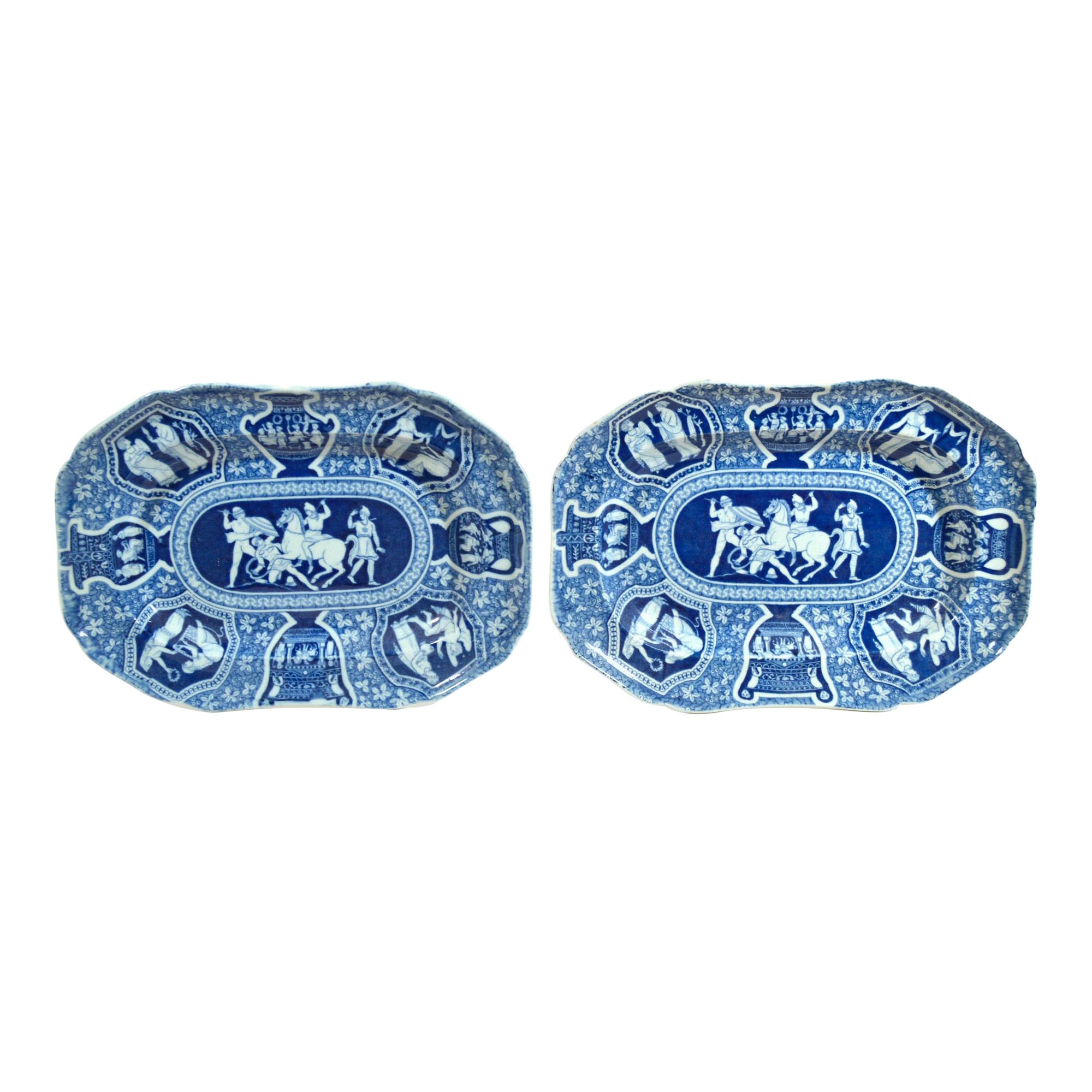
Regency Spode neo-Classical Greek pattern blue rectangular dessert dishes, Four figures in battle, Early 19th century The Spode Greek pattern pott...
Category

Antique Early 18th Century English Neoclassical Pottery

Materials

Pearlware, Pottery

Spode Pottery Neo-Classical Greek Pattern Blue Set of Dinner Plates-33 Plates
By Spode
Located in Downingtown, PA
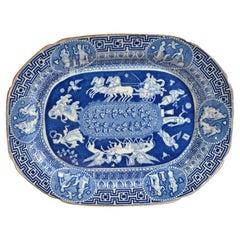
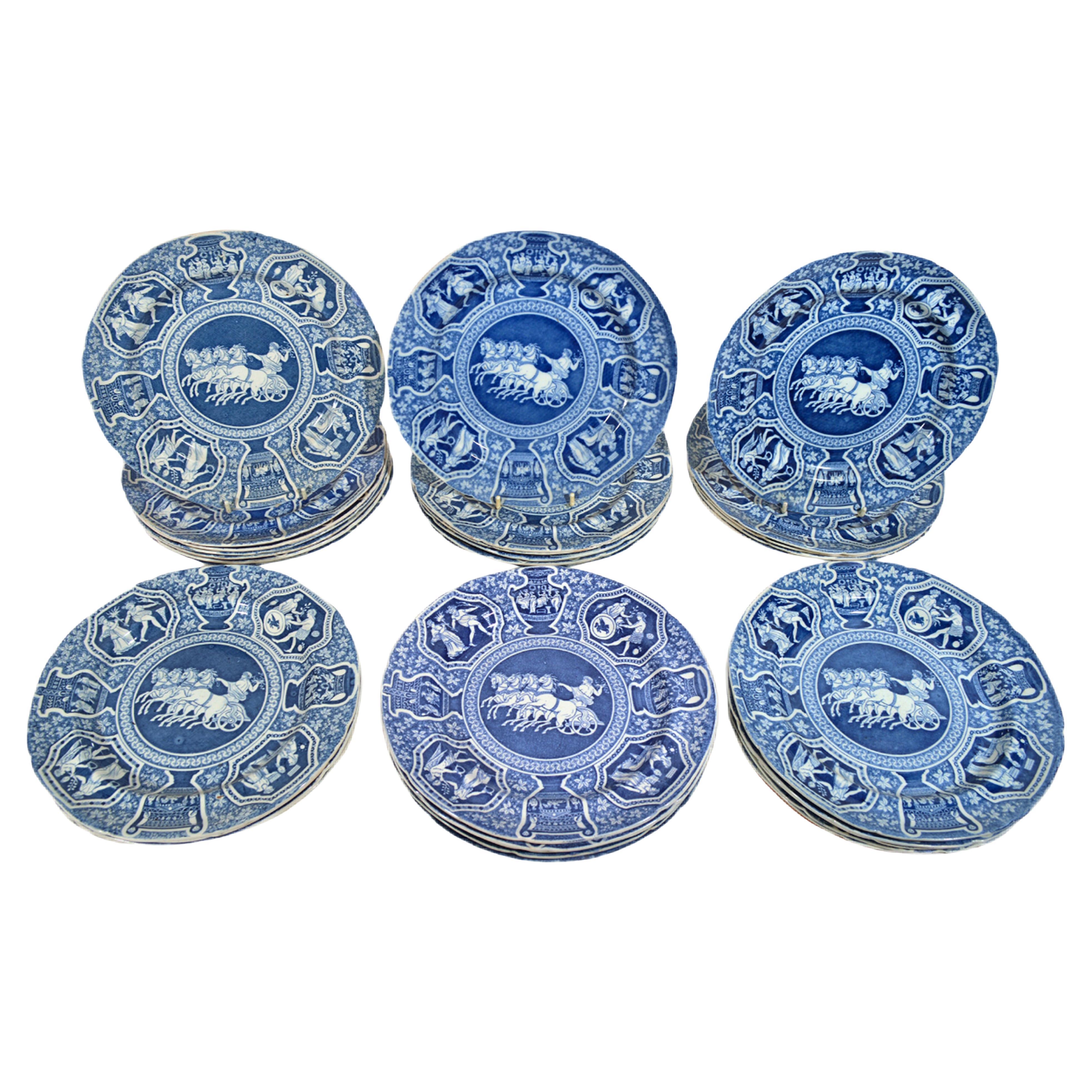
Greek Grandeur: Extensive Set of 33 Spode "Zeus in His Chariot" Dinner Plates (c. 1806–1820) An impressive and extensive set of 33 early 19th-century blue and white transfer-printed...
Category

Antique Early 19th Century English Neoclassical Dinner Plates

Materials

Pearlware, Pottery

Regency Herculaneum Neo-Classical Greek Pattern Blue Printed Dish
By Herculaneum Pottery
Located in Downingtown, PA
Herculaneum neo-Classical Greek Pattern blue printed dish, Early-19th century The Herculaneum pottery underglaze blue central pattern shows a s...
Category

Antique Early 19th Century English Neoclassical Pottery

Materials

Pearlware, Pottery

You May Also Like

Early Spode Red Greek Pattern Tile
By Josiah Spode, Spode
Located in Fort Lauderdale, FL
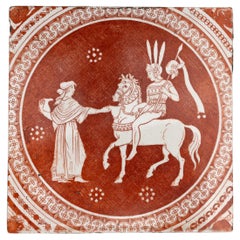
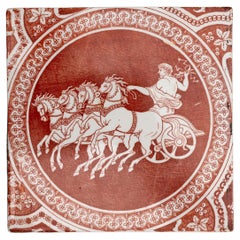
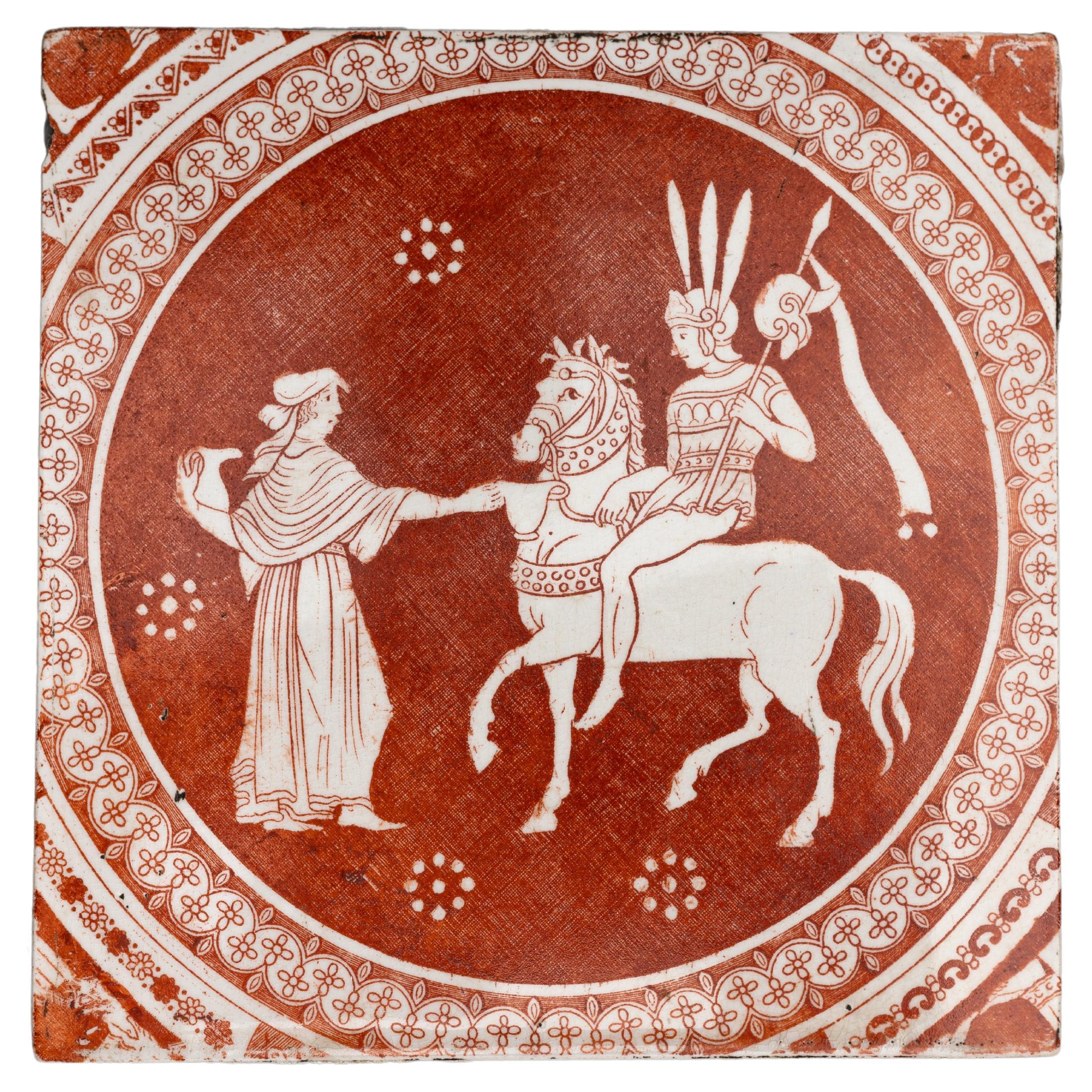
A Neoclassical red transferware tile made by Spode 1806-1810, with the ‘Refreshments for Phliasian Horseman’ pattern. Sir William Hamilton’s Collection of Etruscan, Greek and Roman antiquities, first published in 1766 by Pierre d’Hancarville, was a landmark publication in English design. It intended to disseminate the Antique style through its engravings of Attic pottery. The catalog’s faithful reproductions of Classical vases led British potteries, including Spode, to adapt or even copy the ancient art for modern life. These Spode Greek pattern tiles reflect the major influence of Hamilton’s catalog on English Neoclassicism. The central scene was taken directly from the catalog. This tile can be dated to a narrow window of production in the Spode factory, 1806-1810. During that time, Spode used a technique known as the “Pluck and Dust” method to print in red transfer designs onto creamware. Using this method, source prints were transferred overglaze using tissue imprinted with a very faint rendition of the design outlined in sticky oil. The decorator applied the tissue to the object then carefully “plucked” or pulled it away, leaving the sticky oil design behind. Then, a finely-ground enamel color was “dusted” onto the surface, sticking to any areas that had the oil. A final firing at a low temperature in the enamel kiln made the pattern permanent. The Pluck and Dust technique improved upon bat-printing and enabled larger designers to be transferred. It was short-lived, however, as under-glaze transfer printing soon took over as the preferred method for producing transferwares. Dimensions: 5 in. x 5 in. x 1/4 in. Condition: Excellent. Slight chip to the upper left corner measuring approximately 0.9 cm. in length. Provenance: The Collection of Nancy and Andrew Ramage Jonathan Horne...
Category

Antique Early 19th Century English Neoclassical Pottery

Materials

Earthenware, Creamware

Early 19th Century Spode Red Greek Pattern Tile
By Josiah Spode, Spode
Located in Fort Lauderdale, FL
A Neoclassical red transferware tile made by Spode 1806-1810, with the ‘Zeus in His Chariot’ pattern. Sir William Hamilton’s Collection of Etruscan, Greek and Roman antiquities, first published in 1766 by Pierre d’Hancarville, was a landmark publication in English design. It intended to disseminate the Antique style through its engravings of Attic pottery. The catalog’s faithful reproductions of Classical vases led British potteries, including Spode, to adapt or even copy the ancient art for modern life. These Spode Greek pattern tiles reflect the major influence of Hamilton’s catalog on English Neoclassicism. The central scene was taken directly from the catalog. This tile can be dated to a narrow window of production in the Spode factory, 1806-1810. During that time, Spode used a technique known as the “Pluck and Dust” method to print in red transfer designs onto creamware. Using this method, source prints were transferred overglaze using tissue imprinted with a very faint rendition of the design outlined in sticky oil. The decorator applied the tissue to the object then carefully “plucked” or pulled it away, leaving the sticky oil design behind. Then, a finely-ground enamel color was “dusted” onto the surface, sticking to any areas that had the oil. A final firing at a low temperature in the enamel kiln made the pattern permanent. The Pluck and Dust technique improved upon bat-printing and enabled larger designers to be transferred. It was short-lived, however, as under-glaze transfer printing soon took over as the preferred method for producing transferwares. Dimensions: 5 in. x 5 in. x 1/4 in. Condition: Excellent. Provenance: The Collection of Nancy and Andrew Ramage Jonathan Horne...
Category

Antique Early 19th Century English Neoclassical Pottery

Materials

Earthenware, Creamware

Pair Antique Spode Shell-Shaped Dishes Orange and Blue Pattern England Circa 182
By Spode
Located in Katonah, NY
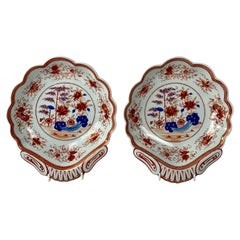
Spode made this pair of fine quality shell-shaped dishes in England in the early 19th century, circa 1820. The dishes were printed in shades of orange and blue Orange and blue is t...
Category

Antique Early 19th Century English Chinoiserie Pottery

Materials

Ironstone

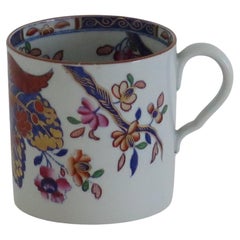
Georgian Spode Coffee Can Ironstone Kackiemon Pattern 2117, circa 1820
By Spode
Located in Lincoln, Lincolnshire
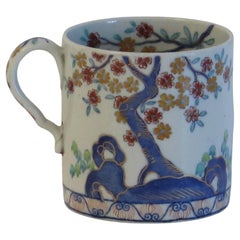
This is a good stone China (Ironstone) coffee can made by the SPODE factory in the early 19th Century, circa 1820. The coffee can is well potted with cylindrical shape and a loop handle with the distinctive Spode kink to it. The piece is beautifully decorated with hand painted enamels in the chinoiserie Kakiemon style, pattern number 2117. It has the Spode Stone China blue printed...
Category

Antique Early 19th Century English Georgian Ceramics

Materials

Ironstone

Georgian PAIR Soup Bowls by Spode in Blue & White Rome or Tiber Pattern, Ca 1815
By Josiah Spode
Located in Lincoln, Lincolnshire
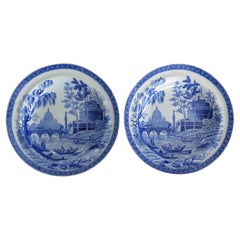
This is a beautiful pair of deep plates or Soup Bowls in the blue and white Rome or Tiber Pattern, produced by the Spode factory and made of a type of earthenware pottery called Pear...
Category

Antique Early 19th Century English Georgian Pottery

Materials

Pearlware

Georgian Spode Stone China Coffee Can (A)Tobacco Leaf Pattern 2061, circa 1820
By Spode
Located in Lincoln, Lincolnshire
This is a very good stone China (Ironstone) coffee can hand painted in the tobacco leaf pattern, number 2061, made by the Spode factory in the early 19th century, English Georgian period, circa 1820. This coffee can or cup made from Ironstone China is beautifully decorated with hand painted enamels in the very distinctive tobacco leaf pattern, pattern number 2061. The decoration also has very good hand gilded detailing. The upper rim has a dark ochre brown hand painted finish in the manner of 18th C...
Category

Antique Early 19th Century English Chinoiserie Ceramics

Materials

Ironstone