New Arrivals: Abstract Prints

Vintage, New and Antique Abstract Prints

  • Shop New Arrivals

    New day. New (outstanding) designs. Be the first to shop pieces — from furniture to fine jewelry — arriving daily.
to
193
294
95
173
74
37
Overall Width
to
Overall Height
to
238
135
89
85
31
5
3
2
1
82
63
24
17
16
545
128
1
6
2
92
129
155
63
38
430
200
42
1
1
1
1
1
1
389
117
88
69
46
140
84
399
242
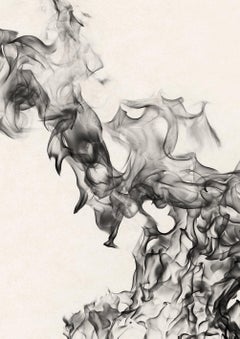
Fire Study 1 - Flames, Fine Art Photographic Print, Signed and Framed
Located in London, GB
Inspired by East Asian Sumi ink drawings, George McLeod wanted to find a photographic way of producing intricately detailed images. As with Sumi ink drawing, fire is both controllabl...
Category

2010s Abstract Impressionist Abstract Photography

Materials

Color, Black and White, Archival Paper, Archival Ink, Cotton, Wood, Arch...
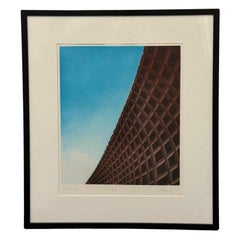
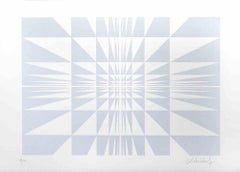
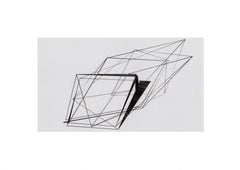
"Vertigo I" Artist's Proof by Hamzi
Located in Pasadena, CA
Signed, titled, and marked A.P. in the lower margin Description “Vertigo I” is a compelling study of scale, perception, and architectural rhythm. Hamzi’s lattice-like structure curv...
Category

Late 20th Century Realist Abstract Prints

Materials

Pastel, Screen

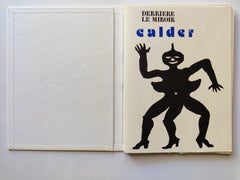
Alexander Calder -- Derriere Le Miroir, 1975
By Alexander Calder
Located in BRUCE, ACT
Alexander Calder Derriere Le Miroir, 1975 7 original lithographs with text in French and additional photographs of Calder and his sculpture work. Hand Signed Edition number 55/150 F...
Category

1970s Abstract Prints

Materials

Archival Paper

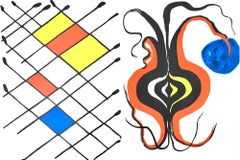
Alexander Calder, Untitled, from Derriere le miroir, 1966
By Alexander Calder
Located in Southampton, NY
This exquisite lithograph by Alexander Calder (1898–1976), titled Sans titre (Untitled), from the folio Derriere le miroir, No. 156, originates from the 1966 edition published by Mae...
Category

1960s Modern Abstract Prints

Materials

Lithograph

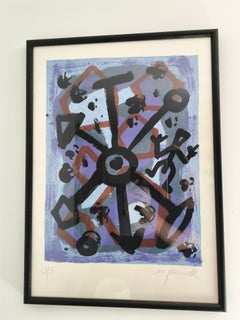
Im Zentrum by AR Penck
Located in Dubai, Dubai
Im Zentrum By Gerhard Richter 2007 Handsigned and numbered Screenprint on paper Framed 73x53cm Edition of 3
Category

2010s Contemporary Abstract Prints

Materials

Paper, Screen

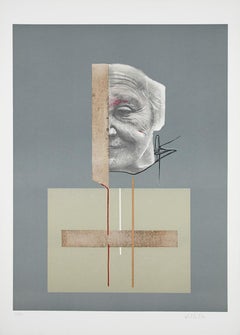
Dario Villalba UNTITLED 4 Limited Conceptualism Spanish Contemporary Grey Woman
By Dario Villalba
Located in Madrid, Madrid
Dario Villalba - UNTITLED 4 Date of creation: 1975 Medium: Lithograph and photolithograph on paper Edition: 75 Size: 95 x 68 cm Condition: In mint conditions and never framed Observa...
Category

1970s Conceptual Abstract Prints

Materials

Paper, Lithograph

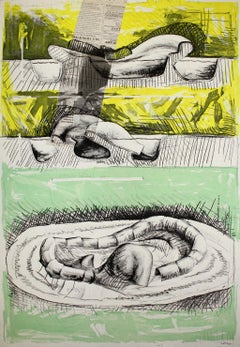
Andrés Nagel - UNTITLED 5 Etching & Collage Spanish Contemporary Conceptualism
Located in Madrid, Madrid
Andrés Nagel - UNTITLED 5 Date of creation: 1991 Medium: Etching and collage on Paper Edition: 75 Size: 98 x 69 cm Condition: In very good conditions and never framed Observations: E...
Category

1990s Conceptual Abstract Prints

Materials

Etching

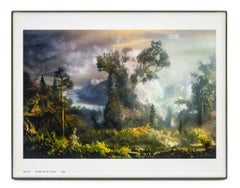
"West 91r"
By Kim Keever
Located in Astoria, NY
Kim Keever (American, b. 1955), "West 91r", Chromogenic Print in Colors, 2008, titled and dated lower right, inscribed and signed verso, black frame. Image: 6.5" H x 10" W; frame: ...
Category

Early 2000s Contemporary Landscape Photography

Materials

C Print

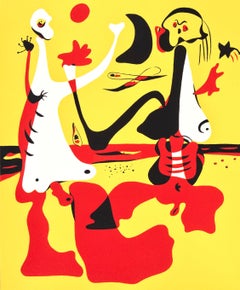
Joan Miro, Figures Before the Sea, from D'Aci i d’Alla, 1934
By Joan Miró
Located in Southampton, NY
This exquisite lithograph and pochoir by Joan Miro (1893–1983), titled Figures davant el mar (Figures Before the Sea), originates from the historic 1934 album D'Aci i d’Alla, Numero Extraordinari de Nadal dedicat a l’art del segle XX. Published by Llibreria Catalonia, Barcelona, under the direction of Antonio Lopez Llausas, Editeur, Barcelona, 1934, and under the supervision of Joan Prats, Barcelona, and Josep Lluis Sert, Barcelona; printed by Pochoir Publicity Art, Barcelona, under the direction of J. Mateu, Barcelona, 1934, the work reflects Miros early mastery of Surrealist biomorphism and his exceptional sensitivity to the pochoir technique, whose saturated, hand-applied colors were ideally suited to his luminous Mediterranean palette. Executed as a lithograph and pochoir on velin paper, this work measures 13 x 11.1875 inches (33.02 x 28.42 cm). Unsigned and unnumbered as issued. Printed by Pochoir Publicity Art, Barcelona, under the direction of J. Mateu. Artwork Details: Artist: Joan Miro (1893–1983) Title: Figures davant el mar (Figures Before the Sea), from the album D'Aci i d’Alla, Numero Extraordinari de Nadal dedicat a l’art del segle XX, 1934 Medium: Lithograph and pochoir on velin paper Dimensions: 13 x 11.1875 inches (33.02 x 28.42 cm) Inscription: Unsigned and unnumbered as issued Date: 1934 Publisher: Llibreria Catalonia, Barcelona; under the direction of Antonio Lopez Llausas, Editeur, Barcelona, with the supervision of Joan Prats and Josep Lluis Sert Printer: Pochoir Publicity Art, Barcelona; under the direction of J. Mateu Catalogue raisonne reference: Dupin, Jacques, and Joan Miro. Miro Engraver 1928–1960. Rizzoli, 1984, illustration 13. Cramer, Patrick. Joan Miro: The Illustrated Books: Catalogue Raisonne. Patrick Cramer, 1989, illustration 11. Condition: Well preserved, consistent with age and medium Provenance: From the album D'Aci i d’Alla, Numero Extraordinari de Nadal dedicat a l’art del segle XX, 1934, published by Llibreria Catalonia, Barcelona About the Publication: The 1934 album D'Aci i d’Alla, Numero Extraordinari de Nadal dedicat a l’art del segle XX, stands as one of the most ambitious, sophisticated, and culturally significant Catalan art publications of the interwar period, conceived at a moment when Barcelona was a thriving hub of artistic modernity. Produced by Llibreria Catalonia under the direction of Antonio Lopez Llausas, with the close involvement of Joan Prats and Josep Lluis Sert—two of the most influential Catalan cultural figures of the twentieth century—the album embodied a vision of Catalonia as an active, forward-looking center of international avant-garde thought, connected intellectually and aesthetically to Paris, yet deeply rooted in Mediterranean identity. Unlike standard periodicals, D'Aci i d’Alla functioned as a hybrid fine art album, design object, and critical journal, integrating essays, photography, architecture, poetry, and original artworks in a unified modernist aesthetic. The 1934 Numero Extraordinari, devoted to twentieth-century art, was particularly ambitious in scope: it surveyed the newest movements in modernism while highlighting Catalonia’s unique contributions to the international avant-garde. Its inclusion of an original Joan Miro pochoir...
Category

1930s Surrealist Abstract Prints

Materials

Lithograph

CONRAD MARCA-RELLI Limited ed. Etching & Aquatint American Modern, Contemporary
By Conrad Marca-Relli 1
Located in Madrid, Madrid
Conrad Marca Relli - Composition X Date of creation: 1977 Medium: Etching and aquatint on Gvarro paper Edition: 75 + AP + HC Size: 56 x 76 cm Condition: In very good conditions and n...
Category

1970s Modern Abstract Prints

Materials

Etching, Aquatint

Wet Dog by Epi
Located in Dubai, Dubai
Wet Dog By Epi 2025 Signed and numbered to verso Single colour silkscreen print on Arches 300gsm hot pressed deckle-edged cotton paper 38cm x 28 cm Limited edition of 120
Category

2010s Pop Art Abstract Prints

Materials

Screen

Work, 1980s Screenprint on paper, framed
Located in Hong Kong, HK
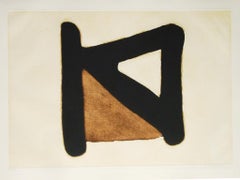
Yoshishige Saito Work, 1980s Screenprint and punching on paper 31.30 x 28.50 cm (12.32 x 11.22 in) Framed 40 x 37 x 3 cm
Category

1980s Prints and Multiples

Materials

Paper, Screen

"Dream and Do"
By Ross Bleckner
Located in Astoria, NY
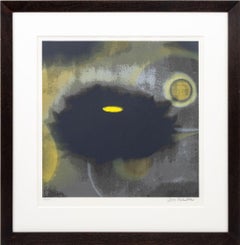
Ross Bleckner (American, b. 1949), "Dream and Do", Screenprint in Colors on Wove Paper, 1997, signed in pencil lower right, numbered edition "38/250" lower left, ebonized wood frame....
Category

1990s Abstract Abstract Prints

Materials

Paper, Screen

ANISH KAPOOR - MOIRÉ. Limited edition etching Hand signed. Contemporary, Modern
By Anish Kapoor
Located in Madrid, Madrid
ANISH KAPOOR MOIRÉ 3 Date of creation: 2015 Medium: Etching on paper Edition: 39 Size: 96 x 72.4 cm Condition: In perfect conditions, brand new Etching on paper hand signed and numbe...
Category

2010s Modern Abstract Prints

Materials

Paper, Etching

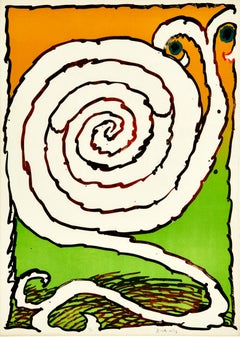
Pierre Alechinsky(1927) -Plate II from the portfolio Ceremonial Labyrinths- 1972
By Pierre Alechinsky
Located in Varese, IT
Color lithograph on Arches paper, edited 1973 Limited edition of 100 copies, numbered 67/100 in lower left corner. Signed in pencil by artist in lower right corner. Paper size: 79 x...
Category

1970s Abstract Abstract Prints

Materials

Lithograph

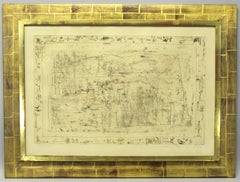
Zao Wou-Ki 趙無極 (1920–2013) – Flore et Faune – Etching on paper – 1951
By Zao Wou-Ki
Located in Varese, IT
Etching on paper, edited 1973 Limited edition of 200 copies, numbered 146/200 in lower left corner. Signed in pencil by artist in lower right corner. Image size: 31.5 x 48.5 cm (12....
Category

1970s Abstract Abstract Prints

Materials

Etching

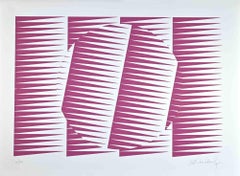
Purple Composition - Screen Print by Victor Debach - 1970s
By Victor Debach
Located in Roma, IT
Screen print on paper realized by Victor Debach in 1970s. Hand signed and numbered in pencil. Edition of 100. Very good condition.
Category

1970s Op Art Abstract Prints

Materials

Screen

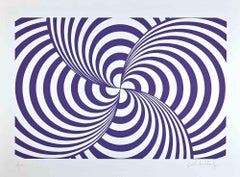
Violet Composition - Screen Print by Victor Debach - 1970s
By Victor Debach
Located in Roma, IT
Screen print on paper realized by Victor Debach in 1970s. Hand signed and numbered in pencil. Edition of 100. Very good condition.
Category

1970s Op Art Abstract Prints

Materials

Screen

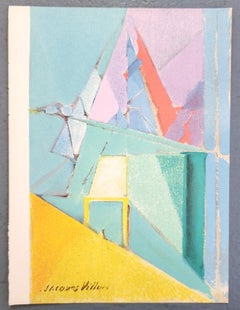
"Intimite" (Mourlot, Paris, Master Printer - 70% OFF LIST PRICE - LIMITED TIME)
By Jacques Villon
Located in Kansas City, MO
Jacques Villon Intimite 1964 Original Reproduction of a Gouache on Velin d'Arches Size: 10x7.375in Signed in the stone Edition: 2,000 Annotated verso Publisher: Mourlot, Paris Printe...
Category

1960s Modern Prints and Multiples

Materials

Vellum

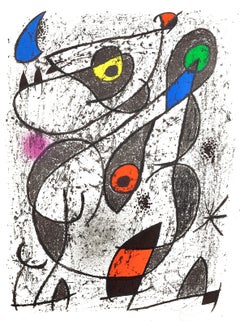
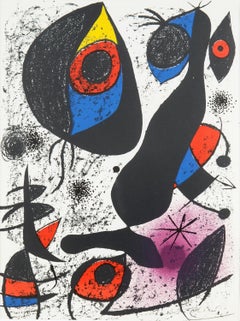
Joan Miro, Miro in Ink II, from Indelible Miro, XXe Siecle, 1972
By Joan Miró
Located in Southampton, NY
This exquisite lithograph by Joan Miro (1893–1983), titled Miro a l'encre II (Miro in Ink II), originates from the 1972 album Indelible Miro. Published by Societe Internationale d'Ar...
Category

1970s Surrealist Abstract Prints

Materials

Lithograph

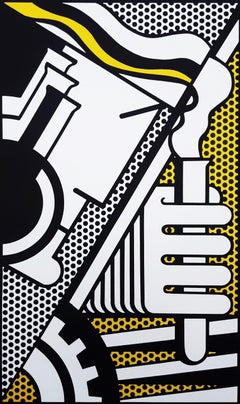
Chem 1A /// Pop Art Roy Lichtenstein Science Chemistry Screenprint Portrait Face
By Roy Lichtenstein
Located in Saint Augustine, FL
Artist: Roy Lichtenstein (American, 1923-1997) Title: "Chem 1A" *Signed and dated by Lichtenstein in pencil lower right Year: 1970 Medium: Original Screenprint on Special Arjomari pa...
Category

1970s Pop Art Abstract Prints

Materials

Screen

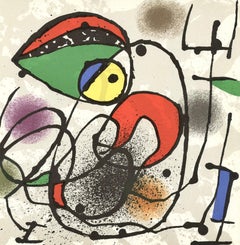
Joan Miro, Untitled, from Miro Sculpture, 1974
By Joan Miró
Located in Southampton, NY
This exquisite lithograph by Joan Miro (1893–1983), titled Sans titre (Untitled), originates from the 1974 album miro sculpture (Miro Sculpture). Publi...
Category

1970s Surrealist Abstract Prints

Materials

Lithograph

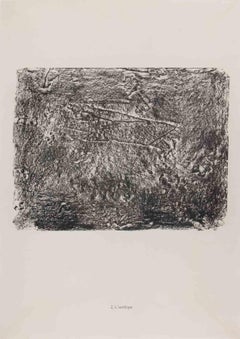
L'Antilope - Lithograph by Jean Dubuffet - 1961
By Jean Dubuffet
Located in Roma, IT
Lithograph on wove paper. Not signed, as issued. Published by Galerie René Drouin, Paris. Plate no. from the portfolio "Les Phénomènes". A striking monochrome lithograph from Jea...
Category

1960s Abstract Abstract Prints

Materials

Lithograph

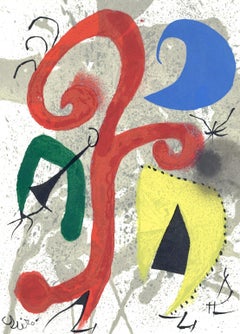
Joan Miro, Garden in the Moonlight, from Homage to Teriade, 1973
By Joan Miró
Located in Southampton, NY
This exquisite lithograph by Joan Miro (1893–1983), titled Jardin au clair de lune (Garden in the Moonlight), originates from the 1973 album hommage a Teriade (Homage to Teriade). Pu...
Category

1970s Surrealist Abstract Prints

Materials

Lithograph

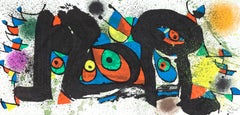
Joan Miro, Untitled, from Miro Sculpture, 1974
By Joan Miró
Located in Southampton, NY
This exquisite lithograph by Joan Miro (1893–1983), titled Sans titre (Untitled), originates from the 1974 album miro sculpture (Miro Sculpture). Publi...
Category

1970s Surrealist Abstract Prints

Materials

Lithograph

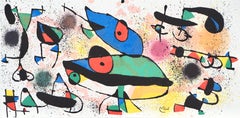
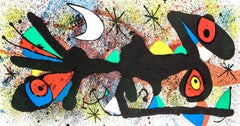
Joan Miro, Untitled, from Miro and Artigas Ceramics, 1974
By Joan Miró
Located in Southampton, NY
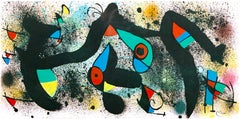
This exquisite lithograph by Joan Miro (1893–1983), titled Sans Titre (Untitled), originates from the 1974 album ceramiques de miro et artigas (Miro and Artigas Ceramics). Published by Maeght Editeur, Paris, and printed by Arte, Adrien Maeght, Paris, this work reflects Miros lyrical fusion of abstraction, gesture, and ceramic-inspired form. In Sans Titre (Untitled), Miro channels the vivid spontaneity and symbolic richness that define his mature graphic language. Executed as a lithograph on velin paper, this work measures 11.024 x 22.28 inches, with stitch perforations and centerfold as issued. Signed in the plate and unnumbered as issued. Printed by Arte, Adrien Maeght, Paris, one of the foremost ateliers of the 20th century. Artwork Details: Artist: Joan Miro (1893–1983) Title: Sans Titre (Untitled), from the album ceramiques de miro et artigas (Miro and Artigas Ceramics), 1974 Medium: Lithograph on velin paper Dimensions: 11.024 x 22.28 inches (28 x 56.57 cm), with stitch perforations and centerfold as issued Inscription: Signed in the plate and unnumbered as issued Date: 1974 Publisher: Maeght Editeur, Paris Printer: Arte, Adrien Maeght, Paris Catalogue raisonne reference: Mourlot, Fernand, and Joan Miro. Catalogue des Lithographies de Miro. Vol. V. Andre Sauret, 1984, illustrations 926–927. Cramer, Patrick. Joan Miro: The Illustrated Books: Catalogue Raisonne. Patrick Cramer, 1989, illustration 183. Condition: Well preserved, consistent with age and medium Provenance: From the 1974 album ceramiques de miro et artigas (Miro and Artigas Ceramics), published by Maeght Editeur, Paris; printed by Arte, Adrien Maeght, Paris Notes: Excerpted from the album (translated from French), The original lithographs were drawn in the ateliers Arte, Adrien Maeght, Paris. Completed printing on April 30, 1974. About the Publication: Ceramiques de miro et artigas (Miro and Artigas Ceramics) is a landmark 1974 album published by Maeght Editeur that documents and celebrates the long, fertile collaboration between Joan Miro and the master ceramicist Josep Llorens Artigas. The album serves as both an artistic tribute and an archival record of their shared exploration into the expressive possibilities of fire, clay, pigment, and surface. Maeght Editeur—renowned for its exceptional production standards and its close relationships with leading modern artists—commissioned original lithographs specifically for the album, each reflecting the tactile, gestural, and symbolic vocabulary that Miro developed through decades of experimentation in ceramics. Printed by Arte, Adrien Maeght in Paris, the production exemplifies the publisher’s commitment to uniting fine art printing with rigorous documentation. The album honors one of the most important artist–artisan partnerships of the 20th century, capturing the profound synergy between Miro’s visionary abstraction and Artigas’s mastery of traditional and experimental ceramic processes. As with all major Maeght publications, the album was conceived not merely as a catalogue but as a complete work of art, synthesizing text, image, and craftsmanship into an enduring contribution to the history of modernist printmaking and book arts. About the Artist: Joan Miro (1893–1983) was a Catalan painter, sculptor, printmaker, and ceramicist whose visionary imagination and lyrical abstraction made him one of the most influential and beloved artists of the 20th century. Born in Barcelona, Miro drew inspiration from Catalan folk art, Romanesque frescoes, and the luminous landscapes of Mont-roig del Camp, developing a deep connection to nature that infused his work with vitality and symbolism. After formal training at the Escola dArt in Barcelona, he absorbed the lessons of Post-Impressionism and Cubism before moving to Paris in the early 1920s, where he became a leading figure in the Surrealist movement. There, Miro forged a personal visual language of biomorphic shapes, floating symbols, and radiant color harmonies that reflected both spontaneity and spiritual depth. In creative dialogue with peers such as Alexander Calder, Alberto Giacometti, Salvador Dali, Wassily Kandinsky, Marcel Duchamp, and Man Ray, he helped revolutionize modern art by dissolving the boundaries between abstraction and dream imagery. Miros inventive approach extended far beyond painting, embracing sculpture, ceramics, and monumental public commissions that redefined how art could interact with space and emotion. His expressive freedom and gestural abstraction profoundly influenced later artists including Jackson Pollock, Mark Rothko, Alexander Calder, Jean Dubuffet, Antoni Tapies, and Joan Mitchell, inspiring generations who sought to merge instinct, color, and imagination. Today, Miros work remains a cornerstone of modernism, prized by collectors and celebrated in major museums worldwide. His highest auction record was achieved by Peinture (Etoile Bleue) (1927), which sold for 23561250 GBP (approximately 37 million USD) at Sothebys, London, on June 19, 2012. Joan Miro Sans Titre 1974, Miro ceramiques...
Category

1970s Surrealist Abstract Prints

Materials

Lithograph

Silver Composition - Screen Print by Victor Debach - 1970s
By Victor Debach
Located in Roma, IT
Screen print on paper realized by Victor Debach in 1970s. Hand signed and numbered in pencil. Edition of 100. Excellent condition.
Category

1970s Op Art Abstract Prints

Materials

Screen

Joan Miro, Miro in Ink I, from Indelible Miro, XXe Siecle, 1972
By Joan Miró
Located in Southampton, NY
This exquisite lithograph by Joan Miro (1893–1983), titled Miro a l'encre I (Miro in Ink I), originates from the 1972 album Indelible Miro. Published by Societe Internationale d'Art ...
Category

1970s Surrealist Abstract Prints

Materials

Lithograph

Joan Miro, Untitled, from Sculptures of Miro, 1973
By Joan Miró
Located in Southampton, NY
This exquisite lithograph by Joan Miro (1893–1983), titled Sans titre (Untitled), originates from the 1973 album Sculptures de Miro, Ceramiques de Miro, et Llorens Artigas (Sculpture...
Category

1970s Surrealist Abstract Prints

Materials

Lithograph

Joan Miro, Untitled, from Sculptures of Miro, 1973
By Joan Miró
Located in Southampton, NY
This exquisite lithograph by Joan Miro (1893–1983), titled Sans titre (Untitled), originates from the 1973 album Sculptures de Miro, Ceramiques de Miro, et Llorens Artigas (Sculpture...
Category

1970s Surrealist Abstract Prints

Materials

Lithograph

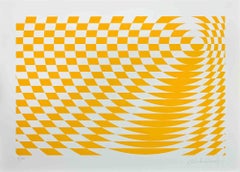
Yellow Composition - Screen Print by Victor Debach - 1970s
By Victor Debach
Located in Roma, IT
Screen print realized by Victor Debach in 1970s. Hand signed and numbered in pencil. Edition of 100.
Category

1970s Op Art Abstract Prints

Materials

Screen

Orange Composition - Screen Print by Victor Debach - 1970s
By Victor Debach
Located in Roma, IT
Screen print on paper realized by Victor Debach in 1970s. Hand signed and numbered in pencil. Edition of 100. Excellent condition.
Category

1970s Op Art Abstract Prints

Materials

Screen

Blue Composition - Screen Print by Victor Debach - 1970s
By Victor Debach
Located in Roma, IT
Screen print on paper realized by Victor Debach in 1970s. Hand signed and numbered in pencil. Edition of 100. Excellent condition.
Category

1970s Op Art Abstract Prints

Materials

Screen

Infinity Nets, 1953-1984 Limited edition print by Yayoi Kusama signed
By Yayoi Kusama
Located in Hong Kong, HK

Yayoi Kusama (b. 1929)
Infinity Nets, 1953–1984

Medium: Lithograph in colors on Vélin d’Arches paper
Image: 31 × 40.6 cm (12 1/4 ×...

Category

1980s Prints and Multiples

Materials

Lithograph

Joan Miro, For Fernand Mourlot, from XXXIIe Festival d'Avignon, 1978 (after)
By Joan Miró
Located in Southampton, NY
This exquisite lithograph after Joan Miro (1893–1983), titled Pour Fernand Mourlot (For Fernand Mourlot), originates from the 1978 album XXXIIe Festival d'Avignon, Cinquante Annees d...
Category

1970s Surrealist Abstract Prints

Materials

Lithograph

Joan Miro, Untitled, from Miro and Artigas Ceramics, 1974
By Joan Miró
Located in Southampton, NY
This exquisite lithograph by Joan Miro (1893–1983), titled Sans Titre (Untitled), originates from the 1974 album ceramiques de miro et artigas (Miro and Artigas Ceramics). Published by Maeght Editeur, Paris, and printed by Arte, Adrien Maeght, Paris, this work reflects Miros lyrical fusion of abstraction, gesture, and ceramic-inspired form. In Sans Titre (Untitled), Miro channels the vivid spontaneity and symbolic richness that define his mature graphic language. Executed as a lithograph on velin paper, this work measures 11.024 x 22.28 inches, with stitch perforations and centerfold as issued. Signed in the plate and unnumbered as issued. Printed by Arte, Adrien Maeght, Paris, one of the foremost ateliers of the 20th century. Artwork Details: Artist: Joan Miro (1893–1983) Title: Sans Titre (Untitled), from the album ceramiques de miro et artigas (Miro and Artigas Ceramics), 1974 Medium: Lithograph on velin paper Dimensions: 11.024 x 22.28 inches (28 x 56.57 cm), with stitch perforations and centerfold as issued Inscription: Signed in the plate and unnumbered as issued Date: 1974 Publisher: Maeght Editeur, Paris Printer: Arte, Adrien Maeght, Paris Catalogue raisonne reference: Mourlot, Fernand, and Joan Miro. Catalogue des Lithographies de Miro. Vol. V. Andre Sauret, 1984, illustrations 926–927. Cramer, Patrick. Joan Miro: The Illustrated Books: Catalogue Raisonne. Patrick Cramer, 1989, illustration 183. Condition: Well preserved, consistent with age and medium Provenance: From the 1974 album ceramiques de miro et artigas (Miro and Artigas Ceramics), published by Maeght Editeur, Paris; printed by Arte, Adrien Maeght, Paris Notes: Excerpted from the album (translated from French), The original lithographs were drawn in the ateliers Arte, Adrien Maeght, Paris. Completed printing on April 30, 1974. About the Publication: Ceramiques de miro et artigas (Miro and Artigas Ceramics) is a landmark 1974 album published by Maeght Editeur that documents and celebrates the long, fertile collaboration between Joan Miro and the master ceramicist Josep Llorens Artigas. The album serves as both an artistic tribute and an archival record of their shared exploration into the expressive possibilities of fire, clay, pigment, and surface. Maeght Editeur—renowned for its exceptional production standards and its close relationships with leading modern artists—commissioned original lithographs specifically for the album, each reflecting the tactile, gestural, and symbolic vocabulary that Miro developed through decades of experimentation in ceramics. Printed by Arte, Adrien Maeght in Paris, the production exemplifies the publisher’s commitment to uniting fine art printing with rigorous documentation. The album honors one of the most important artist–artisan partnerships of the 20th century, capturing the profound synergy between Miro’s visionary abstraction and Artigas’s mastery of traditional and experimental ceramic processes. As with all major Maeght publications, the album was conceived not merely as a catalogue but as a complete work of art, synthesizing text, image, and craftsmanship into an enduring contribution to the history of modernist printmaking and book arts. About the Artist: Joan Miro (1893–1983) was a Catalan painter, sculptor, printmaker, and ceramicist whose visionary imagination and lyrical abstraction made him one of the most influential and beloved artists of the 20th century. Born in Barcelona, Miro drew inspiration from Catalan folk art, Romanesque frescoes, and the luminous landscapes of Mont-roig del Camp, developing a deep connection to nature that infused his work with vitality and symbolism. After formal training at the Escola dArt in Barcelona, he absorbed the lessons of Post-Impressionism and Cubism before moving to Paris in the early 1920s, where he became a leading figure in the Surrealist movement. There, Miro forged a personal visual language of biomorphic shapes, floating symbols, and radiant color harmonies that reflected both spontaneity and spiritual depth. In creative dialogue with peers such as Alexander Calder, Alberto Giacometti, Salvador Dali, Wassily Kandinsky, Marcel Duchamp, and Man Ray, he helped revolutionize modern art by dissolving the boundaries between abstraction and dream imagery. Miros inventive approach extended far beyond painting, embracing sculpture, ceramics, and monumental public commissions that redefined how art could interact with space and emotion. His expressive freedom and gestural abstraction profoundly influenced later artists including Jackson Pollock, Mark Rothko, Alexander Calder, Jean Dubuffet, Antoni Tapies, and Joan Mitchell, inspiring generations who sought to merge instinct, color, and imagination. Today, Miros work remains a cornerstone of modernism, prized by collectors and celebrated in major museums worldwide. His highest auction record was achieved by Peinture (Etoile Bleue) (1927), which sold for 23561250 GBP (approximately 37 million USD) at Sothebys, London, on June 19, 2012. Joan Miro Sans Titre 1974, Miro ceramiques...
Category

1970s Surrealist Abstract Prints

Materials

Lithograph

The Book of Signals - Lithograph by Leo Guida - 1970s
By Leo Guida
Located in Roma, IT
The Book of Signals is an original lithograph realized by Leo Guida in the 1970s. Good condition. Titled on the lower. Leo Guida (1992 - 2017). Sensitive to current issues, artis...
Category

1970s Contemporary Abstract Prints

Materials

Lithograph

Abstract Composition - Etching by Amintore Fanfani - 1972
By Amintore Fanfani
Located in Roma, IT
Abstract Composition is a mixed-colored Etching realized by Amintore Fanfani in 1972. Hand-signed and dated on the lower right. Numbered on the lower left. Edition 4/80.  The stat...
Category

1970s Contemporary Abstract Prints

Materials

Etching

INK ROR TABLES
By Rorschach
Located in Slovak Republic, SK
Ten Rorschach tables, framed in high quality black frames under art glass. Could be purchased as one item all 10/or individually per pieces's. Price is different for the item 10 piec...
Category

20th Century Abstract Abstract Prints

Materials

Paper

“Shadow of Dawn” A Calming Abstract by Gary Smith
Located in San Francisco, CA
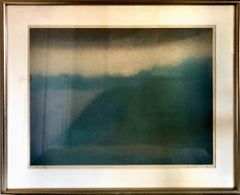
Suggestive of the misty cool colors and contours of the Pacific Northwest, this scenic framed lithograph is numbered #5 of 40. Let it inspire a restful palette for the bedroom. Sign...
Category

1980s Abstract Abstract Prints

Materials

Lithograph

Untitled - Lithograph by J. Hérold - 1974
Located in Roma, IT
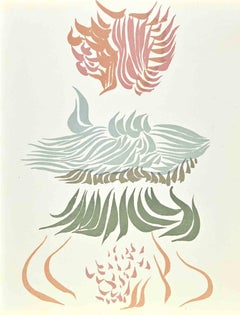
Original artwork realized by Jacques Hérold in 1974. Colored lithograph. Not signed, as issued. Printed by Mourlot , France. Excellent condition.  This lithograph was realized  b...
Category

1970s Surrealist Abstract Prints

Materials

Lithograph

The Octopus Hunter - Spanish Surrealism
By Joan Miró
Located in London, GB
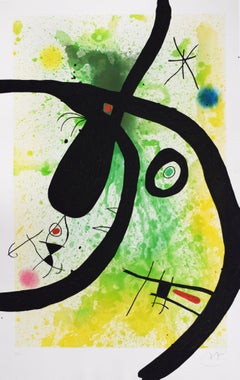
This original etching and aquatint with carborundum is hand signed in pencil by the artist "Miró" at the lower right margin. It is also hand numbered in pencil 2 from the edition of ...
Category

1960s Abstract Prints

Materials

Etching, Aquatint

Códice Miguelito III
By Pedro Friedeberg
Located in Cuauhtemoc, Ciudad de México
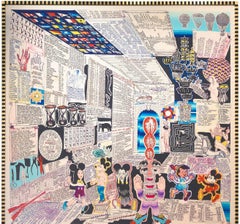
-Pedro Friedeberg signed print featuring a fantastical architectural scene inspired by “Mickey”. Includes whimsical figures, optical art elements, and surreal details. framed in a ha...
Category

2010s Surrealist Abstract Prints

Materials

Giclée

Joan Miró(1893–1983) - Fundació Joan Miró - Color lithograph on paper - 1975
By Joan Miró
Located in Varese, IT
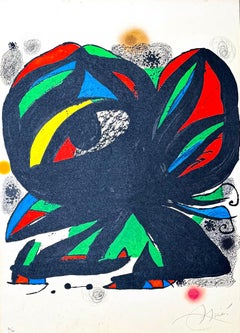
Color lithograph on Guarro paper, edited 1975 Limited edition of 99 copies, numbered 83/99 in lower left corner. Signed in pencil by artist in lower right corner. Paper size: 70 x 5...
Category

1970s Abstract Abstract Prints

Materials

Lithograph

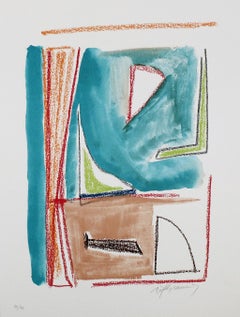
Rafols Casamada Little Blue original litograph abstract painting
By Albert Rafols Casamada
Located in CORAL GABLES - MIAMI, FL
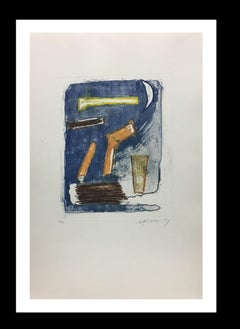
Blue- original litograph abstract limited edition painting Original graphic work by CASAMADA. Limited edition engraving. 50 copies Signed and numbered in pencil. framed RÀFOLS CASAM...
Category

Late 20th Century Abstract Abstract Prints

Materials

Engraving

Vintage Pop Art 1997 Offset Lithograph Larry Rivers Music Poster Hamptons NY
By Larry Rivers
Located in Surfside, FL
Larry Rivers "The Music Festival of the Hamptons / July 18-27 1997" poster, Not hand signed. [Dimensions: 24" H x 18" W] Larry Rivers (born Yitzroch Loiza Grossberg) (1923 – 200...
Category

1990s Pop Art Abstract Prints

Materials

Lithograph, Offset

Shift Scape, Contemporary Architectural Composition, Minimal Geometric Lines
Located in AIX-EN-PROVENCE, FR
Medium : Archival pigment print on Archival Photographic paper 300Gsm. Artist : Fabien Granet Subject : Shift Scape II (Title) This contemporary artwork by Fabien Granet features a d...
Category

21st Century and Contemporary Contemporary Abstract Prints

Materials

Photographic Paper, Archival Pigment

Contemporary Architectural Composition, Minimal Geometric Lines
Located in AIX-EN-PROVENCE, FR
Medium : Archival pigment print on Archival Photographic paper 300Gsm. Artist : Fabien Granet Subject : Shift Scape (Title) This contemporary artwork by Fabien Granet features a deli...
Category

21st Century and Contemporary Contemporary Abstract Prints

Materials

Photographic Paper, Archival Pigment

Pietro Consagra Italian Mod Abstract Expressionist Forma, Art Brut Lithograph
By Pietro Consagra
Located in Surfside, FL
Pietro Consagra (Italian, 1920-2005). Hand signed in pencil and numbered limited edition color lithograph on Magnani paper. Embossed stamp with limited edition numbers in pencil to lower left, and having artist pencil signature to lower right. (from a limited edition of 80 with 15 artist's proofs) Published by Stamperia 2RC, Rome Italy and Marlborough Gallery, Rome, Italy. Abstract Modernist work in colors, produced in the style of the Forma art movement of Postwar Italy, of which the artist was a prominent member. Pietro Consagra (1920 – 2005) was an Italian Post war artist working in painting, printmaking and sculpture. In 1947 he was among the founding members of the Forma 1 group of artists, proponents of structured abstraction. (similar to the Art Informel and Art Brut in France and the Brutalist artists) Consagra was born on 6 October 1920 in Mazara del Vallo, in the province of Trapani in south-western Sicily, to Luigi Consagra and Maria Lentini. From 1931 he enrolled in a trade school for sailors, studying first to become a mechanic, and later to become a captain. In 1938 he moved to Palermo, where he enrolled in the liceo artistico; despite an attack of tuberculosis, he graduated in 1941, and in the same year signed up at the Accademia di Belle Arti, where he studied sculpture under Archimede Campini. After the Invasion of Sicily and the Allied occupation of Palermo in 1943, Consagra found work as a caricaturist for the American Red Cross club of the city; he also joined the Italian Communist Party. Early in 1944, armed with a letter of introduction from an American officer, he travelled to Rome. There he came into contact with the Sicilian artist Concetto Maugeri, and through him with Renato Guttuso, who was also Sicilian and who introduced him to the intellectual life of the city and to other postwar artists such as Leoncillo Leonardi, Mario Mafai and Giulio Turcato. Consagra signed up at the Accademia di Belle Arti di Roma in September 1944 and studied sculpture there under Michele Guerrisi, but left before completing his diploma. In 1947, with Carla Accardi, Ugo Attardi, Piero Dorazio, Mino Guerrini, Achille Perilli, Antonio Sanfilippo and Giulio Turcato, Consagra started the artist's group Forma 1, which advocated both Marxism and structured abstraction. Steadily Consagra's work began to find an audience. Working primarily in metal, and later in marble and wood, his thin, roughly carved reliefs, began to be collected by Peggy Guggenheim and other important patrons of the arts. He showed at the Venice Biennale eleven times between 1950 and 1993, and in 1960 won the sculpture prize at the exhibition. During the 1960s he was associated with the Continuità group, an offshoot of Forma I, and in 1967 taught at the School of Arts in Minneapolis. Large commissions allowed him to begin working on a more monumental scale, and works of his were installed in the courtyard of the Foreign Ministry in Rome and in the European Parliament, Strasbourg. His work is found in the collections of The Tate Gallery, London, in Museo Cantonale d'Arte of Lugano and the Museum of Modern Art, Paris, and the National Gallery of Art in Washington, D.C.. Consagra returned to Sicily where he sculpted a number of significant works during the 1980s. With Senator Ludovico Corrao, he helped created an open-air museum in the new town of Gibellina, after the older town had been destroyed in the earthquake of 1968. Consagra designed the gates to the town's entrance, the building named "Meeting" and the gates to the cemetery, where he was later buried. In 1952 Consagra published La necessità della scultura ("the need for sculpture"), a response to the essay La scultura lingua morta ("sculpture, a dead language"), published in 1945 by Arturo Martini. Other works include L'agguato c'è ("the snare exists", 1960), and La città frontale ("the frontal city", 1969). His autobiography, Vita Mia, was published by Feltrinelli in 1980. In 1989 a substantial retrospective exhibition of work by Consagra was shown at the Galleria Nazionale d'Arte Moderna in Rome; in 1993 a permanent exhibition of his work was installed there. In 1991 his work was shown in the Hermitage Museum in St. Petersburg. In 2002 the Galerie der Stadt Stuttgart opened a permanent exhibition of his work. He was one of ten artists invited by Giovanni Carandente, along with David Smith, Alexander Calder, Arnaldo Pomodoro, Lynn Chadwick, and Beverly Pepper, to fabricate works in Italsider factories in Italy for an outdoor exhibition, "Sculture nella città", held in Spoleto during the summer of 1962. He was included in the The 1962 International Prize for Sculpture the jury included Argan, Romero Brest and James Johnson Sweeney the former director of the Solomon R. Guggenheim Museum in New York. The participants included Louise Nevelson and John Chamberlain for the United States; Lygia Clark for Brazil; Pietro Consagra, Lucio Fontana, Nino Franchina, and Gió Pomodoro for Italy; Pablo Serrano for Spain; and Eduardo Paolozzi, William Turnbull, and Kenneth Armitage for England. Gyula Kosice, Noemí Gerstein...
Category

1960s Abstract Expressionist Abstract Prints

Materials

Lithograph

Pietro Consagra Italian Mod Abstract Expressionist Forma Brutalist Lithograph
By Pietro Consagra
Located in Surfside, FL
Pietro Consagra (Italian, 1920-2005). Hand signed in pencil and numbered limited edition color lithograph on Magnani paper. Embossed stamp with limited edition numbers in pencil to lower left, and having artist pencil signature to lower right. (from a limited edition of 80 with 15 artist's proofs) Published by Stamperia 2RC, Rome Italy and Marlborough Gallery, Rome, Italy. Abstract Modernist work in colors, produced in the style of the Forma art movement of Postwar Italy, of which the artist was a prominent member. Pietro Consagra (1920 – 2005) was an Italian Post war artist working in painting, printmaking and sculpture. In 1947 he was among the founding members of the Forma 1 group of artists, proponents of structured abstraction. Consagra was born on 6 October 1920 in Mazara del Vallo, in the province of Trapani in south-western Sicily, to Luigi Consagra and Maria Lentini. From 1931 he enrolled in a trade school for sailors, studying first to become a mechanic, and later to become a captain. In 1938 he moved to Palermo, where he enrolled in the liceo artistico; despite an attack of tuberculosis, he graduated in 1941, and in the same year signed up at the Accademia di Belle Arti, where he studied sculpture under Archimede Campini. After the Invasion of Sicily and the Allied occupation of Palermo in 1943, Consagra found work as a caricaturist for the American Red Cross club of the city; he also joined the Italian Communist Party. Early in 1944, armed with a letter of introduction from an American officer, he travelled to Rome. There he came into contact with the Sicilian artist Concetto Maugeri, and through him with Renato Guttuso, who was also Sicilian and who introduced him to the intellectual life of the city and to other postwar artists such as Leoncillo Leonardi, Mario Mafai and Giulio Turcato. Consagra signed up at the Accademia di Belle Arti di Roma in September 1944 and studied sculpture there under Michele Guerrisi, but left before completing his diploma. In 1947, with Carla Accardi, Ugo Attardi, Piero Dorazio, Mino Guerrini, Achille Perilli, Antonio Sanfilippo and Giulio Turcato, Consagra started the artist's group Forma 1, which advocated both Marxism and structured abstraction. Steadily Consagra's work began to find an audience. Working primarily in metal, and later in marble and wood, his thin, roughly carved reliefs, began to be collected by Peggy Guggenheim and other important patrons of the arts. He showed at the Venice Biennale eleven times between 1950 and 1993, and in 1960 won the sculpture prize at the exhibition. During the 1960s he was associated with the Continuità group, an offshoot of Forma I, and in 1967 taught at the School of Arts in Minneapolis. Large commissions allowed him to begin working on a more monumental scale, and works of his were installed in the courtyard of the Foreign Ministry in Rome and in the European Parliament, Strasbourg. His work is found in the collections of The Tate Gallery, London, in Museo Cantonale d'Arte of Lugano and the Museum of Modern Art, Paris, and the National Gallery of Art in Washington, D.C.. Consagra returned to Sicily where he sculpted a number of significant works during the 1980s. With Senator Ludovico Corrao, he helped created an open-air museum in the new town of Gibellina, after the older town had been destroyed in the earthquake of 1968. Consagra designed the gates to the town's entrance, the building named "Meeting" and the gates to the cemetery, where he was later buried. In 1952 Consagra published La necessità della scultura ("the need for sculpture"), a response to the essay La scultura lingua morta ("sculpture, a dead language"), published in 1945 by Arturo Martini. Other works include L'agguato c'è ("the snare exists", 1960), and La città frontale ("the frontal city", 1969). His autobiography, Vita Mia, was published by Feltrinelli in 1980. In 1989 a substantial retrospective exhibition of work by Consagra was shown at the Galleria Nazionale d'Arte Moderna in Rome; in 1993 a permanent exhibition of his work was installed there. In 1991 his work was shown in the Hermitage Museum in St. Petersburg. In 2002 the Galerie der Stadt Stuttgart opened a permanent exhibition of his work. He was one of ten artists invited by Giovanni Carandente, along with David Smith, Alexander Calder, Arnaldo Pomodoro, Lynn Chadwick, and Beverly Pepper, to fabricate works in Italsider factories in Italy for an outdoor exhibition, "Sculture nella città", held in Spoleto during the summer of 1962. He was included in the The 1962 International Prize for Sculpture the jury included Argan, Romero Brest and James Johnson Sweeney the former director of the Solomon R. Guggenheim Museum in New York. The participants included Louise Nevelson and John Chamberlain for the United States; Lygia Clark for Brazil; Pietro Consagra, Lucio Fontana, Nino Franchina, and Gió Pomodoro for Italy; Pablo Serrano for Spain; and Eduardo Paolozzi, William Turnbull, and Kenneth Armitage for England. Gyula Kosice, Noemí Gerstein...
Category

1960s Abstract Expressionist Abstract Prints

Materials

Lithograph

Pietro Consagra Italian Mod Abstract Expressionist Forma, Art Brut Lithograph
By Pietro Consagra
Located in Surfside, FL
Pietro Consagra (Italian, 1920-2005). Hand signed in pencil and numbered limited edition color lithograph on Magnani paper. Embossed stamp with limited edition numbers in pencil to lower left, and having artist pencil signature to lower right. (from a limited edition of 80 with 15 artist's proofs) Published by Stamperia 2RC, Rome Italy and Marlborough Gallery, Rome, Italy. Abstract Modernist work in colors, produced in the style of the Forma art movement of Postwar Italy, of which the artist was a prominent member. Pietro Consagra (1920 – 2005) was an Italian Post war artist working in painting, printmaking and sculpture. In 1947 he was among the founding members of the Forma 1 group of artists, proponents of structured abstraction. (similar to the Art Informel and Art Brut in France and the Brutalist artists) Consagra was born on 6 October 1920 in Mazara del Vallo, in the province of Trapani in south-western Sicily, to Luigi Consagra and Maria Lentini. From 1931 he enrolled in a trade school for sailors, studying first to become a mechanic, and later to become a captain. In 1938 he moved to Palermo, where he enrolled in the liceo artistico; despite an attack of tuberculosis, he graduated in 1941, and in the same year signed up at the Accademia di Belle Arti, where he studied sculpture under Archimede Campini. After the Invasion of Sicily and the Allied occupation of Palermo in 1943, Consagra found work as a caricaturist for the American Red Cross club of the city; he also joined the Italian Communist Party. Early in 1944, armed with a letter of introduction from an American officer, he travelled to Rome. There he came into contact with the Sicilian artist Concetto Maugeri, and through him with Renato Guttuso, who was also Sicilian and who introduced him to the intellectual life of the city and to other postwar artists such as Leoncillo Leonardi, Mario Mafai and Giulio Turcato. Consagra signed up at the Accademia di Belle Arti di Roma in September 1944 and studied sculpture there under Michele Guerrisi, but left before completing his diploma. In 1947, with Carla Accardi, Ugo Attardi, Piero Dorazio, Mino Guerrini, Achille Perilli, Antonio Sanfilippo and Giulio Turcato, Consagra started the artist's group Forma 1, which advocated both Marxism and structured abstraction. Steadily Consagra's work began to find an audience. Working primarily in metal, and later in marble and wood, his thin, roughly carved reliefs, began to be collected by Peggy Guggenheim and other important patrons of the arts. He showed at the Venice Biennale eleven times between 1950 and 1993, and in 1960 won the sculpture prize at the exhibition. During the 1960s he was associated with the Continuità group, an offshoot of Forma I, and in 1967 taught at the School of Arts in Minneapolis. Large commissions allowed him to begin working on a more monumental scale, and works of his were installed in the courtyard of the Foreign Ministry in Rome and in the European Parliament, Strasbourg. His work is found in the collections of The Tate Gallery, London, in Museo Cantonale d'Arte of Lugano and the Museum of Modern Art, Paris, and the National Gallery of Art in Washington, D.C.. Consagra returned to Sicily where he sculpted a number of significant works during the 1980s. With Senator Ludovico Corrao, he helped created an open-air museum in the new town of Gibellina, after the older town had been destroyed in the earthquake of 1968. Consagra designed the gates to the town's entrance, the building named "Meeting" and the gates to the cemetery, where he was later buried. In 1952 Consagra published La necessità della scultura ("the need for sculpture"), a response to the essay La scultura lingua morta ("sculpture, a dead language"), published in 1945 by Arturo Martini. Other works include L'agguato c'è ("the snare exists", 1960), and La città frontale ("the frontal city", 1969). His autobiography, Vita Mia, was published by Feltrinelli in 1980. In 1989 a substantial retrospective exhibition of work by Consagra was shown at the Galleria Nazionale d'Arte Moderna in Rome; in 1993 a permanent exhibition of his work was installed there. In 1991 his work was shown in the Hermitage Museum in St. Petersburg. In 2002 the Galerie der Stadt Stuttgart opened a permanent exhibition of his work. He was one of ten artists invited by Giovanni Carandente, along with David Smith, Alexander Calder, Arnaldo Pomodoro, Lynn Chadwick, and Beverly Pepper, to fabricate works in Italsider factories in Italy for an outdoor exhibition, "Sculture nella città", held in Spoleto during the summer of 1962. He was included in the The 1962 International Prize for Sculpture the jury included Argan, Romero Brest and James Johnson Sweeney the former director of the Solomon R. Guggenheim Museum in New York. The participants included Louise Nevelson and John Chamberlain for the United States; Lygia Clark for Brazil; Pietro Consagra, Lucio Fontana, Nino Franchina, and Gió Pomodoro for Italy; Pablo Serrano for Spain; and Eduardo Paolozzi, William Turnbull, and Kenneth Armitage for England. Gyula Kosice, Noemí Gerstein...
Category

1960s Abstract Expressionist Abstract Prints

Materials

Lithograph

Pietro Consagra Italian Mod Abstract Expressionist Forma Art Informel Lithograph
By Pietro Consagra
Located in Surfside, FL
Pietro Consagra (Italian, 1920-2005). Hand signed in pencil and numbered limited edition color lithograph on Magnani paper. Embossed stamp with limited edition numbers in pencil to lower left, and having artist pencil signature to lower right. (from a limited edition of 80 with 15 artist's proofs) Published by Stamperia 2RC, Rome Italy and Marlborough Gallery, Rome, Italy. Abstract Modernist work in colors, produced in the style of the Forma art movement of Postwar Italy, of which the artist was a prominent member. Pietro Consagra (1920 – 2005) was an Italian Post war artist working in painting, printmaking and sculpture. In 1947 he was among the founding members of the Forma 1 group of artists, proponents of structured abstraction. (similar to the Art Informel and Art Brut in France and the Brutalist artists) Consagra was born on 6 October 1920 in Mazara del Vallo, in the province of Trapani in south-western Sicily, to Luigi Consagra and Maria Lentini. From 1931 he enrolled in a trade school for sailors, studying first to become a mechanic, and later to become a captain. In 1938 he moved to Palermo, where he enrolled in the liceo artistico; despite an attack of tuberculosis, he graduated in 1941, and in the same year signed up at the Accademia di Belle Arti, where he studied sculpture under Archimede Campini. After the Invasion of Sicily and the Allied occupation of Palermo in 1943, Consagra found work as a caricaturist for the American Red Cross club of the city; he also joined the Italian Communist Party. Early in 1944, armed with a letter of introduction from an American officer, he travelled to Rome. There he came into contact with the Sicilian artist Concetto Maugeri, and through him with Renato Guttuso, who was also Sicilian and who introduced him to the intellectual life of the city and to other postwar artists such as Leoncillo Leonardi, Mario Mafai and Giulio Turcato. Consagra signed up at the Accademia di Belle Arti di Roma in September 1944 and studied sculpture there under Michele Guerrisi, but left before completing his diploma. In 1947, with Carla Accardi, Ugo Attardi, Piero Dorazio, Mino Guerrini, Achille Perilli, Antonio Sanfilippo and Giulio Turcato, Consagra started the artist's group Forma 1, which advocated both Marxism and structured abstraction. Steadily Consagra's work began to find an audience. Working primarily in metal, and later in marble and wood, his thin, roughly carved reliefs, began to be collected by Peggy Guggenheim and other important patrons of the arts. He showed at the Venice Biennale eleven times between 1950 and 1993, and in 1960 won the sculpture prize at the exhibition. During the 1960s he was associated with the Continuità group, an offshoot of Forma I, and in 1967 taught at the School of Arts in Minneapolis. Large commissions allowed him to begin working on a more monumental scale, and works of his were installed in the courtyard of the Foreign Ministry in Rome and in the European Parliament, Strasbourg. His work is found in the collections of The Tate Gallery, London, in Museo Cantonale d'Arte of Lugano and the Museum of Modern Art, Paris, and the National Gallery of Art in Washington, D.C.. Consagra returned to Sicily where he sculpted a number of significant works during the 1980s. With Senator Ludovico Corrao, he helped created an open-air museum in the new town of Gibellina, after the older town had been destroyed in the earthquake of 1968. Consagra designed the gates to the town's entrance, the building named "Meeting" and the gates to the cemetery, where he was later buried. In 1952 Consagra published La necessità della scultura ("the need for sculpture"), a response to the essay La scultura lingua morta ("sculpture, a dead language"), published in 1945 by Arturo Martini. Other works include L'agguato c'è ("the snare exists", 1960), and La città frontale ("the frontal city", 1969). His autobiography, Vita Mia, was published by Feltrinelli in 1980. In 1989 a substantial retrospective exhibition of work by Consagra was shown at the Galleria Nazionale d'Arte Moderna in Rome; in 1993 a permanent exhibition of his work was installed there. In 1991 his work was shown in the Hermitage Museum in St. Petersburg. In 2002 the Galerie der Stadt Stuttgart opened a permanent exhibition of his work. He was one of ten artists invited by Giovanni Carandente, along with David Smith, Alexander Calder, Arnaldo Pomodoro, Lynn Chadwick, and Beverly Pepper, to fabricate works in Italsider factories in Italy for an outdoor exhibition, "Sculture nella città", held in Spoleto during the summer of 1962. He was included in the The 1962 International Prize for Sculpture the jury included Argan, Romero Brest and James Johnson Sweeney the former director of the Solomon R. Guggenheim Museum in New York. The participants included Louise Nevelson and John Chamberlain for the United States; Lygia Clark for Brazil; Pietro Consagra, Lucio Fontana, Nino Franchina, and Gió Pomodoro for Italy; Pablo Serrano for Spain; and Eduardo Paolozzi, William Turnbull, and Kenneth Armitage for England. Gyula Kosice, Noemí Gerstein...
Category

1960s Abstract Expressionist Abstract Prints

Materials

Lithograph

Pietro Consagra Italian Mod Abstract Expressionist Forma Brutalist Lithograph
By Pietro Consagra
Located in Surfside, FL
Pietro Consagra (Italian, 1920-2005). Hand signed in pencil and numbered limited edition color lithograph on Magnani paper. Embossed stamp with limited edition numbers in pencil to lower left, and having artist pencil signature to lower right. (from a limited edition of 80 with 15 artist's proofs) Published by Stamperia 2RC, Rome Italy and Marlborough Gallery, Rome, Italy. Abstract Modernist work in colors, produced in the style of the Forma art movement of Postwar Italy, of which the artist was a prominent member. Pietro Consagra (1920 – 2005) was an Italian Post war artist working in painting, printmaking and sculpture. In 1947 he was among the founding members of the Forma 1 group of artists, proponents of structured abstraction. Consagra was born on 6 October 1920 in Mazara del Vallo, in the province of Trapani in south-western Sicily, to Luigi Consagra and Maria Lentini. From 1931 he enrolled in a trade school for sailors, studying first to become a mechanic, and later to become a captain. In 1938 he moved to Palermo, where he enrolled in the liceo artistico; despite an attack of tuberculosis, he graduated in 1941, and in the same year signed up at the Accademia di Belle Arti, where he studied sculpture under Archimede Campini. After the Invasion of Sicily and the Allied occupation of Palermo in 1943, Consagra found work as a caricaturist for the American Red Cross club of the city; he also joined the Italian Communist Party. Early in 1944, armed with a letter of introduction from an American officer, he travelled to Rome. There he came into contact with the Sicilian artist Concetto Maugeri, and through him with Renato Guttuso, who was also Sicilian and who introduced him to the intellectual life of the city and to other postwar artists such as Leoncillo Leonardi, Mario Mafai and Giulio Turcato. Consagra signed up at the Accademia di Belle Arti di Roma in September 1944 and studied sculpture there under Michele Guerrisi, but left before completing his diploma. In 1947, with Carla Accardi, Ugo Attardi, Piero Dorazio, Mino Guerrini, Achille Perilli, Antonio Sanfilippo and Giulio Turcato, Consagra started the artist's group Forma 1, which advocated both Marxism and structured abstraction. Steadily Consagra's work began to find an audience. Working primarily in metal, and later in marble and wood, his thin, roughly carved reliefs, began to be collected by Peggy Guggenheim and other important patrons of the arts. He showed at the Venice Biennale eleven times between 1950 and 1993, and in 1960 won the sculpture prize at the exhibition. During the 1960s he was associated with the Continuità group, an offshoot of Forma I, and in 1967 taught at the School of Arts in Minneapolis. Large commissions allowed him to begin working on a more monumental scale, and works of his were installed in the courtyard of the Foreign Ministry in Rome and in the European Parliament, Strasbourg. His work is found in the collections of The Tate Gallery, London, in Museo Cantonale d'Arte of Lugano and the Museum of Modern Art, Paris, and the National Gallery of Art in Washington, D.C.. Consagra returned to Sicily where he sculpted a number of significant works during the 1980s. With Senator Ludovico Corrao, he helped created an open-air museum in the new town of Gibellina, after the older town had been destroyed in the earthquake of 1968. Consagra designed the gates to the town's entrance, the building named "Meeting" and the gates to the cemetery, where he was later buried. In 1952 Consagra published La necessità della scultura ("the need for sculpture"), a response to the essay La scultura lingua morta ("sculpture, a dead language"), published in 1945 by Arturo Martini. Other works include L'agguato c'è ("the snare exists", 1960), and La città frontale ("the frontal city", 1969). His autobiography, Vita Mia, was published by Feltrinelli in 1980. In 1989 a substantial retrospective exhibition of work by Consagra was shown at the Galleria Nazionale d'Arte Moderna in Rome; in 1993 a permanent exhibition of his work was installed there. In 1991 his work was shown in the Hermitage Museum in St. Petersburg. In 2002 the Galerie der Stadt Stuttgart opened a permanent exhibition of his work. He was one of ten artists invited by Giovanni Carandente, along with David Smith, Alexander Calder, Arnaldo Pomodoro, Lynn Chadwick, and Beverly Pepper, to fabricate works in Italsider factories in Italy for an outdoor exhibition, "Sculture nella città", held in Spoleto during the summer of 1962. He was included in the The 1962 International Prize for Sculpture the jury included Argan, Romero Brest and James Johnson Sweeney the former director of the Solomon R. Guggenheim Museum in New York. The participants included Louise Nevelson and John Chamberlain for the United States; Lygia Clark for Brazil; Pietro Consagra, Lucio Fontana, Nino Franchina, and Gió Pomodoro for Italy; Pablo Serrano for Spain; and Eduardo Paolozzi, William Turnbull, and Kenneth Armitage for England. Gyula Kosice, Noemí Gerstein...
Category

1960s Abstract Expressionist Abstract Prints

Materials

Lithograph

ALBERT RÀFOLS-CASAMADA: Estructures 2 - Lithograph on paper, Spanish Abstraction
By Albert Rafols Casamada
Located in Madrid, Madrid
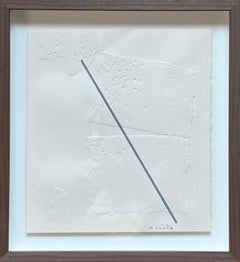
ESTRUCTURES 2 Date of creation: 2006 Medium: Lithograph on paper Edition: 75 Size: 41 x 31 cm Observations: Lithograph on paper signed by the artist and numbered edition of 75. Alber...
Category

2010s Modern Abstract Prints

Materials

Lithograph

Black/White Lithograph American Modernist Gregory Amenoff Abstract Expressionist
By Gregory Amenoff
Located in Surfside, FL
Gregory Amenoff (Contemporary American abstract painter, b. 1948), Title: Haven, STATE II Lithograph, 1986 Edition 4/4 Printer Proof Image Size 21.5 x 30.75" Gregory Amenoff is a...
Category

1980s American Modern Abstract Prints

Materials

Lithograph

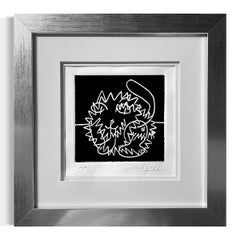
Cat, 2023
By Christopher Mudgett
Located in Los Angeles, CA
Cat, 2023 By Christopher Mudgett Rendered in Mudgett’s unmistakably powerful style, this striking black-and-white linocut distills the essence of a cat into a bold, abstracted form....
Category

2010s Contemporary Abstract Prints

Materials

Ink, Archival Paper, Linocut

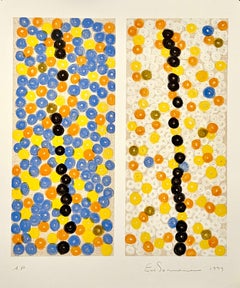
Large Diptych "Deep runners" Photograph Signed Surrealist Photo Lithograph
By Eve Sonneman
Located in Surfside, FL
Abstract geometric color composition Artist: Eve Sonneman Lithograph, 1999 Image Size 25 x 22" Hand signed, dated,and numbered from limited edition. This is from a show at Sidney J...
Category

1990s Contemporary Abstract Prints

Materials

Paper, Color, Lithograph

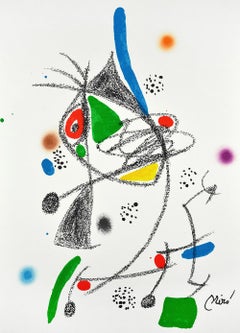
Joan Miró - MARAVILLAS CON VARIACIONES... Lithograph Contemporary Art Abstract
By Joan Miró
Located in Madrid, Madrid
Maravillas con variaciones acrósticas en el jardín de Miró IV Date of creation: 1975 Medium: Lithograph on Gvarro paper Edition: 1500 Size: 49,5 x 35,5 cm Condition: In very good con...
Category

1970s Abstract Abstract Prints

Materials

Lithograph

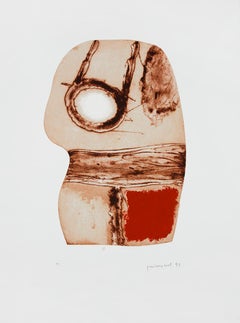
Josep Guinovart IMATGES I TERRA II Hand colored Spanish Contemporary Abstraction
By Josep Guinovart Bertrán
Located in Madrid, Madrid
Josep Guinovart - IMATGES I TERRA II Date of creation: 1991 Medium: Hand colored etching on paper Edition: 50 + 10 H.C. Size: 76 x 57 cm Condition: In very good conditions and never ...
Category

1990s Abstract Abstract Prints

Materials

Paper, Acrylic, Etching

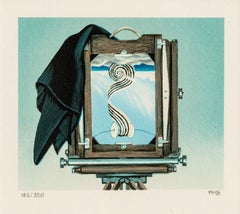
Deardorff
By Fanny Brennan
Located in New York, NY
Created by Surrealist Fanny Brennan from 1993-96, Deardorff is an original lithograph in colors on wove paper, hand-monogrammed by the artist in pencil and numbered from the edition ...
Category

Late 20th Century Surrealist Figurative Prints

Materials

Lithograph

Still Thinking About These?

All Recently Viewed