1930s Art

to
909
3,384
1,235
919
541
352
Overall Width
to
Overall Height
to
7,569
21,326
164,759
236,139
2,069
2,315
4,982
6,477
5,866
15,311
21,005
26,190
18,917
14,167
5,369
2,468
489
406
246
113
107
106
69
12
9
5
2
2
3,574
2,406
313
3,913
1,783
1,612
1,158
1,111
707
461
437
424
359
334
318
298
290
289
237
225
225
219
198
2,023
1,621
1,359
1,213
899
261
145
105
89
61
1,862
1,112
3,456
2,942
Period: 1930s
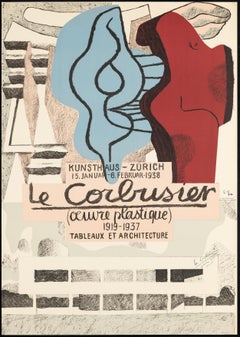
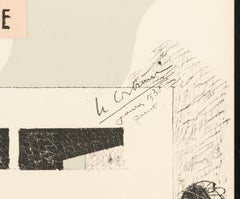
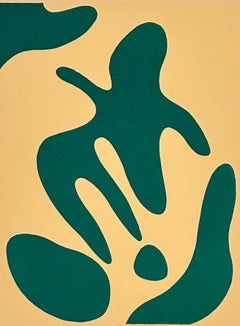
Œuvre Plastique,  Kunsthaus Zürich 1938 – lithograph, hand-signed and denoted

Œuvre Plastique,  Kunsthaus Zürich 1938 – lithograph, hand-signed and denoted

By Le Corbusier

Located in Zurich, CH

Le Corbusier's first (and largest) original lithograph in color. He created the poster on the occasion of his (first) solo exhibition. Print run was 100 ex. only – whereby the largest part was destroyed when used in the streets of Zurich, what makes it LCs most rare lithograph in color. Moreover: This exemplar is even hand-signed by LC and dated, as it was (meant to be) sold at the entrance of the Kunsthaus Zürich...

Category

Modern 1930s Art

Materials

Paper

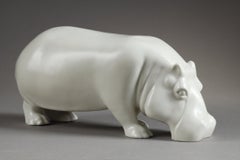
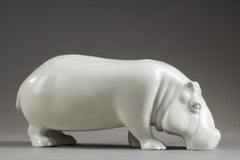
Hippopotamus
Hippopotamus

Hippopotamus

Located in PARIS, FR

Hippopotamus by Armand PETERSEN (1891-1969) Sculpture in dull finish white tender paste porcelain. The bottom signed with the monogram « AP ». Stamped « B - G (for Bing & Grønda...

Category

Art Deco 1930s Art

Materials

Porcelain

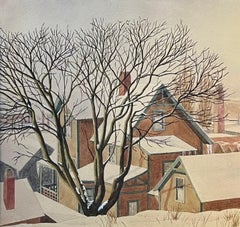
Spring Snowfall Seattle

Spring Snowfall Seattle

By Zama Vanessa Helder

Located in Los Angeles, CA

Spring Snowfall Seattle, 1937, watercolor on paper mounted on panel, signed lower right, 16 ½ x 17 ½ inches (image) 17 x 22 ½ inches (panel), ), title, measurements and Helder’s addr...

Category

American Modern 1930s Art

Materials

Watercolor, Illustration Board

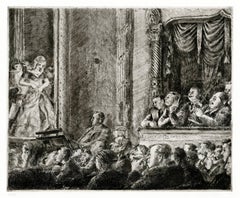
Irving Place Burlesk

Irving Place Burlesk

By Reginald Marsh

Located in Fairlawn, OH

Irving Place Burlesque Etching, 1930 Unsigned (as usual for the Whitney edition) Numbered in pencil lower left Blind stamp of the Whitney Museum (WM) lower right From: Reginald Marsh...

Category

Ashcan School 1930s Art

Materials

Etching

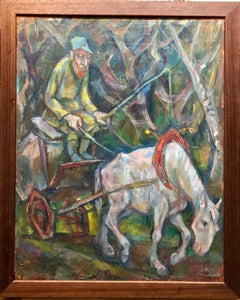
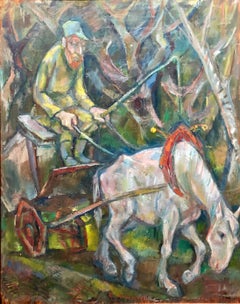
Large Modernist Oil Painting 1940s, Judaica Hasidic Shtetl Wagon Driver WPA Era

Large Modernist Oil Painting 1940s, Judaica Hasidic Shtetl Wagon Driver WPA Era

By Emanuel Glicenstein Romano

Located in Surfside, FL

Genre: Modern Subject: Landscape with figure of horse, driver and wagon Medium: Oil Surface: wood Board Hand signed lower middle E.Romano EMANUEL ROMANO Rome, Italy, b. 1897, d. 1984 Emanuel Glicen Romano was born in Rome, September 23, 1897. His father Henryk Glicenstein was a sculptor and was living in Rome with his wife Helena (born Hirszenberg) when Emanuel was born. His father obtained Italian citizenship and adopted the name Enrico. Emanuel was brought up in Italy, Switzerland, Germany, England and Poland. In 1926 Emanuel Glicenstein Romano and his father sailed for New York. They briefly visited Chicago. Romano's sister, Beatrice, and mother only joined them in New York years later. Romano changed his name on his arrival to America and some have erroneously speculated that this was to avoid antisemitic discrimination. In truth, as the son of a highly-regarded artist, Romano changed his name to ensure that any success or recognition he would later attain, would be the result of nothing other than his own merit as an artist, and not on account of his father's fame. In 1936 Romano was worked for the WPA Federal Art Project creating murals. ( there were many jewish artists active with in the WPA period. notably Chaim Gross, Ben Shahn, Isaac and Moses Soyer, Abraham Rattner and many others. During and immediately after World War II, Romano created a series of allegorical works depicting graphic holocaust images that were held closely by the family until after his passing. One of these works is now on permanent display in the Florida Holocaust Museum in St. Petersburg Florida. Emanuel's father died in 1942 in a car accident before they could realize their shared dream of visiting Israel. In 1944 Romano, having completed his degree at the Pennsylvania Academy of Fine Arts and the Art Institute of Chicago, began teaching at the City College of New York. Romano moved to Safed, Israel in 1953 and established an art museum in his father's memory, the Glicenstein Museum. COLLECTIONS Indianapolis Museum of Art Metropolitan Museum of Art Boston Fine Arts Museum Fogg Museum Musée Nacional de France Recently his work has been added to the Florida Holocaust Museum collection. His notable works include his holocaust themed allegorical paintings as well as portraits of Marianne Moore, his father and William Carlos Williams...

Category

American Modern 1930s Art

Materials

Oil, Board

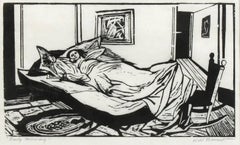
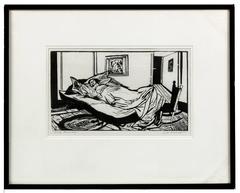
Early Morning
Early Morning

Early Morning

By Will Barnet

Located in Buffalo, NY

A nice rare woodcut by the noted American Artist Will Barnet. This woodcut is from 1939 and is titled and pencil signed on the base "Early Morning", Will...

Category

American Modern 1930s Art

Materials

Paper, Woodcut

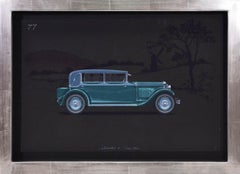
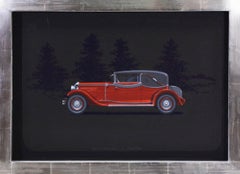
Cabriolet coachwork design by Alexis Kellner AG for the Cadillac 341-A.

Cabriolet coachwork design by Alexis Kellner AG for the Cadillac 341-A.

By Herschu (Herbert Schultz)

Located in London, London

Gouache and watercolour heightened with gum-arabic on very dark green card, annotated in pale ink with body type below, numbered ‘77’, in upper left corner, German copyright label on...

Category

Modern 1930s Art

Materials

Watercolor, Gouache, Handmade Paper

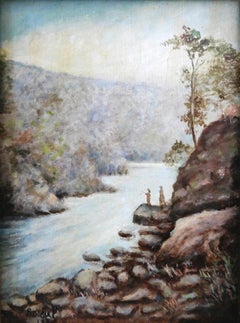
French school Landscape Gorge River Scene with Figures oil painting Signed 1936

French school Landscape Gorge River Scene with Figures oil painting Signed 1936

Located in Zofingen, AG

➡️ Landscape Gorge river scene oil painting⬅️ ⏩It is signed Boréal⏪ ⭐Medium:⭐ Oil on wood panel ⭐Technique: ⭐Impasto painting with expressive brushwork. ⭐Size:⭐16.5x22cm / 6.5x...

Category

Impressionist 1930s Art

Materials

Gesso, Oil, Wood Panel, Stretcher Bars

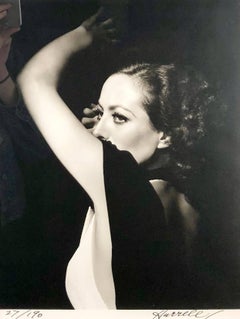
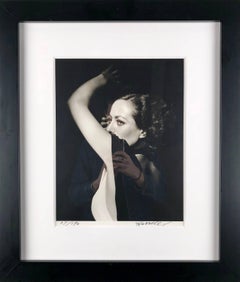
Joan Crawford
Joan Crawford

Joan Crawford

By George Hurrell

Located in Chatsworth, CA

This piece is an original photograph from the original negative, shot by George Hurrell in 1932, and printed at a later date. It depicts American film and television actress, Joan Crawford...

Category

Other Art Style 1930s Art

Materials

Photographic Paper

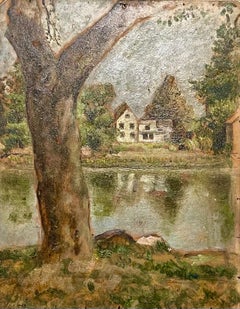
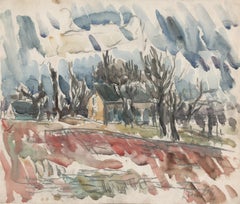
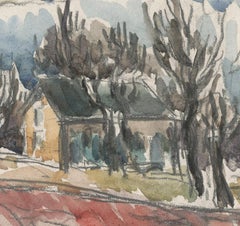
Landscape with buildings and trees

Landscape with buildings and trees

By Leon Kelly

Located in Fairlawn, OH

Landscape with buildings and trees Watercolor on paper, c. 1930's Signed in pencil lower right (see photo) Provenance: Estate of the artist Condition: Excellent Sheet size: 9 3/8 x 1...

Category

American Modern 1930s Art

Materials

Watercolor

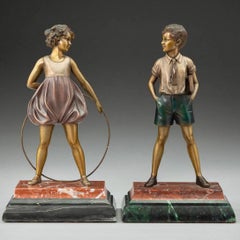
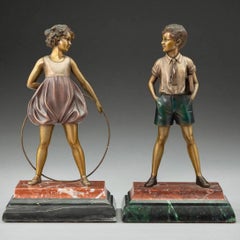
Ferdinand Preiss Hoop Girl And Sonny Boy Painted Bronze Figures

Ferdinand Preiss Hoop Girl And Sonny Boy Painted Bronze Figures

By Ferdinand Preiss

Located in Dallas, TX

Ferdinand Preiss (German, 1882 - 1943) Hoop Girl & Sonny Boy Cold-painted bronze Circa 1930, Art Deco Period Dimensions: 8.18 Inches Tall x 4.65 Inches wide x 2.75 inches deep. ...

Category

Art Deco 1930s Art

Materials

Marble, Bronze

Sportcabriolet coachwork design by Alexis Kellner AG for the Cadillac 341-A.

Sportcabriolet coachwork design by Alexis Kellner AG for the Cadillac 341-A.

By Herschu (Herbert Schultz)

Located in London, London

Gouache and watercolour heightened with gum-arabic on very dark green card, annotated in pale ink with body type below, numbered ‘78’, in upper left corner, German copyright label on...

Category

Modern 1930s Art

Materials

Watercolor, Gouache, Handmade Paper

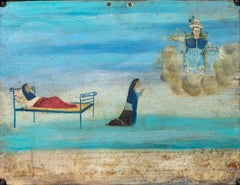
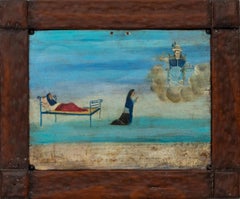
Mexican Ex-Voto Retablo of Gall Bladder Healing, Oil on Tin Folk Art

Mexican Ex-Voto Retablo of Gall Bladder Healing, Oil on Tin Folk Art

Located in Denver, CO

A rare Mexican ex-voto retablo commemorating a miraculous recovery from gall bladder illness, hand-painted in oil on tin by an anonymous folk artist. Created as an offering of gratit...

Category

Folk Art 1930s Art

Materials

Metal

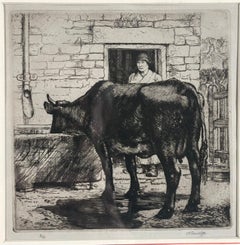
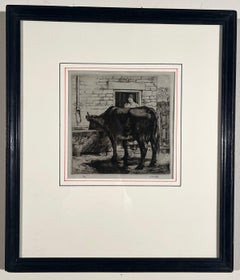
THE WATER TROUGH
THE WATER TROUGH

THE WATER TROUGH

By Charles Tunnicliffe

Located in Portland, ME

Tunnicliffe, Charles. THE WATER TROUGH. Etching, not dated (circa 1930s/40s). Edition of 75, signed in pencil and numbered 9/75. 5 7/8 x 5 7/8 inches, framed to 15 x 13 1/2. In excel...

Category

1930s Art

Materials

Etching

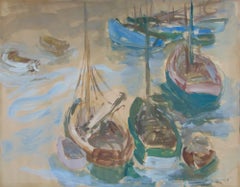
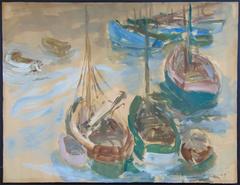
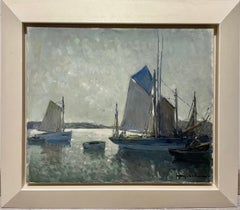
Boats in the Harbour - Seaside Maritime

Boats in the Harbour - Seaside Maritime

By Mane Katz

Located in London, GB

MANE KATZ [Katz Emmanuel] 1894-1962 Kremenchug, Ukraine 1894-1962 Tel Aviv (Russian / Ukrainian / French / Israeli) Title: Boats in the Harbour, circa 1938 Technique: Original...

Category

Expressionist 1930s Art

Materials

Gouache

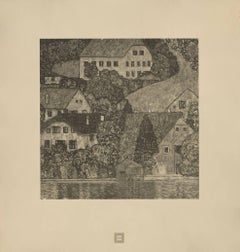
Max Eisler Eine Nachlese folio "Houses in Unterach on Lake Attersee" collotype

Max Eisler Eine Nachlese folio "Houses in Unterach on Lake Attersee" collotype

By (after) Gustav Klimt

Located in Palm Beach, FL

After Gustav Klimt, Max Eisler Plate #29, Am Attersee; brown-toned monochrome collotype after the 1915-16 painting in oil on canvas. GUSTAV KLIMT EINE NACHLESE (GUSTAV KLIMT AN AFTERMATH), a portfolio of 30 collotypes prints, 15 are multi-color and 15 are monochrome, on chine colle paper laid down on heavy cream-wove paper with deckled edges; Max Eisler, Editor-Publisher; Osterreichischer Staatsdruckerei (Austrian State Printing Office), Printer; in a limited edition of 500 numbered examples of which: 200 were printed in German, 150 were printed in French and 150 were printed in English; Vienna, 1931. 2018 marks the 100th anniversary of Gustav Klimt’s death. It is a fitting time to reflect upon the enduring legacy and deep impact of his art. Recognizing this need for posterity with uncanny foresight, the publication of Gustav Klimt: An Aftermath (Eine Nachlese) provides a rare collection of work after Klimt which has proven to be an indispensable tool for Klimt scholarship as well as a source for pure visual delight. Approximately 25 percent of the original works featured in the Aftermath portfolio have since been lost. Of those 30, six were destroyed by fire on 8 May 1945. On that fateful final day of WWII, the retreating Feldherrnhalle, a tank division of the German Army, set fire to the Schloss Immendorf which was a 16th century castle in Lower Austria used between 1942-1945 to store objects of art. All three of Klimt’s Faculty Paintings: Philosophy, Medicine and Jurisprudence (1900-1907), originally created for the University of Vienna, were on premises at that time. Also among the inventory of Klimt paintings in storage there was art which had been confiscated by the Nazis. One of the most significant confiscated collections was the Lederer collection which featured many works by Gustav Klimt such as Girlfriends II and Garden Path with Chickens. In many instances, Aftermath is our only link to these lost treasures. Max Eisler (1881-1937), the publisher of the 1931 Aftermath portfolio, was an art historian at Vienna University specializing in modern and contemporary arts and crafts whose 1920 book on Klimt was the first Klimt monograph. He saw An Aftermath as filling-in important gaps left by the earlier print portfolios which had only featured Klimt up to 1913 and which had glossed over major art projects such as the Tree of Life frieze for the Palais Stoclet. And whereas only 10 of the 50 prints from the earlier portfolios published by H.O. Miethke were made in intricate multi-color images, Eisler augmented the earlier format by featuring half of the 30 images in stunning multi-colored collotypes. Understanding the fragile nature of the collotype printing process also reinforces this project’s distinctive and exceptional characteristics. Fragile collotype plates can not be reused. As such, this necessitates the completion of a run on the first go and also dictates a limited production number. Printed by hand, the collotypes required deft handling by the printer, Osterreichische Staatsdruckerei. A complicated and lengthy process involving gelatin colloids mixed with dichromates, the creation of 16 color separation thin glass filters to achieve the light-sensitive internegative images which could faithfully capture all of the painting’s tonal gradations and colors, exposure to actinic light, and delicate chine collie papers which allowed for greater color saturation, the printer’s collaborative role in capturing and transmitting Klimt’s nuanced paint strokes is nothing short of remarkable. The Österreichische Staatsdruckerei (Austrian State Printing Office), was the successor to the KK Hof -und Staatsdruckerei which was founded by Emperor Franz I in 1804 and whose collotype printing innovations of Klimt’s art...

Category

Vienna Secession 1930s Art

Materials

Archival Paper

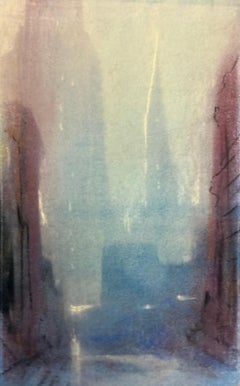
“Chrysler Building, New York City”

“Chrysler Building, New York City”

By Leon Dolice

Located in Southampton, NY

Original pastel on archival paper by the well known New York artist, Leon Dolice. Signed lower right by the artist. View of downtown New York City and the Chrysler Building. Circa 19...

Category

Ashcan School 1930s Art

Materials

Pastel, Archival Paper

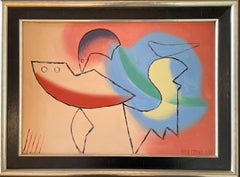
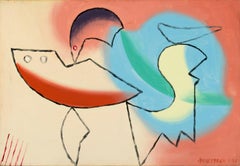
Surrealistic Composition

Surrealistic Composition

By Henri Goetz

Located in Boca Raton, FL

In 1945 Goetz worked with René Guilly on a national radio program called The World of Paris. He continued broadcasting for six months before giving his position to someone else. In 1...

Category

Abstract 1930s Art

Materials

Oil

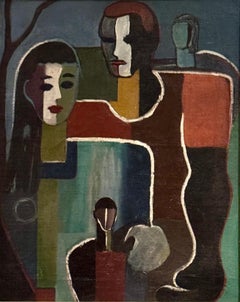
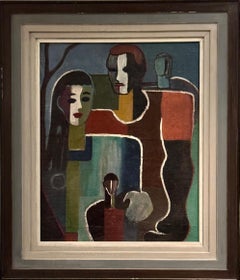
Antique American Signed Interior Modernist Abstract San Fran Museum Painting

Antique American Signed Interior Modernist Abstract San Fran Museum Painting

Located in Buffalo, NY

Antique American modernist signed interior oil painting. Oil on board. Signed. Framed. Image size, 9L x 10H. Provenance from the San Francisco Museum of Art.

Category

Abstract 1930s Art

Materials

Canvas, Oil

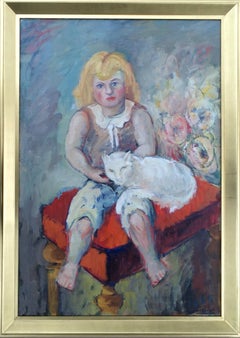
Girl with Cat oil painting by Hans Burkhardt

Girl with Cat oil painting by Hans Burkhardt

By Hans Burkhardt

Located in Hudson, NY

Girl with Cat (1935) Oil on canvas 38" x 26" 42 ½" x 30 ½" x 3 ½" framed Signed and dated "1935 H Burkhardt" lower right. Signed, dated and inscribed verso. About this artist: Hans ...

Category

Modern 1930s Art

Materials

Canvas, Oil

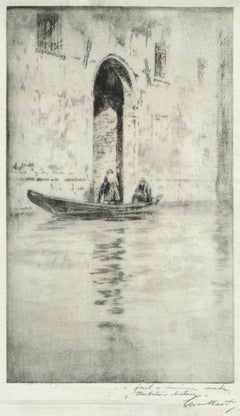
Untitled (Venice canal, man departing the gondola)

Untitled (Venice canal, man departing the gondola)

By Levon West

Located in Fairlawn, OH

Untitled (Venice canal, man departing the gondola) Drypoint, c. 1930-1931 Signed in pencil lower right (see photo) Annotated in the lower margin: "Just a souvenir made ___ Monclair L...

Category

American Impressionist 1930s Art

Materials

Drypoint

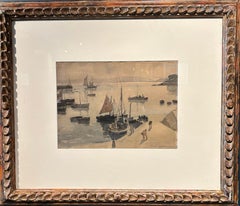
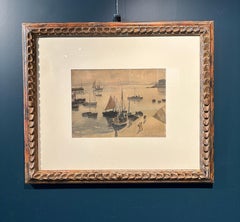
Fishing Harbor, Brittiny

Fishing Harbor, Brittiny

By Hayley Lever

Located in Saratoga Springs, NY

Signed lower right and dated 1930. Lever’s “Fishing Harbor in Brittany” is as much a scene celebrating the boats and quaint architecture of coastal France, as it is a nod to its ...

Category

Post-Impressionist 1930s Art

Materials

Canvas, Oil

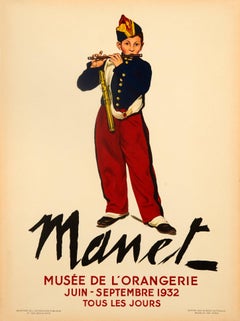
Le Fifre - Musée De L'Orangerie (after) Edouard Manet, 1932

Le Fifre - Musée De L'Orangerie (after) Edouard Manet, 1932

By Édouard Manet

Located in New York, NY

Artist: Edouard Manet Medium: Lithographic Poster, 1932 Dimensions: 29.5 x 22 in, 75 x 55.9 cm Classic Poster Paper - Excellent Condition A This 1932 very rare lithographic poster reproduces an amazing painting by Edouard Manet entitled "Le Fifre" (the fifer), from 1866. It was displayed at the Louvre from 1914 until 1947, when it was relocated to the Musée du Jeu de Paume. In 1986, it was moved to its current home in the Musée d'Orsay, the national museum of 19th-century art. (it is now on loan to the Louvre in Abu Dhabi.) On a trip to Spain in 1865, Édouard Manet visited the Prado, where the art of Diego Velasquez...

Category

1930s Art

Materials

Lithograph

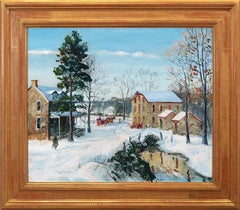
"Bucks County Mill"

"Bucks County Mill"

By Walter Emerson Baum

Located in Lambertville, NJ

Jim's of Lambertville Fine Art Gallery is proud to present this piece by Walter Emerson Baum (1884 - 1956). Born in Sellersville, Pennsylvania, Walter Baum was one of the only members of the New Hope Art Colony actually born in Bucks County...

Category

American Impressionist 1930s Art

Materials

Canvas, Oil

NYC Cityscape American Scene WPA Modern Realism Mid 20th Century Architectural

NYC Cityscape American Scene WPA Modern Realism Mid 20th Century Architectural

By Ernest Fiene

Located in New York, NY

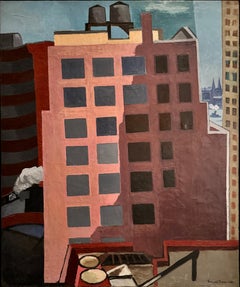
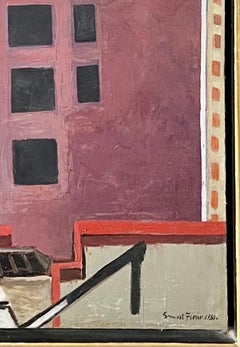
NYC Cityscape American Scene WPA Modern Realism Mid 20th Century Architectural Ernest Fiene (1894-1965) Cityscape 36 x 30 inches Oil on canvas Signed and dated 1930. lower right Provenance Estate of the artist. ACA Galleries, New York Exhibited New York, Frank Rehn Gallery, Changing Old New York, 1931. New York, ACA Galleries, Ernest Fiene: Art of the City, 1925-1955, May 2-23, 1981, n.p., no. 5. BIO Ernest Fiene was born in Elberfeld, Germany in 1894. As a teenager, Fiene immigrated to the United States in 1912. He studied art at the National Academy of Design in New York City from 1914 to 1918, taking day classes with Thomas Maynard and evening classes with Leon Kroll. Fiene continued his studies at the Beaux-Arts Institute of Design in New York from 1916 to 1918, adding classes in printmaking at the Art Students League in 1923. Fiene began his career as an artist in 1919 with his first exhibition of watercolors at the MacDowell Club arranged by his mentor Robert Henri. In 1923 the Whitney Studio Club mounted a large exhibition of his works. The following year he had an exhibition at the New Gallery in New York, which completely sold out all fifty-two works, including paintings, watercolors, drawings, and etchings. With the proceeds of sales from the New Gallery exhibition, Ernest Fiene and his younger brother Paul, a sculptor, built studios in Woodstock, New York in 1925. In the early Twenties Ernest Fiene painted mostly landscapes of Woodstock and both the Ramapo and Hudson River Valleys. The first monograph from the Younger Artists Series was published on Fiene in 1922. Published in Woodstock, the series went on to include Alexander Brook, Peggy Bacon, and Yasuo Kuniyoshi. The book reproduced 1 illustration in color and another 27 reproductions in black and white. Around 1925 Fiene became fascinated with the intensity, excitement, and opportunities for color harmonies New York City offered as a subject. His paintings shifted to urban and industrial themes with architecture, industry, and transportation becoming his subjects. By 1926 Fiene had attracted the dealer Frank K.M. Rehn, who gave him a one-man exhibition that year, which travelled to the Boston Arts Club. C.W. Kraushaar Galleries gave Fiene a one-man exhibition of urban, landscape, portrait, and still life paintings in 1927. Julianna Force, the director of the Whitney Studio Club and first director of the Whitney Museum of American Art, included two of Fiene’s paintings in a fall exhibition in 1928. The Whitney Studio Club showed Fiene’s paintings in a two-man exhibition with Glenn O. Coleman that year and acquired three of Fiene’s paintings. Also in 1928 Fiene became affiliated with Edith Halpert’s Downtown Gallery where he had an exhibition of 20 lithographs in the spring. Fiene sold his house in Woodstock in 1928 to spend more of his time in New York City. With so many successful exhibitions, Fiene returned to Paris in 1928-29 where he rented Jules Pascin's studio and studied at the Académie de la Grande Chaumière. In France, Fiene painted both landscape and urban subjects developed from ideas influenced by Cubist geometry and the use of flat areas of broad color. Upon returning to New York in 1930, Fiene used this new approach to continue to paint New York skyscraper and waterfront subjects, as well as to begin a series of paintings on changing old New York based on the excavations for Radio City Music Hall and the construction of the Empire State Building. Frank K.M. Rehn Galleries exhibited this series, titled “Changing Old New York,” in 1931. Fiene also has solo exhibitions at Rehn Galleries in 1930 and 1932. Fiene’s oil paintings are exhibited at the Chicago Arts Club in 1930 as well. Fiene was included in the Museum of Modern Art’s exhibition Painting and Sculpture by Living Americans in December of 1931. Visiting New York, Henri Matisse saw the exhibition and called Fiene’s Razing Buildings, West 49th Street the finest painting he had seen in New York. Fiene had two mural studies from his Mechanical Progress series exhibited at the Museum of Modern Art’s exhibition Murals by American Painters and Photographers in 1932. Fiene sent View from my Window which depicts Fiene working on a lithograph stone while looking out his window to the newly completed Empire State Building to the Carnegie International in 1931. In 1932 Fiene participated in the first Biennial of American Painting at the Whitney Museum and his prints were included in exhibitions at the Downtown Gallery and the Wehye Gallery. In the same year, Fiene was awarded a Guggenheim fellowship to further study mural painting in Florence, Italy. On his return from Italy in 1933 Fiene re-engaged himself in New York City life and won several public and private mural projects. Fiene resumed his active exhibition schedule, participating in two group exhibitions at the Whitney Museum and a one-man exhibition of recent paintings at the Downtown Gallery in January 1934. In 1933 he purchased a farm in Southbury, Connecticut, which added Connecticut scenes to his landscape subjects. This was also the year Fiene began to spend summers on Monhegan Island, Maine, where he painted seascapes, harbor scenes, and still lifes. Fiene’s landscape paintings attracted numerous commissions as part of the American Scene movement. Through the fall and winter of 1935-36, Fiene took an extended sketching trip through the urban, industrial, and farming areas of Pennsylvania and West Virginia. Most of the twenty-four Pennsylvania urban and rural paintings...

Category

American Modern 1930s Art
Materials

Canvas, Oil