Items Similar to The Parable of the Prodigal Son, Mo. III, The Return
Want more images or videos?
Request additional images or videos from the seller
1 of 12
James Jacques Joseph TissotThe Parable of the Prodigal Son, Mo. III, The Return1881
1881
$2,000
£1,542.29
€1,758.68
CA$2,852.42
A$3,117.36
CHF 1,640.45
MX$37,338.22
NOK 20,646.75
SEK 19,283.26
DKK 13,135.72
About the Item
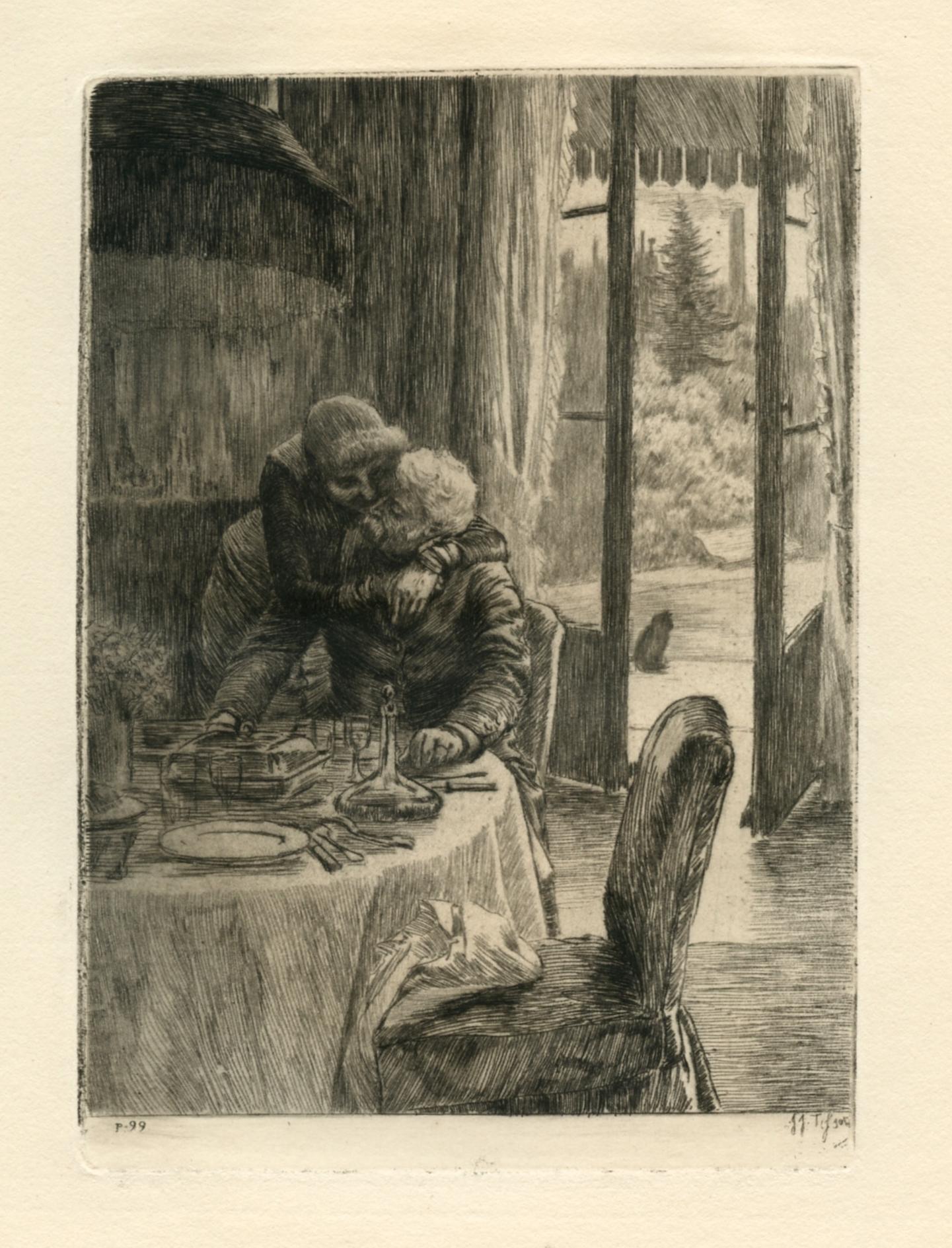
The Parable of the Prodigal Son, Mo. III, The Return
Etching, 1881
Signed and dated in the plate (see photo)
From: The Prodigal Son (four plates and title plate)
This being an impression of the first state before the engraved title and inscription
Printed on J. Whatman 1882 wove paper
Edition of 100 this state
Total edition is 500 impressions in both states
"Destitute and penitent, the returning son is welcomed and embraced by his father. His rags and bare feet contrast sharply with the appearance of his brother, who is looking on skeptically from his warm cocoon of a heavy overcoat. Having grown up in the French port city of Nantes and lived in London for years, Tissot had firsthand knowledge of the social and economic dynamics of the seafaring merchant class. He revisited this milieu in several other narrative paintings and prints." Courtesy High Museum
Condition: The image is excellent. There are two repaired tears in the large margins well away from the image.
Image size: 12 3/8 x 14 5/8 inches
Sheet size: 19 3/4 x 24 1/4 inches
Reference: Wentworth 60 i/II, before letters
Beraldi 132
Provenance: Estate of the Artist
Edmund Sagot, paris (1857-1917)
Maurice Le Garrec, Paris (1881-1937)
By descent
James Tissot
Born Jacques Joseph Tissot
15 October 1836, Nantes, July Monarchy
Died 8 August 1902 (aged 65), Chenecey-Buillon, Third French Republic
Occupation painter, illustrator, artist
Jacques Joseph Tissot (French: [tiso]; 15 October 1836 – 8 August 1902), Anglicized as James Tissot (/ˈtɪsoʊ/), was a French painter and illustrator. He was a successful painter of Paris society before moving to London in 1871. He became famous as a genre painter of fashionably dressed women shown in various scenes of everyday life. He also painted scenes and figures from the Bible.
Early life
Jacques Tissot was born in the city of Nantes in France and spent his early childhood there. His father, Marcel Théodore Tissot, was a successful drapery merchant. His mother, Marie Durand, assisted her husband in the family business and designed hats. A devout Catholic, Tissot's mother instilled pious devotion in the future artist from a very young age. Tissot's youth spent in Nantes likely contributed to his frequent depiction of shipping vessels and boats in his later works. The involvement of his parents in the fashion industry is believed to have been an influence on his painting style, as he depicted women's clothing in fine detail. By the time Tissot was 17, he knew he wanted to pursue painting as a career. His father opposed this, preferring his son to follow a business profession, but the young Tissot gained his mother's support for his chosen vocation. Around this time, he began using the given name of James. By 1854 he was commonly known as James Tissot; he may have adopted it because of his increasing interest in everything English.
Early career
In 1856 or 1857, Tissot travelled to Paris to pursue an education in art. While staying with a friend of his mother, painter Jules-Élie Delaunay, Tissot enrolled at the Ecole des Beaux-Arts to study in the studios of Hippolyte Flandrin and Louis Lamothe. Both were successful Lyonnaise painters who moved to Paris to study under Jean-Auguste-Dominique Ingres. Lamothe provided the majority of Tissot's studio education, and the young artist studied on his own by copying works at the Louvre, as did most other artists of the time in their early years. Around this time, Tissot also made the acquaintance of the American James McNeill Whistler, and French painters Edgar Degas (who had also been a student of Lamothe and a friend of Delaunay), and Édouard Manet.
In 1859, Tissot exhibited in the Paris Salon for the first time. He showed five paintings of scenes from the Middle Ages, many depicting scenes from Goethe's Faust. These works show the influence in his work of the Belgian painter Henri Leys (Jan August Hendrik Leys), whom Tissot had met in Antwerp earlier that same year. Other influences include the works of the German painters Peter von Cornelius and Moritz Retzsch. After Tissot had first exhibited at the Salon and before he had been awarded a medal, the French government paid 5,000 francs for his depiction of The Meeting of Faust and Marguerite in 1860, with the painting being exhibited at the Salon the following year, together with a portrait and other paintings.
Mature career
Émile Péreire supplied Tissot's painting Walk in the Snow for the 1862 international exhibition in London; the next year three paintings by Tissot were displayed at the London gallery of Ernest Gambart.
In about 1863, Tissot suddenly shifted his focus from the medieval style to the depiction of modern life through portraits. During this period, Tissot gained high critical acclaim, and quickly became a success as an artist. Like contemporaries such as Alfred Stevens and Claude Monet, Tissot also explored Japonisme, including Japanese objects and costumes in his pictures and expressing style influence. Degas painted a portrait of Tissot from these years (Metropolitan Museum of Art, New York), in which he is sitting below a Japanese screen hanging on the wall.
Tissot fought in the Franco-Prussian War as part of the improvised defence of Paris, joining two companies of the Garde Nationale and later as part of the Paris Commune. His 1870 painting La Partie Carrée (The Foursome) evoked the period of the French revolution. Either because of the radical political associations related to the Paris Commune (which he was believed to have joined mostly to protect his own belongings rather than for shared ideology), or because of better opportunities, he left Paris for London in 1871. During this period, Seymour Haden helped him to learn etching techniques. Having already worked as a caricaturist for Thomas Gibson Bowles, the owner of the magazine Vanity Fair, as well as exhibited at the Royal Academy, Tissot arrived with established social and artistic connections in London. Tissot used the name Coïdé in Vanity Fair from 1869 to 1873.
Tissot quickly developed his reputation as a painter of elegantly dressed women shown in scenes of fashionable life. By 1872 Tissot had bought a house in St John's Wood, an area of London very popular with artists at the time. According to The Oxford Dictionary of Art and Artists, "in 1874 Edmond de Goncourt wrote sarcastically that he had 'a studio with a waiting room where, at all times, there is iced champagne at the disposal of visitors'".
He gained membership of The Arts Club in 1873.
Paintings by Tissot appealed greatly to wealthy British industrialists during the second half of the 19th century. During 1872 he earned 94,515 francs, an income normally only enjoyed by those in the echelons of the upper classes.
In 1874, Degas asked him to join them in the first exhibition organized by the artists who became known as the Impressionists, but Tissot refused. He continued to be close to these artists, however. Berthe Morisot visited him in London in 1874, and he travelled to Venice with Édouard Manet at about the same time. He regularly saw Whistler, who influenced Tissot's Thames river scenes.
In 1875 or 1876, Tissot met Kathleen Newton, a divorcee who became the painter's companion and frequent model. He composed an etching of her in 1876 entitled Portrait of Mrs N., more commonly titled La frileuse. She gave birth to a son, Cecil George Newton in 1876, who is believed to be Tissot's son. She moved into Tissot's household in St. John's Wood in 1876 and lived with him until her death in the late stages of consumption in 1882. Tissot frequently referred to these years with Newton as the happiest of his life, a time when he was able to live out his dream of a family life.
After Kathleen Newton's death, Tissot returned to Paris. A major exhibition of his work took place in 1885 at the Galerie Sedelmeyer, where he showed 15 large paintings in a series called La Femme à Paris. Unlike the genre scenes of fashionable women he painted in London, these paintings represent different types and classes of women, shown in professional and social scenes. The works also show the widespread influence of Japanese prints, as he used unexpected angles and framing from that tradition. He created a monumental context in the size of the canvases. Tissot was among many Western artists and designers influenced at the time by Japanese art, fashion and aesthetics.
Late career
In 1885, Tissot had a revival of his Catholic faith, which led him to spend the rest of his life making paintings about Biblical events. Many of his artist friends were skeptical about his conversion, as it conveniently coincided with the French Catholic revival, a reaction against the secular attitude of the French Third Republic.[citation needed] At a time when French artists were working in Impressionism, Pointillism, and heavy oil washes, Tissot was moving toward realism in his watercolors. To assist in his completion of biblical illustrations, Tissot traveled to the Middle East in 1886, 1889, and 1896 to make studies of the landscape and people. His series of 365 gouache (opaque watercolor) illustrations showing the life of Christ were shown to critical acclaim and enthusiastic audiences in Paris (1894–1895), London (1896) and New York (1898–1899), before being bought by the Brooklyn Museum in 1900. They were published in a French edition in 1896–1897 and in an English one in 1897–1898, bringing Tissot vast wealth and fame. During July 1894, Tissot was awarded the Légion d'honneur, France's most prestigious medal.
Tissot spent the last years of his life working on paintings of subjects from the Old Testament. Although he never completed the series, he exhibited eighty of these paintings in Paris in 1901 and engravings after them were published in 1904
Courtesy Wikipedia
- Creator:James Jacques Joseph Tissot (1836-1902, French)
- Creation Year:1881
- Dimensions:Height: 12.38 in (31.45 cm)Width: 14.63 in (37.17 cm)
- Medium:
- Movement & Style:
- Period:
- Condition:Two repaired tears in the huge margins well away from the image.
- Gallery Location:Fairlawn, OH
- Reference Number:Seller: FA126931stDibs: LU14017267182
James Jacques Joseph Tissot
Jacques Joseph Tissot (French: [tiso]; 15 October 1836 – 8 August 1902), Anglicized as James Tissot (), was a French painter and illustrator. He was a successful painter of Paris society before moving to London in 1871. He became famous as a genre painter of fashionably dressed women shown in various scenes of everyday life. He also painted scenes and figures from the Bible.
About the Seller
5.0
Recognized Seller
These prestigious sellers are industry leaders and represent the highest echelon for item quality and design.
Gold Seller
Premium sellers maintaining a 4.3+ rating and 24-hour response times
Established in 1978
1stDibs seller since 2013
828 sales on 1stDibs
Typical response time: <1 hour
Associations
International Fine Print Dealers Association
- ShippingRetrieving quote...Shipping from: Akron, OH
- Return Policy
More From This Seller
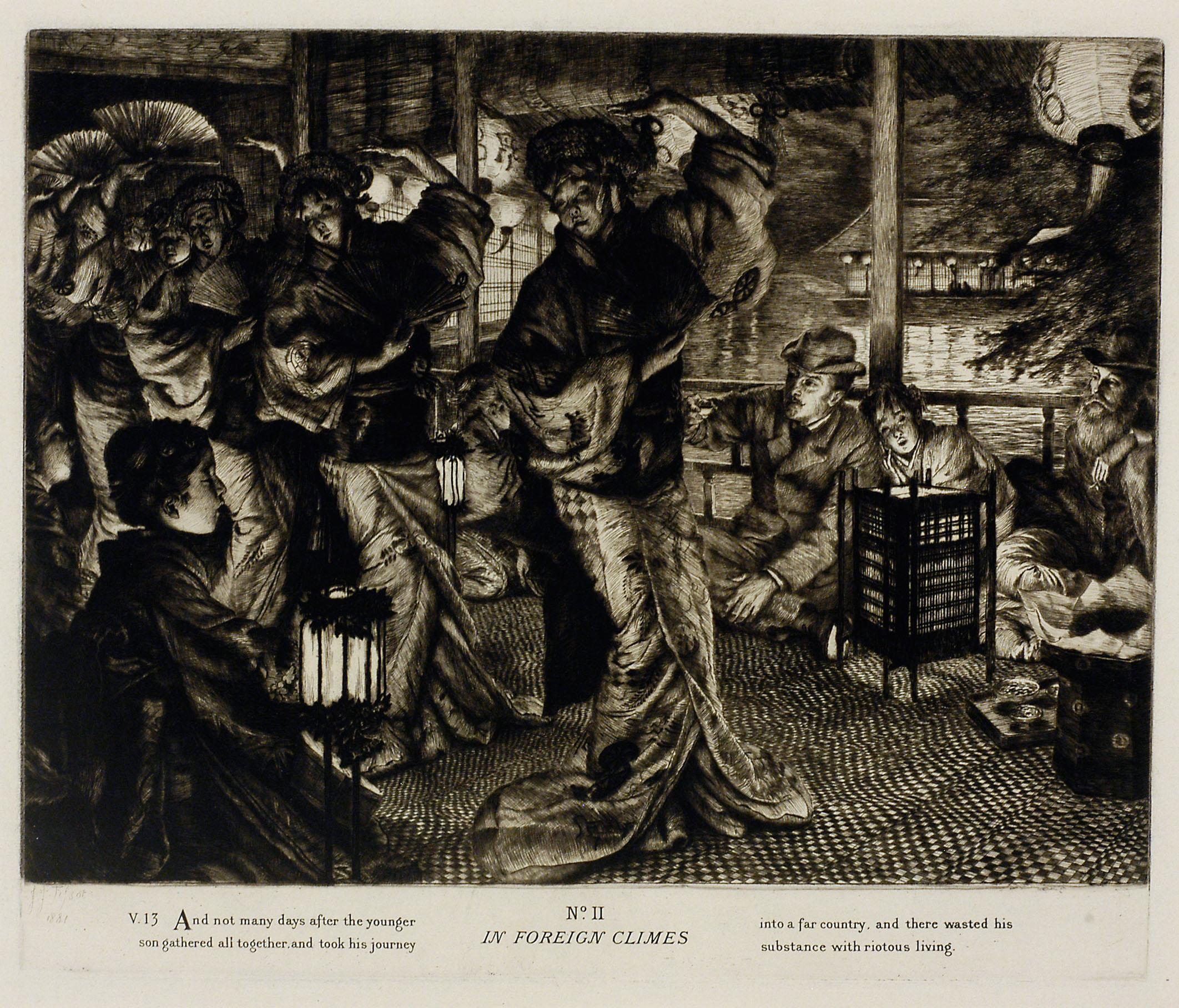
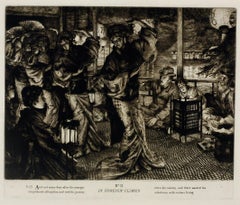
View AllL'enfant prodigue: en pays etranger (The Prodigal Son: In Foreign Climes)
By James Jacques Joseph Tissot
Located in Fairlawn, OH
L'enfant prodigue: en pays etranger (The Prodigal Son: In Foreign Climes)
Etching, 1881
Unsigned (as usual for this state)
From: L'enfant prodigue, (The Prodigal Son, five plates)
Ed...
Category
1880s Impressionist Figurative Prints
Materials
Etching
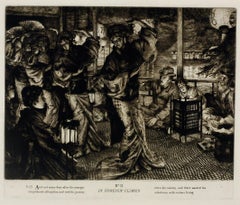
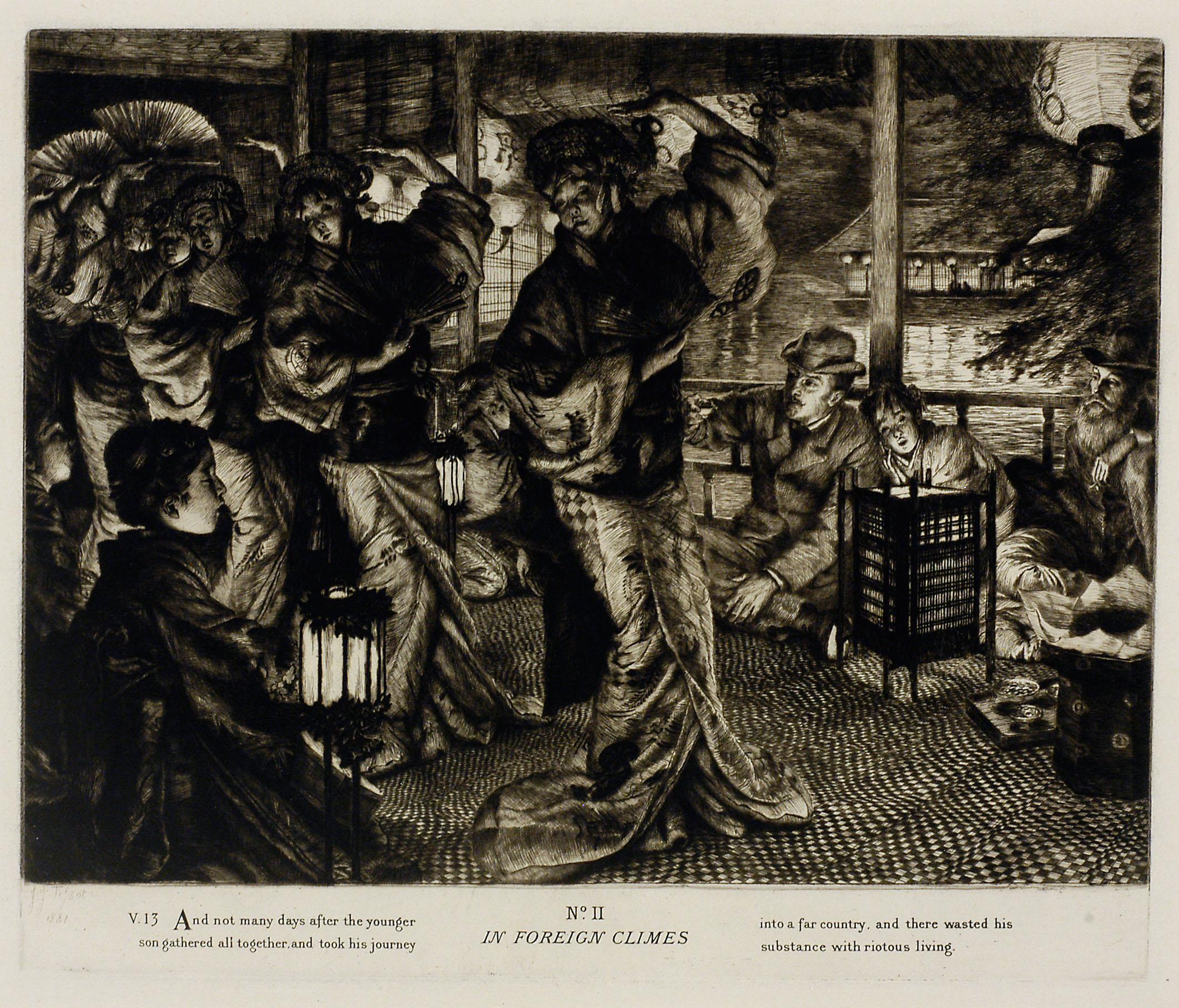
L'enfant prodigue: en pays etranger (The Prodigal Son: In Foreign Climes)
By James Jacques Joseph Tissot
Located in Fairlawn, OH
L'enfant prodigue: en pays etranger (The Prodigal Son: In Foreign Climes)
Etching, 1881
Unsigned (as usual for this state)
From: L'enfant prodigue, (The Prodigal Son, five plates)
Ed...
Category
1880s Impressionist Figurative Prints
Materials
Etching
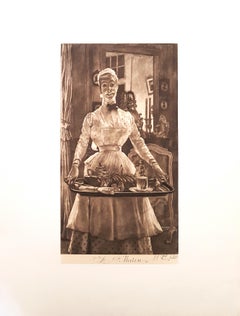
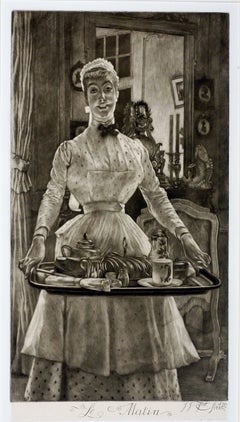
Le Matin (Morning)
By James Jacques Joseph Tissot
Located in Fairlawn, OH
Le Matin (Morning)
Mezzotint, 1886
Signed and dated in the plate (see photos)
Edition: at least 650 impressions in both states
Reference: Wentworth 82 ii/II
Provenance: Heirs of Edmu...
Category
1880s French School Interior Prints
Materials
Mezzotint
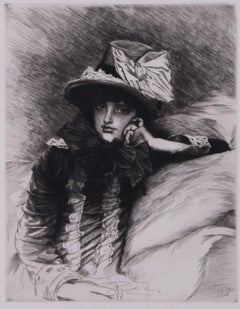
Berthe
By James Jacques Joseph Tissot
Located in Fairlawn, OH
Berthe
Etching with drypoint, 1883
Signed in the plate (see photo)
This etching was inspired by an 1882/3 pastel which the artist included in his ambitious "Femme a Paris" exhibition at Galerie Sedelmeyer, Paris, in 1885.
Reference: Beraldi 65
Wentworth 74, published state
Tissot 76
Condition: Excellent
Plate/Image size: 14 1/4 x 11 inches
Sheet size: 19 1/2 x 15 inches
Frame size: 23-1/2 x 20-1/4 inches
Donald Morris Gallery, Birmingham, Michigan (Morris had a distinguished collection of Tissot prints...
Category
1880s Impressionist Portrait Prints
Materials
Etching
Le banc de jardin (The Garden Bench)
By James Jacques Joseph Tissot
Located in Fairlawn, OH
Le banc de jardin (The Garden Bench)
Mezzotint and engraving on cream chine collé laid down on ivory wove paper, 1883
Signed in the plate (see photo)
Condition: Brilliant impression...
Category
1880s Impressionist Figurative Prints
Materials
Mezzotint
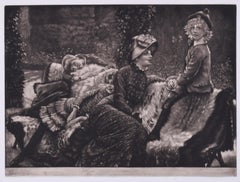
Au bord de la mer (At the Sea Side)
By James Jacques Joseph Tissot
Located in Fairlawn, OH
Au bord de la mer (At the Sea Side)
Etching and drypoint, 1880
Signed in the plate middle left edge (see photo)
Edition: c. 100
A very rich impression, full of burr and contrasts
Pri...
Category
1880s Impressionist Figurative Prints
Materials
Etching
You May Also Like
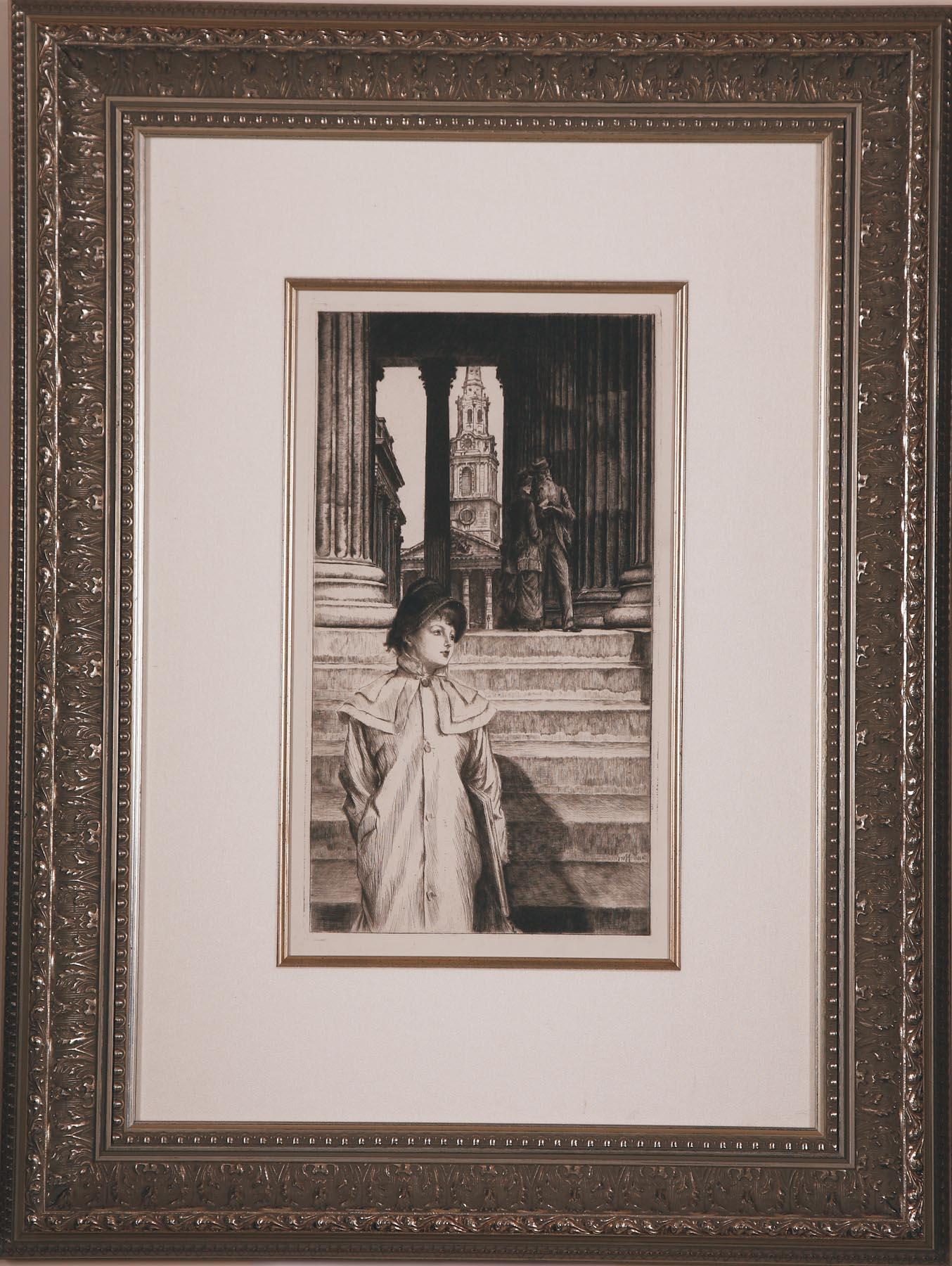
Le Portique de la Galerie Nationale a Londres by J.J. Tissot
By James Jacques Joseph Tissot
Located in Hinsdale, IL
J.J. Tissot
Le Portique de la Galerie Nationale a Londres
(The Portico of the National Gallery, London)
Wentworth 40
Etching and Drypoint on imitation Japanese paper, C. 1878
Only st...
Category
1890s Realist Prints and Multiples
Materials
Drypoint, Etching
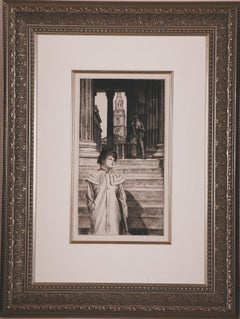
$4,400 Sale Price
20% Off
original etching
By James Jacques Joseph Tissot
Located in Henderson, NV
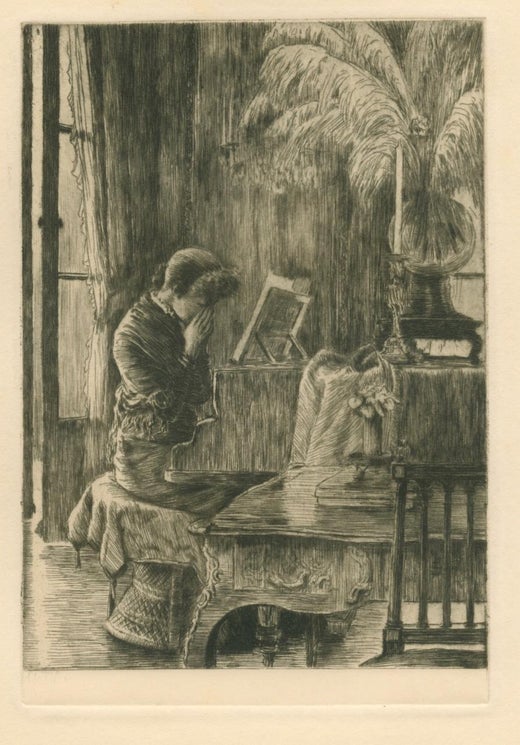
Medium: original etching. Executed by Tissot for the "Rene Mauperin" suite of etchings, published in Paris in 1884 by Charpentier in a limited edition of 550. This is a nice impressi...
Category
1880s Prints and Multiples
Materials
Etching
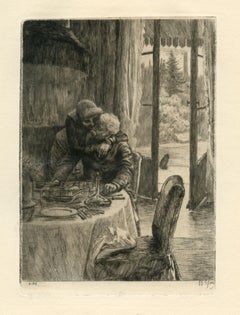
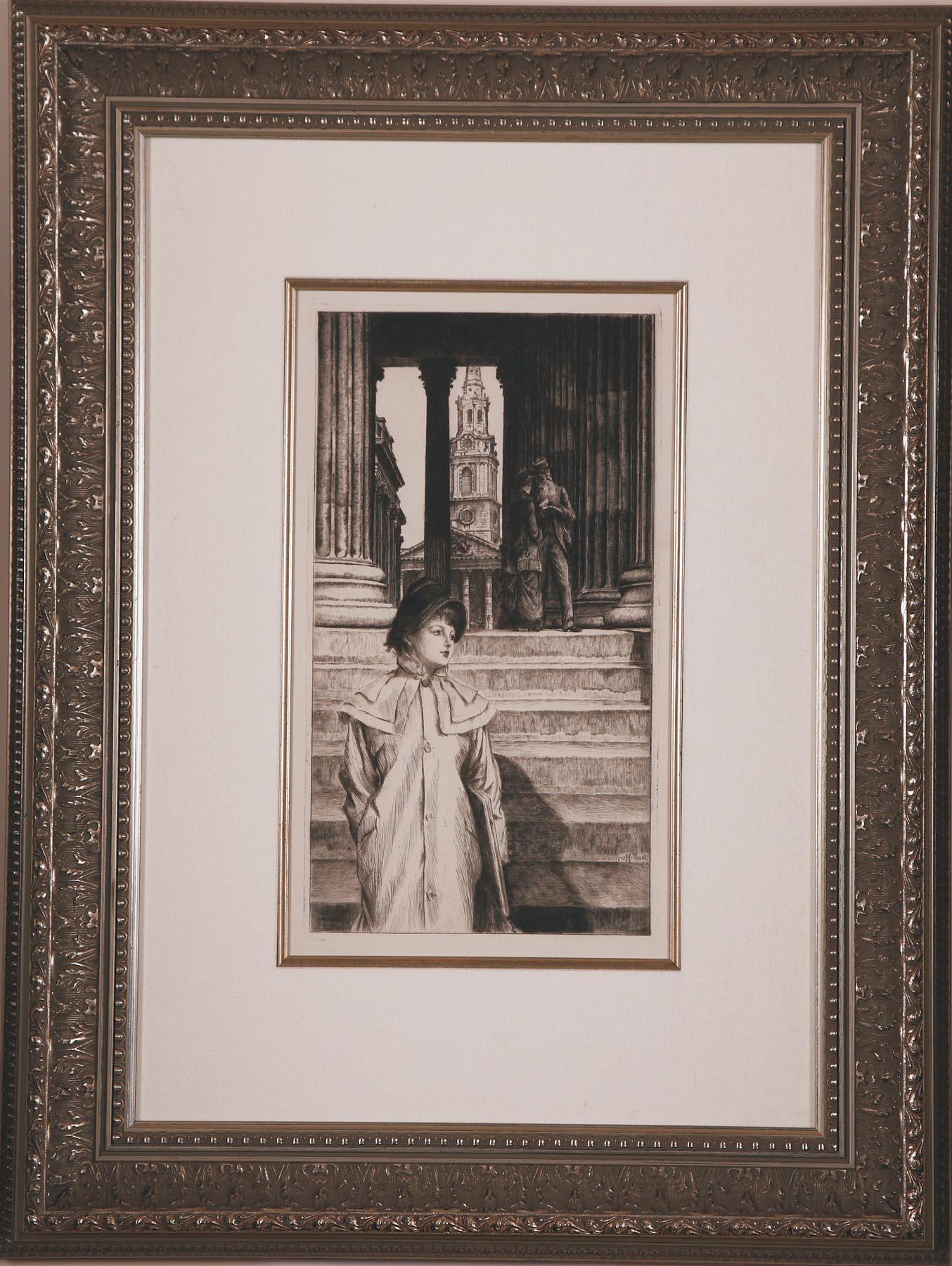
"Le Portique de la Galerie Nationale a Londres" etching by Tissot
By James Jacques Joseph Tissot
Located in Hinsdale, IL
TISSOT, JAMES JACQUES JOSEPH
(1836 - 1902)
"Le Portique de la Galerie Nationale a Londres"
(The Portico of the National Gallery, London)
Wentworth 40
Etching and Drypoint on imitation Japanese paper, C. 1878
Only state published, from the edition of 100
Signed 1878 J.J. Tissot on the step, lower right
14 7/8” x 8 1/4”
Excellent crisp impression
This etching is related to the painting London Visitors exhibited at the Royal Academy in 1874, no. 116. The setting is the portico of the National Gallery, looking toward the Church of St. Martin’s-in-the-Fields. Such works give Tissot a minor but distinguished position as a predecessor of the school of architectural etchers...
Category
Late 19th Century Impressionist Figurative Prints
Materials
Etching
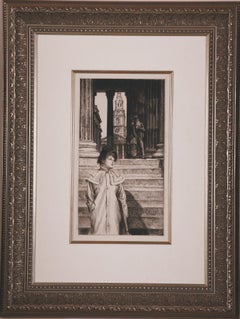
"Reverie"
By James Jacques Joseph Tissot
Located in Astoria, NY
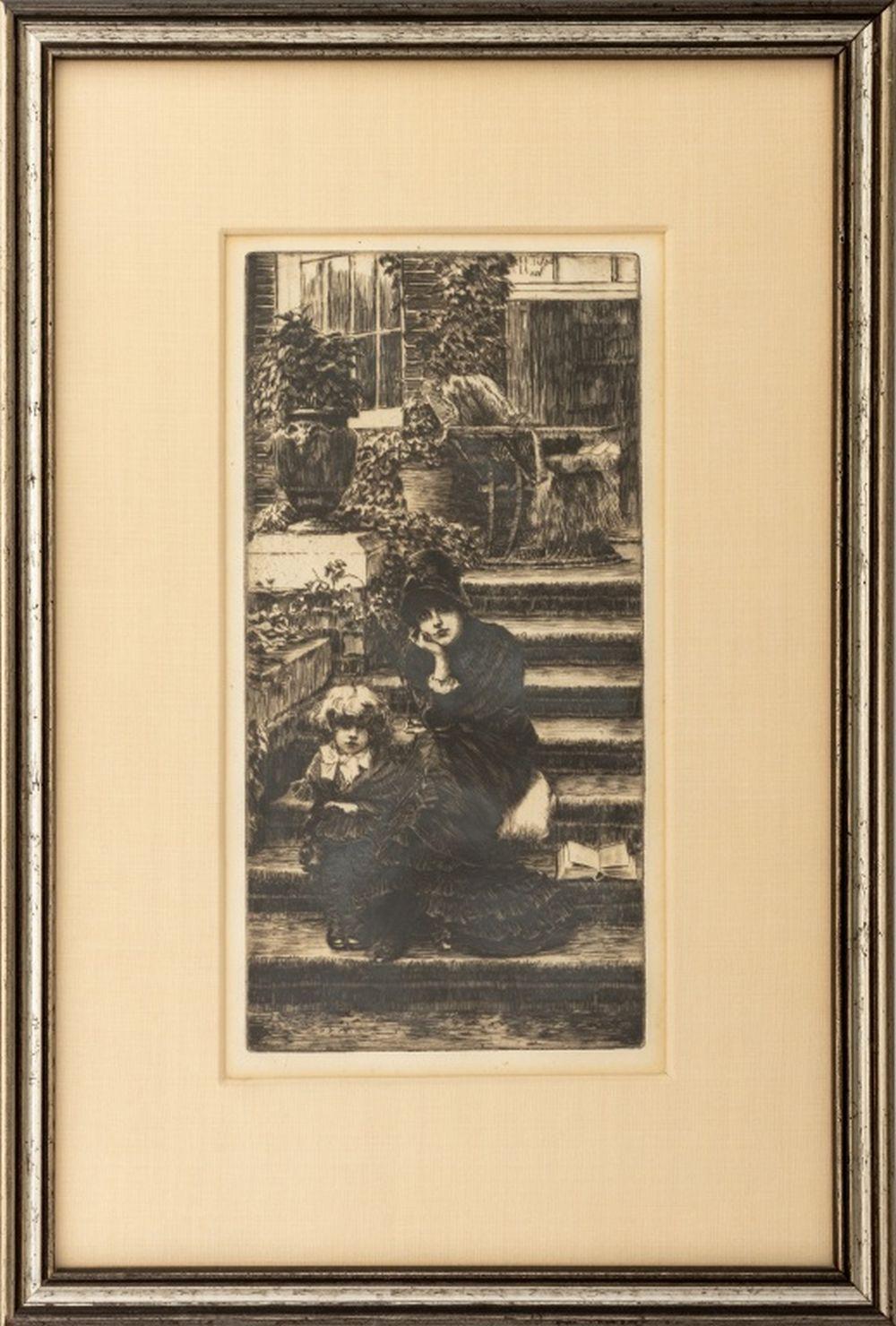
James Jacques Joseph Tissot (French, 1839-1906), "Reverie", Etching and Drypoint on Laid Paper, 1889, silvered wood frame. Image: 9" H x 4.5" W; frame: 14.75" H x 10" W. Provenance: ...
Category
1880s Figurative Prints
Materials
Laid Paper, Drypoint, Etching
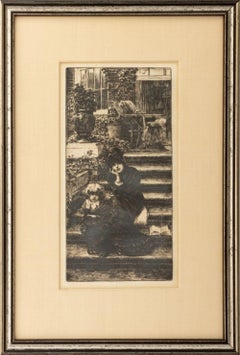
original etching
By James Jacques Joseph Tissot
Located in Henderson, NV
Medium: original etching. Executed by Tissot for the "Rene Mauperin" suite of etchings, published in Paris in 1884 by Charpentier in a limited edition of 550. This is a nice impressi...
Category
1880s Prints and Multiples
Materials
Etching
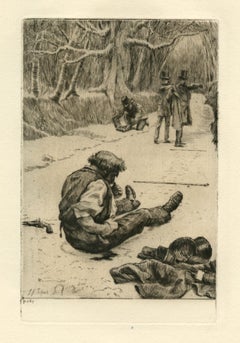
Le Matin - Etching by James Tissot - 1886
By James Tissot
Located in Roma, IT
Wonderful mezzotint and etching on China paper applied. The inscription reads: "Le matin/ J. J. Tissot Sc. et ex. 1886". Titled, signed and dated on plate on the lower margin, below ...
Category
1880s Modern Figurative Prints
Materials
Etching, Aquatint