1820s Figurative Prints
to
13
89
44
26
1
Overall Width
to
Overall Height
to
92
24
1
24
14
5
5
3
3,541
7,597
26,103
6,833
293
652
1,430
1,272
1,341
2,294
3,751
5,338
2,824
1,280
3,035
92
67
1
140
82
47
45
33
31
30
23
20
10
9
8
7
6
5
5
5
5
4
4
128
22
15
15
14
7
116
109
22
Period: 1820s
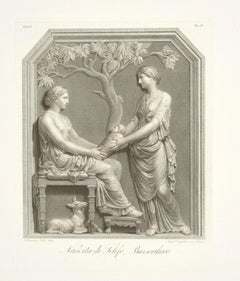
Birth of Telefon, on a Bas-Relief - Original Etching by A. Campanella
By Angelo Campanella
Located in Roma, IT
“Nascita di Telefo, Bassorilievo” (Birth of Telefo, Bas-relief) is a beautiful black and white burin and etching on paper, realized by the artist Angelo Campanella, after Bernardino Nocchi, as the inscriptions on plates on lower margins report “Bernardino Nocchi delineò/ Angelo Campanella incise Roma”.
This original print is numbered on plate in Roman numerals on higher margin: “Tom II. /Tav. IX" and is a plate from the series "Illustrazioni de'Monumenti scelti Borghesiani già esistenti nella Villa sul Pincio (..)date ora per la prima volta in luce dal cav. Gio. Gherardo De Rossi e da Stefano Piale sotto la guida di Vincenzo Feoli", by Ennio Quirino Visconti, published by Stamperia de Romanis in Rome, 1821.
This old master’s original prints shows a beautiful piece of the Borghese's collection, a classical bas-rilief representing the birth of Telefo, a Greek hero and myth.
In excellent conditions with some light signs of the time with some sporadic minor stains along the higher margins,this wonderful etching has preserved still today his beauty and his fresh impression.
Illustrazioni de' Monumenti scelti Borghesiani
This collection in two volumes is a beautifully detailed catalog of classical sculptures collected by Prince Borghese (1730-1800) in his Villa on the Pincio. Ennio Quirino Visconti (1751 - 1818) wrote the texts that accompany the large branches depicting. To these writings, which were available by the son of the illustrious archaeologist, the publishers added only a few illustrations relating to some minor monument of which copper had already been engraved.
The engraved title-plate are signed by draughtsmen like Agostino Tofanelli, Stefano Tofanelli, Bernardino Nocchi, Domenico de Angelis or Teodoro Matteini, and by engravers Pietro Fontana Veneto, P. Vitali, Pietro Bettelini, Giovanni Folo Veneto, Giovanni Brunetti da Ravenna, Giovanni Ottaviani, Francesco Cecchini, Gio. Batta. Leonetti, Girolamo Carattoni, Domenico Cunego, Luigi Cunego, Alessandro Mochetti, Luigi Pizzi, Angelo Campanella or Giacomo Bossi.
The Volume I shows ancient full-length statues, of the Borghese warrior by Agasias (two plates), Greek gods and heroes and Roman famous historical figures; the last two plates represents antique Egyptian deities. There are plates representing ancient bas-reliefs, sarcophagi, of mythological subjects, the Borghese Vase, portrait busts, a vase on an altar, two statues of Amor; and two modern statues, by Bernini (the Apollo and Daphne, and the David).
«Très bel ouvrage» writes Brunet, «Grand ouvrage, le seul qui mérite, parmi ceux sur la villa Borgese, de figurer dans le chapitre aux Galeries et Collections» Vinet said, looking at this plate.
Angelo Campanella (Rome, 1748 – 1815)
Angelo Campanella was an Italian painter and engraver, learned his art under Giovanni Volpato. He engraved the statues of twelve apostles found in the church of St. John Lateran in Rome, and some of the plates for Gavin Hamilton's Schola Itálica including The Presentation in the Temple after Fra Bartolommeo...
Category
Modern 1820s Figurative Prints
Materials
Etching
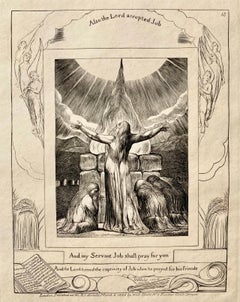
JOB SACRIFICED - And My Servant Job Shall Pray For You
Located in Santa Monica, CA
WILLIAM BLAKE (British 1757-1827)
JOB'S SACRIFICE - And my Servant Job Shall Pray For You, 1825 (Bindman 1978.643; Binyon 1926.123 iii; Russell 1912.33)
Engraving, First edition, one of 100 sets printed directly onto Whatman wove paper with a 1825 watermark. and the word “proof” removed. From "Illustrations of the Book of Job...
Category
English School 1820s Figurative Prints
Materials
Engraving

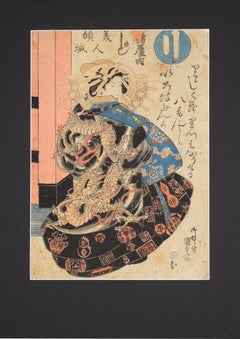
The Courtesan Kashiwagi and the Kamuro Wakano - Japanese Woodblock Print
Located in Soquel, CA
The Courtesan Kashiwagi and the Kamuro Wakano - Japanese Woodblock Print
Original Toyokuni III/Kunisada (Japanese, 1786 - 1864) Japanese Woodblock Print
"The Courtesan Kashiwagi and...
Category
Realist 1820s Figurative Prints
Materials
Printer's Ink, Rice Paper, Woodcut
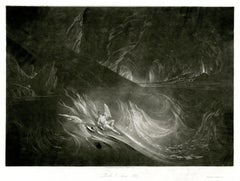
Book 1, line 192: Satan on the Burning Lake
By John Martin
Located in Fairlawn, OH
Book 1, line 192: Satan on the Burning Lake
Mezzotint, 1825
Engraved signature below the image (see photo)
From John Milton's "Paradise Lost"
Published by Septimus Prowett
Printed by...
Category
Romantic 1820s Figurative Prints
Materials
Mezzotint
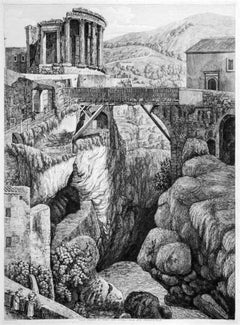
Veduta Generale del Tempio della Sibilla... - by L. Rossini - 1824
Located in Roma, IT
Veduta Generale del Tempio della Sibilla, e Ponte della Cascata di Tivoli
Image dimensions: 61x45 cm.
From the series “Le antichità de’ contorni di Roma (...)” an artist's proof with...
Category
Old Masters 1820s Figurative Prints
Materials
Etching
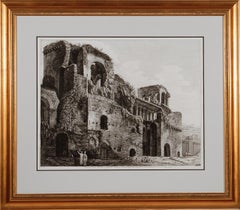
Ruins of the Roman Baths of Belisarius: A 19th C. Etching by Luigi Rossini
Located in Alamo, CA
This early 19th century etching entitled "Veduta degl' Avanzi delle Torri di Belisario Dalla parte che guarda l' Interno della Città, vicino a Porta S. Giovanni, A. Mura Aureliane" (...
Category
Old Masters 1820s Figurative Prints
Materials
Etching
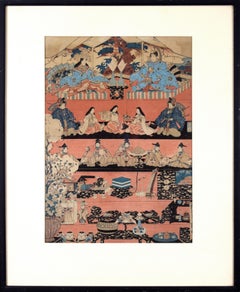
"Various Himochi" Wagashi Festival Japanese Woodblock Print by Utagawa Toyokuni
Located in Soquel, CA
"Various Himochi" Wagashi Festival Japanese Woodblock Print by Utagawa Toyokuni
Rare oversized early 19th century 5-tiered woodblock by Utagawa Ichiyosai Toyokuni, (Japan, 1769-1825), a Japanese lord and wife oversee a sekku festival of food, music, and dolls or toys. '"oshi" is the first day of “Mi (Snake)” in the third month of the lunar calendar. This day, known in modern Japan as the Girls' Festival, originated in China as a form of purification ceremony in which water and drinking peach blossom wine were used to drive away evil. Many kinds of hishi-mochi appear in this picture of hina ningyo (dolls associated with Hinamatsuri, or the Girl’s Day) from Omochae.
The custom of eating special dishes at events throughout the year and at milestones in people's lives has existed since ancient times. This paragraph specifically focuses on the annual event called sekku, and life events that involve eating sweets. Joshi is the first day of “Mi (Snake)” in the third month of the lunar calendar. This day, known in modern Japan as the Girls' Festival, originated in China as a form of purification ceremony in which water and drinking peach blossom wine were used to drive away evil. According to the Keiso saijiki, in ancient China, on the third day of the third lunar month, people ate “ryuzetsuhan,” which is the juice of gogyo (Jersey cudweed) mixed with rice flour and nectar. In Japan, there is a record in the Heian period history book Nihon Montoku tenno jitsuroku [839-5] that it was an annual event to make kusamochi using gogyo on the third day of the third month of the lunar calendar, which may have been influenced by Chinese customs.
The tradition of eating kusamochi on the third day of the third month of the lunar calendar continued after that. By the Edo period, however, hishimochi had come to be used as a sweet to serve on the third day of the third month. A picture of a hishimochi is included in the Morisada manko , which we mentioned in Part 1. According to it, hishimochi in the Edo period were often three layers of green-white-green instead of the now common red-white-green. However, it is possible to see from our collection that not all hishimochi were made in this way. Omochae published in 1857, is a good example. Omochae is a type of ukiyoe print...
Category
Edo 1820s Figurative Prints
Materials
Ink, Rice Paper, Woodcut
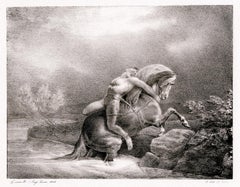
'Mazeppa' — 19th-Century French Romanticism
Located in Myrtle Beach, SC
Théodore Géricault and Eugène Lami, 'Mazeppa' from the series 'Oeuvres de Lord Byron', lithograph, 1823, 2nd state of 3, Delteil 94. Rendered by Thé...
Category
Romantic 1820s Figurative Prints
Materials
Lithograph
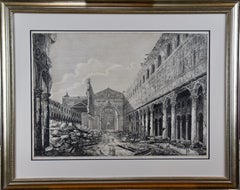
The Basilica of St. Paul in Rome, Early 19th Century Etching by Luigi Rossini
Located in Alamo, CA
"Rovina della gran Basilica di S. Paolo fueri le mura accaduta" (View of the Ruins of the Great Triumphal Arch of S. Paolo Fuori le Mura) from "Le Antichita Romane" (Ancient Rome), published in Rome in 1823. It depicts the destruction of the Basilica of St. Paul after the fire of 1823. People stand in the road and on the right observing the damage amid debris, which includes many fragments of columns.
The etching is presented in a silver-color wood frame with an off-white double mat with a black inner mat. There are a few small spots, but it is otherwise in very good condition. See item # LU117324669722 for another Rossini etching...
Category
Old Masters 1820s Figurative Prints
Materials
Etching
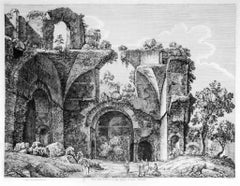
Avanzi della Biblioteca ... - Etching by Luigi Rossini - 1824
Located in Roma, IT
Avanzi della Biblioteca in Villa Adriana, di opera retticolata is an original etching realized by Luigi Rossini.
From the collection “Le antichità de’ c...
Category
Old Masters 1820s Figurative Prints
Materials
Etching
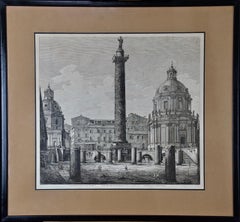
Column of Trajan in Rome: A Framed Original 19th C. Etching by Luigi Rossini
Located in Alamo, CA
This early 19th century etching entitled "Veduta dello scavo del Foro Trajano" was created by Luigi Rossini and included in his publication "Le Antichita Romane" (The Rome of Antiquity), published in Rome in 1823. It depicts the historical victory column of Trajan standing amidst the rubble of broken columns that remain around it.
The etching is presented in a black wood frame with a light brown outer mat and a dark brown inner mat. There are several frame abrasions. The print and mats are in very good condition. The frame measures 27" high, 29.07" wide and 0.5" deep. The print is framed and matted in the identical style as the another etching of an ancient Roman landmark, the Piazza Navona, which is also listed on 1stdibs, see item # LU117326144172. The pair would make an attractive display grouping of Roman architecture. A discount is available for purchase of the pair of prints.
Luigi Rossini (1790-1857) like his predecessors, Giovanni Piranesi (1720–1778) and Giuseppi Vasi (1710-1782), was an architect and artist. Like Piranesi and Vasi, he wanted to glorify the architecture of ancient Rome, which he felt was deteriorating and needed to be documented. Several of the ruins he illustrated have, in fact, since disappeared leaving only his images as a record of their appearance. His images of the grand edifices of the city dramatically depict the power and glory...
Category
Old Masters 1820s Figurative Prints
Materials
Etching
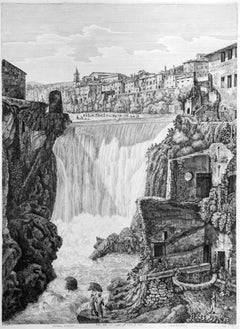
Veduta della Gran Caduta dell' Aniene... - Etching by L. Rossini - 1825
Located in Roma, IT
Veduta della Gran Caduta dell'Aniene in Tivoli
Image dimensions: 63x46 cm.
From the series “Le antichità de’ contorni di Roma (...)” an artist's proof of technical virtuosity with sh...
Category
Old Masters 1820s Figurative Prints
Materials
Etching
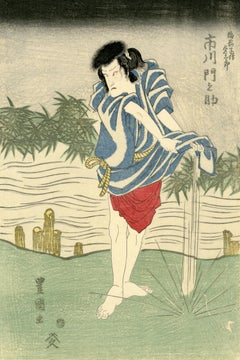
Inari Kozo Tasaburo- Kabuki
Located in Fairlawn, OH
Inari Kozo Tasaburo- Kabuki
Color woodcut, c. 1820
Signed: ‘Toyokuni’
Publisher: ‘Yamamoto Heikichi’
Censor: Hama and Magome
Very good impression and color
Sheet/Image size: 15 1/2 x...
Category
Other Art Style 1820s Figurative Prints
Materials
Woodcut
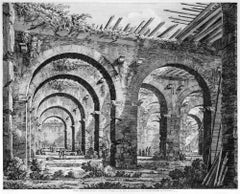
Veduta delle rovine di una Conserva... - Etching by L. Rossini - 1826
Located in Roma, IT
Veduta delle Rovine di una Conserva d'acqua per la Villa di Domiziano vicino a Castel Gandolfo negl'Orti Lodovisi
Image dimensions: 42 x 52 cm.
From th...
Category
Old Masters 1820s Figurative Prints
Materials
Etching
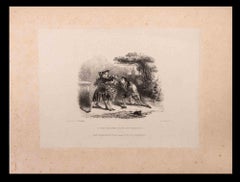
A Duel Between Frank and Rashleigh -Lithograph by Richard Parks Bonington - 1828
Located in Roma, IT
A Duel between Frank and Rashleigh is original lithograph on china glued, realized by the artist Richard Parkes Bonington (1802- 1828)
Signed on the plate on the lower left and titl...
Category
Modern 1820s Figurative Prints
Materials
Lithograph
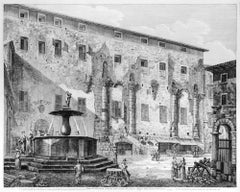
Piazza di Palestrina costruita sulle rovine del famoso Tempio della Fortuna...
Located in Roma, IT
Full Title: Piazza di Palestrina costruita sulle rovine del famoso Tempio della Fortuna Prenestina
Image dimensions: 41 x 52 cm.
From the collection “Le antichità de’ contorni di R...
Category
Old Masters 1820s Figurative Prints
Materials
Etching
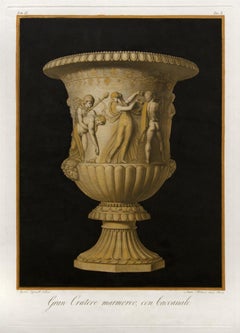
Gran Cratere marmoreo, con baccanale - Etching by Agostino Tofanelli - 1821
Located in Roma, IT
A. Tofanelli, P. Fontana, “Gran Cratere marmoreo, con baccanale” (Big marble Crater, with Bacchanal).
Image Dim: cm 48x33, Dim: cm 59x44; Passepartout Dim: cm 69 x 49.
Precious Etching on copper: Hand-Watercolored subject on black ink bottom.
Designed by Agostino Tofanelli...
Category
1820s Figurative Prints
Materials
Etching
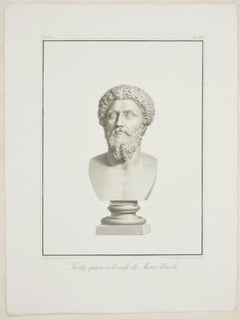
Testa Quasi Colossale di Marco Aurelio - Etching by P. Fontana
Located in Roma, IT
“Testa quasi colossale di Marco Aurelio” (Almost colossal head of Marco Aurelio) is a beautiful black and white burin on paper, realized by the Italian artist Pietro Fontana (Bassano Romano,1762 – Rome, 1837), after Teodoro Matteini (Pistoia, 1754 - Venice, 1831), as the inscriptions on plates on lower margins report “Teodoro Matteini delineò./ Pietro Fontana incise a bollino Roma”.
This original print is numbered on plate in Roman numerals on higher margin: “Tom II. /Tav. XXV" and is a plate from the series "Illustrazioni de'Monumenti scelti Borghesiani già esistenti nella Villa sul Pincio (..)date ora per la prima volta in luce dal cav. Gio. Gherardo De Rossi e da Stefano Piale sotto la guida di Vincenzo Feoli", by Ennio Quirino Visconti, published by Stamperia de Romanis in Rome, 1821.
This old master’s original prints shows a precious piece of the Borghese's collection, the marble bust of the Roman philosopher and writer and one of the "good Roman Emperor" (according to Edward Gibbon) Marco Aurelio, represented in neoclassical style and with the traditional iconography with a thick hair and a long beard.
In excellent conditions with a usual yellowing of the paper on the lower margin and some light signs of the time with an imperceptible weaving of the paper on the lower right corner, this wonderful burin preserved his fresh impression.
Illustrazioni de' Monumenti scelti Borghesiani
This collection in two volumes is a beautifully detailed catalog of classical sculptures collected by Prince Borghese (1730-1800) in his Villa on the Pincio. Ennio Quirino Visconti (1751 - 1818) wrote the texts that accompany the large branches depicting. To these writings, which were available by the son of the illustrious archaeologist, the publishers added only a few illustrations relating to some minor monument of which copper had already been engraved.
The engraved title-plate are signed by draughtsmen like Agostino Tofanelli, Stefano Tofanelli, Bernardino Nocchi, Domenico de Angelis or Teodoro Matteini, and by engravers Pietro Fontana Veneto, P. Vitali, Pietro Bettelini, Giovanni Folo Veneto, Giovanni Brunetti da Ravenna, Giovanni Ottaviani, Francesco Cecchini, Gio. Batta. Leonetti, Girolamo Carattoni, Domenico Cunego, Luigi Cunego, Alessandro Mochetti, Luigi Pizzi, Angelo Campanella or Giacomo Bossi.
The Volume I shows ancient full-length statues, of the Borghese warrior by Agasias (two plates), Greek gods and heroes and Roman famous historical figures; the last two plates represents antique Egyptian deities. There are plates representing ancient bas-reliefs, sarcophagi, of mythological subjects, the Borghese Vase, portrait busts, a vase on an altar, two statues of Amor; and two modern statues, by Bernini (the Apollo and Daphne, and the David).
«Très bel ouvrage» writes Brunet, «Grand ouvrage, le seul qui mérite, parmi ceux sur la villa Borgese, de figurer dans le chapitre aux Galeries et Collections» Vinet said, looking at this plate.
Pietro Fontana (Bassano Romano,1762 – Rome, 1837)
The Italian artist and engraver, Pietro Fontana was active in Rome and specialized in subjects dealing with the Vatican and the Papacy. He started his career as a student of Raffaello Morghen...
Category
Old Masters 1820s Figurative Prints
Materials
Etching
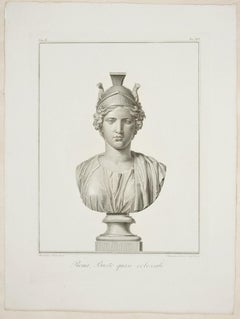
Roma, Busto quasi colossale - Etching by Alessandro Mochetti - 1821
Located in Roma, IT
“Roma, Busto quasi colossale” (Rome, near colossal bust) is a superb black and white burin and etching on paper, realized by the artist Alessandro Mochetti...
Category
Modern 1820s Figurative Prints
Materials
Etching
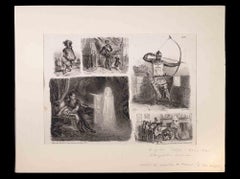
The Military Portait - Original Lithograph by Denis Auguste Marie Raffet - 1829
Located in Roma, IT
The Military Portait - The Appearance of Our Lady - The Classroom is an original Lithograph realized by Denis Auguste Marie Raffet.
Signed on the center and numbered (9). Edition b...
Category
Modern 1820s Figurative Prints
Materials
Lithograph
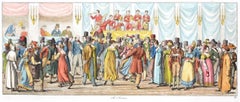
The Feast - Original Etching by C. G. Hyalmar Morner - 1820
Located in Roma, IT
Il Festino is a beautiful etching and hand-colored gouache, finely engraved on copper and printed on laid paper. The work, which presents a remarkable quality of strokes and brillian...
Category
1820s Figurative Prints
Materials
Gouache, Etching
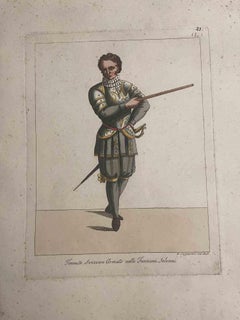
The Swiss Lieutenant - Etching by Giuseppe Capparoni - 1828
Located in Roma, IT
The Swiss Lieutenant is an Artwork realized in 1828 by the Engraver, Giuseppe Capparoni (Rome 1800- 1879).
Etching hand colored on ivory paper. Signed on plate and dated on the rig...
Category
Modern 1820s Figurative Prints
Materials
Etching
$178 Sale Price
25% Off
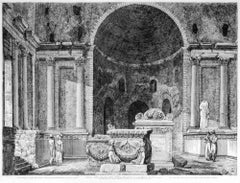
Interno della Basilica della Fortuna Prenestina - by L. Rossini - 1826
Located in Roma, IT
Interno della Basilica della Fortuna Prenestina
Image dimensions: 40x53 cm.
From the collection “Le antichità de’ contorni di Roma (...)”, published in Rome, 1826 an artist's proof w...
Category
Old Masters 1820s Figurative Prints
Materials
Etching
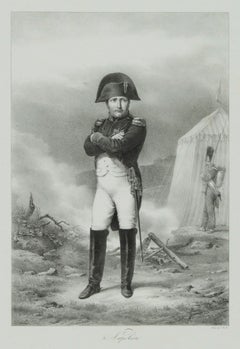
Napoleon Standing
Located in Fairlawn, OH
Napoleon Standing
Lithograph, 1822
Signed in the stone lower left corner of image (see photo)
From: Arnault, A. V.
Vie Politique et Militaire de Napoleon (120 plates)
Published, Paris, Librairie Historiquem 1822
Printed by C. Motte, Paris
Considered to be the major pictorial treatise on Napoleon and his military conquests.
Image size: 14 x 9 3/4 inches
Sheet size: 23 5/8 x 17 3/4 inches
Condition: Very good
Horizontal prints...
Category
Romantic 1820s Figurative Prints
Materials
Lithograph
Arashi Rikan II in an Osaka Kabuki Scene
Located in Fairlawn, OH
Arashi Rikan II in an Osaka Kabuki Scene
Color woodcut, c. 1827
Signed middle left (see photo)
Titled upper left (see photo)
Format: oban
Publisher: Honsei
The actor, in character, d...
Category
Other Art Style 1820s Figurative Prints
Materials
Woodcut
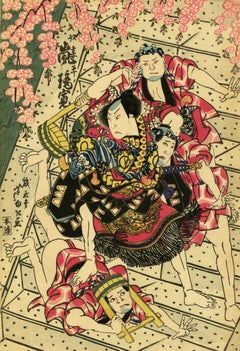
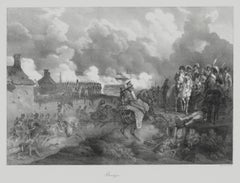
Napoleon a Bautzen
Located in Fairlawn, OH
Napoleon a Bautzen
Lithograph, 1822
Signed in the stone (see photo)
From: Arnault, A. V.
Vie Politique et Militaire de Napoleon (120 plates)
Published, Paris, Librairie Historiquem 1...
Category
Romantic 1820s Figurative Prints
Materials
Lithograph
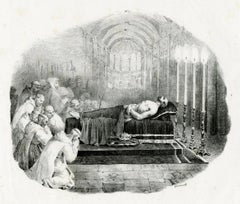
Guillaume le Conquérant rapporté après sa mort à l'église de Boscherville
Located in Fairlawn, OH
Guillaume le Conquérant rapporté après sa mort à l'église de Boscherville (William the Conqueror brought back after his death to the church at Boscherville)
Lithograph, 1823
As publi...
Category
Romantic 1820s Figurative Prints
Materials
Lithograph
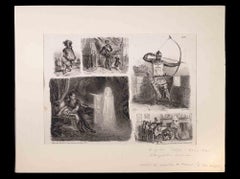
The Military Portait - Original Lithographs by Denis Auguste Marie Raffet- 1829
Located in Roma, IT
The Military Portait - The Appearance of Our Lady- The Classroom is an original Lithograph realized by Denis Auguste Marie Raffet.
Signed on the center and numbered (9). Edition by...
Category
Modern 1820s Figurative Prints
Materials
Lithograph
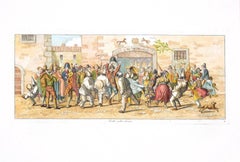
Dancing in the Street - Original Etching by C. G. Hyalmar Morner - 1820
Located in Roma, IT
Dancing in the street (original Title: "Ballo nella Strada") is a beautiful etching and hand-colored gouache, finely engraved on copper and printed on laid paper. The work, which pre...
Category
1820s Figurative Prints
Materials
Gouache, Etching
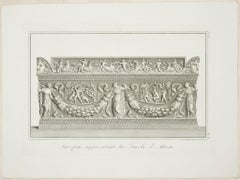
Sarcofago rappresentante la Favola d'Atteone by Giovanni Battista Leonetti-1821
Located in Roma, IT
“Sarcofago rappresentante la Favola d'Atteone” (Sarcophagus representing the Fable of Atteone) is a beautiful black and white burin and etching on paper, realized by the Italian artist Giovanni Battista Leonetti, after Agostino Tofanelli (Lucca 1770 - Rome 1834), as the inscriptions on plates on lower margins report “Agostino Tofanelli delineò./ Gio. Batta Leonetti incise. Roma”.
Image Dimensions: 33.8 x 47.7 cm
This print is numbered on plate in Roman numerals on right margin: “Tom II. /Tav. II" and is a plate from the series "Illustrazioni de'Monumenti scelti Borghesiani già esistenti nella Villa sul Pincio (..) date ora per la prima volta in luce dal cav. Gio. Gherardo De Rossi e da Stefano Piale sotto la guida di Vincenzo Feoli", by Ennio Quirino Visconti, published by Stamperia de Romanis in Rome, 1821.
The print shows a precious piece of the Borghese's collection, a wonderful antique sarcophagus with a very detailed scene representing the fable of Atteone.
In excellent conditions with a usual yellowing of the paper at the edges, this wonderful burin has preserved still today his lifetime impression and a wide gradient of greys and blacks.
Illustrazioni de' Monumenti scelti Borghesiani
This collection in two volumes is a beautifully detailed catalog of classical sculptures collected by Prince Borghese (1730-1800) in his Villa on the Pincio. Ennio Quirino Visconti (1751 - 1818) wrote the texts that accompany the large branches depicting. To these writings, which were available by the son of the illustrious archaeologist, the publishers added only a few illustrations relating to some minor monument of which copper had already been engraved.
The engraved title-plate are signed by draughtsmen like Agostino Tofanelli, Stefano Tofanelli, Bernardino Nocchi, Domenico de Angelis or Teodoro Matteini, and by engravers Pietro Fontana Veneto, P. Vitali, Pietro Bettelini, Giovanni Folo Veneto, Giovanni Brunetti da Ravenna, Giovanni Ottaviani, Francesco Cecchini, Gio. Batta. Leonetti, Girolamo Carattoni, Domenico Cunego, Luigi Cunego, Alessandro Mochetti, Luigi Pizzi, Angelo Campanella or Giacomo Bossi.
The Volume I shows ancient full-length statues, of the Borghese warrior...
Category
Modern 1820s Figurative Prints
Materials
Etching
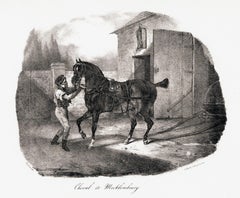
'Cheval de Mecklembourg' — 19th-Century French Romanticism
Located in Myrtle Beach, SC
Théodore Géricault 'Cheval de Mecklembourg' (Mecklembourg Horse), lithograph, 1822, 2nd state of 4, Delteil 47. Signed in the matrix 'Gericault', lower left. Published by Godefroy En...
Category
Romantic 1820s Figurative Prints
Materials
Lithograph
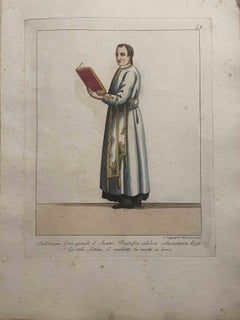
The Greek Subdeacon - Etching by Giuseppe Capparoni - 1828
Located in Roma, IT
The Greek Subdeacon is an Artwork realized in 1828 by the Engraver, Giuseppe Capparoni (Rome 1800- 1879).
Etching hand colored on ivory paper. Signed on plate and dated on the right...
Category
Modern 1820s Figurative Prints
Materials
Etching
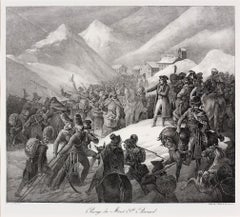
Passage du Mont Saint-Bernard
Located in Fairlawn, OH
Theodore Gericault (1791-1824)
Passage du Mont Saint-Bernard
Lithograph, 1822
Signed and titled in the stone
As published in Arnault "Vie politique et militaire de Napoleon"
Conditio...
Category
Romantic 1820s Figurative Prints
Materials
Lithograph
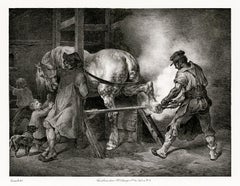
'Le maréchal flamand' (The Flemish Blacksmith) — 19th-Century French Romanticism
Located in Myrtle Beach, SC
Théodore Géricault 'Le maréchal flamand' (The Flemish Blacksmith) from the series ‘Etudes, de chevaux lithographiés,’ lithograph, 1822, 2nd state ...
Category
Romantic 1820s Figurative Prints
Materials
Lithograph
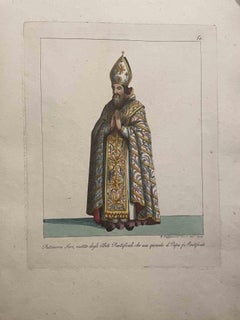
The Patriarch Siro in Pontifical Dress - Etching by Giuseppe Capparoni - 1828
Located in Roma, IT
The Patriarch Siro in Pontifical Dress is an Artwork realized in 1828 by the Engraver, Giuseppe Capparoni (Rome 1800- 1879).
Etching hand colored on ivory paper. Signed on plate and...
Category
Modern 1820s Figurative Prints
Materials
Etching
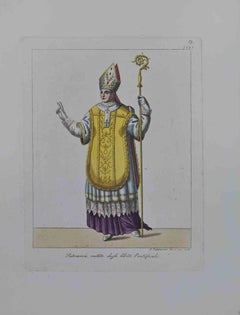
The Patriarch Dressed with Papal Clothes - Etching by Giuseppe Capparoni - 1828
Located in Roma, IT
The artwork belongs to the "Gerarchia ecclesiastica considerata nelle vesti sagre e civili usate da quelli li quali la compongono", composed by 112 engraved and hand-colored tables, ...
Category
Modern 1820s Figurative Prints
Materials
Etching
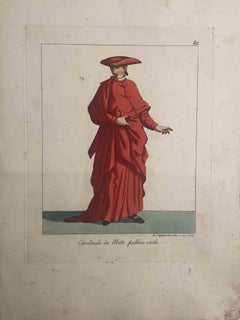
The Cardinal in Civil Dress - Etching by Giuseppe Capparoni - 1829
Located in Roma, IT
The Cardinal in civil dress is an Artwork realized in 1829 by the Engraver, Giuseppe Capparoni (Rome 1800- 1879).
Etching hand colored on ivory paper. Signed on plate and dated on t...
Category
Modern 1820s Figurative Prints
Materials
Etching
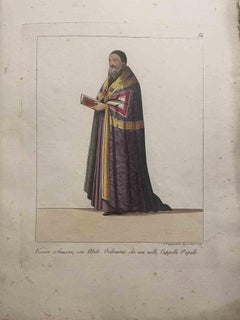
Armenian Bishop - Etching by Giuseppe Capparoni - 1828
Located in Roma, IT
Armenian Bishop is an Artwork realized in 1828 by the Engraver, Giuseppe Capparoni (Rome 1800- 1879).
Etching hand colored on ivory paper. Signed on plate and dated on the right mar...
Category
Modern 1820s Figurative Prints
Materials
Etching
$178 Sale Price
25% Off
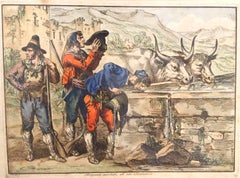
Briganti Assetati - Etching by Bartolomeo Pinelli - 1820
Located in Roma, IT
Briganti assetati is a beautiful artwork realized by Bartolomeo Pinelli in 1820.
Etching and Watercolor technique. In Good condition, worn paper on the marginal line and some little...
Category
Realist 1820s Figurative Prints
Materials
Etching
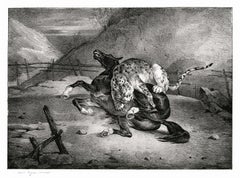
'Horse Attacked by Tiger' — 19th-Century French Romanticism
Located in Myrtle Beach, SC
Théodore Géricault (after), 'Tigre dévorant un cheval' (Tiger Devouring a Horse), lithograph, 3rd state of 3, Clement 97, c. 1820. Lettered 'Volmar ...
Category
Romantic 1820s Figurative Prints
Materials
Lithograph
The Bishop - Etching by Giuseppe Capparoni - 1828
Located in Roma, IT
The Bishop is an Artwork realized in 1828 by the Engraver, Giuseppe Capparoni (Rome 1800- 1879).
Etching hand colored on ivory paper. Signed on plate and dated on the right margin....
Category
Modern 1820s Figurative Prints
Materials
Etching
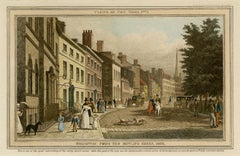
Broadway from the Bowling Green, 1828 — early New York City, hand-coloring
Located in Myrtle Beach, SC
J. R. Hutchinson, 'Broadway from the Bowling Green, 1828', hand-colored etching, 1828. Signed and dated in the plate, beneath the image, lower right. Ann...
Category
Realist 1820s Figurative Prints
Materials
Etching
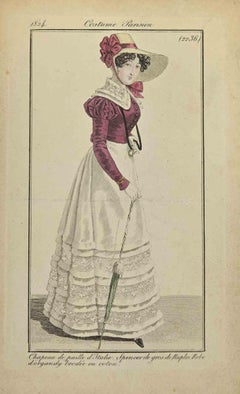
Costume Parisien - Journal des Dam - Etching by Philibert-Louis Debucourt - 1824
Located in Roma, IT
Costume Parisien -Journal des Dames et des Modes is a print realized by Louis-Philibert Debucourt in 1824.
Etching on paper.
The print is part of the fashion magazine Journal des ...
Category
Modern 1820s Figurative Prints
Materials
Etching
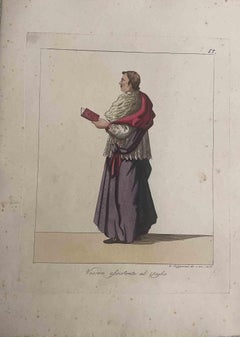
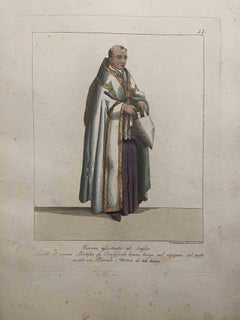
The Bishop Assistant at the Pontifical... - Etching by Giuseppe Capparoni - 1828
Located in Roma, IT
The Bishop Assistant at the Pontifical Throne is an Artwork realized in 1828 by the Engraver, Giuseppe Capparoni (Rome 1800- 1879).
Etching hand colored on ivory paper. Signed on pl...
Category
Modern 1820s Figurative Prints
Materials
Etching
Kabuki Scene from "Kanjincho" - Woodcut by 1887 ca.
Located in Roma, IT
A scene from the important representation of Tenno Kabuki's Play "Kanjincho", held during the Meiji Era in the House of Minister Kaoru Inoue at the presence of the Emperor Akinori Aki and of the Princess Akira Terada. Attributed to the Ukiyo-e Master Kinichika Toyohara (Oshima Yasohachi), specialised in the representations of Kabuki Scenes on Woodcut blocks...
Category
1820s Figurative Prints
Materials
Woodcut

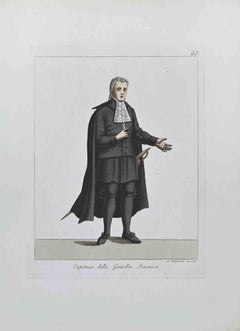
The Captain of the Swiss Guard - Etching by Giuseppe Capparoni - 1828
Located in Roma, IT
The Captain of the Swiss Guard is an Artwork realized in 1828 by the Engraver, Giuseppe Capparoni (Rome 1800- 1879).
Etching hand colored on ivory paper. Signed on plate and dated o...
Category
Modern 1820s Figurative Prints
Materials
Etching
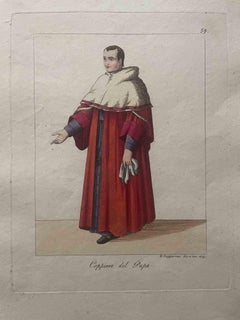
"Coppiere del Papa" - Etching by Giuseppe Capparoni - 1829
Located in Roma, IT
"Coppiere del Papa" is an Artwork realized in 1829 by the Engraver, Giuseppe Capparoni (Rome 1800- 1879).
Etching hand colored on ivory paper. Signed on plate and dated on the right...
Category
Modern 1820s Figurative Prints
Materials
Etching
$178 Sale Price
25% Off
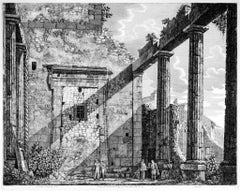
Interno del Pronao del Tempio ... - Etching by Luigi Rossini - 1825
Located in Roma, IT
Interno del Pronao del Tempio d'Ercole nella città di Cora is an original etching by Luigi Rossini.
From the collection “Le antichità de’ contorni di Roma”(..), Rome, 1826 by L. Rossini, an artist's proof with sharp details, showing Cora’s Ruins.
Signed on plate “Rossini dis. e inc.” lower-left corner, with date and place “Roma, 1825”.
In very good condition.
Image Dimensions: 45 x 57 cm
Luigi Rossini (1790 – 1857)
Like Giovanni Battista Piranesi, Luigi Rossini was an architect and his etchings have the same tendency to emphasize the massive constructions of the Ancient Rome. He became famous thanks to his etchings representing Roman landscapes and antique monuments...
Category
Modern 1820s Figurative Prints
Materials
Etching
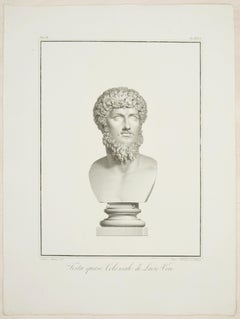
Testa Quasi Colossale di Lucio Vero - Etching by P. Fontana
Located in Roma, IT
“Testa quasi colossale di Lucio Vero” (Almost colossal head of Lucio Vero) is a wonderful black and white etching on paper, realized by the Italian artist Pietro Fontana (Bassano Romano,1762 – Rome, 1837), after Teodoro Matteini (Pistoia, 1754 - Venice, 1831), as the inscriptions on plates on lower margins report “Teodoro Matteini del./ Pietro Fontana inc. Roma”.
This original print is numbered on plate in Roman numerals on higher margin: “Tom II. /Tav. XXVI" and is a plate from the series "Illustrazioni de'Monumenti scelti Borghesiani già esistenti nella Villa sul Pincio (..)date ora per la prima volta in luce dal cav. Gio. Gherardo De Rossi e da Stefano Piale sotto la guida di Vincenzo Feoli", by Ennio Quirino Visconti, published by Stamperia de Romanis in Rome, 1821.
This old master’s original prints representing a precious piece of the Borghese's collection, the marble bust of the Roman Empero Lucio Vero, is in excellent conditions with a usual yellowing of the paper at the edges, some light signs of the time( some light thinning of paper along the margin do not affect the image) but with fresh impression.
Illustrazioni de' Monumenti scelti Borghesiani
This collection in two volumes is a beautifully detailed catalog of classical sculptures collected by Prince Borghese (1730-1800) in his Villa on the Pincio. Ennio Quirino Visconti (1751 - 1818) wrote the texts that accompany the large branches depicting. To these writings, which were available by the son of the illustrious archaeologist, the publishers added only a few illustrations relating to some minor monument of which copper had already been engraved.
The engraved title-plate are signed by draughtsmen like Agostino Tofanelli, Stefano Tofanelli, Bernardino Nocchi, Domenico de Angelis or Teodoro Matteini, and by engravers Pietro Fontana Veneto, P. Vitali, Pietro Bettelini, Giovanni Folo Veneto, Giovanni Brunetti da Ravenna, Giovanni Ottaviani, Francesco Cecchini, Gio. Batta. Leonetti, Girolamo Carattoni, Domenico Cunego, Luigi Cunego, Alessandro Mochetti, Luigi Pizzi, Angelo Campanella or Giacomo Bossi.
The Volume I shows ancient full-length statues, of the Borghese warrior by Agasias (two plates), Greek gods and heroes and Roman famous historical figures; the last two plates represents antique Egyptian deities. There are plates representing ancient bas-reliefs, sarcophagi, of mythological subjects, the Borghese Vase, portrait busts, a vase on an altar, two statues of Amor; and two modern statues, by Bernini (the Apollo and Daphne, and the David).
«Très bel ouvrage» writes Brunet, «Grand ouvrage, le seul qui mérite, parmi ceux sur la villa Borgese, de figurer dans le chapitre aux Galeries et Collections» Vinet said, looking at this plate.
Pietro Fontana (Bassano Romano,1762 – Rome, 1837)
The Italian artist and engraver, Pietro Fontana was active in Rome and specialized in subjects dealing with the Vatican and the Papacy. He started his career as a student of Raffaello Morghen...
Category
Modern 1820s Figurative Prints
Materials
Etching
Cardinale in Croccia - Etching by Giuseppe Capparoni - 1829
Located in Roma, IT
Cardinale in Croccia is an Artwork realized in 1829 by the Engraver, Giuseppe Capparoni (Rome 1800- 1879).
Etching hand colored on ivory paper. Signed on plate and dated on the righ...
Category
Modern 1820s Figurative Prints
Materials
Etching
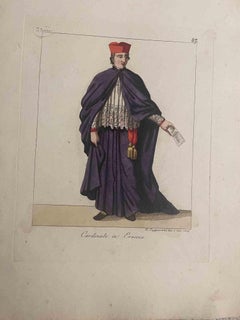
Armenian Bishop - Etching by Giuseppe Capparoni - 1827
Located in Roma, IT
Armenian Bishop is an Artwork realized in 1827 by the Engraver, Giuseppe Capparoni (Rome 1800- 1879).
Etching hand colored on ivory paper. Signed on plate and dated on the right mar...
Category
Modern 1820s Figurative Prints
Materials
Etching

The Swiss Guard - Etching by Giuseppe Capparoni - 1828
Located in Roma, IT
The Swiss Guard is an Artwork realized in 1828 by the Engraver, Giuseppe Capparoni (Rome 1800- 1879).
Etching hand colored on ivory paper. Signed on plate and dated on the right ma...
Category
Modern 1820s Figurative Prints
Materials
Etching
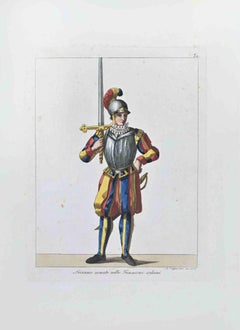
The Consistorial Lawyers - Etching by Giuseppe Capparoni - 1828
Located in Roma, IT
The Consistorial Lawyers is an Artwork realized in 1828 by the Engraver, Giuseppe Capparoni (Rome 1800- 1879).
Etching hand colored on ivory paper. Signed on plate and dated on the ...
Category
Modern 1820s Figurative Prints
Materials
Etching
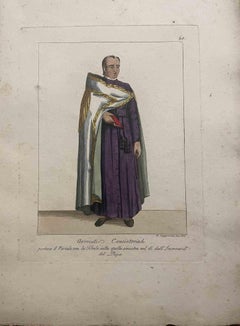
$178 Sale Price
25% Off
19th Century Etching of the Ancient Caracalla Baths in Rome by Luigi Rossini
Located in Alamo, CA
This early 19th century etching entitled "Veduta dei Grandi Avanzi delle Terme Antoniane, o di Caracalla" (The baths of Caracalla) was created by Luigi Rossini and included in his pu...
Category
Old Masters 1820s Figurative Prints
Materials
Etching
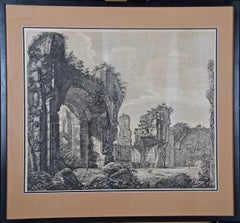
Greek Bishop - Etching by Giuseppe Capparoni - 1828
Located in Roma, IT
Greek Bishop is an Artwork realized in 1828 by the Engraver, Giuseppe Capparoni (Rome 1800- 1879).
Etching hand colored on ivory paper. Signed on plate and dated on the right margin...
Category
Modern 1820s Figurative Prints
Materials
Etching
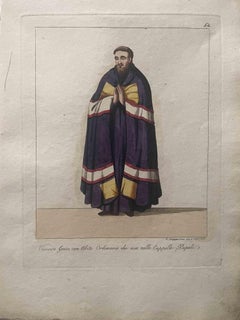
The Conservator in the Chapels - Etching by Giuseppe Capparoni - 1827
Located in Roma, IT
The Conservator in the Chapels is an Artwork realized in 1827 by the Engraver, Giuseppe Capparoni (Rome 1800- 1879).
Etching hand colored on ivory paper. Signed on plate and dated o...
Category
Modern 1820s Figurative Prints
Materials
Etching
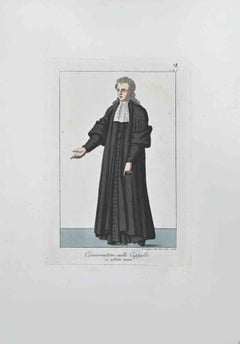
"Aiutante di Camera con la Mazza" - Etching by Giuseppe Capparoni - 1828
Located in Roma, IT
"Aiutante di Camera con la Mazza" is an Artwork realized in 1828 by the Engraver, Giuseppe Capparoni (Rome 1800- 1879).
Etching hand colored on ivory paper. Signed on plate and date...
Category
Modern 1820s Figurative Prints
Materials
Etching
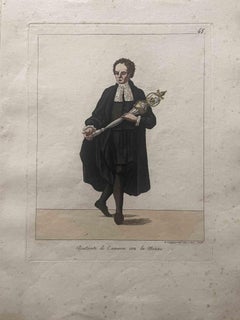
"Bussolante con Triregno Pontificale" - Etching by Giuseppe Capparoni - 1828
Located in Roma, IT
"Bussolante con Triregno Pontificale" is an Artwork realized in 1828 by the Engraver, Giuseppe Capparoni (Rome 1800- 1879).
Etching hand colored on ivory paper. Signed on plate and ...
Category
Modern 1820s Figurative Prints
Materials
Etching
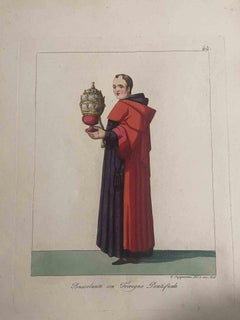
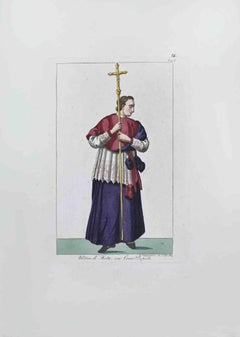
"Uditore di Rota con Croce Papale" - Etching by Giuseppe Capparoni - 1827
Located in Roma, IT
"Uditore di Rota con Croce Papale" is an Artwork realized in 1827 by the Engraver, Giuseppe Capparoni (Rome 1800- 1879).
Etching hand colored on ivory paper. Signed on plate and dat...
Category
Modern 1820s Figurative Prints
Materials
Etching
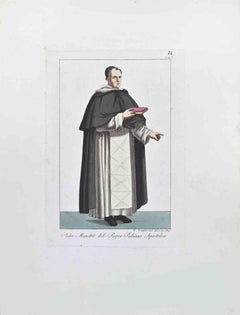
The Father Master of the Sacred Apostolic Palace by Giuseppe Capparoni - 1827
Located in Roma, IT
The Father Master of the Sacred Apostolic Palace is an Artwork realized in 1827 by the Engraver, Giuseppe Capparoni (Rome 1800- 1879).
Etching hand colored on ivory paper. Signed on...
Category
Modern 1820s Figurative Prints
Materials
Etching
Recently Viewed
View AllMore Ways To Browse
Kim Tschang Yeul
Tom Blackwell On Sale
Tom Everhart Lithograph
Torii Kotondo
Victor Richardson
Vintage Boulangerie Signs
Vintage Les Nereides
Vintage Meat Scales
Vintage Multiplier Reel
Warhol Northwest Mask
Whistler Fumette
Yoko Ono Lithograph Harold Town
Zeno Giglietti
Ak47 Lotus
Alex Katz Bicycle
Alex Katz Christy
Alex Katz Twilight
Alex Katz Wedding Dress