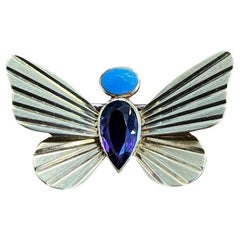
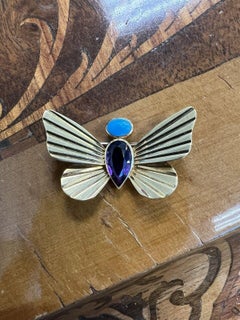
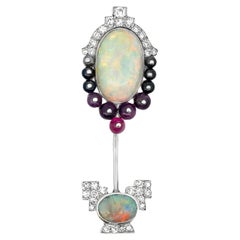
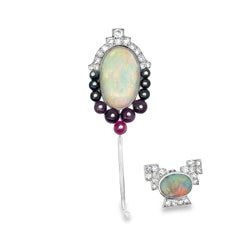
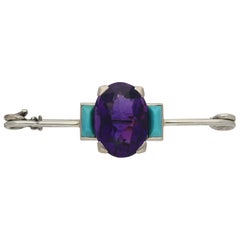
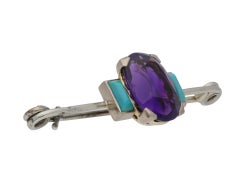
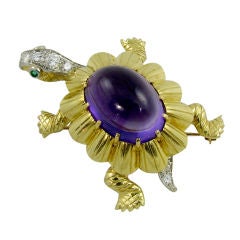
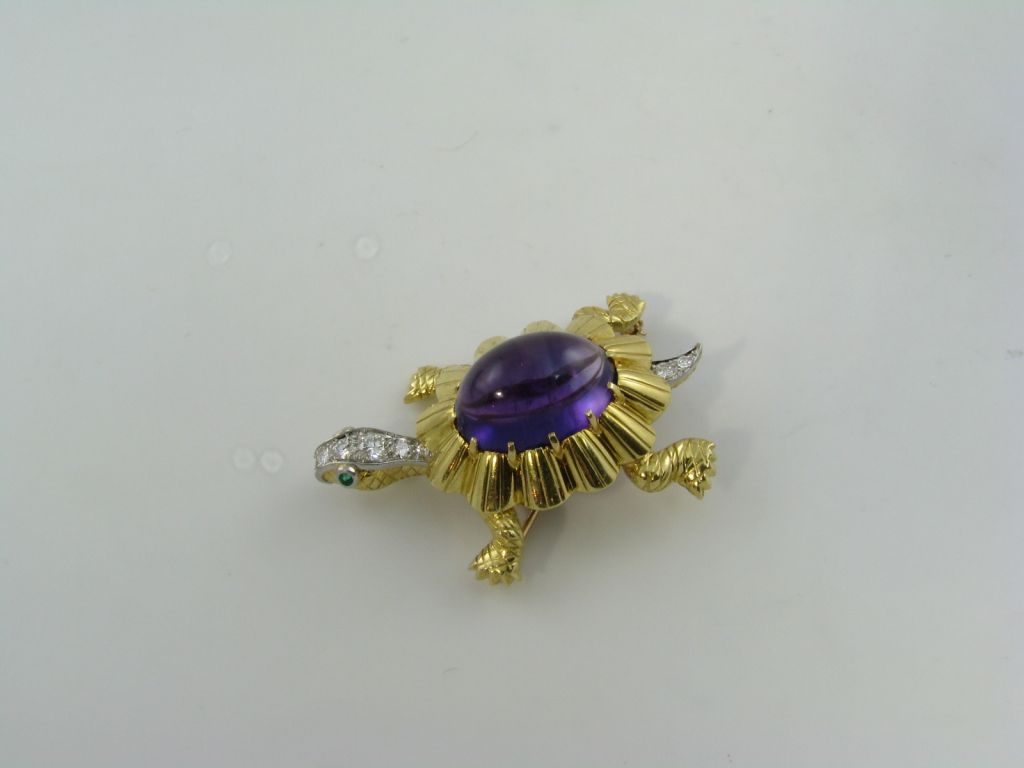
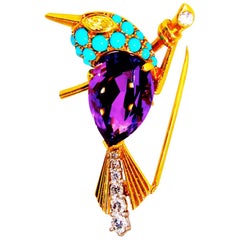
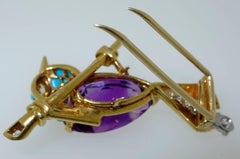
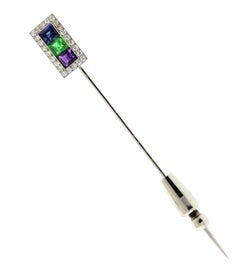
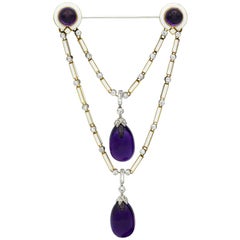
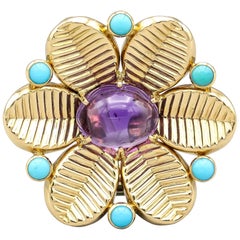
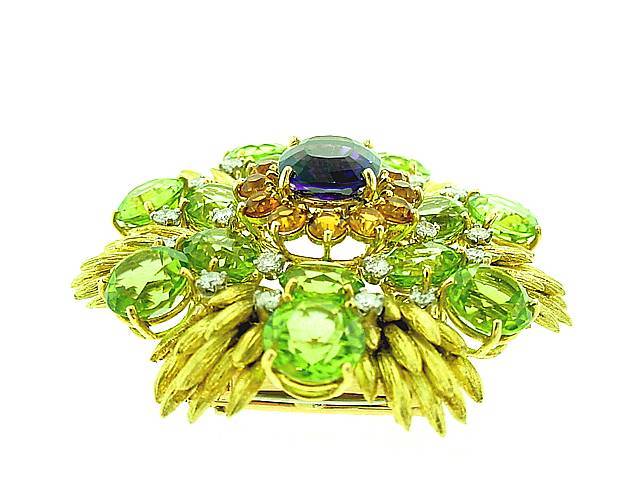
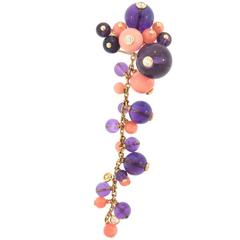
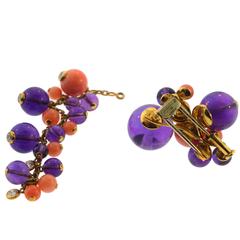
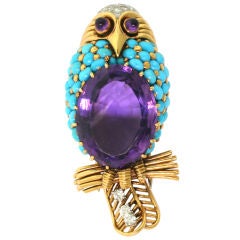
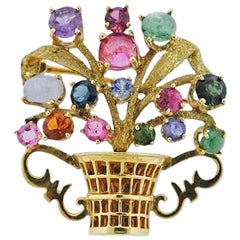
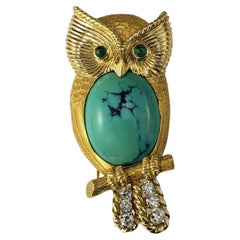
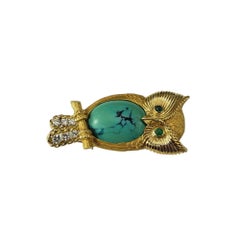
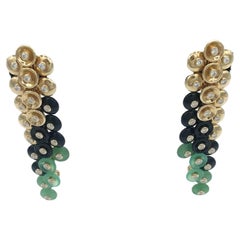
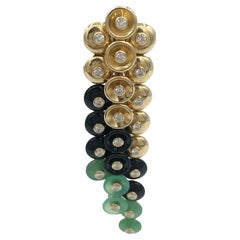
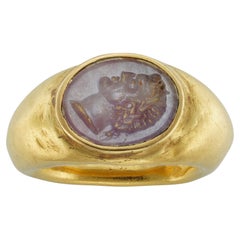
Cartier Amethyst Brooch For Sale on 1stDibs
Find the exact cartier amethyst brooch you’re shopping for in the variety available on 1stDibs. Frequently made of
Gold,
18k Gold and
Platinum, this item was constructed with great care. Our collection of these items for sale includes 17 vintage editions and 2 modern creations to choose from as well. Finding the perfect cartier amethyst brooch may mean sifting through those created during different time periods — you can find an early version that dates to the 20th Century and a newer variation that were made as recently as the 21st Century. See these pages for a
cabochon iteration of this accessory, while there are also
emerald cut cut and
round cut cut versions available here, too. If you’re browsing our inventory for a cartier amethyst brooch, you’ll find that many are available today for
women, but there are still pieces to choose from for unisex and
men.
How Much is a Cartier Amethyst Brooch?
Prices for a cartier amethyst brooch can differ depending upon size, time period and other attributes — at 1stDibs, these accessories begin at $1,575 and can go as high as $65,000, while this accessory, on average, fetches $13,500.
Cartier for sale on 1stDibs
For its extraordinary range of bracelets, watches, rings and other adornments, French luxury house Cartier is undeniably one of the most well known and internationally revered jewelers in the world among clients both existing and aspirational.
Perhaps 1847 was not the ideal time to open a new watchmaking and jewelry business, as the French Revolution was not kind to the aristocracy who could afford such luxuries. Nevertheless, it was the year Louis-François Cartier (1819–1904) — who was born into poverty — founded his eponymous empire, assuming control of the workshop of watchmaker Adolphe Picard, under whom he had previously been employed as an assistant. Of course, in the beginning, it was a relatively modest affair, but by the late 1850s, Cartier had its first royal client, Princess Mathilde Bonaparte, niece of Napoleon Bonaparte, who commissioned the jeweler to design brooches, earrings and other accessories.
Under the leadership of Louis-François’s son, Alfred, who took over in 1874, business boomed. Royalty around the world wore Cartier pieces, including Tsar Nicholas II of Russia, the Maharaja of Patiala and King Edward VII, who had 27 tiaras made by the jewelry house for his coronation in 1902 and issued Cartier a royal warrant in 1904. (Today, the British royal family still dons Cartier pieces; Kate Middleton, Duchess of Cambridge, regularly sports a Ballon Bleu de Cartier watch.)
Cartier’s golden years, however, began when Alfred introduced his three sons, Louis, Pierre and Jacques, to the business. The brothers expanded Cartier globally: Louis reigned in Paris, Pierre in New York and Jacques in London, ensuring their brand’s consistency at their branches across the world. The trio also brought in such talents as Charles Jacqueau and Jeanne Toussaint.
One of Cartier’s earliest major successes was the Santos de Cartier watch — one of the world's first modern wristwatches for men. (Previously, a large number of people were using only pocket watches.) Louis designed the timepiece in 1904 for his friend, popular Brazilian aviator Alberto Santos-Dumont, who wanted to be able to check the time more easily while flying.
Cartier’s other famous timepieces include the Tank watch, which was inspired by the linear form of military tanks during World War I, and the so-called mystery clocks. Invented by watchmaker and magician Jean-Eugène Robert-Houdin and later crafted exclusively for Cartier in the house’s workshop by watchmaker Maurice Couët, the mystery clocks were so named because the integration of glass dials on which the clocks’ hands would seemingly float as well as structures that are hidden away within the base give the illusion that they operate without machinery.
On the jewelry side of the business, Cartier’s internationally renowned offerings include the Tutti Frutti collection, which featured colorful carved gemstones inspired by Jacques’s trip to India and grew in popularity during the Art Deco years; the panthère motif, which has been incorporated into everything from brooches to rings; and the Love bracelet, a minimal, modernist locking bangle inspired by medieval chastity belts that transformed fine jewelry.
While the Cartier family sold the business following the death of Pierre in 1964, the brand continues to innovate today, renewing old hits and creating new masterpieces.
Find contemporary and vintage Cartier watches, engagement rings, necklaces and other accessories on 1stDibs.
The Legacy of Amethyst in Jewelry Design
There are few gemstones in the world that are both affordable and worthy of a duchess’s attention. But then not many stones are as beautiful as amethyst. Indeed, vintage and antique amethyst jewelry has innumerable fans, and February’s birthstone has many unique attributes. For the romantics, there are several tales in Greek mythology that tell the story of Bacchus and Amethyste, a maiden that he pursues yet is rescued by Diane by turning her into a white stone. Bacchus, mourning his love, pours a glass of wine over the sculpture, dyeing her purple.
Amethyst has adorned many royal jewels. One of the most enviable jewelry collections of all time belonged to Wallis Simpson, the Duchess of Windsor. In 1947, the Duke gifted her with a Cartier amethyst and turquoise bib necklace. This special order piece was made with twisted 18-carat and 20-carat gold, platinum, brilliant- and baguette-cut diamonds, one heart-shaped faceted amethyst, 27 emerald-cut amethysts, one oval faceted amethyst, and turquoise cabochons. The Duchess was not the only Royal with a penchant for the purple gemstone. The tiara now owned by Queen Silvia of Sweden is set with amethysts that once belonged to the French Empress Josephine. A stunning 56-carat cushion-cut, square-shaped amethyst set in an 18-karat yellow gold necklace designed by Tiffany & Co. is now in the collection of the Smithsonian National Museum of Natural History.
The Smithsonian also has in its possession an even more rare example of fine amethyst: the 96-carat Morris Amethyst Brooch. The brooch features a deep, rich purple heart-shaped amethyst. The museum states that the piece was likely made during the Edwardian period (1901–15) “when platinum and diamonds were often used, and amethyst, a favorite stone of King Edward VII’s wife, Alexandra, was often included in jewelry of the era.”
Another amethyst necklace, with an even richer story, can be found in the Natural History Museum of London. Known as the Delhi Purple Sapphire (even though the stone is an amethyst), this stone was stolen from the Temple of Indra during the Indian Mutiny of 1857. Anyone in possession of this stone is bound to have terrible luck, including its owner Edward Heron-Allen, who gifted the gemstone to the museum thinking that this would save him but ended up transferring the bad luck to the museum curators overseeing the stone.
Find a wide range of vintage and antique amethyst necklaces, bracelets and other fine jewelry on 1stDibs.
Finding the Right Brooches for You
Vintage brooches, which refer to decorative jewelry traditionally pinned to garments and used to fasten pieces of clothing together where needed, have seen increasing popularity in recent years.
While jewelry trends come and go, brooches are indeed back on the radar thanks to fashion houses like Gucci, Versace, Dior and Saint Laurent, all of which feature fun pinnable designs in their current collections. Whether a dazzlingly naturalistic Art Nouveau dragonfly, a whimsical David Webb animal, a gem-studded bloom or a streamlined abstract design, these jewels add color and sparkle to your look and a spring to your step.
Given their long history, brooches have expectedly taken on a variety of different shapes and forms over time, with jewelers turning to assorted methods of ornamentation for these accessories, including enameling and the integration of pearls and gemstones. Cameo brooches that originated during the Victorian age are characterized by a shell carved in raised relief that feature portraits of a woman’s profile, while 19th-century micromosaic brooches, comprising innumerable individually placed glass fragments, sometimes feature miniature depictions of a pastoral scene in daily Roman life.
At one time, brooches were symbols of wealth, made primarily from the finest metals and showcasing exquisite precious gemstones. Today, these jewels are inclusive and universal, and you don’t have to travel very far to find an admirer of brooches. They can be richly geometric in form, such as the ornate diamond pins dating from the Art Deco era, or designer-specific, such as the celebrated naturalistic works created by Tiffany & Co., the milk glass and gold confections crafted by Trifari or handmade vintage Chanel brooches of silk or laminated sheer fabric. Chanel, of course, has never abandoned this style, producing gorgeously baroque CC examples since the 1980s.
Brooches are versatile and adaptable. These decorative accessories can be worn in your hair, on hats, scarves and on the lower point of V-neck clothing. Pin a dazzling brooch to the lapel of your blazer-and-tee combo or add a cluster of smaller pins to your overcoat. And while brooches have their place in “mourning jewelry,” in that a mourning brooch is representative of your connection to a lost loved one, they’re widely seen as romantic and symbolic of love, so much so that a hardcore brooch enthusiast might advocate for brooches to be worn over the heart.
Today, find a wide variety of antique and vintage brooches for sale on 1stDibs, including gold brooches, sapphire brooches and more.