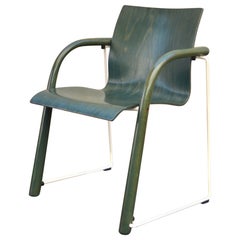
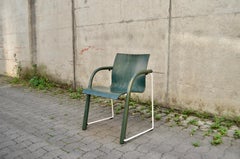
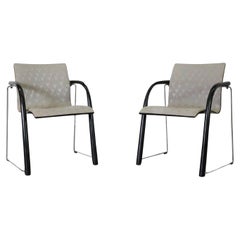
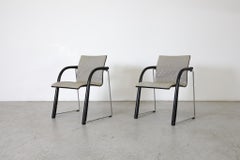
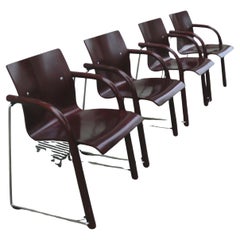
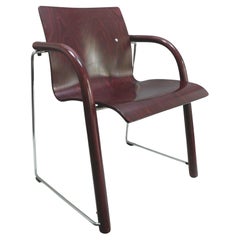
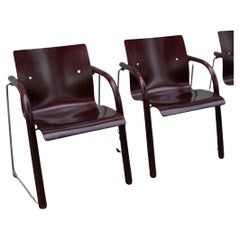
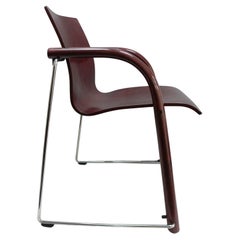
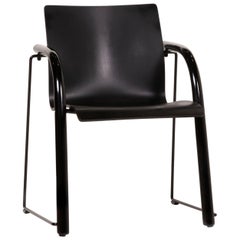
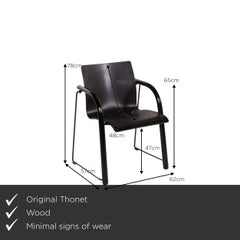
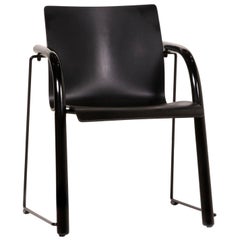
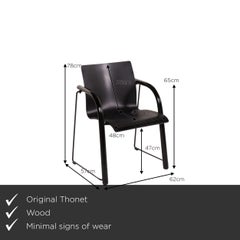
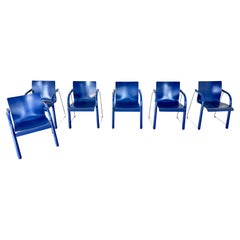
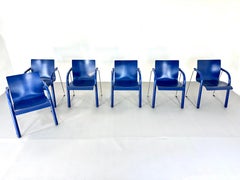
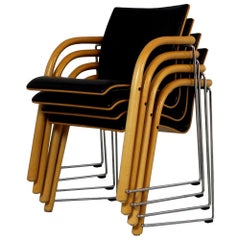
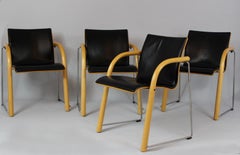
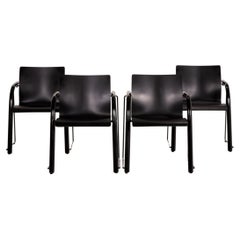
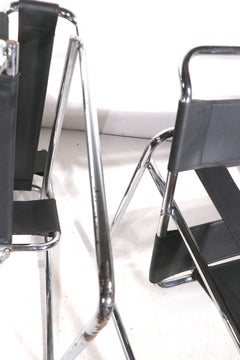
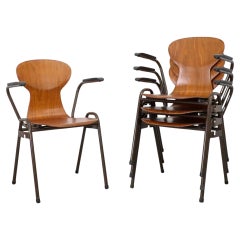
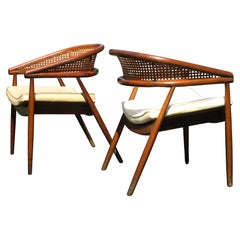
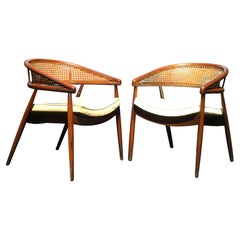
For more than 180 years, Thonet — or Gebrüder Thonet — has produced elegant and durable tables and cabinets as well as chairs, stools and other seating that wholly blur the lines between art and design. Widely known as a trailblazer in the use of bentwood in furniture, the European manufacturer has reimagined the places in which we gather.
Noted for his skill in parquetry, German-Austrian company founder Michael Thonet received an invitation from Austrian Chancellor Prince Metternich to contribute Neo-Rococo interiors to the Liechtenstein City Palace in Vienna. The Boppard-born Thonet had honed his carpentry skills in his father’s workshop, where he carried out experiments with plywood and modified the Biedermeier chairs that populated the studio.
Thonet’s work for the chancellor raised his profile, and the cabinetmaker gained international recognition, including at London’s Great Exhibition of 1851, which featured works created by members of the Arts and Crafts movement as well as industrial products of the day. Thonet showed a range of furniture at the fair and won the bronze medal for his bentwood chairs. He incorporated his family’s company, the Thonet Brothers, with his sons in 1853.
Bentwood furniture dates as far back as the Middle Ages, but it is the 19th-century cabinetmaker Thonet who is most often associated with this now-classic technique. Thonet in 1856 patented a method for bending solid wood through the use of steam, and from there, the bentwood look skyrocketed to furniture fame. The works of renowned mid-century modern designers such as Alvar Aalto, Arne Jacobsen, and Charles and Ray Eames that put this technological advancement to use would not be as extensive or celebrated were it not for the efforts of the pioneering Thonet.
Considered the world’s oldest mass-produced chair, Michael Thonet’s ubiquitous Chair No. 14 demonstrated that his patented bentwood technology made it possible to efficiently produce furniture on an industrial scale. Now known as the 214, it won the German Sustainability Award Design for 2021, a recognition of the company’s commitment to environmentally responsible production.
Often called the Coffee House chair — the company’s first substantial order was for a Viennese coffeehouse — the No. 14 remains an icon. Thonet originally designed the chair in 1859, and it is considered the starting point for modern furniture.
The bentwood process opened doors — there were investments in machinery and new industrial processes, and the business began mass-producing furniture. By the end of the 1850s, there were additional Thonet workshops in Eastern Europe and hundreds of employees. Michael Thonet’s reputation attracted the attention of notable architects including Otto Wagner, Marcel Breuer and Ludwig Mies van der Rohe.
The No. 14 was followed by the No. 18, or the Bistro chair, in 1867, and the 209, or the Architect’s chair, of which Le Corbusier was a fan. (The influential Swiss-French architect and designer used Thonet furniture in his Pavillon de l’Esprit Nouveau at the 1925 International Exposition of Decorative Arts in Paris.)
Thonet’s chair designs also appeared in artwork by Toulouse-Lautrec, John Sloan and Henri Matisse in his Interior with a Violin Case. The noteworthy Thonet rocking chair remains a marvel of construction — in the middle of the 19th century, Michael produced a series of rockers in which the different curved parts were integrated into fluid, sinuous wholes. Thanks to Thonet, the humble rocker acquired something unexpected: style. It was captured in the paintings of Pablo Picasso, Pierre-Auguste Renoir and James Tissot.
Thonet is currently split into global divisions. Thonet Industries U.S.A. was acquired in 1987 by Shelby Williams and joined the CF Group in 1999, while the Thonet brand in Germany is owned by Thonet GmbH.
Find a collection of antique Thonet furniture on 1stDibs.
Chairs are an indispensable component of your home and office. Can you imagine your life without the vintage, new or antique chairs you love?
With the exception of rocking chairs, the majority of the seating in our homes today — Windsor chairs, chaise longues, wingback chairs — originated in either England or France. Art Nouveau chairs, the style of which also originated in those regions, embraced the inherent magnificence of the natural world with decorative flourishes and refined designs that blended both curved and geometric contour lines. While craftsmanship and styles have evolved in the past century, chairs have had a singular significance in our lives, no matter what your favorite chair looks like.
“The chair is the piece of furniture that is closest to human beings,” said Hans Wegner. The revered Danish cabinetmaker and furniture designer was prolific, having designed nearly 500 chairs over the course of his lifetime. His beloved designs include the Wishbone chair, the wingback Papa Bear chair and many more.
Other designers of Scandinavian modernist chairs introduced new dynamics to this staple with sculptural flowing lines, curvaceous shapes and efficient functionality. The Paimio armchair, Swan chair and Panton chair are vintage works of Finnish and Danish seating that left an indelible mark on the history of good furniture design.
“What works good is better than what looks good, because what works good lasts,” said Ray Eames.
Visionary polymaths Ray and Charles Eames experimented with bent plywood and fiberglass with the goal of producing affordable furniture for a mass market. Like other celebrated mid-century modern furniture designers of elegant low-profile furnishings — among them Ludwig Mies van der Rohe and Finn Juhl — the Eameses considered ergonomic support, durability and cost, all of which should be top of mind when shopping for the perfect chair. The mid-century years yielded many popular chairs.
The Eameses introduced numerous icons for manufacturer Herman Miller, such as the Eames lounge chair and ottoman, molded plywood dining chairs the DCM and DCW (which can be artfully mismatched around your dining table) and a wealth of other treasured pieces for the home and office.
A good chair anchors us to a place and can become an object of timeless appeal. Take a seat and browse the rich variety of vintage, new and antique chairs on 1stDibs today.