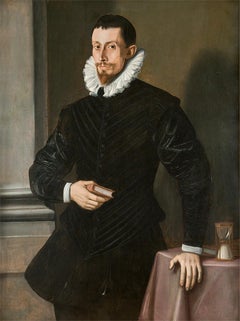
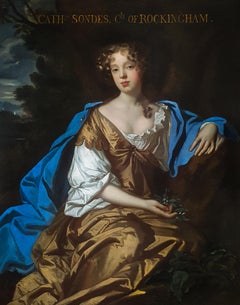
By Studio of Sir Peter Lely
Located in London, GB
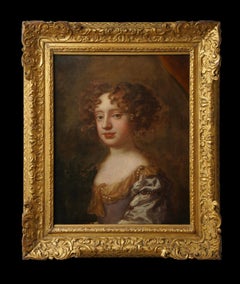
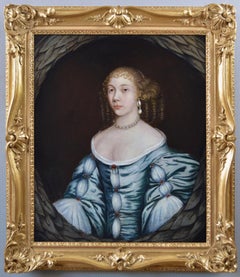
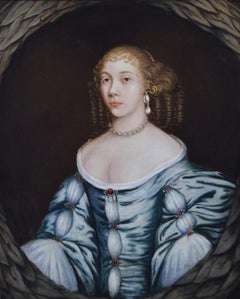
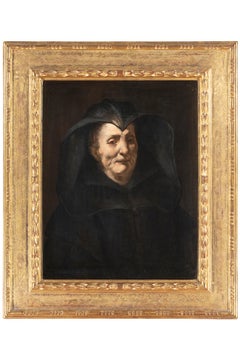
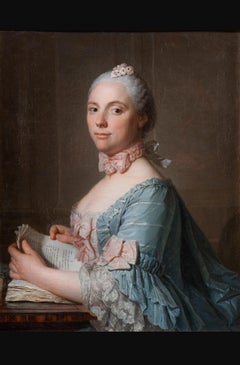
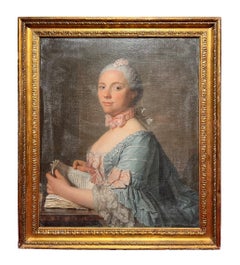
This work formed part of a collection of family pictures and heirlooms of the Smyth Baronets at their magnificent one-thousand-year-old stately home Ashton Court, where they resided for over 400 years. The sitter in this magnificent portrait descended from one of the best and most ancient families in England. From the studio of the most technically proficient painter in England after the death of Van Dyck, and the dominant court painter to Charles II and James, Duke of York, Sir Peter Lely.
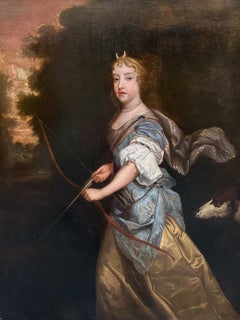
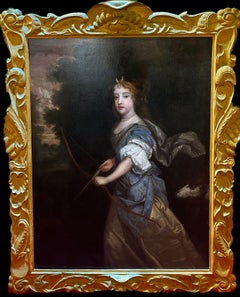
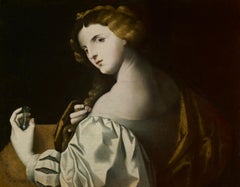
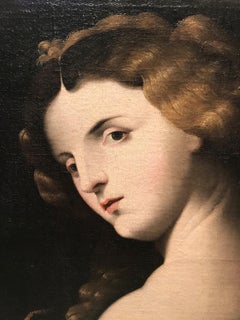
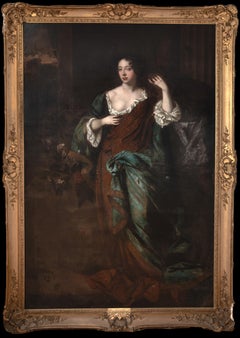
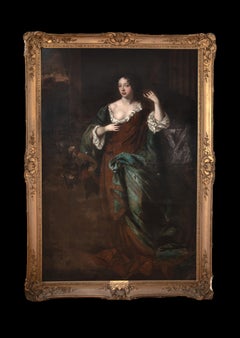
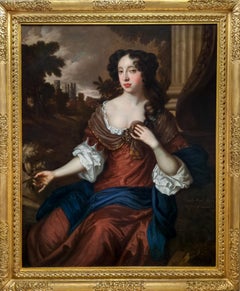
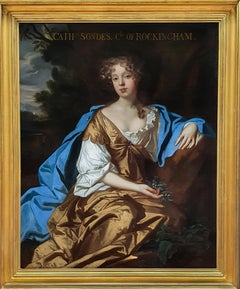
Titan Fine Art are pleased to present this elegant and beautiful painting, which is a classic example of English Baroque portraiture. Meticulously rendered, the sitter is three quarter length, holding a cluster of flowers. The painting abounds with ingenious flourishes and demonstrations of the painter's skill and superior pictorial technique. It was painted circa 1677 when Lely was at the height of his artistic powers and most likely on the occasion of the sitter’s marriage. Sir Peter Lely’s character and talent dominated the art world in the second half of the seventeenth century in England and everyone of significance sat to him.
This elegant portrait of Catherine Watson, Countess of Rockington (1657-1695) portrays her in the finest dress and seated in a rocky outcrop with romantic autumnal landscape beyond. It was a popular pose that Lely used throughout the 1670’s and one which would have been chosen from a selection by the sitter. In line with tradition at the time the portrait was likely painted on the occasion of her marriage in 1677. It was common for more than one portrait to be produced to adorn the walls of the sitter’s various estates or to give to friends and family as gifts. One other version of this portrait is known to exist.
Born Lady Catherine Sondes in 1658 to Sir George Sondes, 1st Earl of Feversham KB (1599-1677) and Mary Villiers (d.1688), daughter of Sir William Villiers, of Brooksby. The family of Sondes is found in Throwley, in Kent, as early as the fourteenth century. Catherine, who was the heiress of her father, married Lewis Watson, 3rd Baron Rockingham, later 1st Earl of Rockingham (1655-1724) on 17th July 1677. The Watson family had been settled at Rockingham, Northamptonshire, since the reign of Henry VIII. The family seat still remains - Rockingham Castle. Lewis was the grandson of the infamous Thomas Wentworth, 1st Earl of Strafford (1593-1641) - a major figure in the period leading up to the Civil War). Her father had died three months earlier and there followed an acrimonious court case over the Feversham inheritance, which led to a ruling by the House of Lords in July 1678 that his brother-in-law Louis de Duras, the 2nd Earl (widower of the elder daughter, Lady Mary Sondes d.v.p. in 1676), who had succeeded to the Feversham title by special remainder, should receive £3,000 p.a. for life out of the estates. The 2nd Earl therefore retained these Kentish estates.
Lewis Watson succeeded to the Rockingham barony in 1689 and upon the death of the 2nd Earl Feversham in 1709 he finally inherited the remainder of the Feversham estates. By this time, however, Rockingham was already a power in his own right in Kent, having been appointed lord lieutenant of the county in 1705. Even so, the acquisition of the Feversham lands made the Watsons the largest landholders in the county. In 1714, Lewis was created Earl of Rockingham and on his death in 1724, his titles passed to their grandson, Lewis (2nd Earl of Rockingham). Lewis and Catherine’s great...
Category
17th Century Old Masters Studio of Sir Peter Lely Art