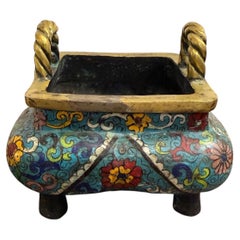
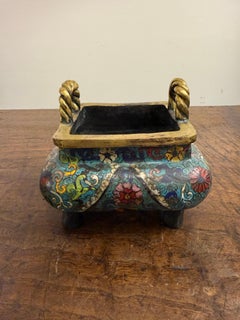
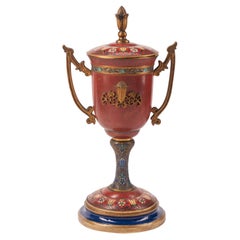
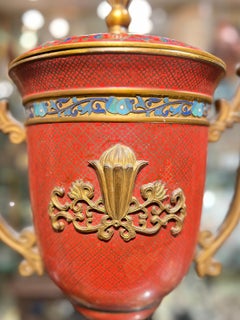
Cloissoné Furniture

to
121
652
247
922
26
2
14
12
9
8
8
5
2
2
1
1
1
1
10
484
428
28
191
96
32
29
7
13
5
4
15
8
4
1
5
908
680
186
166
120
801
760
410
348
108
950
938
950
14
12
10
4
4
Technique: Cloissoné
Cranes as Candlestick Prickets

Cranes as Candlestick Prickets

Located in New York, NY

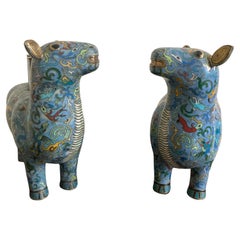
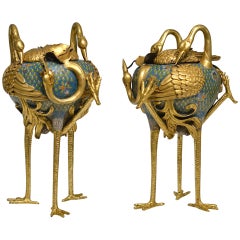
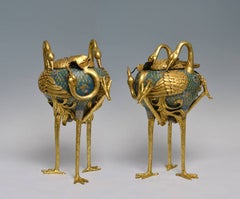
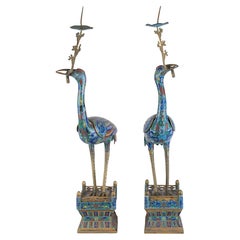
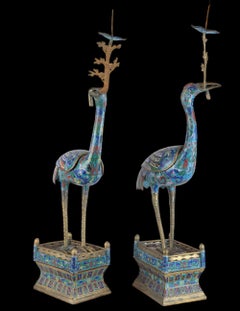
Pair Chinese Cloisonne Cranes as Candlestick Prickets This darling pair of cloisonné crane pricket candlesticks would be the perfect addition ...

Category

Early 20th Century Chinese Chinese Export Cloissoné Furniture

Materials

Enamel

Antique Art Deco King Tut Egyptian Revival Silver Gilt Enamel Cloisonne Box 1925

Antique Art Deco King Tut Egyptian Revival Silver Gilt Enamel Cloisonne Box 1925

Located in Portland, OR

Antique Egyptian Revival Art Deco enameled 800 grade silver gilt cloisonne enamel box, Italy, circa 1925. The hexagonal shaped lidded box having a hinged lid, decorated with a head o...

Category

1920s Italian Egyptian Revival Vintage Cloissoné Furniture

Materials

Silver, Enamel

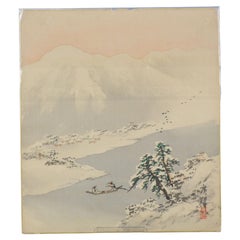
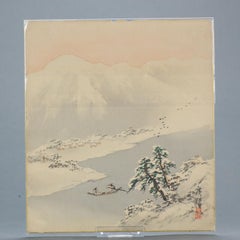
Antique Japanese Silk painting Japan Meiji Period Winter Landscape

Antique Japanese Silk painting Japan Meiji Period Winter Landscape

Located in Amsterdam, Noord Holland

A very nice blockprint 30-5-18-pm-3341 Condition / Overall Condition Perfect. Size frame: 242x 274mm. Period 19th century Meiji Periode (1867-1912)

Category

19th Century Chinese Edo Antique Cloissoné Furniture

Materials

Bronze

Chinese Enamel and French Gilt Bronze Chinoiserie Jardinière

Chinese Enamel and French Gilt Bronze Chinoiserie Jardinière

Located in London, GB

Chinese enamel and French gilt bronze Chinoiserie jardinière The enamel Chinese and the gilt bronze French, 19th century Measures: Height 40cm, width 53cm, depth 30cm. This Chin...

Category

19th Century French Chinoiserie Antique Cloissoné Furniture

Materials

Ormolu, Bronze, Enamel

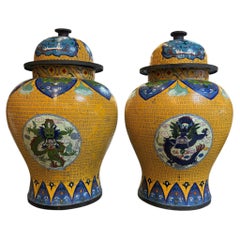
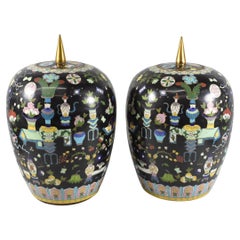
Mid-20th Century Vintage Pair of Chinese Cloisonné Enamel Ginger Jars

Mid-20th Century Vintage Pair of Chinese Cloisonné Enamel Ginger Jars

Located in Stamford, CT

A beautiful pair of Mid 20th Century Chinese cloisonné enamel lidded ginger jars. These jars are crafted using the cloisonné technique, which involves creating compartments (cloison...

Category

Mid-20th Century Chinese Cloissoné Furniture

Materials

Enamel

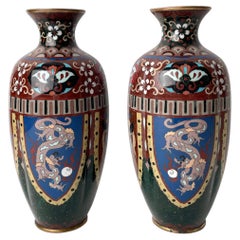
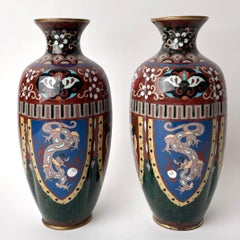
Antique Japanese Cloisonne Enamel Meiji Vases Petite Pair

Antique Japanese Cloisonne Enamel Meiji Vases Petite Pair

Located in Savannah, GA

This colorful striking pair of antique Japanese bronze vases from the Meiji period are decorated with enamel using the cloisonne technique. Two matched vases with a relief pattern of...

Category

Early 1900s Japanese Anglo-Japanese Antique Cloissoné Furniture

Materials

Enamel

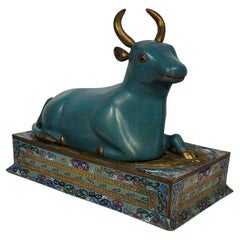
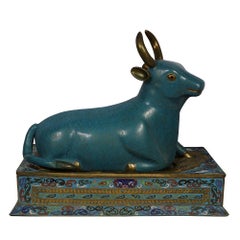
Late 19th Century Antique Chinese Large Royal Gold Plated Cloisonne Bull Statue

Late 19th Century Antique Chinese Large Royal Gold Plated Cloisonne Bull Statue

Located in Pomona, CA

This magnificent antique Chinese Cloisonne bull statue is made from gold plated bronze/copper and shows very detailed hand craft works of Cloisonne art - a lot of Chinese traditional folks art like Buddhas flower...

Category

Late 19th Century Chinese Chinese Export Antique Cloissoné Furniture

Materials

Copper

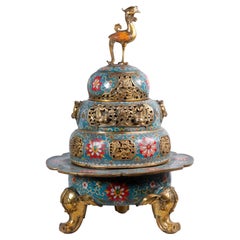
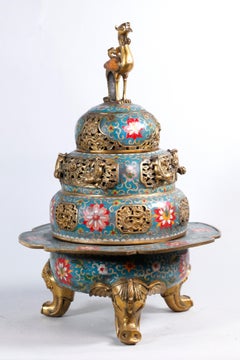
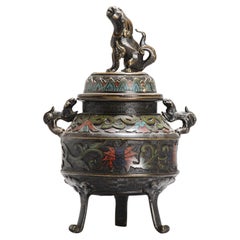
A Chinese Cloisonné Enamel Incense Burner with Mark, Late 19th Century

A Chinese Cloisonné Enamel Incense Burner with Mark, Late 19th Century

Located in ARMADALE, VIC

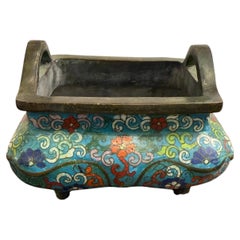
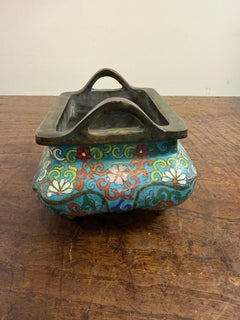
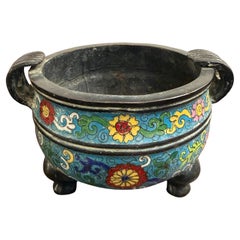
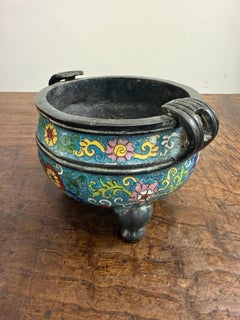
A Chinese Cloisonné Enamel Incense Burner with Mark, Late 19th Century Description: A rectangular, four-footed vessel with two upright handles (also called "ears"). The body is deco...

Category

Late 19th Century Chinese Qing Antique Cloissoné Furniture

Materials

Bronze

Hayashi School Cloisonné Vase Pair, Meiji Period with Tomobako

Hayashi School Cloisonné Vase Pair, Meiji Period with Tomobako

Located in Newark, England

Meiji Period (1868-1912)  From our Japanese collection, we are delighted to present this exceptional pair of Japanese Cloisonné Enamel Vases by the Hayashi School, dating to the Mei...

Category

Early 1900s Japanese Meiji Antique Cloissoné Furniture

Materials

Silver, Enamel

Ashtray Match Box Case Set Cloisonné Enamel

Ashtray Match Box Case Set Cloisonné Enamel

Located in New York, NY

An enamel Cloisonné match box case and ashtray set, circa early-20th century, Asia. Set includes 1 matchbox holder, and 1 ashtray/dish/plate (for used matche...

Category

Mid-20th Century Asian Chinoiserie Cloissoné Furniture

Materials

Brass, Enamel

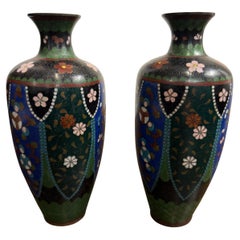
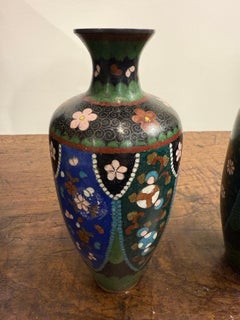
Pair Antique Japanese Cloisonné  Enamel Vases

Pair Antique Japanese Cloisonné Enamel Vases

Located in Germantown, MD

Pair Antique Japanese Cloisonné Enamel Vases Measures 5" in width, 5" in depth and 8" in height.  

Category

19th Century Japanese Meiji Antique Cloissoné Furniture

Materials

Enamel, Brass

LATE 20th CENTURY PAIR OF CLOISONNÉ CHINESE VASES

LATE 20th CENTURY PAIR OF CLOISONNÉ CHINESE VASES

Located in Firenze, FI

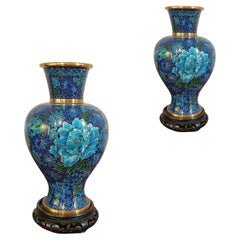
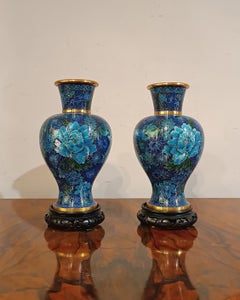
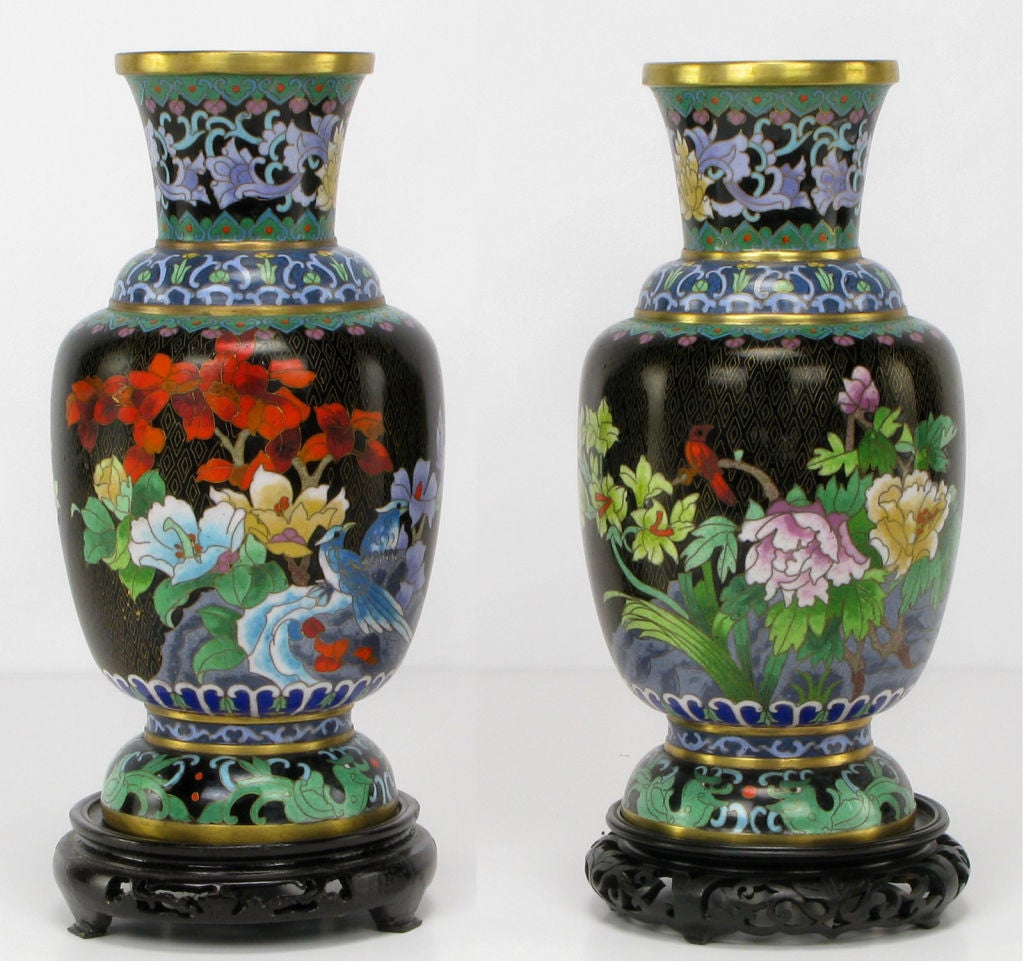
Beautiful pair of cloisonné vases in enameled and gilded metal, with hand-carved and ebonized wooden bases. The vases have a globular shape with a funnel neck. The enameled decoratio...

Category

1990s Chinese Cloissoné Furniture

Materials

Metal

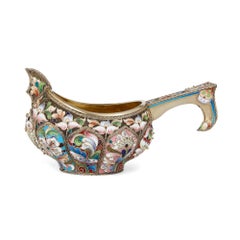
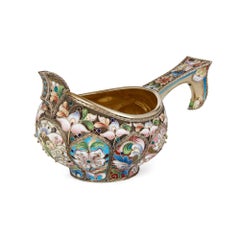
Large Russian Silver Kovsch with Cloisonné Enamel Decoration

Large Russian Silver Kovsch with Cloisonné Enamel Decoration

Located in London, GB

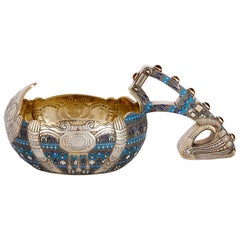
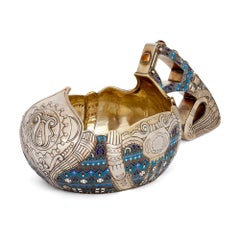
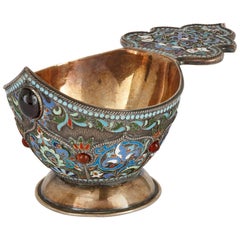
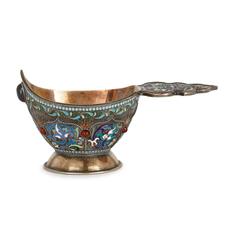
Large Russian silver kovsch with cloisonné enamel decoration Russian, 20th Century Height 13cm, width 31cm, depth 16cm This silver kovsch is decorated in high relief with the cl...

Category

20th Century Russian Baltic Cloissoné Furniture

Materials

Silver, Enamel

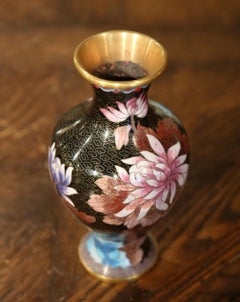
Vintage Chinese Cloisonné Enamel Floral Vase with Brass Trim

Vintage Chinese Cloisonné Enamel Floral Vase with Brass Trim

Located in Dallas, TX

Decorate a table, shelf, or buffet with this vibrant cloisonné enamel vase, crafted in China circa 1980. The elegant baluster form is richly decorated with blooming lotus flowers and...

Category

Late 20th Century Chinese Cloissoné Furniture

Materials

Multi-gemstone, Brass

A Pair of Chinese Cloisonné Models of Tigers on Bases, Life Size

A Pair of Chinese Cloisonné Models of Tigers on Bases, Life Size

Located in New York, NY

A Palace Size Pair of Chinese Cloisonné Models of the Tigers on Original Wood Bases, Life Size. A pair of life-size Chinese cloisonné models of tigers, each presented in a striding pose with open mouths, revealing detailed teeth and red enamel tongues. The bodies are decorated with alternating bands of yellow and black, outlined with wirework that defines scrolling cloud-like motifs across the surface. Their muscular forms are supported on rectangular tiered wooden bases carved with decorative friezes. The tails curve outward, echoing the fluidity of the cloisonné design that continues throughout their bodies, including the paws and ears. In Chinese symbolism, these tigers represents the masculine principle in nature and is king of all the animals, as shown by the four stripes on his forehead, which form the character Wang (王). The tiger represents the greatest earthly power, as well as protection over human life. The decoration is executed in traditional cloisonné technique, where copper wire partitions contain colored enamel filled into the tiger’s stripes and background ornamentation. The yellow enamel ground is filled with fine spirals and scrolls that extend across the surface, contrasting with the black bands, which are similarly detailed with wire-drawn motifs. The white enamel underbellies are also worked with scroll patterns, and the noses are rendered in dotted black cloisonné. Each piece is constructed over a metal core, evident from the openings beneath the bodies showing traces of copper and green oxidation around the rims. Chinese cloisonné animal...

Category

1940s Chinese Qing Vintage Cloissoné Furniture

Materials

Brass, Bronze, Enamel

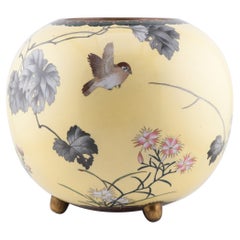
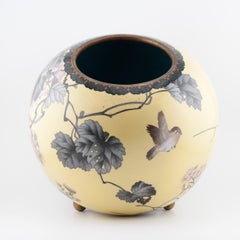
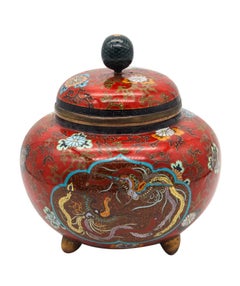
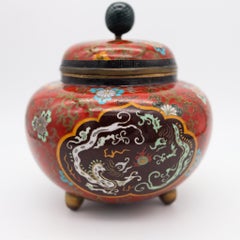
Yellow Ground Incense Burner with Flowers and Birds Cloisonné Enamel Meiji Era

Yellow Ground Incense Burner with Flowers and Birds Cloisonné Enamel Meiji Era

Located in Amsterdam, Noord Holland

Top quality incense burner Meiji era (1868-1912), 19th century Additional information: Material: Bronze & Metal Primary Material: Bronze & Cloisonne Region of Origin: Japan Period: ...

Category

19th Century Japanese Meiji Antique Cloissoné Furniture

Materials

Bronze

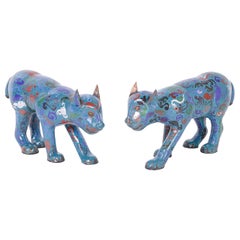
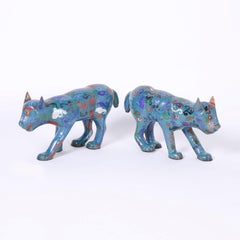
Pair of Chinese Cloisonné Cats

Pair of Chinese Cloisonné Cats

Located in Palm Beach, FL

Pair of Chinese cloisonné or enamel on copper cats in a familiar stalking pose decorated with symbolic biomorphic designs over an alluring blue background.

Category

20th Century Chinese Chinoiserie Cloissoné Furniture

Materials

Enamel

Set of Two Japanese Cloissoné Vases Meiji Era Dragon and Pheonix

Set of Two Japanese Cloissoné Vases Meiji Era Dragon and Pheonix

Located in Knivsta, SE

A pair of Japanese cloisonné enamel vases. Meiji era Japan (1867-1912), a period marked by rapid transformation of Japanese traditional society into a global power. The period of gro...

Category

Late 19th Century Japanese Meiji Antique Cloissoné Furniture

Materials

Enamel

Antique Chinese Cloisonné Ram / Goat Vases, Copper & Gilt

Antique Chinese Cloisonné Ram / Goat Vases, Copper & Gilt

Located in Basildon, GB

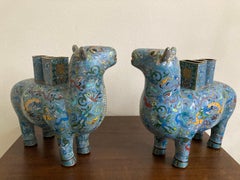
A fine pair of Chinese cloisonné enamel vases modeled as standing rams, each fitted with twin cylindrical vase/spill openings set into the back — a well-established decorative form i...

Category

Early 20th Century Chinese Chinese Export Cloissoné Furniture

Materials

Copper

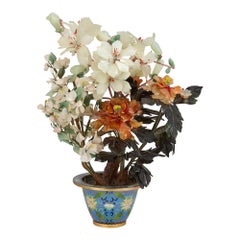
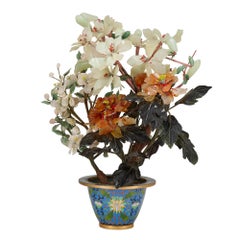
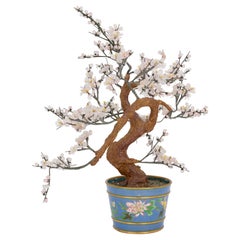
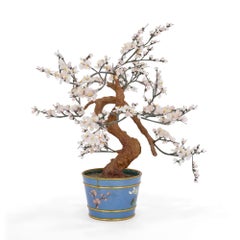
Large Chinese Hardstone Flower Tree Model in a Cloisonné Enamel Pot

Large Chinese Hardstone Flower Tree Model in a Cloisonné Enamel Pot

Located in London, GB

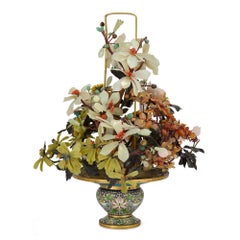
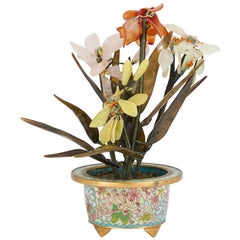
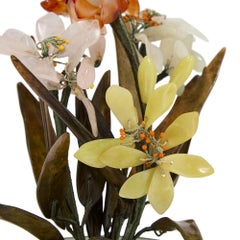
Large Chinese hardstone flower tree model in a cloisonné enamel pot Chinese, 20th Century Height 44cm, width 35cm, depth 21cm This impressive flower tree model, crafted from an ass...

Category

20th Century Chinese Cloissoné Furniture

Materials

Stone, Agate, Quartz, Metal, Enamel

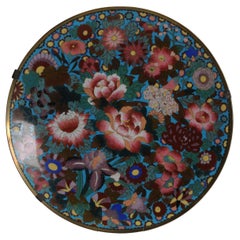
Large Antique Japanese Wall Dish Crane Eagle Hunt Bronze Flowers Cloisonne

Large Antique Japanese Wall Dish Crane Eagle Hunt Bronze Flowers Cloisonne

Located in Amsterdam, Noord Holland

Lovely and beautifully made piece with different kind of flowers and birds on a green base. Cloisonné is an enamelling technique in which the pattern is formed by wires soldered to...

Category

19th Century Japanese Meiji Antique Cloissoné Furniture

Materials

Bronze

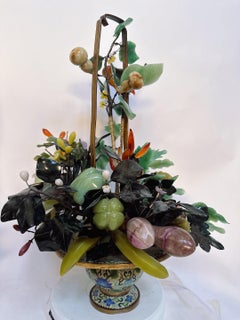
massive Chinese jade/stone flower tree in cloisonné base

massive Chinese jade/stone flower tree in cloisonné base

Located in New York, NY

tall wooden stand/pedestal shown in pictures is not included with this item; flower tree only (not including wooden stand): 43in(H)

Category

Late 20th Century Chinese Cloissoné Furniture

Materials

Stone, Agate, Jade, Metal, Enamel

Very Fine Gilt Bronze, Cloisonné Enamel and Porcelain Holy Water Stoup

Very Fine Gilt Bronze, Cloisonné Enamel and Porcelain Holy Water Stoup

Located in London, GB

A very fine gilt bronze, cloisonné enamel and porcelain holy water stoup French, late 19th century Measures: Height 54cm, width 34cm, depth 9cm This b...

Category

Late 19th Century French Renaissance Antique Cloissoné Furniture

Materials

Enamel, Ormolu

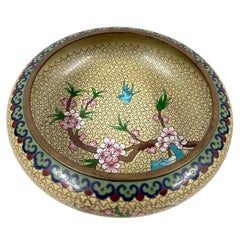
Chinese Cloisonne Bowl

Chinese Cloisonne Bowl

Located in Buenos Aires, Argentina

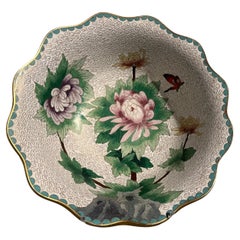
Chinese Cloisonne Bowl Bronze and enamel materials made with Cloisonne technique Origin China Circa 1950 Floral decoration perfect condition cloisone te...

Category

1950s Chinese Chinese Export Vintage Cloissoné Furniture

Materials

Bronze, Enamel

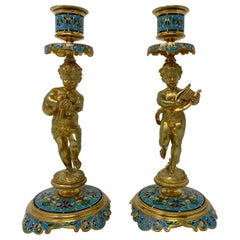
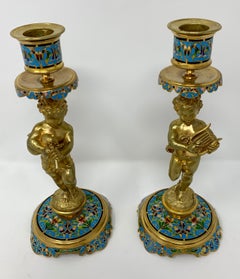
Pair of Antique French Cloisonné and Gold Bronze Candlesticks

Pair of Antique French Cloisonné and Gold Bronze Candlesticks

Located in New Orleans, LA

A charming pair of candlesticks whose cherubs are sporting musical instruments.

Category

Late 19th Century French Antique Cloissoné Furniture

Materials

Metal, Bronze

Russian Cloisonné Enamel Tea Set

Russian Cloisonné Enamel Tea Set

By Pavel Ovchinnikov

Located in New Orleans, LA

This exceptional Russian cloisonné and enamel tea set is the work of Pavel Akimovich Ovchinnikov. One of Russia’s most skilled enamel artisans, Ovchin...

Category

19th Century Russian Japonisme Antique Cloissoné Furniture

Materials

Silver, Enamel

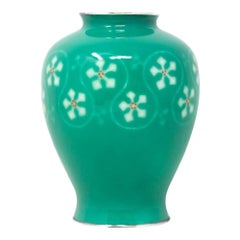
Contemporary Tear Drop Cloisonné Vase in Verde Grass Design by Robert Kuo

Contemporary Tear Drop Cloisonné Vase in Verde Grass Design by Robert Kuo

By Robert Kuo

Located in Los Angeles, CA

Tear Drop Vase (Short) Verde Color Grass Design Cloisonné Glass Enamel Copper Each piece is individually crafted and is unique. The cloisonné technique is an enameling on metal t...

Category

2010s Cloissoné Furniture

Materials

Copper, Enamel

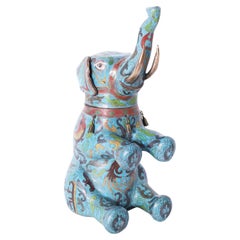
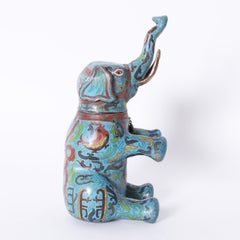
Early 20th century large cloisonne enamel elephant

Early 20th century large cloisonne enamel elephant

Located in Debenham, Suffolk

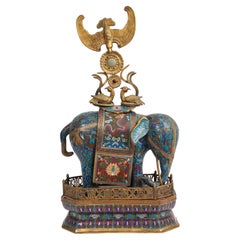
Early 20th century large Chinese cloisonne enamel elephant on stand circa 1900. A real rare decorative piece. Profusely enamelled, modelled carrying a saddle and flaming finial.  I...

Category

Early 20th Century Chinese Victorian Cloissoné Furniture

Materials

Enamel

JAPAN IMPERIAL 1900 Meiji Period Tripode Koro Censer In Cloisonné Enamel With

JAPAN IMPERIAL 1900 Meiji Period Tripode Koro Censer In Cloisonné Enamel With

Located in Miami, FL

Japanese tripod Koro from the Meiji Period (1868-1912). This is a rare and beautiful antique koro censer, created in the imperial Japan during the Meiji period (1868-1912), circa 1900. It was carefully crafted in solid bronze and copper with silver wires and embellished with applications of polychromatic Cloisonné enamels and aventurine. The designs depict organics and natural motifs such mythological animals and flowers. The Chrysanthemum Symbol In Imperial Japan, the chrysanthemum (Kiku) was a potent symbol of the imperial family and the emperor himself, representing longevity, royalty, and divine power. The 16-petaled chrysanthemum is the Imperial Seal and crest, found on passports, coins, and the Chrysanthemum Throne. This association dates back to the Kamakura period (1185–1333), particularly with Emperor Go-Toba's fondness for the flower, establishing its link to imperial authority and lineage. The connection between the chrysanthemum and the imperial family began when Emperor Go-Toba adopted it as a personal emblem, aligning it with the strength and refinement of the emperor's rule. During the Meiji Period, the 16-petaled chrysanthemum crest, solidifying the association with the imperial family, was established during this time. The Meiji Imperial Period This is an era of Japanese history that extended from October 23, 1868 to July 30, 1912.The Meiji era was the first half of the Empire of Japan, when the Japanese people moved from being an isolated feudal society at risk of colonization by Western powers to the new paradigm of a modern, industrialized nation state and emergent great power, influenced by Western scientific, technological, philosophical, political, legal, and aesthetic ideas. As a result of such wholesale adoption of radically different ideas, the changes to Japan were profound, and affected its social structure, internal politics, economy, military, and foreign relations. The period corresponded to the reign of Emperor Meiji. It was preceded by the Keiō era and was succeeded by the Taishō era, upon the accession of Emperor Taishō. Country: Imperial Japan. Period: Meiji, 1890-1910. Technique: Silver Wire Cloisonné over copper and bronze. Weight: 416.80 Grams, (0.417 Kg). Measurements:118 mm by 115 mm (4.65 x 4.52 Inches). Koro This term refers to a Japanese censer, incense burner, perfume burner or pastille burner is a vessel made for burning incense or perfume in some solid form. They vary greatly in size, form, and material of construction, and have been in use since ancient times throughout the world. They may consist of simple earthenware bowls or fire pots to intricately carved silver or gold vessels, small tabletop objects a few centimeters tall to as many as several meters high. Many designs use openwork to allow a flow of air. In many cultures, burning incense has spiritual and religious connotations, and this influences the design and decoration of the censer. Cloisonné This is an enameling technique in which the pattern is formed by wires soldered to the surface of the object to be decorated, which is usually made from copper, forming cells or cloisons, each of which holds a single colour of enamel paste which is then fired, and ground and polished. The champleve technique also uses an enameling technique, but the cells are formed by carving into the surface of the object, or in the casting. The cloisonne technique has been in use since the 12th century BC in the west, but the technique did not reach China until the 13th or 14th century. It became popular in China in the 18th century. Initially bronze or brass bodies were used, and in the 19th century copper, at which time the quality of the items produced began to decline. Chinese cloisonné is the best-known enamel cloisonné, though the Japanese produced large quantities from the mid-19th century, of very high technical quality. In the west the cloisonne technique was revived in the mid-19th century following imports from China, and its use continued in the Art Nouveau and Art Deco periods. Condition: Basically, is in great antique condition, near mint, with insignificant and minimal usage, in great condition. All parts are secured in the settings. This Japanese Meiji Koro...

Category

Early 1900s Japanese Meiji Antique Cloissoné Furniture

Materials

Silver, Bronze, Copper, Enamel
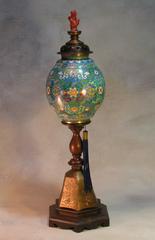
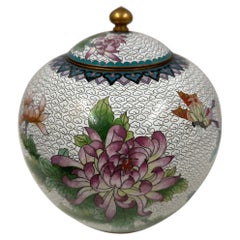
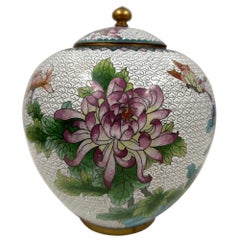
Mid-20th Century Chinese Cloisonne Ginger Jar with Chrysanthemums and Butterfly

Mid-20th Century Chinese Cloisonne Ginger Jar with Chrysanthemums and Butterfly

Located in Pomona, CA

This is a cloisonné ginger jar, a type of decorative enamelware. Cloisonné is an ancient technique for decorating metal objects, where thin metal wires are soldered to a metal surfac...

Category

Mid-20th Century Chinese Chinese Export Cloissoné Furniture

Materials

Copper

Chinese Lamp with a Plique-A-Jour Shade

Chinese Lamp with a Plique-A-Jour Shade

Located in Ottawa, Ontario

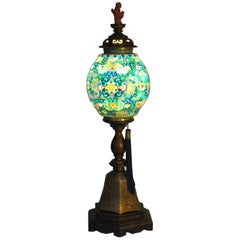
Chines lamp with a plique-a-jour shade, circa 1900. Ovid shaped plique-a jour cloisonné shade with pierced wood cover and imitation carved coral finial on a wood turned baluster stem and hexagonal bronze Buddhist bell...

Category

1930s Chinese Chinese Export Vintage Cloissoné Furniture

Materials

Bronze

Early 20th-Century Chinese Cloisonne Calligraphy Brush

Early 20th-Century Chinese Cloisonne Calligraphy Brush

Located in Pomona, CA

This is Chinese Calligraphy Brush, specifically featuring a cloisonné handle. The handle is crafted with cloisonné enamel, a decorative technique involving the fusion of colored glass pastes into compartments (cloisons) formed by wires on a metal base, resulting in intricate floral patterns as seen in the image. Used for traditional Chinese calligraphy and Sumi-e painting...

Category

Early 20th Century Chinese Chinese Export Cloissoné Furniture

Materials

Copper

A Fantastic Pair of 19th Century Chinese Turquoise Ground Cloisonné Dragon Vases

A Fantastic Pair of 19th Century Chinese Turquoise Ground Cloisonné Dragon Vases

Located in New York, NY

A Fantastic Pair of 19th Century Chinese Turquoise Ground Cloisonné Dragon Vases. Each vase is constructed with a baluster form rising to a tall, flaring neck and resting on a sligh...

Category

19th Century Chinese Qing Antique Cloissoné Furniture

Materials

Bronze

Chinese six panel screen with cloisonné insets

Chinese six panel screen with cloisonné insets

Located in New York, NY

measurements of each panel: 16in(L) x 65.5in(H) x 1in(D); each panel is adorned with cloisonné insets, which are surrounded by delicate, finely, painted incised decorations; back of ...

Category

Mid-20th Century Chinese Cloissoné Furniture

Materials

Enamel, Metal

20th Century Chinese Hardstone Flowering Tree in a Cloisonné Planter

20th Century Chinese Hardstone Flowering Tree in a Cloisonné Planter

Located in London, GB

20th century Chinese hardstone flowering tree in a cloisonné planter Chinese, 20th century Height 42cm, width 33cm, depth 31cm This exquisite 20th-century Chinese hardstone tree is ...

Category

20th Century Chinese Cloissoné Furniture

Materials

Agate, Rock Crystal

Antique Chinese Cloisonne Elephant Ginger Jar

Antique Chinese Cloisonne Elephant Ginger Jar

Located in Palm Beach, FL

Rare and unusual antique Chinese ginger jar handcrafted in a cloisonne technique, decorated with fauna, flora, and tassels on an alluring b...

Category

Early 20th Century Chinese Chinese Export Cloissoné Furniture

Materials

Metal

Chinese Hardstone and Cloisonné Enamel Flower Tree Model

Chinese Hardstone and Cloisonné Enamel Flower Tree Model

Located in London, GB

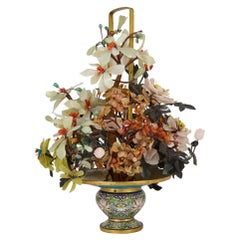
Chinese hardstone and cloisonné enamel flower tree model Chinese, 20th Century Height 54cm, width 42cm, depth 39cm Depicting a basket filled with a lavi...

Category

20th Century Chinese Cloissoné Furniture

Materials

Stone, Carnelian, Jade, Enamel

19th Century Japanese Cloisonne Enamel Meiji Floral Box

19th Century Japanese Cloisonne Enamel Meiji Floral Box

Located in Long Island City, NY

An antique Japanese, late Meiji era, covered enamel over brass jewelry or trinket box. The exterior of the ware is enameled with polychrome images of blossoming flowers surrounded by...

Category

19th Century Japanese Meiji Antique Cloissoné Furniture

Materials

Enamel, Brass

Centerpiece winged lions blue fired enamel sterling silver Salimbeni

Centerpiece winged lions blue fired enamel sterling silver Salimbeni

By Giorgio Salimbeni

Located in Firenze, FI

Large centerpiece in 925/1000 sterling silver gold plated with translucent fired enamel on guilloche. Round base with rounded edge, diameter 15 cm, height 3.5 cm, with sculptures of ...

Category

1990s Italian Napoleon III Cloissoné Furniture

Materials

Gold, Gold Plate, Sterling Silver, Enamel

Vintage Mirrored Pair of Chinese Cloisonné Rooster Sculptures

Vintage Mirrored Pair of Chinese Cloisonné Rooster Sculptures

Located in San Diego, CA

A nice vintage mirrored pair of Chinese cloisonné rooster sculptures, circa early 20th century. The sculptures are in very good condition with no d...

Category

Early 20th Century Chinese Chinese Export Cloissoné Furniture

Materials

Brass, Enamel

Antique Pair of Russian Silver Gilt Enamel Cloisonné Salts Spoons St. Petersburg

Antique Pair of Russian Silver Gilt Enamel Cloisonné Salts Spoons St. Petersburg

Located in Portland, OR

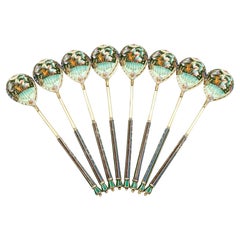
A good pair of antique Russian Imperial silver-gilt & cloisonné enamel salts and spoons, St. Petersburg, circa 1908. The salts of circular form and are finely decorated with multi-c...

Category

Early 1900s Russian Baltic Antique Cloissoné Furniture

Materials

Silver, Enamel

Chinese Agate, Jade and Rose Quartz Flower Model in a Cloisonné Enamel Pot

Chinese Agate, Jade and Rose Quartz Flower Model in a Cloisonné Enamel Pot

Located in London, GB

Chinese agate, jade and rose quartz flower model in a cloisonné enamel pot Chinese, 20th Century Height 28cm, width 37cm, depth 25cm Crafted in 20th century China, this delicate fl...

Category

20th Century Chinese Cloissoné Furniture

Materials

Agate, Jade, Metal, Enamel

Chinese Cloisonné Enamel and Hardstone Flower Model

Chinese Cloisonné Enamel and Hardstone Flower Model

Located in London, GB

Chinese cloisonné enamel and hardstone flower model Chinese, 20th Century Height 17cm, width 15cm, depth 12cm This charming hardstone flower arrangement showcases the artistry and m...

Category

20th Century Chinese Cloissoné Furniture

Materials

Stone, Agate, Metal, Enamel

Chinese Qing Cloisonné Bronze Opium Caddy Set

Chinese Qing Cloisonné Bronze Opium Caddy Set

Located in Toledo, OH

Chinese Qing opium caddy set includes burner and tray with 6 dishes. Cloisonné set in bronze with blue enamel interior, foo dog lion handle. Intricate fl...

Category

Late 19th Century Antique Cloissoné Furniture

Materials

Bronze

Lot of Four Chinese Cloisonne Vases & Teapot, 20th Century

Lot of Four Chinese Cloisonne Vases & Teapot, 20th Century

Located in Ottawa, Ontario

Lot of four chinese cloisonne vases and teapot 20th century. From left: Baluster-shaped black ground vase with flowering prunus emerging from a rock, ruyi band around flaring ...

Category

Mid-20th Century Chinese Chinese Export Cloissoné Furniture

Materials

Metal

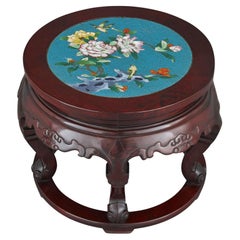
Antique Chinese Hongmu Carved Rosewood and Floral Enamel Cloisonné 2 Tier Table

Antique Chinese Hongmu Carved Rosewood and Floral Enamel Cloisonné 2 Tier Table

Located in Germantown, MD

Antique Chinese carved rosewood and floral enamel cloisonné two tier side table, flower stand. Refinished rosewood. Measures 12.5" in width, 25" in depth and stands 31.5" tall for th...

Category

Early 20th Century Chinese Tang Cloissoné Furniture

Materials

Copper, Enamel
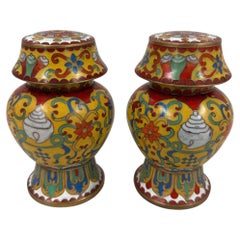
Pair of Antique Japanese Meiji Period Silver Wired Cloisenne Vases

Pair of Antique Japanese Meiji Period Silver Wired Cloisenne Vases

Located in New York, NY

Pair of Antique Japanese Meiji Period Silver Wired Cloisenne Vases A pair of antique Japanese Meiji period silver wired cloisonné vases of slightly compressed tapering form with rou...

Category

1890s Japanese Meiji Antique Cloissoné Furniture

Materials

Silver, Bronze, Enamel
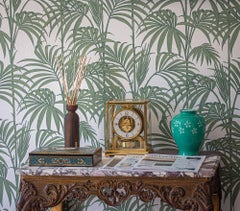
Cloisonné Vases, Lamps, Bowls and Other Furniture and Objects for Sale on 1stDibs

Liven your home with cloisonné vases, bowls, lamps and other objects and furnishings ornamented with lustrous enamel. Technically, enamel is colored glass fused to metal. But that simple description greatly understates the case. Applied using an array of techniques to a wide range of objects, it is one of the most dynamic, and alluring, mediums in the world.
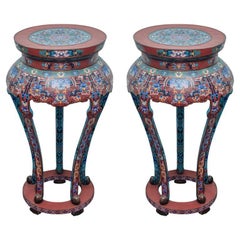
No one knows for sure when or where enameling originated. But, according to the Encyclopedia Britannica, it is widely believed that the decoration on a gold scepter found in a royal Mycenaean tomb at Kourion Kaloriziki, in Cyprus, and dating to the 11th century BC, is a true, early example of the technique.

Between the 6th and 12th centuries AD, cloisonné — in which tiny compartments (cloisons) made by soldering copper filaments to a metal surface are filled with vibrantly hued enamel — had a huge vogue in the Byzantine Empire. By the 7th century, Lombard craftsmen in northern Italy were using enamel to emulate Byzantine objects. In the 12th and 13th centuries, artisans in China imported the technique and made it so much their own that enameled objects have long been associated with Eastern aesthetics and motifs rather than Western ones.
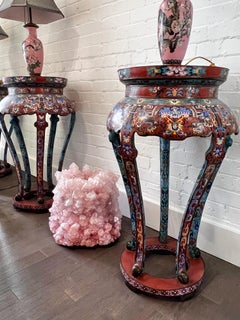
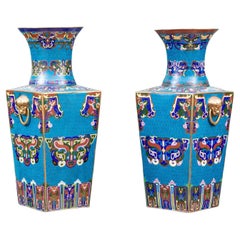
Collectors of authentic antique Chinese furniture and decorative objects know that Ming dynasty-era cloisonné objects are particularly coveted. Although ornamentation was minimal at the time, Ming dynasty furniture often featured carved or painted details of flowers, insects, dragons, fruits and other motifs. As overseas trade expanded, techniques from the West, like cloisonné enamel painting, adorned table screens and other pieces. 
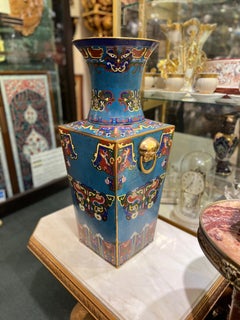
Elaborately decorated Ming-era cloisonné objects and furnishings — vessels and other items featuring lots of vibrant colors and details — are likely to fetch considerable sums at auction, as Chinese cloisonné vases created during the Ming and Qing eras represent a golden age of the country’s furniture design. (Victorian cloisonné is also popular with design enthusiasts.)

Cloisonné wasn’t adopted in Japan until the 1800s. Back then, amid an era of societal and cultural shifts, a bolstered interest in art and design elevated Japanese craft traditions during the Meiji period. European styles like Japonisme appropriated Japanese design while craftsmen in places like Wales and England employed japanning, a varnishing technique that approximated the appearance of lacquer for the surfaces of furnishings.
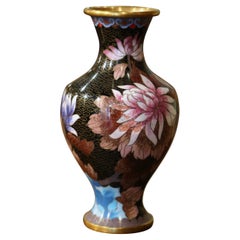
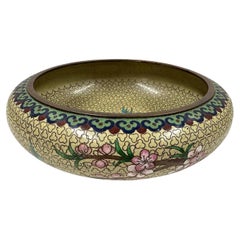
Today, Meiji-era cloisonné vases or incense burners in good condition are of great interest to collectors of Asian art and furniture produced by the period’s Japanese cloisonné workshops. 

Find cloisonné vases, lighting, decorative bowls and other objects for sale on 1stDibs.