1940s Paintings

to
427
380
389
437
232
150
Overall Width
to
Overall Height
to
2,171
6,464
41,583
121,799
686
657
1,244
1,641
1,588
2,194
3,000
3,428
3,186
3,134
1,048
363
276
132
87
33
27
21
14
13
3
854
692
38
711
368
252
166
150
141
130
120
111
66
62
52
48
47
46
44
43
36
36
35
1,484
1,213
589
543
232
19
18
17
16
15
1,034
95
1,213
359
Period: 1940s
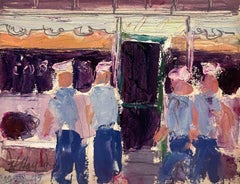
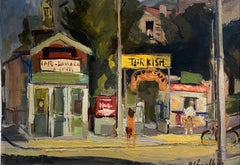
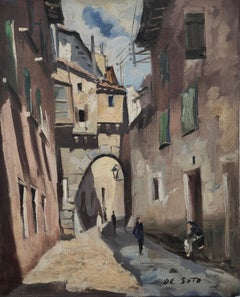
Market Day in Piazza Grande Locarno Switzerland
Located in London, GB
'Market Day in Piazza Grande, Locarno, Switzerland', oil on board, by unknown artist (1947-48). Locarno is an utterly charming Italian-speaking resort located on the northern shore o...
Category

Expressionist 1940s Paintings

Materials

Oil, Board

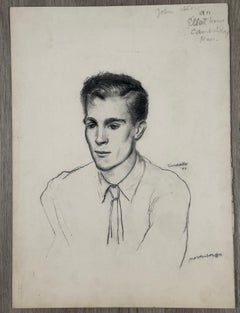
Dreamy Vintage Watercolor of Two Figures by Artist Gertrude Klares Bedell
Located in Chicago, IL
A dreamy watercolor of two figures in repose Gertrude Klares Bedell. Artwork size: 18" x 13 1/2". Framed size: 26 1/2" x 22". Biography from Askart: An Austrian countess born i...
Category

American Modern 1940s Paintings

Materials

Paper, Watercolor

Vintage Mid Century Fauvist American Modernist Amusement Park Oil Painting
Located in Buffalo, NY
A Painting depicting an amusement park exploding in vibrant colors. The painting is signed "William Wright" lower right. Oil on Canvas. 20 x 24. Nicely framed.
Category

Modern 1940s Paintings

Materials

Canvas, Oil

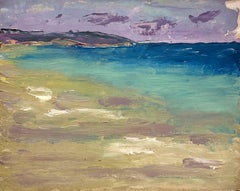
Antique American Framed Impressionist Beach Scene Original Oil Painting
Located in Buffalo, NY
Antique American impressionist beach scene oil painting. Oil on canvasboard. Framed. No signature found.
Category

Impressionist 1940s Paintings

Materials

Canvas, Oil

The lively square and Piazza Governo, in Bellinzona
Located in Genève, GE
Work on canvas Frame in molding and beige gray wood 50 x 63 x 6 cm
Category

1940s Paintings

Materials

Oil

On the bank of Seine, 1940. Oil on canvas, 54, 5 x 73 cm
Located in Riga, LV
Constantin Kluge was a Russian-born French painter best known for his naturalistic scenes of Paris and French countryside. Kluge was born to a wealthy military family on January 29, ...
Category

Impressionist 1940s Paintings

Materials

Canvas, Oil

Summer Seas, Mid-Century Asilomar California Seascape 1943
Located in Soquel, CA
Summer Seas, Mid-Century Asilomar California Seascape by William Clothier Watts A beautiful and substantial mid-century seascape by William Clo...
Category

American Impressionist 1940s Paintings

Materials

Oil, Linen

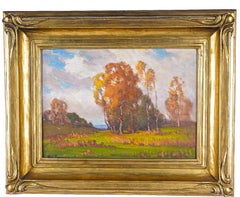
Irene Fowler 1940s Oil Painting, Boulder Canyon Autumn Landscape, Colorado Art
Located in Denver, CO
This vintage 1940s oil painting by Irene Fowler (1884–1969) masterfully captures the vibrant beauty of Boulder Canyon in Colorado. The composition showcases majestic mountains and golden Aspen trees in their autumnal splendor, with leaves glowing in rich shades of gold, orange, and red. Fowler’s keen observation of light and atmosphere brings the serene mountain landscape to life, reflecting the tranquil yet dramatic character of Colorado’s rugged terrain. The painting measures 22 ¼ x 18 ¼ inches, and is presented in a custom gold frame with outer dimensions of 25 ¼ x 21 ¼ x 1 ½ inches, making it ready for display. About the Artist: Irene Fowler was a pivotal figure in Denver’s early 20th-century art scene. Born in Illinois, she settled in Denver, becoming a public school teacher and a founding member of the Denver Artist’s Guild (now the Colorado Artist’s Guild). Known for her en plein air landscapes, Fowler captured the unique beauty of Colorado, from towering mountains and quaking Aspen groves to rustic mining towns, with an extraordinary sense of light, color, and atmosphere. Fowler exhibited widely, including at the Schlier Gallery, Chappell House, University Club...
Category

American Impressionist 1940s Paintings

Materials

Oil

Antique Italian Figural Painted Ceramic Tile "Two Sisters"
Located in Douglas Manor, NY
5146 Antique Italian Hand painted ceramic tile of two sisters Hanging hardware on back
Category

1940s Paintings

Materials

Ceramic

Vintage American School Modernist Rose Flower Still Life Nicely Framed Painting
Located in Buffalo, NY
Impressive early American modernist still life oil painting. Framed. Oil on canvas. Signed. Image size, 10H by 8L.
Category

Modern 1940s Paintings

Materials

Canvas, Oil

Mauna 'uhane - Mid Century Modern Surrealist Hawaiian Visionary Art
Located in Soquel, CA
Hawaiian Symbolism Figurative & Landscape Oil painting of Mauna Uhane (Mountain Spirit) Symbolic and surreal landscape with a figure of spirit ascen...
Category

Post-Minimalist 1940s Paintings

Materials

Oil, Stretcher Bars, Linen

Giant Sadistic Laughing Devil with Hellfire and Tiny Humans
Located in Miami, FL
A sadistic laughing Devil grinning a big smile is pictured hovering over a Hellfire. He is reveling while witnessing tiny ant-like sinners engage in eternal torture, torment, and co...
Category

Expressionist 1940s Paintings

Materials

Oil, Cardboard

"Coney Island" Brooklyn NYC Amusement Park Mid-century American Scene WPA Modern
By Ludwig Bemelmans, 1898-1962
Located in New York, NY
"Coney Island" Brooklyn NYC Amusement Park Mid-century American Scene WPA Modern Ludwig Bemelmans (1898 – 1962), “Coney Island" 35 x 27 inches Oil on board Signed lower right Origi...
Category

American Modern 1940s Paintings

Materials

Oil, Board

Inevitable Day – Birth of the Atom oil and tempera painting by Julio De Diego
Located in Hudson, NY
Julio De Diego’s Atomic Series paintings made an extraordinary statement regarding the shock and fear that accompanied the dawn of the nuclear age. In the artist’s own words, “Scientists were working secretly to develop formidable powers taken from the mysterious depths of the earth - with the power to make the earth useless! Then, the EXPLOSION! . . . we entered the Atomic Age, and from there the neo-Atomic war begins. Explosions fell everywhere and man kept on fighting, discovering he could fight without flesh.” To execute these works, De Diego developed a technique of using tempera underpainting before applying layer upon layer of pigmented oil glazes. The result is paintings with surfaces which were described as “bonelike” in quality. The forms seem to float freely, creating a three-dimensional visual effect. In the 1954 book The Modern Renaissance in American Art, author Ralph Pearson summarizes the series as “a fantastic interpretation of a weighty theme. Perhaps it is well to let fantasy and irony appear to lighten the devastating impact. By inverse action, they may in fact increase its weight.” Bibliography Art in America, April 1951, p.78 About this artists: Julio De Diego crafted a formidable persona within the artistic developments and political struggles of his time. The artist characterized his own work as “lyrical,” explaining, “through the years, the surrealists, the social-conscious painters and the others tried to adopt me, but I went my own way, good, bad or indifferent.” [1] His independence manifested early in life when de Diego left his parent’s home in Madrid, Spain, in adolescence following his father’s attempts to curtail his artistic aspirations. At the age of fifteen he held his first exhibition, set up within a gambling casino. He managed to acquire an apprenticeship in a studio producing scenery for Madrid’s operas, but moved from behind the curtains to the stage, trying his hand at acting and performing as an extra in the Ballet Russes’ Petrouchka with Nijinsky. He spent several years in the Spanish army, including a six-month stretch in the Rif War of 1920 in Northern Africa. His artistic career pushed ahead as he set off for Paris and became familiar with modernism’s forays into abstraction, surrealism, and cubism. The artist arrived in the U.S. in 1924 and settled in Chicago two years later. He established himself with a commission for the decoration of two chapels in St. Gregory’s Church. He also worked in fashion illustration, designed magazine covers and developed a popular laundry bag for the Hotel Sherman. De Diego began exhibiting through the Art Institute of Chicago in 1929, and participated in the annual Chicago Artists Exhibitions, Annual American Exhibitions, and International Water Color Exhibitions. He held a solo exhibition at the Art Institute of Chicago in the summer of 1935. Though the artist’s career was advancing, his family life had deteriorated. In 1932 his first marriage dissolved, and the couple’s young daughter Kiriki was sent to live with friend Paul Hoffman. De Diego continued to develop his artistic vocabulary with a growing interest in Mexican art. He traveled throughout the country acquainting himself with the works of muralists such as Carlos Merida, and also began a collection of small native artifacts...
Category

American Modern 1940s Paintings

Materials

Masonite, Oil, Tempera

Mid Century Fingerpainted Landscape in Acrylic, in Diamond-Shaped Frame
Located in Soquel, CA
Mid Century Fingerpainted Landscape in Acrylic, in Diamond-Shaped Frame Unique landscape by Hollywood, California artist Genevieve"Gen" Matucha (American, 1903-1989). The scene dep...
Category

Modern 1940s Paintings

Materials

Acrylic, Board

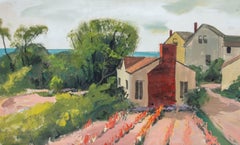
1940s English Country Cottage Landscape
By Henry T. Harvey
Located in Soquel, CA
Wonderful 1940s genre landscape of traditional English cottage painted in the European style by Henry T. Harvey (English/American, 1908-2000). Signed lower right corner. Presented in...
Category

Impressionist 1940s Paintings

Materials

Canvas, Oil

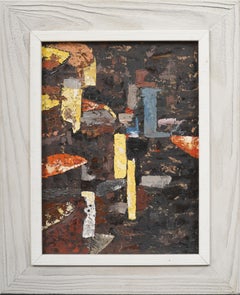
Antique American Abstract Expressionist Signed Vintage Original Oil Painting
Located in Buffalo, NY
Vintage modernist abstract expressionist painting. Oil on canvas. Housed in a period frame. Image size, 24L x 36H. Signed.
Category

Abstract Expressionist 1940s Paintings

Materials

Canvas, Oil

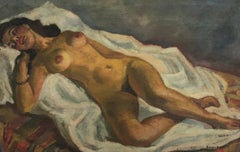
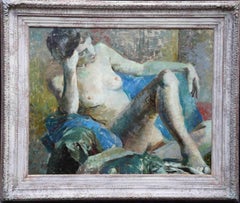
Reclining Nude, Modern Oil Painting by Paul Sieffert
Located in Long Island City, NY
Artist: Paul Sieffert, French (1874 - 1957) Title: Reclining Nude Year: circa 1940 Medium: Oil on Canvas, signed l.r. Size: 15 x 24 in. (38.1 x 60.96 cm) Frame Size: 18.5 x 27.5 inches
Category

Post-Impressionist 1940s Paintings

Materials

Oil

Antique San Martino Hills Naples Italy 1940's
Located in Douglas Manor, NY
#5-2879a San Martino Hill ,Naples Italy, a 1940's oil on canvas applied on board,displayed in a gilt wood frame.Signed by Ferrara
Category

1940s Paintings

Materials

Oil

St Pauls Chapel NYC
Located in Dallas, TX
Johann Berthelsen (Denmark, 1883- 1957) 'St. Paul's Chapel, NYC'. Oil on canvas board. Signed lower right. NY. Property from a New Jersey estate. Dimensions: 16" h x 12 " w. Fra...
Category

Aesthetic Movement 1940s Paintings

Materials

Oil

Bedroom Interior - French Mid 20th Century Post Impressionist Oil Painting
Located in Sevenoaks, GB
Beautiful 1940's French post impressionist oil on board by Simon Simon-Auguste. The work depicts a simple bedroom interior with shoes, candle and a single picture on the wall. Signed lower left and presented in a swept impressionist style frame. Provenance: Chilham Castle, Kent Artist: Simon Simon-Auguste (French, 1909-1987) Title: Bedroom Interior Medium: Oil on board Size: 25.5 x 30.5 inches (65 x 77 cm) including frame Simon Joseph Simon-Auguste (20 April 1909 – May 1987) was a French artist, known for his intimate paintings, mainly portraits, nudes and still lifes. His production is characterized by a calm, intimate feel, and the effective use of glaze. Born in Marseille, Simon-Auguste was the son of Antonin Auguste, a cabinetmaker specialized in restoring furniture in the chateaux of the Provence. Simon studied at the École communale of his neighborhood at rue Eydoux, in Marseille, where he excelled in design. In 1931 Simon-Auguste finished his studies at the École des Beaux-Arts and won the Stanislas-Torrents award. He was commissioned to execute the mural decorations of the town hall in Allauch. He began exhibiting in Marseille where doctors and lawyers purchased his paintings. In 1932 he invested into a 6-month stay in Paris where he frequented the Louvre Museum and became specially interested in the Camondo Collection. At the invitation of art dealer Adolphe Basler, he took part in the Moins de trente ans exhibition, at the Galerie de Sèvres, along with Jacques Despierre, André Hambourg, Louis Dideron, Léon Couturier, among others. He presented a nude, a still life, and a view of the Jardin du Luxembourg. He also started dealing with Georges Petit and the Galerie Vildrac. In 1933 Simon-Auguste had his first solo exhibition at the Galerie Detailles, at the Canebière in Marseille which contributed to his success. He displayed 40 pieces (paintings, watercolours and sketches), mostly nudes and genre scenes. In 1934 he married a philosophy student who would become a journalist under the pseudonym of Michele Seurière. For his second solo exhibition at the Galerie Detailles a few landscapes and marines were added to his portfolio. During the 1930s Simon-Auguste explored subjects around nudes and landscapes. Later these evolved into children, still lifes and locals, full of intimacy and simplicity, which gained him a lot of recognition. Among these, we find La fillette au bol and Tête d'Enfant, which were purchased by the Musée Longchamp, Marseille. It was 1939 when he could afford to move to Paris. The family settled at 38 rue de Malte and Simon-Auguste started submitting his work to the Salon d'Automne, Salon des Peintres Témoins de Leur Temps, and other major exhibitions. At the outbreak of World War II, he was on holiday in Auvergne. In 1940, he was mobilized. Within two months he had to retreat to Ussel, forced by his ill health. In 1941 he reconverted a rented farm there into his atelier. Simon-Auguste returned to Paris after the Liberation in 1944, to take part for the first time in the Nationale with La Fillette aux Pommes. Up to 1947 Simon-Auguste signed his paintings with fountain pen ink. Afterwards, he used brush oil. He spent some Summer holidays in Villiers-sur-Morin in the late 1940s. In 1949 he traveled around Italy: Rome, Florence, Siena, San-Giminiano, Venice, Milan. In 1950 he was appointed member at the Salon d’Automne. This year he submitted Le Café du Commerce to the Grand Prix de la Peinture Contemporaine, at the Marsan Pavilion (Louvre Museum). He was amongst the 100 painters selected by the jury. Also in 1950 the city of Paris acquired his Marine de La Rochelle. The Musée du Château de Sceaux acquired Paysage de l'Ille-de-France. The French state acquired La Fillette à la lampe in 1952, Nature morte aux Bleuets in 1953, and Comme un Poisson dans l’Eau in 1955. In 1951 he contributed to an itinerant exhibition around Switzerland (Bern, Lausanne and Geneva) about Les fleurs et les fruits...
Category

Post-Impressionist 1940s Paintings

Materials

Oil

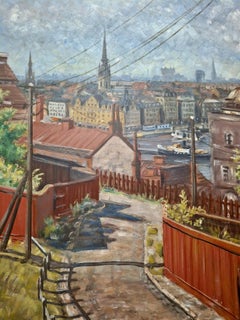
French IMPRESSIONIST Landscape WINTER Scene St. Nicholas Prague
By Alois Lecoque
Located in New York, NY
Alois Lecoque 1891-1981 St. Nicholas 18x24 inches image size 28x34 imches with frame oil on canvas Private collection NYC Charming Wintry landscape with aerial view of St Nicholas...
Category

Impressionist 1940s Paintings

Materials

Oil

Antique Chinese Junk Reverse Oil Painting on Glass 1940
Located in Douglas Manor, NY
5-3537 Reverse oil painting on glass with gilt detailing. Set in a gilt wood frame Image size 9.5x7.5"
Category

1940s Paintings

Materials

Oil

"Alaskan Pollock II"
Located in Detroit, MI
SALE ONE WEEK ONLY This painting of four different species of fish that can be found in South Korea is from the mid-20th century Korean artist Kim Kyung. Seafood from both the seas that surround the peninsula and from its rivers are an integral part of the livelihood and cuisine of Koreans. Kim Kyung (in Hanja, 金耕, in Hangul 김경) was born in South Korea, his real name, under the current Revised Romanization was Kim Gyeong-Eun (in Hanja 金萬斗, in Hangul 김경은). His name follows the East Asian convention of family name first, though some Western galleries choose to reorder his name with the Western convention as Kyung Kim. He was born in Hadong, Gyeongnam during the Imperial Japanese occupation, as the eldest son of a poor farm family, and at the age of 18 he entered the art department of Japan University. In 1943, he returned to his hometown to escape being drafted into the Japanese army...
Category

Modern 1940s Paintings

Materials

Canvas, Oil

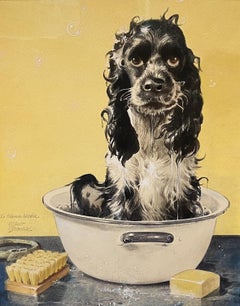
Penny Candy, The Saturday Evening Post Cover
Located in Fort Washington, PA
Signed Lower Right by Artist The Saturday Evening Post Cover, September 23, 1944 A proponent of simplicity as a virtue, Stevan Dohan...
Category

1940s Paintings

Materials

Oil, Tempera

Mid Century Sierra Mountain Lake Landscape
By Lillian Jackson Heath
Located in Soquel, CA
Sweeping mid-century landscape of a lake and snow-capped mountains by Lillian Josephine Heath (American, 1864-1961). A gigantic, snow-covered mountain dominates the upper portion of the composition, rising above the rest of the landscape. In the shadow of the mountain is a valley lake, filled with snowmelt, with several smaller mountains in between. Signed "Lillian Heath" lower left. Displayed in a giltwood frame. Image, 20.5"H x 28"L. Lillian Heath was one of the Jolly Daubers at the turn of the 19th-century and as a young student, married the senior artist and instructor, Frank Heath in Santa Cruz, California. Artists Frank and Lillian [Heath] by Margaret Koch [transcribed from Santa Cruz Public Library website]….Frank L. Heath courted Lillian Dake Storey during painting trips around Santa Cruz County back in the 1890s. Those were the years when Lillian was riding a saddle horse daily from Santa Cruz to the Powdermill where she taught school. Today [1974] the Powdermill is Paradise Park. Frank's actual proposal of marriage was delivered at Rocky Falls, a beautiful scenic place on Carbonero Creek. There he had constructed a painting platform with a perfect view of the rushing waters, and it was there that he asked Lillian in that formal day and age, to be his bride. Frank was nearly 40 years old at the time, and Lillian was about 32. She had always been interested in art and had talent to a large degree. She took a year's leave of absence from teaching school to travel alone to New York where she visited relatives and stayed to study china painting and the painting of miniatures which is an art in itself. ‘When I returned from New York I enrolled in the art classes of a Santa Cruz artist who was making a name for himself,’ she once said with a smile. The artist was Frank L. Heath, and that was the start of their romance, she told me in 1959. She accepted Frank's proposal at Rocky Falls. At the Heath home on Third Street, Beach Hill, Frank added a wing with a large studio workroom downstairs and several bedrooms upstairs. That was his wedding gift to his bride. ‘The Studio’ had a fireplace and big bay windows that looked out over the town of Santa Cruz and back to the mountains they both loved and painted many times. Lillian painted a set of tiles for the fireplace; they showed darting swallows in the clouds above a stream where song birds perched on tulles and water lilies floated. In 1897 Lillian and Frank were married in the First Methodist Church and they moved into the home on Beach Hill, a house she continued to live in for 64 years. Frank's father, Lucien Heath, was the first Secretary of State of Oregon. He came to Santa Cruz from Oregon in 1866 with his wife, Jane, and sons, Frank and Henry. A daughter, Lina, had died in Michigan where the Heaths lived before crossing the plains to Oregon in 1852. [?] In Santa Cruz Lucien Heath opened one of the early hardware stores on Pacific Avenue in partnership with John Byrne...
Category

American Impressionist 1940s Paintings

Materials

Canvas, Oil

Antique American Modernist New York Cityscape Pink Hotel Framed Oil Painting
Located in Buffalo, NY
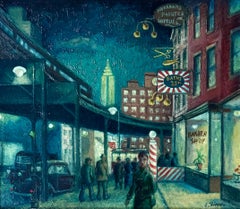
Impressive early American modernist cityscape oil painting. Framed. Oil on canvas. Image size, 30H by 26L.
Category

Modern 1940s Paintings

Materials

Canvas, Oil

Mid Century Surrealist Nocturnal Tide Hawaiian Islands God Symbolism Landscape
Located in Soquel, CA
Mid Century Surrealist Nocturnal Tide Hawaiian Islands God Symbolism Landscape Symbolic nocturnal landscape with tide God in foam of wave, in a dream-like surreal landscape, by Margu...
Category

Abstract Impressionist 1940s Paintings

Materials

Oil, Linen

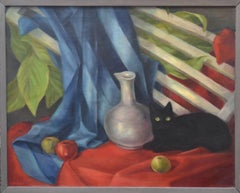
Mid Century Black Cat and Vase Still Life
By Joseph Tanous
Located in Soquel, CA
Charming mid century still life of fruit, vase and black cat by Monterey artist Joseph Tanous (American, b. 1925), c. 1940-50. Signed lower left corner. Presented in rustic painted w...
Category

American Impressionist 1940s Paintings

Materials

Canvas, Oil

A Vibrant 1940's Painting of a River in Vermont by Harold Haydon
Located in Chicago, IL
A vibrant summer landscape of a Vermont river by artist Harold Haydon in a gold-toned frame. Artwork size: 20" x 25". Framed size: 21 1/2" x 26 1/2". Estate stamped on reverse....
Category

American Modern 1940s Paintings

Materials

Oil, Canvas

Mid Century Colorado River Landscape
Located in Soquel, CA
Beautiful mid century impressionist landscape of Colorado River and hills by Wilfred A. Readio (American, 1895-1961), c.1940. Unsigned; purchased as part of collection of artist's wo...
Category

Tonalist 1940s Paintings

Materials

Masonite, Oil

1948 American Folk Art Watercolor, Gouache, Painting Horse Farm, Running Horses
Located in Surfside, FL
Cecilia "Peach" Taylor (Mrs Reginald B. Taylor) Folk Art watercolor painting of horses titled "White Horse Farm) painted in 1948 A classic example of self taught, American Folk Art d...
Category

Folk Art 1940s Paintings

Materials

Watercolor, Gouache

Ecole de Paris Mid 20th Century: Wartime Figures
Located in Cirencester, Gloucestershire
Paris: A Wartime Study of Figures Relaxing in Springtime by Henri Miloch (1898-1979) Unsigned watercolour, graphite and gouache painting on artist's paper, unframed Sheet: 12.25 x 9...
Category

Impressionist 1940s Paintings

Materials

Watercolor, Gouache, Graphite

Ribbons of Memory, surrealist composition by D Ollard
Located in London, GB
D Ollard Ribbons of Memory Gouache and photographic collage 20 x 26 cm Signed to reverse Provenance: The family of A. E. Halliwell Little is known about D Ollard other than the fac...
Category

1940s Paintings

Materials

Photographic Film, Gouache

Interesting Tropical Modernist Palm Tree Abstract Vintage Framed Oil Painting
Located in Buffalo, NY
Antique American modernist signed abstract tropical oil painting. Oil on board. Framed.
Category

Modern 1940s Paintings

Materials

Canvas, Oil

1940s Yorkshire, England Landscape of Whitby Abbey Ruins
Located in Soquel, CA
Striking and atmospheric painting of North Yorkshire’s Whitby Abbey ruins by Marguerite Louis Blasingame (American; 1906-1947), circa 1940-45. Whitby Abbe...
Category

Abstract Impressionist 1940s Paintings

Materials

Canvas, Oil

"Home Corral" Very early Wieghorst California Western Painting awesome colors
Located in San Antonio, TX
Olaf Wieghorst (1899 - 1988) California, New York, New Mexico, Arizona, Texas Artist Image Size: 20 x 24 Frame Size: 29.5 x 33 Medium: oil 1946 "Home Corral" California Olaf Wieghorst Without a doubt one of if not the most colorful Wieghorst paintings ever done. Signed lower left. Titled on verso. Dated on verso. In very nice condition. Has been professionally cleaned. Has very fine craquelure in the tree branches and a small spot below the horse that is really only visible if you are extremely close to the painting or with magnification. One of his finest paintings. Also please view my other Wieghorst from the same estate. I have included close up photos as well as photos taken in natural light, spot light and fluorescent lighting. Olaf Wieghorst (1899 - 1988) California, New York, New Mexico, Arizona, Texas Artist Image Size: 20 x 24 Frame Size: 29.5 x 33 Medium: oil "Home Corral" Dated 1946 Biography Olaf Wieghorst (1899 - 1988) Born in Viborg, Denmark, Olaf Wieghorst was a child acrobatic performer from the age of nine when he began appearances at Tivoli Theater in Copenhagen and later toured Europe. He also learned horseback riding working on a stock farm, and horses became a major focus of his admiration and later his painting. In 1918, he arrived in the United States, having worked as a cabin boy on a steamer. He served in the 5th U.S. Cavalry on the Mexican border in the days of Pancho Villa. He later recalled a favorite horse from that period and said that riding through El Paso in 1921, the horse fell on his ankle and broke it. The outfit was heading to Douglas, Arizona, and not wanting to be left behind with his injury, he stayed on the horse which carried him all the way through the New Mexico desert on one of the hottest days of the year. The horse died during the night, having expended all his energy on saving Wieghorst. He later wrote that when the Cavalry discarded the use of horses, "they took the soul out of that great branch of the service" ("Widening Horizons"). He wandered extensively through the West sometimes on horseback, finding work in Arizona and New Mexico as a cowboy. Then he went to New York and served as a mounted policeman until 1944, spending most of his time on a horse named Rhombo patrolling the Central Park bridle paths and saving many people injury from runaway horses. He began painting in his spare time, and he was successful enough that his work was represented by the Grand Central Art Galleries of the Biltmore Hotel. In 1944, he settled in El Cajon, California. His paintings include cowboys, horses, and Indians in landscape, but there is little if any collectible art of his done during his early days in the West. His primary output came after his return to California when he began painting cowboys and horses extensively. He did numerous horse portraits, spending time on ranches studying their unique personalities. He painted celebrity horses including Roy Rogers' Trigger, Gene Autry's Champion and Tom Morgan's stallion. He was a large, powerful, handsome, and very personable man. Source: Kathleen Wade Olaf Carl Wieghorst (1899-1988) He arrived in the U.S. in 1918, joining the U.S. Cavalry, & patrolled the Mexico border in New Mexico & Arizona . When he mustered out of the army, he drifted, ending up as a wrangler on the Cunningham Ranch near Alma, New Mexico. By the mid-twenties, Wieghorst was in New York City, working as a mounted policeman - his relationships with the many horses that were a part of his life became the common denominator of his paintings. Living in California by the end of WWII, he began a career that spiraled to success, in part due to his engaging personality. His paintings have appeared in numerous solo & retrospective exhibitions including the National Cowboy & Western Heritage Museum, Oklahoma City (1974), The Tucson Museum of Art, Arizona (1981), & the San Diego Historical Society, California (2002). His work was the subject of the 1970 biography, "Olaf Wieghorst" by William Reed...
Category

Impressionist 1940s Paintings

Materials

Oil

Large Antique American Signed Abstract Sandy Beach Scene Framed Oil Painting
Located in Buffalo, NY
Very nicely painted mid century abstract beach scene. Oil on canvas. Signed illegibly. Framed elegantly.
Category

Abstract 1940s Paintings

Materials

Canvas, Oil

Quebec in winter
Located in Westmount, QC
Graham Noble Norwell, Canadian, 1901-1967 Saguenay, circa 1949 watercolour on paper 21 x 28 in (sight) Signed lower right framed
Category

1940s Paintings

Materials

Pastel, Watercolor

Surrealist Nocturnal Hawaiian Figurative Landscape w. Blue Skirted Woman & Moon
Located in Soquel, CA
Surrealist Nocturnal Hawaiian Figurative Landscape w. Blue Skirted Woman & Moon by Marguerite Louis Blasingame Striking mid century modern Hawaiian noct...
Category

Surrealist 1940s Paintings

Materials

Linen, Oil

Vintage Art Deco Abstract Spot Light Aeronautical Framed Landscape Painting
Located in Buffalo, NY
Antique American modernist signed abstract oil painting. Oil on canvas. Signed. Framed.
Category

Abstract 1940s Paintings

Materials

Canvas, Oil

Antique Horse Drawn Sleigh Ride
By J.A. Waine
Located in Douglas Manor, NY
5-3288 Oil on board set in a gilt wood frame Image size 19.5x15.5"
Category

1940s Paintings

Materials

Oil

The Red-haired Woman
Located in Saint Amans des cots, FR
Oil on canvas by Louis BERTHOMME SAINT-ANDRE, France, 1940s. Young Red-haired Woman. with frame: 74x63 cm - 29.1x24.8 inches ; without frame: 61x50 cm - 24x19.7 inches. Format 12F. ...
Category

Neo-Expressionist 1940s Paintings

Materials

Canvas, Oil

Reclining Nude - Industrial Scene Verso - Scottish 1940's portrait oil painting
Located in Hagley, England
This interesting British 1940's oil painting is attributed to Harry Jefferson Barnes. Barnes trained at the Slade School of Art and later went on to become Director of the Glasgow Sc...
Category

Impressionist 1940s Paintings

Materials

Oil

Marternity
Located in Geneva, CH
Artist born in Vienna, Austria in 1887. Died in 1970 in Geneva. Work on canvas
Category

Modern 1940s Paintings

Materials

Oil

Ex-Voto, Retablo, Painting on Metal, Mexico , Our Lady of the Cave, Folk Art
Located in Houston, TX
This retablo was purchased by the gallery in Mexico City. I knew the family that sold this retablo to me. The writing says" August 8,1944,I give thanks...
Category

Folk Art 1940s Paintings

Materials

Metal

Antique American School New York City Modernist Central Park View Oil Painting
Located in Buffalo, NY
Impressive early American modernist central park, new york city oil painting. Framed. Oil on canvasboard . Image size, 18H by 24L.
Category

Modern 1940s Paintings

Materials

Canvas, Oil

'Sketching Wisconsin' original oil painting, Signed
Located in Milwaukee, WI
John Steuart Curry "Sketching Wisconsin," 1946 oil on canvas 31.13 x 28 inches, canvas 39.75 x 36.75 x 2.5 inches, frame Signed and dated lower right Overall excellent condition Presented in a 24-karat gold leaf hand-carved wood frame John Steuart Curry (1897-1946) was an American regionalist painter active during the Great Depression and into World War II. He was born in Kansas on his family’s farm but went on to study art in Chicago, Paris and New York as young man. In Paris, he was exposed to the work of masters such as Peter Paul Rubens, Eugène Delacroix and Jacques-Louis David. As he matured, his work showed the influence of these masters, especially in his compositional decisions. Like the two other Midwestern regionalist artists that are most often grouped with him, Grant Wood (American, 1891-1942) and Thomas Hart Benton (American, 1889-1975), Curry was interested in representational works containing distinctly American subject matter. This was contrary to the popular art at the time, which was moving closer and closer to abstraction and individual expression. Sketching Wisconsin is an oil painting completed in 1946, the last year of John Steuart Curry’s life, during which time he was the artist-in-residence at the University of Wisconsin in Madison. The painting is significant in Curry’s body of work both as a very revealing self-portrait, and as a landscape that clearly and sensitively depicts the scenery of southern Wisconsin near Madison. It is also a portrait of the artist’s second wife, Kathleen Gould Curry, and is unique in that it contains a ‘picture within a picture,’ a compositional element that many early painting masters used to draw the eye of the viewer. This particular artwork adds a new twist to this theme: Curry’s wife is creating essentially the same painting the viewer is looking at when viewing Sketching Wisconsin. The triangular composition of the figures in the foreground immediately brings focus to a younger Curry, whose head penetrates the horizon line and whose gaze looks out towards the viewer. The eye then moves down to Mrs. Curry, who, seated on a folding stool and with her hand raised to paint the canvas on the easel before her, anchors the triangular composition. The shape is repeated in the legs of the stool and the easel. Behind the two figures, stripes of furrowed fields fall away gently down the hillside to a farmstead and small lake below. Beyond the lake, patches of field and forest rise and fall into the distance, and eventually give way to blue hills. Here, Curry has subverted the traditional artist’s self-portrait by portraying himself as a farmer first and an artist second. He rejects what he sees as an elitist art world of the East Coast and Europe. In this self-portrait he depicts himself without any pretense or the instruments of his profession and with a red tractor standing in the field behind him as if he was taking a break from the field work. Here, Curry’s wife symbolizes John Steuart Curry’s identity as an artist. Compared with a self-portrait of the artist completed a decade earlier, this work shows a marked departure from how the artist previously presented and viewed himself. In the earlier portrait, Curry depicted himself in the studio with brushes in hand, and with some of his more recognizable and successful canvases behind him. But in Sketching Wisconsin, Curry has taken himself out of the studio and into the field, indicating a shift in the artist’s self-conception. Sketching Wisconsin’s rural subject also expresses Curry’s populist ideals, that art could be relevant to anyone. This followed the broad educational objectives of UW’s artist-in-residence program. Curry was appointed to his position at the University of Wisconsin in 1937 and was the first person to hold any such position in the country, the purpose of which was to serve as an educational resource to the people of the state. He embraced his role at the University with zeal and not only opened the doors of his campus studio in the School of Agriculture to the community, but also spent a great deal of time traveling around the state of Wisconsin to visit rural artists who could benefit from his expertise. It was during his ten years in the program that Curry was able to put into practice his belief that art should be meaningful to the rural populace. However, during this time he also struggled with public criticism, as the dominant forces of the art market were moving away from representation. Perhaps it was Curry’s desire for public acceptance during the latter part of his career that caused him to portray himself as an Everyman in Sketching Wisconsin. Beyond its importance as a portrait of the artist, Sketching Wisconsin is also a detailed and sensitive landscape that shows us Curry’s deep personal connection to his environment. The landscape here can be compared to Wisconsin Landscape of 1938-39 (the Metropolitan Museum of Art), which presents a similar tableau of rolling hills with a patchwork of fields. Like Wisconsin Landscape, this is an incredibly detailed and expressive depiction of a place close to the artist’s heart. This expressive landscape is certainly the result of many hours spent sketching people, animals, weather conditions and topography of Wisconsin as Curry traveled around the state. The backdrop of undulating hills and the sweeping horizon, and the emotions evoked by it, are emphatically recognizable as the ‘driftless’ area of south-central Wisconsin. But while the Metropolitan’s Wisconsin Landscape conveys a sense of uncertainty or foreboding with its dramatic spring cloudscape and alternating bands of light and dark, Sketching Wisconsin has a warm and reflective mood. The colors of the foliage indicate that it is late summer and Curry seems to look out at the viewer approvingly, as if satisfied with the fertile ground surrounding him. The landscape in Sketching Wisconsin is also revealing of what became one of Curry’s passions while artist-in-residence at UW’s School of Agriculture – soil conservation. When Curry was a child in Kansas, he saw his father almost lose his farm and its soil to the erosion of The Dust Bowl. Therefore, he was very enthusiastic about ideas from UW’s School of Agriculture on soil conservation methods being used on Wisconsin farms. In Sketching Wisconsin, we see evidence of crop rotation methods in the terraced stripes of fields leading down the hillside away from the Curry’s and in how they alternate between cultivated and fallow fields. Overall, Sketching Wisconsin has a warm, reflective, and comfortably pastoral atmosphere, and the perceived shift in Curry’s self-image that is evident in the portrait is a positive one. After his rise to favor in the art world in the 1930’s, and then rejection from it due to the strong beliefs presented in his art, Curry is satisfied and proud to be farmer in this self-portrait. Curry suffered from high blood...
Category

American Realist 1940s Paintings

Materials

Canvas, Oil

'Bouquet de Fleurs' Impressionist Still Life of Flowers, Signed Oil Painting
Located in Cirencester, Gloucestershire
'Bouquet de Fleurs' Impressionist Still Life of Flowers, Signed Oil Painting By artist, Degerna, Mid 20th Century Signed and dated '1949' by the artist on the lower right hand corner...
Category

Impressionist 1940s Paintings

Materials

Oil

A Beautiful Modern Figure Painting, Two Bathers in a Boathouse by Francis Chapin
Located in Chicago, IL
A beautiful Modern figure painting of two bathers in a boathouse by noted Chicago Modern artist, Francis Chapin (Am. 1899-1965). Painted at the Ox-Bow School of Saugatuck, Michigan ...
Category

American Modern 1940s Paintings

Materials

Masonite, Oil

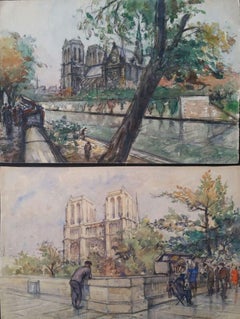
Notre Dame Cathedral and Ile Saint Louis Oil on Canvas Painting by Paul Lambert
Located in Atlanta, GA
A unique oil painting on canvas signed by Paul Lambert (1910–1970), a renowned French artist celebrated for his evocative portrayals of Parisian landscapes. This rare piece exemplifi...
Category

Post-Impressionist 1940s Paintings

Materials

Canvas, Oil

Mid Century Oil Landscape of Santa Clara Valley Before Silicon Valley
Located in Soquel, CA
Mid Century Oil Landscape of Santa Clara Valley Before Silicon Valley 1947 Original oil painting depicting a landscape of Santa Clara Valley orchards, prior to the Silicon Valley bo...
Category

American Modern 1940s Paintings

Materials

Canvas, Oil

Antique American Impressionist Maui Coastal Hawaiian Beach Scene Framed Painting
Located in Buffalo, NY
Rare Hawaiian landscape of coastal Maui. Oil on canvas. Framed. Signed. Oil on canvas. Image size, 20"H x 24"L.
Category

Impressionist 1940s Paintings

Materials

Canvas, Oil

Portrait of a Man Smoking a Pipe in Oil on Masonite
Located in Soquel, CA
Portrait of a Man Smoking a Pipe in Oil on Masonite Detailed portrait of a man with a pipe by Heinz Robert Schubert (German, 1912-2001 approx.). A man wearing a short-brimmed hat is...
Category

Realist 1940s Paintings

Materials

Masonite, Oil

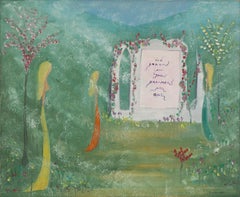
Hawaiian Symbolism Flowering Tree and Acolytes Symbolism Landscape
Located in Soquel, CA
Hawaiian Symbolism Flowering Tree and Acolytes Symbolism Landscape Symbolic landscape with four figures worshiping flowering tree by Marguerite Louis Blasingame (American; 1906-1947)...
Category

Surrealist 1940s Paintings

Materials

Linen, Oil

Mid Century Autumn Valley Landscape
Located in Soquel, CA
Charming mid century folk art painting of an autumn valley by Farris (American, 20th Century)Signed "Farris" lower left. Tag on verso from Ohio frame shop ...
Category

American Impressionist 1940s Paintings

Materials

Canvas, Oil, Cardboard

Saint-Germain-des-Prés. 1946. Oil on canvas, 73x92 cm
Located in Riga, LV
Saint-Germain-des-Prés. 1946. Oil on canvas, 73x92 cm
Category

Impressionist 1940s Paintings

Materials

Canvas, Oil

" D'apres Delacroix" Impressionist Portrait, Signed Oil Painting
Located in Cirencester, Gloucestershire
"D'apres Delacroix" Impressionist Portrait, Signed Oil Painting By French artist Claude Benard, (1926 - 2016) Signed and dated '47 by the artist on the lower left hand corner Oil pai...
Category

Impressionist 1940s Paintings

Materials

Oil

1940s WPA-Era Abstract Watercolor of Golden Cycle Mill by Charles Ragland Bunnel
Located in Denver, CO
This original 1940s grayscale watercolor by Charles Ragland Bunnell captures a semi-abstracted view of the Golden Cycle Mill in Colorado Springs, Colorado. Rendered in subtle blacks and grays, this striking WPA-era landscape melds industrial subject matter with a modernist aesthetic. The piece exemplifies mid-20th-century American regionalism, blending expressive abstraction with historical significance. The painting measures 8 1/8 x 9 5/8 inches (sight size) and is showcased in a custom black frame measuring 18 x 19 ½ x 1 ⅜ inches, making it an elegant addition to any collection of American art or industrial landscapes. The Golden Cycle Mining and Reduction Company was a vital part of Colorado’s early 20th-century mining boom, located in what is now Old Colorado City. Bunnell’s work documents this industrial heritage through a modernist lens, offering a unique narrative of regional development. About the Artist: Charles Ragland Bunnell (1897–1968) was a key figure in Colorado’s art scene and a pioneer of American Modernism and abstraction. Trained at Broadmoor Art Academy, he combined American Scene painting with abstract forms. Bunnell contributed to New Deal art...
Category

American Modern 1940s Paintings

Materials

Watercolor

"There's Two Kinds of Heroes" Story Illustration, Saturday Evening Post
Located in Fort Washington, PA
Medium: Gouache on Paper Dimensions: 19.50" x 21.00" Signature: Signed Lower Right "There's Two Kinds of Heroes," by Maurice Beam and illustrated by Peter Helck for the Saturday Eve...
Category

1940s Paintings

Materials

Gouache, Paper

Recently Viewed

View All