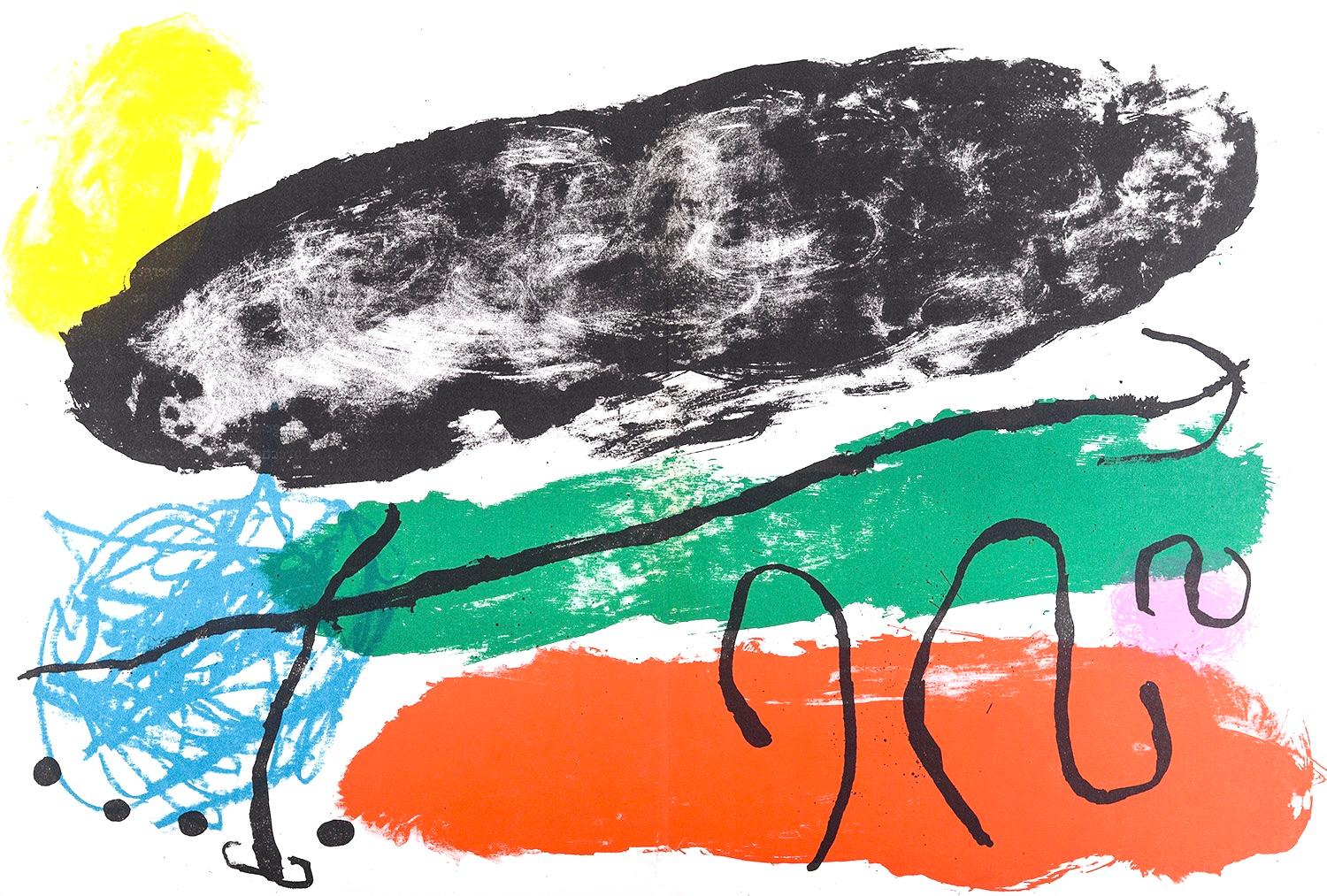
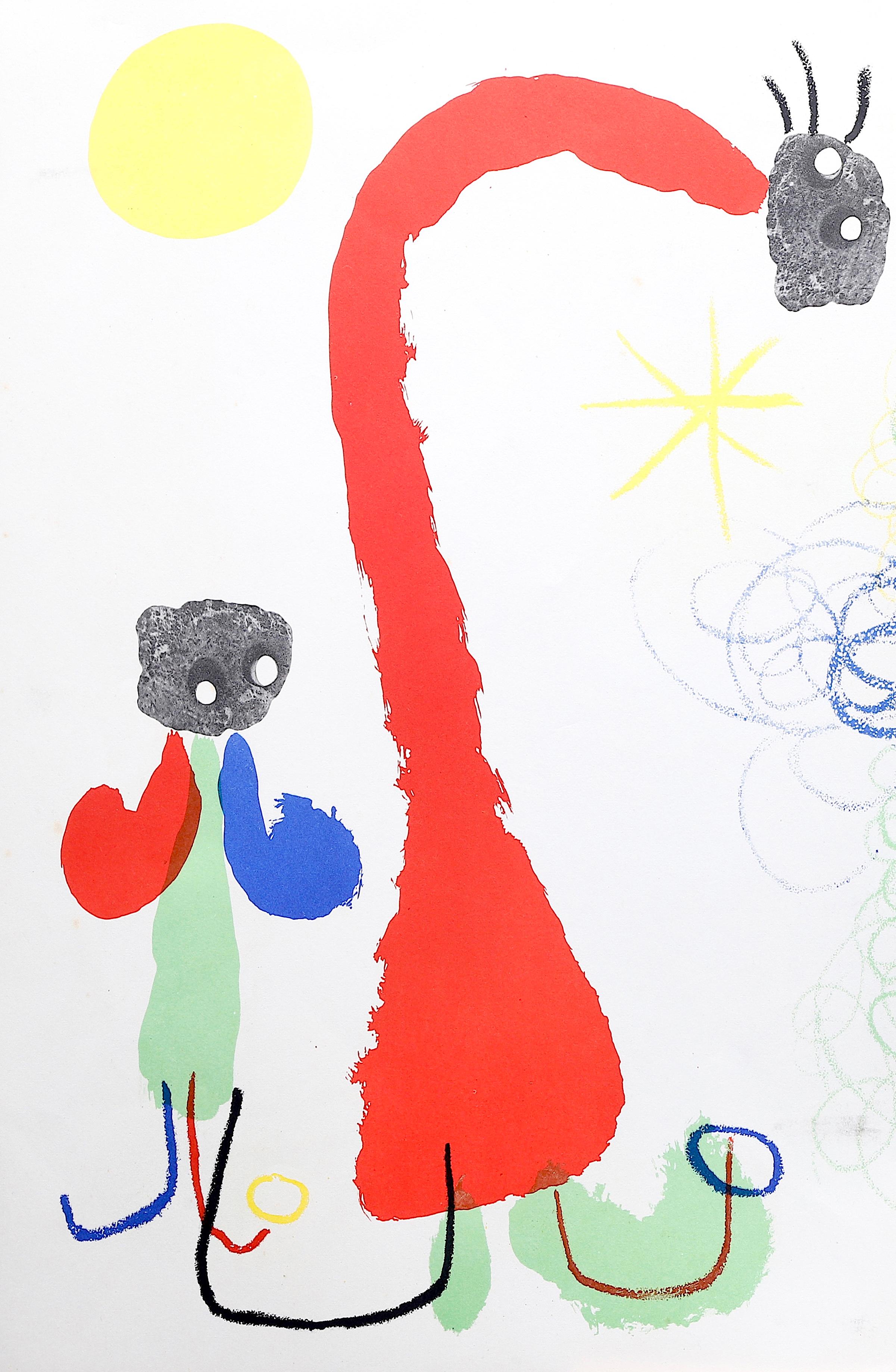
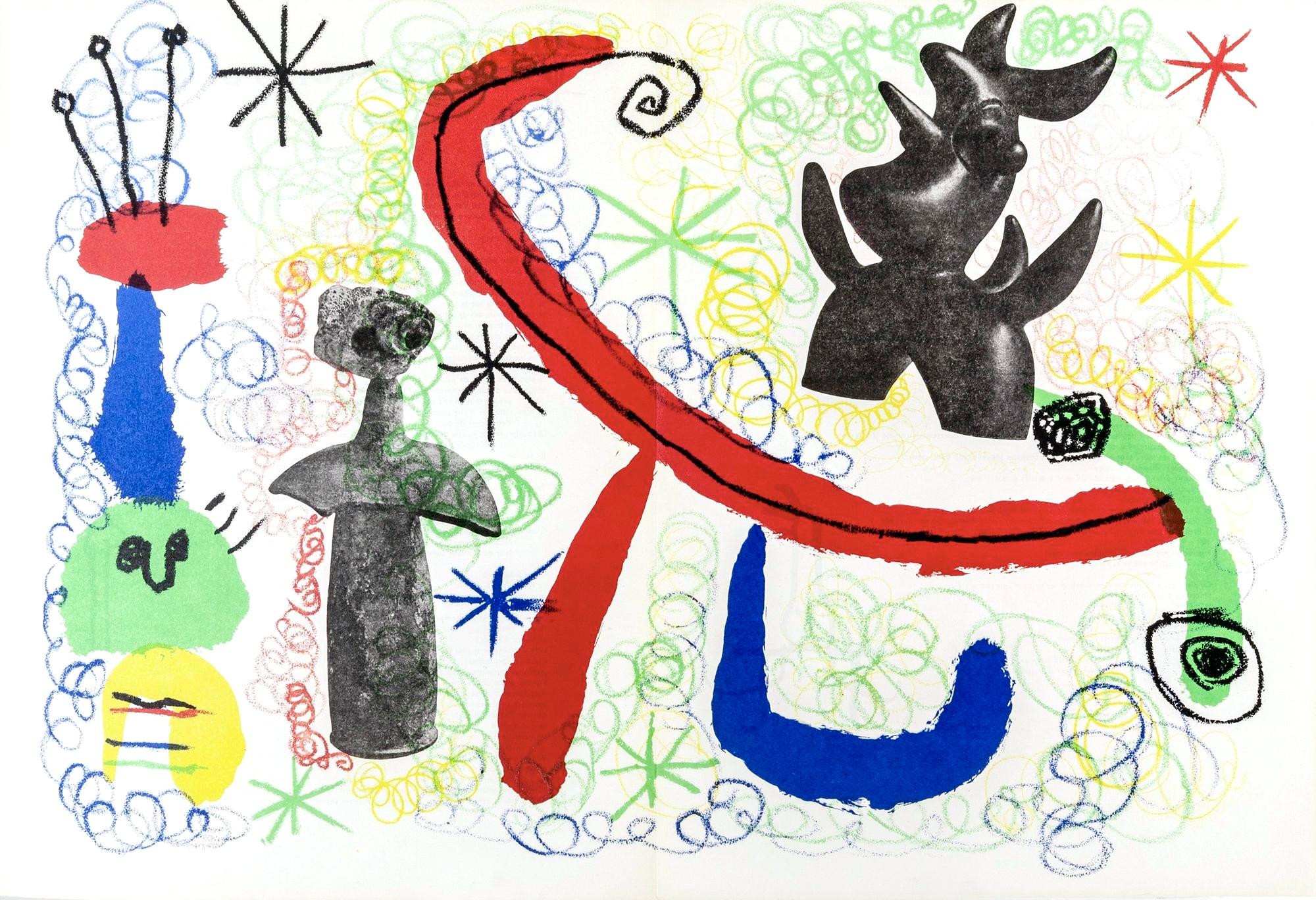
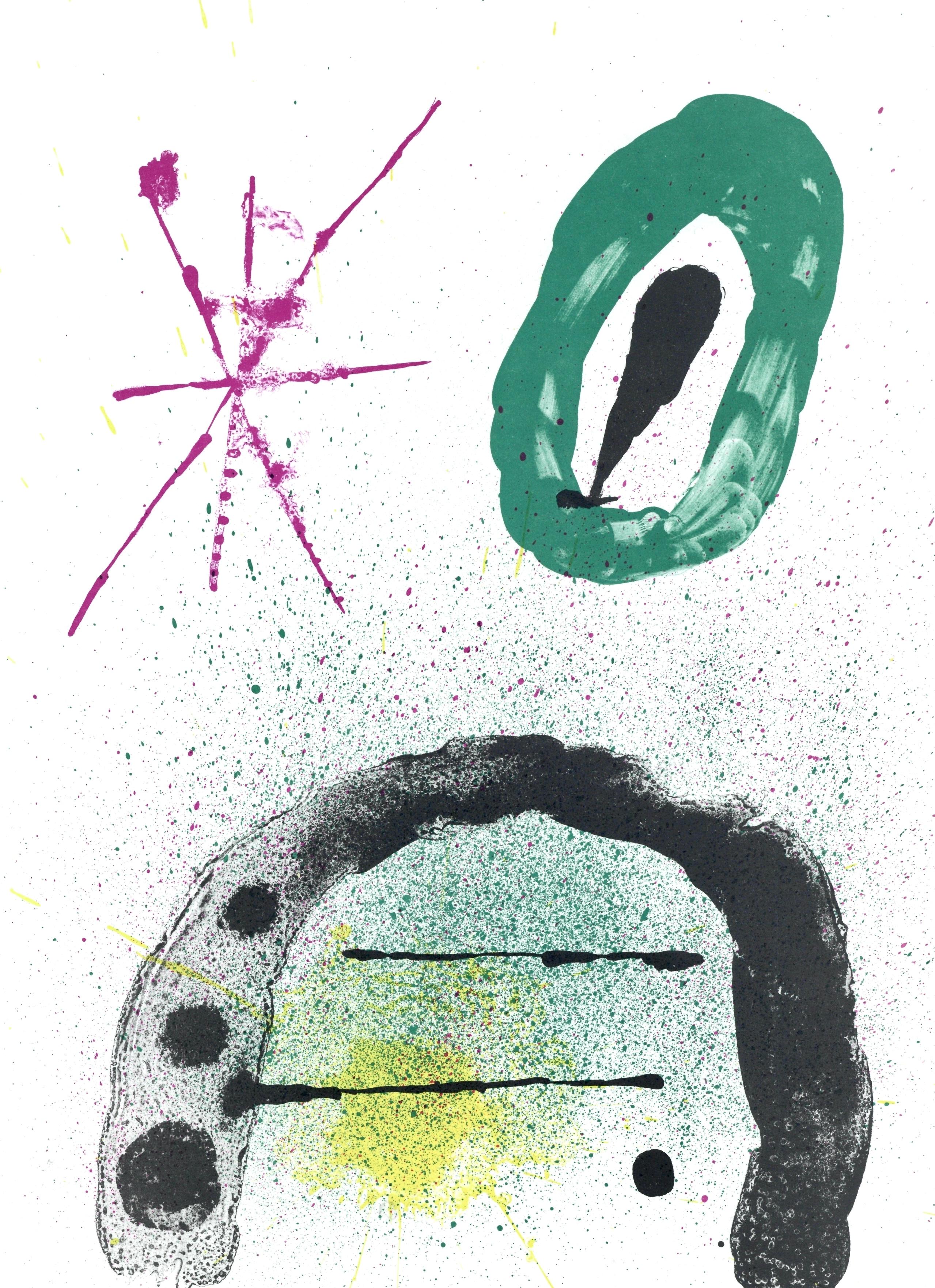
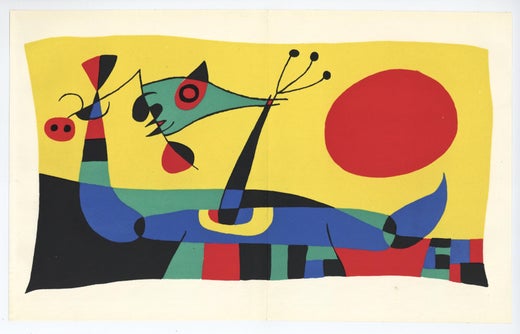
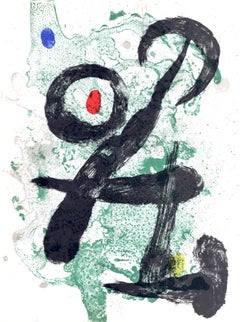
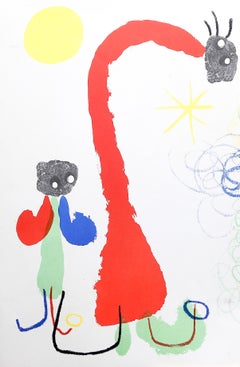
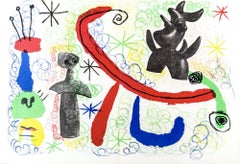
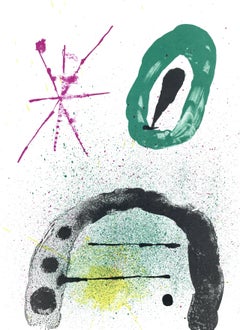
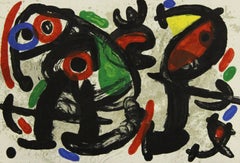
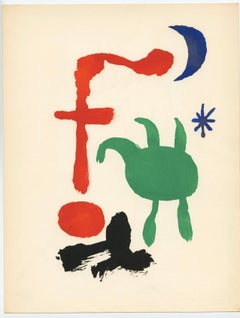
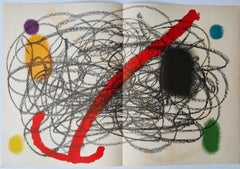
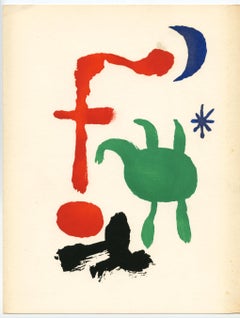
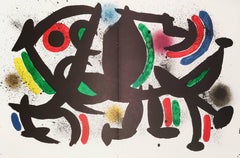
This exquisite lithograph by Joan Miro (1893–1983), titled L'Astre Patagon (The Patagonian Star), originates from the 1960 folio Derriere le Miroir, No. 119, Poetes, peintres, sculpteurs (Poets, Painters, Sculptors), published by Maeght Editeur, Paris, under the direction of Aime Maeght, and printed by Mourlot Freres, Paris. L'Astre Patagon embodies Miro's signature dreamlike abstraction—an interplay of cosmic forms, floating symbols, and lyrical color. This composition radiates the artist’s boundless imagination and his poetic dialogue between the material and the celestial.
Executed on velin paper, this lithograph measures 15 x 22 inches (38.1 x 55.9 cm), with centerfold, as issued. Unsigned and unnumbered, as issued. The edition reflects the exceptional quality and craftsmanship of the Maeght and Mourlot collaborations, capturing Miro’s visual rhythm and surreal energy in a strikingly balanced composition.
Artwork Details:
Artist: Joan Miro (1893–1983)
Title: L'Astre Patagon (The Patagonian Star), from Derriere le Miroir, No. 119, Poetes, peintres, sculpteurs (Poets, Painters, Sculptors), 1960
Medium: Lithograph on velin paper
Dimensions: 15 x 22 inches (38.1 x 55.9 cm), with centerfold, as issued
Inscription: Unsigned and unnumbered, as issued
Date: 1960
Publisher: Maeght Editeur, Paris
Printer: Mourlot Freres, Paris
Catalogue raisonne references: Cramer, Patrick, and Joan Miro. Joan Miro, Catalogue Raisonne des Livres Illustres. P. Cramer, 1989, illustration 62. Miro, Joan. Joan Miro, Lithographe / II, 1953–1963. Preface by Raymond Queneau. Maeght, 1975, illustration 265
Condition: Well preserved, consistent with age and medium
Provenance: From the 1960 folio Derriere le Miroir, No. 119, Poetes, peintres, sculpteurs (Poets, Painters, Sculptors), published by Maeght Editeur, Paris
About the Publication:
Derriere le Miroir (translated as "Behind the Mirror") was an iconic French art periodical published from 1946 to 1982 by Maeght Editeur, one of the most influential art publishers of the 20th century. Founded by Aime Maeght in Paris, the publication was conceived as a visual and literary collaboration between leading modern artists, poets, and critics. Each issue functioned as both an exhibition catalogue and a work of art in itself—featuring original lithographs printed directly from the artists' stones or plates, alongside essays, poems, and critical commentary. Over the course of 36 years, Derriere le Miroir produced more than 250 issues and showcased an extraordinary roster of artists including Henri Matisse, Marc Chagall, Joan Miro, Georges Braque, Alexander Calder, Fernand Leger, Pierre Bonnard, Alberto Giacometti, Eduardo Chillida, Ellsworth Kelly, Francis Bacon, Paul Rebeyrolle, Claude Garache, Antoni Tapies, Bram van Velde, Pierre Alechinsky, Pol Bury, Shusaku Arakawa, and Gerard Titus-Carmel. Printed in the ateliers of Mourlot, Arte, and Imprimerie Moderne du Lion, the periodical set new standards for quality in color lithography, combining fine art printing with elegant typography and poetic text. Beyond its visual brilliance, Derriere le Miroir also became a cultural chronicle of postwar European modernism. Each issue coincided with exhibitions held at Galerie Maeght, providing a collectible and widely accessible record of groundbreaking shows. Its integration of image, text, and philosophy created a dialogue between art and literature that elevated the modern art book to new aesthetic heights. Today, Derriere le Miroir remains one of the most sought-after and historically significant art publications, prized by collectors and scholars alike for its craftsmanship, influence, and its role in defining the visual language of 20th-century modernism. The Maeght Foundation in Saint-Paul-de-Vence continues to honor this legacy through exhibitions and archival preservation of the series, affirming Derriere le Miroir's enduring place in the history of modern art and fine art publishing.
About the Artist:
Joan Miro (1893–1983) was a Catalan painter, sculptor, and ceramicist whose imaginative, dreamlike vision helped spearhead the Surrealist movement and left an indelible mark on modern art. Born in Barcelona and deeply rooted in Catalan culture, Miro moved to Paris in the early 1920s where his playful shapes, cosmic motifs, and childlike yet sophisticated abstractions broke new ground alongside the great innovators of his time. His artistic dialogue aligned with contemporaries such as Pablo Picasso, Henri Matisse, Alexander Calder, Marc Chagall, Salvador Dali, Jackson Pollock, Georges Braque, Wassily Kandinsky, Marcel Duchamp, and Man Ray, each of whom challenged the conventions of form, color, and symbolism. Miro distilled these ideas into a uniquely poetic visual vocabulary—birds, stars, and bold spectral forms emerging from flat planes of color—that has inspired scores of artists and continues to influence modern and contemporary masters including Banksy, Damien Hirst, Jeff Koons, Andy Warhol, and Jasper Johns. His works are represented in leading museums worldwide, including MoMA, the Guggenheim, the Tate, and the Centre Pompidou, and remain highly sought after by collectors. The highest price ever paid for a Joan Miro artwork is approximately $37.06 million USD, achieved in June 2012 at Sotheby’s London for Peinture (Etoile Bleue) (1927).
Joan Miro L'Astre Patagon, Miro Derriere le Miroir, Miro Maeght Editeur Paris, Miro Mourlot Freres,
Miro 1960...