20th Century Abstract Prints

to
3,708
4,673
2,415
4,903
1,824
919
Overall Width
to
Overall Height
to
6,112
2,173
1,321
1,265
803
352
333
202
81
25
10
8
6
708
283
245
182
166
13
90
6,737
6
24
156
179
404
1,164
2,692
5,002
2,150
1,208
5
9,422
4,557
699
213
178
89
51
46
45
39
36
35
32
32
32
31
31
27
21
21
20
17
16
7,554
3,129
2,128
1,342
805
2,071
4,180
10,093
4,001
Period: 20th Century
Leonor Fini, Untitled, from Satiricon, 1970

Leonor Fini, Untitled, from Satiricon, 1970

By Leonor Fini

Located in Southampton, NY

This exquisite lithograph by Leonor Fini (1907–1996), titled Sans titre (Untitled), from the album Satiricon, originates from the 1970 edition published by Ariane Lancell, Editeur, P...

Category

Surrealist 20th Century Abstract Prints

Materials

Lithograph

Marc Chagall, Paradise I, from Drawings for the Bible, 1960

Marc Chagall, Paradise I, from Drawings for the Bible, 1960

By Marc Chagall

Located in Southampton, NY

This exquisite lithograph by Marc Chagall (1887–1985), titled Paradise I (Paradise I), from Marc Chagall, Dessins Pour La Bible (Drawings for the Bible), Verve: Revue Artistique et Litteraire, Vol. X, No. 37-38, originates from the July 29, 1960 issue published by Editions de la revue Verve, Paris, under the direction of Teriade, Editeur, Paris, and printed by Mourlot Freres, Paris, 1960. This visionary composition reflects Chagall’s poetic interpretation of the biblical paradise, evoking a realm of harmony, innocence, and divine presence through his luminous color and dreamlike symbolism. The flowing forms and radiant imagery convey a sense of spiritual unity and transcendence, capturing the timeless serenity and mystical beauty of Eden within Chagall’s distinctive visual language. Infused with movement and lyricism, the work transforms sacred narrative into a meditative vision of paradise and the enduring connection between humanity and the divine. The piece forms part of Chagall’s celebrated series of lithographs and drawings created for Dessins Pour La Bible, a monumental project uniting art, scripture, and mysticism in one of the artist’s most important achievements. Executed as a lithograph on velin du Marais paper, this work measures 14 x 10.5 inches (35.56 x 26.67 cm). Unsigned and unnumbered as issued. The edition exemplifies the superb craftsmanship of the Mourlot Freres atelier, renowned for its collaborations with the greatest modern masters of the 20th century. Artwork Details: Artist: Marc Chagall (1887–1985) Title: Paradise I (Paradise I), from Marc Chagall, Dessins Pour La Bible (Drawings for the Bible), Verve: Revue Artistique et Litteraire, Vol. X, No. 37-38, July 29, 1960 Medium: Lithograph on velin du Marais paper Dimensions: 14 x 10.5 inches (35.56 x 26.67 cm) Inscription: Unsigned and unnumbered as issued Date: 1960 Publisher: Editions de la revue Verve, Paris, under the direction of Teriade, Editeur, Paris Printer: Mourlot Freres, Paris Catalogue raisonne references: Chagall, Marc, et al. Chagall Lithographe. Andre Sauret, 1960-1986, illustration 230-276. Cramer, Patrick, and Meret Meyer. Marc Chagall: Catalogue Raisonne des Livres Illustres. P. Cramer ed., 1995, illustration 42. Condition: Well preserved, consistent with age and medium Provenance: From Marc Chagall, Dessins Pour La Bible (Drawings for the Bible), Verve: Revue Artistique et Litteraire, Vol. X, No. 37-38, published by Editions de la revue Verve, Paris, 1960 Notes: Excerpted from the folio (translated from French), This double issue of Verve includes the drawings that Marc Chagall executed in 1958 and 1959 on biblical themes that he had not generally dealt with in his illustration for the Bible, engraved with etching and which were included in issue 33/34 of Verve. This album has 96 renderings in black and 24 color litbographies as well as the cover that were specially made for this album. It was completed printing on July 29, 1960 by Draeger Freres for black gravures and by Mourlot Freres for color lithography. About the Publication: Marc Chagall, Dessins Pour La Bible (Drawings for the Bible), published as Verve Vol. X, No. 37-38 on July 29, 1960, represents a significant continuation and expansion of Chagall’s profound engagement with biblical imagery and spiritual narrative. Conceived and directed by the visionary publisher Teriade, the publication builds upon the earlier Verve issue devoted to Chagall’s Bible illustrations by presenting a new body of work executed in 1958 and 1959, exploring themes and episodes that had not been fully addressed in the initial series. Printed in Paris by Draeger Freres for black gravures and Mourlot Freres for color lithography, the edition demonstrates an exceptional level of technical refinement and artistic collaboration. The publication includes an extensive suite of ninety six black reproductions and twenty four color lithographs, as well as specially created cover imagery, reflecting Chagall’s continued innovation in translating sacred themes into graphic form. As part of the broader tradition of Verve, one of the most important artistic and literary publications of the twentieth century, this issue exemplifies the fusion of text, image, and craftsmanship at the highest level. Today, Verve Vol. X, No. 37-38 stands as a major achievement within Chagall’s graphic oeuvre, reaffirming his role as one of the foremost interpreters of biblical narrative in modern art. About the Artist: Marc Chagall (1887–1985) was a Belarus-born French painter, printmaker, and designer whose visionary imagination, radiant color, and deeply poetic symbolism made him one of the most beloved and influential artists of the 20th century. Rooted in the imagery of his Jewish heritage and the memories of his childhood in Vitebsk, Chagall’s art wove together themes of faith, love, folklore, and fantasy with a dreamlike modern sensibility. His unique style merging elements of Cubism, Fauvism, Expressionism, and Surrealism defied categorization, transforming ordinary scenes into lyrical meditations on memory and emotion. Influenced by Russian icon painting, medieval religious art, and the modern innovations of artists such as Pablo Picasso, Henri Matisse, and Georges Braque, Chagall developed a profoundly personal visual language filled with floating figures, vibrant animals, musicians, and lovers that symbolized the transcendent power of imagination and love. During his early years in Paris, he became an integral part of the Ecole de Paris circle, forming friendships with Amedeo Modigliani, Fernand Leger, and Sonia Delaunay, and his creative spirit resonated with that of his peers and successors Alexander Calder, Alberto Giacometti, Salvador Dali, Joan Miro, Wassily Kandinsky, Marcel Duchamp, and Man Ray, artists who sought to push the boundaries of perception, emotion, and form. Over a prolific career that spanned painting, printmaking, stained glass, ceramics, and stage design, Chagall brought an unparalleled poetic sensibility to modern art, infusing even the most abstract subjects with human warmth and spiritual depth. His works are held in the most prestigious museums around the world, including the Museum of Modern Art, the Centre Pompidou, the Tate, and the Guggenheim, where they continue to inspire generations of artists and collectors. The highest price ever paid for a Marc Chagall artwork is approximately 28.5 million USD, achieved in 2017 at Sotheby’s New York for Les Amoureux (1928). Marc Chagall Paradise...

Category

Expressionist 20th Century Abstract Prints

Materials

Lithograph

Homage to the Square (Geometric Abstraction, Minimalism, Color Theory, ~41% OFF)

Homage to the Square (Geometric Abstraction, Minimalism, Color Theory, ~41% OFF)

By (after) Josef Albers

Located in Kansas City, MO

Josef Albers Homage to the Square (from "Son oeuvre et sa contribution à la figuration visuelle au cours du XXe siècle") 1972 Silkscreen Print in brilliant colors on wove paper Image Size: 8.75 × 8.75 inches(22.23 × 22.23 cm) Sheet Size (approx.): 10.5 × 12 inches (26.67 × 30.48 cm) Framed Size: 13 × 13 × 0.5 inches (33.02 × 33.02 × 1.27 cm) Unsigned; as published Edition: ~1,500; not individually numbered Published by Dessain et Tolra – 1972 Printed with an additional image verso as issued Serigraphs by Herbert Geier, Ingolstadt, Germany & Ives-Sillman, Inc., New Haven, Connecticut, USA Gallery-issued COA available upon request The Homage to the Square series is Josef Albers’s most celebrated and influential body of work, produced between 1950 and his death in 1976. Consisting of hundreds of paintings, the series explores the interaction of color through a deceptively simple compositional structure: nested squares arranged concentrically on a flat surface. Despite its geometric restraint, the work is fundamentally about perception—how colors shift, advance, recede, and transform in relation to one another. Albers applied paint directly from the tube using a palette knife, avoiding visible brushwork to eliminate gesture and emphasize color relationships as the primary subject. Each composition is carefully calibrated, demonstrating how identical colors can appear dramatically different depending on their surrounding context. The result is a dynamic visual experience in which depth, vibration, and spatial illusion emerge purely through chromatic interaction. The series reflects Albers’s theoretical contributions, particularly his seminal book Interaction of Color (1963), in which he articulated his belief that color is relative rather than absolute. Rather than expressing emotion through imagery, Albers invites the viewer into an active perceptual process, making the act of seeing itself the central theme. Homage to the Square remains a cornerstone of modernist abstraction and color theory, influencing generations of artists, designers, and architects. Works from the series are held in major museum collections worldwide and continue to be studied for their rigorous investigation of visual perception. Homage to the Square, Josef Albers square...

Category

Abstract Geometric 20th Century Abstract Prints

Materials

Screen

Monument in the Fertile Country Oversize print 40x30 inches Limited Edition

Monument in the Fertile Country Oversize print 40x30 inches Limited Edition

By (after) Paul Klee

Located in London, GB

Monument im Fruchtland (Monument in the Fertile Country) 1929. after Paul Klee, 1879 – 1940 Original work : Pastel, 47.5 × 34.8cm. Bern, Zentrum Paul Klee. (Photograph via Archiv...

Category

Abstract 20th Century Abstract Prints

Materials

Archival Pigment

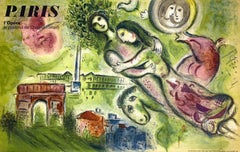
Marc Chagall, Place de la Concorde, from Views of Paris, 1963

Marc Chagall, Place de la Concorde, from Views of Paris, 1963

By Marc Chagall

Located in Southampton, NY

This exquisite lithograph by Marc Chagall (1887–1985), titled Place de la Concorde (Place de la Concorde), from Regards Sur Paris (Views of Paris), originates from the January 22, 19...

Category

Expressionist 20th Century Abstract Prints

Materials

Lithograph

Art Card: Keith Haring - Andy Mouse - New Coke Hand signed by Keith Haring Frame

Art Card: Keith Haring - Andy Mouse - New Coke Hand signed by Keith Haring Frame

By Keith Haring

Located in New York, NY

Offset lithograph postcard Boldly signed by Keith Haring on the front• The piece is part of Haring's "Andy Mouse" series, which features a character that is a whimsical blend of Mickey Mouse and his friend and mentor, Andy Warhol. By combining these icons with the New Coke...

Category

Pop Art 20th Century Abstract Prints

Materials

Postcard, ABS

Henri Matisse, The Swimming Pool II, from Last Works of Matisse, 1958 (after)

Henri Matisse, The Swimming Pool II, from Last Works of Matisse, 1958 (after)

By Henri Matisse

Located in Southampton, NY

This exquisite lithograph after Henri Matisse (1869–1954), titled La Piscine II (The Swimming Pool II), from Dernieres Oeuvres de Matisse 1950-1954 (Last Works of Matisse 1950-1954), Verve: Revue Artistique et Litteraire, Vol. IX, No. 35-36, originates from the July 28, 1958 issue published by Editions de la revue Verve, Paris, under the direction of Teriade, Editeur, Paris, and printed by Mourlot Freres, Paris, 1958. This visionary composition reflects Matisse’s late mastery of form and color, translating his celebrated cut-out aesthetic into the lithographic medium with remarkable clarity and vibrancy. Executed as a lithograph on velin du Marais paper, this work measures 14 x 42 inches (35.56 x 106.68 cm), with trifold and stitch perforations as issued. Unsigned and unnumbered as issued. The edition exemplifies the superb craftsmanship of the Mourlot Freres atelier, renowned for its collaborations with the greatest modern masters of the 20th century. Artwork Details: Artist: After Henri Matisse (1869–1954) Title: La Piscine II (The Swimming Pool II) Medium: Lithograph on velin du Marais paper Dimensions: 14 x 42 inches (35.56 x 106.68 cm), with trifold and stitch perforations as issued Inscription: Unsigned and unnumbered as issued Date: 1958 Publisher: Editions de la revue Verve, Paris, under the direction of Teriade, Editeur, Paris Printer: Mourlot Freres, Paris Catalogue raisonne references: Duthuit, Claude. Henri Matisse: Catalogue raisonne des ouvrages illustres. Editions Claude Duthuit, Paris, 1988, illustration 139. Condition: Well preserved, consistent with age and medium Provenance: From Dernieres Oeuvres de Matisse 1950-1954 (Last Works of Matisse 1950-1954), Verve: Revue Artistique et Litteraire, Vol. IX, No. 35-36, published by Editions de la revue Verve, Paris, 1958 Notes: Excerpted from the folio (translated from French), This double issue of VERVE is entirely devoted to the last works of Henri Matisse-1950-1954. These works, rendered in color litbography, were made by the artist, in gouache papers, cut with scissors and glued. They are accompanied by drawings executed during the same period or before. Matisse specially composed the cover of this album. Under his direction were drawn, during the year 1954, the first of these lithographic plates. The work was completed on July 28, 1958 by Mourlot Freres for lithography and by Master Printers Draeger Freres for heliogravures and typography. About the Publication: Dernieres Oeuvres de Matisse 1950-1954 (Last Works of Matisse 1950-1954), published as Verve Vol. IX, No. 35-36 on July 28, 1958, represents one of the most important posthumous tributes to Henri Matisse’s final period of artistic production. Conceived and directed by the visionary publisher Teriade, this issue of Verve is entirely dedicated to the works Matisse created between 1950 and 1954, a period defined by his pioneering cut-out technique. Produced in Paris with exceptional technical precision, the publication brings together color lithographs faithfully reproducing Matisse’s gouache cut-outs alongside a selection of drawings executed during the same period or earlier. The lithographs were printed by Mourlot Freres, while Draeger Freres oversaw the heliogravures and typography, ensuring the highest level of craftsmanship. The project was initiated under Matisse’s direct supervision in 1954, with the artist guiding the early stages of translation from original cut paper compositions into lithographic form. As part of the broader legacy of Verve, one of the most influential artistic and literary publications of the twentieth century, this issue stands as a monumental record of Matisse’s final innovations, preserving the essence of his late style and affirming his enduring impact on modern art. About the Artist: Henri Matisse (1869–1954) was a French painter, sculptor, draughtsman, and printmaker whose revolutionary vision redefined modern art through his daring use of color, line, and form. Celebrated as one of the greatest artists of the 20th century, Matisse led the Fauvist movement and devoted his life to the pursuit of balance, beauty, and emotional expression in visual art. His early works burst with vibrant hues and liberated brushwork, while his later “cut-out” compositions achieved a poetic simplicity that transformed the relationship between color and space. Deeply influenced by the work of Paul Cezanne, Vincent van Gogh, and Georges Seurat, as well as by the rhythmic patterns of Islamic art, Byzantine mosaics, and Japanese prints, Matisse forged a new visual language that celebrated joy, movement, and serenity. He was part of an extraordinary generation of artists who shaped the evolution of modernism, maintaining lifelong dialogue and friendly rivalry with contemporaries such as Pablo Picasso, Georges Braque, Marc Chagall, Andre Derain, Albert Marquet, and Raoul Dufy—peers who, like him, sought to expand the expressive potential of color and composition. Matisses influence extended across generations, inspiring modern and contemporary masters including Alexander Calder, Alberto Giacometti, Salvador Dali, Joan Miro, Wassily Kandinsky, Marcel Duchamp, and Man Ray, each of whom drew upon his fearless experimentation and refined visual harmony. His paintings, sculptures, and works on paper are held in the most prestigious museums in the world, including the Museum of Modern Art, the Centre Pompidou, the Tate, and the Hermitage Museum, where his art continues to symbolize the essence of creativity and human emotion. The highest price ever paid for a Henri Matisse artwork is approximately 80.8 million USD, achieved in 2018 at Christies New York for Odalisque couchee aux magnolias (1923). Henri Matisse La Piscine...

Category

Fauvist 20th Century Abstract Prints

Materials

Lithograph

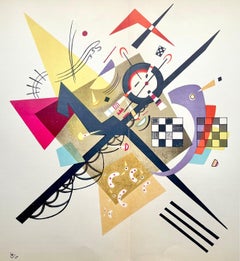
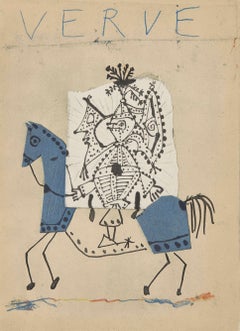
Verve No. 2; Spring 1938 – Kandinsky & Masson lithographs & many images

Verve No. 2; Spring 1938 – Kandinsky & Masson lithographs & many images

By Georges Braque

Located in Middletown, NY

Teriade, E. (director) Texts by Georges Braque, Paul Valéry, André Gide, André Malraux, James Joyce, Ernest Hemingway, et. al. Verve, Volume One No. 2; Verve for For Spring 1938 (Mar...

Category

Modern 20th Century Abstract Prints

Materials

Photographic Paper, Black and White, Photogravure, Lithograph

CONRAD MARCA-RELLI Limited ed. Etching & Aquatint American Modern, Contemporary

CONRAD MARCA-RELLI Limited ed. Etching & Aquatint American Modern, Contemporary

By Conrad Marca-Relli 1

Located in Madrid, Madrid

Conrad Marca Relli - Composition XV Date of creation: 1977 Medium: Etching and aquatint on Gvarro paper Edition number: 47/75 Size: 56 x 76 cm Condition: In very good conditions and ...

Category

Modern 20th Century Abstract Prints

Materials

Paper, Etching, Aquatint

Niagara Series No. 5, Abstract Silkscreen by Larry Zox

Niagara Series No. 5, Abstract Silkscreen by Larry Zox

By Larry Zox

Located in Long Island City, NY

Artist: Larry Zox Title: Niagara Series No. 5 Year: circa 1980 Medium: Screenprint, signed and numbered in pencil Edition: 175 Image Size: 34 x 13 inches Paper Size: 39 in. x 20.5 i...

Category

Abstract Expressionist 20th Century Abstract Prints

Materials

Screen

Untitled Composition (Cuban Modernism, Afro-Caribbean Art)

Untitled Composition (Cuban Modernism, Afro-Caribbean Art)

By Wifredo Lam

Located in Kansas City, MO

Wifredo Lam Untitled Composition from "Ediciones Poligrafa, Barcelona at Redfern Gallery, London" Original Color Lithograph Year: 1979 Edition: 100 Size: 10 x 7.325 inches (25.4 × ...

Category

Modern 20th Century Abstract Prints

Materials

Archival Paper, Lithograph

1990s Abstract Offset Print: Brown and Orange on Slate, Unframed

1990s Abstract Offset Print: Brown and Orange on Slate, Unframed

By (after) Mark Rothko

Located in Brooklyn, NY

This high-quality reproduction of Brown and Orange on Slate faithfully captures Mark Rothko’s signature exploration of color, light, and emotion. Rothko’s artistic process was deeply...

Category

Abstract 20th Century Abstract Prints

Materials

Offset

Fernand Leger, Untitled, from Circus, 1950

Fernand Leger, Untitled, from Circus, 1950

By Fernand Léger

Located in Southampton, NY

This exquisite lithograph by Fernand Leger (1881–1955), titled Sans titre (Untitled), from the album Cirque, Lithographies Originales (Circus, Original Lithographs), originates from ...

Category

Cubist 20th Century Abstract Prints

Materials

Lithograph

Pablo Picasso, Head, from Not Wanting, 1942

Pablo Picasso, Head, from Not Wanting, 1942

By Pablo Picasso

Located in Southampton, NY

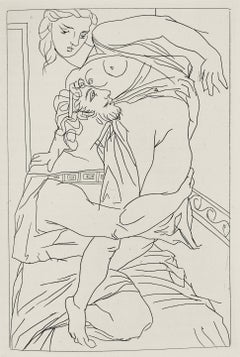
This exquisite zincograph by Pablo Picasso (1881–1973), titled Tete (Head), from the album Non vouloir (Not Wanting), originates from the 1942 edition published by Editions Jeanne Bu...

Category

Cubist 20th Century Abstract Prints

Materials

Lithograph

Jean Cocteau, Untitled, from Recipes for a Friend, 1964

Jean Cocteau, Untitled, from Recipes for a Friend, 1964

By Jean Cocteau

Located in Southampton, NY

This exquisite lithograph by Jean Cocteau (1889–1963), titled Sans titre (Untitled), originates from the 1964 album Recettes pour un ami, illustrations de Jean Cocteau (Recipes for a...

Category

Modern 20th Century Abstract Prints

Materials

Lithograph

Kathe Kollwitz, Mother with Child, from Ten Lithographs, 1941 (after)

Kathe Kollwitz, Mother with Child, from Ten Lithographs, 1941 (after)

By Käthe Kollwitz

Located in Southampton, NY

This exquisite lithograph after Kathe Kollwitz (1867–1945), titled Mutter mit Kind (Mother with Child), from the folio Kathe Kollwitz, Ten Lithographs, originates from the 1941 edition published by Henry C. Kleemann, New York, and Curt Valentin, New York; printed by Duenewald Printing Corporation, New York. The composition reflects Kollwitz’s profound engagement with themes of maternal protection, tenderness, and human vulnerability, rendered with stark emotional intensity and a powerful graphic economy that underscores her enduring social message. Executed as a lithograph on velin paper, this work measures 19 x 16 inches (48.26 x 40.64 cm), overall; 13 x 10.5 inches (33.02 x 26.67 cm), image. Unsigned and unnumbered as issued. Artwork Details: Artist: After Kathe Kollwitz (1867–1945) Title: Mutter mit Kind (Mother with Child), from Kathe Kollwitz, Ten Lithographs Medium: Lithograph on velin paper Dimensions: 19 x 16 inches (48.26 x 40.64 cm), overall; 13 x 10.5 inches (33.02 x 26.67 cm), image Inscription: Unsigned and unnumbered as issued Date: 1941 Publisher: Henry C. Kleemann, New York, and Curt Valentin, New York Printer: Duenewald Printing Corporation, New York Condition: Well preserved, consistent with age and medium Provenance: From the folio Kathe Kollwitz, Ten Lithographs, 1941 About the Publication: Kathe Kollwitz, Ten Lithographs, published in New York in 1941 by Henry C. Kleemann in collaboration with Curt Valentin, represents an important early American presentation of Kollwitz’s graphic work at a time when her reputation was expanding internationally. Issued during the turbulence of the Second World War and following the suppression of her work in Germany under the Nazi regime, the folio played a crucial role in introducing her imagery to a broader audience outside Europe. The publication gathers a selection of her most powerful lithographic compositions, emphasizing her mastery of tonal contrast, expressive line, and psychological depth. Produced with careful attention to print quality by Duenewald Printing Corporation, the edition reflects the continued transmission of European modernist printmaking traditions into the American context, serving both as a document of artistic excellence and as a vehicle for the preservation and dissemination of Kollwitz’s humanistic vision. About the Artist: Kathe Kollwitz (1867–1945) was a German draughtsman, printmaker, and sculptor whose profoundly moving imagery, exceptional technical mastery, and unwavering social conscience established her as one of the most important and influential artists of the twentieth century, widely recognized as a master of modern printmaking and one of the most powerful visual chroniclers of human suffering, war, and social injustice. Born in Konigsberg, East Prussia, into a progressive and intellectually engaged family, Kollwitz was encouraged from an early age to pursue art and developed a deep awareness of social inequality that would shape her entire career, studying in Berlin and Munich at a time when women were largely excluded from formal academies while mastering drawing and graphic techniques with extraordinary discipline. Her breakthrough came with the monumental graphic cycle A Weavers’ Revolt (1893–1897), followed by The Peasants’ War (1901–1908), works that combined complex narrative structure with extraordinary technical command in etching, aquatint, and lithography, establishing her reputation as one of Europe’s leading graphic artists. Throughout her career, Kollwitz remained committed to portraying the lives of workers, mothers, and victims of poverty and conflict with unflinching honesty, creating compositions defined by bold, sculptural line, dense shadow, and unparalleled psychological depth that conveyed grief, resilience, and dignity. Working during a period transformed by the radical innovations of Pablo Picasso, Alexander Calder, Alberto Giacometti, Salvador Dali, Joan Miro, Wassily Kandinsky, Marcel Duchamp, and Man Ray, Kollwitz maintained a resolutely figurative and human-centered approach, aligning more closely with German Expressionism and artists such as Ernst Barlach, Max Liebermann, and Edvard Munch, whose emotional intensity and symbolic treatment of the human figure profoundly shaped her artistic language. Her later work, particularly the woodcut cycle War (1922–1923), stands among the most powerful anti-war statements in the history of art, reflecting both personal tragedy, including the death of her son in World War I, and a universal condemnation of violence and loss. In addition to her prints, Kollwitz created deeply moving sculptures that extended her exploration of grief and maternal protection into three dimensions, reinforcing her status as a multidisciplinary artist of exceptional range. She achieved significant recognition during her lifetime, becoming the first woman elected to the Prussian Academy of Arts, though her work was later condemned by the Nazi regime as degenerate, leading to her forced resignation and the removal of her works from public collections, yet her reputation expanded internationally after World War II and she is now regarded as a central figure in modern art. Her influence has been profound and far-reaching, shaping later artists including Francis Bacon, Anselm Kiefer, Leon Golub, Kiki Smith, and numerous contemporary figurative and socially engaged artists who continue to explore themes of trauma, memory, and human vulnerability. Today her works are held in major museum collections worldwide, including the Kathe Kollwitz Museum in Berlin, the Museum of Modern Art in New York, the British Museum in London, and the Art Institute of Chicago, and remain highly sought after by collectors for their emotional intensity and historical significance. The highest auction record for a work by Kathe Kollwitz is held by her sculpture Mutter mit totem Sohn (Mother with Dead Son), which achieved approximately 1.2 million EUR at auction, confirming her enduring importance. Kathe Kollwitz Mutter mit Kind 1941 lithograph German Expressionism social realism print.

Category

Expressionist 20th Century Abstract Prints

Materials

Lithograph

Caroni
Caroni

Caroni

By Jesús Rafael Soto

Located in Miami Beach, FL

Color screenprint, color pencil on heavy white wove paper, 1971. 840x595 mm; 33 1/4×23 1/2 inches (sheet), full margins. Signed and numbered 47/175 in pencil, lower margin. Publishe...

Category

Abstract Geometric 20th Century Abstract Prints

Materials

Color Pencil, Screen

Fernand Leger, Untitled, from Circus, 1950

Fernand Leger, Untitled, from Circus, 1950

By Fernand Léger

Located in Southampton, NY

This exquisite lithograph by Fernand Leger (1881–1955), titled Sans titre (Untitled), from the album Cirque, Lithographies Originales (Circus, Original Lithographs), originates from ...

Category

Cubist 20th Century Abstract Prints

Materials

Lithograph

Life Forces - 1978 Signed Limited Edition Screen Print

Life Forces - 1978 Signed Limited Edition Screen Print

By Kyohei Inukai

Located in Rochester Hills, MI

Artist: Kyohei Inukai Title: Life Forces  Year: 1978 Print - Silkscreen    Size: 30'' x 22½'' in Edition: signed in pencil and marked 70/200 Kyohei Inukai (1913–1985) was a Japanese...

Category

Abstract Geometric 20th Century Abstract Prints

Materials

Screen

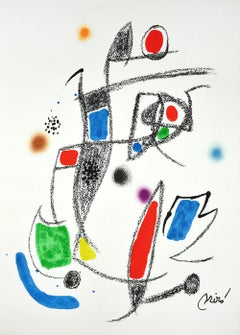
Plate #4 from Album 19

Plate #4 from Album 19

By Joan Miró

Located in San Francisco, CA

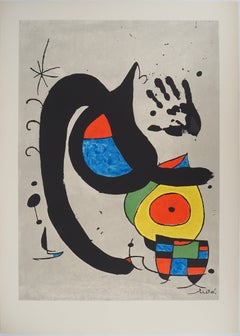
This artwork titled "Plate #4 from Album 19" 1961, is an original color lithograph on watermarked BFK Rives paper by renown artist Joan Miro 1893-1983. It is hand signed (monogramed...

Category

Abstract 20th Century Abstract Prints

Materials

Lithograph

RARE! Mark Rothko at Museo d'Arte Moderna Ca' Pesaro, Venezia hand no. 250/500

RARE! Mark Rothko at Museo d'Arte Moderna Ca' Pesaro, Venezia hand no. 250/500

By Mark Rothko

Located in New York, NY

Mark Rothko at Museo d'Arte Moderna Ca' Pesaro, Venezia, 1970 Offset lithograph and lithograph on high quality lithographic paper Numbered in pencil 250/500 in the lower left front ...

Category

Abstract 20th Century Abstract Prints

Materials

Pencil, Lithograph, Offset

Joan Miro, Japan, from Miro as Sculptor, 1974

Joan Miro, Japan, from Miro as Sculptor, 1974

By Joan Miró

Located in Southampton, NY

This exquisite lithograph by Joan Miro (1893–1983), titled Japan, from Miro escultor (Miro as Sculptor), originates from the 1974 edition published by Bijutsu Shupan Sha, Tokyo, and printed by La Poligrafa, Barcelona, 1974. The work reflects Miro’s lyrical mastery of biomorphic form, symbolic purity, and gestural spontaneity, embodying the visionary abstraction that made him a defining figure of twentieth century modernism. Executed as a lithograph on Guarro velin paper, this work measures 7.87 x 15.47 inches (20 x 39.3 cm). Signed in the plate and unnumbered, as issued. The edition exemplifies the refined craftsmanship of La Poligrafa, Barcelona. Artwork Details: Artist: Joan Miro (1893–1983) Title: Japan Medium: Lithograph on Guarro velin paper Dimensions: 7.87 x 15.47 inches (20 x 39.3 cm) Inscription: Signed in the plate and unnumbered, as issued Date: 1974 Publisher: Bijutsu Shupan Sha, Tokyo Printer: La Poligrafa, Barcelona Catalogue Raisonne References: Cramer, Patrick, and Joan Miro. Joan Miro, Catalogue Raisonne des Livres Illustres. P. Cramer, 1989, illustration 194 Miro, Joan, et al. Joan Miro : Lithographs. Tudor, 1972-1992, illustration 937. Condition: Well preserved, consistent with age and medium Provenance: Published by Bijutsu Shupan Sha, Tokyo; printed by La Poligrafa, Barcelona, 1974, in an edition of MD About the Publication: Miro escultor (Miro as Sculptor), published in 1974 by Bijutsu Shupan Sha in Tokyo, is a richly produced lithographic edition created to accompany and celebrate Joan Miro’s expanding work in sculpture during the late 1960s and early 1970s. Printed by the renowned La Poligrafa workshop in Barcelona one of the most important printers of modernist and postwar graphic art the publication formed part of a larger project intended to document and disseminate Miro’s sculptural innovations to an international audience. During this period, Miro turned increasingly toward three dimensional form, collaborating with foundries and experimental workshops to transform his biomorphic vocabulary into bronze, painted wood, ceramics, and mixed media assemblages. The publication Miro escultor functioned both as an artistic portfolio and as an interpretive document, presenting lithographic translations of sculptural ideas that were simultaneously graphic works in their own right. The edition of MD examples reflected Bijutsu Shupan Sha’s commitment to high quality multiples and the broader 1970s movement to democratize access to contemporary art through carefully produced prints. Today, the publication stands as a testament to the intersection of Miro’s painterly gesture, his graphic discipline, and his growing fascination with spatial and sculptural expression. About the Artist: Joan Miro (1893–1983) was a Catalan painter, sculptor, printmaker, and ceramicist whose visionary imagination and lyrical abstraction made him one of the most influential and beloved artists of the 20th century. Born in Barcelona, Miro drew inspiration from Catalan folk art, Romanesque frescoes, and the luminous landscapes of Mont roig del Camp, developing a deep connection to nature that infused his work with vitality and symbolism. After formal training at the Escola dArt in Barcelona, he absorbed the lessons of Post Impressionism and Cubism before moving to Paris in the early 1920s, where he became a leading figure in the Surrealist movement. There, Miro forged a personal visual language of biomorphic shapes, floating symbols, and radiant color harmonies that reflected both spontaneity and spiritual depth. In creative dialogue with peers such as Alexander Calder, Alberto Giacometti, Salvador Dali, Wassily Kandinsky, Marcel Duchamp, and Man Ray, he helped revolutionize modern art by dissolving the boundaries between abstraction and dream imagery. Miro’s inventive approach extended far beyond painting, embracing sculpture, ceramics, and monumental public commissions that redefined how art could interact with space and emotion. His expressive freedom and gestural abstraction profoundly influenced later artists including Jackson Pollock, Mark Rothko, Alexander Calder, Jean Dubuffet, Antoni Tapies, and Joan Mitchell, inspiring generations who sought to merge instinct, color, and imagination. Today, Miro’s work remains a cornerstone of modernism, prized by collectors and celebrated in major museums worldwide. His highest auction record was achieved by Peinture (Etoile Bleue) (1927), which sold for 23,561,250 GBP (approximately 37 million USD) at Sotheby’s, London, on June 19, 2012. Joan Miro Japan...

Category

Surrealist 20th Century Abstract Prints

Materials

Lithograph

Joan Miro, Blue II, from Miro 1959–1960, 1961 (after)

Joan Miro, Blue II, from Miro 1959–1960, 1961 (after)

By Joan Miró

Located in Southampton, NY

This exquisite lithograph and pochoir after Joan Miro (1893–1983), titled Bleu II (Blue II), from the album Miro 1959–1960 (Miro 1959–1960), originates from the 1961 edition publishe...

Category

Surrealist 20th Century Abstract Prints

Materials

Lithograph

Plougastel

Plougastel

By Sonia Delaunay

Located in Paris, FR

Etching and aquatint, 1970 Edition : 78/125 Publisher : Galerie de Varenne (Paris) 65.50 cm. x 50.00 cm. 25.79 in. x 19.69 in. (paper) 49.00 cm. x 39.00 cm. 19.29 in. x 15.35 in. (...

Category

Abstract 20th Century Abstract Prints

Materials

Etching, Aquatint

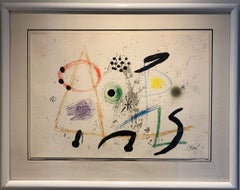
Joan Miró “Italia 1969” Hand Signed Lithograph, Galleria del Milione, Milan 1970

Joan Miró “Italia 1969” Hand Signed Lithograph, Galleria del Milione, Milan 1970

By Joan Miró

Located in Miami, FL

JOAN MIRÓ (1893–1983) – “ITALIA 1969” Color Lithograph ⚜ Hand Signed and Numbered ⚜ Gilt Wood Frame PUBLISHED FOR ONE OF ITALY’S MOST IMPORTANT MODERNIST GALLERIES “Italia 1969” is...

Category

Surrealist 20th Century Abstract Prints

Materials

Lithograph

Jean Cocteau, Untitled, from Recipes for a Friend, 1964

Jean Cocteau, Untitled, from Recipes for a Friend, 1964

By Jean Cocteau

Located in Southampton, NY

This exquisite lithograph by Jean Cocteau (1889–1963), titled Sans titre (Untitled), originates from the 1964 album Recettes pour un ami, illustrations de Jean Cocteau (Recipes for a...

Category

Modern 20th Century Abstract Prints

Materials

Lithograph