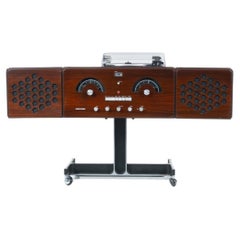
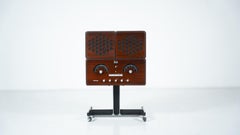
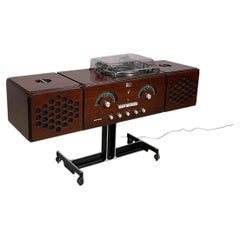
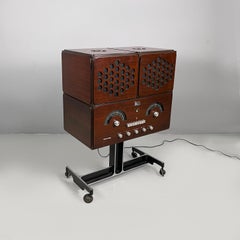
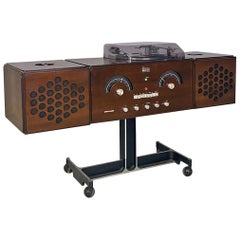
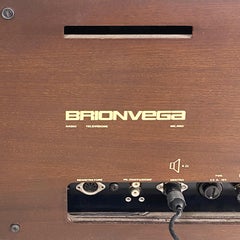
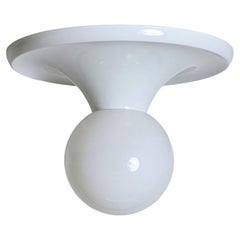
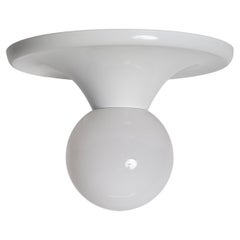
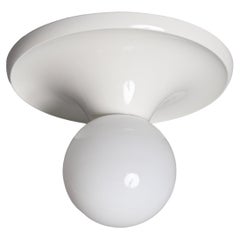
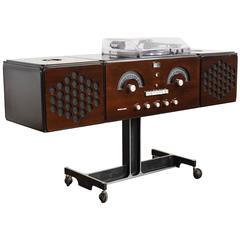
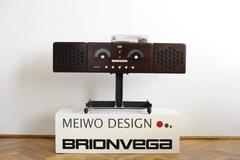
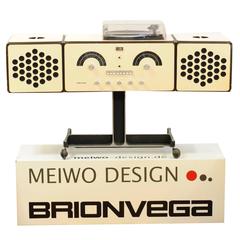
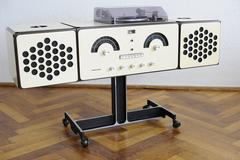
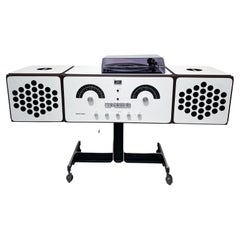
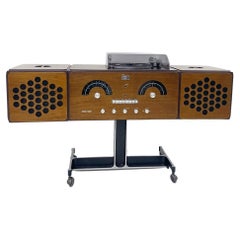
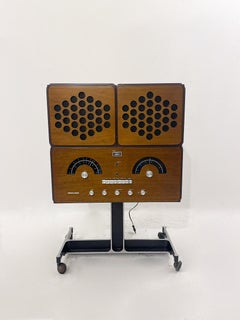
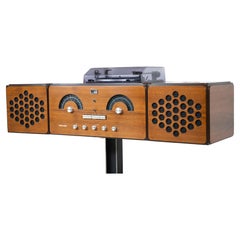
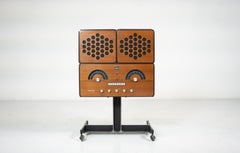
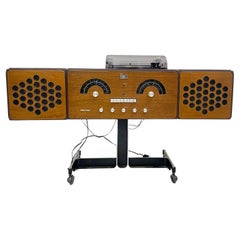
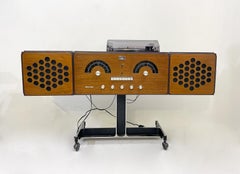
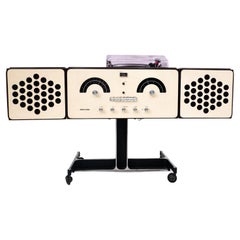
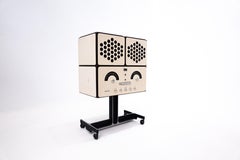
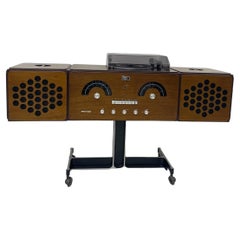
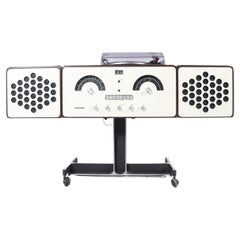
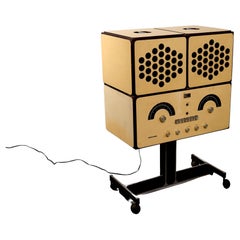
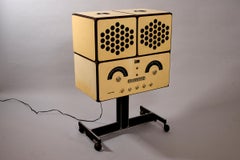
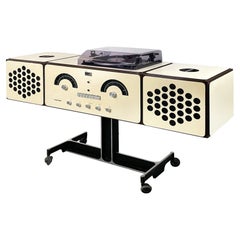
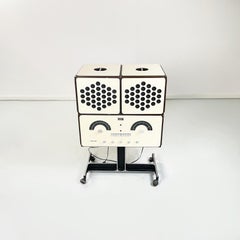
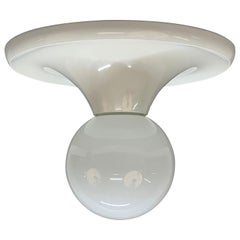
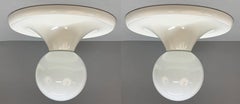
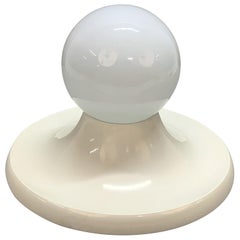
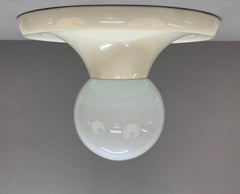
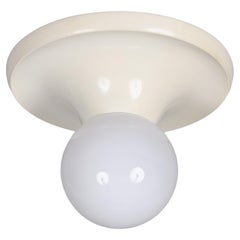
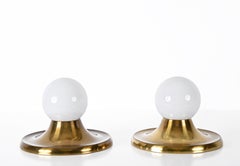
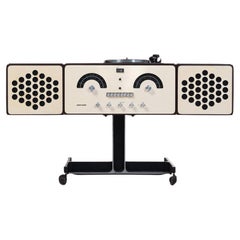
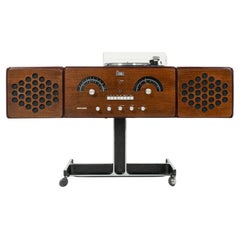
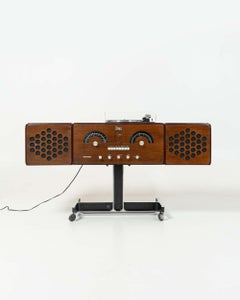
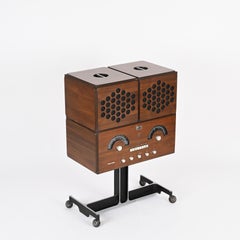
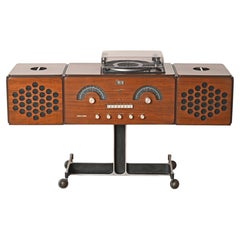
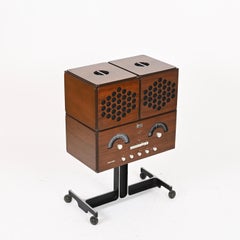
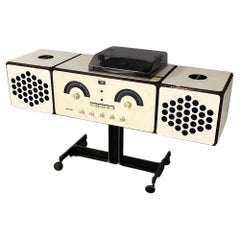
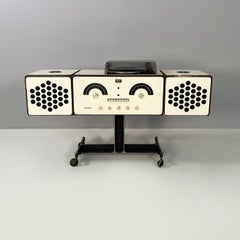
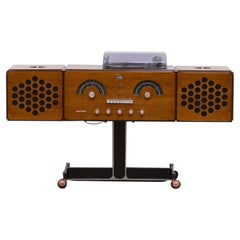
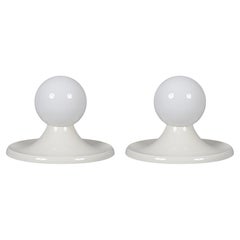
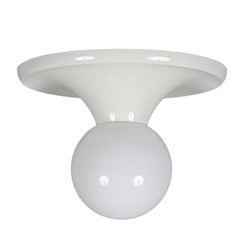
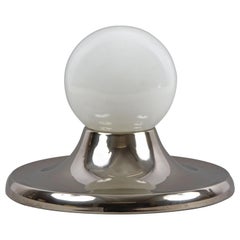
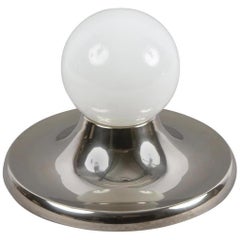
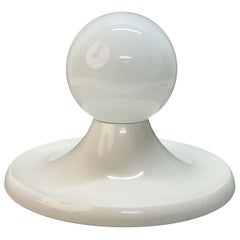
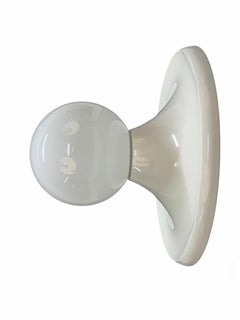
Choose from an assortment of styles, material and more with respect to the record player brionvega you’re looking for at 1stDibs. Each record player brionvega for sale was constructed with extraordinary care, often using
wood,
metal and
plastic. Your living room may not be complete without a record player brionvega — find older editions for sale from the 20th Century and newer versions made as recently as the 20th Century. A record player brionvega is a generally popular piece of furniture, but those created in
Mid-Century Modern styles are sought with frequency.
Achille and Pier Giacomo Castiglioni,
Brionvega and
Achille Castiglioni each produced at least one beautiful record player brionvega that is worth considering.
Milanese industrial designer-architects Achille and Pier Giacomo Castiglioni (1918–2002; 1913-68) created some of the most iconic furniture designs in the world, particularly those that originated in the realm of mid-century modern lighting.
In the late 1930s, after graduating from the acclaimed Polytechnic University of Milan, Pier Giacomo opened a design studio with his brother Livio and likeminded architect Luigi Caccia Dominioni. Achille, also a graduate of Milan Polytechnic, joined the group after completing his studies in 1944. The era’s architects were encountering difficulty in their attempts to secure building commissions, so the group focused on designing practical everyday objects such as the Model 547, a tabletop radio for Phonola that was encased in Bakelite.
The Castiglioni brothers produced wildly popular and innovative designs throughout the 20th century. While Livio departed the practice in 1952 to pursue lighting design and sound technology on his own, Pier Giacomo and Achille would continue to collaborate on a wealth of projects in the ensuing years.
Vintage furniture collectors may be familiar with Livio and Italian designer Gianfranco Frattini’s serpent-like Boalum lamp, while Achille’s Taraxacum hanging lamp — created for FLOS with sprayed plastic polymers originally intended for military use — as well as the Arco, Snoopy and Toio lamps, which were the result of the collaboration between Pier Giacomo and Achille, are milestones in modernist lighting design.
Also for FLOS, Pier Giacomo and Achille created a series of metal frames that, wrapped in the polymer, became floor lamps (Gatto) or pendant lights (Viscontea and Taraxacum), all released in 1960. The Gatto floor lamp takes its name from the Italian word for “cat” and the inspiration for its aesthetic from lighting that George Nelson developed for legendary American furniture manufacturer Howard Miller during the 1940s. Around the same time, the designer Tobia Scarpa (son of the famed Italian architect Carlo Scarpa and one-half of the widely revered postmodern husband-and-wife design duo Afra and Tobia Scarpa) created a floor lamp called Fantasma (1961) using the polymers technique. FLOS continues to make the Castiglionis’ innovative pieces today.
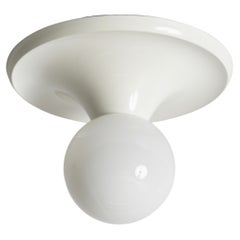
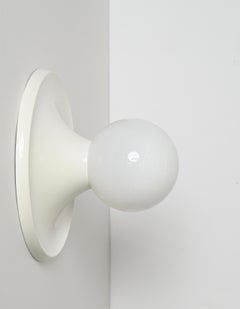
In addition to their provocative lighting works, Pier Giacomo and Achille also created stereo systems, decorative objects, seating, tables and other items for the likes of Brionvega, Alessi, Zanotta, Kartell and more.
Find vintage Achille and Pier Giacomo Castiglioni floor lamps, table lamps, pendants, seating and other furniture on 1stDibs.
Organically shaped, clean-lined and elegantly simple are three terms that well describe vintage mid-century modern furniture. The style, which emerged primarily in the years following World War II, is characterized by pieces that were conceived and made in an energetic, optimistic spirit by creators who believed that good design was an essential part of good living.
ORIGINS OF MID-CENTURY MODERN FURNITURE DESIGN
CHARACTERISTICS OF MID-CENTURY MODERN FURNITURE DESIGN
MID-CENTURY MODERN FURNITURE DESIGNERS TO KNOW
ICONIC MID-CENTURY MODERN FURNITURE DESIGNS
VINTAGE MID-CENTURY MODERN FURNITURE ON 1STDIBS
The mid-century modern era saw leagues of postwar American architects and designers animated by new ideas and new technology. The lean, functionalist International-style architecture of Le Corbusier and Bauhaus eminences Ludwig Mies van der Rohe and Walter Gropius had been promoted in the United States during the 1930s by Philip Johnson and others. New building techniques, such as “post-and-beam” construction, allowed the International-style schemes to be realized on a small scale in open-plan houses with long walls of glass.
Materials developed for wartime use became available for domestic goods and were incorporated into mid-century modern furniture designs. Charles and Ray Eames and Eero Saarinen, who had experimented extensively with molded plywood, eagerly embraced fiberglass for pieces such as the La Chaise and the Womb chair, respectively.
Architect, writer and designer George Nelson created with his team shades for the Bubble lamp using a new translucent polymer skin and, as design director at Herman Miller, recruited the Eameses, Alexander Girard and others for projects at the legendary Michigan furniture manufacturer.
Harry Bertoia and Isamu Noguchi devised chairs and tables built of wire mesh and wire struts. Materials were repurposed too: The Danish-born designer Jens Risom created a line of chairs using surplus parachute straps for webbed seats and backrests.
The Risom lounge chair was among the first pieces of furniture commissioned and produced by celebrated manufacturer Knoll, a chief influencer in the rise of modern design in the United States, thanks to the work of Florence Knoll, the pioneering architect and designer who made the firm a leader in its field. The seating that Knoll created for office spaces — as well as pieces designed by Florence initially for commercial clients — soon became desirable for the home.
As the demand for casual, uncluttered furnishings grew, more mid-century furniture designers caught the spirit.
Classically oriented creators such as Edward Wormley, house designer for Dunbar Inc., offered such pieces as the sinuous Listen to Me chaise; the British expatriate T.H. Robsjohn-Gibbings switched gears, creating items such as the tiered, biomorphic Mesa table. There were Young Turks such as Paul McCobb, who designed holistic groups of sleek, blond wood furniture, and Milo Baughman, who espoused a West Coast aesthetic in minimalist teak dining tables and lushly upholstered chairs and sofas with angular steel frames.
Generations turn over, and mid-century modern remains arguably the most popular style going. As the collection of vintage mid-century modern chairs, dressers, coffee tables and other furniture for the living room, dining room, bedroom and elsewhere on 1stDibs demonstrates, this period saw one of the most delightful and dramatic flowerings of creativity in design history.