Reuven Rubin Animal Prints

Israeli, 1893-1974
Reuven Rubin- (November 13, 1893 - October 13, 1974) was a Romanian-born Israeli painter and Israel's first ambassador to Romania. Rubin Zelicovici (later Reuven Rubin) was born in Galaţi to a poor Romanian Jewish Hasidic family. He was the eighth of 13 children. In 1912, he left for Ottoman-ruled Palestine to study art at Bezalel Academy of Art and Design in Jerusalem. Finding himself at odds with the artistic views of the Academy's teachers, he left for Paris, France, in 1913 to pursue his studies at the École Nationale Supérieure des Beaux-Arts. At the outbreak of World War I, he was returned to Romania, where he spent the war years. In 1921, he traveled to the United States with his friend and fellow artist, Arthur Kolnik, with whom he had shared a studio in Cernăuţi. In New York City, the two met artist Alfred Stieglitz, who was instrumental in organizing their first American show at the Anderson Gallery. Following the exhibition, in 1922, they both returned to Europe. In 1923, Rubin emigrated to Mandate Palestine. Rubin met his wife, Esther, in 1928, aboard a passenger ship to Palestine on his return from a show in New York. She was a Bronx girl who had won a trip to Palestine in a Young Judea competition. He died in 1974.
to
2
Overall Width
to
Overall Height
to
2
37
155
154
116
103
2
2
2
2
2
2
Artist: Reuven Rubin
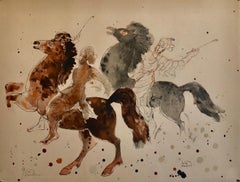
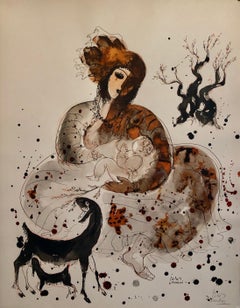
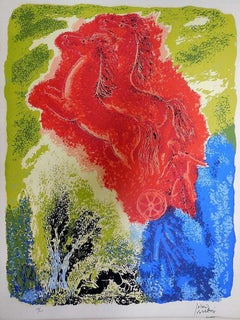
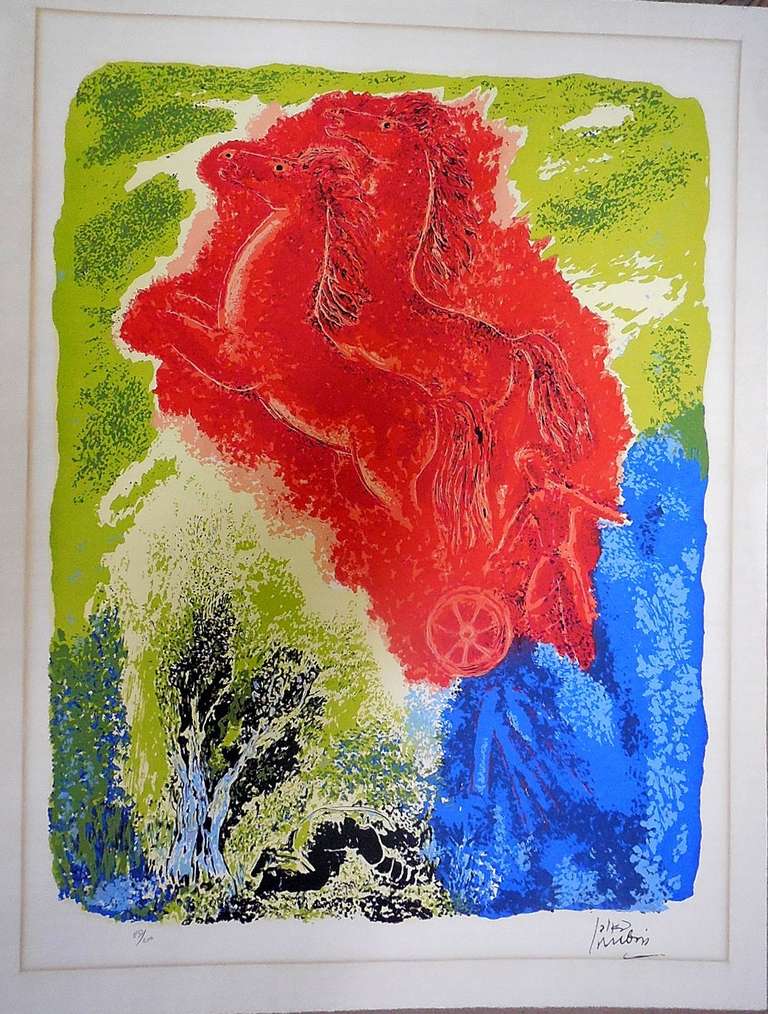
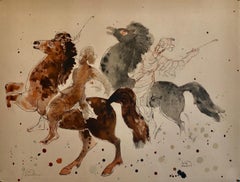
Modern Israeli Lithograph Reuven Rubin Views Of Israel Judaica Horses, Riders

Modern Israeli Lithograph Reuven Rubin Views Of Israel Judaica Horses, Riders

By Reuven Rubin

Located in Surfside, FL

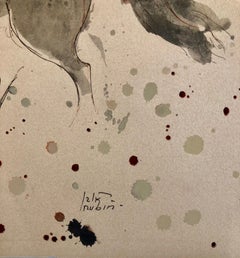
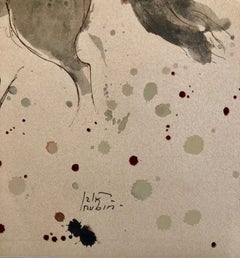
Lithograph printed by Chez Daniel Jacomet, Paris, France 1960 offset lithograph in colors on Arches, signed in crayon on the justification sheet (this auction is just for the one lithograph pictured as the 1st photo, the justification sheet with the original drawing is just included for provenance and is not part of this sale), on Arches deckle edged paper. limited edition of 250. plate signed and hand signed in pencil. Israeli views Lithograph by Israeli Master. Reuven Rubin 1893 -1974 was a Romanian-born Israeli painter and Israel's first ambassador to Romania. Rubin Zelicovici (later Reuven Rubin) was born in Gala?i to a poor Romanian Jewish Hasidic family. He was the eighth of 13 children. In 1912, he left for Ottoman-ruled Palestine to study art at Bezalel Academy of Art and Design in Jerusalem. Finding himself at odds with the artistic views of the Academy's teachers, he left for Paris, France, in 1913 to pursue his studies at the École Nationale Supérieure des Beaux-Arts. At the outbreak of World War I, he was returned to Romania, where he spent the war years. In 1921, he traveled to the United States with his friend and fellow artist, Arthur Kolnik, with whom he had shared a studio in Cernovitzu. In New York City, the two met artist Alfred Stieglitz, who was instrumental in organizing their first American show at the Anderson Gallery.Following the exhibition, in 1922, they both returned to Europe. In 1923, Rubin emigrated to Mandate Palestine. Rubin met his wife, Esther, in 1928, aboard a passenger ship to Palestine on his return from a show in New York. She was a Bronx girl who had won a trip to Palestine in a Young Judea competition. He died in 1974 Artistic career Joseph Zaritsky...

Category

1960s Modern Reuven Rubin Animal Prints

Materials

Lithograph, Offset
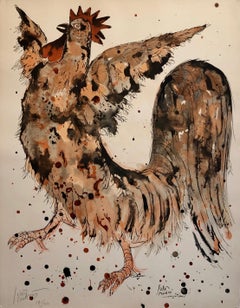
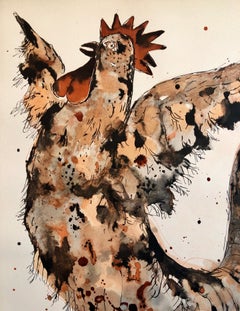
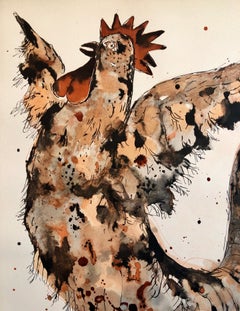
Modern Israeli Lithograph Reuven Rubin Views Of Israel Judaica Crowing Rooster

Modern Israeli Lithograph Reuven Rubin Views Of Israel Judaica Crowing Rooster

By Reuven Rubin

Located in Surfside, FL

Lithograph printed by Chez Daniel Jacomet, Paris, France 1960 offset lithograph in colors on Arches, signed in crayon on the justification sheet (this auction is just for the one lithograph pictured as the 1st photo, the justification sheet with the original drawing is just included for provenance and is not part of this sale), on Arches deckle edged paper. limited edition of 250. plate signed and hand signed in pencil. Israeli views Lithograph by Israeli Master. Reuven Rubin 1893 -1974 was a Romanian-born Israeli painter and Israel's first ambassador to Romania. Rubin Zelicovici (later Reuven Rubin) was born in Gala?i to a poor Romanian Jewish Hasidic family. He was the eighth of 13 children. In 1912, he left for Ottoman-ruled Palestine to study art at Bezalel Academy of Art and Design in Jerusalem. Finding himself at odds with the artistic views of the Academy's teachers, he left for Paris, France, in 1913 to pursue his studies at the École Nationale Supérieure des Beaux-Arts. At the outbreak of World War I, he was returned to Romania, where he spent the war years. In 1921, he traveled to the United States with his friend and fellow artist, Arthur Kolnik, with whom he had shared a studio in Cernovitzu. In New York City, the two met artist Alfred Stieglitz, who was instrumental in organizing their first American show at the Anderson Gallery.Following the exhibition, in 1922, they both returned to Europe. In 1923, Rubin emigrated to Mandate Palestine. Rubin met his wife, Esther, in 1928, aboard a passenger ship to Palestine on his return from a show in New York. She was a Bronx girl who had won a trip to Palestine in a Young Judea competition. He died in 1974 Artistic career Joseph Zaritsky...

Category

1960s Modern Reuven Rubin Animal Prints

Materials

Lithograph, Offset
Related Items
Keith Haring 1985 announcement (Keith Haring at Tony Shafarzi Leo Castelli)

Keith Haring 1985 announcement (Keith Haring at Tony Shafarzi Leo Castelli)

By (after) Keith Haring

Located in NEW YORK, NY

Keith Haring at Tony Shafrazi/Leo Castelli Gallery, New York, 1985: Rare original 1980s announcement for two Keith Haring exhibitions: Keith Haring at Tony Shafrazi Gallery, October 26...

Category

1980s Pop Art Reuven Rubin Animal Prints

Materials

Offset, Lithograph

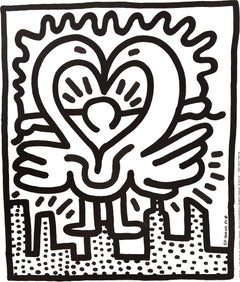
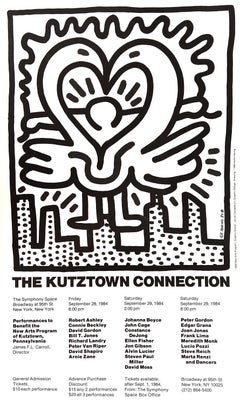
Keith Haring Kutztown Connection 1984 (Keith Haring prints posters)

Keith Haring Kutztown Connection 1984 (Keith Haring prints posters)

By Keith Haring

Located in NEW YORK, NY

Keith Haring ‘Kutztown Connection’ 1984: This rare vintage 1980s Keith Haring poster was illustrated by Haring in conjunction with the Benefit Performances for the New Arts Program o...

Category

1980s Pop Art Reuven Rubin Animal Prints

Materials

Lithograph, Offset
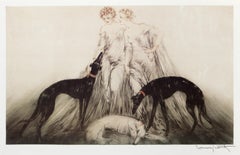
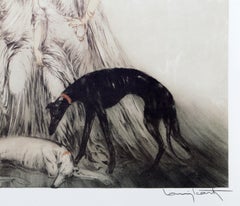
Coursing 3, Art Nouveau Offset Lithograph after Louis Icart

Coursing 3, Art Nouveau Offset Lithograph after Louis Icart

By Louis Icart

Located in Long Island City, NY

Louis Icart, After, French (1888 - 1950) - Coursing 3, Medium: Offset Lithograph on paper, signed in plate, Image Size: 14.5 x 23.75 inches, Size: 16 x 25 in. (40.64 x 63.5 cm), D...

Category

Early 20th Century Art Nouveau Reuven Rubin Animal Prints

Materials

Lithograph, Offset
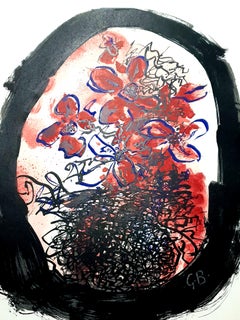
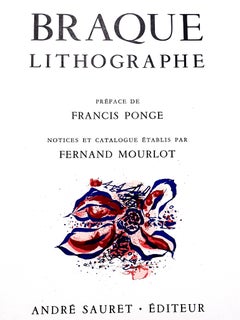
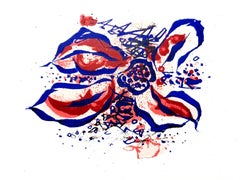
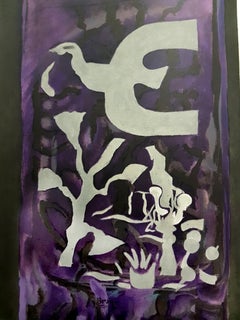
Georges Braque - Original Lithograph

Georges Braque - Original Lithograph

By Georges Braque

Located in Collonge Bellerive, Geneve, CH

Georges Braque - Original Lithograph 1963 Dimensions: 32 x 24 cm Andre Sauret, Monte Carlo The father of Cubism Three Cubist that distinguishes art historian periods were initiated and developed by Georges Braque: The Cubist Cézanne (1907-1909), Executive (1909-1912) and synthetic (1912-1922). Post-Impressionist and fawn, Braque no longer adheres to the contingency of a decorative way or the other. Cézanne’s paintings exhibited at the Grand Palais during the retrospective of 1907 are a revelation: Cézanne sought and invented a pictorial language. In his footsteps, Braque went to the South with the reasons of the Master. He returned with Estaque landscapes and surprising Ciotat it keeps Cezanne geometric model and retains the “passages” continuity from one surface to another to create the sensation of “turning around” of the object represented. But he wants to go after the consequences of the vision of Cezanne. In his paintings Houses in L’Estaque (1908) it simplifies the volumes of houses, neglects detail by removing doors and windows: the plastic rhythm that builds the table. Large Nude , a masterpiece of the period, can be considered the first work of Cézanne cubism . Systematizing and deepening Braque discoveries open the door analytical cubism. In 1909, his painting became more cerebral than sensual. The pattern is recreated in the two-dimensionality of the canvas, leaving aside any illusionistic perspective. In Still Life with Violin, objects are analyzed facets according to their characteristic elements, each facet referring to a particular view of the object. There are so many facets of points selected view: Table reflects the knowledge of the object and the ubiquity of the eye. Moreover, Braque is looking for the essence of the objects in the world rather than their contingency, which explains the absence of light source and use of muted colors (gray, ocher), contingent aspects of the object . But formal logic has stepped facets, erased any anecdote to the object and ultimately led to his painting a hermetic more marked on the edge of abstraction (see the series of Castle Roche-Guyon ). Braque, anxious to keep the concrete and refusing at all costs that the logic of Cubism takes the paintings to abstract, reintroduced signs of reality in his paintings in 1912 marks the beginning of Synthetic Cubism. Historians speak of “signs of real” rather than reality because what interests Braque, this is not to put reality into a table, but to create a painting which, by its language, refers to the real. To do this, he invented two major techniques XX th century inclusions and contributions. The inclusions consist of painting objects that have no real depth, materials (wallpaper in Nature morte aux playing cards faux wood is a pictorial inclusion) or letters (calligraphic inclusion in Portuguese ), made first brush and a few months later stencil. Contributions are defined in contrast with the collage on canvas of foreign materials: glued or sand paper, sawdust, etc.. Regarding the collages, Braque used for the first time in September 1912 a piece of adhesive paper imitating faux wood Compote and Glass , then the packet envelope of tobacco Bock in 1912-1913, or an advertisement in Damier , 1913). Inputs and inclusions refer to an external object in the table, without “emulate” this object. Away from their appearances, objects are represented in closest essence of the objects in the real world sense. This is also the time of Synthetic Cubism that Braque invented paper sculpture. There are, unfortunately, and no one is living proof of a photograph makes it possible to realize: Paper and paperboard. Métamorphoses period(1961-1963). In 1961, Georges Braque worked on a Greek head for the Louvre, which obsesses him, and he wishes to free his mind. He tried several times to bring out the paint and the result was unsatisfactory. He thinks the ultimate metamorphosis its Greek head projected in three dimensions. He calls in his studio of Baron Heger Loewenfeld, master lapidary, and he communicates his enthusiasm during the “fateful encounter.” Nine months later, in honor of the eighty years of Georges Braque, Heger Loewenfeld offers the Master of the ring Circe: the famous Greek head finally exorcised, carved in an onyx. Braque Loewenfeld then asked to identify other issues that haunt him. From dated and signed by Georges Braque, Heger gouaches Loewenfeld shapes works in the fields of jewelery, lapidary art...

Category

1960s Modern Reuven Rubin Animal Prints

Materials

Lithograph

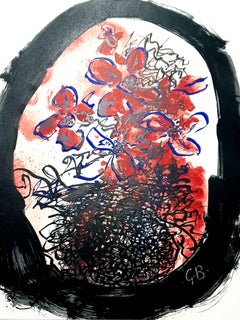
Georges Braque - Original Lithograph

Georges Braque - Original Lithograph

By Georges Braque

Located in Collonge Bellerive, Geneve, CH

Georges Braque - Original Lithograph 1963 Dimensions: 32 x 24 cm Andre Sauret, Monte Carlo The father of Cubism Three Cubist that distinguishes art historian periods were initiated and developed by Georges Braque: The Cubist Cézanne (1907-1909), Executive (1909-1912) and synthetic (1912-1922). Post-Impressionist and fawn, Braque no longer adheres to the contingency of a decorative way or the other. Cézanne’s paintings exhibited at the Grand Palais during the retrospective of 1907 are a revelation: Cézanne sought and invented a pictorial language. In his footsteps, Braque went to the South with the reasons of the Master. He returned with Estaque landscapes and surprising Ciotat it keeps Cezanne geometric model and retains the “passages” continuity from one surface to another to create the sensation of “turning around” of the object represented. But he wants to go after the consequences of the vision of Cezanne. In his paintings Houses in L’Estaque (1908) it simplifies the volumes of houses, neglects detail by removing doors and windows: the plastic rhythm that builds the table. Large Nude , a masterpiece of the period, can be considered the first work of Cézanne cubism . Systematizing and deepening Braque discoveries open the door analytical cubism. In 1909, his painting became more cerebral than sensual. The pattern is recreated in the two-dimensionality of the canvas, leaving aside any illusionistic perspective. In Still Life with Violin, objects are analyzed facets according to their characteristic elements, each facet referring to a particular view of the object. There are so many facets of points selected view: Table reflects the knowledge of the object and the ubiquity of the eye. Moreover, Braque is looking for the essence of the objects in the world rather than their contingency, which explains the absence of light source and use of muted colors (gray, ocher), contingent aspects of the object . But formal logic has stepped facets, erased any anecdote to the object and ultimately led to his painting a hermetic more marked on the edge of abstraction (see the series of Castle Roche-Guyon ). Braque, anxious to keep the concrete and refusing at all costs that the logic of Cubism takes the paintings to abstract, reintroduced signs of reality in his paintings in 1912 marks the beginning of Synthetic Cubism. Historians speak of “signs of real” rather than reality because what interests Braque, this is not to put reality into a table, but to create a painting which, by its language, refers to the real. To do this, he invented two major techniques XX th century inclusions and contributions. The inclusions consist of painting objects that have no real depth, materials (wallpaper in Nature morte aux playing cards faux wood is a pictorial inclusion) or letters (calligraphic inclusion in Portuguese ), made first brush and a few months later stencil. Contributions are defined in contrast with the collage on canvas of foreign materials: glued or sand paper, sawdust, etc.. Regarding the collages, Braque used for the first time in September 1912 a piece of adhesive paper imitating faux wood Compote and Glass , then the packet envelope of tobacco Bock in 1912-1913, or an advertisement in Damier , 1913). Inputs and inclusions refer to an external object in the table, without “emulate” this object. Away from their appearances, objects are represented in closest essence of the objects in the real world sense. This is also the time of Synthetic Cubism that Braque invented paper sculpture. There are, unfortunately, and no one is living proof of a photograph makes it possible to realize: Paper and paperboard. Métamorphoses period(1961-1963). In 1961, Georges Braque worked on a Greek head for the Louvre, which obsesses him, and he wishes to free his mind. He tried several times to bring out the paint and the result was unsatisfactory. He thinks the ultimate metamorphosis its Greek head projected in three dimensions. He calls in his studio of Baron Heger Loewenfeld, master lapidary, and he communicates his enthusiasm during the “fateful encounter.” Nine months later, in honor of the eighty years of Georges Braque, Heger Loewenfeld offers the Master of the ring Circe: the famous Greek head finally exorcised, carved in an onyx. Braque Loewenfeld then asked to identify other issues that haunt him. From dated and signed by Georges Braque, Heger gouaches Loewenfeld shapes works in the fields of jewelery, lapidary art...

Category

1960s Modern Reuven Rubin Animal Prints

Materials

Lithograph

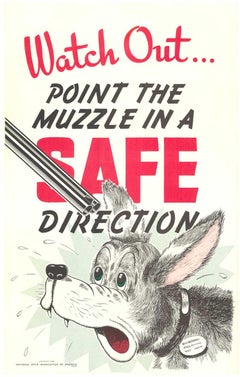
Original Watch Out .. Safe Direction  NRS vintage gun safety poster

Original Watch Out .. Safe Direction NRS vintage gun safety poster

Located in Spokane, WA

Original “Watch Out .. Point the Muzzle in a SAFE Direction” vintage National Rifle Association of America vintage poster. Printed in 1946 on a thick cardboard stock. Excellent ...

Category

1940s American Modern Reuven Rubin Animal Prints

Materials

Lithograph

Lithograph after Georges Braque

Lithograph after Georges Braque, 1964

$1,393

H 14.97 in W 11.03 in D 0.04 in

Lithograph after Georges Braque

Located in Collonge Bellerive, Geneve, CH

Lithograph after Georges Braque From the deluxe art review, Derrière le Mirroir 1964 Printed signature Dimensions: 38 x 28 cm DLM No. 148, 1964 Edition: Foundation Maeght at Saint P...

Category

1960s Modern Reuven Rubin Animal Prints

Materials

Lithograph

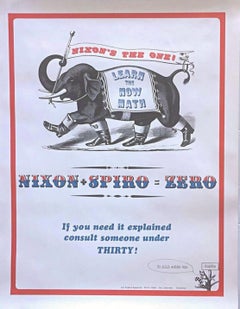
Nixon + Spiro - Zero, Extremely rare 1968 political poster offset lithograph

Nixon + Spiro - Zero, Extremely rare 1968 political poster offset lithograph

Located in New York, NY

Unknown Artist Nixon + Spiro - Zero, 1968 Extremely rare vintage 1960s Offset lithograph poster 28 × 22 inches Publisher Published by Joe A. Kennedy; printed by Provo Press Unframed,...

Category

1960s Outsider Art Reuven Rubin Animal Prints

Materials

Lithograph, Offset
Original "The Greatest Show on Earth" 1951 vintage movie poster US 1-sheet

Original "The Greatest Show on Earth" 1951 vintage movie poster US 1-sheet

Located in Spokane, WA

Original “The Greatest Show on Earth” vintage US 1 sheet movie poster. Cecil B DeMille’s 1951 movie. Archival linen backed in very good condition, ready to frame. Original theater-issued fold marks restored during linen backing. Over 70 years old, 1st printing. Welcome to the circus. The Greatest Show on Earth starring Betty Hutton, Cornel Wilde, Charlton Heston, James Stewart (Jimmy Stewart...

Category

1950s American Modern Reuven Rubin Animal Prints

Materials

Offset

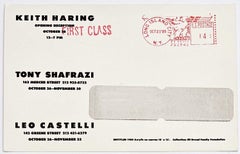
Keith Haring 1985 announcement (Keith Haring Tony Shafarzi Leo Castelli)

Keith Haring 1985 announcement (Keith Haring Tony Shafarzi Leo Castelli)

By Keith Haring

Located in NEW YORK, NY

Keith Haring Tony Shafrazi/Leo Castelli Gallery, New York, 1985: Rare original 1980s Keith Haring announcement published on the occasion of: Keith Haring at Tony Shafrazi Gallery,...

Category

1980s Pop Art Reuven Rubin Animal Prints

Materials

Lithograph, Offset
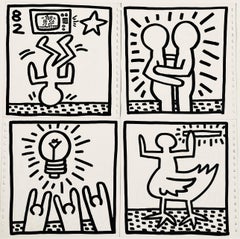
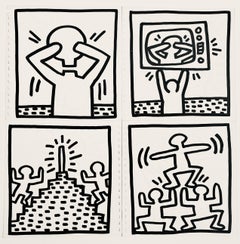
Keith Haring Tony Shafrazi 1982 (set of 4 printed works)

Keith Haring Tony Shafrazi 1982 (set of 4 printed works)

By (after) Keith Haring

Located in NEW YORK, NY

Keith Haring Tony Shafrazi 1982: set of 4 printed works: A set of four double-sided lithographic inserts from the seminal, spiral bound 1982 Keith Haring Tony...

Category

1980s Pop Art Reuven Rubin Animal Prints

Materials

Lithograph, Offset
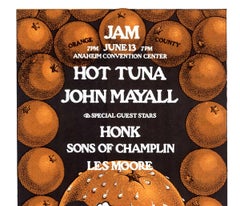
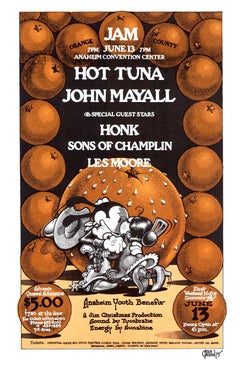
Vintage 1975 Hot Tuna & John Mayall Concert Poster, Original Rick Griffin

Vintage 1975 Hot Tuna & John Mayall Concert Poster, Original Rick Griffin

By Rick Griffin 1

Located in Spokane, WA

Original 1975 Rick Griffin Concert Poster – Hot Tuna, John Mayall, & Honk at Anaheim. Grade A. This is a premier original vintage 1975 concert poster created by the legendary p...

Category

1970s Modern Reuven Rubin Animal Prints

Materials

Offset

Previously Available Items
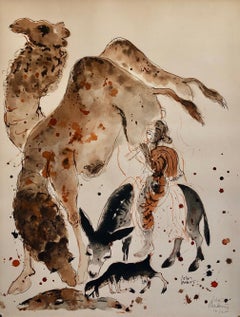
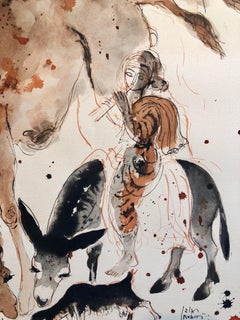
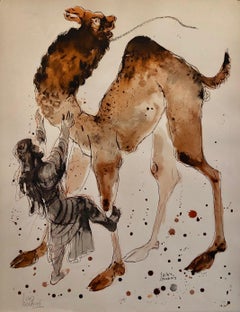
Modern Israeli Lithograph Reuven Rubin Views Of Israel Judaica Camel Rider

Modern Israeli Lithograph Reuven Rubin Views Of Israel Judaica Camel Rider

By Reuven Rubin

Located in Surfside, FL

Lithograph printed by Chez Daniel Jacomet, Paris, France 1960 offset lithograph in colors on Arches, signed in crayon on the justification sheet (this auction is just for the one lithograph pictured as the 1st photo, the justification sheet with the original drawing is just included for provenance and is not part of this sale), on Arches deckle edged paper. limited edition of 250. plate signed and hand signed in pencil. Israeli views Lithograph by Israeli Master. Reuven Rubin 1893 -1974 was a Romanian-born Israeli painter and Israel's first ambassador to Romania. Rubin Zelicovici (later Reuven Rubin) was born in Gala?i to a poor Romanian Jewish Hasidic family. He was the eighth of 13 children. In 1912, he left for Ottoman-ruled Palestine to study art at Bezalel Academy of Art and Design in Jerusalem. Finding himself at odds with the artistic views of the Academy's teachers, he left for Paris, France, in 1913 to pursue his studies at the École Nationale Supérieure des Beaux-Arts. At the outbreak of World War I, he was returned to Romania, where he spent the war years. In 1921, he traveled to the United States with his friend and fellow artist, Arthur Kolnik, with whom he had shared a studio in Cernovitzu. In New York City, the two met artist Alfred Stieglitz, who was instrumental in organizing their first American show at the Anderson Gallery.Following the exhibition, in 1922, they both returned to Europe. In 1923, Rubin emigrated to Mandate Palestine. Rubin met his wife, Esther, in 1928, aboard a passenger ship to Palestine on his return from a show in New York. She was a Bronx girl who had won a trip to Palestine in a Young Judea competition. He died in 1974 Artistic career Joseph Zaritsky...

Category

1960s Modern Reuven Rubin Animal Prints

Materials

Lithograph, Offset
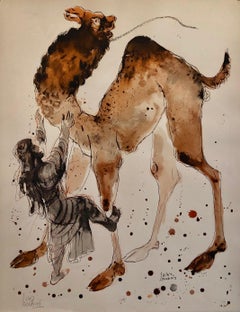
Negev Aglow, Expressionist Lithograph by Reuven Rubin

Negev Aglow, Expressionist Lithograph by Reuven Rubin

By Reuven Rubin

Located in Long Island City, NY

Artist: Reuven Rubin, Israeli (1893 - 1974) Title: Negev Aglow Year: circa 1965 Medium: Lithograph, signed and numbered in pencil Edition: 77/200 Image Size: 19 x 25 inches Frame: 30...

Category

1960s Expressionist Reuven Rubin Animal Prints

Materials

Lithograph

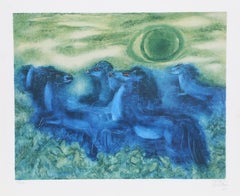
“Horses” Framed Limited Edition Lithograph, Signed by Artist

“Horses” Framed Limited Edition Lithograph, Signed by Artist

By Reuven Rubin

Located in Chesterfield, MI

Limited Edition Lithograph, 43/150. 20.5 x 26 in, Framed. Signed by Artist. Print is in Excellent/Good Condition. Frame and matting show signs of wear/cosmetic imperfections due to a...

Category

Late 20th Century Reuven Rubin Animal Prints

Materials

Lithograph

Modern Israeli Lithograph Reuven Rubin Views Of Israel Judaica Fisherman, Fish

Modern Israeli Lithograph Reuven Rubin Views Of Israel Judaica Fisherman, Fish

By Reuven Rubin

Located in Surfside, FL

Lithograph printed by Chez Daniel Jacomet, Paris, France 1960 offset lithograph in colors on Arches, signed in crayon on the justification sheet (this auction is just for the one lit...

Category

1960s Modern Reuven Rubin Animal Prints

Materials

Lithograph, Offset
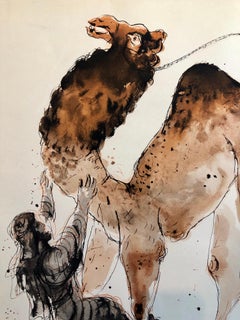
Modern Israeli Lithograph Reuven Rubin Views Of Israel Judaica Crowing Rooster

Modern Israeli Lithograph Reuven Rubin Views Of Israel Judaica Crowing Rooster

By Reuven Rubin

Located in Surfside, FL

Lithograph printed by Chez Daniel Jacomet, Paris, France 1960 offset lithograph in colors on Arches, signed in crayon on the justification sheet (this auction is just for the one lithograph pictured as the 1st photo, the justification sheet with the original drawing is just included for provenance and is not part of this sale), on Arches deckle edged paper. limited edition of 250. plate signed and hand signed in pencil. Israeli views Lithograph by Israeli Master. Reuven Rubin 1893 -1974 was a Romanian-born Israeli painter and Israel's first ambassador to Romania. Rubin Zelicovici (later Reuven Rubin) was born in Gala?i to a poor Romanian Jewish Hasidic family. He was the eighth of 13 children. In 1912, he left for Ottoman-ruled Palestine to study art at Bezalel Academy of Art and Design in Jerusalem. Finding himself at odds with the artistic views of the Academy's teachers, he left for Paris, France, in 1913 to pursue his studies at the École Nationale Supérieure des Beaux-Arts. At the outbreak of World War I, he was returned to Romania, where he spent the war years. In 1921, he traveled to the United States with his friend and fellow artist, Arthur Kolnik, with whom he had shared a studio in Cernovitzu. In New York City, the two met artist Alfred Stieglitz, who was instrumental in organizing their first American show at the Anderson Gallery.Following the exhibition, in 1922, they both returned to Europe. In 1923, Rubin emigrated to Mandate Palestine. Rubin met his wife, Esther, in 1928, aboard a passenger ship to Palestine on his return from a show in New York. She was a Bronx girl who had won a trip to Palestine in a Young Judea competition. He died in 1974 Artistic career Joseph Zaritsky, Arieh Lubin, Yona Zeliuk, Reuven Rubin, Sionah Tagger, Pinchas Litvinovsky, Yitzhak Katz, and Baruch Agadati; The painters who depicted the country’s landscapes in the 1920s rebelled against Bezalel. They sought current styles in Europe that would help portray their own country’s landscape, in keeping with the spirit of the time. Rubin’s Cezannesque landscapes from the 1920s were defined by both a modern and a naive style, portraying the landscape and inhabitants of Israel in a sensitive fashion. His landscape paintings in particular paid special detail to a spiritual, translucent light. In Palestine, he became one of the founders of the new Eretz-Yisrael style. Recurring themes in his work were the bible, the prophet, the biblical landscape, folklore and people, including Yemenite, Hasidic Jews and Arabs. Many of his paintings are sun-bathed depictions of Jerusalem and the Galilee. Rubin might have been influenced by the work of Henri Rousseau whose style combined with Eastern nuances, as well as with the neo-Byzantine art to which Rubin had been exposed in his native Romania. In accordance with his integrative style, he signed his works with his first name in Hebrew and his surname in Roman letters. In 1924, he was the first artist to hold a solo exhibition at the Tower of David, in Jerusalem (later exhibited in Tel Aviv at Gymnasia Herzliya). That year he was elected chairman of the Association of Painters and Sculptors of Palestine. From the 1930s onwards, Rubin designed backdrops for Habima Theater, the Ohel Theater and other theaters. His biography, published in 1969, is titled My Life - My Art. He died in Tel Aviv in October 1974, after having bequeathed his home on 14 Bialik Street and a core collection of his paintings to the city of Tel Aviv. The Rubin Museum opened in 1983. The director and curator of the museum is his daughter-in-law, Carmela Rubin.Rubin's paintings are now increasingly sought after. At a Sotheby's auction in New York in 2007, his work accounted for six of the ten top lots. Selected group exhibitions: 2015 Israeli Art: The Renewed Collection Galleries, Dr. Julius and Hilde Merzbacher Galleries and the Ayala Zacks Abramov Pavilion for Israeli Art, Israel Museum, Jerusalem Artists: Reuven Rubin, Ephraim Moses Lilien, Yitzhak Danziger, Lea Nikel, Naftali Bezem, Mordecai Ardon, David Reeb, Ruth Schloss, Yehiel Shemi, Menashe Kadishman, Avigdor Arikha, Moshe Gershuni, Moshe Geva, Tsibi Ginton, David Gitlin, Michael Klapisch, Liliane Klasmer, Gabi Krakauer, Leopold Moshe Kupferman, Sigalit Landau, Moshe Mokady, Ori Reisman...

Category

1960s Modern Reuven Rubin Animal Prints

Materials

Lithograph, Offset
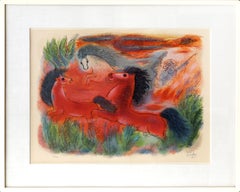
Modern Israeli Lithograph Reuven Rubin Views Of Israel Judaica Horses, Riders

Modern Israeli Lithograph Reuven Rubin Views Of Israel Judaica Horses, Riders

By Reuven Rubin

Located in Surfside, FL

Lithograph printed by Chez Daniel Jacomet, Paris, France 1960 offset lithograph in colors on Arches, signed in crayon on the justification sheet (this auction is just for the one lithograph pictured as the 1st photo, the justification sheet with the original drawing is just included for provenance and is not part of this sale), on Arches deckle edged paper. limited edition of 250. plate signed and hand signed in pencil. Israeli views Lithograph by Israeli Master. Reuven Rubin 1893 -1974 was a Romanian-born Israeli painter and Israel's first ambassador to Romania. Rubin Zelicovici (later Reuven Rubin) was born in Gala?i to a poor Romanian Jewish Hasidic family. He was the eighth of 13 children. In 1912, he left for Ottoman-ruled Palestine to study art at Bezalel Academy of Art and Design in Jerusalem. Finding himself at odds with the artistic views of the Academy's teachers, he left for Paris, France, in 1913 to pursue his studies at the École Nationale Supérieure des Beaux-Arts. At the outbreak of World War I, he was returned to Romania, where he spent the war years. In 1921, he traveled to the United States with his friend and fellow artist, Arthur Kolnik, with whom he had shared a studio in Cernovitzu. In New York City, the two met artist Alfred Stieglitz, who was instrumental in organizing their first American show at the Anderson Gallery.Following the exhibition, in 1922, they both returned to Europe. In 1923, Rubin emigrated to Mandate Palestine. Rubin met his wife, Esther, in 1928, aboard a passenger ship to Palestine on his return from a show in New York. She was a Bronx girl who had won a trip to Palestine in a Young Judea competition. He died in 1974 Artistic career Joseph Zaritsky, Arieh Lubin, Yona Zeliuk, Reuven Rubin, Sionah Tagger, Pinchas Litvinovsky, Yitzhak Katz, and Baruch Agadati; The painters who depicted the country’s landscapes in the 1920s rebelled against Bezalel. They sought current styles in Europe that would help portray their own country’s landscape, in keeping with the spirit of the time. Rubin’s Cezannesque landscapes from the 1920s were defined by both a modern and a naive style, portraying the landscape and inhabitants of Israel in a sensitive fashion. His landscape paintings in particular paid special detail to a spiritual, translucent light. In Palestine, he became one of the founders of the new Eretz-Yisrael style. Recurring themes in his work were the bible, the prophet, the biblical landscape, folklore and people, including Yemenite, Hasidic Jews and Arabs. Many of his paintings are sun-bathed depictions of Jerusalem and the Galilee. Rubin might have been influenced by the work of Henri Rousseau whose style combined with Eastern nuances, as well as with the neo-Byzantine art to which Rubin had been exposed in his native Romania. In accordance with his integrative style, he signed his works with his first name in Hebrew and his surname in Roman letters. In 1924, he was the first artist to hold a solo exhibition at the Tower of David, in Jerusalem (later exhibited in Tel Aviv at Gymnasia Herzliya). That year he was elected chairman of the Association of Painters and Sculptors of Palestine. From the 1930s onwards, Rubin designed backdrops for Habima Theater, the Ohel Theater and other theaters. His biography, published in 1969, is titled My Life - My Art. He died in Tel Aviv in October 1974, after having bequeathed his home on 14 Bialik Street and a core collection of his paintings to the city of Tel Aviv. The Rubin Museum opened in 1983. The director and curator of the museum is his daughter-in-law, Carmela Rubin.Rubin's paintings are now increasingly sought after. At a Sotheby's auction in New York in 2007, his work accounted for six of the ten top lots. Selected group exhibitions: 2015 Israeli Art: The Renewed Collection Galleries, Dr. Julius and Hilde Merzbacher Galleries and the Ayala Zacks Abramov Pavilion for Israeli Art, Israel Museum, Jerusalem Artists: Reuven Rubin, Ephraim Moses...

Category

1960s Modern Reuven Rubin Animal Prints

Materials

Lithograph, Offset
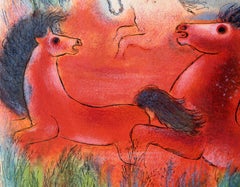
Modern Israeli Lithograph Reuven Rubin Views Of Israel Judaica Camel Rider Goat

Modern Israeli Lithograph Reuven Rubin Views Of Israel Judaica Camel Rider Goat

By Reuven Rubin

Located in Surfside, FL

Lithograph printed by Chez Daniel Jacomet, Paris, France 1960 offset lithograph in colors on Arches, signed in crayon on the justification sheet (this auction is just for the one lit...

Category

1960s Modern Reuven Rubin Animal Prints

Materials

Lithograph, Offset
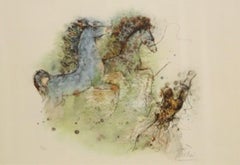
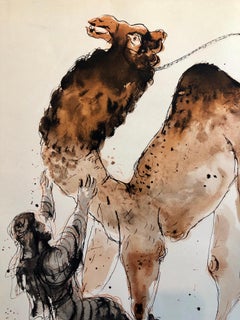
Modern Israeli Lithograph Reuven Rubin Views Of Israel Judaica Camel Rider

Modern Israeli Lithograph Reuven Rubin Views Of Israel Judaica Camel Rider

By Reuven Rubin

Located in Surfside, FL

Lithograph printed by Chez Daniel Jacomet, Paris, France 1960 offset lithograph in colors on Arches, signed in crayon on the justification sheet (this auction is just for the one lit...

Category

1960s Modern Reuven Rubin Animal Prints

Materials

Lithograph, Offset

Modern Israeli Lithograph Reuven Rubin Views Of Israel Judaica Camel Rider

Modern Israeli Lithograph Reuven Rubin Views Of Israel Judaica Camel Rider

By Reuven Rubin

Located in Surfside, FL

Lithograph printed by Chez Daniel Jacomet, Paris, France 1960 offset lithograph in colors on Arches, signed in crayon on the justification sheet (this auction is just for the one lithograph pictured as the 1st photo, the justification sheet with the original drawing is just included for provenance and is not part of this sale), on Arches deckle edged paper. limited edition of 250. plate signed and hand signed in pencil. Israeli views Lithograph by Israeli Master. Reuven Rubin 1893 -1974 was a Romanian-born Israeli painter and Israel's first ambassador to Romania. Rubin Zelicovici (later Reuven Rubin) was born in Gala?i to a poor Romanian Jewish Hasidic family. He was the eighth of 13 children. In 1912, he left for Ottoman-ruled Palestine to study art at Bezalel Academy of Art and Design in Jerusalem. Finding himself at odds with the artistic views of the Academy's teachers, he left for Paris, France, in 1913 to pursue his studies at the École Nationale Supérieure des Beaux-Arts. At the outbreak of World War I, he was returned to Romania, where he spent the war years. In 1921, he traveled to the United States with his friend and fellow artist, Arthur Kolnik, with whom he had shared a studio in Cernovitzu. In New York City, the two met artist Alfred Stieglitz, who was instrumental in organizing their first American show at the Anderson Gallery.Following the exhibition, in 1922, they both returned to Europe. In 1923, Rubin emigrated to Mandate Palestine. Rubin met his wife, Esther, in 1928, aboard a passenger ship to Palestine on his return from a show in New York. She was a Bronx girl who had won a trip to Palestine in a Young Judea competition. He died in 1974 Artistic career Joseph Zaritsky, Arieh Lubin, Yona Zeliuk, Reuven Rubin, Sionah Tagger, Pinchas Litvinovsky, Yitzhak Katz, and Baruch Agadati; The painters who depicted the country’s landscapes in the 1920s rebelled against Bezalel. They sought current styles in Europe that would help portray their own country’s landscape, in keeping with the spirit of the time. Rubin’s Cezannesque landscapes from the 1920s were defined by both a modern and a naive style, portraying the landscape and inhabitants of Israel in a sensitive fashion. His landscape paintings in particular paid special detail to a spiritual, translucent light. In Palestine, he became one of the founders of the new Eretz-Yisrael style. Recurring themes in his work were the bible, the prophet, the biblical landscape, folklore and people, including Yemenite, Hasidic Jews and Arabs. Many of his paintings are sun-bathed depictions of Jerusalem and the Galilee. Rubin might have been influenced by the work of Henri Rousseau whose style combined with Eastern nuances, as well as with the neo-Byzantine art to which Rubin had been exposed in his native Romania. In accordance with his integrative style, he signed his works with his first name in Hebrew and his surname in Roman letters. In 1924, he was the first artist to hold a solo exhibition at the Tower of David, in Jerusalem (later exhibited in Tel Aviv at Gymnasia Herzliya). That year he was elected chairman of the Association of Painters and Sculptors of Palestine. From the 1930s onwards, Rubin designed backdrops for Habima Theater, the Ohel Theater and other theaters. His biography, published in 1969, is titled My Life - My Art. He died in Tel Aviv in October 1974, after having bequeathed his home on 14 Bialik Street and a core collection of his paintings to the city of Tel Aviv. The Rubin Museum opened in 1983. The director and curator of the museum is his daughter-in-law, Carmela Rubin.Rubin's paintings are now increasingly sought after. At a Sotheby's auction in New York in 2007, his work accounted for six of the ten top lots. Selected group exhibitions: 2015 Israeli Art: The Renewed Collection Galleries, Dr. Julius and Hilde Merzbacher Galleries and the Ayala Zacks Abramov Pavilion for Israeli Art, Israel Museum, Jerusalem Artists: Reuven Rubin, Ephraim Moses Lilien, Yitzhak Danziger, Lea Nikel, Naftali Bezem, Mordecai Ardon, David Reeb, Ruth Schloss, Yehiel Shemi, Menashe Kadishman, Avigdor Arikha, Moshe Gershuni, Moshe Geva, Tsibi Ginton, David Gitlin, Michael Klapisch, Liliane Klasmer, Gabi Krakauer, Leopold Moshe Kupferman, Sigalit Landau, Moshe Mokady, Ori Reisman...
Category

1960s Modern Reuven Rubin Animal Prints

Materials

Lithograph, Offset

Sunset in the Negev
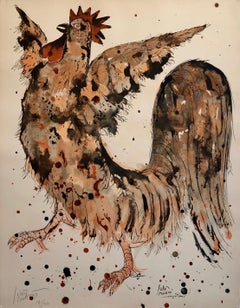
Sunset in the Negev
Sunset in the Negev
By Reuven Rubin

Located in Long Island City, NY

Artist: Reuven Rubin, Israeli (1893 - 1974) Title: Sunset in the Negev Year: circa 1965 Medium: Lithograph, signed and numbered in pencil Edition: 59/200 Image Size: 16 x 20 inches S...

Category

1960s Expressionist Reuven Rubin Animal Prints

Materials

Lithograph

CHARIOT OF FIRE  signed numbered LITHOGRAPH

CHARIOT OF FIRE signed numbered LITHOGRAPH

By Reuven Rubin

Located in Surfside, FL

Biblical themed Lithograph (or Silkscreen) by Israeli Master. it depicts Horses and a chariot ascending to heaven. this might be from the Prophets series. I have aso seen this piece ...

Category

20th Century Modern Reuven Rubin Animal Prints

Materials

Lithograph

Reuven Rubin animal prints for sale on 1stDibs.

Find a wide variety of authentic Reuven Rubin animal prints available for sale on 1stDibs. You can also browse by medium to find art by Reuven Rubin in lithograph, offset print, mixed media and more. Much of the original work by this artist or collective was created during the 20th century and is mostly associated with the modern style. Not every interior allows for large Reuven Rubin animal prints, so small editions measuring 14 inches across are available. Customers who are interested in this artist might also find the work of Jean Cocteau, Bernard Buffet, and Ray H. French. Reuven Rubin animal prints prices can differ depending upon medium, time period and other attributes. On 1stDibs, the price for these items starts at $800 and tops out at $1,500, while the average work can sell for $900.