By Maison Gripoix
Located in New York, NY
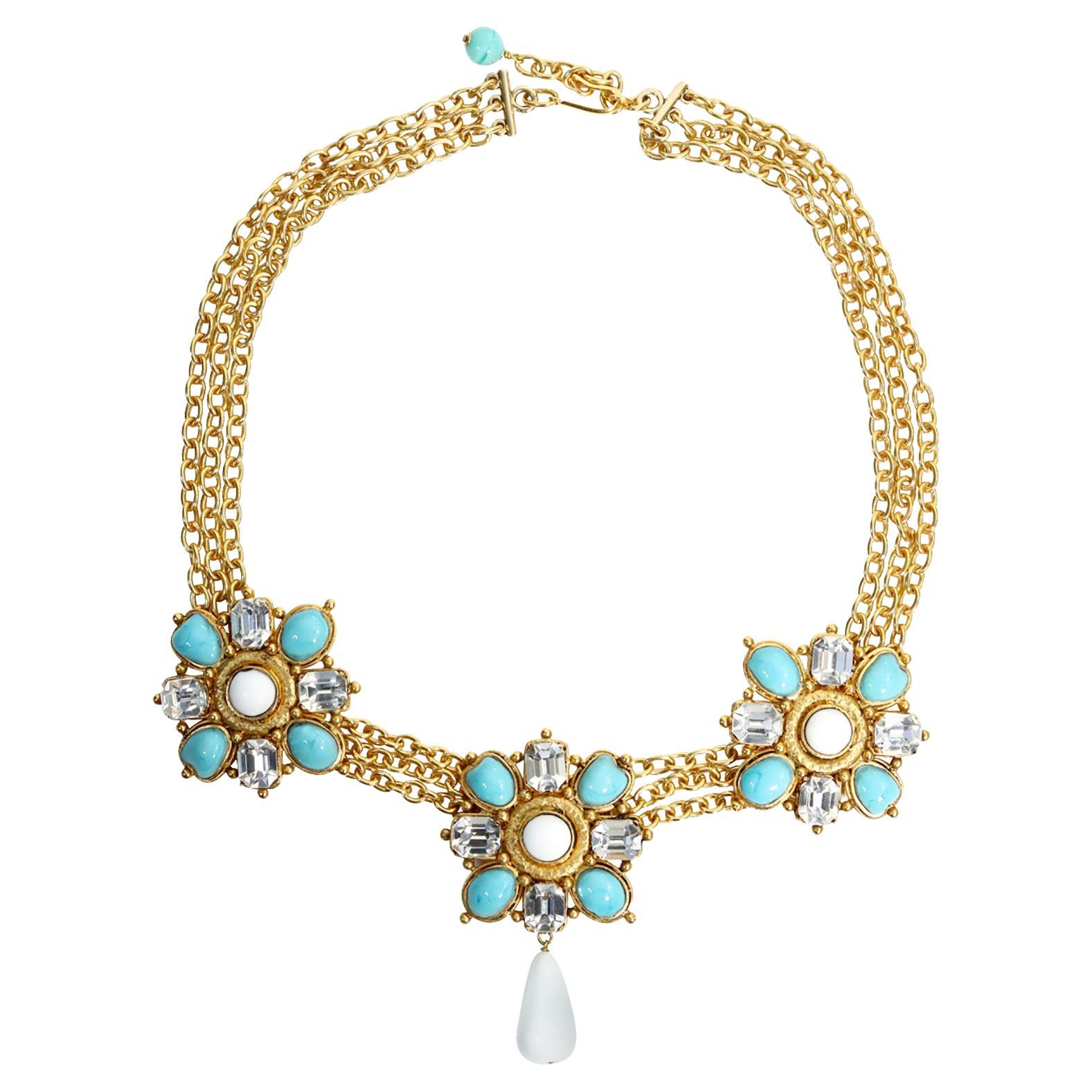
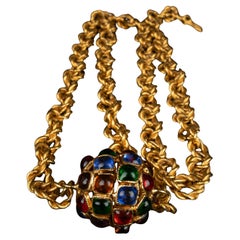
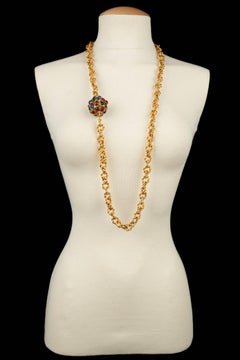
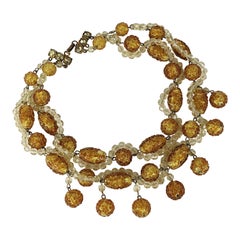
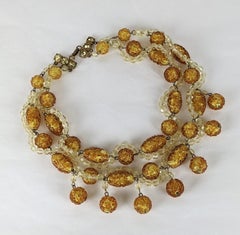
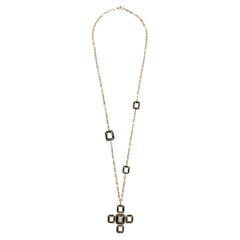
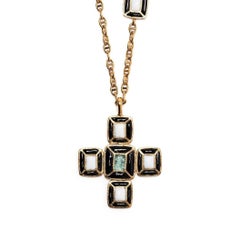
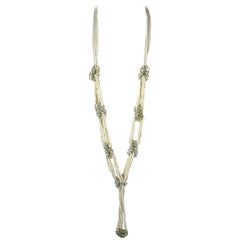
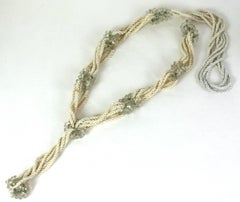
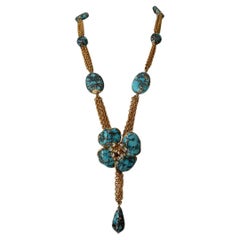
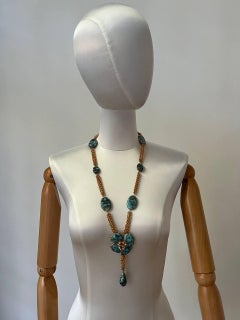
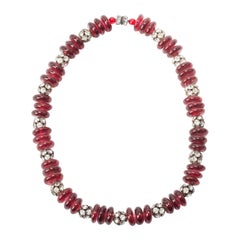
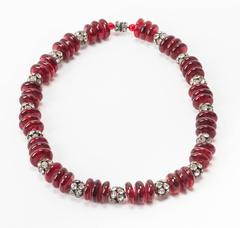
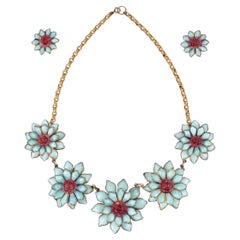
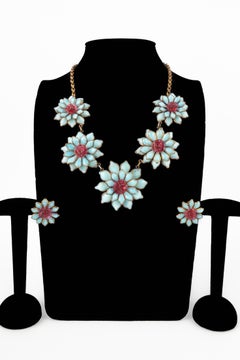
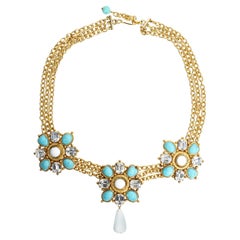
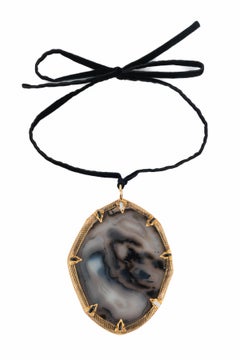
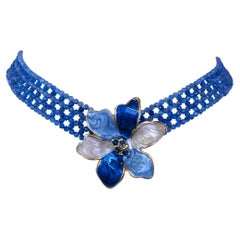
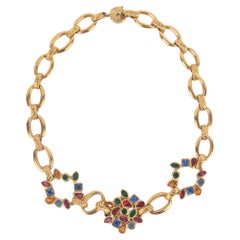
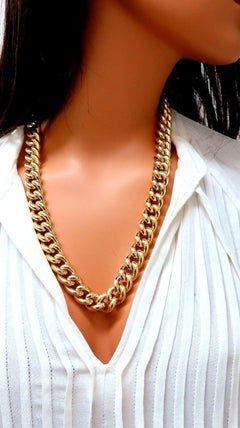
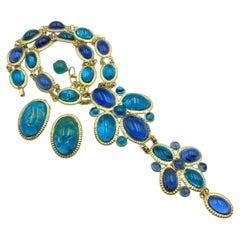
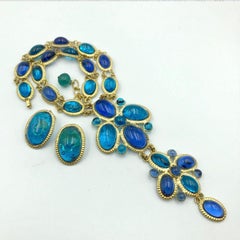
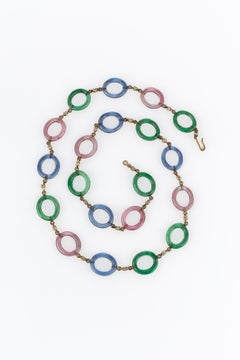
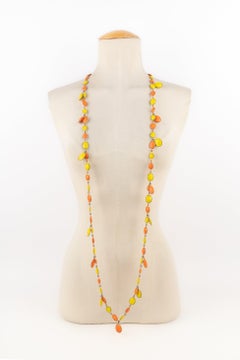
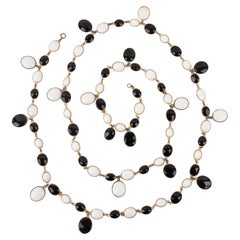
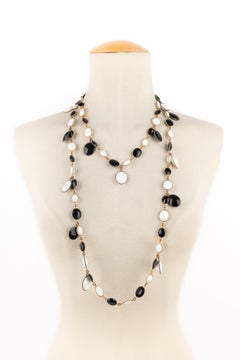
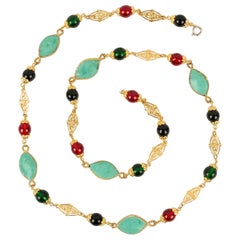
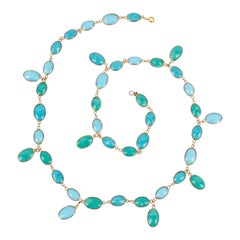
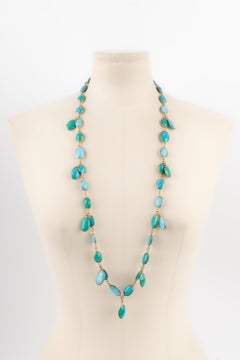
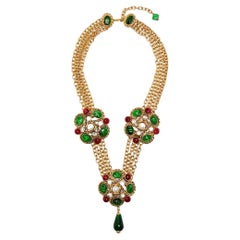
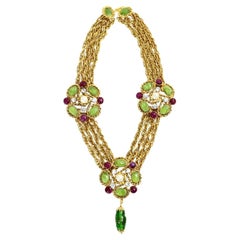
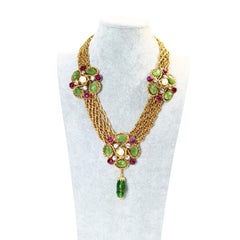
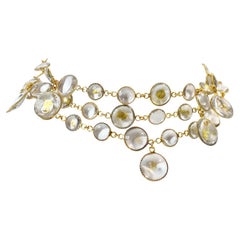
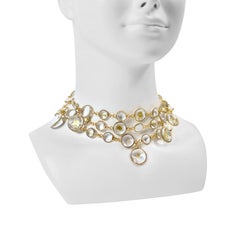
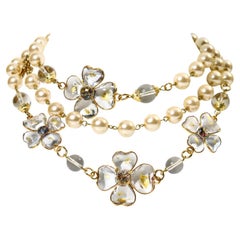
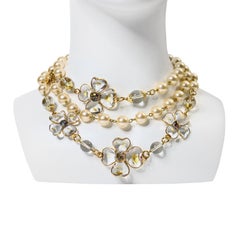
Vintage Maison Gripoix White, Crystal, and Faux Turquoise on Gold Chain Necklace. 3 Different Emblems On a Gold Chain with a Dangling White Piece in the Middle. 22"-24" L. Dangling Middle is 3" L. Each Piece is 2" by 2"
Guy de Maupassant wrote a famous story about a necklace. The story is about a young, pretty, intelligent, well-educated, but poorly endowed bride who has to marry a petty official; thus, suffering from the limitations of living a life with a husband who lacks any exquisite qualities. One day, to entertain his dejected spouse, her husband receives an invitation to a ball and gives his wife the 400 francs he had saved for a hunting rifle so that she can order an appropriate dress.
However, when the dress is ready, it becomes clear that it is lacking jewelry, and it would be impossible to attend the ball while looking so poor. The protagonist approaches her wealthy childhood friend, with whom she was raised at the monastery, and borrows a diamond necklace from her. The ball is a great success, and she is the centre of attention. However, when the woman returns home, she discovers that she has lost the necklace. To conceal her faux pas from her friend, she buys a new necklace identical to the one she lost. To pay it off, the woman gets into a massive debt, which, over the years, gradually drags her down the social ladder from the bourgeoisie to poverty. Ten years later, having lost her good looks, the woman encounters her friend on the Champs Élysées, who still looks young, beautiful, and rich. The protagonist reveals to her friend the entire story about the necklace, but her friend replies in amazement that the diamonds were fake and would “cost 500 francs at most.”
Maison Gripoix starts with a dramatic story. In 1869 (or a year earlier, according to other sources), Paris master glassmaker Augustina Gripoix began creating replicas of pearls and crystals, casting glass into various shapes and colors and setting them in the most sophisticated settings. She used the pâte de verre (glass paste) technique, whereby a traditional ceramic or gypsum form was filled with a multi-colour piece of glass and special gluing substances and then baked in a furnace, resulting in objects featuring fantastical hues. Only Augustina made her crystals by pouring the melted glass paste into the press moulds, skipping the furnace step, allowing her to achieve the purity of colour, transparency, and shine. She found a simple method to make beautiful jewelry. Thus, Marquises, Duchesses, and Princesses queued up ... so Madame Gripoix would make them replicas of their own jewelry in case of robbery or loss, or some unusual jewelry pieces for their new wraps, neckpieces, or boas. The so-called ‘costume jewelry’ emerged to a large extent thanks to the work of Maison Gripoix.
Augustina Gripoix earned her fame in the 1890s when she began creating necklaces for Sarah Bernhardt to wear on stage and later designed costume jewelry for the first high-fashion house of Charles Frederick Worth. Later, Paul Poiret, the leading couturier of 1910, contacted her, and she created sophisticated Oriental-style jewelry to match his famous Oriental costumes, based on the aesthetic of Diaghilev’s initial Russian seasons.
The value of costume jewelry was now being recognized in its own right and not just for imitation purposes. The taste of emancipated young girls, who were gaining more and more freedom and opportunities, was best met with bijouterie. So in the 1920s, when Augustina’s daughter Susan became the head of the House, Gripoix prospects became even more exciting—girls with short-cropped hair in short dresses zoomed by in open-top cars wearing bijou rather than diamonds. Everyone ordered bijouterie from Madam Gripoix during this period, from Jeanne Lanvin to Jean Piguet...
Category
1990s French Modern Maison Gripoix Necklaces