Painted Decorative Objects

to
1,413
8,698
1,571
245
734
2,712
5,252
1,816
1,454
2,176
998
227
107
247
287
94
230
382
363
193
98
1,040
895
727
506
406
280
261
207
193
191
149
103
82
75
72
63
61
53
6,858
3,478
2,953
1,642
848
4,980
4,553
7,451
1,917
1,794
1,594
1,296
Height
to
Width
to
10,514
9,904
10,210
306
233
160
148
139
Technique: Painted
Small Figurative Ceramic Candle Holder, 1960s

Small Figurative Ceramic Candle Holder, 1960s

Modernist terracotta candle holder with sculpted face, hair and body. Hand-applied glaze in matte anthracite black on eyes, hair and clothes. Made to fit a slender candle. By ceramic...

Category

Mid-20th Century Danish Mid-Century Modern Painted Decorative Objects

Materials

Ceramic, Stoneware, Pottery, Terracotta

French Louis XV Style “Tournant” Mantel Clock, Napoleon III Period, Paris, 1855

French Louis XV Style “Tournant” Mantel Clock, Napoleon III Period, Paris, 1855

By Eug. Vincent & Cie

Located in MADRID, ES

French Louis XV Style “Tournant” Mantel Clock, Napoleon III Period, Paris, 1855 In gilt bronze (ormolu) and Sèvres enamel. The base is crafted in white Carrara marble, decorated wit...

Category

1850s French Louis XV Antique Painted Decorative Objects

Materials

Carrara Marble, Bronze, Copper, Enamel

Photo Frame baroque style engraving Sterling Silver Salimbeni

Photo Frame baroque style engraving Sterling Silver Salimbeni

By Franco Salimbeni, Salimbeni

Located in Firenze, FI

Octagonal notched photo frame in 925/1000 sterling silver gold plated with fine fire-enamelled baroque style engraving. External dimensions cm. 14.2 x 17.8, internal oval cm. 8 x 12....

Category

1970s Italian Baroque Vintage Painted Decorative Objects

Materials

Gold Plate, Sterling Silver, Enamel

Moroccan Decorative Cat Sculpture Handbuilt and Handpainted by Potter Houda

Moroccan Decorative Cat Sculpture Handbuilt and Handpainted by Potter Houda

Located in Marseille, FR

- Hand built decorative cat sculpture - made of clay collected from the potter's surroundings. - decorative motifs painted with a goat hair brush made b...

Category

2010s Moroccan Folk Art Painted Decorative Objects

Materials

Clay, Earthenware

Mid Century Big King White Poodle Dog Sculpture, Italy, 1960s

Mid Century Big King White Poodle Dog Sculpture, Italy, 1960s

Located in 05-080 Hornowek, PL

Painted ceramic, very good original vintage condition. No damages or cracks. Beautiful and unique decorative sculpture. Big King White Poodle Dog Sculptur...

Category

20th Century Italian Mid-Century Modern Painted Decorative Objects

Materials

Ceramic

Vintage Mid-Century Pedal Car Fire Truck

Vintage Mid-Century Pedal Car Fire Truck

Located in Chicago, IL

Vibrant, sleek and full of character, this vintage pedal car was once the prized possession of children all across America. A popular toy since the late 19th century, pedal cars expe...

Category

Mid-20th Century American Industrial Painted Decorative Objects

Materials

Steel

French Sèvres Porcelain Bronze Mounted Cobalt & Raised Gilt Gold Covered Urn

French Sèvres Porcelain Bronze Mounted Cobalt & Raised Gilt Gold Covered Urn

Located in Tarry Town, NY

Elegant antique French Sèvres porcelain covered decorative urn, made in France in the late 19th century and finely executed with hand-painted decoration and richly cast bronze mounts...

Category

1870s French Louis XVI Antique Painted Decorative Objects

Materials

Bronze

Pair of Attic Red-Figured Glaux

Pair of Attic Red-Figured Glaux

Located in Los Angeles, CA

A charming pair, with the usualy disparate glaux handles, one vertical strap and one horizontal. One of the pair is slightly larger than the other, with a seated, draped winged Nike ...

Category

15th Century and Earlier Greek Classical Greek Antique Painted Decorative Objects

Materials

Terracotta

Cigarette Case black lines Art Deco style Salimbeni

Cigarette Case black lines Art Deco style Salimbeni

By Salimbeni, Cartier

Located in Firenze, FI

Rectangular pocket cigarette case with long rounded sides in 925/1000 sterling silver with black fire-enamelled stripes. With button and spring opening. Measurements cm. 10.3 x 5.8 ...

Category

1980s Italian Art Deco Vintage Painted Decorative Objects

Materials

Sterling Silver, Enamel

Late 20th Century Large Pair of Dresden-Style Hand Painted Porcelain Urns

Late 20th Century Large Pair of Dresden-Style Hand Painted Porcelain Urns

Located in Stamford, CT

A beautiful pair of Dresden style hand painted porcelain urns with lids. A very impressive and decorative pair of Dresden style lidded porcelain urns. Classical romantic hand painted...

Category

Late 20th Century Chinese Painted Decorative Objects

Materials

Porcelain

Mid-Century Vase by Fratelli Fanciullacci Italy

Mid-Century Vase by Fratelli Fanciullacci Italy

By Fratelli Fanciullacci

Located in Waddinxveen, ZH

Stunning and vibrant, 15 cm high, vase with sgrafitto and hand-painted colored glossy pattern of two different animals. Fratelli Fanciullacci Pottery: during the first half of the 2...

Category

Mid-20th Century Italian Mid-Century Modern Painted Decorative Objects

Materials

Ceramic

Early 20th Century French Hand-Painted Faience Terrine from Rouen

Early 20th Century French Hand-Painted Faience Terrine from Rouen

By Rouen

Located in Verviers, BE

The designs on this French faience group is typical of pottery made in Rouen. Early 20th century French hand-painted Faience Terrine from Rouen. Marking on the bottom: "Rouen Fait...

Category

Early 20th Century French Painted Decorative Objects

Materials

Faience

Japanese Contemporary Platinum Blue Porcelain Plate by Master Artist, 3

Japanese Contemporary Platinum Blue Porcelain Plate by Master Artist, 3

Located in Takarazuka, JP

Exquisite dimpled Japanese decorative porcelain plate intricately hand painted, showcasing a dramatic breathtaking phoenix in deep blue extending its beautiful long wings to cover th...

Category

21st Century and Contemporary Japanese Meiji Painted Decorative Objects

Materials

Gold

Erphila Art Pottery Art Deco Cubist Ceramic Vase, Germany 1920s

Erphila Art Pottery Art Deco Cubist Ceramic Vase, Germany 1920s

By Erphila

Located in Clifton Springs, NY

Antique or vintage art pottery vase features tapered body with elongated cylindrical neck, decorated with wide band of abstract graphic motifs in Cubist style with Art Deco influence...

Category

Early 20th Century German Art Deco Painted Decorative Objects

Materials

Ceramic, Majolica, Pottery

Lomonosov Porcelain Vase, Floral Design, Cobalt Blue & Gold, 1950s

Lomonosov Porcelain Vase, Floral Design, Cobalt Blue & Gold, 1950s

By Lomonosov, Royal Daulton, Royal Copenhagen, Royal Delft

Located in Copenhagen, DK

Large Russian white, blue and gold floral porcelain vase manufactured in the 1950s by the Lomonosov Porcelain Factory which was founded in 1744. Soft shaped organic midcentury modern...

Category

Mid-20th Century Russian Mid-Century Modern Painted Decorative Objects

Materials

Gold

A Fine Pair of Pottery Sparrow Hawks

A Fine Pair of Pottery Sparrow Hawks

Located in London, GB

A fine pair of mid nineteenth century pottery sparrow hawk sculptures, with finely painted feathers, the opposing hawks perched on naturalistic bases.

Category

Mid-19th Century European Antique Painted Decorative Objects

Materials

Pottery

French Majolica Aesthetic /Japonisme Vase, Attributed to Theodore Deck

French Majolica Aesthetic /Japonisme Vase, Attributed to Theodore Deck

By Theodore Deck

Located in West Palm Beach, FL

French Majolica Japonisme vase, attributed to Theodore Deck  France, Late 19th Century  This exquisite late 19th-century French Majolica vase, attributed to the renowned ceramist Th...

Category

Late 19th Century French Japonisme Antique Painted Decorative Objects

Materials

Majolica

Chinese Turquoise Enamel Hand Painted Porcelain Ovoid Lidded Ginger Jar

Chinese Turquoise Enamel Hand Painted Porcelain Ovoid Lidded Ginger Jar

Located in Doylestown, PA

Vibrant vintage Chinese hand-painted, ovoid form porcelain lidded ginger jar, circa 1960-70s. The jar displays prominent, bright coral phoenix birds against a turquoise background su...

Category

Mid-20th Century Chinese Painted Decorative Objects

Materials

Enamel

Walt Disney, Minnie Mouse Cookie Jar15

Walt Disney, Minnie Mouse Cookie Jar15

Located in Guaynabo, PR

This is a Walt Disney, Minnie Mouse Cookie Jar. It depicts a hand painted glazed ceramic cookie jar shaped as a flirty seated Minnie Mouse. Bel...

Category

20th Century Mexican Modern Painted Decorative Objects

Materials

Ceramic

19th Century Tall Gilt Porcelain Decorative Vase / Piece

19th Century Tall Gilt Porcelain Decorative Vase / Piece

Located in Tarry Town, NY

19th century very tall gilt porcelain decorative vase / piece with exterior floral design details . The vase / piece is in good condition . Minor wear appropriate with age / use . Nu...

Category

Mid-19th Century French Antique Painted Decorative Objects

Materials

Gold

Chinese Famille Rose Kamcheng Jar, Purple Ground, Dayazhai Style

Chinese Famille Rose Kamcheng Jar, Purple Ground, Dayazhai Style

Located in Glasgow, GB

This Chinese famille rose kamcheng jar is a fine example of late Qing-style porcelain, crafted in the vibrant Dayazhai style circa mid-20th century. The kamcheng, a Straits Chinese t...

Category

Mid-20th Century Chinese Qing Painted Decorative Objects

Materials

Porcelain

Théodore deck (1823-1891), A Gourd Shape Enameled Faïence Vase, circa 1885

Théodore deck (1823-1891), A Gourd Shape Enameled Faïence Vase, circa 1885

By Theodore Deck

Located in Saint-Ouen, FR

Théodore Deck (1823-1891) Gourd shape vase with a spherical body and straight neck Polychrome glazed earthenware designed on both sides with a bird, butterflies, a bee, and flowers o...

Category

1880s French Aesthetic Movement Antique Painted Decorative Objects

Materials

Faience

Large Antique Blue and White Dutch Delft Charger with Birds and Flower Basket

Large Antique Blue and White Dutch Delft Charger with Birds and Flower Basket

By Delft

Located in Katonah, NY

This blue and white Dutch Delft charger was hand-painted in deep cobalt blue in the 18th century, circa 1780. The central scene features a pair of birds in flight above a basket brimming with full blooms and leafy stems. The birds—elegantly rendered with wings extended—add a sense of movement and vitality to the design. The flower basket is painted with expressive brushwork, creating a beautiful and balanced composition. Surrounding the central reserve is a wide border of scrolling foliate motifs and stylized floral panels. This charger exemplifies the refined decorative tradition of 18th-century Delftware. Its tin-glazed surface enhances the depth of the blue pigment, and the expressive brushwork throughout reveals the painter's skill. Dimensions: 14" diameter Condition: Excellent—very minor expected wear consistent with age Decoration: Birds in flight, flower basket, and scrolling floral border Price: $980 Material: Tin-glazed earthenware (Delftware) Style: Dutch Delft, Chinoiserie-inspired decoration Origin: Netherlands Date: 18th century, circa 1780 Key Features   • Hand-painted scene with birds and blooming basket   • Expressive brushwork and deep cobalt blue decoration   • Wide floral border with scrolling foliate motifs   • Tin-glazed surface characteristic of Delftware   • Reverse shows three stilt marks from traditional 18th-century kiln firing   • Fine example of Dutch Delft painting...

Category

Late 18th Century Antique Painted Decorative Objects

Materials

Delft

1920s Art Déco French Hand-Painted Frosted Vase by Charder for Le Verre Français

1920s Art Déco French Hand-Painted Frosted Vase by Charder for Le Verre Français

By Charder, Le Verre Francais

Located in North Miami, FL

1920s Art Déco French Le Verre Français hand-painted frosted glass vase designed by Charder By: Chander, Le Verre Français, Schneider Material: glass, art glass, paint Technique: ca...

Category

1920s French Art Deco Vintage Painted Decorative Objects

Materials

Glass, Art Glass, Paint

elegant floral artful Italian vase by Elio Schiavon Italy 1960s handpainted

elegant floral artful Italian vase by Elio Schiavon Italy 1960s handpainted

By Elio Schiavon

Located in Landshut, BY

This beautiful ceramic vase, which features a floral painting very similar to the designs of the renowned art mirror, was meticulously hand-painted in the Italian province of South T...

Category

1960s Italian Mid-Century Modern Vintage Painted Decorative Objects

Materials

Pottery

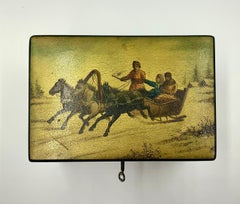
Antique Imperial Russian Lukutin Racing Winter Troika Lacquer Jewelry Casket Box

Antique Imperial Russian Lukutin Racing Winter Troika Lacquer Jewelry Casket Box

Located in New York, NY

Fine antique Imperial Russian lacquer Racing Winter Troika jewelry casket by the Lukutin Workshops 19th Century In exceptionally fine condition with original key The Russian lacquerw...

Category

19th Century Russian Antique Painted Decorative Objects

Materials

Lacquer

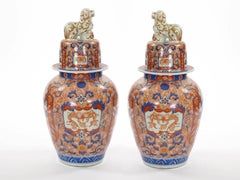
Pair of Chinese Polychrome Porcelain Lidded Vases

Pair of Chinese Polychrome Porcelain Lidded Vases

Located in LA CIOTAT, FR

This pair of exquisite lidded Chinoiserie vases, or ginger jars, features an intricate, hand-painted polychrome decoration of flowers and foo dogs – mythical lion-like creatures that...

Category

20th Century Chinese Painted Decorative Objects

Materials

Porcelain, Paint

Art pottery Vide-Poche or plate by Inger Persson for Rörstrand, Sweden

Art pottery Vide-Poche or plate by Inger Persson for Rörstrand, Sweden

By Rörstrand, Inger Persson

Located in Skarpnäck, SE

A signed rare abstract Scandinavian Mid- century modern art ceramic plate made by Inger Persson in the 1960s for Rörstrand, Sweden. This is a studio production and has an unusual pat...

Category

1970s Swedish Mid-Century Modern Vintage Painted Decorative Objects

Materials

Ceramic

Ernst Wahliss Turn Wein Austrian Art Nouveau Figural Lily Vase

Ernst Wahliss Turn Wein Austrian Art Nouveau Figural Lily Vase

By Ernst Wahliss

Located in Bishop's Stortford, Hertfordshire

A stunning Turn Wein Austrian art nouveau figural vase formed as a lily by renowned ceramicist Ernst Wahliss (Austrian, 1837-1900) dating from around 1900. The tall and elegant porce...

Category

1890s Austrian Art Nouveau Antique Painted Decorative Objects

Materials

Porcelain

Vase Painted Two-handled Amphora Majolica Renaissance Vessel Italian Ceramic

Vase Painted Two-handled Amphora Majolica Renaissance Vessel Italian Ceramic

By deBlona

Located in Recanati, IT

This large luxurious amphora, in majolica handmade in Italy and hand-painted in polychrome, is characterized by a dense presence of naturalistic ornamental motifs that decorate the v...

Category

21st Century and Contemporary Italian Modern Painted Decorative Objects

Materials

Ceramic, Majolica

19th Century Capodimonte Polychrome Porcelain Incense Burners Vases with Flowers

19th Century Capodimonte Polychrome Porcelain Incense Burners Vases with Flowers

By Capodimonte

Located in Firenze, IT

An exquisite pair of early 19th century Italian Capodimonte Rocococ style polychrome porcelain incense burners in the form of urn shaped vases with two handles and pierced lids. The...

Category

19th Century Italian Rococo Antique Painted Decorative Objects

Materials

Porcelain

Giacomo Futur Balla Futurist Obeliso Cactus Sculpture 33/40

Giacomo Futur Balla Futurist Obeliso Cactus Sculpture 33/40

By Giacomo Balla

Located in Hanover, MA

GIACOMO BALLA Italy, 1871-1958 "Obelisco". Incised "Obelisco Multipli 33/40" and "Futur Balla 1/45". Painted wood, height 17.5". Fiore Futuriste (1918-25) Giacomo Balla, Rome. Paint...

Category

1930s Italian Futurist Vintage Painted Decorative Objects

Materials

Wood

Vintage Porcelain Cache-Pot Planter with Blue and White Mountainous Landscape

Vintage Porcelain Cache-Pot Planter with Blue and White Mountainous Landscape

Located in Yonkers, NY

A Chinese vintage porcelain cache-pot planter from the mid 20th century with hand-painted blue and white décor depicting landscapes, architectures and figures in boats patterns. Created in China during the midcentury period, this porcelain cache-pot features a tapering silhouette perfectly accented by a blue and white décor. Showcasing an opening of 10.5 inches diameter, the piece is adorned on its upper lip with geometric motifs inspired by honeycombs, surrounding delicate floral motifs. The round tapering body attracts all of our attention with its delicate hand painted décor presenting traditional architectures such as pagodas set...

Category

Mid-20th Century Chinese Painted Decorative Objects

Materials

Porcelain

Impressive 19th Century French Sèvres Style Ormolu Mounted Porcelain Covered Urn

Impressive 19th Century French Sèvres Style Ormolu Mounted Porcelain Covered Urn

Located in Tarry Town, NY

An impressive and monumental French Sèvres style porcelain covered centerpiece urn, made in France in the early to mid-19th century and richly mounted with gilt bronze ormolu. This l...

Category

1830s French Louis XVI Antique Painted Decorative Objects

Materials

Gold, Bronze

19th Century Large Royal Vienna Porcelain Urn.

19th Century Large Royal Vienna Porcelain Urn.

By Royal Vienna Porcelain

Located in Vero Beach, FL

19th Century Large Royal Vienna Porcelain Urn. Highly decorated Royal Vienna Gilt Porcelain urn. This circular urn with double-scrolled handles stands as two pieces on its original ...

Category

19th Century Austrian Neoclassical Antique Painted Decorative Objects

Materials

Porcelain

Table Box 925 Silver translucent Enamel on guilloche and miniature Salimbeni

Table Box 925 Silver translucent Enamel on guilloche and miniature Salimbeni

By Salimbeni

Located in Firenze, FI

Rectangular table box in 925/1000 sterling silver with translucent fired enamels on the guilloche and, on the corners, miniature of floral shoots hand-painted by the painter Romano B...

Category

1960s Italian Art Nouveau Vintage Painted Decorative Objects

Materials

Sterling Silver, Enamel

Japanese Contemporary Gold Orange Black Red Porcelain Beckoning Cat, 2

Japanese Contemporary Gold Orange Black Red Porcelain Beckoning Cat, 2

Located in Takarazuka, JP

Charming beckoning cat with left paw raised is a gilded and hand painted porcelain piece from the Kutani region of Japan. Beckoning cats come in two varieties. The more common right-handed beckoning cat (with right paw raised) is said to bring money and wealth to its owner, and are to this day frequently seen in shops and restaurants in Japan. The less common left-handed cat is said to be inviting friends and acquaintances to hearth and home. While the origins of the Japanese beckoning cat (known as maneki neko in Japanese) are unclear, contemporary woodblock...

Category

21st Century and Contemporary Japanese Meiji Painted Decorative Objects

Materials

Gold

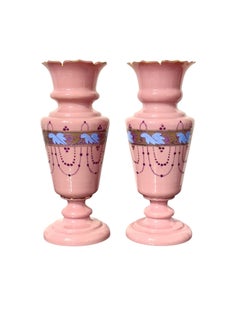
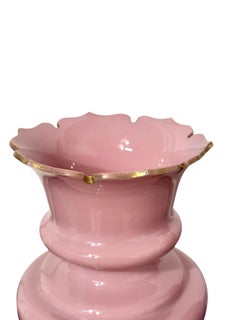
Pair French Baccarat Pink Opaline & Ormolu Vases, Exposition Universelle 1876

Pair French Baccarat Pink Opaline & Ormolu Vases, Exposition Universelle 1876

Located in New York, NY

Pair of French Baccarat Pink Opaline Ormolu-Mounted Vases Hand Painted with Birds and Flowers, Exposition Universelle 1876 The upper portions of the vases are decorated with polychro...

Category

1870s French Louis XVI Antique Painted Decorative Objects

Materials

Bronze, Enamel

Art Deco Advertising Statue for Cigarettes Copain, France 1920s

Art Deco Advertising Statue for Cigarettes Copain, France 1920s

Located in Meulebeke, BE

A rare and whimsical survivor from the golden age of commercial display, this French advertising statue for Cigarettes Copain dates to the early 1920s and captures the exuberance of ...

Category

1920s French Art Deco Vintage Painted Decorative Objects

Materials

Plaster

Danish Retro Dog Sculpture

Danish Retro Dog Sculpture

Located in Paris, FR

Sculpture Danish retro dog In hand painted ceramic.

Category

21st Century and Contemporary Italian Painted Decorative Objects

Materials

Ceramic

Turkish Kütahya Pottery Hand Painted Wall Hanging Plate with Iznik Pattern 1950s

Turkish Kütahya Pottery Hand Painted Wall Hanging Plate with Iznik Pattern 1950s

By Iznik Pottery

Located in Moreno Valley, CA

Mid 20th Century Turkish Kütahya Pottery Hand Painted Wall Hanging Plate with Iznik Patterns. Large hand-made decorative ceramic wall art platter hand painted in polychrome Izink pat...

Category

Mid-20th Century Turkish Islamic Painted Decorative Objects

Materials

Ceramic, Pottery

Antique French Chinoiserie Ormolu and Porcelain garniture Set in St of E. Liever

Antique French Chinoiserie Ormolu and Porcelain garniture Set in St of E. Liever

Located in New York, NY

An elegant and high quality French 19th century Chinoiserie ormolu, silvered bronze and porcelain clock garniture in the style of Edouard Lievre mounted with Chinese famille verte po...

Category

19th Century French Chinoiserie Antique Painted Decorative Objects

Materials

Bronze

Lladró Cat & Mouse Game

Lladró Cat & Mouse Game

By Lladro

Located in New York City, NY

Cat and mouse handmade in porcelain, one glazed and the other matte. This beautiful cat, made in glazed porcelain, is accompanied by a very special friend, its toy mouse. The former ...

Category

21st Century and Contemporary Spanish Painted Decorative Objects

Materials

Porcelain

Japanese Maki-e Lacquered Box, Ric.049

Japanese Maki-e Lacquered Box, Ric.049

Located in Norton, MA

Japan, Edo to Meiji period, a long rectangular document box with hinged cover, decorated with a bird and a floral basket, The locker is not functioning.

Category

19th Century Japanese Antique Painted Decorative Objects

Materials

Lacquer

Snuff Box Monocrome Miniature Hand Painted Sterling Silver Enamel Salimbeni

Snuff Box Monocrome Miniature Hand Painted Sterling Silver Enamel Salimbeni

By Franco Salimbeni, Salimbeni

Located in Firenze, FI

Round snuff box in 925/1000 sterling silver gold plated with fired enamel on the enameled edge with vertical stripes and fine monochrome miniature hand painted by the painter Renato Dainelli. Diameter cm. 6.2 cm high. 3.4. Weight gr. 222. Designed by Franco Salimbeni in 1967 and produced in Florence in the Salimbeni company headquarters with manual workmanship by skilled artisan artists with thick slab and large reinforcements suitable for withstanding numerous high-fire enamelled firings at approximately 750 < 800° C. Miniature is a very ancient technique which consists of painting works in small proportions. It was born for the decoration of the first letter of the paragraph of the books. Over the years, however, this technique is refined and enriched, then moving on to precious personal items. Hand-painted miniatures can be done with multiple different techniques. The most important that we use on our articles are of three kinds: 1) Fire enamel. 2) Water tempera on an ivory plate. 3) Painted on mother-of-pearl. Fire enameled miniatures: On a first layer of enamel generally white or very clear or even transparent suitably liquefied at a temperature of about 750 ° C, the chosen subject is painted using miniature colors which are as many colored crystals, ground and reduced to a very fine, almost impalpable powder washed and purified in distilled water with the addition of small quantities of deoxidizing acids which, diluted with essential oils (usually essential oil of solder), can be mixed to form a palette of colors. With very fine sable hair brushes you draw the subject starting from the perimeter and then gradually adding various layers of color. It is necessary to carry out various firings very often so that the colors harden and are not absorbed by the underlying glaze as, during the subsequent firings at 750 ° C, during liquefaction, it would spread irremediably. Hence the need to form the painting a little at a time, cooking it numerous times. Therefore it is necessary to proceed with numerous retouching, often overlapping different colors that only the painter's experience knows. A beautiful miniature needs from 20 to over 50 firings and is finished when the painter deems he does not have to further intervene. Some colors must have darker tones than others because then, by superimposing the transparent enamel placed at the end of the miniature, they fade. This transparent layer, called “fondant” in jargon, must be smoothed and polished like all other translucent enamel colors. The miniatures with water tempera colors are painted on real ivory...

Category

1960s Italian Baroque Vintage Painted Decorative Objects

Materials

Sterling Silver, Enamel

Fabulous 1920's Art Deco Anne Fish "Charleston Dancers" Doorstop #270 by Hubley

Fabulous 1920's Art Deco Anne Fish "Charleston Dancers" Doorstop #270 by Hubley

By Hubley Manufacturing Company 2

Located in Red Lion, PA

This exceptional 1920s Hubley cast iron doorstop, “Charleston Dancers,” No. 270, was designed by the celebrated British-born artist Anne Harriet Fish (later Anne Sefton) and captures the exuberant, lighthearted spirit of the Roaring Twenties. The sculptural doorstop depicts a dancing couple in close embrace, joyfully moving across the floor as they dance the Charleston late into the night, an iconic image of Jazz Age energy and modernity. Anne Harriet Fish was born in Bristol, England, and trained as a painter working in both oils and watercolors. After relocating to New York City, she became a prominent illustrator for Vanity Fair and Vogue, including the celebrated April 1917 Vanity Fair cover. During World War I, German-made porcelain doll heads became unavailable in the United States, prompting Fulper Pottery of Flemington, New Jersey, originally founded in 1909 as a stoneware pottery, to establish a new line of porcelain doll heads. When the postwar market for these products collapsed, Fulper pivoted to producing ceramic novelties, hiring Anne Fish in the early 1920s to contribute her distinctive, expressive designs. Fish’s success in ceramic design led to her collaboration with Hubley Manufacturing Company, for whom she designed seven iconic cast iron doorstops, now among the most desirable in the field of American folk and decorative arts: No. 269 – The Tiger No. 249 – The Messenger Boy No. 268 – The Parlor Maid No. 250 – Bathing Girls No. 270 – Charleston Dancers No. 222 – Small Footmen No. 248 – Large Footmen Anne Fish’s Hubley doorstops are characteristically numbered on the back and bear a copyright mark, with her name “FISH” painted on the front base, often in black. Likely influenced by her background in ceramics, her designs were finished with a distinctive high-gloss surface, a feature that has worn away on many surviving examples. This example is in beautiful antique condition, having been gently cleaned with minor professional paint restoration. It retains excellent surface presence and sculptural detail, with a richness and charm that exemplify Fish’s playful yet sophisticated approach to design. A highly collectible example of Hubley cast iron, Anne Fish doorstops...

Category

1920s American Art Deco Vintage Painted Decorative Objects

Materials

Metal

Goebel Porcelain Hand Painted Bird Figurine of a Pied Wagtail

Goebel Porcelain Hand Painted Bird Figurine of a Pied Wagtail

By Goebel Company

Located in Guaynabo, PR

This is a Goebel porcelain figurine of a Pied Wagtail bird. It depicts a very well done hand painted black, brown, gray blue and white, Wagtail bird. It has the Goebel hallmark plus ...

Category

20th Century German Art Nouveau Painted Decorative Objects

Materials

Porcelain

A Large Spanish Hand Painted Lebrillo Bowl, 19th Century

A Large Spanish Hand Painted Lebrillo Bowl, 19th Century

Located in ARMADALE, VIC

A Large Spanish Hand Painted Lebrillo Bowl, 19th Century Description: A Large hand-built terracotta bowl with rabbit motif to the tondo within a banded rim, underglaze painted in tu...

Category

19th Century Spanish Antique Painted Decorative Objects

Materials

Ceramic

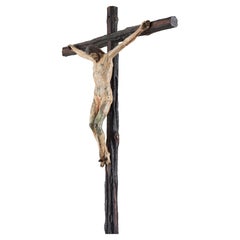
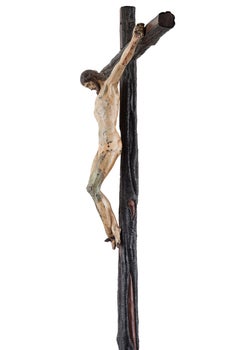
Rare and important painted bronze Crucifix after a model by Michelangelo

Rare and important painted bronze Crucifix after a model by Michelangelo

By Michelangelo Buonarroti

Located in Leesburg, VA

A rare and very fine bronze corpus of Christ after a model by Michelangelo, cast ca. 1597-1600 by Juan Bautista Franconio and painted in 1600 by Francisco Pacheco in Seville, Spain. The present corpus reproduces a model attributed to Michelangelo. The best known example, lesser in quality, is one on display at the Metropolitan Museum of Art (MET). The association of this corpus with Michelangelo was first brought to light by Manuel Gomez-Moreno (1930-33) who studied the wider circulated casts identified throughout Spain. The attribution to Michelangelo was subsequently followed by John Goldsmith-Phillips (1937) of the MET and again by Michelangelo expert, Charles de Tolnay (1960). While Michelangelo is best known for his monumental works, there are four documented crucifixes he made. The best known example is the large-scale wooden crucifix for the Church of Santa Maria del Santo Spirito in Florence, made in 1492 as a gift for the Prior, Giovanni di Lap Bicchiellini, for allowing him to study the anatomy of corpses at the hospital there. In 1562, Michelangelo wrote two letters to his nephew, Lionardo, indicating his intention to carve a wooden crucifix for him. In 1563 a letter between Lionardo and the Italian sculptor Tiberio Calcagni, mentions this same crucifix (a sketch of a corpus on the verso of a sheet depicting Michelangelo’s designs for St. Peter’s Basillica [Palais des Beaux-Arts in Lille] may reproduce this). That Michelangelo was working on small corpora in the last years of his life is further evidenced by the small (26.5 cm) unfinished wooden crucifix located at the Casa Buonarroti, considered his last known sculptural undertaking. Michelangelo’s contemporary biographer, Giorgio Vasari additionally cites that Michelangelo, in his later years, made a small crucifix for his friend, Menighella, as a gift. Surviving sketches also indicate Michelangelo’s study of this subject throughout his career, most notably during the end of his life but also during the 1530s-40s as he deepened his spiritual roots. The occasional cameo of crucified Christ’s throughout his sketched oeuvre have made it challenging for scholars to link such sketches to any documented commissions of importance. All the while, in consideration that such objects were made as gifts, it is unlikely they should be linked with commissions. Nonetheless, a number of theories concerning Michelangelo’s sketches of Christ crucified have been proposed and some may regard the origin of the present sculpture. It has been suggested that the corpus could have its impetus with Michelangelo’s work on the Medici Chapel, whose exclusive design was given to the master. It is sensible smaller details, like an altar cross, could have fallen under his responsibility (see for example British Museum, Inv. 1859,0625.552). Others have noted the possibility of an unrealized large marble Crucifixion group which never came to fruition but whose marble blocks had been measured according to a sheet at the Casa Buonarroti. A unique suggestion is that Michelangelo could have made the crucifix for Vittoria Colonna, of whom he was exceedingly fond and with whom he exchanged gifts along with mutual spiritual proclivities. In particular, Vittoria had an interest in the life of St. Bridget, whose vision of Christ closely resembles our sculpture, most notably with Christ’s proper-left leg and foot crossed over his right, an iconography that is incredibly scarce for crucifixes. The suggestion could add sense to Benedetto Varchi’s comment that Michelangelo made a sculpted “nude Christ…he gave to the most divine Marchesa of Pescara (Vittoria Colonna).” Of that same period, two sketches can be visually linked to our sculpture. Tolnay relates it to a sketch of a Crucified Christ at the Teylers Museum (Inv. A034) of which Paul Joannides comments on its quality as suggestive of preparations for a sculptural work. Joannides also calls attention to a related drawing attributed to Raffaello da Montelupo copying what is believed to be a lost sketch by Michelangelo. Its relationship with our sculpture is apparent. Montelupo, a pupil of Michelangelo’s, returned to Rome to serve him in 1541, assisting with the continued work on the tomb of Pope Julius II, suggesting again an origin for the corpus ca. 1540. The earliest firm date that can be given to the present corpus is 1574 where it appears as a rather crudely conceived Crucifixion panel, flanked by two mourners in low-relief and integrally cast for use as the bronze tabernacle door to a ciborium now located at the Church of San Lorenzo in Padula. Etched in wax residue on the back of the door is the date, 27 January 1574, indicating the corpus would have at least been available as a model by late 1573. The Padula tabernacle was completed by Michelangelo’s assistant, Jacopo del Duca and likely has its origins with Michelangelo’s uncompleted tabernacle for the Basilica of St. Mary of the Angels in Rome. The impetus for the Padula tabernacle’s Crucifixion panel begins with a series of late Crucifixion sketches by Michelangelo, depicting a scene of Christ crucified and flanked by two mourners (see British Museum Inv. 1895.0915.510; Ashmolean Museum Inv. 1846.89, KP II 343 recto; Windsor Castle RCIN 912761 recto; and Louvre Inv. 700). A faintly traced block possibly intended for sculpting the sketch of the crucified Christ on its recto was discovered by Tolnay on a version of the composition at Windsor Castle. The Windsor sketch and those related to it appear to have served as preparatory designs for what was probably intended to become the Basilica of St. Mary’s tabernacle door. Vasari documents that the project was to be designed by Michelangelo and cast by his assistant, Jacopo del Duca. Michelangelo died before the commission was complete, though on 15 March 1565, Jacopo writes to Michelangelo’s nephew stating, “I have started making the bronze tabernacle, depending on the model of his that was in Rome, already almost half complete.” Various circumstances interrupted the completion of the tabernacle, though its concept is later revitalized by Jacopo during preparations to sell a tabernacle, after Michelangelo’s designs, to Spain for Madrid’s El Escorial almost a decade later. The El Escorial tabernacle likewise encountered problems and was aborted but Jacopo successfully sold it shortly thereafter to the Carthusians of Padula. An etched date, 30 May 1572, along the base of the Padula tabernacle indicates its framework was already cast by then. A 1573 summary of the tabernacle also describes the original format for the door and relief panels, intended to be square in dimension. However, a last minute decision to heighten them was abruptly made during Jacopo’s negotiations to sell the tabernacle to King Phillip II of Spain. Shortly thereafter the commission was aborted. Philippe Malgouyres notes that the Padula tabernacle’s final state is a mixed product of the original design intended for Spain’s El Escorial, recycling various parts that had already been cast and adding new quickly finished elements for its sale to Padula, explaining its unusually discordant quality, particularly as concerns the crudeness of the door and relief panels which were clearly made later (by January 1574). Apart from his own admission in letters to Spain, it is apparent, however, that Jacopo relied upon his deceased master’s designs while hastily realizing the Padula panels. If Michelangelo had already earlier conceived a crucifix model, and Jacopo had access to that model, its logical he could have hastily employed it for incorporation on the door panel to the tabernacle. It is worth noting some modifications he made to the model, extending Christ’s arms further up in order to fit them into the scale of the panel and further lowering his chin to his chest in order to instill physiognomic congruence. A crude panel of the Deposition also follows after Michelangelo’s late sketches and is likewise known by examples thought to be modifications by Jacopo based upon Michelangelo’s initial sculptural conception (see Malgouyres: La Deposition du Christ de Jacopo del Duca, chef-d’oeuvre posthume de Michel-Ange). Jacopo’s appropriation of an original model by Michelangelo for more than one relief on the Padula tabernacle adds further indication that the crucifix was not an object unique to Jacopo’s hand, as few scholars have posited, but rather belongs to Michelangelo’s original...

Category

16th Century Renaissance Antique Painted Decorative Objects
Materials

Bronze

Large Blue and White Faience Lidded Vase with Landscape Motifs

Large Blue and White Faience Lidded Vase with Landscape Motifs

Located in LA CIOTAT, FR

This impressive lidded vase is crafted in faience, a material prized for its depth of glaze and subtle warmth, offering a distinct alternative to porcelain. Its baluster form, crowne...

Category

20th Century Chinese Painted Decorative Objects

Materials

Faience, Ceramic

Ancient Greek Attic Black-Figured Neck Amphora

Ancient Greek Attic Black-Figured Neck Amphora

Located in Los Angeles, CA

Attributed to the Manner of The Antimenes Painter. Side A features bearded Dionysos at the centre, with his head turned back, clad in a himation with a patterned border over an ankl...

Category

15th Century and Earlier Greek Greco Roman Antique Painted Decorative Objects
Materials
Terracotta