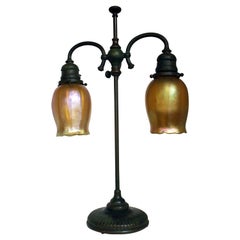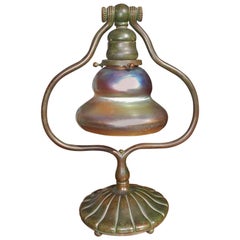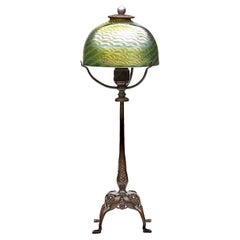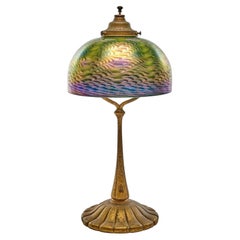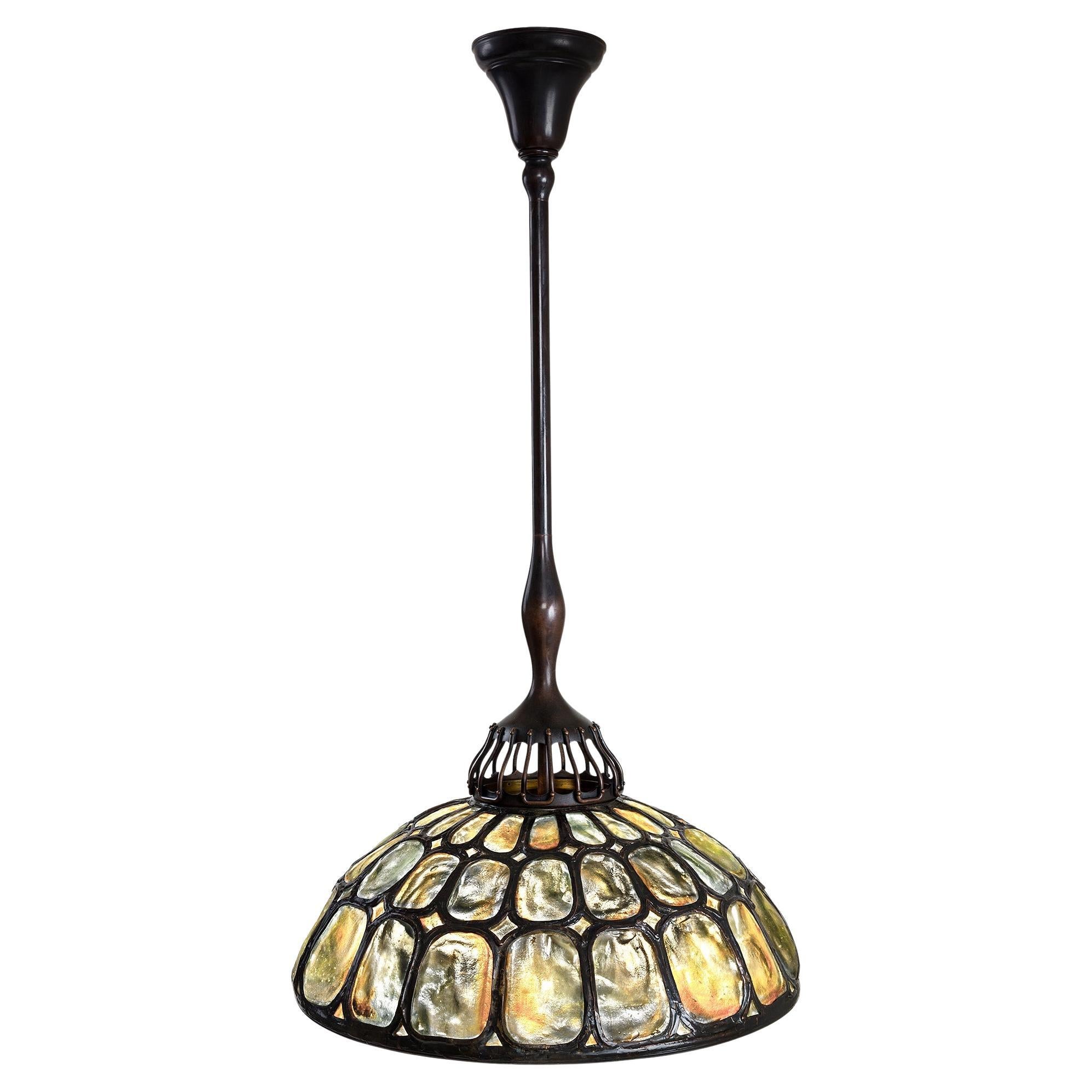
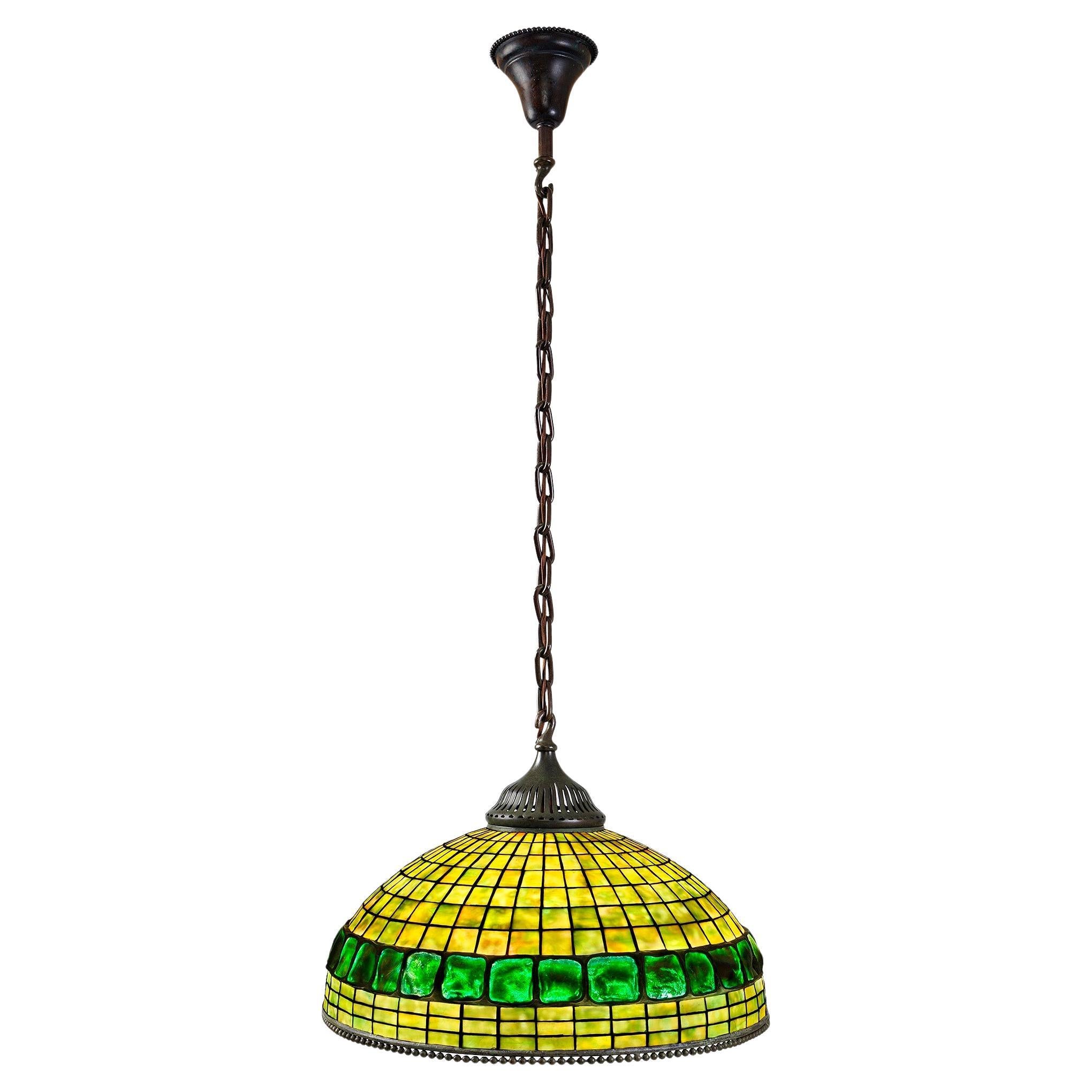
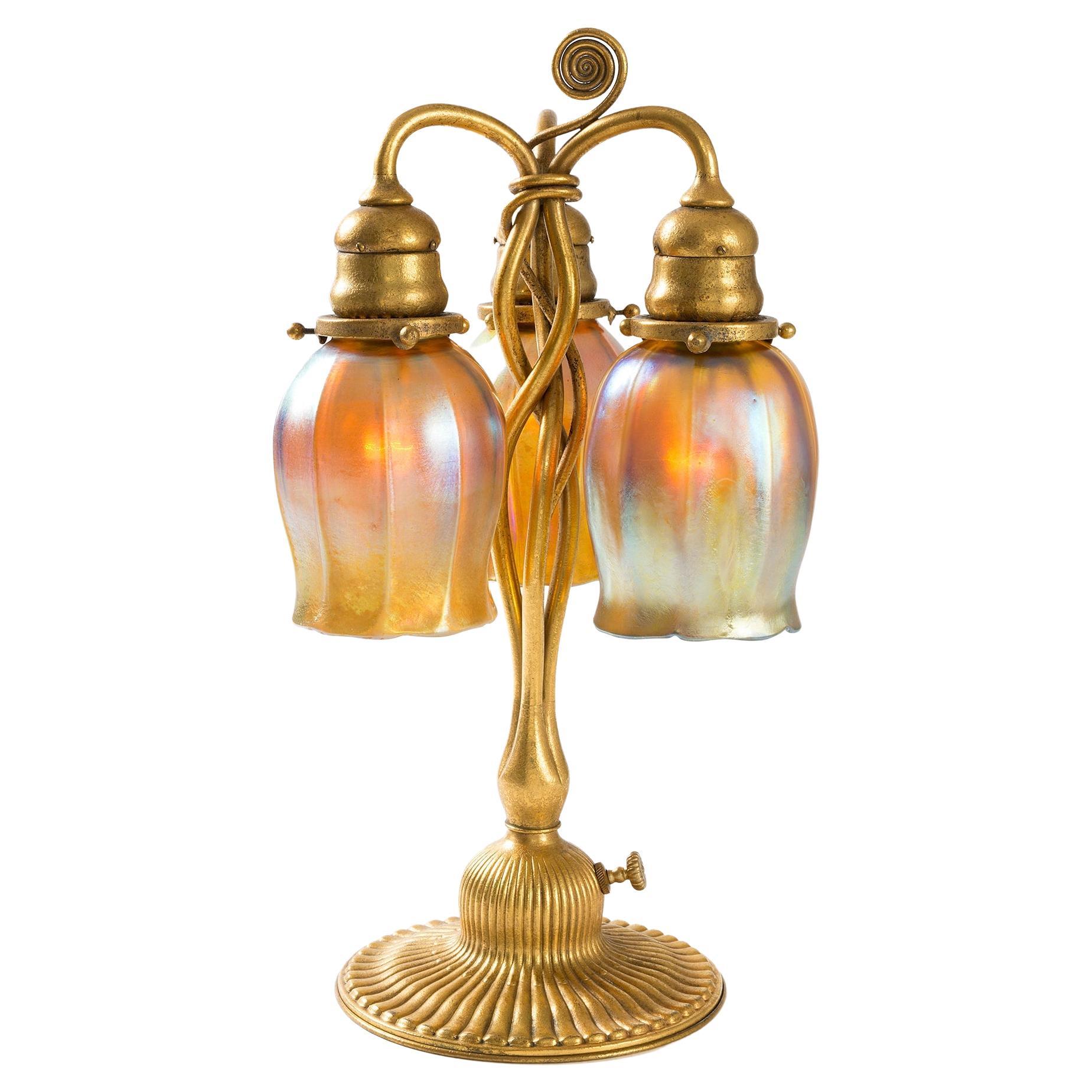
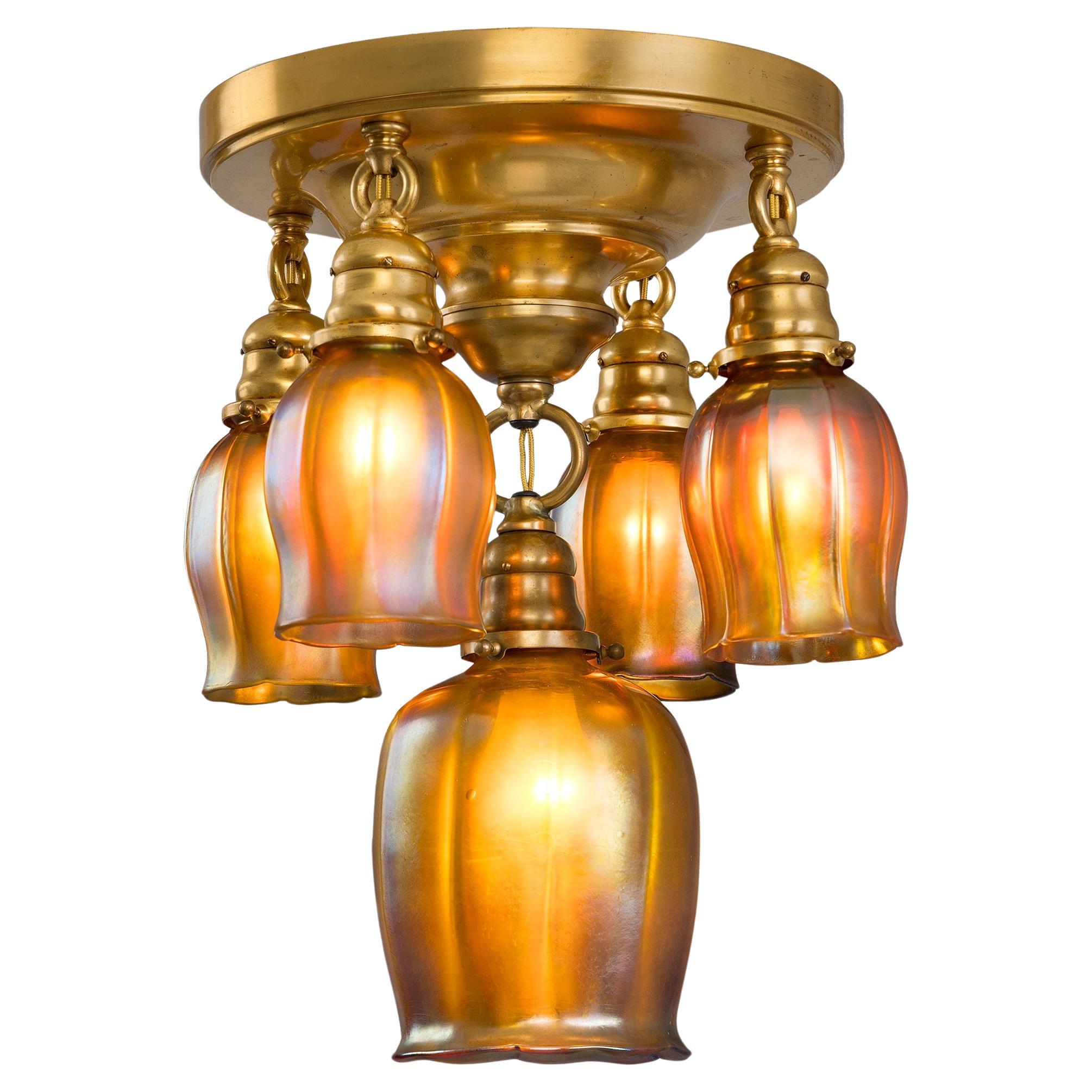
Pair of Tiffany Studios New York "Globe" Glass and Bronze Chandeliers
About the Item
- Creator:Tiffany Studios (Maker),Louis Comfort Tiffany (Workshop/Studio)
- Dimensions:Height: 18.5 in (46.99 cm)Diameter: 5 in (12.7 cm)
- Lampshade:Included
- Style:Art Nouveau (Of the Period)
- Materials and Techniques:
- Place of Origin:
- Period:
- Date of Manufacture:1900
- Condition:
- Seller Location:New York, NY
- Reference Number:
Louis Comfort Tiffany
The name Tiffany prompts thoughts of two things: splendid gifts in robin’s-egg blue boxes and exquisite stained glass. Charles Lewis Tiffany founded the former, and his son, Louis Comfort Tiffany, is responsible for exemplars of the latter. Beyond glass, the younger Tiffany worked in mediums that ranged from furniture and enameling to ceramics and metalware. Louis Comfort Tiffany was undoubtedly the most influential and accomplished American decorative artist in the decades that spanned the late 19th and early 20th centuries.
By the time Tiffany was born, the stationery and “fancy goods” emporium his father had established 11 years before had grown to become the most fashionable jewelry and luxury items store in New York. Tiffany fils declined to join the family business and pursued a career as an artist. He studied painting with several teachers, notably the scenic painter Samuel Colman, while spending long periods touring Europe and North Africa. Though he painted his entire career, visits to continental churches sparked a passionate interest in stained glass. Tiffany began experimenting with the material and in 1875 opened a glass factory-cum-laboratory in Corona, Queens — the core of what eventually became Tiffany Studios, a multimedia decorative-arts manufactory.
Tiffany developed a method in which colors were blended together in the molten state. Recalling the Old English word fabrile, meaning “hand-wrought,” he named the blown glass Favrile, a term that signified handmade glass of unique quality. In his glass designs, Tiffany embraced the emerging Art Nouveau movement and its sinuous, naturalistic forms and motifs. The pieces won Tiffany international fame. (Siegfried Bing, the Paris entrepreneur whose design store, L’Art Nouveau, gave the stylistic movement its name, was the leading European importer of Tiffany pieces.)
By 1902, along with glass, Tiffany was designing stained-glass lamps and chandeliers as well as enameled metal vases, boxes and bowls, and items such as desk sets and candlesticks. Today such pieces epitomize the rich aesthetics of their era. Tiffany Studios table lamps are the most recognizable and the most prized. They range in price from $60,000 to upward of $2 million for intricate shade designs like the Dragonfly. Tiffany glass vases and bowls are generally priced from $1,000 to $30,000 depending on size, color, condition and form. Simpler accessories such as metal trays and small picture frames can fetch from $800 to $3,000. Tiffany design of any type is an emblem of taste and craftsmanship. As you will see on 1stDibs, Louis Comfort Tiffany ensured that each piece he and his company produced, magnificent or modest, was a work of art.
Find Louis Comfort Tiffany vases, serveware and other items on 1stDibs.
Tiffany Studios
The hand-crafted kerosene and early electric lighting fixtures created at Tiffany Studios now rank among the most coveted decorative objects in the world. Tiffany designs of any kind are emblematic of taste and craftsmanship, and Tiffany glass refers to far more than stained-glass windows and decorative glass objects. The iconic multimedia manufactory’s offerings include stained-glass floor lamps, chandeliers and enameled metal vases. The most recognizable and prized of its works are antique Tiffany Studios table lamps.
The name Tiffany generally prompts thoughts of two things: splendid gifts in robin’s-egg blue boxes and exquisite stained glass. In 1837, Charles Lewis Tiffany founded the former — Tiffany & Co., one of America’s most prominent purveyors of luxury goods — while his son, Louis Comfort Tiffany, is responsible for exemplars of the latter.
Louis was undoubtedly the most influential and accomplished American decorative artist in the decades that spanned the late 19th and early 20th centuries. Rather than join the family business, he studied painting with several teachers, notably the scenic painter Samuel Colman, while spending long periods touring Europe and North Africa. Though he painted his entire career, visits to continental churches sparked a passionate interest in stained glass. Tiffany began experimenting with the material and in 1875 opened a glass factory-cum-laboratory in Corona, Queens — the core of what eventually became Tiffany Studios.
In his glass designs, Tiffany embraced the emerging Art Nouveau movement and its sinuous, naturalistic forms and motifs. By 1902, along with glass, Tiffany was designing stained-glass lamps and chandeliers as well as enameled metal vases, boxes and bowls, and items such as desk sets and candlesticks. Today such pieces epitomize the rich aesthetics of their era.
The lion’s share of credit for Tiffany Studios table lamps and other fixtures has gone to Louis. However, it was actually Clara Driscoll (1861–1944), an Ohio native and head of the Women’s Glass Cutting Department for 17 years, who was the genius behind the Tiffany lamps that are most avidly sought by today’s collectors. A permanent gallery of Tiffany lamps at the New-York Historical Society celebrates the anonymous women behind the desirable fixtures.
Find antique Tiffany Studios lamps, decorative glass objects and other works on 1stDibs.
- ShippingRetrieving quote...Ships From: New York, NY
- Return PolicyA return for this item may be initiated within 3 days of delivery.
- Tiffany Studios New York "Turteback Tile" ChandelierBy Tiffany Studios, Louis Comfort TiffanyLocated in New York, NYRippling undulations in gold iridescence and soft, organic lines dominate this ethereal but weighty composition, an exceptional example of a Tiffany Studios New York "Turtleback Tile" chandelier. Three tiers of vertically oriented rectangular Turtleback tiles with rounded corners graduate in size, with substantially sized tiles decorating the bottom-most tier and the apex of the domed shade featuring tightly clustered tiles in miniature. Sumptuous and romantically uneven borders frame each tile, accentuating their unique silhouettes and adding a dark, matte element to contrast the bright, shimmering gold that dominates the shade. Item #: L-20333 Artist: Tiffany Studios New York Country: United States Circa: 1900 Size: 18.5" diameter Materials: Patinated Bronze, Leaded Glass Signed: "Tiffany Studios" Literature: A similar chandelier is pictured in Tiffany Lamps and Metalware: An illustrated reference to over 2000 models by Alastair Duncan, Woodbridge: Suffolk: Antique Collectors' Club, 1988, p. 281, plate 109 Macklowe Gallery Curators notes: he same model was on display at the Cooper Hewitt Museum's Passion for the Exotic: Louis Comfort Tiffany and Lockwood De Forest...Category
Antique Mid-19th Century American Art Nouveau Chandeliers and Pendants
MaterialsBronze, Lead
- Tiffany Studios New York "Belted Turtleback" ChandelierBy Tiffany StudiosLocated in New York, NYThe "Belted Turtleback" Chandelier by Tiffany Studios New York is a refined study in monochromatic expression. Separated into three distinct tiers, the conical lamp shade offers a ma...Category
Early 20th Century American Art Nouveau Chandeliers and Pendants
MaterialsBronze
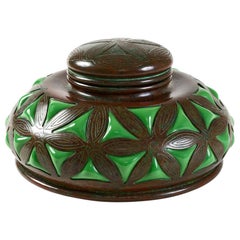
- Tiffany Studios New York Bronze and Green Glass InkwellBy Tiffany StudiosLocated in New York, NYAmong the most visually alluring and technically excellent of all Tiffany Studios New York's desk accessories, the exciting design for this refined but robustly rounded inkwell features green blown glass in pinched triangular forms that appear to dance in perfectly coordinated movement around the circumference of the piece. The negative space between the blown green glass appears in the form of stylized flowers with Minimalist linear accents in patinated bronze. Artist: Tiffany Studios New York Country: United States circa 1900 Dimensions: 3.75" height, 6.25" diameter Materials: Leaded glass, bronze Signed: "Tiffany Studios New York 25055” along with the Tiffany Studios monogram...Category
Antique Early 1900s American Art Nouveau Inkwells
MaterialsBronze
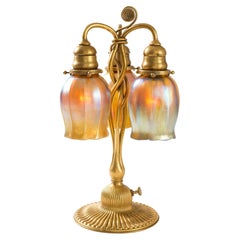
- Tiffany Studios New York "Newell Post" Favrile Glass Desk LampBy Tiffany Studios, Louis Comfort TiffanyLocated in New York, NYThe "Newell Post" lamp by Tiffany Studios New York, features three gold Favrile glass shades with purple iridescence, suspended from a gilt bronze “Wilson”...Category
Antique Early 1900s American Art Nouveau Table Lamps
MaterialsBronze
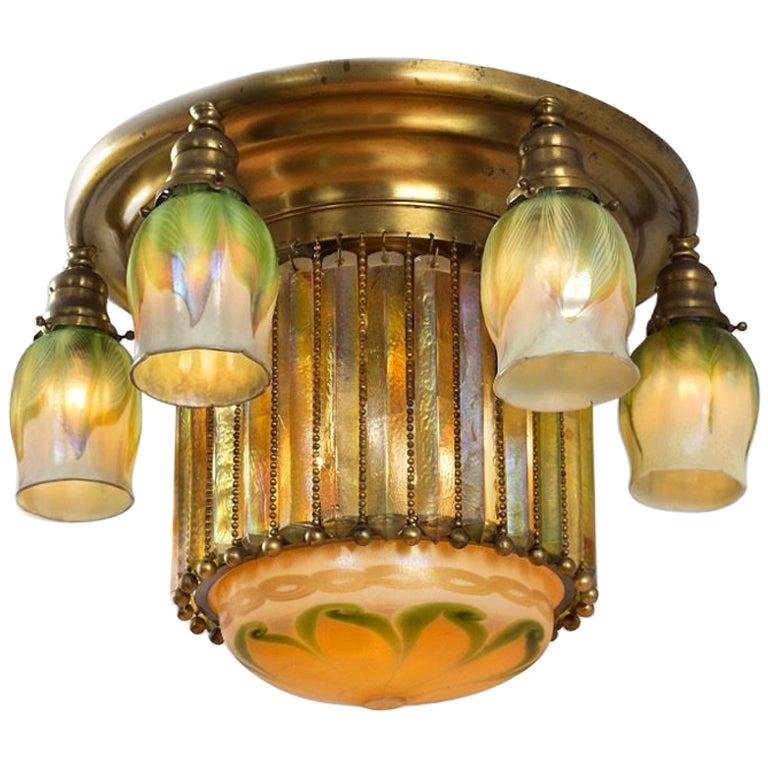
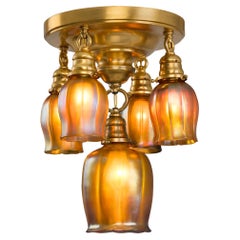
- Tiffany Studios New York Five-Light Tulip Ceiling FixtureBy Tiffany StudiosLocated in New York, NYThis Tiffany Studios New York "Five-Light" chandelier, features five golden iridescent Favrile tulip shades suspended along with loosely interlocking, heavy circular gilt bronze link...Category
Early 20th Century American Art Nouveau Chandeliers and Pendants
MaterialsBronze
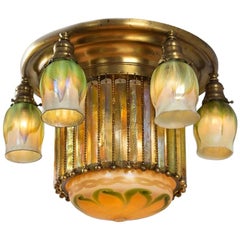
- Tiffany Studios New York "Prism" Favrile Ceiling Light FixtureBy Tiffany StudiosLocated in New York, NYThis unique Tiffany Studios New York Favrile glass and bronze "Prism" ceiling light fixture, featuring a large decorated center glass shade, surrounded by a circular row of grandiose...Category
Vintage 1910s American Art Nouveau Chandeliers and Pendants
MaterialsBronze
- Tiffany Studios New York Student Lamp Signed Bronze Base and Artglass GlobesBy Tiffany StudiosLocated in Savannah, GATwo bell shaped art glass signed iridescent shades are supported by an adjustable bronze two arm base with bell sockets. The twin paddle knob sockets are stamped GE CO. The base is s...Category
Early 20th Century American Aesthetic Movement Table Lamps
MaterialsArt Glass
- Tiffany Studios Bronze Desk Lamp, New York, Circa 1920By Tiffany StudiosLocated in Hollywood, SCTiffany Studios bronze desk lamp with original iridescent shade, scrolled bulbous harp, and terminating on circular fluted base with the original circ...Category
Early 20th Century American Art Nouveau Table Lamps
MaterialsBronze
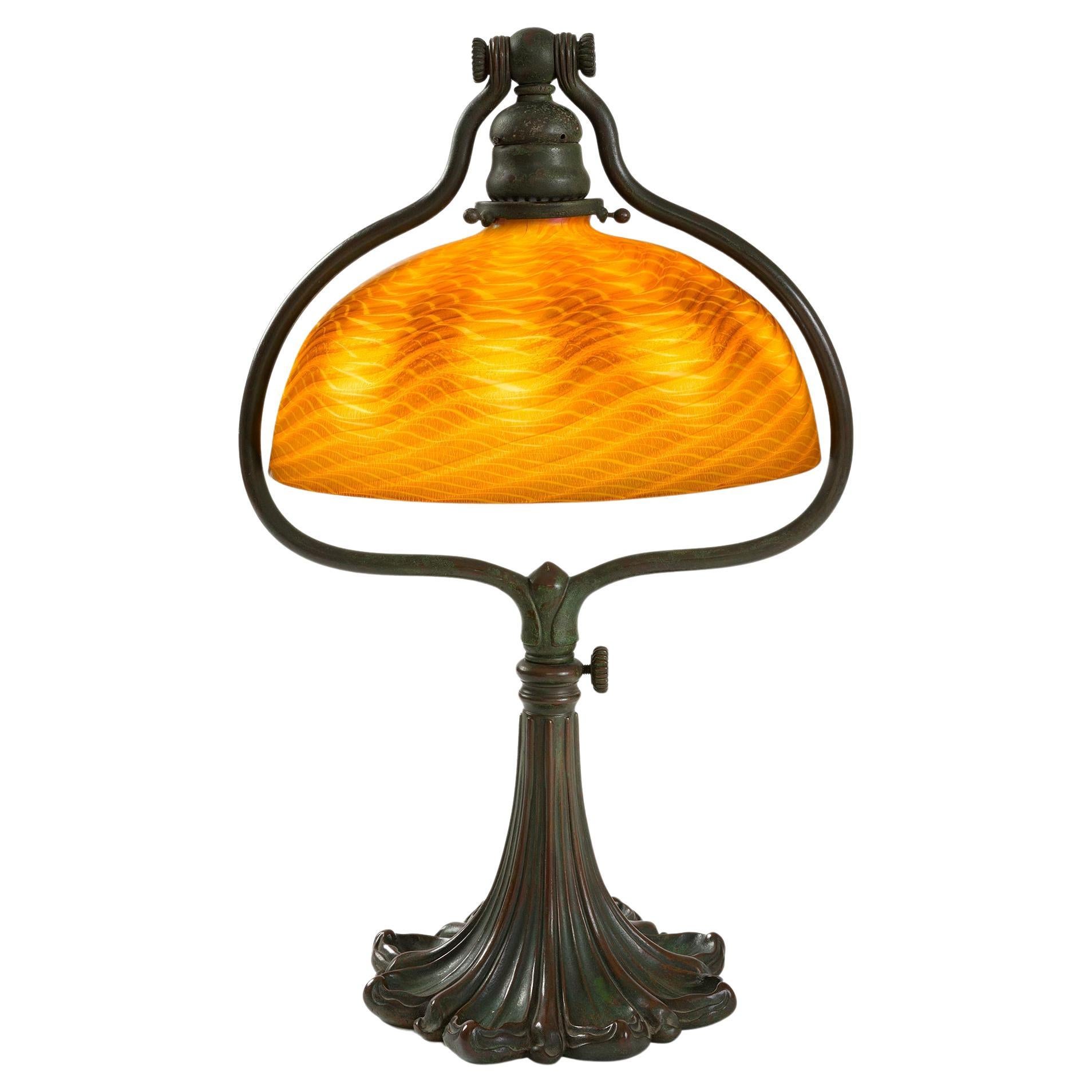
- Tiffany Studios Bronze and Favrile Table LampBy Tiffany Studios, Louis Comfort TiffanyLocated in Dallas, TXTiffany Studios Bronze and favrile Desk lamp Damascene iridescent glass with greens, blues, goals and silver. Fine reticulated and patinated bronze base. Original favrile pearl heat cap. Original socket and paddle switch. A rare and fabulous table lamp. New York c. 1910 patinated bronze, Favrile glass Height: 20 Inches (51 cm) Diameter: 7 Inches (18 cm) Impressed to base 'TIFFANY STUDIOS NEW YORK'. Etched to inner top aperture 'L.C.T. Favrile'. Provenance: Private Collection, New York Literature: Tiffany Lamps and Metalware, Alastair Duncan, pg. 90 illustrates base and shade AVANTIQUES is dedicated to providing an exclusive curated collection of Fine Arts, Paintings, Bronzes, Asian treasures, Art Glass and Antiques. Our inventory represents time-tested investment quality items with everlasting decorative beauty. We look forward to your business and appreciate any reasonable offers. All of our curated items are vetted and guaranteed authentic and as described. Avantiques only deals in original antiques and never reproductions. We stand behind our treasures with a full money back return policy if the items are not as described. Tiffany glass refers to the many and varied types of glass developed and produced from 1878 to 1933 at the Tiffany Studios in New York, by Louis Comfort Tiffany and a team of other designers, including Clara Driscoll, Agnes F. Northrop and Frederick Wilson. In 1865, Tiffany traveled to Europe, and in London he visited the Victoria and Albert Museum, whose extensive collection of Roman and Syrian glass made a deep impression on him. He admired the coloration of medieval glass and was convinced that the quality of contemporary glass could be improved upon. In his own words, the "Rich tones are due in part to the use of pot metal full of impurities, and in part to the uneven thickness of the glass, but still more because the glass maker of that day abstained from the use of paint". Tiffany was an interior designer, and in 1878 his interest turned toward the creation of stained glass, when he opened his own studio and glass foundry because he was unable to find the types of glass that he desired in interior decoration. His inventiveness both as a designer of windows and as a producer of the material with which to create them was to become renowned. Tiffany wanted the glass itself to transmit texture and rich colors and he developed a type of glass he called "Favrile". The glass was manufactured at the Tiffany factory...Category
Vintage 1910s American Art Nouveau Table Lamps
MaterialsBronze
- Tiffany Studios Damascene Gilt Bronze LampBy Tiffany Studios, Louis Comfort TiffanyLocated in Dallas, TXTiffany Studios New York Table Lamp This Damascene shade has exceptional blue and green iridescence and is in pristine condition. ...Category
Vintage 1910s American Art Nouveau Table Lamps
MaterialsBronze
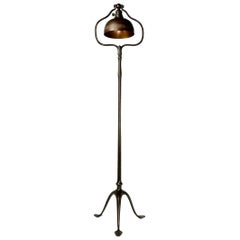
- 1920s Tiffany Studios New York Bronze Floor Lamp #423By Tiffany StudiosLocated in Las Vegas, NVTiffany Studios of New York bronze floor lamp, circa early 20th century. Original domed bronze shade with decorative border over a single socket. Signed on base as shown. Immaculat...Category
Early 20th Century American Arts and Crafts Floor Lamps
MaterialsBronze
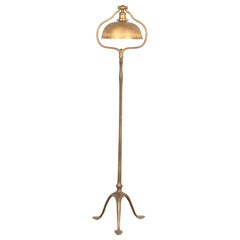
- Tiffany Studios New York Gilt Bronze Harp Floor LampBy Tiffany StudiosLocated in South Bend, INAn outstanding Arts & Crafts or Art Deco period floor lamp By Tiffany Studios (signed to the underside of one foot) New York, USA, Early 20th Century Gilt bronze stand, with gorge...Category
Early 20th Century American Arts and Crafts Floor Lamps
MaterialsBronze