Pop Art Portrait Photography

POP ART STYLE

Perhaps one of the most influential contemporary art movements, Pop art emerged in the 1950s. In stark contrast to traditional artistic practice, its practitioners drew on imagery from popular culture — comic books, advertising, product packaging and other commercial media — to create original Pop art paintings, prints and sculptures that celebrated ordinary life in the most literal way.

ORIGINS OF POP ART

CHARACTERISTICS OF POP ART 

  • Bold imagery
  • Bright, vivid colors
  • Straightforward concepts
  • Engagement with popular culture 
  • Incorporation of everyday objects from advertisements, cartoons, comic books and other popular mass media

POP ARTISTS TO KNOW

ORIGINAL POP ART ON 1STDIBS

The Pop art movement started in the United Kingdom as a reaction, both positive and critical, to the period’s consumerism. Its goal was to put popular culture on the same level as so-called high culture.

Richard Hamilton’s 1956 collage Just what is it that makes today’s homes so different, so appealing? is widely believed to have kickstarted this unconventional new style.

Pop art works are distinguished by their bold imagery, bright colors and seemingly commonplace subject matter. Practitioners sought to challenge the status quo, breaking with the perceived elitism of the previously dominant Abstract Expressionism and making statements about current events. Other key characteristics of Pop art include appropriation of imagery and techniques from popular and commercial culture; use of different media and formats; repetition in imagery and iconography; incorporation of mundane objects from advertisements, cartoons and other popular media; hard edges; and ironic and witty treatment of subject matter.

Although British artists launched the movement, they were soon overshadowed by their American counterparts. Pop art is perhaps most closely identified with American Pop artist Andy Warhol, whose clever appropriation of motifs and images helped to transform the artistic style into a lifestyle. Most of the best-known American artists associated with Pop art started in commercial art (Warhol made whimsical drawings as a hobby during his early years as a commercial illustrator), a background that helped them in merging high and popular culture.

Roy Lichtenstein was another prominent Pop artist that was active in the United States. Much like Warhol, Lichtenstein drew his subjects from print media, particularly comic strips, producing paintings and sculptures characterized by primary colors, bold outlines and halftone dots, elements appropriated from commercial printing. Recontextualizing a lowbrow image by importing it into a fine-art context was a trademark of his style. Neo-Pop artists like Jeff Koons and Takashi Murakami further blurred the line between art and popular culture.

Pop art rose to prominence largely through the work of a handful of men creating works that were unemotional and distanced — in other words, stereotypically masculine. However, there were many important female Pop artists, such as Rosalyn Drexler, whose significant contributions to the movement are recognized today. Best known for her work as a playwright and novelist, Drexler also created paintings and collages embodying Pop art themes and stylistic features.

Read more about the history of Pop art and the style’s famous artists, and browse the collection of original Pop art paintings, prints, photography and other works for sale on 1stDibs.

to
222
415
71
12
37
57
Overall Width
to
Overall Height
to
469
123
2
60
184
166
20
7,880
3,795
444
99
42
22
15
14
14
11
6
5
3
382
170
37
457
404
338
272
226
173
173
76
72
71
40
35
32
32
32
29
26
23
15
14
387
76
75
52
39
207
207
47
19
16
178
56
535
56
Style: Pop Art
Andy Warhol, Baroness de Waldner unique acetate of Brazilian actress provenance
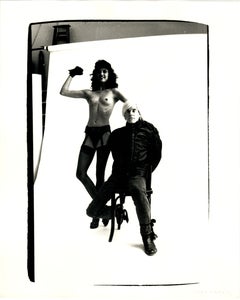
Located in New York, NY
Andy Warhol Baroness de Waldner, ca. 1975 Unique Acetate positive This piece comes with a signed letter of provenance from the representative of Chromacomp, Warhol's printer. Frame i...
Category

1970s Pop Art Portrait Photography

Materials

Photographic Film, Mixed Media

Nicola (Nicky) Weymouth, unique acetate positive of British socialite provenance
Located in New York, NY
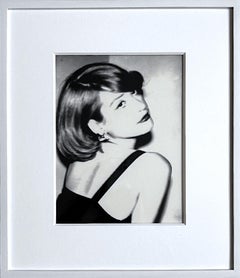
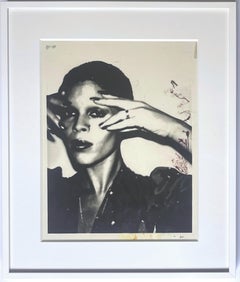
Andy Warhol Nicola (Nicky) Weymouth, ca. 1976 Acetate positive, acquired directly from Chromacomp, Inc. Andy Warhol's printer in the 1970s. Accompanied by a Letter of Provenance from the representative of Chromacomp Unique Frame included: Elegantly framed in a museum quality white wood frame with UV plexiglass: Measurements: Frame: 18 x 15.5 x 1.5 inches Acetate: 11 x 8 inches This is the original, unique photographic acetate positive taken by Andy Warhol as the basis for his portrait of Nicky Weymouth, that came from Andy Warhol's studio, The Factory to his printer. It was acquired directly from Chromacomp, Inc. Andy Warhol's printer in the 1970s. It is accompanied by a Letter of Provenance from the representative of Chromacomp. This is one of the images used by Andy Warhol to create his iconic portrait of the socialite Nicola Samuel Weymouth, also called Nicky Weymouth, Nicky Waymouth, Nicky Lane Weymouth or Nicky Samuel. Weymouth (nee Samuel) was a British socialite, who went on to briefly marry the jewelry designer Kenneth Lane, whom she met through Warhol. This acetate positive is unique, and was sent to Chromacomp because Warhol was considering making a silkscreen out of this portrait. As Bob Colacello, former Editor in Chief of Interview magazine (and right hand man to Andy Warhol), explained, "many hands were involved in the rather mechanical silkscreening process... but only Andy in all the years I knew him, worked on the acetates." An acetate is a photographic negative or positive transferred to a transparency, allowing an image to be magnified and projected onto a screen. As only Andy worked on the acetates, it was the last original step prior to the screenprinting of an image, and the most important element in Warhol's creative process for silkscreening. Warhol realized the value of his unique original acetates like this one, and is known to have traded the acetates for valuable services. This acetate was brought by Warhol to Eunice and Jackson Lowell, owners of Chromacomp, a fine art printing studio in NYC, and was acquired directly from the Lowell's private collection. During the 1970s and 80s, Chromacomp was the premier atelier for fine art limited edition silkscreen prints; indeed, Chromacomp was the largest studio producing fine art prints in the world for artists such as Andy Warhol, Leroy Neiman, Erte, Robert Natkin, Larry Zox, David Hockney and many more. All of the plates were done by hand and in some cases photographically. Famed printer Alexander Heinrici worked for Eunice & Jackson Lowell at Chromacomp and brought Andy Warhol in as an account. Shortly after, Warhol or his workers brought in several boxes of photographs, paper and/or acetates and asked Jackson Lowell to use his equipment to enlarge certain images or portions of images. Warhol made comments and or changes and asked the Lowells to print some editions; others were printed elsewhere. Chromacomp Inc. ended up printing Warhol's Mick Jagger Suite and the Ladies & Gentlemen Suite, as well as other works, based on the box of photographic acetates that Warhol brought to them. The Lowell's allowed the printer to be named as Alexander Heinrici rather than Chromacomp, since Heinrici was the one who brought the account in. Other images were never printed by Chromacomp- they were simply being considered by Warhol. Warhol left the remaining acetates with Eunice and Jackson Lowell. After the Lowells closed the shop, the photographs were packed away where they remained for nearly a quarter of a century. This work is exactly as it was delivered from the factory. Unevenly cut by Warhol himself. This work is accompanied by a signed letter of provenance from the representative of Chromacomp, Andy Warhol's printer for many of his works in the 1970s. About Andy Warhol: Isn’t life a series of images that change as they repeat themselves? —Andy Warhol Andy Warhol’s (1928–1987) art encapsulates the 1960s through the 1980s in New York. By imitating the familiar aesthetics of mass media, advertising, and celebrity culture, Warhol blurred the boundaries between his work and the world that inspired it, producing images that have become as pervasive as their sources. Warhol grew up in a working-class suburb of Pittsburgh. His parents were Slovak immigrants, and he was the only member of his family to attend college. He entered the Carnegie Institute of Technology (now Carnegie Mellon University) in 1945, where he majored in pictorial design. After graduation, he moved to New York with fellow student Philip Pearlstein and found steady work as a commercial illustrator at several magazines, including Vogue, Harper’s Bazaar, and the New Yorker. Throughout the 1950s Warhol enjoyed a successful career as a commercial artist, winning several commendations from the Art Directors Club and the American Institute of Graphic Arts. He had his first solo exhibition at the Hugo Gallery in 1952, showing drawings based on the writings of Truman Capote; three years later his work was included in a group show at the Museum of Modern Art for the first time. The year 1960 marked a turning point in Warhol’s prolific career. He painted his first works based on comics and advertisements, enlarging and transferring the source images onto canvas using a projector. In 1961 Warhol showed these hand-painted works, including Little King (1961) and Saturday’s Popeye (1961), in a window display at the department store Bonwit Teller; in 1962 he painted his famous Campbell’s Soup Cans, thirty-two separate canvases, each depicting a canned soup of a different flavor. Soon after, Warhol began to borrow not only the subject matter of printed media, but the technology as well. Incorporating the silkscreen technique, he created grids of stamps, Coca-Cola bottles, shipping and handling labels, dollar bills, coffee labels...
Category

1970s Pop Art Portrait Photography

Materials

Photographic Film

Unique portrait of Roy Lichtenstein, Authenticated by the Andy Warhol Foundation
Located in New York, NY
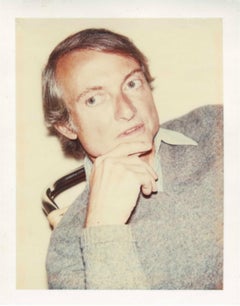
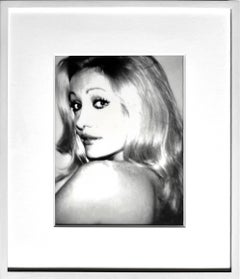
Andy Warhol Portrait of Roy Lichtenstein, 1975 Polaroid dye-diffusion print Authenticated by the Andy Warhol Foundation for the Visual Arts, bears the Foundation stamp verso Frame included: Framed in white wood frame with UV plexiglass; with die-cut window in the back to show official Warhol Foundation authentication stamp and text Measurements: 9 9/16 x 8 9/16 x 9/16 inches (frame) 3 1/2 x 2 3/4 inches (window) 4.16 x 3.15 inches (Artwork) Authenticated and stamped by the Estate of Andy Warhol/Warhol Foundation for the Visual Arts An impressive piece of Pop Art history! A must-have for fans and collectors of both Andy Warhol and Roy Lichtenstein: This is a unique, authenticated color Polaroid taken by one Pop Art legend, Andy Warhol, of his most formidable contemporary and, in many respects, rival, Roy Lichtenstein. One of only a few portraits Andy Warhol took of Roy Lichtenstein, during one tense photo shoot. Both iconic artists, colleagues and, perhaps lesser known to the public, rivals, would be represented at the time by the renowned Leo Castelli Gallery. The truth is - they were really more rivals than friends. (the rivalry intensified when Warhol, who was working with Walt Disney, discovered that Lichtenstein painted Mickey Mouse before he did!!) Leo Castelli was committed to Roy Lichtenstein, and, it's easy to forget today, wasn't that interested in Warhol as he considered Lichtenstein the greater talent and he could relate better with Roy on a personal level. However, Ivan Karp, who worked at Castelli, was very interested in Warhol, as were some powerful European dealers, as well as many wealthy and influential American and European collectors. That was the start of Warhol's bypassing the traditional gallery model - so that dealers like Castelli could re-discover him after everybody else had. Warhol is known to have taken hundreds of self-portrait polaroid photographs - shoe boxes full - and he took many dozens of images of celebrities like Blondie and Farrah Fawcett. But only a small number of photographic portraits of fellow Pop Art legend Roy Lichtenstein -- each unique,- are known to have appeared on the market over the past half a century - all from the same photo session. This is one of them. There is another Polaroid - from this same (and only) sitting, in the permanent collection of the Getty Museum in California. There really weren't any other collaborations between these two titans, making the resulting portrait from this photo session extraordinary. It is fascinating to study Roy Lichtenstein's face and demeanor in this photograph, in the context of the great sense of competition, but perhaps even greater, albeit uneasy respect, these two larger than life Pop art titans had for each other: Like Leo Castelli, Roy Lichtenstein was Jewish of European descent; whereas Warhol was Catholic and quintessentially American, though also of European (Polish) descent. They were never going to be good friends, but this portrait, perhaps even arranged by Leo Castelli, represents an uneasy acknowledgement there would be room at the top for both of them. Floated, framed with die cut back revealing authentication details, and ready to hang. Measurements: 9 9/16 x 8 9/16 x 9/16 inches (frame) 3 1/2 x 2 3/4 inches (window) 4.16 x 3.15 inches (sheet) Authenticated by the Estate of Andy Warhol/The Andy Warhol Foundation for the Visual Arts. Estate Stamped: Stamped with the Andy Warhol Estate, Warhol Foundation for the Visual Arts stamp, numbered "B 512536P", with the Estate of Andy Warhol stamp and inscribed UP on the reverse. Bears the Warhol Foundation unique inventory number. Roy Lichtenstein Biography Roy Lichtenstein was one of the most influential and innovative artists of the second half of the twentieth century. He is preeminently identified with Pop Art, a movement he helped originate, and his first fully achieved paintings were based on imagery from comic strips and advertisements and rendered in a style mimicking the crude printing processes of newspaper reproduction. These paintings reinvigorated the American art scene and altered the history of modern art. Lichtenstein’s success was matched by his focus and energy, and after his initial triumph in the early 1960s, he went on to create an oeuvre of more than 5,000 paintings, prints, drawings, sculptures, murals and other objects celebrated for their wit and invention. Roy Fox Lichtenstein was born on October 27, 1923, in New York City, the first of two children born to Milton and Beatrice Werner Lichtenstein. Milton Lichtenstein (1893–1946) was a successful real estate broker, and Beatrice Lichtenstein (1896–1991), a homemaker, had trained as a pianist, and she exposed Roy and his sister Rénee to museums, concerts and other aspects of New York culture. Roy showed artistic and musical ability early on: he drew, painted and sculpted as a teenager, and spent many hours in the American Museum of Natural History and the Museum of Modern Art. He played piano and clarinet, and developed an enduring love of jazz, frequenting the nightspots in Midtown to hear it. Lichtenstein attended the Franklin School for Boys, a private junior high and high school, and was graduated in 1940. That summer he studied painting and drawing from the model at the Art Students League of New York with Reginald Marsh. In September he entered Ohio State University (OSU) in Columbus in the College of Education. His early artistic idols were Rembrandt, Daumier and Picasso, and he often said that Guernica (1937; Museo Reina Sofía, Madrid), then on long-term loan to the Museum of Modern Art, was his favorite painting. Even as an undergraduate, Lichtenstein objected to the notion that one set of lines (one person’s drawings) “was considered brilliant, and somebody’s else’s, that may have looked better to you, was considered nothing by almost everyone.”i Lichtenstein’s questioning of accepted canons of taste was encouraged by Hoyt L. Sherman, a teacher whom he maintained was the person who showed him how to see and whose perception-based approach to art shaped his own. In February 1943, Lichtenstein was drafted, and he was sent to Europe in 1945. As part of the infantry, he saw action in France, Belgium and Germany. He made sketches throughout his time in Europe and, after peace was declared there, he intended to study at the Sorbonne. Lichtenstein arrived in Paris in October 1945 and enrolled in classes in French language and civilization, but soon learned that his father was gravely ill. He returned to New York in January 1946, a few weeks before Milton Lichtenstein died. In the spring of that year, Lichtenstein went back to OSU to complete his BFA and in the fall he was invited to join the faculty as an instructor. In June 1949, he married Isabel Wilson Sarisky (1921–80), who worked in a cooperative art gallery in Cleveland where Lichtenstein had exhibited his work. While he was teaching, Lichtenstein worked on his master’s degree, which he received in 1949. During his second stint at OSU, Lichtenstein became closer to Sherman, and began teaching his method on how to organize and unify a composition. Lichtenstein remained appreciative of Sherman’s impact on him. He gave his first son the middle name of “Hoyt,” and in 1994 he donated funds to endow the Hoyt L. Sherman Studio Art Center at OSU. In the late 1940s and early 1950s, Lichtenstein began working in series and his iconography was drawn from printed images. His first sustained theme, intimate paintings and prints in the vein of Paul Klee that poked lyrical fun at medieval knights, castles and maidens, may well have been inspired by a book about the Bayeux Tapestry. Lichtenstein then took an ironic look at nineteenth-century American genre paintings he saw in history books, creating Cubist interpretations of cowboys and Indians spiked with a faux-primitive whimsy. As with his most celebrated Pop paintings of the 1960s, Lichtenstein gravitated toward what he would characterize as the “dumbest” or “worst” visual item he could find and then went on to alter or improve it. In the 1960s, commercial art was considered beneath contempt by the art world; in the early 1950s, with the rise of Abstract Expressionism, nineteenth-century American narrative and genre paintings were at the nadir of their reputation among critics and collectors. Paraphrasing, particularly the paraphrasing of despised images, became a paramount feature of Lichtenstein’s art. Well before finding his signature mode of expression in 1961, Lichtenstein called attention to the artifice of conventions and taste that permeated art and society. What others dismissed as trivial fascinated him as classic and idealized—in his words, “a purely American mythological subject matter.”ii Lichtenstein’s teaching contract at OSU was not renewed for the 1951–52 academic year, and in the autumn of 1951 he and Isabel moved to Cleveland. Isabel Lichtenstein became an interior decorator specializing in modern design, with a clientele drawn from wealthy Cleveland families. Whereas her career blossomed, Lichtenstein did not continue to teach at the university level. He had a series of part-time jobs, including industrial draftsman, furniture designer, window dresser and rendering mechanical dials for an electrical instrument company. In response to these experiences, he introduced quirkily rendered motors, valves and other mechanical elements into his paintings and prints. In 1954, the Lichtensteins’ first son, David, was born; two years later, their second child, Mitchell, followed. Despite the relative lack of interest in his work in Cleveland, Lichtenstein did place his work with New York dealers, which always mattered immensely to him. He had his first solo show at the Carlebach Gallery in New York in 1951, followed by representation with the John Heller Gallery from 1952 to 1957. To reclaim his academic career and get closer to New York, Lichtenstein accepted a position as an assistant professor at the State University of New York at Oswego, in the northern reaches of the state. He was hired to teach industrial design, beginning in September 1957. Oswego turned out to be more geographically and aesthetically isolated than Cleveland ever was, but the move was propitious, for both his art and his career. Lichtenstein broke away from representation to a fully abstract style, applying broad swaths of pigment to the canvas by dragging the paint across its surface with a rag wrapped around his arm. At the same time, Lichtenstein was embedding comic-book characters figures such as Mickey Mouse and Donald Duck in brushy, expressionistic backgrounds. None of the proto-cartoon paintings from this period survive, but several pencil and pastel studies from that time, which he kept, document his intentions. Finally, when he was in Oswego, Lichtenstein met Reginald Neal, the new head of the art department at Douglass College, the women’s college of Rutgers University, in New Brunswick, New Jersey. The school was strengthening and expanding its studio art program, and when Neal needed to add a faculty member to his department, Lichtenstein was invited to apply for the job. Lichtenstein was offered the position of assistant professor, and he began teaching at Douglass in September 1960. At Douglass, Lichtenstein was thrown into a maelstrom of artistic ferment. With New York museums and galleries an hour away, and colleagues Geoffrey Hendricks and Robert Watts at Douglass and Allan Kaprow and George Segal at Rutgers, the environment could not help but galvanize him. In June 1961, Lichtenstein returned to the idea he had fooled around with in Oswego, which was to combine cartoon characters from comic books with abstract backgrounds. But, as Lichtenstein said, “[I]t occurred to me to do it by mimicking the cartoon style without the paint texture, calligraphic line, modulation—all the things involved in expressionism.”iii Most famously, Lichtenstein appropriated the Benday dots, the minute mechanical patterning used in commercial engraving, to convey texture and gradations of color—a stylistic language synonymous with his subject matter. The dots became a trademark device forever identified with Lichtenstein and Pop Art. Lichtenstein may not have calibrated the depth of his breakthrough immediately but he did realize that the flat affect and deadpan presentation of the comic-strip panel blown up and reorganized in the Sherman-inflected way “was just so much more compelling”iv than the gestural abstraction he had been practicing. Among the first extant paintings in this new mode—based on comic strips and illustrations from advertisements—were Popeye and Look Mickey, which were swiftly followed by The Engagement Ring, Girl with Ball and Step-on Can with Leg. Kaprow recognized the energy and radicalism of these canvases and arranged for Lichtenstein to show them to Ivan Karp, director of the Leo Castelli Gallery. Castelli was New York’s leading dealer in contemporary art, and he had staged landmark exhibitions of Jasper Johns and Robert Rauschenberg in 1958 and Frank Stella in 1960. Karp was immediately attracted to Lichtenstein’s paintings, but Castelli was slower to make a decision, partly on account of the paintings’ plebeian roots in commercial art, but also because, unknown to Lichtenstein, two other artists had recently come to his attention—Andy Warhol and James Rosenquist—and Castelli was only ready for one of them. After some deliberation, Castelli chose to represent Lichtenstein, and the first exhibition of the comic-book paintings was held at the gallery from February 10 to March 3, 1962. The show sold out and made Lichtenstein notorious. By the time of Lichtenstein’s second solo exhibition at Castelli in September 1963, his work had been showcased in museums and galleries around the country. He was usually grouped with Johns, Rauschenberg, Warhol, Rosenquist, Segal, Jim Dine, Claes Oldenburg, Robert Indiana and Tom Wesselmann. Taken together, their work was viewed as a slap in the face to Abstract Expressionism and, indeed, the Pop artists shifted attention away from many members of the New York School. With the advent of critical and commercial success, Lichtenstein made significant changes in his life and continued to investigate new possibilities in his art. After separating from his wife, he moved from New Jersey to Manhattan in 1963; in 1964, he resigned from his teaching position at Douglass to concentrate exclusively on his work. The artist also ventured beyond comic book subjects, essaying paintings based on oils by Cézanne, Mondrian and Picasso, as well as still lifes and landscapes. Lichtenstein became a prolific printmaker and expanded into sculpture, which he had not attempted since the mid-1950s, and in both two- and three-dimensional pieces, he employed a host of industrial or “non-art” materials, and designed mass-produced editioned objects that were less expensive than traditional paintings and sculpture. Participating in one such project—the American Supermarket show in 1964 at the Paul Bianchini Gallery, for which he designed a shopping bag—Lichtenstein met Dorothy Herzka (b. 1939), a gallery employee, whom he married in 1968. The late 1960s also saw Lichtenstein’s first museum surveys: in 1967 the Pasadena Art Museum initiated a traveling retrospective, in 1968 the Stedelijk Musem in Amsterdam presented his first European retrospective, and in 1969 he had his first New York retrospective, at the Solomon R. Guggenheim Museum. Wanting to grow, Lichtenstein turned away from the comic book subjects that had brought him prominence. In the late 1960s his work became less narrative and more abstract, as he continued to meditate on the nature of the art enterprise itself. He began to explore and deconstruct the notion of brushstrokes—the building blocks of Western painting. Brushstrokes are conventionally conceived as vehicles of expression, but Lichtenstein made them into a subject. Modern artists have typically maintained that the subject of a painting is painting itself. Lichtenstein took this idea one imaginative step further: a compositional element could serve as the subject matter of a work and make that bromide ring true. The search for new forms and sources was even more emphatic after 1970, when Roy and Dorothy Lichtenstein bought property in Southampton, New York, and made it their primary residence. During the fertile decade of the 1970s, Lichtenstein probed an aspect of perception that had steadily preoccupied him: how easily the unreal is validated as the real because viewers have accepted so many visual conceptions that they don’t analyze what they see. In the Mirror series, he dealt with light and shadow upon glass, and in the Entablature series, he considered the same phenomena by abstracting such Beaux-Art architectural elements as cornices, dentils, capitals and columns. Similarly, Lichtenstein created pioneering painted bronze sculpture that subverted the medium’s conventional three-dimensionality and permanence. The bronze forms were as flat and thin as possible, more related to line than volume, and they portrayed the most fugitive sensations—curls of steam, rays of light and reflections on glass. The steam, the reflections and the shadow were signs for themselves that would immediately be recognized as such by any viewer. Another entire panoply of works produced during the 1970s were complex encounters with Cubism, Futurism, Purism, Surrealism and Expressionism. Lichtenstein expanded his palette beyond red, blue, yellow, black, white and green, and invented and combined forms. He was not merely isolating found images, but juxtaposing, overlapping, fragmenting and recomposing them. In the words of art historian Jack Cowart, Lichtenstein’s virtuosic compositions were “a rich dialogue of forms—all intuitively modified and released from their nominal sources.”v In the early 1980s, which coincided with re-establishing a studio in New York City, Lichtenstein was also at the apex of a busy mural career. In the 1960s and 1970s, he had completed four murals; between 1983 and 1990, he created five. He also completed major commissions for public sculptures in Miami Beach, Columbus, Minneapolis, Paris, Barcelona and Singapore. Lichtenstein created three major series in the 1990s, each emblematic of his ongoing interest in solving pictorial problems. The Interiors, mural-sized canvases inspired by a miniscule advertisement in an Italian telephone...
Category

1970s Pop Art Portrait Photography

Materials

Polaroid

Warhol Superstar Candy Darling star of 'Vain Victory', Color 17 x 22"
Located in Senoia, GA
Warhol superstar Candy Darling photographed as 'Donna Bella Beads' in the hit play "Vain Victory: the Vicissitudes of the Damned" in 1971. One of Mitchell'...
Category

1970s Pop Art Portrait Photography

Materials

Archival Pigment

Neo Classical by BATIK Super Oversize Signed Limited Edition
Located in London, GB
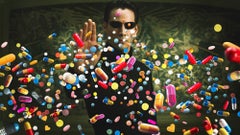
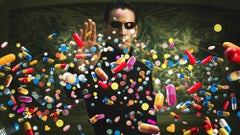
Neo Classical by BATIK Pop artwork featuring Neo from the Matrix films stopping an onslaught of assorted colourful pills. signed & limited edition. BATIK is an increasingly collec...
Category

2010s Pop Art Portrait Photography

Materials

Archival Pigment

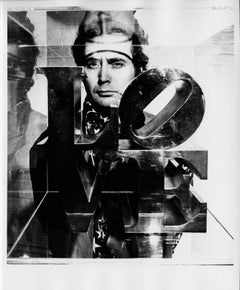
Pop Artist Robert Indiana posing in his studio with his famous LOVE sculpture
Located in Senoia, GA
8 x 10" vintage silver gelatin photograph of artist Robert Indiana posing in his studio with his famous LOVE sculpture, 1969.. This is a print tha...
Category

1960s Pop Art Portrait Photography

Materials

Silver Gelatin

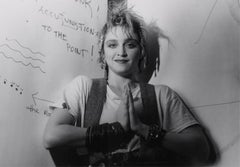
Madonna at Danceteria NYC 1983 Memorial for Michael Stewart photograph, Signed
By Eric Kroll
Located in New York, NY
Silver gelatin print The present work is hand signed with the artist's copyright, dated 1983, and titled on the back. It is numbered 3 of an edition of only 10. On October 3, 1983, Madonna headlined a memorial concert in honor of Michael Stewart, a graffiti artist in the midst of the AIDS crisis who became a victim of police brutality. Madonna was only 24 years old in 1983, but had already signed her first record deal and was on the cusp of superstardom. In 1984, the year after Madonna appeared in Kroll's shoot, she would release chart hits Like A Virgin, Material Girl and Crazy For You, cementing her place as an international star. This photograph was taken by renowned photographer and editor Eric Kroll backstage at Danceteria - a gritty and popular after hours club and concert venue on West 21st Street in Manhattan, operating out of the first three floors in an old industrial 12-story building. The visible text "ACCUTUNKTIONA TO THE POINT!" and "UNK" are actual, gritty wall graffiti from the venue, adding to the candid nature of the shot. Eric Kroll is a notable photographer, best known for his many fetish subjects, and for documenting America’s seediest spots and denizens, sharing a certain aesthetic with fellow photographers Larry Clark and Richard Kern...
Category

1980s Pop Art Portrait Photography

Materials

Silver Gelatin

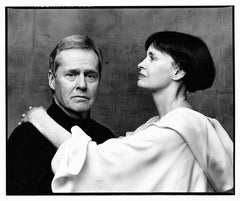
Composer and diarist Ned Rorem & designer Gloria Vanderbilt
Located in Senoia, GA
11 x 14" vintage silver gelatin photograph of composer and diarist Ned Rorem with his close friend designer Gloria Vanderbilt, photographed in Jack Mitchell'...
Category

1990s Pop Art Portrait Photography

Materials

Silver Gelatin

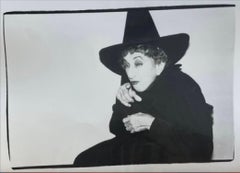
Margaret Hamilton - Witch in Myths series
Located in Beverly Hills, CA
This work was acquired directly from The Andy Warhol Foundation for the Visual Arts. The work is in pristine condition and has never been framed. This is a unique work which comes w...
Category

1980s Pop Art Portrait Photography

Materials

Silver Gelatin

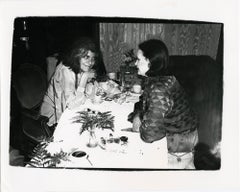
Susan Sontag and Gloria Vanderbilt
Located in Beverly Hills, CA
This is a unique work. Stamped on verso by The Estate of Andy Warhol and The Andy Warhol Foundation for the Visual Arts. Annotated with Foundation inventory number and initialed Tim...
Category

Late 20th Century Pop Art Portrait Photography

Materials

Silver Gelatin

Composer Michael Tilson Thomas & Joshua Mark Robison, signed by Jack
Located in Senoia, GA
11 x 14" vintage silver gelatin photograph of Conductor, Pianist & Composer Michael Tilson Thomas, and his partner/manager (now husband) Joshua Mark Robis...
Category

1970s Pop Art Portrait Photography

Materials

Silver Gelatin

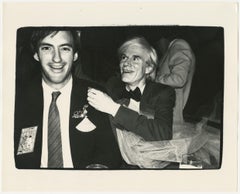
Jon Gould & Andy Warhol
Located in Beverly Hills, CA
This work is unique taken at the direction of Andy Warhol at a performance of "Gotta Get Wet." Others in attendance were Jon Gould, Christopher Makos & Peter Wise. Warhol gazes very ...
Category

Late 20th Century Pop Art Portrait Photography

Materials

Silver Gelatin

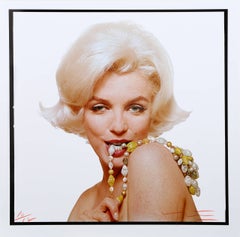
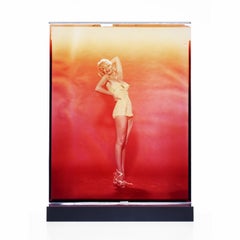
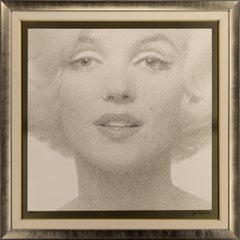
Marilyn Monroe -The Last Sitting 7, Photograph by Bert Stern
Located in Long Island City, NY
Artist: Bert Stern Title: Marilyn Monroe -The Last Sitting Year: 1962 (printed 2009) Medium: Color Photograph, signed and numbered in red crayon Edition: 12...
Category

1960s Pop Art Portrait Photography

Materials

Photographic Paper

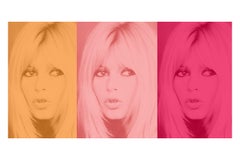
Pink Bardot Triptych - Hand Signed Limited Edition
Located in London, GB
Pink Bardot Triptych - Hand Signed Limited Edition Archival Pigment Print A beautifully crafted pop art composite of the French sex symbol and French Cinema icon that is Brigitte ...
Category

2010s Pop Art Portrait Photography

Materials

Color, Archival Pigment

Conductor, Pianist & Composer Michael Tilson Thomas, signed by Jack
Located in Senoia, GA
11 x 14" vintage silver gelatin photograph of Conductor, Pianist & Composer Michael Tilson Thomas in 1971. Signed by Jack Mitchell on the print verso. Comes directly from the Jack Mi...
Category

1970s Pop Art Portrait Photography

Materials

Silver Gelatin

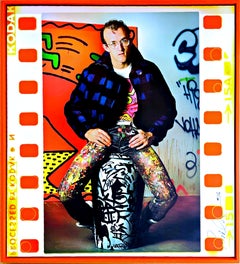
Keith Haring 1 - NYC, 1985 hand signed, numbered twice; hand painted wood frame
Located in New York, NY
Richard Corman Keith Haring 1 - NYC, 1985 (hand signed twice), 2022 Photographic print on Hahnemühle Photo Rag Ultrasmooth paper mounted on Dibond aluminum board. (Hand signed and nu...
Category

2010s Pop Art Portrait Photography

Materials

Metal

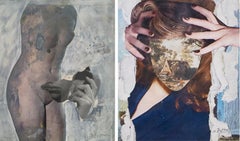
Lover Man Oh Where Can You Be and Crazy. Large limited edition color photograph
Located in Miami Beach, FL
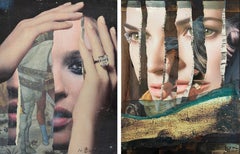
Zupan combines images from old masters, alchemical prints, contemporary artists, and bits from magazines and newspapers to create overlapping, intersecting worlds of transparencies a...
Category

2010s Pop Art Portrait Photography

Materials

Archival Pigment

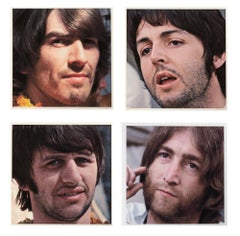
John Lennon, Paul McCartney, George Harrison and Ringo Starr, Rishikesh India
Located in Fairfield, CT
Artist: Paul Saltzman (1943) Title: John Lennon, Paul McCartney, George Harrison and Ringo Starr, Rishikesh India (Beatles), suite of four Year: 1966 Medium: Chromogenic prints on photographic paper Edition: 1/50, 3/50, 3/50, 3/50; editions of 50 Size: 24.75 x 24.75 inches, each Inscription: each signed, titled, and numbered by the photographer Notes: Photographed by Paul Saltzman, Rishikesh, 1966; printed by Paul Saltzman, Toronto. Captured when the photographer was twenty-three years old, and studying meditation under the Maharishi Mahesh Yogi, these images were created at the time when the Beatles, Donovan and others were also pursuing their studies in meditation there. These photographs are rare and may never have been fully editioned. PAUL SALTZMAN (1943) is a Canadian film and television producer, photographer, and director. A two-time Emmy Award-recipient, he has been credited on more than 300 films, both dramas and documentaries. In 1968, at the age of 23, he traveled to India for the first time as sound engineer on the National Film Board of Canada's Juggernaut documentary. He studied meditation to recover after his girlfriend had broken up with him, by mail. He learned meditation at the Maharishi Mahesh Yogi's ashram in the holy city of Rishikesh, India, The Beatles were coincidentally also visiting the ashram. He saw them sitting at a table and asked to join them. Paul McCartney drew up a chair. While there, he spent time with and photographed the Beatles, Donovan, Mia and Prudence Farrow and Mike Love. His photos have been judged "some of the best intimate shots" ever taken of John Lennon, Paul McCartney, George Harrison and Ringo Starr, and have been seen in galleries worldwide. A permanent exhibition of his The Beatles in India photographs...
Category

1960s Pop Art Portrait Photography

Materials

Digital Pigment

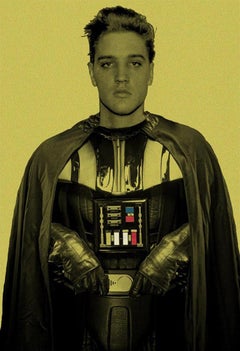
Only Elvis signed limited edition print
Located in London, GB
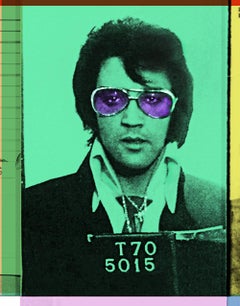
Only Elvis by B A T I K signed limited edition print pop art print of the infamous mock arrest mugshot of Elvis Presley. Archival pi...
Category

2010s Pop Art Portrait Photography

Materials

Color, Archival Pigment

Debbie Harry photograph (on the set of Unmade Beds), New York, 1976
Located in NEW YORK, NY
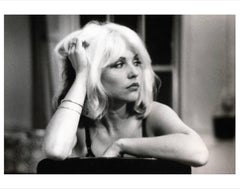
Debbie Harry Photograph: NYC, 1976: Debbie Harry East Village, 1976 by celebrated New York photographer Fernando Natalici. Cooler than cool, this classic "Blondie" photo was captured...
Category

1970s Pop Art Portrait Photography

Materials

C Print

Fun Loving Criminals II by BATIK- Signed Limited Edition
Located in London, GB
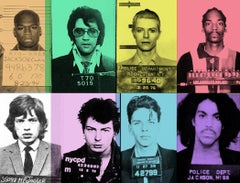
Fun Loving Criminals II By BATIK- Signed Limited Edition Archival pigment pop art print of infamous criminal arrest mugshots of Fifty Cent, Elvis Presley, David Bowie, Snoop Dog, ...
Category

2010s Pop Art Portrait Photography

Materials

Archival Pigment

Querelle
Located in Beverly Hills, CA
From The Jon Gould Collection of Andy Warhol Photographs This work is not signed by the artist, however, each photo is unique and blind embossed “Andy Warhol” in the lower right co...
Category

1980s Pop Art Portrait Photography

Materials

Silver Gelatin

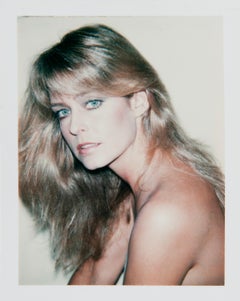
Farrah Fawcett
Located in Beverly Hills, CA
This is a unique work. Work comes with a Certificate of Authenticity issued by The Andy Warhol Foundation for the Visual Arts (pictured). The work is stamped on the verso by the Es...
Category

1970s Pop Art Portrait Photography

Materials

Polaroid

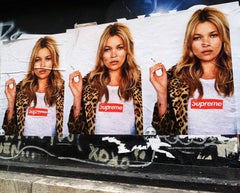
Kate Moss Photo (Kate Moss Supreme New York)
Located in NEW YORK, NY
Kate Moss Supreme New York: In 2012, Moss was chosen as the face for Supreme’s spring campaign. Kate’s cold stare down British photographer Alasda...
Category

21st Century and Contemporary Pop Art Portrait Photography

Materials

C Print

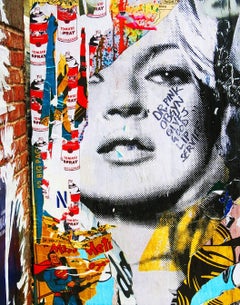
Kate Moss Street Art Photograph New York
Located in NEW YORK, NY
Kate Moss Street Art Photo: A rare Mr. Brainwash Kate Moss mural photographed in New York's famed Soho area in 2014 by celebrated downtown photographer Fernando Natalici. Digital C...
Category

21st Century and Contemporary Pop Art Portrait Photography

Materials

C Print

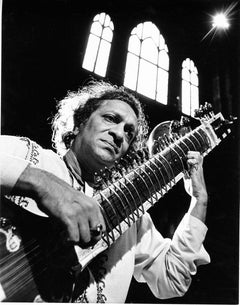
Musician & composer Ravi Shankar performing at St. John, signed by Jack Mitchell
Located in Senoia, GA
11 x 14" vintage silver gelatin photograph of composer and musician Ravi Shankar, performing at the Cathedral of St. John the Divine in 1976. Signed by Ja...
Category

1970s Pop Art Portrait Photography

Materials

Silver Gelatin

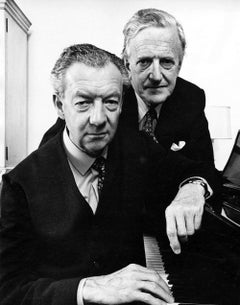
Composer Benjamin Britten & tenor Peter Pears, signed by Jack Mitchell
Located in Senoia, GA
11 x 14" vintage silver gelatin photograph of composer Benjamin Britten and tenor Peter Pears - 1969. Signed by Jack Mitchell on the print recto. Come...
Category

1960s Pop Art Portrait Photography

Materials

Silver Gelatin

Carla Bruni - Gitane - dyptique
Located in PARIS, FR
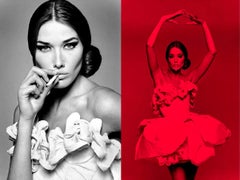
Limited edition of 10 About the series: Carla Bruni - Interview Philippe Robert I've worked extensively with Carla Bruni since she was 17, on over 40 photo shoots. These photos, ...
Category

21st Century and Contemporary Pop Art Portrait Photography

Materials

C Print

Composer and diarist Ned Rorem
Located in Senoia, GA
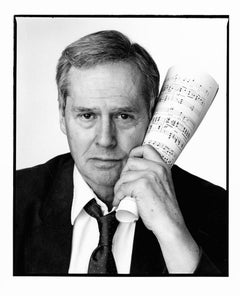
11 x 14" vintage silver gelatin photograph of composer and diarist Ned Rorem in 1992. Comes directly from the Jack Mitchell Archives with a certificate of a...
Category

1990s Pop Art Portrait Photography

Materials

Silver Gelatin

Debbie Harry photograph NYC 1978 (Debbie Harry The Foreigner)
Located in NEW YORK, NY
Cooler than cool... Debbie Harry, New York, 1978, photographed on the set of "The Foreigner" by celebrated New York underground photographer Fernando Natalici. The Foreigner (directo...
Category

1970s Pop Art Portrait Photography

Materials

Silver Gelatin

British singer/songwriter Cat Stevens (Yusuf Islam), signed by Jack Mitchell
Located in Senoia, GA
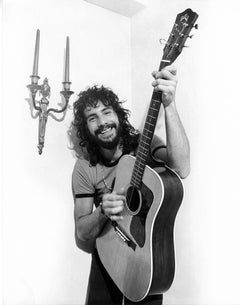
11 x 14" vintage silver gelatin photograph of British singer/songwriter Cat Stevens (Yusuf Islam), photographed in 1971. Signed by Jack Mitchell on the pri...
Category

1980s Pop Art Portrait Photography

Materials

Silver Gelatin

Dancer/Choreographer Trisha Brown, signed by Jack Mitchell
Located in Senoia, GA
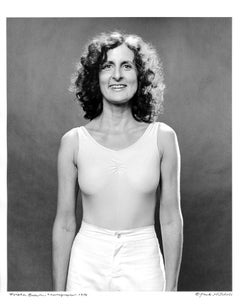
11 x 14" vintage silver gelatin photograph of Dancer/Choreographer Trisha Brown in 1976, signed by Jack Mitchell on the print recto. Comes directly from t...
Category

1970s Pop Art Portrait Photography

Materials

Silver Gelatin

Neo Classical by BATIK Super Oversize Signed Limited Edition
Located in London, GB
Neo Classical by BATIK Pop artwork featuring Neo from the Matrix films stopping an onslaught of assorted colourful pills. signed & limited edition. BATIK is an increasingly co...
Category

2010s Pop Art Portrait Photography

Materials

Archival Pigment

Cast members of Gerald Arpino's Joffrey Ballet masterpiece 'The Clowns'
Located in Senoia, GA
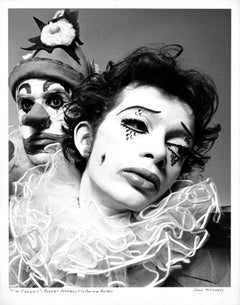
Principal cast members of Gerald Arpino's Joffrey Ballet masterpiece "The Clowns" photographed in 1968. Vintage silver gelatin exhibition photograph mad...
Category

1960s Pop Art Portrait Photography

Materials

Silver Gelatin

Metropolitan Opera conductor Sarah Caldwell, signed by Jack Mitchell
Located in Senoia, GA
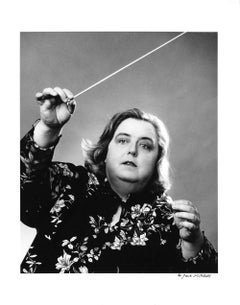
11 x 14" vintage silver gelatin photograph of Metropolitan Opera conductor Sarah Caldwell, 1975. Signed by Jack Mitchell on the print recto. Comes direc...
Category

1970s Pop Art Portrait Photography

Materials

Silver Gelatin

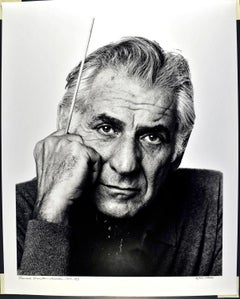
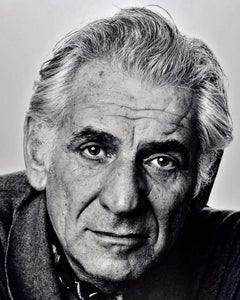
16 x 20" Composer/conductor Leonard Bernstein, signed by Jack Mitchell
Located in Senoia, GA
16 x 20" vintage silver gelatin photograph of Composer/conductor Leonard Bernstein, photographed in 1977. It is signed by Jack Mitchell on the recto and in pencil on the verso. Comes...
Category

1970s Pop Art Portrait Photography

Materials

Silver Gelatin

Rudolf Nureyev photographed at Monique van Vooren's apartment
Located in Senoia, GA
8 x 10" vintage silver gelatin photograph ofRudolf Nureyev photographed at Monique van Vooren's apartment in 1970. This is a print that was published by Af...
Category

1960s Pop Art Portrait Photography

Materials

Silver Gelatin

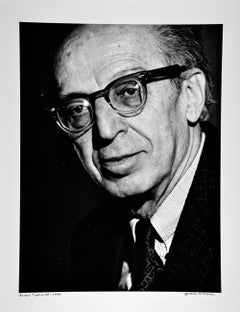
American Composer Aaron Copland, signed by Jack Mitchell
Located in Senoia, GA
11 x 14" vintage silver gelatin photograph of composer Aaron Copland, 1970. Signed by Jack Mitchell on the print verso. Comes directly from the Jack Mitc...
Category

1970s Pop Art Portrait Photography

Materials

Silver Gelatin

Dennis Hopper Photographs 1961-1967 Limited Edition Hand Signed Monograph in box
Located in New York, NY
Dennis Hopper Photographs 1961 - 1967 (Limited Edition Hand Signed), 2009 Hardcover Book in Clamshell Box. Hand Signed and numbered 1327/1500 Hand signed by Dennis Hopper on the colophon page. 19 × 14 1/4 × 3 1/10 inches This is the limited edition (signed and numbered) collector's edition, not to be confused with the later mass market edition. Hand signed, hardcover book in a clamshell box from an edition of 1500. 17.3 x 13 inches (book) 19 x 14 1/4 inches (box) 546 pages Accompanied by Certificate of Guarantee issued by Alpha 137 Gallery During the 1960s, Dennis Hopper (1936–2010) carried a camera everywhere—on film sets and locations, at parties, in diners, bars and galleries, driving on freeways, and walking in political marches. He photographed movie idols, pop stars, writers, artists, girlfriends, and complete strangers. Along the way he captured some of the most intriguing moments of his generation with a keen and intuitive eye. From a selection of photographs compiled by Hopper and gallerist Tony Shafrazi—more than a third of them previously unpublished—this Collector’s Edition distills the essence of Hopper’s prodigious photographic career, documenting the likes of Tina Turner in the studio, Andy Warhol at his first West Coast show, Paul Newman on set, and Martin Luther King Jr. during the Civil Rights March from Selma to Montgomery, Alabama. In many ways this work is photography as film, a poignant narrative expressed through a series of stark images—early shots of Tijuana bullfights, LA happenings, and urban street scenes show an experimental freedom that would translate into the vivid cinematic imagery of Easy Rider and beyond. The images are accompanied by introductory essays from Tony Shafrazi and legendary West Coast art pioneer Walter Hopps, as well as an extensive biography by journalist Jessica Hundley. With excerpts from Victor Bockris’s interviews of Hopper’s famous subjects, friends, and family, this is an unprecedented exploration of the life and mind of one of America’s most fascinating personalities. CONTRIBUTORS The photographer Dennis Hopper (1936–2010) was an acclaimed artist, actor, screenwriter, and director who first impressed audiences with his performances in Rebel Without A Cause (1955) and Giant (1956). He changed the face of American cinema with Easy Rider (1969), which he cowrote, directed, and starred in. Hopper went on to act in hundreds of memorable films and television shows, including Apocalypse Now (1979), Blue Velvet (1986), Hoosiers (1986), True Romance (1993), Basquiat (1997), Elegy (2008), and the TV series Crash (2008). Hopper began painting as a child and started taking photos in 1961, after his then wife Brooke Hayward gave him a 35 mm Nikon camera for his birthday. His paintings and photography have been exhibited all over the world, including the recent retrospective, “Dennis Hopper and the New Hollywood” in Paris. Dennis Hopper passed away May 29, 2010, in Venice, CA. The contributing authors An Englishman who moved to New York in 1973 and became connected to Andy Warhol, the Factory, and Interview, Victor Bockris has written books on Lou Reed, Andy Warhol, Keith Richards, William S. Burroughs, Patti Smith, and Muhammad Ali. Walter Hopps (1933–2005) was one of the premier curators of 20th-century art. Cofounder of Los Angeles’s Ferus Gallery and director of the Pasadena Museum of Art, he was responsible for the first retrospectives of Kurt Schwitters, Joseph Cornell, and Marcel Duchamp. A key advocate of American Pop art, his 1962 survey “New Painting of Common Objects” was the first of its kind. After directing the Washington Gallery of Modern Art, he went on to build the Menil Collection museum in Houston and became its founding director in 1987. A filmmaker and frequently published art, music, and film journalist, Jessica Hundley has directed several documentaries and recently completed her second book, a biography of country-rock legend Gram Parsons...
Category

Early 2000s Pop Art Portrait Photography

Materials

Mixed Media, Lithograph, Offset

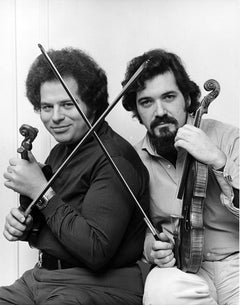
Musicians and friends Itzak Perlman and Pinchas Zukerman
Located in Senoia, GA
11 x 14" vintage silver gelatin photograph of Musicians and friends Itzak Perlman and Pinchas Zukerman photographed at Perlman's apartment in ...
Category

1970s Pop Art Portrait Photography

Materials

Silver Gelatin

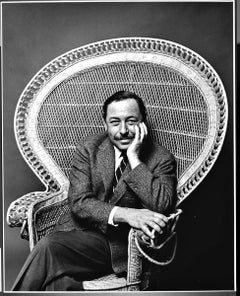
16 x 20" Pulitzer prize-winning playwright Tennessee Williams signed by Mitchell
Located in Senoia, GA
16 x 20" vintage silver gelatin photograph of Pulitzer prize-winning playwright Tennessee Williams, photographed in 1966, numbered 5/12. It is signed by Jack Mitchell in pencil on th...
Category

1960s Pop Art Portrait Photography

Materials

Silver Gelatin

16 x 20" Composer/conductor Leonard Bernstein, signed by Jack Mitchell
Located in Senoia, GA
16 x 20" vintage silver gelatin photograph of Composer/conductor Leonard Bernstein, photographed in 1977. It is signed by Jack Mitchell on the recto and in pencil on the verso. Comes...
Category

1970s Pop Art Portrait Photography

Materials

Silver Gelatin

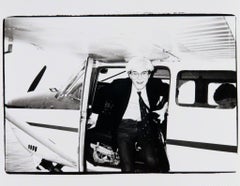
Andy Warhol on a Seaplane on Fire Island
Located in Beverly Hills, CA
This is a unique photographic work taken at the direction of Andy Warhol. Image dimensions: 8 x 10 in. Framed dimensions 16 x 18.5 x 1.25 in. Stamped twice on the reverse by both...
Category

1980s Pop Art Portrait Photography

Materials

Silver Gelatin

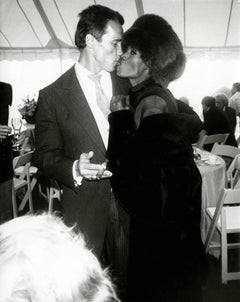
Arnold Schwarzenegger & Grace Jones at His Wedding
Located in Beverly Hills, CA
This is a unique photographic work by Andy Warhol of Grace Jones with Arnold Schwarzenegger at his wedding to Maria Shriver in Hyannis Port, Maine in Apr...
Category

1980s Pop Art Portrait Photography

Materials

Silver Gelatin

Original acetate positive for Ladies & Gentlemen ca. 1975 with provenance Framed
Located in New York, NY
Andy Warhol Ladies & Gentlemen, ca. 1975 Acetate positive photograph Provenance: The Factory, (Andy Warhol's Studio) via Chromacomp (Warhol's printer, owned by Eunice & Jack ...
Category

1970s Pop Art Portrait Photography

Materials

Photographic Paper

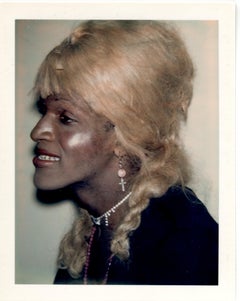
Ladies and Gentlemen (Marsha P. Johnson)
Located in Beverly Hills, CA
Work comes with a Certificate of Provenance issued by Christie’s. Stamped on the verso by the Estate of the Artist and The Andy Warhol Foundation for the Visual Arts. Foundation num...
Category

1970s Pop Art Portrait Photography

Materials

Polaroid

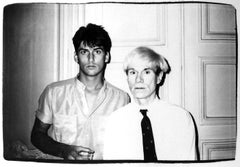
Andy Warhol and Janice Dickinson
Located in Beverly Hills, CA
From The Jon Gould Collection of Andy Warhol Photographs This work is not signed by the artist, however, each photo is unique and blind embossed “Andy Warhol” in the lower right co...
Category

1980s Pop Art Portrait Photography

Materials

Silver Gelatin

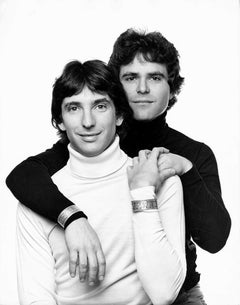
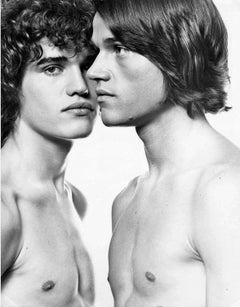
Warhol Superstar Twins Jay and Jed Johnson photographed for After Dark Magazine
Located in Senoia, GA
11 x 14" vintage silver gelatin photograph of twin brothers Jay and Jed Johnson photographed for 'After Dark' magazine on June 8, 1970. Comes dire...
Category

1970s Pop Art Portrait Photography

Materials

Silver Gelatin

Jean-Michel Basquiat VI: A Portrait, 1984, gelatin slver print, Signed/N 4/30
Located in New York, NY
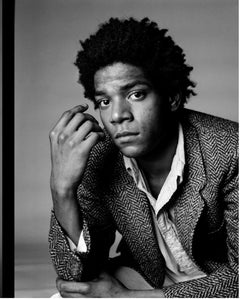
Richard Corman Jean-Michel Basquiat VI: A Portrait, 1984, 2018 Gelatin silver print Signed, titled, dated and numbered 4/30 by Richard Corman in marker on the reverse 20 × 16 inches...
Category

2010s Pop Art Portrait Photography

Materials

Silver Gelatin

Eternal Recurrence #43 and #9. Large limited edition color photograph
Located in Miami Beach, FL
Zupan combines images from old masters, alchemical prints, contemporary artists, and bits from magazines and newspapers to create overlapping, intersecting worlds of transparencies a...
Category

2010s Pop Art Portrait Photography

Materials

Archival Pigment

"Alfred E. Donuts", Mad Magazine Icon photographic arrangement of donuts 38x31"
Located in Southampton, NY
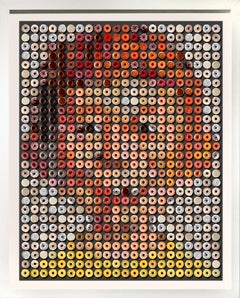
You have read about the extraordinary donut portraits by Candice CMC on social media world-wide and we are excited and proud to represent her work. "Alfred E. Donuts" by Candice CMC was actually featured in Mad Magazine...
Category

2010s Pop Art Portrait Photography

Materials

Archival Ink, Rag Paper

Andy Warhol and a Male Model
Located in Beverly Hills, CA
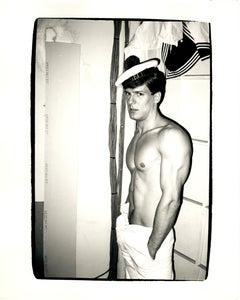
This is a unique photographic work taken under the direction of Andy Warhol. Image dimensions: 8 x 10 in. Framed dimensions: 16 x 18 in. Work comes with an authentication letter from the Andy Warhol Authentication Board, Inc. Stamped on verso by the Andy Warhol Art Authentication Board. Provenance: Estate of the Artist to The Andy Warhol Foundation for the Visual Arts to Hedges Projects...
Category

1980s Pop Art Portrait Photography

Materials

Silver Gelatin

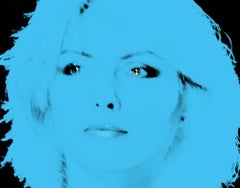
Blondie Blue by BATIK Oversize Signed Limited Edition
Located in London, GB
Blondie Blue By BATIK Archival pigment pop art print of pop culture icon Debbie Harry of punk rock glam band Blondie BATIK is a London based fine artist and image maker. Certific...
Category

2010s Pop Art Portrait Photography

Materials

Archival Pigment

Plain Jane by BATIK Super Oversize Signed Limited Edition
Located in London, GB
Plain Jane By BATIK Archival pigment pop art print of pop culture, fashion icon British born Jane Birkin, who famously emigrated to France and formed the iconic French It Couple wit...
Category

2010s Pop Art Portrait Photography

Materials

Archival Pigment

American Icon by BATIK Oversize Signed Limited Edition
Located in London, GB
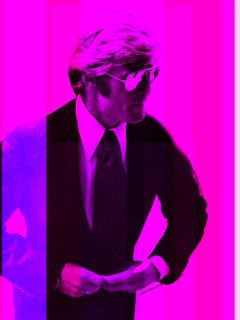
American Icon - Robert Redford by BATIK pop artwork featuring a portrait of the late film star, producer and director and male sex symbol Robert Redford. signed & limited editi...
Category

2010s Pop Art Portrait Photography

Materials

Archival Pigment

Cherry Kate by BATIK- Signed Limited Edition
Located in London, GB
Cherry Kate By BATIK- Signed Limited Edition Artwork of the supermodel Kate Moss Made and signed by London based pop artist BATIK. Produced from the o...
Category

2010s Pop Art Portrait Photography

Materials

Archival Pigment

John Waters photograph Baltimore 1985
Located in NEW YORK, NY
Fernando Natalici: John Waters, Baltimore, 1985 John Waters was born in 1946 in Baltimore, where he continues to live and work. Exhibitions include the Wex...
Category

1970s Pop Art Portrait Photography

Materials

Inkjet

Basquiat photograph by Nick Taylor of Gray (Basquiat 1979)
Located in NEW YORK, NY
Rare 1979 Photograph of Jean Michel Basquiat This rare Basquiat photograph was taken from Nicholas Taylor’s well-documented portfolio exploring his friendship with Jean-Michel Basquiat - a friendship which began when both collaborated on the historic New York No Wave band, “GRAY” in the late 1970s; before the two briefly lived together in the East Village. Selections from Taylor's portfolio were most notably exhibited as part of the Basquiat retrospective at London's Barbican in 2017 and have been featured in numerous noteworthy publications on Basquiat. Silver Gelatin Print. 1979. 11 x 14 inches Hand signed and numbered in the margins from an edition of 5 A/P's. Good overall vintage condition, with the exception of some minor signs of handling; surface marks to lower right; minor surface waves commensurate with medium. Provenance: Obtained directly from artist Lot 180 is an authorized dealer rep of Nicholas Taylor Whilst Basquiat often provided glimpses into his conflicted character through his own art, Taylor’s photograph offers an intimate, and perhaps more honest, portrait from the outside. The clever exploration of light and dark reveals the dichotomies that divided the artist; both his fragile and playful, tender and brazen sides are unveiled. A soft glow is cast across Basquiat’s face, communicating a tenderness and affection that only a close friend could capture. About Nicholas Taylor Nicholas Taylor (American, b. 1953) is a renowned photographer and musician. Taylor moved to New York in 1977 to pursue a career as a photographer and it was through the vibrant New York art scene that he came to know the young artist, Jean-Michel Basquiat. It was, in fact, his intimate portfolio of photographs documenting his friendship with Basquiat that rocketed Taylor to fame. The two would collaborate in the seminal No Wave band “Gray” and live together in the East Village, before Taylor launched a successful career as a DJ famous for track-looping. His track “Suicide Mode” would later be used in the soundtrack for Julian Schnabel’s 1996 film “Basquiat." Taylor has been directly referenced in at least two works by Basquiat and is responsible for first introducing the artist to Madonna before the two dated. Taylor's photographs of Basquiat were recently exhibited at London's Barbican and Frankfurt's Schirn Kunsthalle as part of the landmark Basquiat: Boom for Real exhibition; with Gray (Michael Holman & Nick Taylor...
Category

1980s Pop Art Portrait Photography

Materials

Silver Gelatin

Bert Stern "Marilyn Monroe Gold and Champagne" 1973 Signed Photo Silkscreen
Located in Miami, FL
BERT STERN – "MARILYN MONROE (GOLD/CHAMPAGNE)" Photo Silkscreen ⚜ Hand Signed ⚜ Numbered ⚜ Framed AN ICONIC IMAGE FROM "THE LAST SITTING" SERIES This original photo silkscreen by Be...
Category

1970s Pop Art Portrait Photography

Materials

Photographic Paper, Screen

Composer/conductor Leonard Bernstein, signed by Jack Mitchell
Located in Senoia, GA
11 x 14" vintage silver gelatin photograph of composer and conductor Leonard Bernstein, 1977. Signed by Jack Mitchell on the print recto. Comes directly from the Jack Mitchell Archiv...
Category

1970s Pop Art Portrait Photography

Materials

Silver Gelatin

Pop Art portrait photography for sale on 1stDibs.
Find a wide variety of authentic Pop Art portrait photography available for sale on 1stDibs. Works in this style were very popular during the 21st Century and Contemporary, but contemporary artists have continued to produce works inspired by this movement. If you’re looking to add portrait photography created in this style to introduce contrast in an otherwise neutral space in your home, the works available on 1stDibs include elements of blue, orange, pink, purple and other colors. Many Pop art paintings were created by popular artists on 1stDibs, including Andy Warhol, Jack Mitchell, Candice CMC, and BATIK. Frequently made by artists working with Silver Gelatin Print, and Paper and other materials, all of these pieces for sale are unique and have attracted attention over the years. Not every interior allows for large Pop Art portrait photography, so small editions measuring 1.5 inches across are also available. Prices for portrait photography made by famous or emerging artists can differ depending on medium, time period and other attributes. On 1stDibs, the price for these items starts at $225 and tops out at $150,000, while the average work sells for $17,725.

Still Thinking About These?

All Recently Viewed