Late 19th Century Prints and Multiples

to
194
2,786
565
182
42
85
Overall Width
to
Overall Height
to
1,515
168
137
56
31
7
7
6
4
2
72
62
44
41
39
4,819
10,537
57,772
24,841
721
984
2,309
2,323
2,438
5,001
7,811
13,573
8,033
4,254
3,983
2,488
1,161
9
2,012
1,093
768
668
641
545
464
398
386
243
217
212
209
188
188
174
147
128
109
101
1,842
1,197
433
411
172
289
1,821
1,556
1,202
Period: Late 19th Century
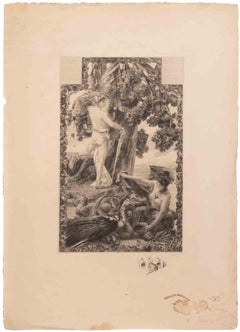
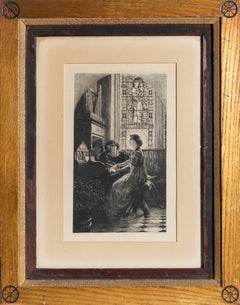
Harmony, Framed Vintage Etching by Frank Dicksee
Located in Long Island City, NY
This is an etched rendition of a painting by Frank Dicksee. Harmony is one of the most well-known pictures by Dicksee, depicting a young man staring adoringly into the eyes of a girl...
Category

Late 19th Century Prints and Multiples

Materials

Etching

"Venice" original etching
By Charles Abel Corwin
Located in Henderson, NV
Medium: original etching. This impression on wove paper was printed in 1885 for the Sylvester R. Koehler portfolio of etchings and published by Cassell & Company. Plate size: 8 x 5 1...
Category

Late 19th Century Prints and Multiples

Materials

Etching

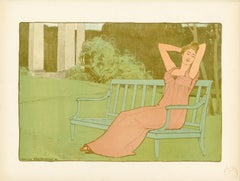
Corinne
Located in Fairlawn, OH
Corinne Color lithograph, 1898 Signed in the stone lower left (see photo) Published in L’Estampe Moderne with their blindstamp lower right corner, Lugt 2790 (see photo) Edition 2000 ...
Category

Late 19th Century Prints and Multiples

Materials

Lithograph

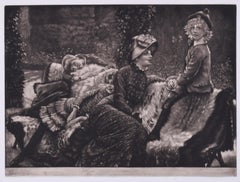
Le banc de jardin (The Garden Bench)
Located in Fairlawn, OH
Le banc de jardin (The Garden Bench) Mezzotint and engraving on cream chine collé laid down on ivory wove paper, 1883 Signed in the plate (see photo) Condition: Brilliant impression...
Category

Impressionist Late 19th Century Prints and Multiples

Materials

Mezzotint

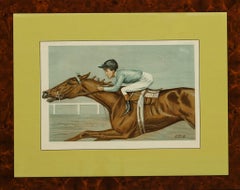
"An American Jockey 1899 Tod Sloan"
Located in Bristol, CT
Hand-coloured litho depicting the American jockey, Tod Sloan (1874-1933) from the Men of The Day series #750 since bespokely framed 1899 Print Sz: 9 1/2"H x 13 1/2"W...
Category

Late 19th Century Prints and Multiples

Materials

Lithograph

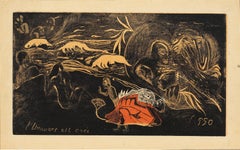
L'Univers est créé
Located in London, GB
Gauguin came back to Paris in August 1893 from his first stay in Tahiti, In the luggage numerous drawings and preparatory work for a book designed by him. In collaboration with the writer Charles Morice, parts of the text "NOA NOA" were created in Paris in the winter of 1893-1894. The plan was for a preferred edition with 10 almost identical woodcuts, all of which were made in the winter of 1893-1894. According to the individual proto-prints by Gauguin, the artist left the artist to Louis Roy...
Category

Late 19th Century Prints and Multiples

Materials

Woodcut

Gerlach's Allegorien Plate #35: "Love & Wine" Lithograph
Located in Palm Beach, FL
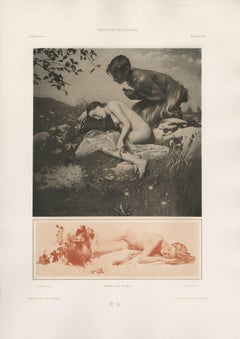
Koloman Moser (1868 –1918), AUSTRIAN Instead of applying his flair and art education solely to painting, Koloman Moser embodied the idea of Gesamt Kunstwerk (all-embracing art work) by designing architecture, furniture, jewelry, graphics, and tapestries meant to coordinate every detail of an environment. His work transcended the imitative decorative arts of earlier eras and helped to define Modernism for generations to come. Moser achieved a remarkable balance between intellectual structure (often geometric) and hedonistic luxury. Collaborating with Gustav Klimt and Josef Hoffmann, the artist was an editor and active contributor to Ver Sacrum, (Sacred Spring), the journal of the Viennese Secession that was so prized for its aesthetics and high quality production that it was considered a work of art. The magazine featured drawings and designs in the Jugendstil style (Youth) along with literary contributions from distinguished writers from across Europe. It quickly disseminated both the spirit and the style of the Secession. In 1903 Moser and Hoffmann founded and led the Wiener Werkstatte (Viennese Workshop) a collective of artisans that produced elegant decorative arts items, not as industrial prototypes but for the purpose of sale to the public. The plan, as idealistic then as now, was to elevate the lives of consumers by means of beautiful and useful interior surroundings. Moser’s influence has endured throughout the century. His design sensibility is evident from the mid-century modern furniture of the 1950s and ‘60s to the psychedelic rock posters...
Category

Vienna Secession Late 19th Century Prints and Multiples

Materials

Lithograph

Thomas Moran Chromolithograph Print 1893 of the Grand Canyon
Located in Rome, IT
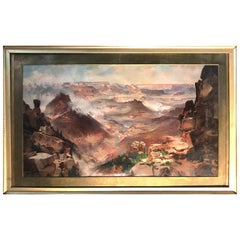
Created by Gustav Buek from an original oil painting made in 1892 by Thomas Moran. The painting is today owned by the Philadelphia Museum of Art in Philadelphia, Pennsylvania. Both w...
Category

Late 19th Century Prints and Multiples

Materials

Lithograph

Cheval et singe dressés - Grabado firmado a lápiz - 114/500 ejemplares
Located in Sant Celoni, ES
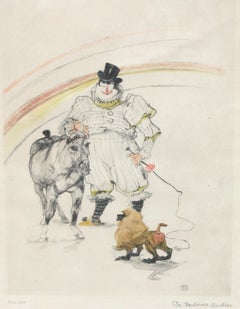
El grabado va firmado a lápiz y con justificante del tiraje que en este caso es un tiraje de 500 ejemplares, siendo este el número 114 Se presenta enmarcado El estado del grabado e...
Category

Late 19th Century Prints and Multiples

Materials

Engraving

19th century color lithograph seascape boat ship waves maritime landscape
Located in Milwaukee, WI
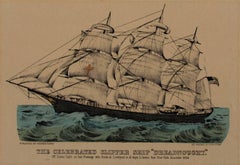
"The Celebrated Clipper Ship Dreadnought" is an original hand-colored lithograph by Currier & Ives. It depicts a sailing ship. 13 1/4" x 17 1/2" art 19" x 23 1/2" frame Nathaniel Currier was a tall introspective man with a melancholy nature. He could captivate people with his piercing stare or charm them with his sparkling blue eyes. Nathaniel was born in Roxbury, Massachusetts on March 27th, 1813, the second of four children. His parents, Nathaniel and Hannah Currier, were distant cousins who lived a humble yet spartan life. When Nathaniel was eight years old, tragedy struck. Nathaniel’s father unexpectedly passed away leaving Nathaniel and his eleven-year-old brother Lorenzo to provide for the family. In addition to their mother, Nathaniel and Lorenzo had to care for six-year-old sister Elizabeth and two-year-old brother Charles. Nathaniel worked a series of odd jobs to support the family, and at fifteen, he started what would become a life-long career when he apprenticed in the Boston lithography shop of William and John Pendleton. A Bavarian gentleman named Alois Senefelder invented lithography just 30 years prior to young Nat Currier’s apprenticeship. While under the employ of the brothers Pendleton, Nat was taught the art of lithography by the firm’s chief printer, a French national named Dubois, who brought the lithography trade to America. Lithography involves grinding a piece of limestone flat and smooth then drawing in mirror image on the stone with a special grease pencil. After the image is completed, the stone is etched with a solution of aqua fortis leaving the greased areas in slight relief. Water is then used to wet the stone and greased-ink is rolled onto the raised areas. Since grease and water do not mix, the greased-ink is repelled by the moisture on the stone and clings to the original grease pencil lines. The stone is then placed in a press and used as a printing block to impart black on white images to paper. In 1833, now twenty-years old and an accomplished lithographer, Nat Currier left Boston and moved to Philadelphia to do contract work for M.E.D. Brown, a noted engraver and printer. With the promise of good money, Currier hired on to help Brown prepare lithographic stones of scientific images for the American Journal of Sciences and Arts. When Nat completed the contract work in 1834, he traveled to New York City to work once again for his mentor John Pendleton, who was now operating his own shop located at 137 Broadway. Soon after the reunion, Pendleton expressed an interest in returning to Boston and offered to sell his print shop to Currier. Young Nat did not have the financial resources to buy the shop, but being the resourceful type he found another local printer by the name of Stodart. Together they bought Pendleton’s business. The firm ‘Currier & Stodart’ specialized in "job" printing. They produced many different types of printed items, most notably music manuscripts for local publishers. By 1835, Stodart was frustrated that the business was not making enough money and he ended the partnership, taking his investment with him. With little more than some lithographic stones, and a talent for his trade, twenty-two year old Nat Currier set up shop in a temporary office at 1 Wall Street in New York City. He named his new enterprise ‘N. Currier, Lithographer’ Nathaniel continued as a job printer and duplicated everything from music sheets to architectural plans. He experimented with portraits, disaster scenes and memorial prints, and any thing that he could sell to the public from tables in front of his shop. During 1835 he produced a disaster print Ruins of the Planter's Hotel, New Orleans, which fell at two O’clock on the Morning of the 15th of May 1835, burying 50 persons, 40 of whom Escaped with their Lives. The public had a thirst for newsworthy events, and newspapers of the day did not include pictures. By producing this print, Nat gave the public a new way to “see” the news. The print sold reasonably well, an important fact that was not lost on Currier. Nat met and married Eliza Farnsworth in 1840. He also produced a print that same year titled Awful Conflagration of the Steamboat Lexington in Long Island Sound on Monday Evening, January 18, 1840, by which melancholy occurrence over One Hundred Persons Perished. This print sold out very quickly, and Currier was approached by an enterprising publication who contracted him to print a single sheet addition of their paper, the New York Sun. This single page paper is presumed to be the first illustrated newspaper ever published. The success of the Lexington print launched his career nationally and put him in a position to finally lift his family up. In 1841, Nat and Eliza had their first child, a son they named Edward West Currier. That same year Nat hired his twenty-one year old brother Charles and taught him the lithography trade, he also hired his artistically inclined brother Lorenzo to travel out west and make sketches of the new frontier as material for future prints. Charles worked for the firm on and off over the years, and invented a new type of lithographic crayon which he patented and named the Crayola. Lorenzo continued selling sketches to Nat for the next few years. In 1843, Nat and Eliza had a daughter, Eliza West Currier, but tragedy struck in early 1847 when their young daughter died from a prolonged illness. Nat and Eliza were grief stricken, and Eliza, driven by despair, gave up on life and passed away just four months after her daughter’s death. The subject of Nat Currier’s artwork changed following the death of his wife and daughter, and he produced many memorial prints and sentimental prints during the late 1840s. The memorial prints generally depicted grief stricken families posed by gravestones (the stones were left blank so the purchasers could fill in the names of the dearly departed). The sentimental prints usually depicted idealized portraits of women and children, titled with popular Christian names of the day. Late in 1847, Nat Currier married Lura Ormsbee, a friend of the family. Lura was a self-sufficient woman, and she immediately set out to help Nat raise six-year-old Edward and get their house in order. In 1849, Lura delivered a son, Walter Black Currier, but fate dealt them a blow when young Walter died one year later. While Nat and Lura were grieving the loss of their new son, word came from San Francisco that Nat’s brother Lorenzo had also passed away from a brief illness. Nat sank deeper into his natural quiet melancholy. Friends stopped by to console the couple, and Lura began to set an extra place at their table for these unexpected guests. She continued this tradition throughout their lives. In 1852, Charles introduced a friend, James Merritt Ives, to Nat and suggested he hire him as a bookkeeper. Jim Ives was a native New Yorker born in 1824 and raised on the grounds of Bellevue Hospital where his father was employed as superintendent. Jim was a self-trained artist and professional bookkeeper. He was also a plump and jovial man, presenting the exact opposite image of his new boss. Jim Ives met Charles Currier through Caroline Clark, the object of Jim’s affection. Caroline’s sister Elizabeth was married to Charles, and Caroline was a close friend of the Currier family. Jim eventually proposed marriage to Caroline and solicited an introduction to Nat Currier, through Charles, in hopes of securing a more stable income to support his future wife. Ives quickly set out to improve and modernize his new employer’s bookkeeping methods. He reorganized the firm’s sizable inventory, and used his artistic skills to streamline the firm’s production methods. By 1857, Nathaniel had become so dependent on Jims’ skills and initiative that he offered him a full partnership in the firm and appointed him general manager. The two men chose the name ‘Currier & Ives’ for the new partnership, and became close friends. Currier & Ives produced their prints in a building at 33 Spruce Street where they occupied the third, fourth and fifth floors. The third floor was devoted to the hand operated printing presses that were built by Nat's cousin, Cyrus Currier, at his shop Cyrus Currier & Sons in Newark, NJ. The fourth floor found the artists, lithographers and the stone grinders at work. The fifth floor housed the coloring department, and was one of the earliest production lines in the country. The colorists were generally immigrant girls, mostly German, who came to America with some formal artistic training. Each colorist was responsible for adding a single color to a print. As a colorist finished applying their color, the print was passed down the line to the next colorist to add their color. The colorists worked from a master print displayed above their table, which showed where the proper colors were to be placed. At the end of the table was a touch up artist who checked the prints for quality, touching-in areas that may have been missed as it passed down the line. During the Civil War, demand for prints became so great that coloring stencils were developed to speed up production. Although most Currier & Ives prints were colored in house, some were sent out to contract artists. The rate Currier & Ives paid these artists for coloring work was one dollar per one hundred small folios (a penny a print) and one dollar per one dozen large folios. Currier & Ives also offered uncolored prints to dealers, with instructions (included on the price list) on how to 'prepare the prints for coloring.' In addition, schools could order uncolored prints from the firm’s catalogue to use in their painting classes. Nathaniel Currier and James Merritt Ives attracted a wide circle of friends during their years in business. Some of their more famous acquaintances included Horace Greeley, Phineas T. Barnum, and the outspoken abolitionists Rev. Henry Ward, and John Greenleaf Whittier (the latter being a cousin of Mr. Currier). Nat Currier and Jim Ives described their business as "Publishers of Cheap and Popular Pictures" and produced many categories of prints. These included Disaster Scenes, Sentimental Images, Sports, Humor, Hunting Scenes, Politics, Religion, City and Rural Scenes, Trains, Ships, Fire Fighters, Famous Race Horses, Historical Portraits, and just about any other topic that satisfied the general public's taste. In all, the firm produced in excess of 7500 different titles, totaling over one million prints produced from 1835 to 1907. Nat Currier retired in 1880, and signed over his share of the firm to his son Edward. Nat died eight years later at his summer home 'Lion’s Gate' in Amesbury, Massachusetts. Jim Ives remained active in the firm until his death in 1895, when his share of the firm passed to his eldest son, Chauncey. In 1902, faced will failing health from the ravages of Tuberculosis, Edward Currier sold his share of the firm to Chauncey Ives...
Category

Other Art Style Late 19th Century Prints and Multiples

Materials

Lithograph

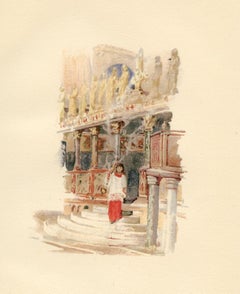
(after) Rhoda Holmes Nicholls - chromolithograph "St Mark's" Venice
Located in Henderson, NV
Medium: chromolithograph (after the watercolor). This delightful antique lithograph was published in a small edition in 1892 to illustrate a rare volume with scenes of Venetian life....
Category

Late 19th Century Prints and Multiples

Materials

Lithograph

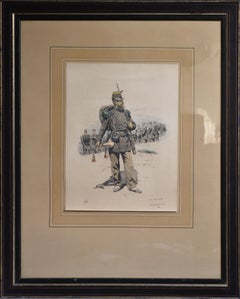
Bugler of Chasseurs Corps by Ed Detaille 19th Century Facsimile Color Lithograph
Located in Stockholm, SE
Bugler Foot Hunter, 1870 (lithographed facsimile 1883), Illustration after Édouard Detaille (1848 - 1912), similar in Musée de Nuits-Saint-Georges. This illustration shows a bugler from the 20th Chasseurs Battalion. "Chasseur" a French term for "hunter" or "huntsman", is the designation given to certain regiments of French and Belgian light...
Category

French School Late 19th Century Prints and Multiples

Materials

Wood, Paper

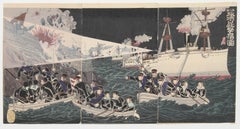
The Second Army Bombarding, Ukiyo-E Wooblock by Watanabe Nobukazu
By Watanabe Nobukazu
Located in Long Island City, NY
Artist: Watanabe Nobukazu, Japanese (1872 - 1944) Title: The Second Army Bombarding and Occupying Port Arthur Year: 1894 Medium: Woodblock Triptych...
Category

Other Art Style Late 19th Century Prints and Multiples

Materials

Woodcut

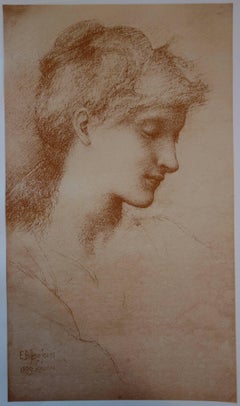
Beauty - Original lithograph - 1897
By Edward Burne-Jones
Located in Paris, IDF
Edward Burne-Jones Beauty, 1898 Original lithograph (Champenois workshop) Printed signature in the plate On vellum, 40 x 31 cm (c. 16 x 12 in) INFORMATION: Lithograph created for t...
Category

Art Nouveau Late 19th Century Prints and Multiples

Materials

Lithograph

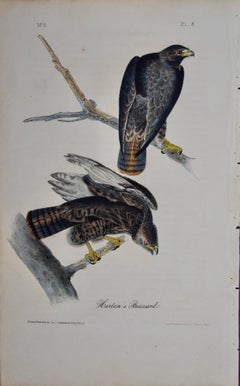
Harlan's Buzzard Birds: An Original 19th C. Audubon Hand-colored Bird Lithograph
Located in Alamo, CA
This is an original 1st edition John James Audubon hand-colored lithograph entitled "Harlan's Buzzard", No. 2, Plate 8 from Audubon's "Birds of America, lithographed, printed and col...
Category

Naturalistic Late 19th Century Prints and Multiples

Materials

Lithograph

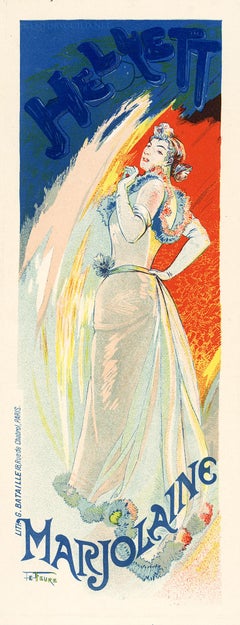
Hélyett Marjolaine by Georges de Feure, Art Nouveau theater lithograph, 1896
Located in Chicago, IL
Lithograph of George de Feure’s 1896 theatrical Art Nouveau poster promoting Mistinguett’s role as Hélyett in Marjolaine. Hélyett is shown in a delicate pastel palette, enveloped b...
Category

Art Nouveau Late 19th Century Prints and Multiples

Materials

Lithograph

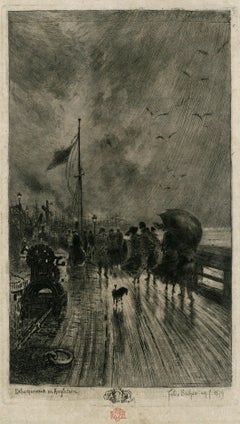
Un Debarquement en Angleterre (A Disembarking in England)
Located in Fairlawn, OH
Un Debarquement en Angleterre (A Disembarking in England) etching, drypoint, aquatint, roulette and spirit ground, 1879 Signed with the artist’s red owl stamp, Lugt 977 (see photo) ...
Category

Impressionist Late 19th Century Prints and Multiples

Materials

Drypoint

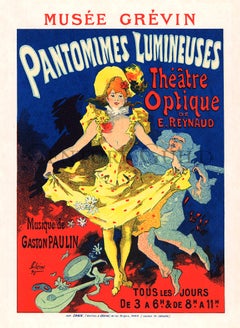
Musée Grévin, Pantomimes Lumineuses by Jules Cheret, Commedia lithograph, 1896
Located in Chicago, IL
Jules Chéret’s poster advertising the Théâtre Optique (Optical Theatre) immortalized a momentous convergence of technology, culture, history, and art with the 1892 debut of Emile Reynaud’s praxinoscope at the Musée Grévin in Paris. Reynaud presented his Pantomimes Lumineuses, the world’s first animated films, using his innovative system which projected light through moving pictures to offer illuminated pantomimes. Among the three short films Reynaud screened through his praxinoscope was Pauvre Pierrot (Poor Pierrot), a story of Pierrot courting Columbine based on the timeless archetypal love triangle featured in many Commedia dell’arte pantomimes. As a member of the Cercle Funambulesque (roughly “Friends of the Tightrope-walkers”), a French society which championed the contemporary creation of Commedia dell-arte-inspired pantomimes, Jules Chéret was often inspired by Pierrot and produced a large number of works depicting him, often with his beloved Columbine. Cheret’s involvement with the Cercle, combined with the immense popularity of these archetypes in the late 19th century, meant that they appeared frequently in his works. This work comes from the extremely scarce edition of 25 strikes on Imperial Japon paper, a mulberry bark-based stock inspired by the smooth-surfaced papers used in Japanese printmaking. This world-class example of lithography captures superior resolution and color-richness to that of its large-format counterpart. The use of marbled Imperial Japon paper allows inks to rest upon its surface rather than being absorbed by a more porous paper stock. An extremely scarce fraction of the edition of 25 are estimated to have survived to date. Stone lithograph of Jules Chéret’s Musée Grévin...
Category

Art Nouveau Late 19th Century Prints and Multiples

Materials

Lithograph

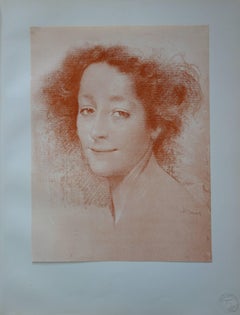
Beauty of Last Century - Original lithograph (1897/98)
Located in Paris, IDF
Lucien LEVY DHURMER (1865 - 1953) Beauty of Last Century Original litograph Platesigned 1897/98 Printed on paper Vélin Size 40 x 31 cm (c. 16 x 12") I...
Category

Art Nouveau Late 19th Century Prints and Multiples

Materials

Lithograph

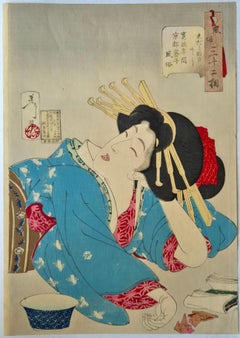
Tsukioka Yoshitoshi -- Looks Slovenly', Mannerisms of a Kyoto Geisha
Located in BRUCE, ACT
Tsukioka Yoshitoshi Looks Slovenly', Mannerisms of a Kyoto Geisha from the Kansei Period from Thirty-Two Daily Scenes (風俗三十二相), 1888 Woodblock print Oban The image depicts a geisha...
Category

Late 19th Century Prints and Multiples

Materials

Woodcut

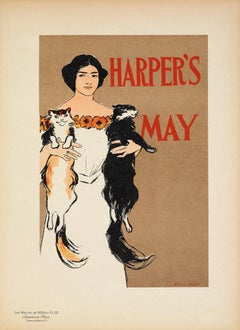
Harper's May (Plate 115)
Located in Greenwich, CT
Harper's May (Plate 115) is an 1898 lithograph of Edward Penfield's poster, printed at Imprimerie Chaix by Jules Chéret and included in the famed collection of Belle Époque posters 'Les Maîtres de l'Affiche.' From the deluxe edition of 100 printed on japon - total edition size unknown. Framed in an ornate, gold-tone frame. Designed by Edward Penfield for a May edition...
Category

Art Nouveau Late 19th Century Prints and Multiples

Materials

Paper, Lithograph

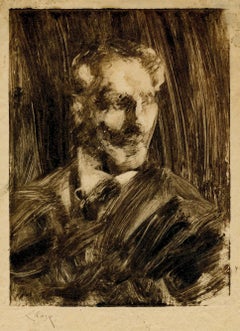
Portrait of a Man Facing Left
Located in Fairlawn, OH
Portrait of a Man Facing Left Monotype printed in brown ink, c. 1880-1914 Signed in ink lower left: Chase (see photo) Provenance: Helen Chase Storm (the artist's daughter) Jackson Chase Storm (her son) Chapellier Galleries (as agent) James Bergquist, Boston References And Exhibitions: Exhibited at the Museum of Fine Arts, Boston and the Clark Art Institute, Williamstown, MA. (See MFA paperwork in photos) Reference: Ronald G. Pisano, Completed by D. Frederick Baker and Carolyn K. Lane, William Merritt Chase: Still Lifes, Interiors, Figures, Copies of Old Masters, and Drawings, Catalogue Raisonne, Vol. IV (New Haven and London: Yale University Press, 2010), Vol. 1, M. 8. (See photos of entry) William Merritt Chase (1840-2016) Born in Nineveh, Indiana Died New York, New York In 1883 Chase was involved in the organization of an exhibition to help raise funds for a pedestal for the Statute of Liberty. The exhibition featured loans of three works by Manet and urban scenes by the Italian Impressionist Giuseppe de Nittis. Both artists influenced Chase's Impressionistic style that gave rise to a series of New York park scenes. It is also thought that he was influenced by John Singer Sargent's In the Luxembourg Gardens (1879) which was exhibited in New York at this time. Indeed, Chase had met Sargent in Europe in 1881, the two men becoming lifelong friends with Sargent painting Chase's portrait in 1902. On another European trip in 1885, Chase met James McNeill Whistler in London. While Whistler had a reputation for being difficult, the two artists got along famously and agreed to paint one another's portrait. Eventually, however, Whistler's moods began to grate with Chase who wrote home stating "I really begin to feel that I never will get away from here". For his part, Whistler criticized Chase's finished portrait and, according to Hirshler, "complained about Chase for the rest of his life". While no record exists of Whistler's portrait of Chase; Chase's portrait of Whistler remains a well-known piece in his oeuvre. In 1887 Chase married Alice Gerson, the daughter of the manager of a lithography company. Though some fifteen years his junior (Chase was 37), he had known Alice for some time through her family's devotion to the arts. The pair, who would enjoy a happy marriage with Alice in full support of her husband's career, settled initially in Brooklyn...
Category

Impressionist Late 19th Century Prints and Multiples

Materials

Monoprint

La Mare Aux Grenouille - Etching by J. Desbrosses - Late 19th Century
Located in Roma, IT
La Mare Aux Grenouilles is a black and White etching realized by J. Desbrosses in the Late 19th Century.  Titled in the lower Image Size: 16x25 Very good impression. Realized by ...
Category

Impressionist Late 19th Century Prints and Multiples

Materials

Etching

Grand’mère (effet de lumière) (La Mère de l’artiste) by Camille Pissarro
Located in London, GB
Grand’mère (effet de lumière) (La Mère de l’artiste) by Camille Pissarro (1830-1903) Etching 17.1 x 25.3 cm (6 ³/₄ x 10 inches) Stamped lower right, C.P. an...
Category

Impressionist Late 19th Century Prints and Multiples

Materials

Etching

La Mort du Chat Murr - Etching by Jean François Raffaëlli - 1875
Located in Roma, IT
Etching on laid paper Inscribed in pencil: Épreuve tirée de la planche donnée personnellement par l’artiste pour la Société des Aquafortistes Published by Cadart & Luquet, Éditeu...
Category

Modern Late 19th Century Prints and Multiples

Materials

Drypoint, Etching

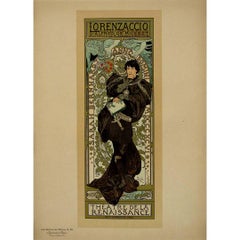
1898 poster Mucha Lorenzaccio - Les Maîtres de l'affiche Pl.114
Located in PARIS, FR
Alphonse Mucha's "Lorenzaccio" poster, featured as Plate 114 in "Les Maîtres de l'Affiche," encapsulates the Art Nouveau spirit and the enchanting collaboration between the iconic ar...
Category

Art Nouveau Late 19th Century Prints and Multiples

Materials

Paper, Lithograph

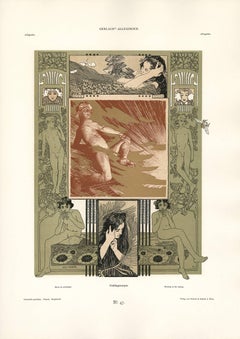
Gerlach's Allegorien Plate #47: "Morning in the Spring" Lithograph
Located in Palm Beach, FL
Koloman Moser (1868 –1918), AUSTRIAN Instead of applying his flair and art education solely to painting, Koloman Moser embodied the idea of Gesamt Kunstwerk (all-embracing art work) by designing architecture, furniture, jewelry, graphics, and tapestries meant to coordinate every detail of an environment. His work transcended the imitative decorative arts of earlier eras and helped to define Modernism for generations to come. Moser achieved a remarkable balance between intellectual structure (often geometric) and hedonistic luxury. Collaborating with Gustav Klimt and Josef Hoffmann, the artist was an editor and active contributor to Ver Sacrum, (Sacred Spring), the journal of the Viennese Secession that was so prized for its aesthetics and high quality production that it was considered a work of art. The magazine featured drawings and designs in the Jugendstil style (Youth) along with literary contributions from distinguished writers from across Europe. It quickly disseminated both the spirit and the style of the Secession. In 1903 Moser and Hoffmann founded and led the Wiener Werkstatte (Viennese Workshop) a collective of artisans that produced elegant decorative arts items, not as industrial prototypes but for the purpose of sale to the public. The plan, as idealistic then as now, was to elevate the lives of consumers by means of beautiful and useful interior surroundings. Moser’s influence has endured throughout the century. His design sensibility is evident from the mid-century modern furniture of the 1950s and ‘60s to the psychedelic rock posters...
Category

Vienna Secession Late 19th Century Prints and Multiples

Materials

Paper

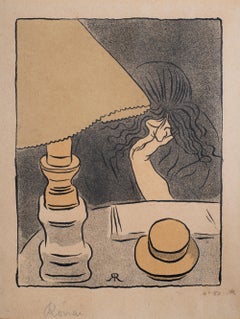
Femme Sous la Lampe (Woman Under the Lamp) signed lithograph; József Rippl-Rónai
Located in Palm Beach, FL
Framed lithograph, signed ("Rónai") and numbered ("no. 50") by the artist. Also includes a silver József Rippl-Rónai coin, made in 1977 for the 50th anniversary of his death. The li...
Category

Art Nouveau Late 19th Century Prints and Multiples

Materials

Lithograph

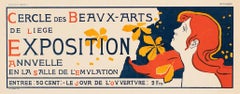
Cercle des Beaux-Arts de Liege Annual Exhibition by Auguste Donnay
Located in Chicago, IL
Lithograph of Auguste Donnay’s Cercle des Beaux-Arts de Liege Exposition Annuelle, published by Imprimerie Chaix, the printing house known for publishing the ...
Category

Art Nouveau Late 19th Century Prints and Multiples

Materials

Lithograph

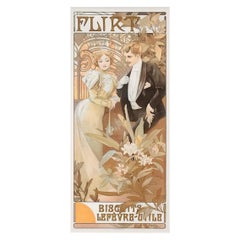
Alphonse Mucha Flirt Biscuits Lefevre Utile Poster
Located in Dallas, TX
Alphonse Mucha (Czech, 1860-1939) Flirt Biscuits Lefevre Utile. 1899, Lithograph in colors on wove paper. Linen backed. Imp F. Champenois Paris. Measures : sheet: 24.75 x 11.75 inche...
Category

Art Nouveau Late 19th Century Prints and Multiples

Materials

Paper

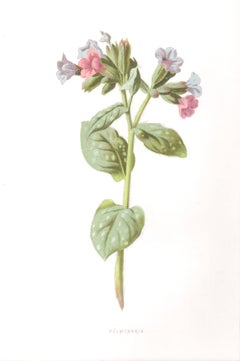
Pulmonaria, English antique blue pink flower botanical chromolithograph, 1895
By Frederick William Hulme
Located in Melbourne, Victoria
'Pulmonaria' Process print from Frederick William Hulme’s ‘Familiar Wild Flowers’, circa 1890. Hulme was known as a teacher and an amateur botanist. He was the Professor of Freehan...
Category

Naturalistic Late 19th Century Prints and Multiples

Materials

Lithograph

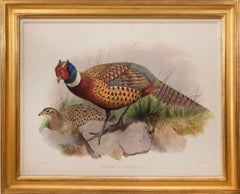
Four Pheasants
Located in London, GB
WOLF, Joseph (artist) Four Pheasants London, For the author, Red Lion Court, Fleet Street, 1871 Four original hand-coloured lithographic plates by Joseph Smit after Joseph Wo...
Category

Naturalistic Late 19th Century Prints and Multiples

Materials

Watercolor, Gouache, Lithograph

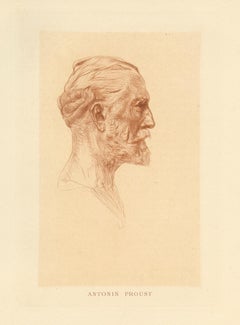
"Antonin Proust" original drypoint
Located in Henderson, NV
Medium: original etching and drypoint. Catalogue reference: Delteil 10. Published in Paris in 1899 by H. Floury for Auguste Rodin "Statuaire" by Lon Maillard. This impression is prin...
Category

Late 19th Century Prints and Multiples

Materials

Drypoint, Etching

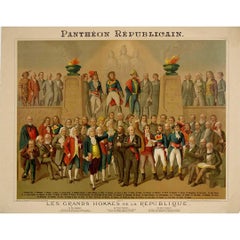
Original poster Panthéon Républicain Les grands hommes de la République
Located in PARIS, FR
This vibrant chromolithographic poster titled Panthéon Républicain – Les grands hommes de la République is a monumental homage to the intellectual, political, and military figures wh...
Category

Late 19th Century Prints and Multiples

Materials

Paper, Lithograph

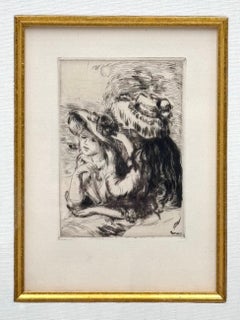
Pierre Auguste-Renoir "Le Chapeau Épinglé"
Located in Los Angeles, CA
"PIERRE-AUGUSTE RENOIR (1841-1919) Le Chapeau Épinglé, 1ère Planche (Delteil; Stella 6) Drypoint, 1894-95, on laid paper, with watermark MBM, an extr...
Category

Late 19th Century Prints and Multiples

Materials

Drypoint

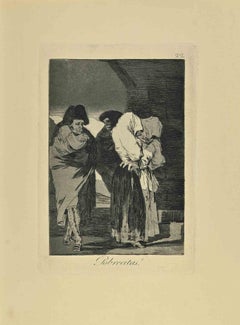
Pobrecitas - Etching by Francisco Goya - 1881
Located in Roma, IT
Pobrecitas is a black and White aquatint, drypoint, and etching printed in blue-black ink on laid paper from Caprichos realized after Francisco Goya in 1881-1886. 6th Edition.  Tit...
Category

Modern Late 19th Century Prints and Multiples

Materials

Etching

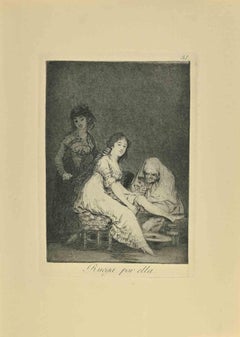
Ruega por ella (She prays for her) - Etching by Francisco Goya - 1881
Located in Roma, IT
Ruega por ella (She prays for her) is a black and White aquatint, drypoint, and etching printed in blue-black ink on laid paper from Caprichos realized after Francisco Goya in 1881-1...
Category

Modern Late 19th Century Prints and Multiples

Materials

Etching

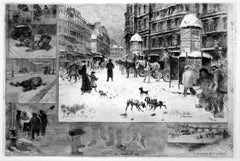
L’Hiver a Paris ou La Neige a Paris
Located in New York, NY
Felix Buhot (1847-1898), L’Hiver a Paris ou La Neige a Paris, 1879, etching, aquatint, drypoint, roulette. [signed and dated in the plate Felix Buhot Par...
Category

Realist Late 19th Century Prints and Multiples

Materials

Drypoint, Etching, Aquatint

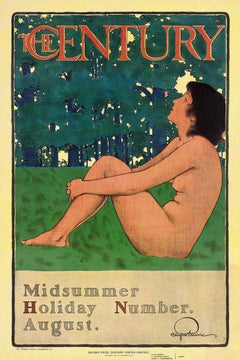
The Century, Maxfield Parrish
Located in New York, NY
This image - created as an advertisement for the magazine "The Century" -  is an original lithograph by Maxfield Parrish printed in 1897 measuring 15 ¾ x 11 3/8 in (40 x 29 cm), unfr...
Category

Late 19th Century Prints and Multiples

Materials

Lithograph

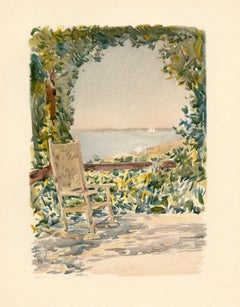
Chromolithograph after Childe Hassam
Located in Henderson, NV
Medium: chromolithograph (after the watercolor). Beautifully printed in 1894 to illustrate the rare Celia Thaxter volume entitled "An Island Garden". Celia Thaxter and Childe Hassam ...
Category

Late 19th Century Prints and Multiples

Materials

Lithograph

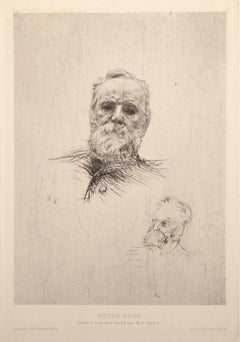
Victor Hugo, de Face (State 6), Impressionist Etching by Auguste Rodin
Located in Long Island City, NY
Auguste Rodin, French (1840 - 1917) - Victor Hugo, de Face (State 6), Year: 1885, Medium: Etching, signed in the plate, Image Size: 9 x 6.25 inches, Size: 17.25 x 11.75 in. (43.82 ...
Category

Impressionist Late 19th Century Prints and Multiples

Materials

Etching

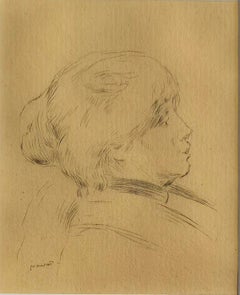
Pierre-Auguste Renoir -- Berthe Morisot
Located in BRUCE, ACT
Pierre-Auguste Renoir Portrait De Berthe Morisot, 1892 etching (Printed during his lifetime in 1892) signed in plate lower left Image size: 10.5 x 9.5 cm Frame size: 42 x 33 x 2 cm R...
Category

Late 19th Century Prints and Multiples

Materials

Etching

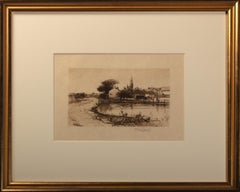
"Sketch Near Pittsfield, " realist landscape ink sketch rural scene signed
Located in Milwaukee, WI
"Sketch Near Pittsfield" is an original etching signed by the artist Stephen Parrish. It depicts a small group of buildings next to a lake. A path runs next to them, and the entire s...
Category

Late 19th Century Prints and Multiples

Materials

Etching

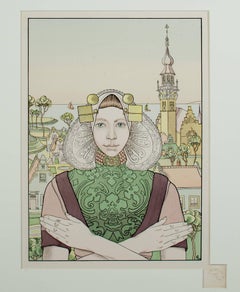
"La Phalène des Isles de la Mer, " figurative art nouveau ornate print
Located in Milwaukee, WI
"La Phalène des Isles de la Mer" or "The Moth of the Islands of the Sea" is an original color lithograph by Franz Melchers. This piece was published in L'Estampe Moderne I, an Art No...
Category

Art Nouveau Late 19th Century Prints and Multiples

Materials

Lithograph

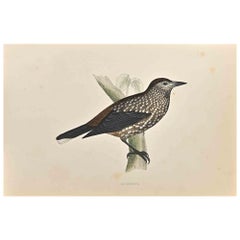
Nutcracker - Woodcut Print by Alexander Francis Lydon - 1870
Located in Roma, IT
Nutcracker is a modern artwork realized in 1870 by the British artist Alexander Francis Lydon (1836-1917). Woodcut print on ivory-colored paper. Hand-colored, published by London, ...
Category

Modern Late 19th Century Prints and Multiples

Materials

Woodcut

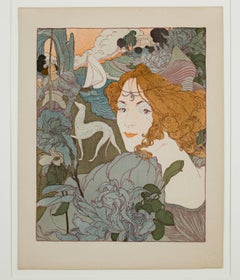
Art Nouveau Lithograph 1800s Landscape Romantic Figure Floral
Located in Milwaukee, WI
"Retour (L'Estampe Moderne I)" is a color lithograph by Georges de Feure. It features a woman with red hair in an environment of flora and fauna with muted colors and the Art Nouveau...
Category

Art Nouveau Late 19th Century Prints and Multiples

Materials

Lithograph

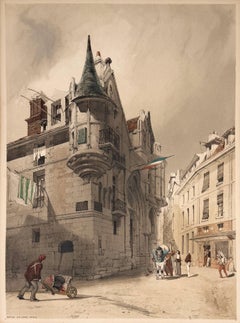
Hôtel De Sens, Paris
Located in Middletown, NY
London: Charles Hullmandel, c1839. Stipple point lithograph with hand coloring in watercolor on cream wove paper, 21 1/4 x 14 1/4 inches (540 x 362 mm), the full sheet. In fair cond...
Category

English School Late 19th Century Prints and Multiples

Materials

Watercolor, Engraving

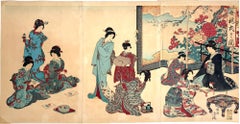
(Untitled), from the series Pictures of ladies' etiquette
Located in Middletown, NY
Tokyo: c1893. Wooblock tryptich printed in colors on hand laid mulberry paper, 14 3/4 x 29 inches (375 x 737 mm), the full sheet. Meiji period. In very good condition with extensive...
Category

Late 19th Century Prints and Multiples

Materials

Handmade Paper, Woodcut

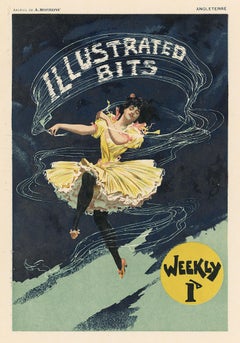
Albert Morrow's Illustrated Bits, 1897 Art Nouveau lithograph on Japon paper
Located in Chicago, IL
Stone lithograph of Albert Morrow’s Illustrated Bits, printed by Imprimerie Chaix (Ateliers Chéret), Paris in 1897. This world-class example of lithography captures superior resoluti...
Category

Art Nouveau Late 19th Century Prints and Multiples

Materials

Lithograph

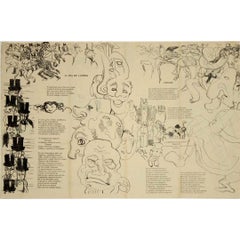
1895 poster by Pierre Bonnard - Nib Carnavalesque supplément de la Revue Blanche
Located in PARIS, FR
This rare and whimsical 1895 poster by Pierre Bonnard was created as a special supplement to La Revue Blanche, the influential French literary and artistic magazine of the fin-de-siè...
Category

Late 19th Century Prints and Multiples

Materials

Paper, Lithograph

Untitled (Mythological Scene) - Etching by Eugene Decisy - 1899
Located in Roma, IT
Etching and drypoint on laid paper. Signed in the plate lower right, with remarque proofs below; annotated on verso with artist details and date. Early impression, before the lette...
Category

Modern Late 19th Century Prints and Multiples

Materials

Etching, Drypoint

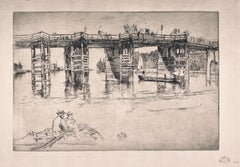
Old Putney Bridge
Located in New York, NY
James Whistler (1834-1903), Old Putney Bridge, 1879, etching and drypoint, signed in pencil with a large, elaborate shaded butterfly, lower right and inscribed imp (also signed with the butterfly in the plate), printed in dark-brown/black ink on laid paper, watermark ProPatria, an impression in Glasgow’s seventh (final) state, published by The Fine Art Society, probably printed in 1881, 8x 11 3/4 inches, sheet 12 1/8 x 16 1/8 inches. Reference: Kennedy 178; Glasgow 185. Provenance: Kraushaar Gallery, New York A fine impression, with wide margins. The Fine Art Societys relationship with Whistler began with the new etchings of the Thames he made in 1879, following a visit from Ernest Brown who had joined the staff of the gallery. The plate is on a large scale and shows the change in the artists approach to the Thames since the etchings he had made in Wapping and the docks in the summer of 1859. The central motif is the old bridge, by this stage somewhat dilapidated. It was shortly to be demolished and replaced by the new bridge of Cornish granite...
Category

Impressionist Late 19th Century Prints and Multiples

Materials

Drypoint, Etching

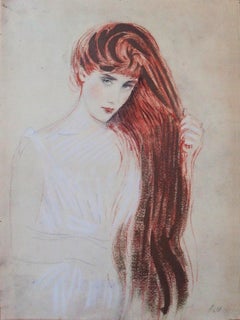
Shy Red Hair Woman - Lithograph
Located in Paris, IDF
Paul César Helleu Shy Red Hair Woman, 1913 Lithograph and watercolor stencil Printed signature On vellum 26 x 20 cm (c. 10.5 x 8 inch) Very good condition
Category

Art Nouveau Late 19th Century Prints and Multiples

Materials

Lithograph

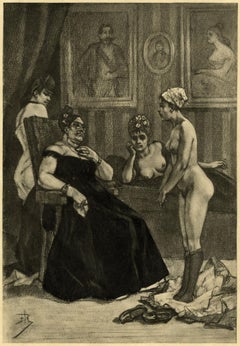
L'examen (The Examination)
Located in Middletown, NY
Heliogravure on light weight Japan paper, full margins. Titled in pencil in the lower right margin. In good condition with some minor handling creases, dog-eared lower right corner, ...
Category

Victorian Late 19th Century Prints and Multiples

Materials

Photogravure

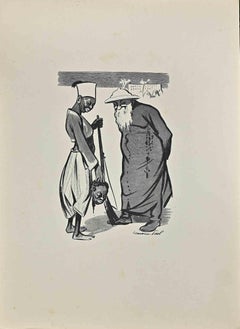
Colonialism- Lithograph by Hermann Paul - 1903
Located in Roma, IT
L'Inspecteur Général "Revizor" is a Lithograph realized by Hermann Paul, in 1903. Signed on Plate. Good condition. René Georges Hermann-Paul (27 Decemb...
Category

Modern Late 19th Century Prints and Multiples

Materials

Paper, Lithograph

Lesser Black-Backed Gull - Woodcut Print by Alexander Francis Lydon - 1870
Located in Roma, IT
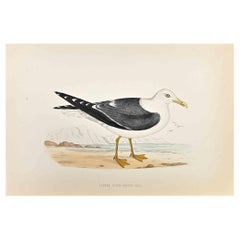
Lesser Black-Backed Gull is a modern artwork realized in 1870 by the British artist Alexander Francis Lydon (1836-1917) . Woodcut print, hand colored, published by London, Bell & S...
Category

Modern Late 19th Century Prints and Multiples

Materials

Woodcut

Morning Awakening
Located in PARIS, FR
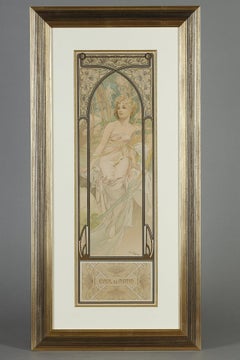
Morning Awakening by Alfons MUCHA (1860-1939) "Morning Awakening" from the series "The Times of the Day" Variant 1 Original lithograph Signed "Mucha" and dated "99" for 1899, at t...
Category

Art Nouveau Late 19th Century Prints and Multiples

Materials

Lithograph

Wigeon- Woodcut Print by Alexander Francis Lydon - 1870
Located in Roma, IT
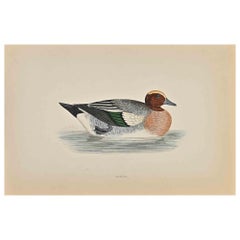
Wigeon is a modern artwork realized in 1870 by the British artist Alexander Francis Lydon (1836-1917). Woodcut print on ivory-colored paper. Hand-colored, published by London, Bell...
Category

Modern Late 19th Century Prints and Multiples

Materials

Woodcut

Redstart - Woodcut Print by Alexander Francis Lydon - 1870
Located in Roma, IT
Redstart is a modern artwork realized in 1870 by the British artist Alexander Francis Lydon (1836-1917) . Woodcut print, hand colored, published by London, Bell & Sons, 1870. Name...
Category

Modern Late 19th Century Prints and Multiples

Materials

Woodcut

Reading the News - Original Lithograph by Paul Gavarni - 1881
Located in Roma, IT
Reading the news is an original lithograph artwork on ivory-colored paper, realized by the French draftsman Paul Gavarni (after) (alias Guillaume Sulpice Chevalier Gavarni, 1804-1866...
Category

Modern Late 19th Century Prints and Multiples

Materials

Paper, Lithograph

Still Thinking About These?

All Recently Viewed