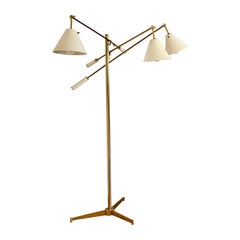
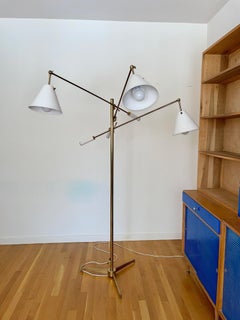
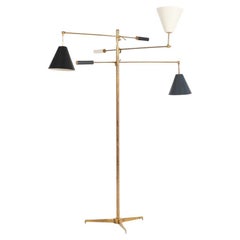
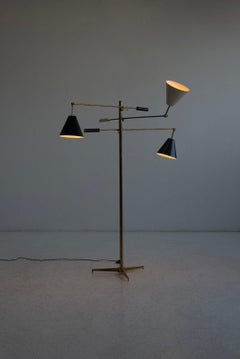
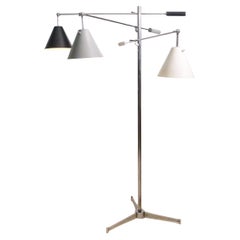
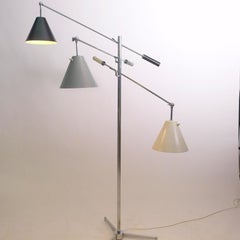
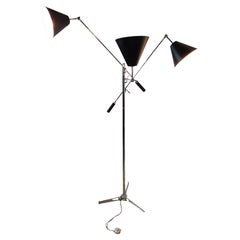
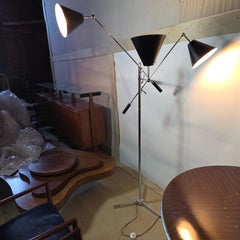
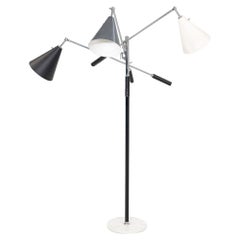
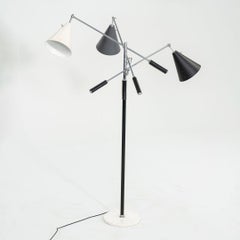
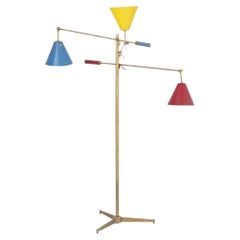
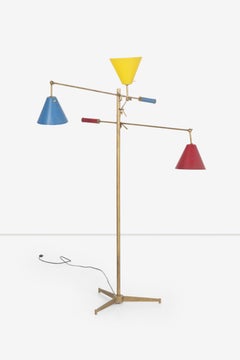
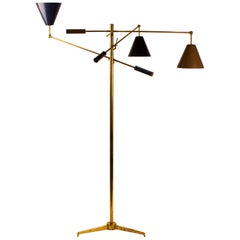
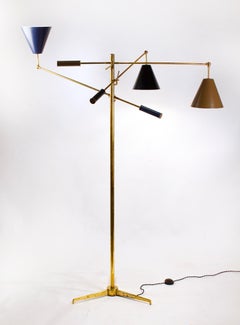
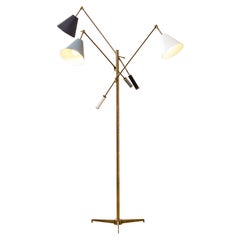
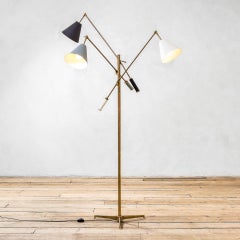
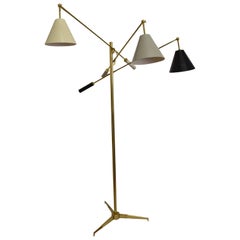
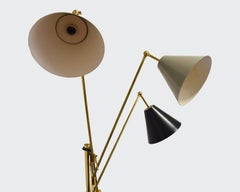
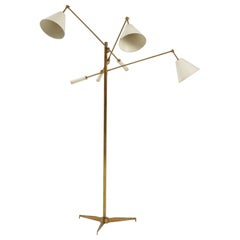
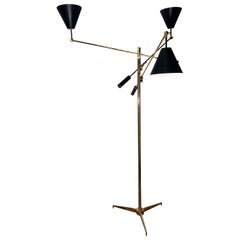
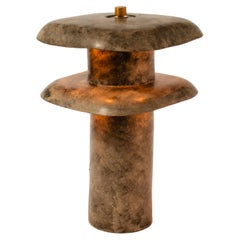
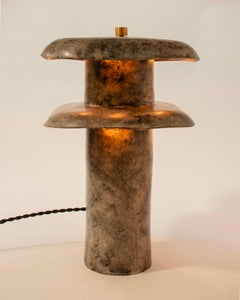
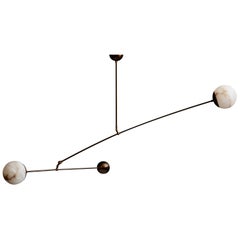
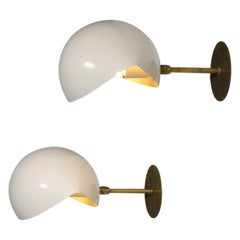
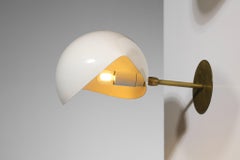
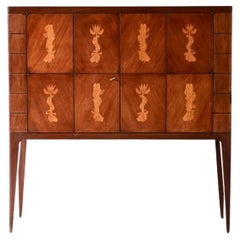
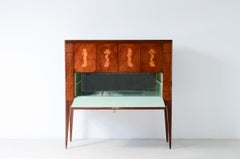
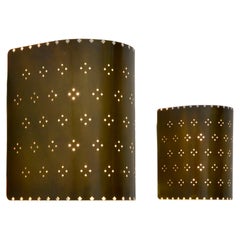
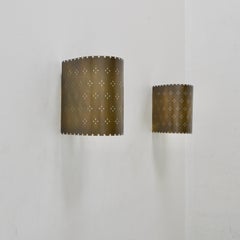
At 1stDibs, there are many versions of the ideal arredoluce 12128 for your home. A arredoluce 12128 — often made from
metal,
brass and
aluminum — can elevate any home. You’ve searched high and low for the perfect arredoluce 12128 — we have versions that date back to the 20th Century alongside those produced as recently as the 20th Century are available. A arredoluce 12128 is a generally popular piece of furniture, but those created in
mid-century modern styles are sought with frequency.
Angelo Lelii,
Arredoluce and
Raymor each produced at least one beautiful arredoluce 12128 that is worth considering.
A arredoluce 12128 can differ in price owing to various characteristics — the average selling price 1stDibs is $9,750, while the lowest priced sells for $984 and the highest can go for as much as $34,800.
The lighting company Arredoluce opened in 1943, at the start of a golden era of modernist Italian design, and was born of the confluence of an eager entrepreneurial business spirit and a fresh, innovative, forward-looking creative atmosphere.
Angelo Lelii (1911–79), the founder of Arredoluce, which was based in the Milanese district of Monza, was a gifted and at times brilliant designer. He had the insight to commission works from other greats of the day, including Gio Ponti, Vico Magistretti, the brothers Achille and Pier Giacomo Castiglioni and Ettore Sottsass Jr.
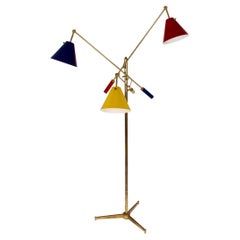
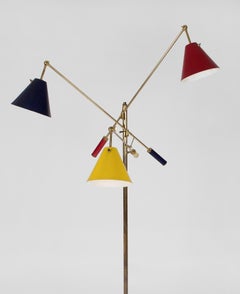
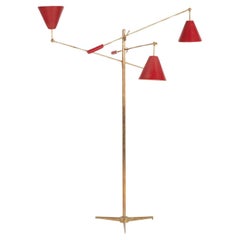
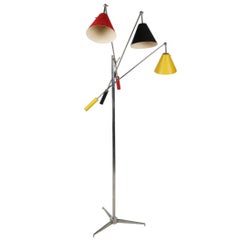
Lelii’s designs cover a broad aesthetic range. His most famous work, the Triennale floor lamp (circa 1947), is both elegant and practical, with three omnidirectional lighting booms attached to a central pole. His well-known ceiling light of 1954 — in which a conical canister bounces light upward off a lighting-arced enameled-aluminum sheet — is a piece of design poetry. And his 1962 Cobra table lamp has a wild, almost Surrealist look, featuring a sculptured rod of polished metal with a socket that, like his Eye floor lamp of the early 1960s, holds an eyeball-like directional bulb.
Arredoluce also placed few constraints on the creativity of the designers it employed from outside the company. The Castiglioni brothers’ Tubino table lamp of 1951, for example, is a remarkably early example of minimalist design. The company both fostered the tradition-minded aspect of Ponti’s sensibility and produced several of his experimental pieces in Lucite in the 1950s; and Sottsass’s UFO table lamp of 1957, a sandwich of two plastic bubbled tablets on four legs, prefigures the look of his postmodern works for the Memphis Group by more than 20 years.
From the stylish and utilitarian to the avant-garde, vintage Arredoluce floor lamps, table lamps, chandeliers and other lighting includes some of the most diverse, remarkable — and collectible — designs of the late 20th century.
Organically shaped, clean-lined and elegantly simple are three terms that well describe vintage mid-century modern furniture. The style, which emerged primarily in the years following World War II, is characterized by pieces that were conceived and made in an energetic, optimistic spirit by creators who believed that good design was an essential part of good living.
ORIGINS OF MID-CENTURY MODERN FURNITURE DESIGN
CHARACTERISTICS OF MID-CENTURY MODERN FURNITURE DESIGN
MID-CENTURY MODERN FURNITURE DESIGNERS TO KNOW
ICONIC MID-CENTURY MODERN FURNITURE DESIGNS
VINTAGE MID-CENTURY MODERN FURNITURE ON 1STDIBS
The mid-century modern era saw leagues of postwar American architects and designers animated by new ideas and new technology. The lean, functionalist International-style architecture of Le Corbusier and Bauhaus eminences Ludwig Mies van der Rohe and Walter Gropius had been promoted in the United States during the 1930s by Philip Johnson and others. New building techniques, such as “post-and-beam” construction, allowed the International-style schemes to be realized on a small scale in open-plan houses with long walls of glass.
Materials developed for wartime use became available for domestic goods and were incorporated into mid-century modern furniture designs. Charles and Ray Eames and Eero Saarinen, who had experimented extensively with molded plywood, eagerly embraced fiberglass for pieces such as the La Chaise and the Womb chair, respectively.
Architect, writer and designer George Nelson created with his team shades for the Bubble lamp using a new translucent polymer skin and, as design director at Herman Miller, recruited the Eameses, Alexander Girard and others for projects at the legendary Michigan furniture manufacturer.
Harry Bertoia and Isamu Noguchi devised chairs and tables built of wire mesh and wire struts. Materials were repurposed too: The Danish-born designer Jens Risom created a line of chairs using surplus parachute straps for webbed seats and backrests.
The Risom lounge chair was among the first pieces of furniture commissioned and produced by celebrated manufacturer Knoll, a chief influencer in the rise of modern design in the United States, thanks to the work of Florence Knoll, the pioneering architect and designer who made the firm a leader in its field. The seating that Knoll created for office spaces — as well as pieces designed by Florence initially for commercial clients — soon became desirable for the home.
As the demand for casual, uncluttered furnishings grew, more mid-century furniture designers caught the spirit.
Classically oriented creators such as Edward Wormley, house designer for Dunbar Inc., offered such pieces as the sinuous Listen to Me chaise; the British expatriate T.H. Robsjohn-Gibbings switched gears, creating items such as the tiered, biomorphic Mesa table. There were Young Turks such as Paul McCobb, who designed holistic groups of sleek, blond wood furniture, and Milo Baughman, who espoused a West Coast aesthetic in minimalist teak dining tables and lushly upholstered chairs and sofas with angular steel frames.
Generations turn over, and mid-century modern remains arguably the most popular style going. As the collection of vintage mid-century modern chairs, dressers, coffee tables and other furniture for the living room, dining room, bedroom and elsewhere on 1stDibs demonstrates, this period saw one of the most delightful and dramatic flowerings of creativity in design history.
The modern floor lamp is an evolution of torchères — tall floor candelabras that originated in France as a revolutionary development in lighting homes toward the end of the 17th century. Owing to the advent of electricity and the introduction of new materials as a part of lighting design, floor lamps have taken on new forms and configurations over the years.
In the early 1920s, Art Deco lighting artisans worked with dark woods and modern metals, introducing unique designs that still inspire the look of modern floor lamps developed by contemporary firms such as Luxxu.
Popular mid-century floor lamps include everything from the enchanting fixtures by the Italian lighting artisans at Stilnovo to the distinctly functional Grasshopper floor lamp created by Scandinavian design pioneer Greta Magnusson-Grossman to the Paracarro floor lamp by the Venetian master glass workers at Mazzega. Among the more celebrated names in mid-century lighting design are Milanese innovators Achille and Pier Giacomo Castiglioni, who, along with their eldest brother, Livio, worked for their own firm as architects and designers. While Livio departed the practice in 1952, Achille and Pier Giacomo would go on to design the Arco floor lamp, the Toio floor lamp and more for legendary lighting brands such as FLOS.
Today’s upscale interiors frequently integrate the otherworldly custom lighting solutions created by a wealth of contemporary firms and designers such as Spain’s Masquespacio, whose Wink floor lamps integrate gold as well as fabric fringes.
Visual artists and industrial designers have a penchant for floor lamps, possibly because they’re so often a clever marriage of design and the functions of lighting. A good floor lamp can change the mood of any room while adding a touch of elegance to your entire space. Find yours now on 1stDibs.