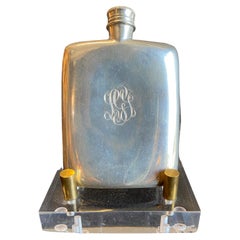
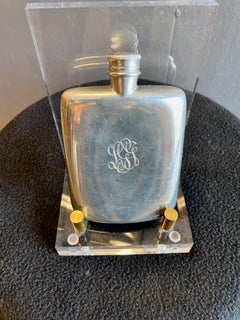
Art Deco Cartier Pewter Hip Flask
By Cartier
Located in Pasadena, CA
This is a classic Art Deco flask that has been designed by Cartier; however it was created in
Category
Early 20th Century English Art Deco Barware
Materials
Pewter
Art Deco Cartier Pewter Hip Flask
By Cartier
Located in Pasadena, CA
This is a classic Art Deco flask that has been designed by Cartier; however it was created in
Pewter
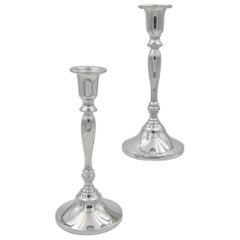
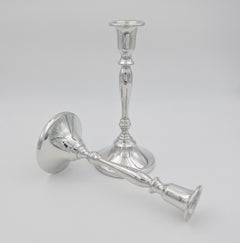
Cartier Candlesticks in Polished Pewter, Set of Two
By Cartier
Located in Los Angeles, CA
Two French taper candle sticks from Cartier in silvery, highly-polished pewter dating to the 1970s
Pewter
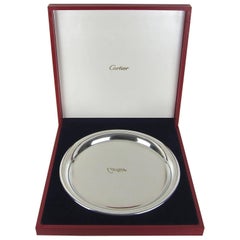

Vintage Cartier Pewter Tray with Original Box
By Cartier
Located in Los Angeles, CA
rim, stamped "Cartier Pewter" in script along the bottom edge. The tray measures 11 in. diameter and
Metal, Pewter
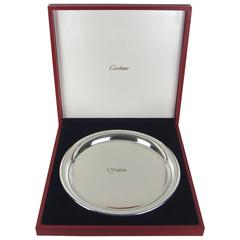
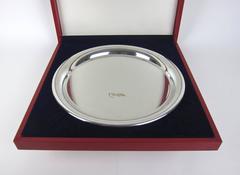
Vintage Cartier Pewter Tray with Original Fitted Box
By Cartier
Located in Los Angeles, CA
An elegant vintage serving tray from Cartier, perfect for cocktails or cupcakes, in highly polished
Metal, Pewter
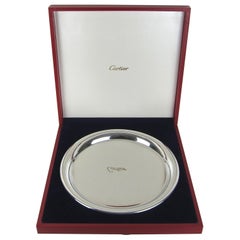

Sold
H 2 in W 12.75 in D 12.75 in
Vintage Cartier Polished Pewter Tray with Original Red Presentation Box
By Cartier
Located in Los Angeles, CA
An elegant vintage Cartier serving tray in highly polished pewter, made in France, circa 1977. The
Metal, Pewter
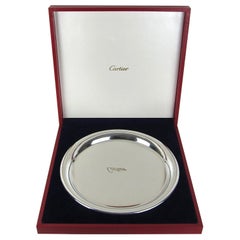

Sold
H 2 in W 12.75 in D 12.75 in
Vintage Cartier Polished Pewter Silver Tray with Original Red Presentation Box
By Cartier
Located in Los Angeles, CA
An elegant vintage Cartier silver serving tray in highly polished pewter, made in France, circa
Metal, Pewter
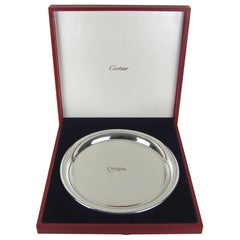

Sold
H 2 in W 12.75 in D 12.75 in
Vintage Cartier Polished Pewter Tray with Original Red Presentation Box
By Cartier
Located in Los Angeles, CA
An elegant vintage Cartier serving tray in highly polished pewter, made in France, circa 1977. The
Metal, Pewter
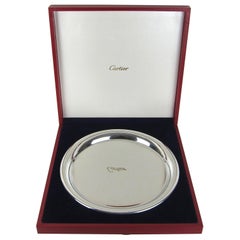

Sold
H 2 in W 12.75 in D 12.75 in
Vintage Cartier Polished Pewter Tray with Original Red Presentation Box
By Cartier
Located in Los Angeles, CA
An elegant vintage Cartier serving tray in highly polished pewter, made in France, circa 1977. The
Metal, Pewter
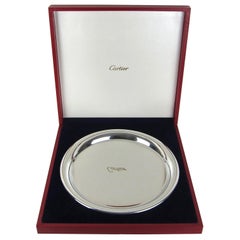

Sold
H 2 in W 12.75 in D 12.75 in
Vintage Cartier Polished Pewter Silver Tray with Original Red Presentation Box
By Cartier
Located in Los Angeles, CA
An elegant vintage Cartier silver serving tray in highly polished pewter, made in France, circa
Metal, Pewter
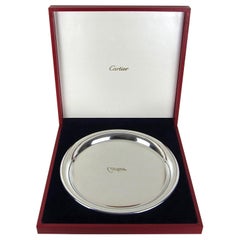

Vintage Cartier Polished Pewter Silver Tray with Original Red Box
By Cartier
Located in Los Angeles, CA
A vintage Cartier silver serving tray in highly polished and reflective pewter, made in France
Metal, Pewter
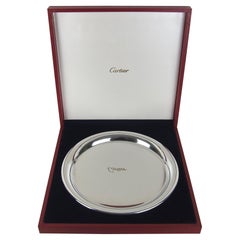

Vintage Cartier Tray in Polished Silver Pewter with Original Red Box
By Cartier
Located in Los Angeles, CA
A vintage Cartier silver metal serving tray of highly polished and reflective pewter, made in
Metal, Pewter
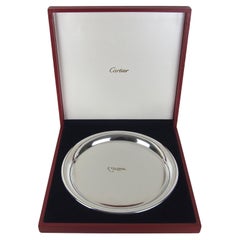

Vintage Cartier Tray in Polished Silver Pewter with Original Red Box
By Cartier
Located in Los Angeles, CA
A vintage Cartier silver metal serving tray of highly polished and reflective pewter, made in
Metal, Pewter

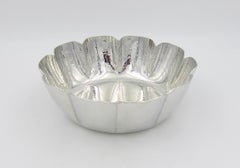
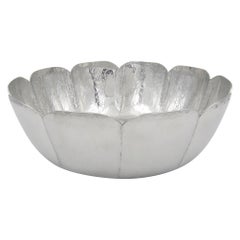
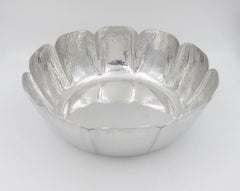
Vintage Cartier Bowl Handcrafted in Polished Pewter
By Cartier
Located in Los Angeles, CA
A vintage Cartier bowl handcrafted of polished pewter with a hammered surface dating to the 1980s
Metal, Pewter
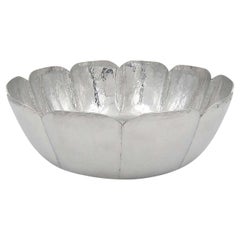
Large Vintage Cartier Centerpiece Bowl Handcrafted in Polished Pewter
By Cartier
Located in Los Angeles, CA
A large vintage Cartier bowl handcrafted in highly polished pewter, dating to the 1980s. The
Metal, Pewter
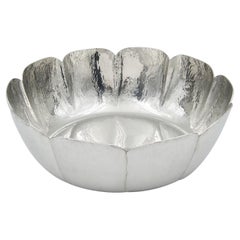
Large Cartier Bowl in Hammered and Highly Polished Pewter
By Cartier
Located in Los Angeles, CA
A large vintage Cartier bowl handcrafted in highly polished pewter and dating to the 1980s. The
Metal, Pewter
For its extraordinary range of bracelets, watches, rings and other adornments, French luxury house Cartier is undeniably one of the most well known and internationally revered jewelers in the world among clients both existing and aspirational.
Perhaps 1847 was not the ideal time to open a new watchmaking and jewelry business, as the French Revolution was not kind to the aristocracy who could afford such luxuries. Nevertheless, it was the year Louis-François Cartier (1819–1904) — who was born into poverty — founded his eponymous empire, assuming control of the workshop of watchmaker Adolphe Picard, under whom he had previously been employed as an assistant. Of course, in the beginning, it was a relatively modest affair, but by the late 1850s, Cartier had its first royal client, Princess Mathilde Bonaparte, niece of Napoleon Bonaparte, who commissioned the jeweler to design brooches, earrings and other accessories.
Under the leadership of Louis-François’s son, Alfred, who took over in 1874, business boomed. Royalty around the world wore Cartier pieces, including Tsar Nicholas II of Russia, the Maharaja of Patiala and King Edward VII, who had 27 tiaras made by the jewelry house for his coronation in 1902 and issued Cartier a royal warrant in 1904. (Today, the British royal family still dons Cartier pieces; Kate Middleton, Duchess of Cambridge, regularly sports a Ballon Bleu de Cartier watch.)
Cartier’s golden years, however, began when Alfred introduced his three sons, Louis, Pierre and Jacques, to the business. The brothers expanded Cartier globally: Louis reigned in Paris, Pierre in New York and Jacques in London, ensuring their brand’s consistency at their branches across the world. The trio also brought in such talents as Charles Jacqueau and Jeanne Toussaint.
One of Cartier’s earliest major successes was the Santos de Cartier watch — one of the world's first modern wristwatches for men. (Previously, a large number of people were using only pocket watches.) Louis designed the timepiece in 1904 for his friend, popular Brazilian aviator Alberto Santos-Dumont, who wanted to be able to check the time more easily while flying.
Cartier’s other famous timepieces include the Tank watch, which was inspired by the linear form of military tanks during World War I, and the so-called mystery clocks. Invented by watchmaker and magician Jean-Eugène Robert-Houdin and later crafted exclusively for Cartier in the house’s workshop by watchmaker Maurice Couët, the mystery clocks were so named because the integration of glass dials on which the clocks’ hands would seemingly float as well as structures that are hidden away within the base give the illusion that they operate without machinery.
On the jewelry side of the business, Cartier’s internationally renowned offerings include the Tutti Frutti collection, which featured colorful carved gemstones inspired by Jacques’s trip to India and grew in popularity during the Art Deco years; the panthère motif, which has been incorporated into everything from brooches to rings; and the Love bracelet, a minimal, modernist locking bangle inspired by medieval chastity belts that transformed fine jewelry.
While the Cartier family sold the business following the death of Pierre in 1964, the brand continues to innovate today, renewing old hits and creating new masterpieces.
Find contemporary and vintage Cartier watches, engagement rings, necklaces and other accessories on 1stDibs.
The late 19th and early 20th centuries saw sweeping social change and major scientific advances — both of which contributed to a new aesthetic: modernism. Rejecting the rigidity of Victorian artistic conventions, modernists sought a new means of expression. References to the natural world and ornate classical embellishments gave way to the sleek simplicity of the Machine Age. Architect Philip Johnson characterized the hallmarks of modernism as “machine-like simplicity, smoothness or surface [and] avoidance of ornament.”
Early practitioners of modernist design include the De Stijl (“The Style”) group, founded in the Netherlands in 1917, and the Bauhaus School, founded two years later in Germany.
Followers of both groups produced sleek, spare designs — many of which became icons of daily life in the 20th century. The modernists rejected both natural and historical references and relied primarily on industrial materials such as metal, glass, plywood, and, later, plastics. While Bauhaus principals Marcel Breuer and Ludwig Mies van der Rohe created furniture from mass-produced, chrome-plated steel, American visionaries like Charles and Ray Eames worked in materials as novel as molded plywood and fiberglass. Today, Breuer’s Wassily chair, Mies van der Rohe’s Barcelona chair — crafted with his romantic partner, designer Lilly Reich — and the Eames lounge chair are emblems of progressive design and vintage originals are prized cornerstones of collections.
It’s difficult to overstate the influence that modernism continues to wield over designers and architects — and equally difficult to overstate how revolutionary it was when it first appeared a century ago. But because modernist furniture designs are so simple, they can blend in seamlessly with just about any type of décor. Don’t overlook them.
Your dining room table is a place where stories are shared and personalities shine — why not treat yourself and your guests to the finest antique and vintage glass, silver, ceramics and serveware for your meals?
Just like the people who sit around your table, your serveware has its own stories and will help you create new memories with your friends and loved ones. From ceramic pottery to glass vases, set your table with serving pieces that add even more personality, color and texture to your dining experience.
Invite serveware from around the world to join your table settings. For special occasions, dress up your plates with a striking Imari charger from 19th-century Japan or incorporate Richard Ginori’s Italian porcelain plates into your dining experience. Celebrate the English ritual of afternoon tea with a Japanese tea set and an antique Victorian kettle. No matter how big or small your dining area is, there is room for the stories of many cultures and varied histories, and there are plenty of ways to add pizzazz to your meals.
Add different textures and colors to your table with dinner plates and pitchers of ceramic and silver or a porcelain lidded tureen, a serving dish with side handles that is often used for soups. Although porcelain and ceramic are both made in a kiln, porcelain is made with more refined clay and is more durable than ceramic because it is denser. The latter is ideal for statement pieces — your tall mid-century modern ceramic vase is a guaranteed conversation starter. And while your earthenware or stoneware is maybe better suited to everyday lunches as opposed to the fine bone china you’ve reserved for a holiday meal, handcrafted studio pottery coffee mugs can still be a rich expression of your personal style.
“My motto is ‘Have fun with it,’” says author and celebrated hostess Stephanie Booth Shafran. “It’s yin and yang, high and low, Crate & Barrel with Christofle silver. I like to mix it up — sometimes in the dining room, sometimes on the kitchen banquette, sometimes in the loggia. It transports your guests and makes them feel more comfortable and relaxed.”
Introduce elegance at supper with silver, such as a platter from celebrated Massachusetts silversmith manufacturer Reed and Barton or a regal copper-finish flatware set designed by International Silver Company, another New England company that was incorporated in Meriden, Connecticut, in 1898. By then, Meriden had already earned the nickname “Silver City” for its position as a major hub of silver manufacturing.
At the bar, try a vintage wine cooler to keep bottles cool before serving or an Art Deco decanter and whiskey set for after-dinner drinks — there are many possibilities and no wrong answers for tableware, barware and serveware. Explore an expansive collection of antique and vintage glass, ceramics, silver and serveware today on 1stDibs.