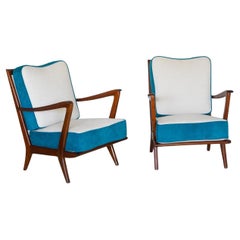
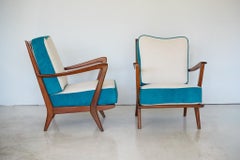
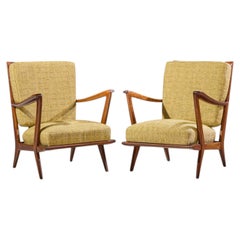
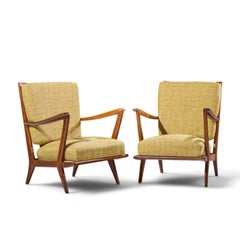
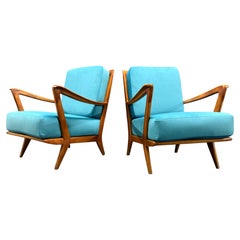
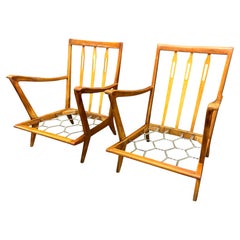
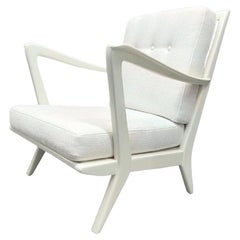
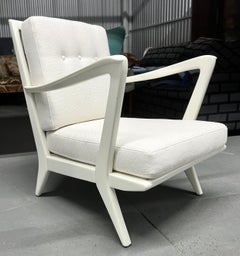
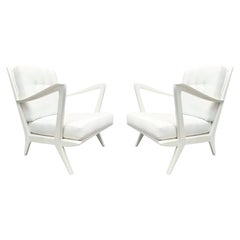
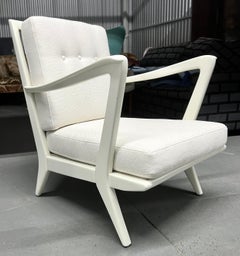
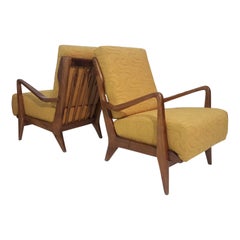
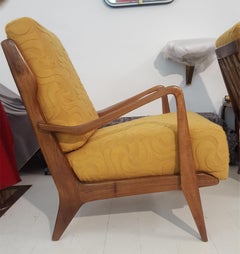
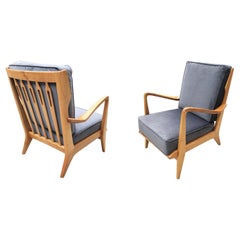
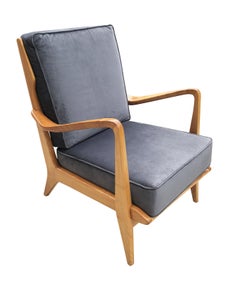
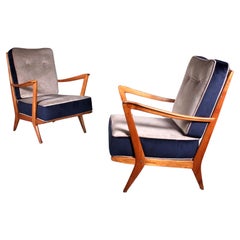
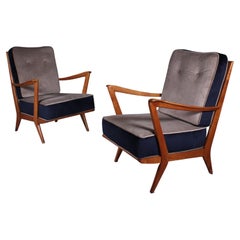
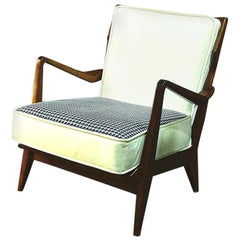
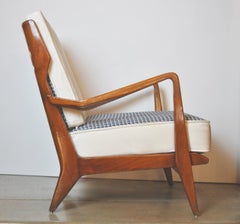
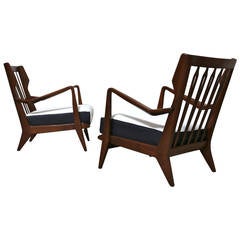
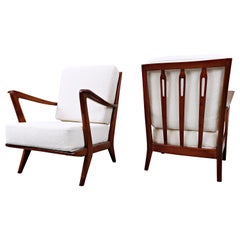
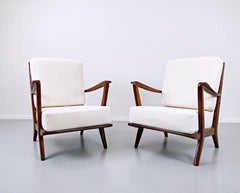
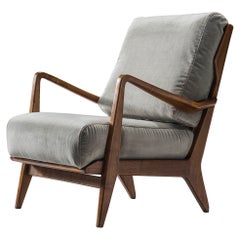
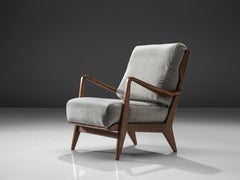
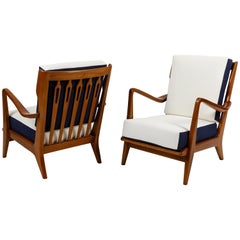
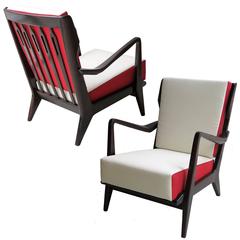
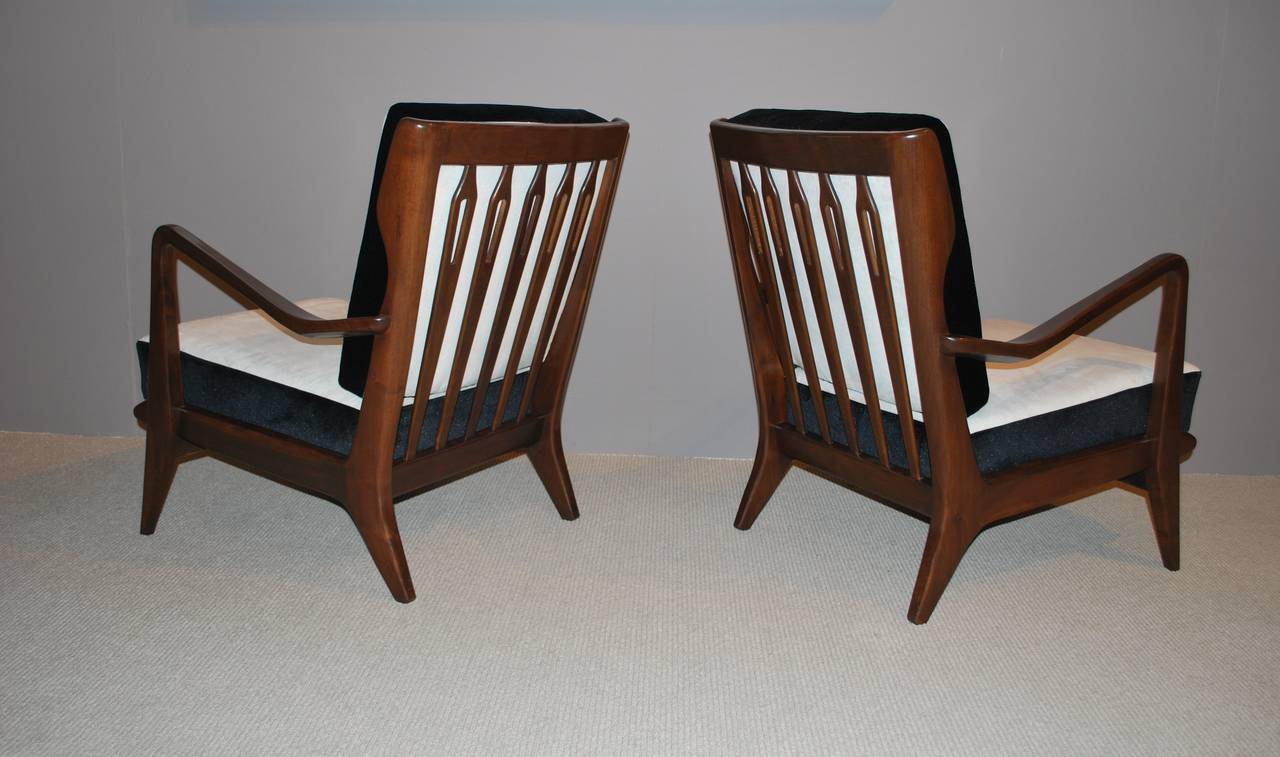
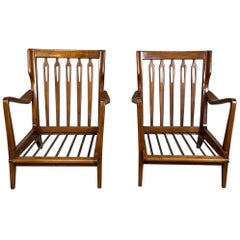
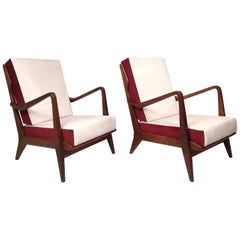
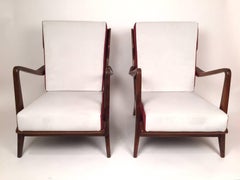
Gio Ponti 516 For Sale on 1stDibs
Choose from an assortment of styles, material and more with respect to the gio ponti 516 you’re looking for at 1stDibs. A gio ponti 516 — often made from
wood,
walnut and
fabric — can elevate any home. There are many kinds of the gio ponti 516 you’re looking for, from those produced as long ago as the 20th Century to those made as recently as the 20th Century. Each gio ponti 516 bearing
Mid-Century Modern hallmarks is very popular.
How Much is a Gio Ponti 516?
The average selling price for a gio ponti 516 at 1stDibs is $28,844, while they’re typically $13,800 on the low end and $35,000 for the highest priced.
Gio Ponti for sale on 1stDibs
An architect, furniture and industrial designer and editor, Gio Ponti was arguably the most influential figure in 20th-century Italian modernism.
Ponti designed thousands of furnishings and products — from cabinets, mirrors and chairs to ceramics and coffeemakers — and his buildings, including the brawny Pirelli Tower (1956) in his native Milan, and the castle-like Denver Art Museum (1971), were erected in 14 countries. Through Domus, the magazine he founded in 1928, Ponti brought attention to virtually every significant movement and creator in the spheres of modern art and design.
The questing intelligence Ponti brought to Domus is reflected in his work: as protean as he was prolific, Ponti’s style can’t be pegged to a specific genre.
In the 1920s, as artistic director for the Tuscan porcelain maker Richard Ginori, he fused old and new; his ceramic forms were modern, but decorated with motifs from Roman antiquity. In pre-war Italy, modernist design was encouraged, and after the conflict, Ponti — along with designers such as Carlo Mollino, Franco Albini, Marco Zanuso — found a receptive audience for their novel, idiosyncratic work. Ponti’s typical furniture forms from the period, such as the wedge-shaped Distex chair, are simple, gently angular, and colorful; equally elegant and functional. In the 1960s and ’70s, Ponti’s style evolved again as he explored biomorphic shapes, and embraced the expressive, experimental designs of Ettore Sottsass Jr., Joe Colombo and others.
Ponti's signature furniture piece — the one by which he is represented in the collections of the Museum of Modern Art in New York, Germany’s Vitra Design Museum and elsewhere — is the sleek Superleggera chair, produced by Cassina starting in 1957. (The name translates as “superlightweight” — advertisements featured a model lifting it with one finger.)
Ponti had a playful side, best shown in a collaboration he began in the late 1940s with the graphic artist Piero Fornasetti. Ponti furnishings were decorated with bright finishes and Fornasetti's whimsical lithographic transfer prints of things such as butterflies, birds or flowers; the Montreal Museum of Fine Arts possesses a 1950 secretary from their Architetturra series, which feature case pieces covered in images of building interiors and facades. The grandest project Ponti and Fornasetti undertook, however, lies on the floor of the Atlantic Ocean: the interiors of the luxury liner Andrea Doria, which sank in 1956.
Widely praised retrospectives at the Queens Museum of Art in 2001 and at the Design Museum London in 2002 sparked a renewed interest in Ponti among modern design aficionados. (Marco Romanelli’s monograph, which was written for the London show, offers a fine overview of Ponti’s work.) Today, a wide array of Ponti’s designs are snapped up by savvy collectors who want to give their homes a touch of Italian panache and effortless chic.
Find a range of vintage Gio Ponti desks, dining chairs, coffee tables and other furniture on 1stDibs.
A Close Look at Mid-century Modern Furniture
Organically shaped, clean-lined and elegantly simple are three terms that well describe vintage mid-century modern furniture. The style, which emerged primarily in the years following World War II, is characterized by pieces that were conceived and made in an energetic, optimistic spirit by creators who believed that good design was an essential part of good living.
ORIGINS OF MID-CENTURY MODERN FURNITURE DESIGN
CHARACTERISTICS OF MID-CENTURY MODERN FURNITURE DESIGN
MID-CENTURY MODERN FURNITURE DESIGNERS TO KNOW
ICONIC MID-CENTURY MODERN FURNITURE DESIGNS
VINTAGE MID-CENTURY MODERN FURNITURE ON 1STDIBS
The mid-century modern era saw leagues of postwar American architects and designers animated by new ideas and new technology. The lean, functionalist International-style architecture of Le Corbusier and Bauhaus eminences Ludwig Mies van der Rohe and Walter Gropius had been promoted in the United States during the 1930s by Philip Johnson and others. New building techniques, such as “post-and-beam” construction, allowed the International-style schemes to be realized on a small scale in open-plan houses with long walls of glass.
Materials developed for wartime use became available for domestic goods and were incorporated into mid-century modern furniture designs. Charles and Ray Eames and Eero Saarinen, who had experimented extensively with molded plywood, eagerly embraced fiberglass for pieces such as the La Chaise and the Womb chair, respectively.
Architect, writer and designer George Nelson created with his team shades for the Bubble lamp using a new translucent polymer skin and, as design director at Herman Miller, recruited the Eameses, Alexander Girard and others for projects at the legendary Michigan furniture manufacturer.
Harry Bertoia and Isamu Noguchi devised chairs and tables built of wire mesh and wire struts. Materials were repurposed too: The Danish-born designer Jens Risom created a line of chairs using surplus parachute straps for webbed seats and backrests.
The Risom lounge chair was among the first pieces of furniture commissioned and produced by celebrated manufacturer Knoll, a chief influencer in the rise of modern design in the United States, thanks to the work of Florence Knoll, the pioneering architect and designer who made the firm a leader in its field. The seating that Knoll created for office spaces — as well as pieces designed by Florence initially for commercial clients — soon became desirable for the home.
As the demand for casual, uncluttered furnishings grew, more mid-century furniture designers caught the spirit.
Classically oriented creators such as Edward Wormley, house designer for Dunbar Inc., offered such pieces as the sinuous Listen to Me chaise; the British expatriate T.H. Robsjohn-Gibbings switched gears, creating items such as the tiered, biomorphic Mesa table. There were Young Turks such as Paul McCobb, who designed holistic groups of sleek, blond wood furniture, and Milo Baughman, who espoused a West Coast aesthetic in minimalist teak dining tables and lushly upholstered chairs and sofas with angular steel frames.
Generations turn over, and mid-century modern remains arguably the most popular style going. As the collection of vintage mid-century modern chairs, dressers, coffee tables and other furniture for the living room, dining room, bedroom and elsewhere on 1stDibs demonstrates, this period saw one of the most delightful and dramatic flowerings of creativity in design history.
Finding the Right Seating for You
With entire areas of our homes reserved for “sitting rooms,” the value of quality antique and vintage seating cannot be overstated.
Fortunately, the design of side chairs, armchairs and other lounge furniture — since what were, quite literally, the early perches of our ancestors — has evolved considerably.
Among the earliest standard seating furniture were stools. Egyptian stools, for example, designed for one person with no seat back, were x-shaped and typically folded to be tucked away. These rudimentary chairs informed the design of Greek and Roman stools, all of which were a long way from Sori Yanagi's Butterfly stool or Alvar Aalto's Stool 60. In the 18th century and earlier, seats with backs and armrests were largely reserved for high nobility.
The seating of today is more inclusive but the style and placement of chairs can still make a statement. Antique desk chairs and armchairs designed in the style of Louis XV, which eventually included painted furniture and were often made of rare woods, feature prominently curved legs as well as Chinese themes and varied ornaments. Much like the thrones of fairy tales and the regency, elegant lounges crafted in the Louis XV style convey wealth and prestige. In the kitchen, the dining chair placed at the head of the table is typically reserved for the head of the household or a revered guest.
Of course, with luxurious vintage or antique furnishings, every chair can seem like the best seat in the house. Whether your preference is stretching out on a plush sofa, such as the Serpentine, designed by Vladimir Kagan, or cozying up in a vintage wingback chair, there is likely to be a comfy classic or contemporary gem for you on 1stDibs.
With respect to the latest obsessions in design, cane seating has been cropping up everywhere, from sleek armchairs to lounge chairs, while bouclé fabric, a staple of modern furniture design, can be seen in mid-century modern, Scandinavian modern and Hollywood Regency furniture styles.
Admirers of the sophisticated craftsmanship and dark woods frequently associated with mid-century modern seating can find timeless furnishings in our expansive collection of lounge chairs, dining chairs and other items — whether they’re vintage editions or alluring official reproductions of iconic designs from the likes of Hans Wegner or from Charles and Ray Eames. Shop our inventory of Egg chairs, designed in 1958 by Arne Jacobsen, the Florence Knoll lounge chair and more.
No matter your style, the collection of unique chairs, sofas and other seating on 1stDibs is surely worthy of a standing ovation.