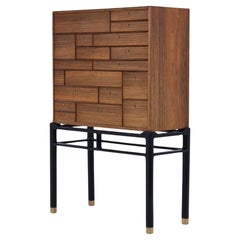
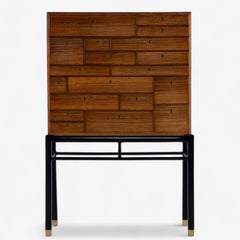
Rare cabinet in rosewood by Jørgen Berg
By Jørgen Berg, William Christensen
Located in Copenhagen, DK
Jørgen Berg and made by William Christensen.
Category
Mid-20th Century Danish Mid-Century Modern Cabinets
Materials
Rosewood
Rare cabinet in rosewood by Jørgen Berg
By Jørgen Berg, William Christensen
Located in Copenhagen, DK
Jørgen Berg and made by William Christensen.
Rosewood
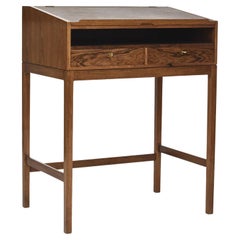
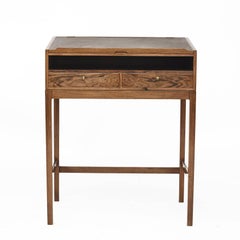
Jørgen Berg. Danish Writing Desk In Rosewood, 1960-1970
By Jørgen Berg
Located in Kastrup, DK
Jørgen Berg. Danish writing desk in Rio rosewood. Fall-front fitted with a writing slope with brown
Brass
Unavailable
H 57 in W 41 in D 16.5 in
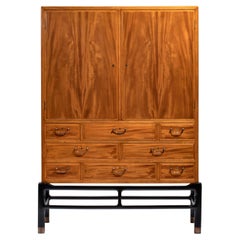
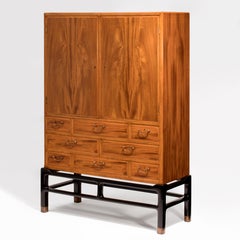
Jørgen Berg, An Exceptional Danish Mahogany, Lacquered & Patinated Brass Cabinet
By Jørgen Berg, Illums Bolighus, William Christensen
Located in Philadelphia, PA
William Christensen. The cabinet is a rare example; it is the only known piece by Berg executed in
Brass
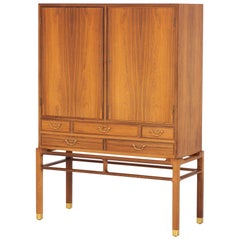
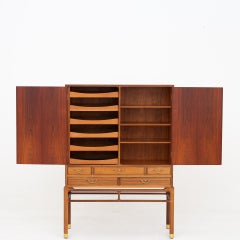
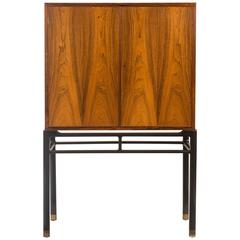
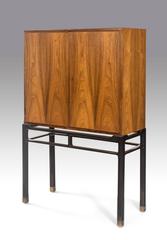
Linen-Press by Jørgen Berg
By William Christensen
Located in Copenhagen, DK
Linen-press in rosewood with drawers, trays and shoes of brass. Jørgen Berg. Maker William
Rosewood
Sold
H 55.25 in W 36.25 in D 15.25 in
Jørgen Berg for Illums Bolighus, Rare Danish Rosewood Cabinet on Stand
By Jørgen Berg, Illums Bolighus
Located in New York, NY
Jørgen Berg is illustrated in the Illums Bolighus catalog ca. 1960.
Brass
Jørgen Berg Rosewood Cabinet, 1960s
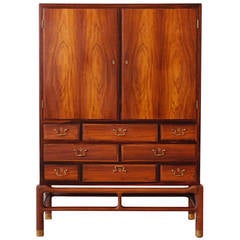
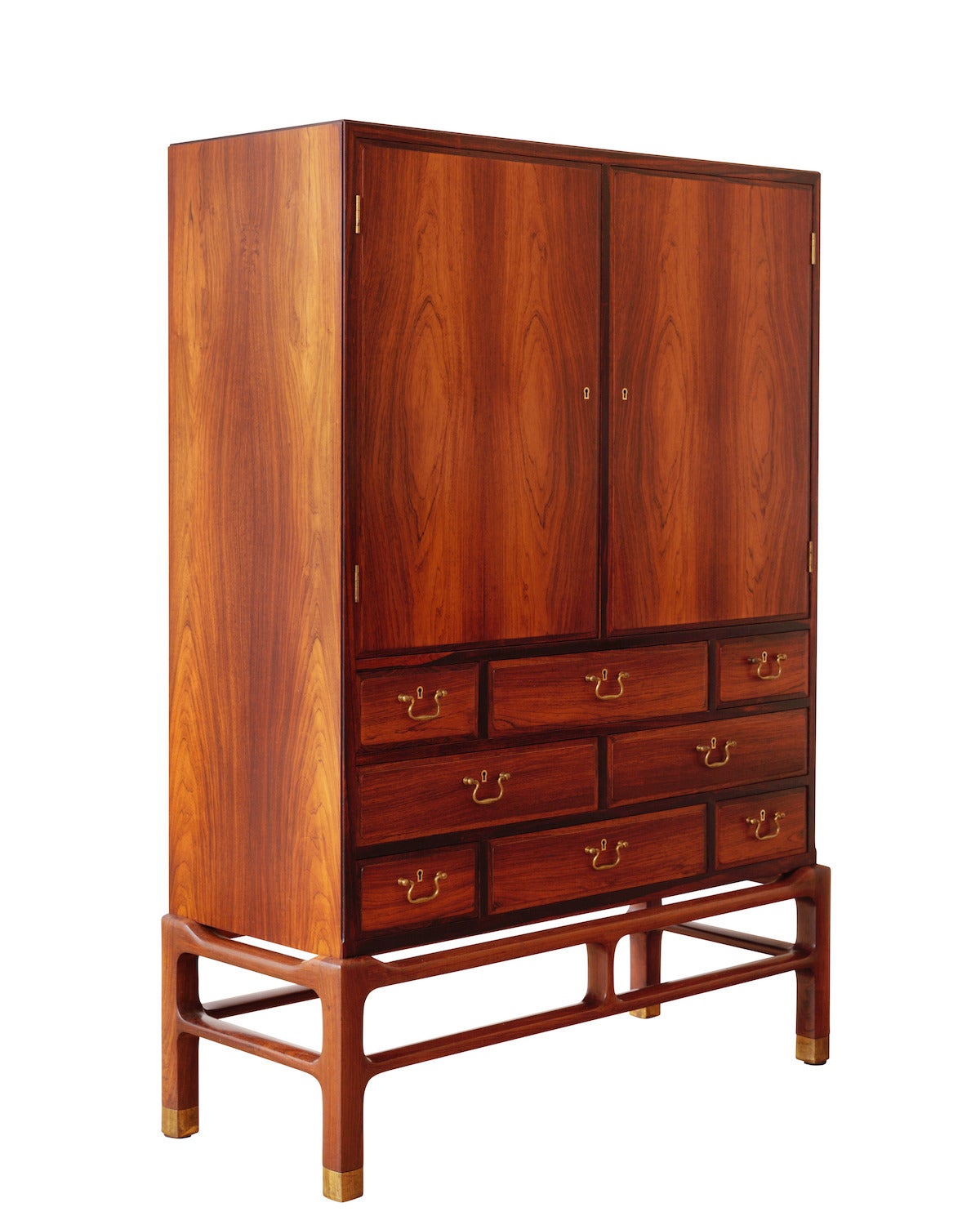
By Jørgen Berg
Located in Copenhagen, DK
Cabinet with brass fittings, front with two cabinet doors and eight drawers.
Rosewood
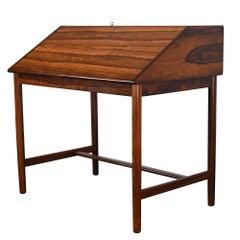
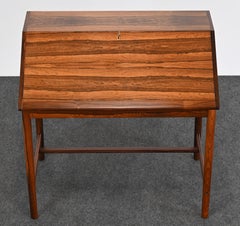
Sykkylven Brode Blindheim Rosewood Slant Front Desk, Norway 1960s
By Brode Blindheim
Located in Hamburg, PA
A stunning and very beautiful Rosewood Desk for Brode Blindheim by Sykky Iven circa 1960s. This amazing slant front desk is structured on a refined stretcher base. The cabinet has wo...
Rosewood
Scandinavian modernism is perhaps the warmest and most organic iteration of modernist design. The work of the designers associated with vintage Scandinavian modern furniture was founded on centuries-old beliefs in both quality craftsmanship and the ideal that beauty should enhance even the humblest accessories of daily life.
ORIGINS OF SCANDINAVIAN MODERN FURNITURE DESIGN
CHARACTERISTICS OF SCANDINAVIAN MODERN FURNITURE DESIGN
SCANDINAVIAN MODERN FURNITURE DESIGNERS TO KNOW
ICONIC SCANDINAVIAN MODERN FURNITURE DESIGNS
VINTAGE SCANDINAVIAN MODERN FURNITURE ON 1STDIBS
The gentle, organic contours that are typical of Scandinavian design appear in the furnishings and decor created by Danish, Finnish and Swedish designers not as a stylistic gesture, but rather as a practical, ergonomic — and, as importantly, elegant — response to the human form.
Each nation produced exceptional talents in all areas of the applied arts, yet each had its forté. Sweden was home to Greta Magnusson Grossman and Bruno Mathsson — creators of the classic Grasshopper lighting series and Berlin daybed, respectively — but the country excelled most notably at ceramics. In the 1920s at the great Gustavsberg porcelain manufactory, Wilhelm Kåge introduced pieces in the Scandinavian style based on influences from folklore to Cubism; his skills were passed on to his versatile and inspired pupils Berndt Friberg and Stig Lindberg.
Likewise, Finland produced a truly ingenious Scandinavian modern furniture designer in the architect Alvar Aalto, a master at melding function and artistic form in works like the Paimio chair, created in collaboration with his first wife, Aino. Yet Finnish glassware was pre-eminent, crafted in expressive, sculptural designs by Tapio Wirkkala and Timo Sarpaneva.
The Danes excelled at chairs. Hans Wegner and Arne Jacobsen were exemplars of the country’s facility with wood, particularly teak.
Wegner created such iconic pieces as the Round chair and the Wishbone chair; Jacobsen — while the revolutionary architect and furniture innovator produced the best-selling plywood Ant chair — designed two classic upholstered pieces of the 1950s: the Swan chair and Egg chair. The list of great Danes could go on and on, including Finn Juhl, a stylistic maverick and maker of the bold Chieftain chair; Poul Kjaerholm, with his lean metal-and-rattan aesthetic; and Verner Panton, who introduced a vibrant Pop note into international design.
Today, decades after their heyday, the prolific, ever-evolving Scandinavian modernists continue to amaze and delight, and interior designers all over the world use their pieces to bring warmth to any given space.
On 1stDibs, you will note both instantly recognizable vintage Scandinavian modern chairs, sofas, rugs and tables — those that have earned iconic status over time — and many new discoveries.
Of all the vintage storage cabinets and antique case pieces that have become popular in modern interiors over the years, dressers, credenzas and cabinets have long been home staples, perfect for routine storage or protection of personal items.
In the mid-19th century, cabinetmakers would mimic styles originating in the Louis XIV, Louis XV and Louis XVI eras for their dressers, bookshelves and other structures, and, later, simpler, streamlined wood designs allowed these “case pieces” or “case goods” — any furnishing that is unupholstered and has some semblance of a storage component — to blend into the background of any interior.
Mid-century modern furniture enthusiasts will cite the tall modular wall units crafted in teak and other sought-after woods of the era by the likes of George Nelson, Poul Cadovius and Finn Juhl. For these highly customizable furnishings, designers of the day delivered an alternative to big, heavy bookcases by considering the use of space — and, in particular, walls — in new and innovative ways. Mid-century modern credenzas, which, long and low, evolved from tables that were built as early as the 14th century in Italy, typically have no legs or very short legs and have grown in popularity as an alluring storage option over time.
Although the name immediately invokes images of clothing, dressers were initially created in Europe for a much different purpose. This furnishing was initially a flat-surfaced, low-profile side table equipped with a few drawers — a common fixture used to dress and prepare meats in English kitchens throughout the Tudor period. The drawers served as perfect utensil storage. It wasn’t until the design made its way to North America that it became enlarged and equipped with enough space to hold clothing and cosmetics. The very history of case pieces is a testament to their versatility and well-earned place in any room.
In the spirit of positioning your case goods center stage, decluttering can now be design-minded.
A contemporary case piece with open shelving and painted wood details can prove functional as a storage unit as easily as it can a room divider. Alternatively, apothecary cabinets are charming case goods similar in size to early dressers or commodes but with uniquely sized shelving and (often numerous) drawers.
Whether you’re seeking a playful sideboard that features colored glass and metal details, an antique Italian hand-carved storage cabinet or a glass-door vitrine to store and show off your collectibles, there are options for you on 1stDibs.