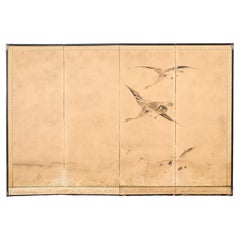
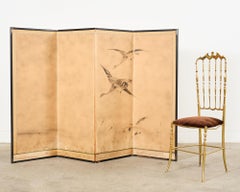
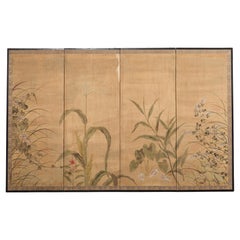
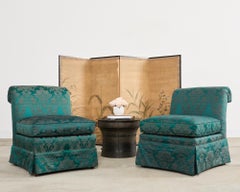
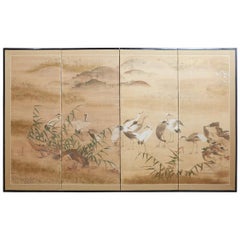
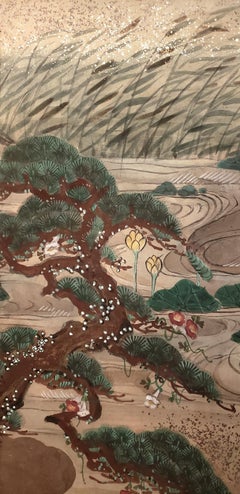
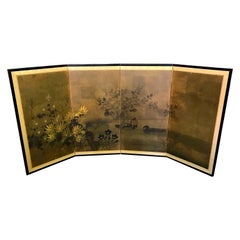
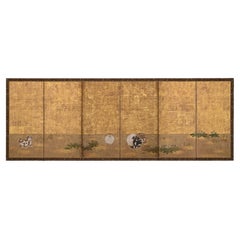
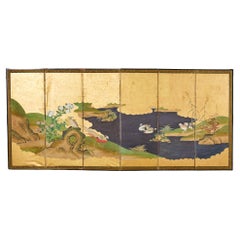
Japanese Meiji Four Panel Screen Wild Geese Over Reeds
Located in Rio Vista, CA
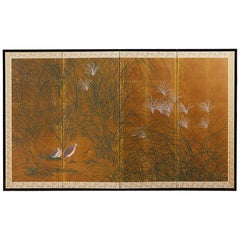
Muromachi period inspired Japanese four panel byobu screen depicting wild geese in flight over
Antique 19th Century Japanese Meiji Paintings and Screens
Brass
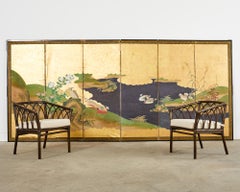
Japanese Meiji Four Panel Screen Wild Geese Over Reeds
Located in Rio Vista, CA
Muromachi period inspired Japanese four panel byobu screen depicting wild geese in flight over
Brass
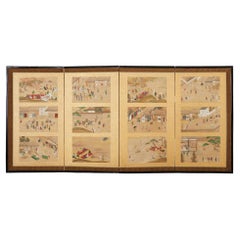
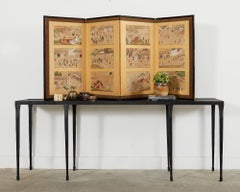
19th Century Japanese Meiji Four Panel Screen Festival Scenes
Located in Rio Vista, CA
Colorful late 19th century late Meiji period four-panel byobu screen featuring 12 scenes of a
Brass
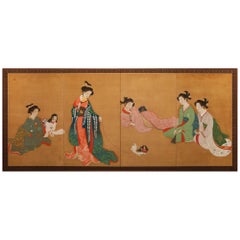
Meiji Period Japanese Four Panel Screen Bijin At Leisure
Located in Hudson, NY
Japanese four panel screen: Bijin At Leisure. Ladies in a tea house with a small dog. Seal reads
Silk, Wood
$2,166
H 35.44 in W 43.31 in D 1.58 in
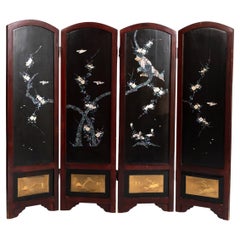
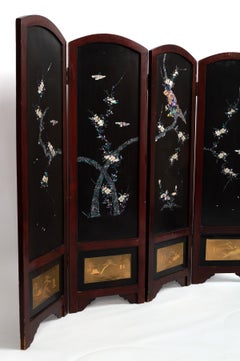
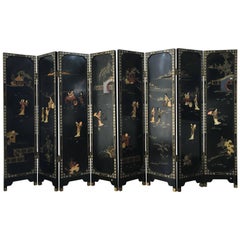
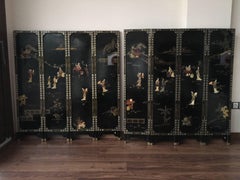
19th Century Shibayama Four Panel Screen Meiji Period Japan, C.1880
Located in London, GB
19th century Shibayama four Panel screen Meiji Period Japan C.1880 Mother of pearl inlay in
Mother-of-Pearl, Wood, Lacquer
$14,000
H 30 in W 71 in D 2 in
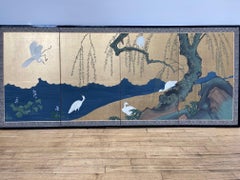
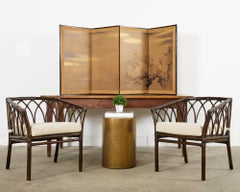
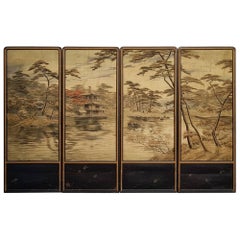
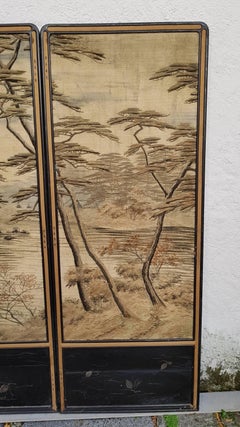
Japanese Meiji Period Four-Panel Screen w Flying Cranes and Landscape, Ca. 1900
Located in New York, NY
Japanese Meiji Period Four-Panel Screen with Flying Cranes and Landscape, Ca. 1900
Wood
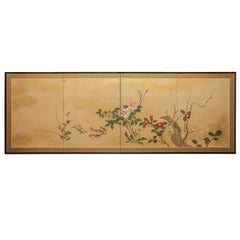
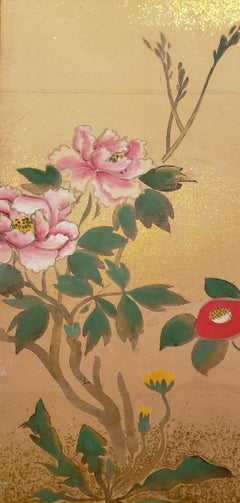
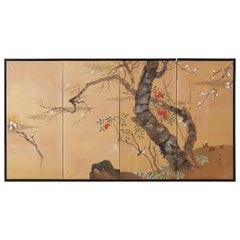
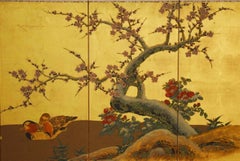
Japanese Four Panel Screen: Early Spring Into Summer
Located in Hudson, NY
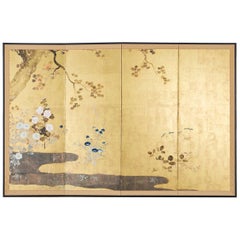
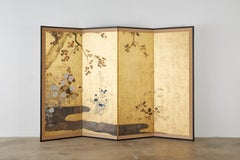
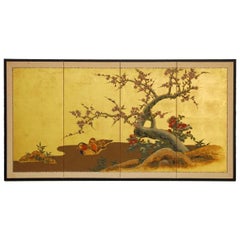
Japanese Four Panel Screen: Early Spring Into Summer, Meiji period (1868 -1912) painting of plum
Gold Leaf
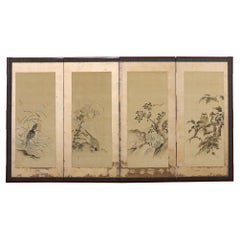
Japanese Kano School Four Panel Screen Birds and Owl
Located in Rio Vista, CA
Amazing 19th century Japanese Meiji period four-panel byobu screen featuring painted panels
Gold Leaf
Antique Japanese Hand-Painted Four-Panel Folding Table Screen
Located in Miami, FL
Antique Japanese hand-painted four-panel folding table screen depicting birds, bamboo and flowering
Paper, Silk, Wood
Japanese Meiji Four Panel Screen After Tawaraya Sotatsu
Located in Rio Vista, CA
Fascinating late 19th century Japanese Meiji period four panel folding byobu screen. Made in the
Brass
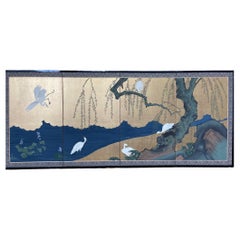
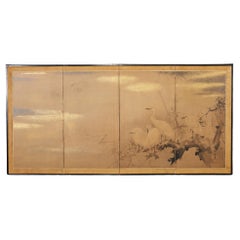
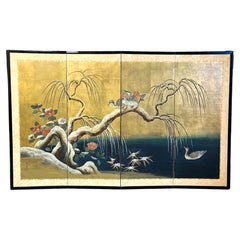
Japanese Meiji Four Panel Screen White Egrets in Winter Landscape
Located in Rio Vista, CA
Late 19th century serene Japanese Meiji period four panel folding byobu screen featuring a flock of
Silk, Wood, Paper
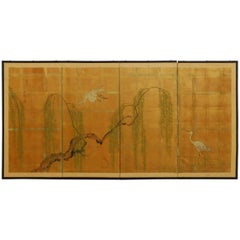
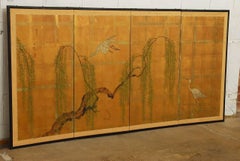
Japanese Four-Panel Byobu Screen of Cranes and Willow on Gold Leaf
Located in Rio Vista, CA
Early 20th century Japanese Meiji four-panel screen featuring cranes and a willow tree. Painted on
Brass, Gold Leaf
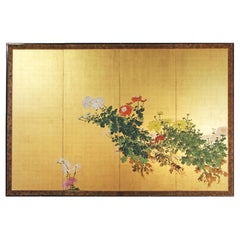
Japanese Meiji Four-Panel Moriage Style Chrysanthemum Screen
Located in Rio Vista, CA
Dramatic early 20th century Japanese late Meiji period Byobu screen featuring painted
Brass
Sold
H 68.12 in W 64.18 in D 0.79 in
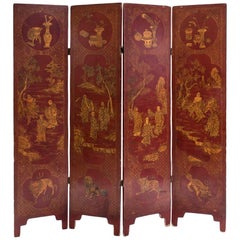
Red Japanese Lacquer Four-Panels Folding Screen, Meiji Period, 1868-1912
Located in Saint-Ouen, FR
Red Japanese lacquer four panels folding screen "{yonkyoku byobu}". The panels are decorated with
Lacquer
Japanese Four Panel Screen Flowering Prunus Tree
Located in Rio Vista, CA
Impressive Japanese four panel screen depicting ancient flowering prunus tree with spring blossoms
Brass
Japanese Four-Panel Screen Prunus Tree with Nandina
Located in Rio Vista, CA
Colorful Japanese four-panel screen depicting a prunus tree with a songbird perched in a red
Wood, Paper
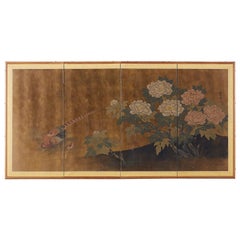
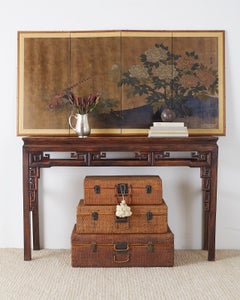
Japanese Four-Panel Showa Screen Pheasant and Peonies
Located in Rio Vista, CA
Charming Japanese Showa period four-panel screen depicting a pheasant and her chicks next to blooms
Silk, Wood, Paper
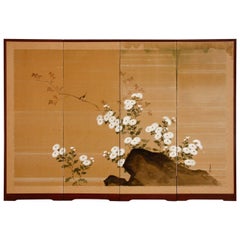
Japanese Four Panel Silk Byobu Screen of Chrysanthemums
Located in Rio Vista, CA
Vintage Japanese four panel silk Byobu screen of delicate chrysanthemums and a small bird. Features
Brass
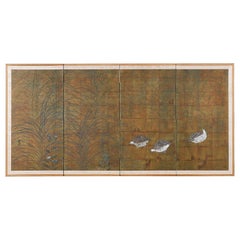
Japanese Four-Panel Screen Quail in Autumn Landscape
Located in Rio Vista, CA
Serene Japanese four-panel byobu screen depicting three quail in an autumn landscape with eulalia
Brass
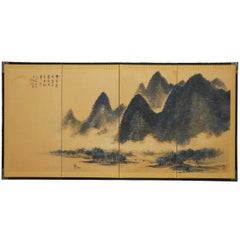
Japanese Four-Panel Blue Mountain Landscape Byobu Screen
Located in Rio Vista, CA
Dramatic Japanese four-panel landscape byobu screen featuring a blue mountain landscape scene
Brass
Japanese Four Panel Screen of Ducks and Prunus on Gold Leaf
Located in Rio Vista, CA
Colorful Japanese four panel byobu folding screen depicting a pair of ducks near a prunus blossom
Gold Leaf
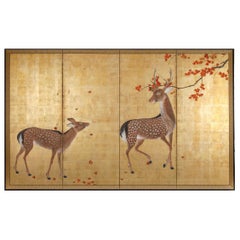
Japanese Four Panel Screen Buck and Doe with Autumn Maple on Gold
Located in Hudson, NY
Japanese four panel screen: Buck and doe with autumn maple on gold. Late Meiji period (1868-1912
Gold Leaf
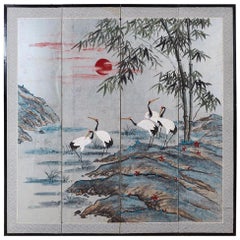
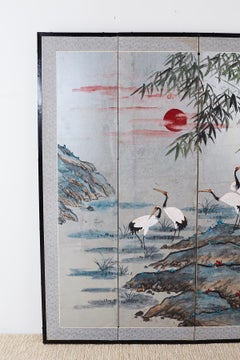
Japanese Meiji Period Screen of Red-Crowned Cranes
Located in Rio Vista, CA
Impressive Japanese four-panel Meiji period screen depicting a landscape scene with cranes
Brass
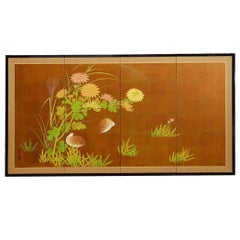
Japanese Four-Panel Byobu Screen of Quail and Flowers
Located in Rio Vista, CA
Beautiful Japanese four-panel Byobu screen featuring Japanese quail and spring flowers on a gilt
Silk, Wood, Paint, Paper
Sold
H 4.75 in W 8.75 in D 0.25 in
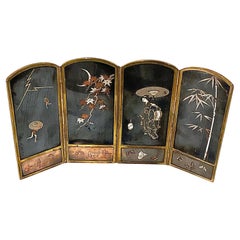
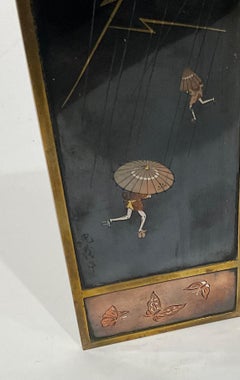
Bronze Mixed Metal Japanese Meiji Era Four Panel 2 Sided Table Screen Signed
Located in Ann Arbor, MI
A good Japanese bronze and shakudo miniature table screen, Meiji period, each panel in a gilt
Bronze
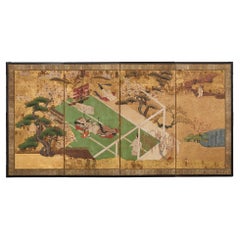
Weathered Japanese Meiji Four Panel Screen Tale of Genji
Located in Rio Vista, CA
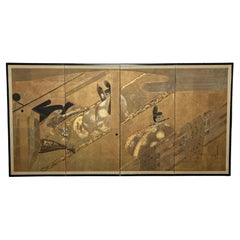
Beautifully aged and weathered late 19th century Japanese Meiji period four-panel byobu screen
Silk, Wood, Paper
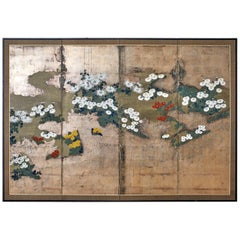
Japanese Meiji Four Panel Screen Chrysanthemums Along a Fence
Located in Rio Vista, CA
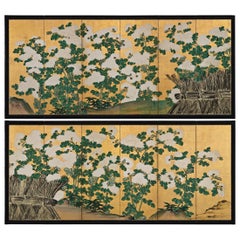
Extraordinary Japanese late Meiji period four panel screen depicting colorful chrysanthemums
Brass, Silver Leaf
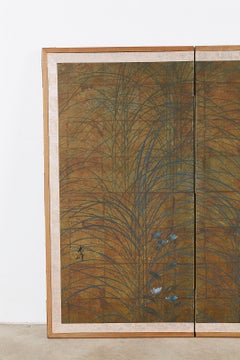
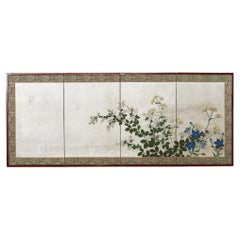
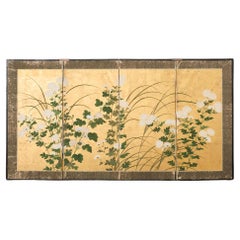
Japanese Meiji Four Panel Screen Flowering Grasses of Autumn
Located in Rio Vista, CA
Remarkable late 19th century Meiji period Japanese four panel byobu screen featuring the flowering
Silver Leaf
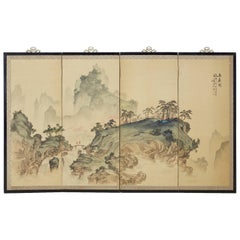
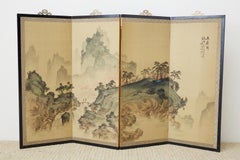
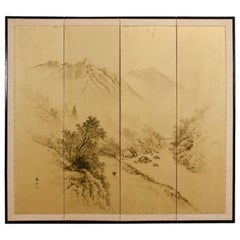
Japanese Meiji Period Four-Panel Landscape Screen
Located in Rio Vista, CA
Dramatic Japanese late Meiji early Showa period landscape screen titled Mountain Residence. Ink and
Brass
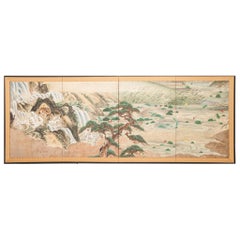
Japanese Four-Panel Screen Water Landscape
Located in Hudson, NY
Japanese four-panel screen: Water landscape, Meiji period (1868-1912) painting of a waterfall on
Silver Leaf
Japanese Four-Panel Byobu Gilt Landscape Screen
Located in Rio Vista, CA
Large Japanese four-panel Byobu screen featuring a painted mountain landscape on a gilt background
Brass
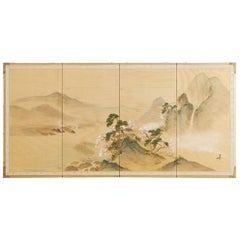
Japanese Four-Panel Silk Landscape Byobu Screen
Located in Rio Vista, CA
Exceptional Japanese four-panel Byobu screen of a mountain landscape painted on silk. The
Brass
Japanese Four-Panel Flowers of Autumn Byobu Screen
Located in Rio Vista, CA
Gorgeous Japanese four-panel byobu screen depicting colorful flowers of autumn. Chrysanthemum (kiku
Silk, Paper, Wood
Japanese Four-Panel Screen Winter Pine with Ducks
Located in Rio Vista, CA
Unique Japanese four-panel screen depicting a cool winter landscape with pine, prunus, and bamboo
Silk, Glass, Paper, Wood
Japanese Four-Panel Kano School Manchurian Crane Screen
Located in Rio Vista, CA
Colorful Japanese four-panel screen made in the kano school style depicting five Manchurian cranes
Silver Leaf, Brass
Japanese Four-Panel Painted Silk Landscape Byobu Screen
Located in Rio Vista, CA
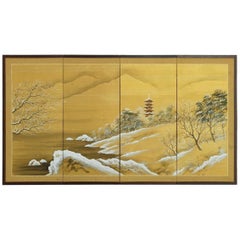
Idyllic Japanese four panel painted silk Byobu screen depicting a snow covered landscape with a
Brass
Hand Painted Four Panel Japanese Byobu Screen Circa 1960s
Located in Peabody, MA
A hand painted Japanese byobu screen of four panels, ca. 1960s, depicting an abstract assemblage of
Paint
Japanese Showa Period Floral Foliate Four-Panel Screen
Located in Rio Vista, CA
Captivating Japanese Showa four-panel byobu screen depicting a floral and foliate scene
Brass
Japanese Four Panel Screen Peacock and Flowering Magnolia
Located in Rio Vista, CA
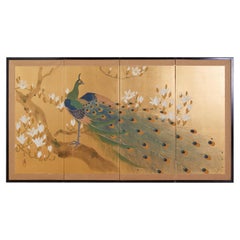
Gorgeous Japanese four-panel byobu screen featuring a peacock perched in a flowering magnolia tree
Silk, Wood, Paint, Paper
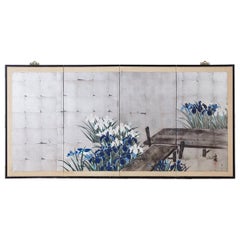
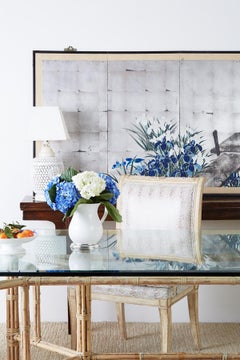
Japanese Four Panel Screen Irises on Silver Leaf
Located in Rio Vista, CA
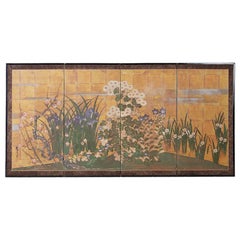
Fantastic Japanese four panel Byobu screen featuring hand painted irises on squares of metallic
Brass, Silver Leaf
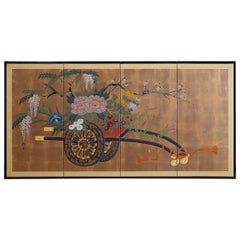
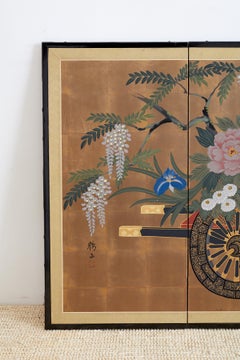
Japanese Four Panel Screen Gold Leaf Flower Cart
Located in Rio Vista, CA
Lovely Japanese four-panel Byobu screen featuring a vibrant and colorful flower cart painted on
Gold Leaf, Brass
Japanese Four-Panel Rimpa Screen Floral Autumn Landscape
Located in Rio Vista, CA
Magnificent Japanese four-panel 19th century Meiji screen. Made in the Rimpa School style depicting
Brass, Gold Leaf, Silver Leaf
Japanese Four-Panel Byobu Screen of Irises on Gilt
Located in Rio Vista, CA
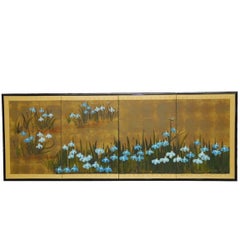
Colorful Japanese four-panel byobu screen featuring watercolor painted irises on gilt background
Brass
Japanese Four-Panel Byobu Screen of Quail in Grass
Located in Rio Vista, CA
Charming Japanese four-panel byobu screen depicting two young quail in Eulalia grasses. Beautifully
Gold Leaf, Brass
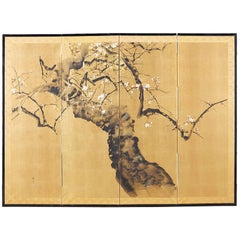
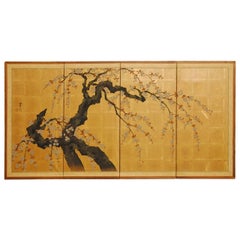
Japanese Four-Panel Byobu Screen Sakura Cherry Blossom Tree
Located in Rio Vista, CA
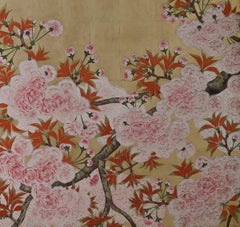
Dramatic Japanese four-panel Byobu screen featuring a large Sakura or cherry blossom tree on
Silk, Wood, Paint, Paper
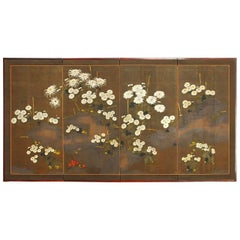
Japanese Edo Four Panel Screen Flowering White Chrysanthemums
Located in Rio Vista, CA
19th century extraordinary Japanese late Edo/early Meiji period four-panel byobu screen featuring
Brass, Gold Leaf
Sold
H 36 in W 72 in D 1 in
Japanese Asian Signed Four-Panel Folding Byobu Screen Ducks on Pond 19th Century
Located in Studio City, CA
A gorgeous four-panel Japanese Byobu folding screen depicting two ducks on a tranquil pond with
Gold Leaf
Sold
H 30 in W 48 in D 0.75 in
Antique Japanese Four Panel Byobu Screen: Mandarin Ducks by Snowy Pond in Early
Located in Sheridan, CO
Antique Japanese Four Panel Byobu Screen: Mandarin Ducks by Snowy Pond in Early Spring. Kano School
Metal, Gold Leaf
Japanese Screen, Four Panels Japanese Screen on Spring Gold Leaf
By Japanese Studio
Located in Brescia, IT
Spring landscape by an unknown painter of the Rinpa school, XX th century, six-panel ink painted on
Gold Leaf
Sold
H 67.33 in W 97.64 in D 0.79 in
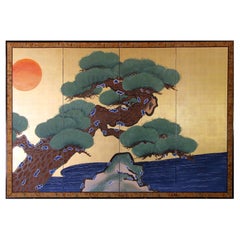
Japanese Folding Screen four Panels painted on gold leaf -Japanese Byobu
By Japanese Studio
Located in Brescia, IT
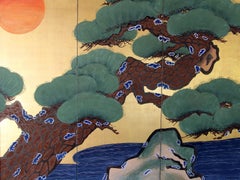
Japanese Kano school four-panel screen, with pine trees near the sea kissed by the sun. Hand
Gold Leaf
Japanese Maple Leaf Screen
Located in San Francisco, CA
Antique Japanese Meiji-period four-panel signed byobu (screen). Signature of the artist in the
Japanese Embroidered Silk Four-Panel Folding Screen
Located in Locarno, CH
Beautiful Japanese folding screen from the Meiji period (1868-1912). The structure is made in
Wood, Silk
$4,800
H 48 in W 45 in D 2 in
Pair of Four-Panel Reversible French Chinoiserie Coromandel Screens Paris, 1920s
Located in Miami, FL
Eight-Panel Reversible Chinese Coromandel Screen Pair of French chinoiserie screens, Paris, 1920s This French chinoiserie screens from the 1920s are composed of four panels richly ...
Wood, Mother-of-Pearl
$15,000
H 45 in W 60 in D 32 in
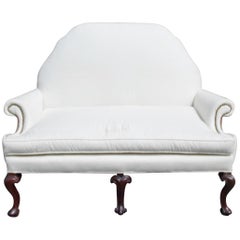
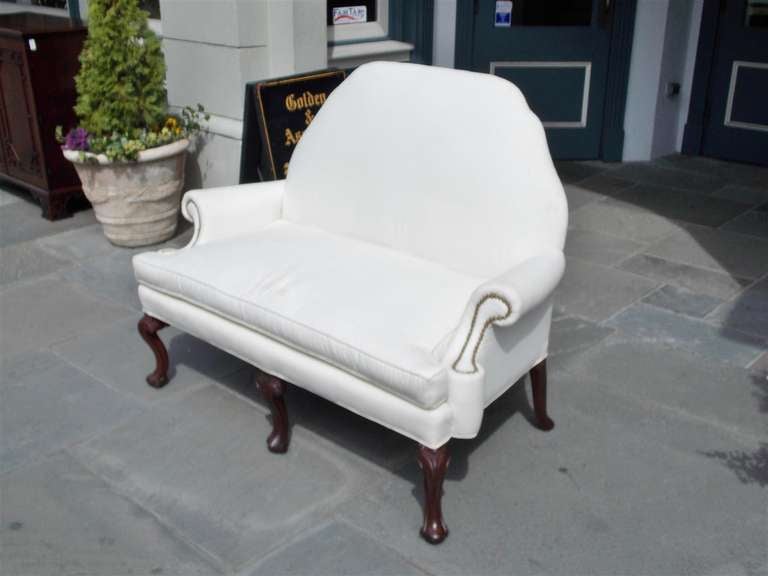
English Mahogany Camel Back Settee Upholstered in White Muslin, Circa 1820
Located in Charleston, SC
English mahogany camel back settee with flanking scrolled brass tacked arms, removable cushion, carved floral knees, and terminating on trifod splayed feet. Settee is upholstered in ...
Brass
$1,290 / item
H 17.33 in Dm 23.63 in
El Topo • Natural • Sculptural Hand-Carved Acacia & Sheepskin Ottoman by Odditi
By Odditi
Located in CAROOL, NSW, AU
A tactile piece of domestic fantasy, the El Topo ottoman is a social object, featuring a carved Acacia base, burnt using the traditional method of Shou Sugi Ban and an animalistic, y...
Wood, Sheepskin
Unavailable|$3,495 / item
H 17.72 in Dm 11.82 in
Pleated Shade, Beige Fabric Small Ceiling Pendant Lamp with Brass by Elsa Foulon
Located in Geneve, CH
Demoiselle Small Decorative Pendant Lamp by Elsa Foulon Unique Piece. Dimensions: Ø 30 x H 45 cm. Materials: Taffetas fabric, ceramic, and brass. Available in three different sizes....
Brass
$1,100
H 23.82 in W 24.41 in D 13.39 in
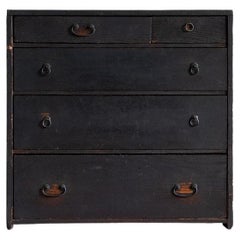
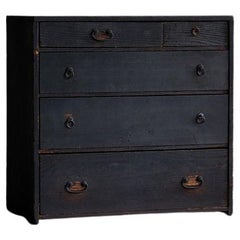
Japanese Antique Small Chest of Drawers, Meiji Era '1868–1912', Wabi Sabi
Located in Hitachiomiya-shi, 08
This antique small chest of drawers was crafted in the Meiji Era (1868-1912). Its compact size makes it an ideal addition to any space, offering both practicality and unique charac...
Cedar
$3,290
H 82.68 in W 57.88 in D 1.19 in
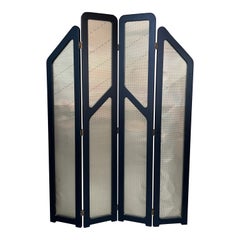
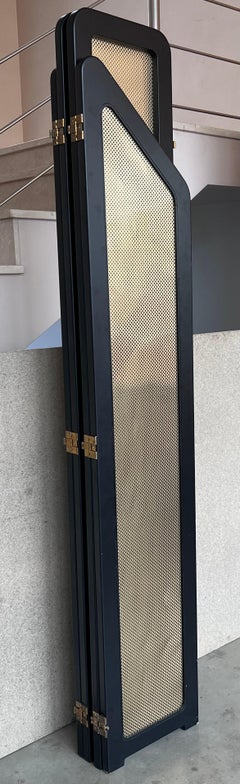
Art Deco Room Divider Black Ebonized Wood and Gold Metal Screens
Located in Miami, FL
Art Deco room divider black ebonized wood and gold metal screens A beautiful 4-panel folding screen, in black lacquered wood over gold metal finish great design easy to move, each...
Metal
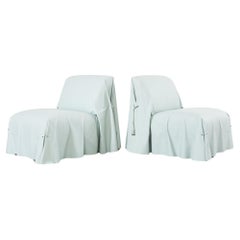
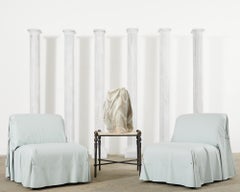
Pair of Fendi Casa Arctic Blue Leather Tunica Lounge Chairs
By Fendi Casa
Located in Rio Vista, CA
Sublime pair of Italian Fendi Tunica lounge chairs or slipper chairs circa 2015. The bespoke rare chairs feature a soft and supple arctic blue leather. The fitted leather is draped o...
Brass
Late 17th Century Japanese Screen. Puppy and Kittens on Gold Leaf.
Located in Kyoto, JP
Anonymous Late 17th century Puppy & Kittens A six-panel Japanese screen. Ink, color, gofun, gold-leaf and gold-fleck on paper. A medium sized late 17th century Japanese screen fe...
Gold Leaf
Japanese Meiji Six Panel Screen Kano School Bird Waterscape
Located in Rio Vista, CA
Stunning late 19th century Japanese Meiji period six panel byobu screen featuring a deep blue waterscape with pheasants and ducks. Made in the Kano school style with natural ink and ...
Brass, Gold Leaf
$3,375Sale Price|50% Off
H 70 in W 52 in D 24.5 in
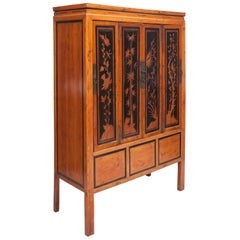
Antique Chinese Cabinet in Elm with Carved Scenes of Four Seasons & Ebonizing
Located in INTERLAKEN, NY
A lovely Chinese cabinet in elm with four doors whose panels show a carved scene of vegetation representing each of the four seasons in relief. The amber color of the wood, as well a...
Elm
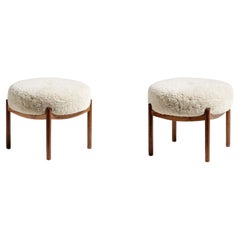
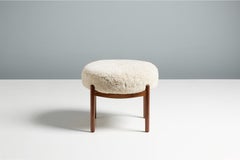
Pair of Custom Made Walnut & Sheepskin Esko Ottomans
Located in London, England
Pair of custom made Esko Ottomans from Dagmar Design. This classic yet contemporary design was first produced in Denmark in the 1960s by cabinetmaker Soren Nielsen. This new edition...
Oak
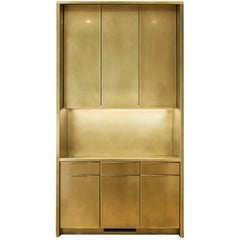
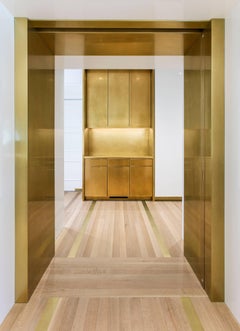
Amuneal's Brass Pantry Cabinetry
By Amuneal
Located in New York, NY
Amuneal's Brass Pantry Cabinetry, part of our metal Kitchen Collection, is designed as a feature element for any space. The three doors on the upper cabinets are fabricated with a kn...
Brass
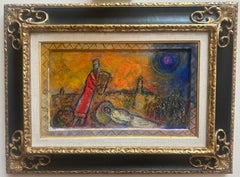
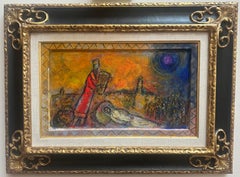
L'hymne du Roi David (King David's Dream)
By Marc Chagall
Located in Boca Raton, FL
L'hymne du Roi David (King David's Dream) Oil on wood by Marc Chagall c late 70's Comes with Numbered and Verified Certificate of Authenticity from Comite Chagall in Paris signed and...
Oil
$2,940Sale Price|40% Off
H 27 in W 64 in D 36 in
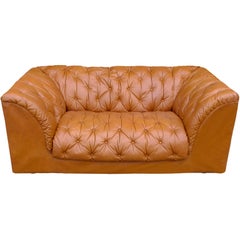
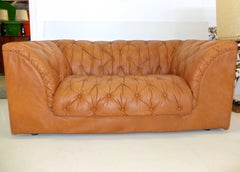
1970's Italian Tufted Leather Sofa by Ambienti Bernini
Located in Hanover, MA
SATURDAY SALE Very comfortable lounging sofa made in Italy by Ambienti Bernini. It reminds me of the Mario Bellini "le Bambole" sofa but with tufted upholstery. The outside back, ...
Upholstery
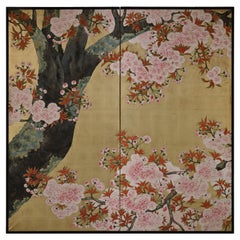
Early 20th Century Japanese Cherry Blossom Screen by Kano Sanrakuki
Located in Kyoto, JP
Cherry Blossoms Kano Sanrakuki (1898-1981) Showa period, circa 1930 2-panel Japanese Screen Color, gofun and gold leaf on paper Against a backdrop of gold-leafed groun...
Gold Leaf
$48,000 / set
H 67.5 in W 149 in D 0.75 in
Mid-18th Century Japanese Screen Pair, One Hundred Flowers, Chrysanthemums
Located in Kyoto, JP
Omori Soun (b. 1704) Chrysanthemums - One Hundred Flowers A Pair of Six-fold Japanese Screens. Ink, color, gofun and gold leaf on paper. Dating to the mid 18th century this pair o...
Gold Leaf
From 1868 to 1912, Emperor Mutsuhito oversaw an era of transformation in Japan. Formerly a country of feudalism and isolation, Japan entered an age of modernization influenced by newly established trade and exchange with the West. The Meiji period, or period of “enlightened rule,” also saw the global impact of the East Asian country’s culture. Japanese Meiji furniture was exhibited at expositions from Paris to San Francisco and created for export.
Prior to the Meiji era, furniture was mostly made by commission for the ruling class; now there were new domestic and international markets. European styles like Japonisme appropriated Japanese design while craftsmen in places like Wales and England employed japanning, a varnishing technique that approximated the appearance of lacquer for the surfaces of furnishings.
Meiji furniture made for Japanese homes and buildings constructed in Western styles resulted in taller tables, chairs, cabinets with large drawers and other features. The government invested in areas such as transportation and communication, and because people could freely choose occupations after the restrictions of feudalism, industries of various types were energized by expressive new ideas during those years. Art schools were formed and, for the first time, design was an area of study in the country, leading to the evolution of professional design as a career by the 1890s.
The work of Japanese designers was transmitted widely through lavishly illustrated pattern books that included designs for screens and lacquerware for the home. While screens today may be of use as decorative accents or partitions to ensure privacy in one’s space, Japanese screens were adorned with paintings and were featured in performing arts such as concerts, tea ceremonies and more. The color illustrations that characterize Meiji woodblock prints, a genre of Japanese art that grew out of 17th-century developments in printing and book publishing, depicted the sweeping changes that the era brought to East Asia.
Although it was a time of societal and cultural shifts, a bolstered interest in art and design elevated Japanese craft traditions. From colorful porcelain table lamps with silk shades and hardwood tables decorated with dark lacquer to cabinets featuring iron hardware and inlaid with mother-of-pearl, Meiji furniture showcased Japan’s artistic heritage to the world.
Find a collection of antique Japanese Meiji period case pieces and storage cabinets, decorative objects, wall decorations and more furniture on 1stDibs.
Traditional Asian paintings were often created on scrolls and folding screens. Artisans made screens that could be folded up or spread out by connecting several panels using hinges. Today, antique Asian folding screens and paintings are sophisticated decorative accents that can serve as makeshift partitions to ensure privacy.
The original folding screens were created by Chinese artists. The earliest record of screens comes from the 2nd century B.C., and surviving examples date back to the Ming dynasty. Chinese painting utilizes many of the same tools as calligraphy — these screens were crafted from wood with painted panels featuring striking art or calligraphy that told cultural stories or represented nature and life in the area.
The practice was introduced to Japan, where paintings for screens were made on paper and silk, in the 8th century. These paintings frequently feature subjects such as landscapes, animals, flowers and Buddhist religious themes. Along with screens for tea ceremonies and dance backgrounds, there were screens for use in Shinto and Buddhist temples.
In the 17th century, screens began to be imported to Europe where their popularity grew. Coco Chanel famously collected Coromandel folding screens.
Traditional Asian paintings can make a tasteful addition to any wall, and screens can be used as decoration or, in the case of larger iterations, as an aesthetic way to divide a large room. Browse the selection of antique Asian paintings and screens from a variety of styles and eras on 1stDibs.