Bronze Clocks

to
181
1,556
11
105
1,252
199
11
103
43
17
30
4
15
15
4
4
6
9
1
237
191
122
89
50
34
18
17
15
14
10
4
4
4
3
4,036
1,599
1,567
1,098
991
776
651
1,439
1,257
47
39
36
Height
to
Width
to
1,567
1,556
1,556
22
19
19
15
12
Material: Bronze
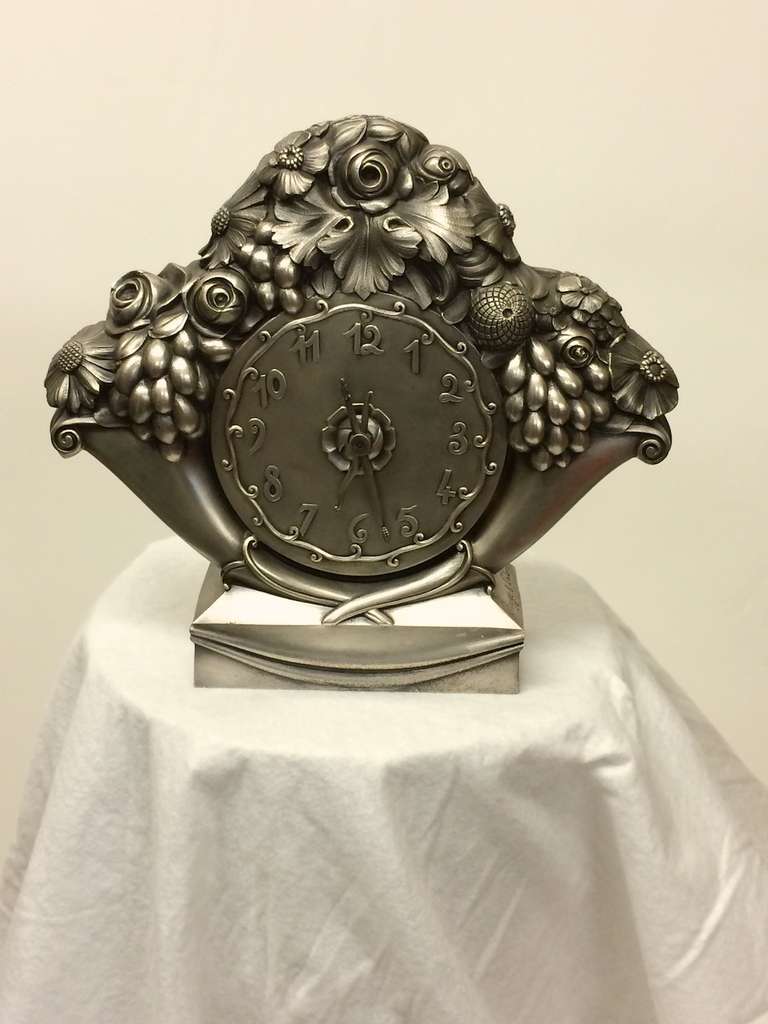
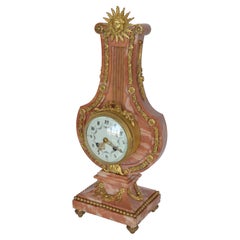
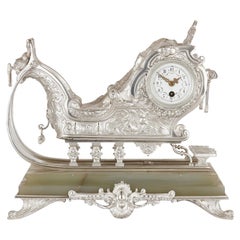
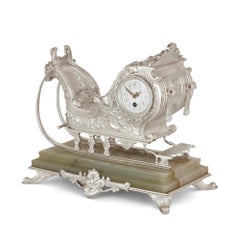
Bagge and Peters Clock

Bagge and Peters Clock

By Eric Bagge

Located in Philadelphia, PA

Silvered bronze mantel clock, signed on base and documented.

Category

Early 20th Century French Bronze Clocks

Materials

Bronze

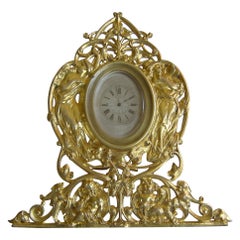
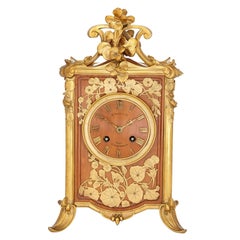
Howell James Art Nouveau Cased Strut Clock

Howell James Art Nouveau Cased Strut Clock

Located in London, GB

A highly unusual and rare Art Nouveau gilt bronze strut clock in the manner of Cole and Signed "Howell James and Co. to the Queen London & ...

Category

1890s English Art Nouveau Antique Bronze Clocks

Materials

Bronze

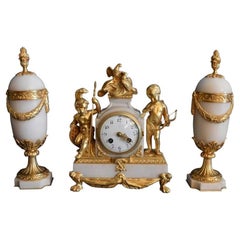
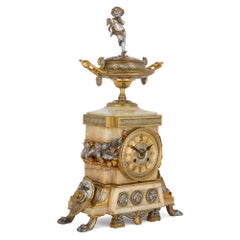
19th Century French Clockset

19th Century French Clockset

Located in Los Angeles, CA

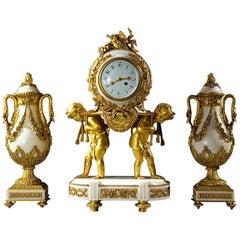
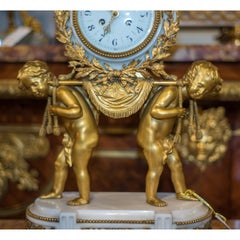
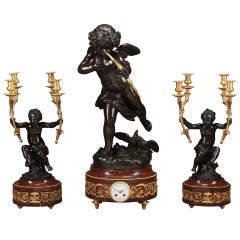
19th century French clockset. Marble and bronze, working clock. Children playing the Horn measure to 12" H x 8.5" W x 3.5" D.

Category

Early 19th Century French Antique Bronze Clocks

Materials

Bronze

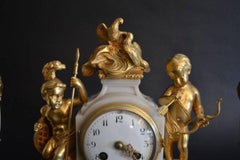
Trophies of War English Regency Clock by Forrester of Hull

Trophies of War English Regency Clock by Forrester of Hull

Located in London, GB

A superb, rare English Regency period mantel clock in patinated bronze in the form of the "Trophies of War". Set upon a rectangular base with crested hel...

Category

1810s British Regency Antique Bronze Clocks

Materials

Bronze

Japanese Woman Fire-Gilt Bronze Clock c. 1800

Japanese Woman Fire-Gilt Bronze Clock c. 1800

Located in 263-0031, JP

A French fire-gilt bronze clock with marble base depicting a Japanese woman, Louis XVI or Empire Era, 1790-1815. The silk-thread mechanis...

Category

Early 19th Century French Louis XVI Antique Bronze Clocks

Materials

Marble, Bronze

Impressive Antique Austrian Champlevé Enamel, Silver-Gilt and Lapis Lazuli Clock

Impressive Antique Austrian Champlevé Enamel, Silver-Gilt and Lapis Lazuli Clock

Located in London, GB

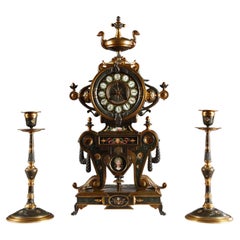
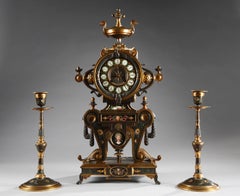
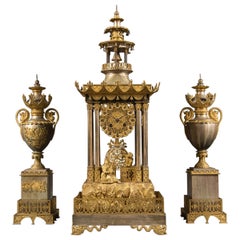
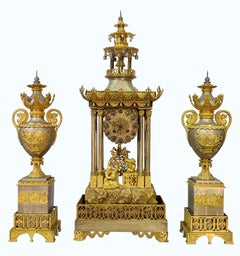
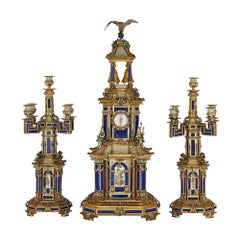
Impressive antique Austrian champlevé enamel, silver-gilt and lapis lazuli clock set Austrian, Late 19th century Clock: Height 91cm, width 37cm, depth 37cm Candelabra: Height 64cm, width 24cm, depth 24cm Clock case: Height 97cm, width 44cm, depth 41cm Candelabra case: 67cm, width 27cm, depth 27cm Crafted in Austria in the late 19th century, this magnificent three-piece clock set was most likely gifted to the Imperial Russian family by the Austro-Hungarian Royal family. Its design is inspired by various cultures and styles, whilst its high quality celebrates some of the best craftsmen of the late 19th century. Of a tiered pagoda shape, the clock is surmounted by an eagle, its wings spread wide landing atop a vibrant lapis lazuli ball. The eagle is most likely a reference to Turul, a mythological animal which is a symbol of Hungary. This bird of prey is also a popular feature within Turkish traditions. Within a canopy, supported on four sturdy lapis lazuli pillars two prominent silver-gilt bells are hanging. These are carved with various motifs such as acanthus leaf design and connect to the clock mechanism below. The bells ring informing its users of the time. All four sides of the piece are inset with a clock, an unusual feature on an object of this type and a testament to its highest quality. The inclusion of clocks on all sides signifies that the antique is aimed to be a centrepiece, admired from all sides. The dial is decorated using the champlevé enamelling technique, whereby ‘parcels’ are carved into the silver gilt and into which enamel is poured. The 12 numbers are coloured in black with a gold outline and are surrounded by a white circular background making them stand out and easy to read. The hour clock dial is cast in the form of a sun, while the minute hand is represented as the moon. The two motifs symbolise one’s bright and gloomy sides of existence. The four corners around the clocks are mounted with three-dimensional female figures dressed in traditional garments from around the world. For example, one figure is dressed in typical Turkish clothing...

Category

Late 19th Century Austrian Antique Bronze Clocks

Materials

Lapis Lazuli, Silver, Bronze, Enamel
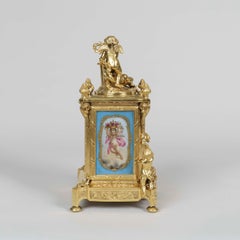
Palatial & Rare Napoleon III French Ormolu and Patinated Bronze Clock, Detouche

Palatial & Rare Napoleon III French Ormolu and Patinated Bronze Clock, Detouche

By C. Detouche

Located in Long Island City, NY, NY

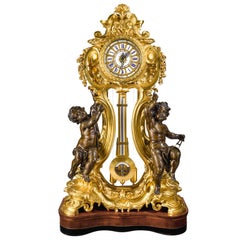
A Palatial and Extremely Rare Napoleon III French Ormolu and Patinated Bronze Regulateur de Parquet Clock by Louis-Constantin Detouche, Paris, Circa 1850 An exceptional testament to the grandeur and technical mastery of 19th-century French horology, this palatial and extraordinarily rare Napoleon III ormolu and patinated bronze Regulateur de Parquet clock stands as a crowning achievement of the renowned Parisian horologist Louis-Constantin Detouche. Created circa 1850, this monumental timepiece exemplifies the perfect synthesis of artistic opulence and mechanical precision, distinguishing itself as one of the most impressive works from Detouche’s illustrious oeuvre. At over six feet tall, this clock’s imposing scale and decorative grandeur make it an object of immense historical and aesthetic significance. The case, crafted from the finest French ormolu, features two majestic patinated bronze seated putti, serving as allegorical figures and underscoring the artistic sophistication characteristic of the Second Empire style. The white enamel dial, elegantly signed "C. Detouche/Paris," affirms its prestigious maker, while the movement, meticulously numbered 7064 and bearing the stamps "C. Detouche RUE St. MARTIN" and "C. DETOUCHE 158 R. St MARTIN 160," speaks to the highest standards of 19th-century horological craftsmanship. Further distinguishing this piece is the medaille d’argent stamp, a testament to the numerous accolades and awards bestowed upon Detouche for his innovations in timekeeping. A Masterpiece of Horological Artistry: Louis-Constantin Detouche was not merely a clockmaker; he was a visionary whose contributions to horology redefined precision and complexity. This particular regulator clock...
Category

19th Century French Napoleon III Antique Bronze Clocks

Materials

Bronze, Ormolu