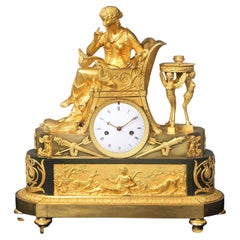
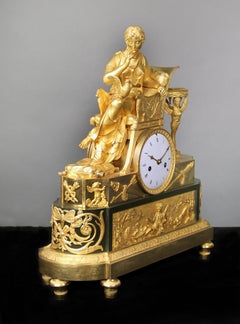
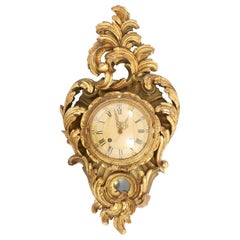
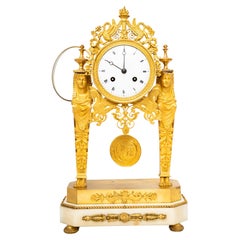
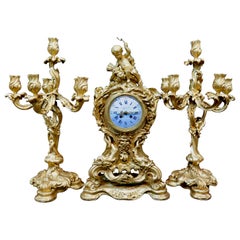
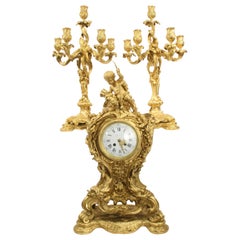
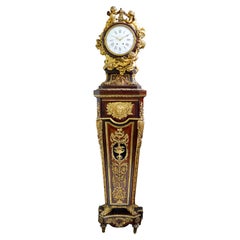
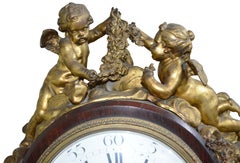
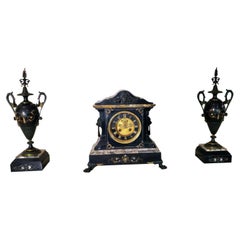
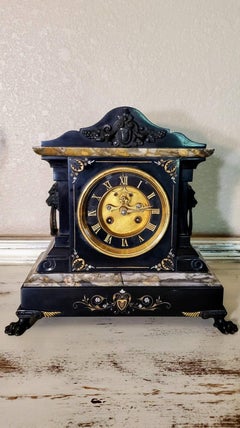
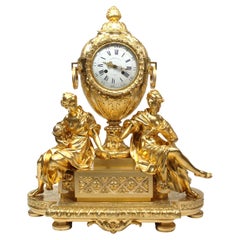
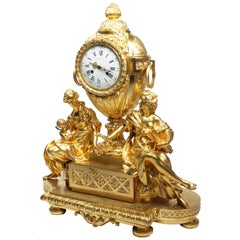
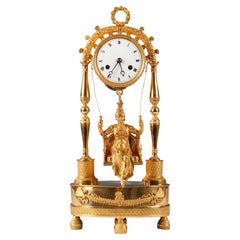
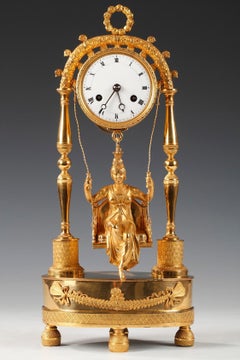
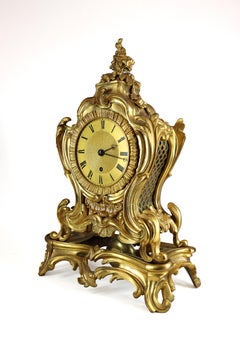
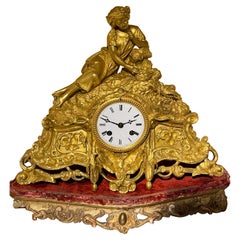
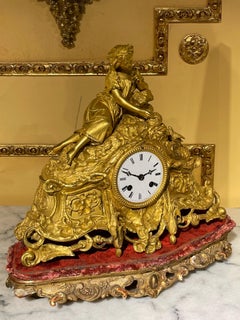
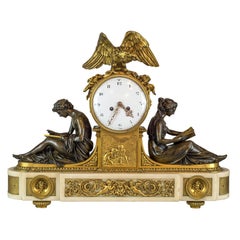
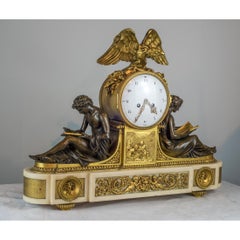
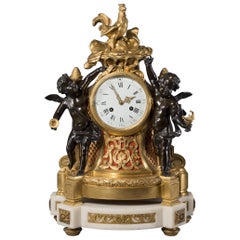
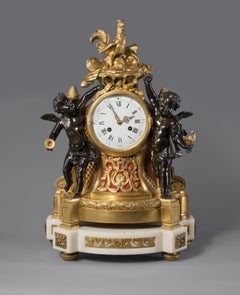
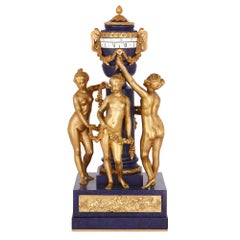
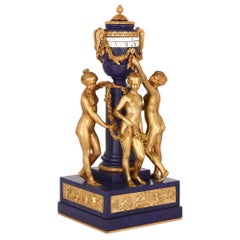
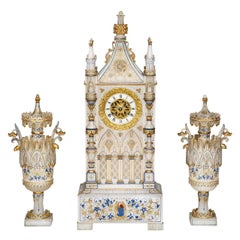
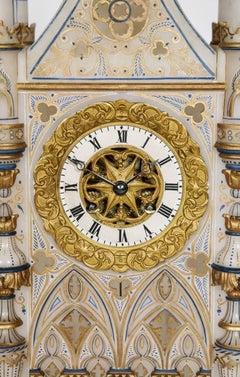
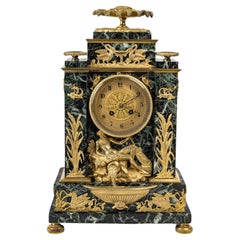
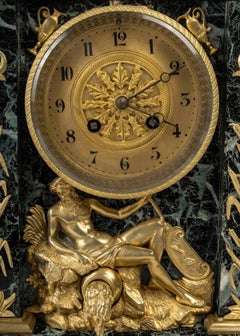
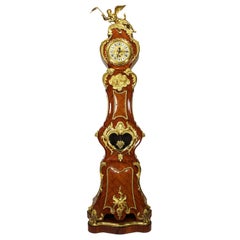
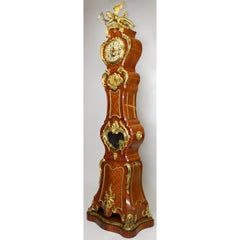
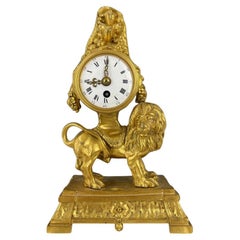
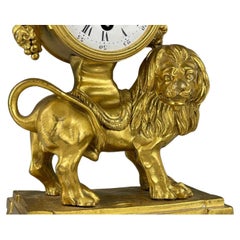
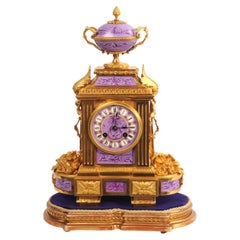
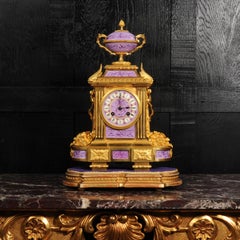
Antique Swedish Gustavian Rococo Giltwood Wall Clock, Stockholm, Circa 1900
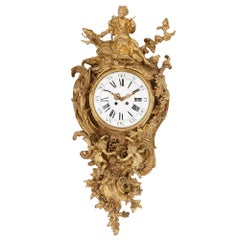
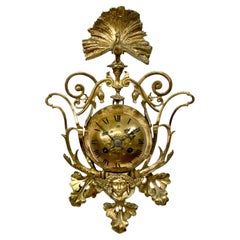
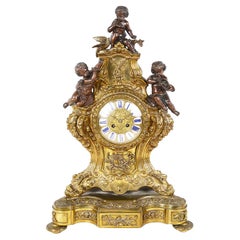
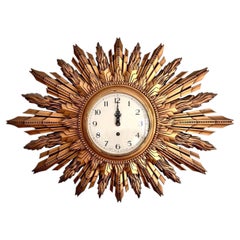
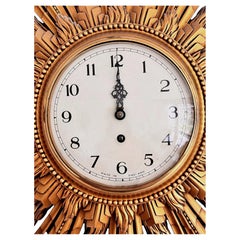
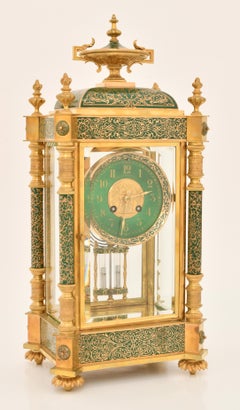
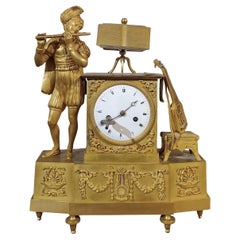
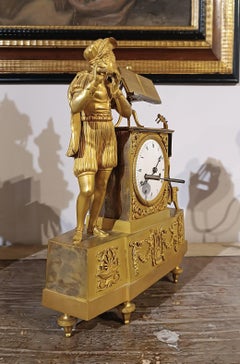
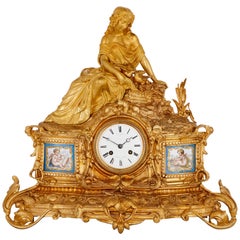
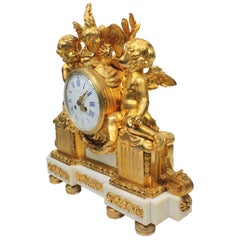
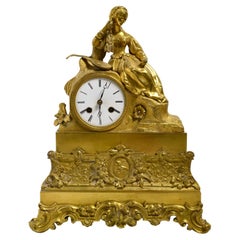
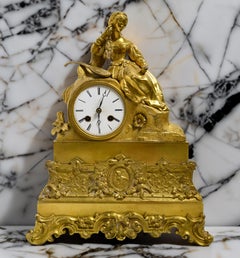
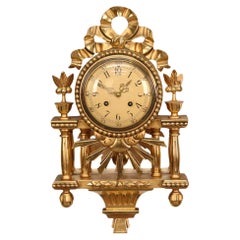
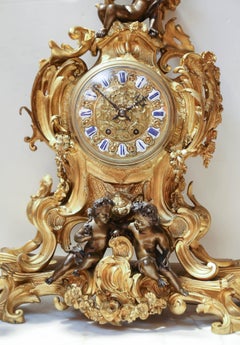
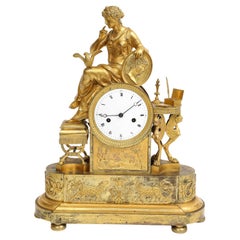
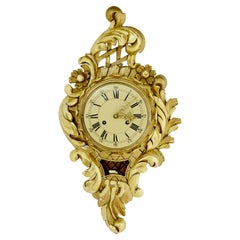
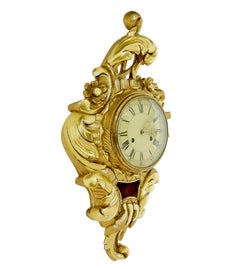
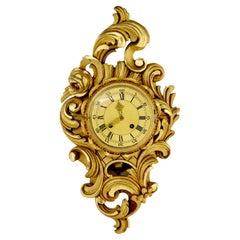
This exceptional antique Gustavian wall clock is a refined example of Swedish Rococo craftsmanship, dating to circa 1900 and retaining its original working mechanical movement. Hand-carved and richly gilded, this elegant wall clock embodies the restrained opulence and architectural balance that define Gustavian decorative arts, making it a timeless statement for curated interiors.
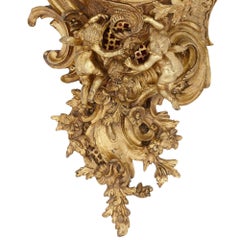
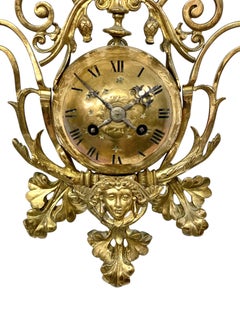
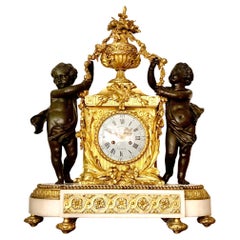
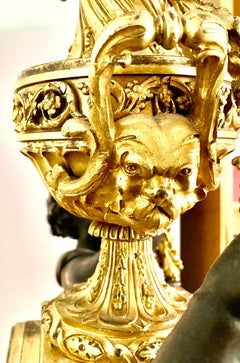
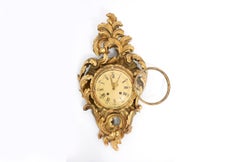
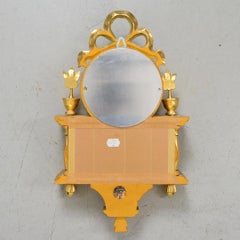
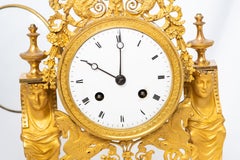
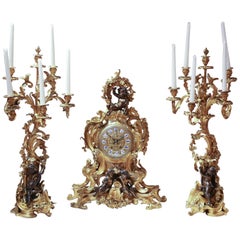
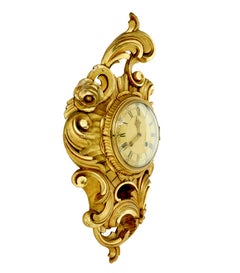
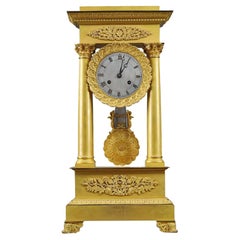
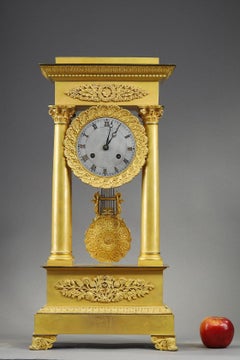
The clock features a beautifully sculpted giltwood case, adorned with classical Rococo floral carvings, laurel swags, ribbon bows, and finely modelled ornamental details. The symmetrical composition is anchored by turned columns, a decorative shelf base, and a graceful ribbon crest, all finished in warm, luminous gold leaf that enhances both traditional and contemporary spaces.
The circular dial, set within a beaded gilt surround, displays clear Arabic numerals and original hands, offering visual harmony and legibility. Below, the pendulum aperture and architectural elements add depth and sculptural presence, allowing the clock to function as both a decorative wall sculpture and a functional timepiece.
Measuring approximately 54 cm in height, this piece is ideally scaled for use in living rooms, bedrooms, hallways, libraries, dining rooms, stairwells, and refined interior settings. It works beautifully as a feature wall clock, a decorative focal point, or a collector’s object within classic, neoclassical, Scandinavian, Parisian, or eclectic interiors.
Origin & Period
Origin: Sweden, Stockholm
Period: Circa 1900
Style: Gustavian / Rococo Revival
This clock reflects Sweden’s late Gustavian tradition, where French Rococo influences were interpreted with Nordic restraint, symmetry, and elegance. Pieces of this quality were produced for refined domestic interiors and remain highly sought after by collectors of European decorative arts, antique clocks, and giltwood furnishings.
Craftsmanship & Materials
Hand-carved giltwood case
Original mechanical movement (tested and working)
Traditional gilding with rich patina
Finely detailed floral, ribbon, and laurel motifs
Each element demonstrates exceptional artisanal skill, with hand-carved details and proportional harmony typical of museum-quality Scandinavian decorative objects.
Condition
Very good antique condition
The mechanism was tested and functioning well
The surface displays authentic age-related patina consistent with the period.
No functional guarantee is included, which is standard for antique clocks.
Styling & Interior Appeal
This antique Swedish wall clock...
Category
Early 1900s Swedish Rococo Antique Gilt Clocks