1830s Art

to
36
458
111
20
11
12
Overall Width
to
Overall Height
to
7,729
21,750
164,523
227,601
2,024
2,312
4,989
6,563
5,869
15,107
20,679
25,914
18,756
14,163
5,510
416
9
2
1
1
1
1
1
345
258
5
459
239
203
161
137
55
53
37
35
33
26
25
25
24
22
19
18
18
18
18
339
116
85
49
45
39
14
11
9
8
70
401
434
67
Period: 1830s
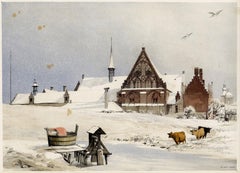
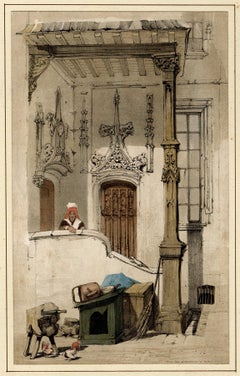
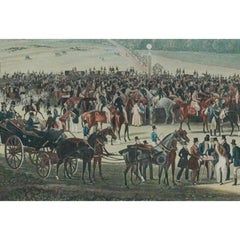
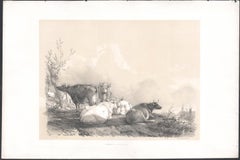
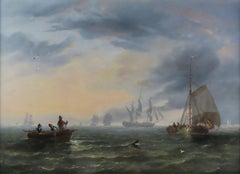
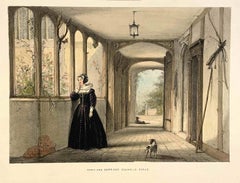
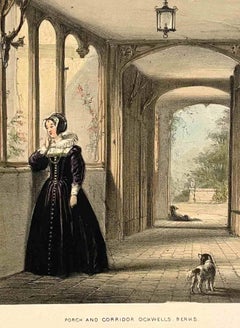
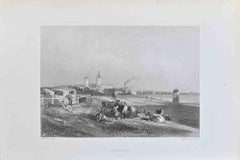
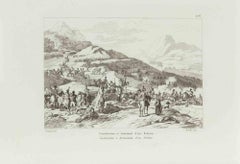
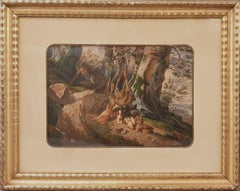
Byloke, Ghent; From Picturesque Architecture in Paris, Ghent, Antwerp, Rouen...

Byloke, Ghent; From Picturesque Architecture in Paris, Ghent, Antwerp, Rouen...

By Thomas Shotter Boys

Located in Middletown, NY

Aquatint with hand coloring in oil color on smooth wove paper, 10 1/2 x 14 5/8 inches (266 × 370 mm), full margins. Moderate mat tone, scattered spots of light brown discoloration in...

Category

English School 1830s Art

Materials

Oil, Handmade Paper, Aquatint

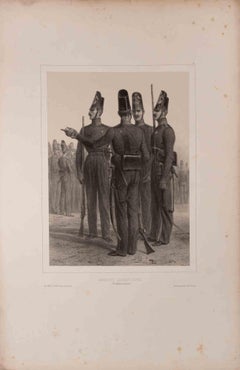
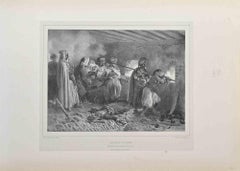
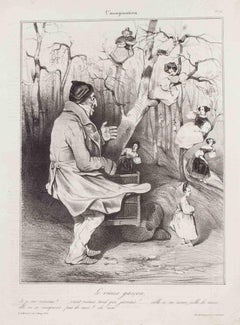
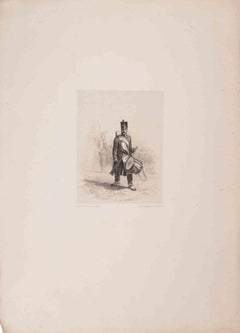
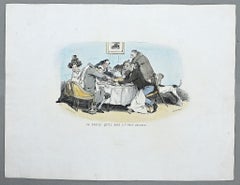
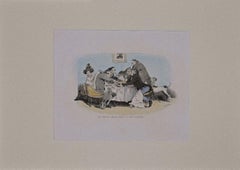
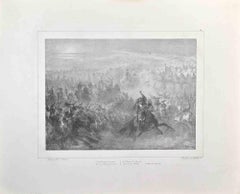
Pauvres Enfants!! - Lithograph by Auguste Raffet - 1830s

Pauvres Enfants!! - Lithograph by Auguste Raffet - 1830s

Located in Roma, IT

Lithograph on wove paper, realized between 1830s and 840s. Signed in the plate. Pronounced foxing across sheet, heavier toward the edges; scattered water stains and one dark spot a...

Category

Modern 1830s Art

Materials

Lithograph

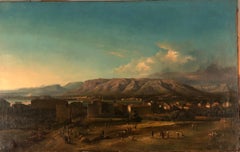
A view of Sebastopol in the Crimea.

A view of Sebastopol in the Crimea.

Located in Paris, FR

A view of Sebastopol in the Crimea. Oil on canvas. In a 19th century gild wood and plaster frame. This painting can be dated around 1830/1840 given the dresses worn by the women i...

Category

Realist 1830s Art

Materials

Oil

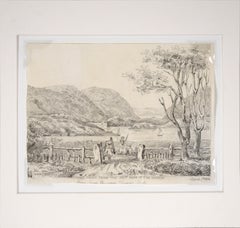
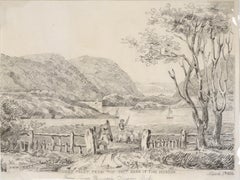
"West Point from the East Bank of the Hudson" Antique Drawing on Paper Watkinson

"West Point from the East Bank of the Hudson" Antique Drawing on Paper Watkinson

Located in Soquel, CA

"West Point from the East Bank of the Hudson" Antique Drawing on Paper Delicate and detailed drawing by Hartford, Connecticut artist Edward Watkins Wells (1819-1898) The viewer looks out past a gate at the Hudson River, with its characteristic mountain banks. A shepherd is driving a flock of sheep towards the gate and viewer. The scene appears to have been copied from a drawing book published in 1827, based on the inscription at the bottom edge. Presented in white archival mat Mat size: 12"H x 12"W Initialed "E.W.W." lower left. Titled lower center. Dated lower right. Paper size: 7.5"H x 9.25"W Notes of interest on Edward Watkinson Wells Our most significant acquisition this year came from a dealer in Philadelphia. It is a 450-page diary written over 10 years (1841-1851) by Hartford artist and dilettante Edward Watkinson Wells (1819-1898), one of the many nephews of our founder, David Watkinson (1778-1857). Edward was immersed in Hartford’s cultural life in the 1840s, exhibited his works at local fairs and gave lessons to the locals. He portrays an active involvement with with his large extended family, which often crossed and re-crossed the other prominent families of Hartford (i.e., Barnard, Channing, Dexter, Ely, Gallaudet, Gill, Goodrich, Hudson, Rockwell, Silsbee, Tappan, Terry, Tracy, Trumbull, Van Renselaer, and Wadsworth). Edward describes dancing and costume parties, soirees, teas, dinners, and receptions in private homes and public venues. He meets Charles Dickens and his wife when they come through Hartford in 1842, and describes brushes with other luminaries, such as Col. Thomas L. McKenney (who lectures on American Indians), and the Unitarian clergyman Rev. Henry Giles, who gave a pro-Irish speech. Other entertainments included a balloon ascension, exhibitions of mesmerism and hypnotism, parades, and performances by well-known groups. He also chronicles the progression of the construction of the Wadsworth Atheneum, and touches on his father’s far-reaching interests in the business world–canals, railroads, factories, and real estate. The cost of this valuable document of mid-19thC Hartford was generously underwritten entirely by a member of the Watkinson Trustees. Trinity College and the Watkinson Virtual Library has content on Edward Watkinson Wells. Yale College also: Edward Watkinson Wells also kept a diary, of which three volumes are preserved (folder 32). He describes a trip by steamboat to Florida, ca. 1855-1860, and the social life and customs he observed there. The other two volumes detail his daily life in Hartford during 1856-1860, and record the deaths of his father and David Watkinson in 1857. Other items contained in the William Wells...

Category

Romantic 1830s Art

Materials

Laid Paper, Pencil
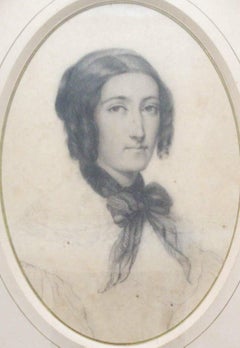
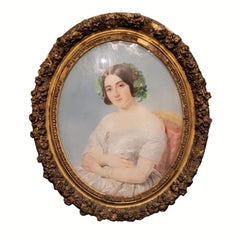
French Watercolor
French Watercolor

French Watercolor

Located in Houston, TX

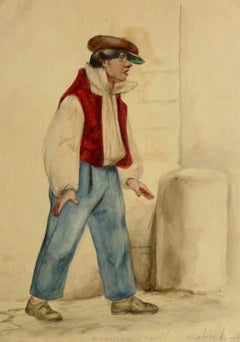
Pencil and watercolor portrait of a person in loose period clothing displaying nervous energy and vibrant demeanor by P.B. Faurnier, 1833. Signed lowe...
Category

1830s Art

Materials

Paper, Watercolor

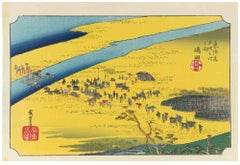
Bijin-ga Woman Kneeling by River Japanese Print

Bijin-ga Woman Kneeling by River Japanese Print

By Kuniyasu

Located in Houston, TX

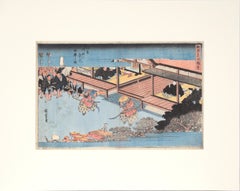
Japanese woodblock print of a woman kneeling by the river. She is holding a stick making it appear like she is fishing with it. The woodblock print is printed on rice paper. The print is not framed. Artist Biography: Utagawa Kuniyasu...

Category

Edo 1830s Art

Materials

Woodcut

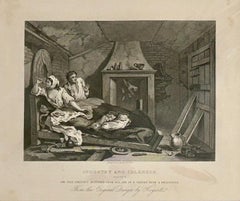
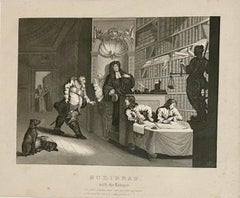
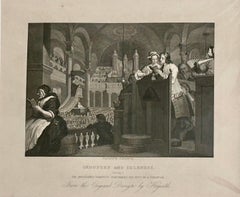
Industry and Idleness Plate 5: The Idle 'Prentice Turn'd Away & Sent to Sea

Industry and Idleness Plate 5: The Idle 'Prentice Turn'd Away & Sent to Sea

By William Hogarth

Located in Bournemouth, Dorset

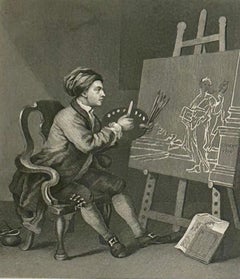
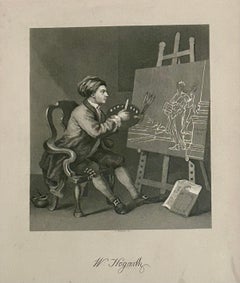
William Hogarth was an English painter and engraver, the outstanding British artist of his period. During his childhood, his father, a schoolteacher, was imprisoned for debt, and this early experience of the seamy side of life left a deep mark on Hogarth (much of his output is concerned with the contrast between success and failure, and he depicted prisons in several works). He trained as an engraver of silver plate and by 1720 had set up his own business in London, doing various kinds of commercial work. In his spare time he studied painting, first at the St Martin's Lane Academy and later under Sir James Thornhill, whose daughter he married in 1729. By the early 1730s he had achieved some success as a painter of conversation pieces and at about the same time he invented the idea of using a sequence of anecdotal pictures ‘similar to representations on the stage’ to point a moral and satirize social abuses. From a set of 12 original engravings illustrating Industry and Idleness, after the drawings by William Hogarth, printed in 1833. The engravers are F Jordan, E Smith, C Armstrong, S Davenport, H Adlard, W H Worthington, H Fernell, A Duncan and F F Walker. The engravings, which are in excellent condition, would be mounted and ready to frame Edward Smith (fl. 1823-49) The landscape, figure, and portrait engraver Edward Smith may have been a native of Edinburgh but appears to have worked mostly in London. His earliest recorded plates...

Category

1830s Art

Materials

Engraving

Portrait of Francesco Petrarca - Lithograph by H. Grevedon - 1834

Portrait of Francesco Petrarca - Lithograph by H. Grevedon - 1834

By Henri Grevedon

Located in Roma, IT

Portrait of Petrarque is an original modern artwork realized by Henri Grevedon in 1834. Original Black and White Lithograph on paper. Printed original by Lemercier, Paris, "Paris chez Aumont,rue JJ Rousseau N°10/ et chez Tessari et Cie du cloître Notre Dame N4". Hand-signed and dated on the lower right corner: H. Revedon 1834. Excellent conditions. Excellent black and white lithograph depicting the portrait of the great Italian author and poet Francesco Petrarca. The figure is in pose and express a great magniloquence and monumentality with a refined and elegant stroke. Henri Grévedon (Paris, 1776 - Paris, 1860). Grévedon studied painting in the Parisian workshop of Jean-Baptiste Regnault, professor of painting at the École des Beaux-Arts in Paris. Henri Grévedon exhibited from 1798 to 1806 and received a second medal in 1790. He was a first class gold medal in 1805 and won the first prize of the torso in 1806. He competed without success for the Prix de Rome in 1805 and 1806. According to Henri Beraldi, he "traveled the world, going to seek success in Russia in 1806 where he became an associate of the Academy of Saint Petersburg. He stayed in Stockholm in 1812, then in London, finally retured to Paris in 1816. Soon he devoted himself completely to lithography, and found there a reputation which would not have come to him with painting". He executed many painted portraits, paintings and miniatures, then he drew directly on the lithographic stone, working in particular for the workshop of Charles Motte during the 1820s. At the Salon of 1824, he won for the second time a gold medal for first class. Among the personalities he represented between 1825 and 1845, there were many actresses and dancers of his time such as the Taglioni, Fanny...

Category

1830s Art

Materials

Lithograph

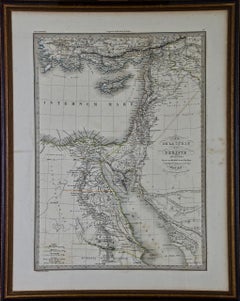
Ancient World Map
Ancient World Map

Ancient World Map

Located in Houston, TX

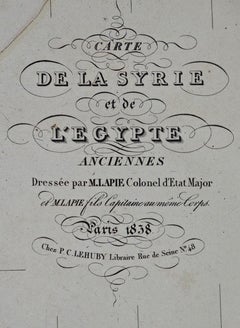
Over 150 year old engraved map of the world as it was known during the antiquities by cartographer Delamarche from 1838. Original hand color. Shows African, European and Asian cont...

Category

1830s Art

Materials

Ink, Watercolor, Handmade Paper

Antique Horse Study; Legs and Rumps, 1838" Wouterus Verschuur (Dutch, 1812-1874)

Antique Horse Study; Legs and Rumps, 1838" Wouterus Verschuur (Dutch, 1812-1874)

Located in SANTA FE, NM

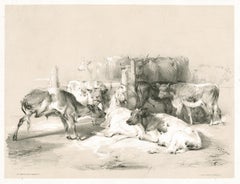
Antique Horse Study "Legs and Rumps, 1838" Wouterus Verschuur l (Dutch, 1812-1874) Pencil on paper Signed and Dated "W Verschuur 1838" 10 x 6 1/2 (17 1/2 x 14 frame) inches In his time Wouterus Verschuur was an acclaimed and celebrated painter of horses. Through careful observation he learned to capture their physique and movement to perfection. As a true-born romanticist he was also interested in their character, thereby painting powerful carthorses in their stable, thoroughbred saddled horses during an afternoon ride or harnessed horses in action. He was born to an Amsterdam jeweler and received his training from the landscape and cattle painters Pieter Gerardus van Os and Cornelis Steffelaar. As part of this education Verschuur had to copy works by the 17th century painter Philips Wouwerman. Like Wouwerman, Verschuur's subjects consist mostly of stable scenes, landscapes with horses and coastal landscape. These works reflect the enduring influence of the northern Baroque masters on nineteenth century art, revealing the artist's close study of his Dutch and Flemish predecessors harking back to Peter Paul Rubens. Showing talent from a very early age, at 15 Verschuur had a painting exhibited at the "Exhibition of Living Masters" at Amsterdam in 1828. In 1832 and 1833 he won the gold medal at the annual exhibition at Felix Meritis. In 1833 he was appointed a member of the Royal Academy in Amsterdam. In 1839 he joined the artists' society, Arti et Amicitiae. His reputation was also considerable abroad. He was often featured in the annual exhibitions which travelled the large European cities at that time. In 1855 Napoleon III purchased one of his paintings at the Exposition Universelle in Paris. The Verschuur horse revels in its physicality, like a quintessential Baroque horse...
Category

Romantic 1830s Art

Materials

Pencil, Paper

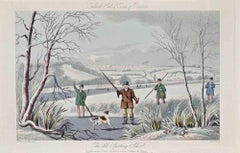
The Old Sporting School - Etching by Joseph Banks - 1837

The Old Sporting School - Etching by Joseph Banks - 1837

Located in Roma, IT

The Old Sporting School is an artwork, realized by the artist Joseph Banks in 1837. Etching colored. Titled and signed on plate . Beautiful engraving with contemporary colouring. E...

Category

Old Masters 1830s Art

Materials

Etching

The Crow Wood - Etching by Joseph Banks - 1837

The Crow Wood - Etching by Joseph Banks - 1837

Located in Roma, IT

The Crow Wood is an artwork, realized by the artist Joseph Banks in 1837. Colored etching, titled and signed in the plate. Beautiful engraving with contemporary colouring. Edition ...

Category

Modern 1830s Art

Materials

Etching

Humming Birds & Co. - Rare Book Illustrated by G. Cruikshank - 1835

Humming Birds & Co. - Rare Book Illustrated by G. Cruikshank - 1835

By George Cruikshank

Located in Roma, IT

Humming Birds & Co. is an original modern rare book illustrated by George Cruikshank (London, 1792 - London, 1878) in 1835. Published by Mc Lean, London. Original First Edition. Format: oblong 4°. The book includes Eleven hand colored Etchings. Mint conditions. Humming birds & Co. is an original modern rare book engraved by George Cruikshank (London, 1792 - London, 1878) was a British caricaturist and book illustrator, praised as the "modern Hogarth" during his life. His book illustrations for his friend di lui Charles Dickens, and many other authors, reached an international audience. For Charles Dickens, Cruikshank illustrated Sketches by Boz (1836), The Mudfog Papers (1837–38) and Oliver Twist...

Category

Modern 1830s Art

Materials

Paper, Etching

Eared Grebe /// John James Audubon Ornithology Havell Edition Bird Animal Art

Eared Grebe /// John James Audubon Ornithology Havell Edition Bird Animal Art

By John James Audubon

Located in Saint Augustine, FL

Artist: John James Audubon (American, 1785-1851) Title: "Eared Grebe" (Plate CCCCIV - 404; part No. 81) Portfolio: The Birds of America, Havell Edition Year: 1838 Medium: Original Ha...

Category

Victorian 1830s Art

Materials

Watercolor, Engraving, Aquatint, Intaglio