Early 18th Century Art
to
144
249
103
59
47
36
Overall Width
to
Overall Height
to
7,523
21,282
158,533
232,828
1,963
2,232
4,889
6,391
5,805
13,241
19,603
25,619
18,239
13,539
5,378
122
62
1
256
230
311
180
119
91
88
78
49
44
36
36
35
26
26
25
25
24
24
18
15
14
191
178
158
98
85
69
40
10
9
8
196
170
356
117
Period: Early 18th Century
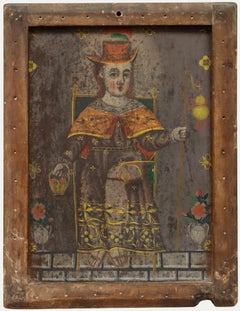
Cuzco School 18th Century Oil - Christ Child of Atocha
Located in Corsham, GB
A charming 18th-century Cuzco-style depiction of the 'Santo Niño de Atocha', or 'Holy Child of Atocha', a popular figure in Roman Catholic devotio...
Category
Early 18th Century Art
Materials
Oil
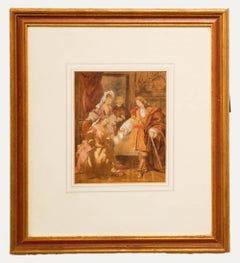
18th Century Watercolour - Court Scene
Located in Corsham, GB
Signed and dated indistinctly under the mount. Presented in a gilt frame and wash-line mount. On paper.
Category
Early 18th Century Art
Materials
Watercolor

$290 Sale Price
20% Off
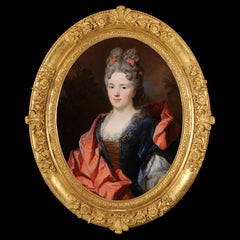
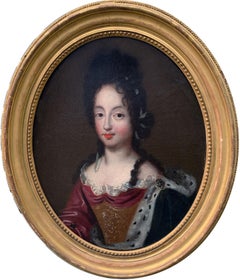
Presumed portrait of Marie-Anne de Bourbon
Located in BELEYMAS, FR
Nicolas de LARGILLIERRE
(Paris 1656 – 1746)
Portrait of a woman, presumed to be Marie-Anne de Bourbon, Princess of Conti (1666-1739)
Oil on oval canvas
H. 8...
Category
French School Early 18th Century Art
Materials
Canvas, Oil
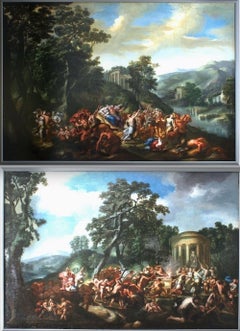
Outstanding 18' century Paintings The Wedding Feast of Bacchus and Ariadne
Located in Rome, IT
Pair of large painting oil on canvas with the Wedding Feast of Bacchus and Ariadne scene .
Italy 18' century .
Amazing landscape background and roman Temple with classical archite...
Category
Old Masters Early 18th Century Art
Materials
Oil
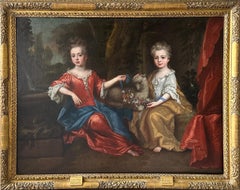
18th century portrait of sisters Lady Catherine and lady Jane Brydges
By James Maubert
Located in Bath, Somerset
This large double portrait depicts the sisters Lady Catherine and Lady Jane Brydges, the daughters of John Brydges, the Marquess of Carnarvon (1703-1727). They are seated on a stone...
Category
Old Masters Early 18th Century Art
Materials
Canvas, Oil
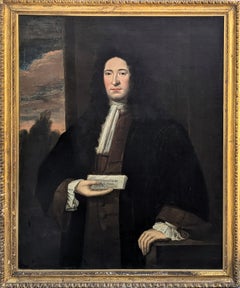
Early Historical Portrait Believed to be of Scottish Politician David Carnegie
By John Baptist De Medina
Located in Houston, TX
Early historical portrait in the style of William Aikman believed to be of David Carnegie, 4th Earl of Northesk, a Scottish peer and politician. The work features the central figure ...
Category
Old Masters Early 18th Century Art
Materials
Canvas, Oil
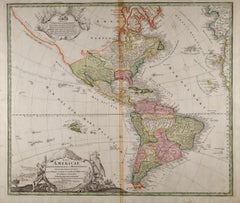
North and South America: An 18th Century Hand-colored Map by Johann Homann
Located in Alamo, CA
This early 18th century hand-colored copperplate map of North and South America entitled "Totius Americae Septentrionalis Et Meridionalis Novissima Repraesentatio" was created by Johann Baptist Homann and published in Nuremberg, Germany, between 1710 and 1731. The map details cities, forts, mountains, forests and lakes, as well as districts. There is a decorative cartouche in the lower left which depicts a volcano, scenes representing the people in their native costumes, as well as animals and plants of the Americas. A village is seen in the background on the left. A second smaller decorative cartouche in the upper right includes text and a series of allegorical figures. A large portion if the north central and western portions of North America is left without detail, because the region was largely unexplored at the time this map was created. The map also shows "Terra Esonis Incognita", representing a mythical continuous land bridge from North America to Asia, a northwest passage. The map preceded the French and...
Category
Old Masters Early 18th Century Art
Materials
Engraving
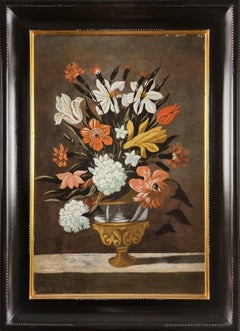
Primitive Spanish vase of flowers, after Pedro de Camprobín
Located in New York, NY
Early 18th Century still life, very close to Pedro de Camprobín.
Category
Baroque Early 18th Century Art
Materials
Oil, Canvas
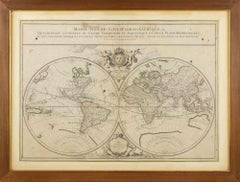
World Map - Etching by Hubert Nicholas-Jaillot - 1719
Located in Roma, IT
World map is an original modern artwork realized by Hubert Nicholas - Jaillot, printed by Louis Cordier in Paris 1719.
Etching on copper
The artwork depicts two hemispheres, conti...
Category
Old Masters Early 18th Century Art
Materials
Etching
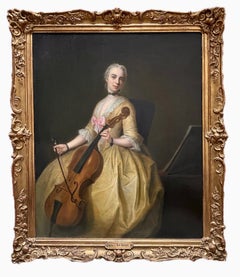
18th century portrait of the artist’s daughter, Catharina, playing the cello
By Balthasar Denner
Located in Bath, Somerset
The sitter, seated in a yellow silk gown trimmed with a pink bow playing the cello, is believed to be the artist Balthazar Denner's eldest daughter Catharina (1715-1744), after his marriage to Esther Winter in Hamburg in 1712. She is also recognisable in another portrait of the Denner family in the Hamburg Kunsthalle, painted circa 1740 by the artist's son, Jacob Denner (1722-1765). Oil on canvas in a period giltwood frame.
Provenance: Private collection, Northern Germany
Professor Helmut Borsch-Supan, Berlin, confirmed the authenticity of the painting after examining it in 2013. The painting will also be included in the forthcoming catalogue raisonnée of the artist, by Ute Mannhardt.
Balthasar Denner...
Category
Old Masters Early 18th Century Art
Materials
Canvas, Oil
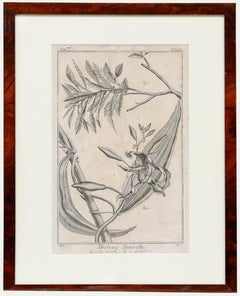
Robert Béenard (1734-1794) - 18th Century Engraving, Le Cirier & Le Vanille
Located in Corsham, GB
Well presented in a simple mahogany frame and cream mount On wove.
Category
Early 18th Century Art
Materials
Engraving
Attributed to MILLOT, Henri Portrait of a Lady
Located in Berlin, DE
Attributed to MILLOT, Henri. Portrait of a Lady. Oil on canvas. Unsigned, inscribed Millot on the reverse. 18th century. 85 x 69 cm. Framed. 85 x 69 cm. Portrait of a young woman in ...
Category
Baroque Early 18th Century Art
Materials
Oil
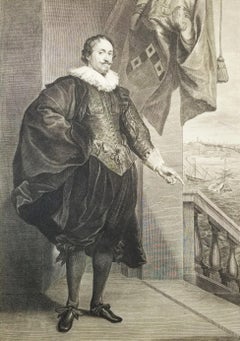
Dominus Nicolaus Vander Borcht /// Anthony van Dyck Full Length Portrait Flemish
Located in Saint Augustine, FL
Artist: (after) Anthony van Dyck (Dutch, 1599-1641)
Title: "Dominus Nicolaus Vander Borcht"
Year: 1703 (first or second state of three)
Medium: Original Engraving on laid paper
Limi...
Category
Old Masters Early 18th Century Art
Materials
Laid Paper, Engraving
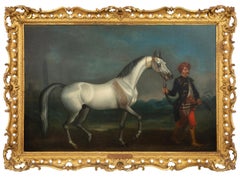
The Bloody Shouldered Arabian Horse Oil on canvas 18th Century
By John Wootton
Located in London, GB
John Wootton (1686 - 1764)
The Bloody-Shouldered Arabian
Oil on canvas
Inscribed below, 'Bred by Lord Oxford in 1755 & Sire of many famous Racers, including the Duke of Bolton's 'Swe...
Category
English School Early 18th Century Art
Materials
Oil
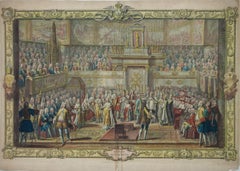
Le Roy Mene au Trone from Series Le Sacre de Louis XV 1722-1731
Located in Paonia, CO
Le Roy Mene au Trone from the Series Le Sacre de Louis XV (1722-1731 ) is an etching by French artist Charles Nicolas Cochin the Elder ( 1688-1754...
Category
French School Early 18th Century Art
Materials
Etching
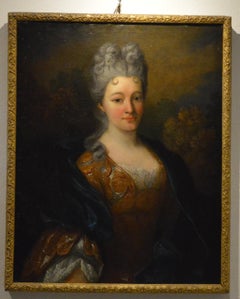
Portrait 18e Siècle Pierre Mignard (1612/1695) Entourage.
Located in GOUVIEUX, FR
Huile sur toile dim avec cadre 44/52 cm Dim sans cadre 33.5/41 cm Ecole française Entourage Pierre Mignard Pierre Mignard né le 17 novembre 1612 à Troyes et mort le 30 mai 1695 à Pa...
Category
French School Early 18th Century Art
Materials
Canvas, Paint, Oil
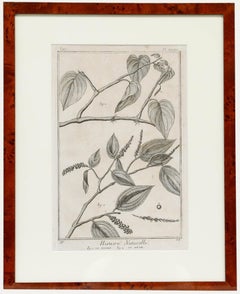
Robert Béenard (1734-1794) - 18th Century Engraving, Le Pivre & Le Betel
Located in Corsham, GB
Well presented in a simple mahogany frame and cream mount. On wove.
Category
Early 18th Century Art
Materials
Engraving
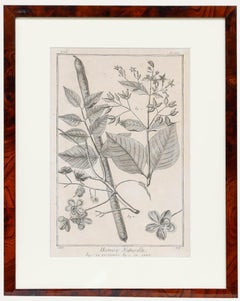
Robert Béenard (1734-1794) - 18th Century Engraving, Le Quinquina & La Casse
Located in Corsham, GB
Well presented in a simple mahogany frame and cream mount. On wove.
Category
Early 18th Century Art
Materials
Engraving
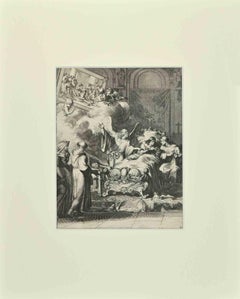
La Manière de se Bien Preparer à La Mort - Etching by Romeyn de Hooghe - 1700
Located in Roma, IT
La Manière de se Bien Preparer à La Mort is an etching by Romeyn de Hooghe from the Suite by Chertablon de la Vigne, La manière de se bien preparer à la mort. Antwerp: Gallet 1700.
...
Category
Modern Early 18th Century Art
Materials
Etching
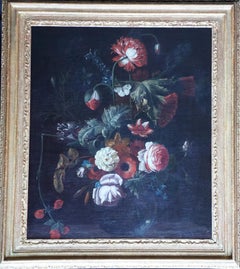
Floral Arrangement in a Glass Vase - Dutch Old Master still life oil painting
By Simon Pietersz Verelst (circle)
Located in Hagley, England
This stunning 18th century Dutch Old Master Golden Age floral oil painting is attributed to a circle of Simon Pietersz Verelst. Painted circa 1720 it is a still life floral of a mixe...
Category
Old Masters Early 18th Century Art
Materials
Oil
$14,656 Sale Price
20% Off
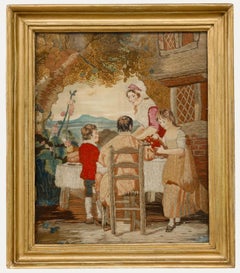
Georgian Embroidery - At the Table
Located in Corsham, GB
A delightful 18th-century embroidery depicting a family at the table for dinner. The artist has expertly blended threads of varying weights and painted fine watercolour details to cr...
Category
Early 18th Century Art
Materials
Tapestry
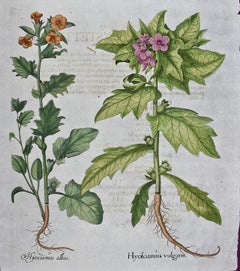
Flowering Henbane : A Besler 18th Century Hand-colored Botanical Engraving
Located in Alamo, CA
This is a hand-colored copper plate engraving depicting flowering "Hyosciamus albus and Hyosciamus vulgaris" (Henbane) plants from Basilius Besler's landmark work, Hortus Eystettensi...
Category
Academic Early 18th Century Art
Materials
Engraving
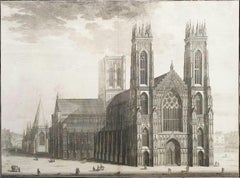
The West Prospect of the Cathedral of York /// "Britannia Illustrata" Engraving
By Johannes Kip
Located in Saint Augustine, FL
Artist: Johannes "Jan" Kip (Dutch, 1652/3-1722)
Title: "The West Prospect of the Cathedral of York" (Vol. 3, Plate 31)
Portfolio: Britannia Illustrata / Le Nouveau Théâtre de la Grande Bretagne
Year: 1715-1724 (Third edition)
Medium: Original Engraving and Etching on cream laid paper
Limited edition: Unknown
Printer: Joseph Smith, London, UK
Publisher: Joseph Smith, London, UK
Reference: "London Illustrated 1604-1850" - Adams No. 22; Crace No. 201; Brunet IV No. 114; Lowndes No. 1277; Lewine page 263-264
Sheet size: 19.25" x 24.19"
Image size: 16.75" x 22.5"
Condition: With centerfold as issued. Some light toning and foxing mainly in margins, and some light edgewear. Has been professionally stored away for decades. It is otherwise a strong impression in very good condition
Rare
Notes:
Provenance: private collection - Ross-on-Wye, UK. Engraved by Dutch artist Johannes "Jan" Kip (1652/3-1722) after a drawing by Dutch artist Leonard Knyff or Leendert Knijff (1650-1722). Comes from Kip's six volume (including Supplement and 'Atlas Anglois') "Britannia Illustrata" / Le Nouveau Théâtre de la Grande Bretagne", (1724-1728) (Third edition), which consists of 394 engravings and etchings. Printed in one color from one copper plate: black.
Biography:
Johannes "Jan" Kip (1652/53 in Amsterdam - 1722 in Westminster) was a Dutch draftsman, engraver and print dealer. Together with Leonard Knyff, he made a speciality of engraved views of English country houses.
Kip was a pupil of Bastiaen Stopendaal (1636–1707), from 1668 to 1670, before setting up on his own; his earliest dated engravings are from 1672. In April 1680, at the age of 27, he married Elisabeth Breda in Amsterdam. After producing works for the court of William of Orange in Amsterdam, Kip followed William and Mary to London and settled in St. John Street in Farringdon, where he conducted a thriving printselling business. He also worked for various London publishers producing engravings after such artists as Francis Barlow (c. 1626–1704) and Caius Gabriel Cibber (1630–1700), largely for book illustrations. He made several engraved plates for Awnsham & John Churchill's "A Collection of Voyages & Travels" (first published 1704). He signed the African scenes in volume V of the 1732 edition as "J. Kip".
His most important works were the large fold-out folio illustrations for "Britannia Illustrata", 1708; for the 65 folio plates he engraved for the antiquary Sir Robert Atkyns, "The Ancient and Present State of Glostershire", 1712 (1st edition); and for "Le Nouveau Théâtre de la Grande Bretagne ou description exacte des palais de la Reine, et des Maisons les plus considerables des des Seigneurs & des Gentilshommes de la Grande Bretagne", 1715, an extended reprint in collaboration with other artists.
The linked careers of Jan Kip and Leonard Knyff made a specialty of engraved views of English country houses, represented in detail from the bird's-eye view, a pictorial convention for topography. Their major work was "Britannia Illustrata: Or Views of Several of the Queens Palaces, as Also of the Principal seats of the Nobility and Gentry of Great Britain, Curiously Engraven on 80 Copper Plates", London (1707, published in the winter of 1708–9). The volume is among the most important English topographical publications of the 18th century. Architecture is rendered with care, and the settings of parterres and radiating avenues driven through woods or planted across fields, garden paths, gates and toolsheds are illustrated in detail. The images are staffed with figures and horses, coaches pulling into forecourts, water...
Category
Old Masters Early 18th Century Art
Materials
Laid Paper, Engraving, Etching, Intaglio
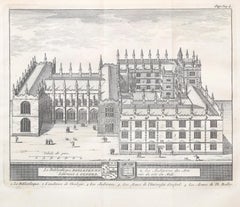
The Bodleian Library, Oxford University by Pieter van der Aa after David Loggan
Located in London, GB
Pieter van der Aa (1659-1733), after David Loggan (1634–1692)
The Bodleian Library, Oxford
Engraving
12 x 16 cm
An eighteenth-century view of the bea...
Category
Realist Early 18th Century Art
Materials
Engraving
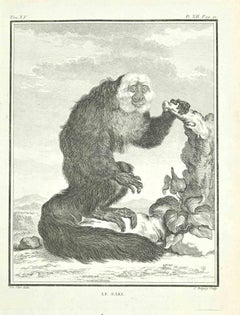
Le Saki - Etching by Jean Charles Baquoy - 1771
Located in Roma, IT
Le Saki is an etching realized by Jean Charles Baquoy in 1771.
Signed in plate.
The artwork Belongs to the suite "Histoire naturelle, générale et particulière avec la description d...
Category
Modern Early 18th Century Art
Materials
Etching
$177 Sale Price
40% Off
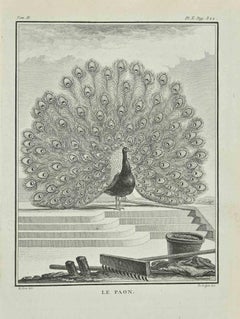
Le Paon - Etching by Catherine Haussard - 1771
Located in Roma, IT
Le Paon is an etching realized by Haussard in 1771.
Signed in plate.
The artwork Belongs to the suite "Histoire naturelle, générale et particulière avec la d...
Category
Modern Early 18th Century Art
Materials
Etching
$185 Sale Price
40% Off
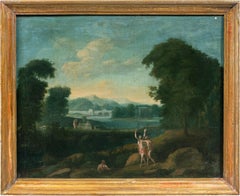
Van Lint workshop (Baroque) - 18th century landscape painting - Apollo Daphne
Located in Varmo, IT
Circle of Hendrik Frans van Lint (Antwerp 1684 - Rome 1763) - Apollo and Daphne.
40 x 50 cm.
Old oil painting on canvas, unframed (not signed).
Condition report: Lined canvas. The...
Category
Rococo Early 18th Century Art
Materials
Canvas, Oil
$1,779 Sale Price
40% Off
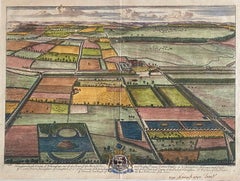
“Haughton in the County of Nottingham” (Near Newark Upon Trent)
By Johannes Kip
Located in Southampton, NY
An original hand colored engraving by Johannes 'Jan' Kip (1653-1722) of Haughton in the County of Nottinghamshire, one of the seats of Prince John Duke of ...
Category
Academic Early 18th Century Art
Materials
Engraving
$960 Sale Price
20% Off
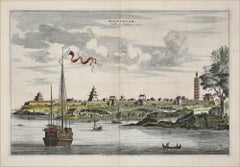
View Of Kinnungam - Hand Watercolored Etching by A. Leide
Located in Roma, IT
View Of Kinnungam is an original print realized in the beginning of the XVIII century by Pieter van der Aa.
Hand-watercolored etching. Includes frame 42 x 52.5 cm.
Original title,...
Category
Early 18th Century Art
Materials
Etching
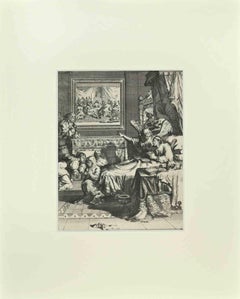
La Manière de se Bien Preparer à La Mort - Etching by Romeyn de Hooghe - 1700
Located in Roma, IT
La Manière de se Bien Preparer à La Mort is an etching by Romeyn de Hooghe from the Suite by Chertablon de la Vigne, La manière de se bien preparer à la mort. Antwerp: Gallet 1700.
...
Category
Modern Early 18th Century Art
Materials
Etching
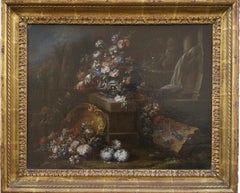
Gaspare Lopez, attrib. Still Life with Fountain, Obelisk and Cascade of Flowers
Located in Firenze, IT
Gaspare Lopez, attrib. Still Life with Fountain, Obelisk and Cascade of Flowers in a Garden, Naples, c. 1720
Oil on canvas, 36 × 45.2 cm
Giltwood frame of later date, 48 × 57.4 cm
Inscription on reverse: “H. C. Veit – 1A Chesham Mews SW1 – 16 June 1957”
This painting, one of a pair of Neapolitan still lifes from the early eighteenth century, displays a refined architectural setting combined with a rich cascade of flowers—features closely associated with the work of Gaspare Lopez, one of the leading Italian flower painters of the period.
At the centre stands a fountain with a putto, its stream rendered in fine, silvery strokes that recall Lopez’s characteristic way of enlivening his compositions with water. To the left rises a slender obelisk, a motif that appears in several of his more elaborate garden scenes and contributes to the noble, decorative tone of the setting.
The cascade of flowers is constructed with the inventive spirit typical of his floral capricci: roses, tulips, peonies, carnations and his distinctive blue bellflowers, painted with a clear, bright touch. The colours are luminous, joyful and decorative, expressing the Neapolitan vitality that marks Lopez’s mature style. Already in his lifetime he was known as “Gaspare dei fiori” for his spectacular and often deliberately exuberant floral arrangements.
The background features an Italianate garden with cypresses, terraces and stone structures. This repertoire closely parallels the still lifes with garden terraces preserved at the Kunsthistorisches Museum in Vienna (inv. GG 1658, 1662, 1664), all attributed to Lopez. Despite its smaller size, the present painting shares the same horizontal layout, bright skies with soft clouds and the interplay of architecture and abundant floral masses, offering strong arguments for the attribution.
Lopez trained under Andrea Belvedere, the foremost Neapolitan flower painter of the late Baroque. From him he inherited a refined botanical vocabulary, brilliant colour and a taste for scenographic compositions, which he later developed in a more decorative and international direction while active between Naples, Rome and Florence.
Condition: old varnish and stable craquelure.
Provenance
A handwritten label on the reverse, dated 16 June 1957 and bearing the London address 1A Chesham Mews, SW1, identifies former ownership by Henri C. “Harry” Veit (1925–2012): American citizen, engineer trained at Princeton, US Navy veteran and grandson of the French Orientalist painter Maurice Bompard...
Category
Baroque Early 18th Century Art
Materials
Canvas, Oil
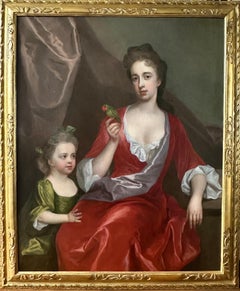
A portrait of a lady and her daughter with an exotic bird
By Michael Dahl
Located in Bath, Somerset
A portrait of a lady three-quarter length, seated in an interior, wearing a red silk gown draped in a pink silk sash with an exotic bird perched on her hand and one arm resting on a stone plinth, her young daughter wearing a green silk gown standing at her side.
Oil on canvas, housed in a period 'Lely' giltwood frame.
This double portrait was painted at the height of Dahl's career in circa 1715 when Dahl had become firmly established as one of the leading portrait painters in Britain. Although the identities of the sitters are currently unknown, it is a sensitive depiction of a close and affectionate bond between a mother and daughter, with the young girl's hand resting affectionately on her mothers lap. The tamed exotic bird adds a charming decorative element which also serves to convey the high social status of the lady, given only the very wealthy would be able to own such a rare and expensive pet and the lively colouring of the bird's feathers is reflected in the colours of the sitters' silk gowns.
Provenance: Private collection, London
Michael Dahl (Stockholm 1659-1743 London) was born in Stockholm in Sweden and studied under Martin Hannibal (d 1741) and later with David Klöcker Ehrenstrahl. In 1682 he travelled to London, where he became acquainted with Godfrey Kneller and Henry Tilson, and in 1685 he left for Europe with Tilson, working briefly in Paris before continuing to Venice and Rome, where they stayed for about two years. In Rome Dahl converted to Roman Catholicism and gravitated towards the circle of Christina, former Queen of Sweden, who sat for him (Grimsthorpe Castle, Lincs). He returned to England with Tilson via Frankfurt and arrived in London in 1689, staying in England for the remainder of his career.
During Dahl's absence, Kneller had consolidated his supremacy in London as the most fashionable portrait painter, but Dahl rapidly became Kneller’s closest competitor. His patrons probably had roots in the Swedish diplomatic circles, but it expanded as a result of his ability and his agreeable personality. His prices were lower than those of Kneller and he favoured softer, more diffused, colour tones and could respond to his sitters with sincerity and humanity. Politically, Kneller supported the ascendant Whigs while Dahl was a Tory, but they frequently painted the same sitters from both parties, and in spite of fundamental differences in technique and temperament, their work was sometimes similar in appearance.
Dahl was prolific but rarely signed his work, and comparatively few of his portraits were engraved in mezzotint, the method used by Kneller to widen his reputation. By 1690 he had painted the aged Duke of Schomberg (engraved by William Faithorne) and Prince George of Denmark (London, Kensington Palace). He was ignored by William III but received commissions from Princess Anne, including one for a portrait of herself (Oakly Park, Ludlow, Salop). He also painted the future Duke and Duchess of Marlborough, and his informal portrait of the Duchess (Althorp House, Northants), formerly attributed to Kneller, is perhaps the most intimate of all images of her.
During the 1690s he secured the patronage of Charles Seymour, the ‘Proud’ 6th Duke of Somerset, who ordered a series of seven full-length portraits of notable contemporary beauties from Dahl (1690s; Petworth House, W. Sussex, NT). This was originally a scheme similar to Kneller’s more famous ‘Hampton Court Beauties’, but the portraits were subsequently reduced to three-quarter-length formats. The features of the sitters are not individualized, but they possess a decorative, languorous glamour that recalls Lely rather than Kneller. Somerset gave Dahl further employment over the next 25 years.
In 1698, following the death of Klöcker Ehrenstrahl, Dahl was offered the post of court painter at Stockholm, which he apparently refused, preferring to remain in London at his studio in Leicester Fields, near the Swedish legation. In about 1700 he was joined by a young compatriot, Hans Hysing, who worked with him for many years. Dahl seems not to have married until after 1708, He had a son Michael (d. 1741), also a painter, of whose work nothing is known, and two daughters.
After the accession of Queen Anne in 1701, she and Prince George sat for a number of official portraits. His royal patronage ceased with Queen Anne’s death, and when Dahl refused to paint the infant Duke of Cumberland in 1722. He was suspected of Jacobite sympathies, and relations had cooled between him and the Swedish legation. However, his practice continued to prosper, and he acquired another important patron in Edward Harley, 2nd Earl of Oxford, who shared his political views and whose circle included the architect James Gibbs and the poets Matthew Prior and Alexander Pope, all of whom Dahl painted. Oxford commissioned several portraits of himself. In the earliest (1719; Welbeck Abbey...
Category
Old Masters Early 18th Century Art
Materials
Canvas, Oil
$26,056 Sale Price
20% Off
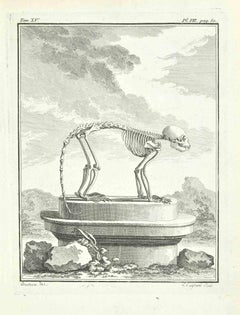
Skeleton - Etching by Louis Legrand - 1711
Located in Roma, IT
Skeleton is an etching realized in 1771 by Louis Legrand (1723-1807).
Signed in plate.
The artwork Belongs to the suite "Histoire naturelle, générale et particulière avec la descri...
Category
Modern Early 18th Century Art
Materials
Etching
$177 Sale Price
40% Off
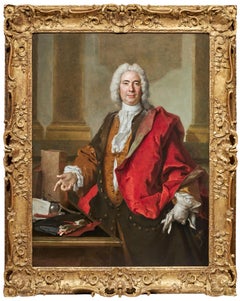
Portrait of Monsieur Aubert, a ceremonial portrait by Nicolas de Largillière
Located in PARIS, FR
Provenance :
Arnold S. Kirkeby (1901-1962)
Donated by Arnold S. Kirkeby to the Los Angeles County Museum of Art in 1955, where it remained until its sale at Sotheby's, New York on January 10, 1991, lot 82.
Christie's, London, July 7, 2010, lot 186, where it was purchased after the sale by the executors of the will of the late Edmund de Rothschild (1916-2009) for display at Exbury House
The Trustees of Exbury House
Literature :
R. Brown, Bulletin of the Art Division, Los Angeles County Museum, VIII, 1957, pp.8-9, no. 4;
S. Schaefer and P. Husco, European Paintings and Sculpture in the Los Angeles County Museum of Art (Los Angeles, 1987), p. 53 (illustrated and dated c. 1735)
This sumptuous ceremonial portrait, executed around 1725-1730, depicts Monsieur Aubert, the French General Comptroller of Bridges and Roadways, as we learn from a letter on the desk beside our model. The virtuoso treatment of the fabrics, the authoritative yet confident pose, the vigorous treatment of the two hands, are representative of Largillière's talent, here at the peak of his art as portraitist.
The portrait also has a rather extraordinary provenance: donated by Arnold S. Kirkeby, an American hotel magnate and real estate developer, it was exhibited during almost forty years in the collections of the Los Angeles County Museum, before being acquired in 2010 by the executors of Edmund de Rothschild's will to adorn his former home Exbury House (Hampshire), where it remained until its sale in 2022.
1. Nicolas de Largillière, a great European portraitist
Nicolas de Largillière (or Largillierre), one of Europe's premier painters of portraits, history paintings, and still lifes during the late seventeenth century and the first four decades of the eighteenth, was born in Paris in 1656. He was the son of a hatmaker and merchant who moved with his family to Antwerp in 1659. As a boy of nine, he traveled for the first time to London in the company of an associate of his father. After returning to Antwerp more than a year later, his artistic gifts were recognized and his father apprenticed him to Antoni Goubau (1616-1698), a painter genre scenes and landscapes. Something of a prodigy, he was admitted to the painters' Guild of Saint Luke when he was only seventeen. In 1675 he made a second trip to London, where he was employed at Windsor Castle and worked as a restorer under the direction of Italian painter and decorator Antonio Verrio (c. 1639-1707), who brought him to the attention of King Charles II (r. 1660-1685).
At this time Largillière painted several still life paintings in the manner of the Dutch and Flemish masters. Thereafter he practiced this branch of painting with consummate skill, a talent that allowed him to make brilliant use of flowers, fruit, and animals in some of his most ambitious portraits and contemporary history pictures.
In 1679 Largillière settled in Paris, where he specialized in baroque portraiture in the grand manner of Peter Paul Rubens (1577-1640), Anthony van Dyck (1599-1641), and Peter Lely (1618-1680). The Flemish battle painter Adam Frans van der Meulen (1631 or 1632-1690) introduced him to Charles Le Brun (1619-1690) who, as First Painter to King Louis XIV (r. 1643-1715) and director of the Académie royale de peinture et de sculpture, was the predominant figure in France's official art establishment. Upon his acceptance as a candidate for admission to the Académie, he agreed to execute as his diploma picture a large portrait of Le Brun (completed 1686, Paris, Musée du Louvre, eight photo in the gallery) seated in his studio surrounded by the accoutrements of his art and an oil study for the ceiling of Galerie des Glaces at Versailles.
In 1686, Largillière made a final trip to England, where he painted portraits of the newly crowned king, James II (r. 1685-1688) (Greenwich, National Maritime Museum) and his consort Mary of Modena...
Category
Old Masters Early 18th Century Art
Materials
Oil
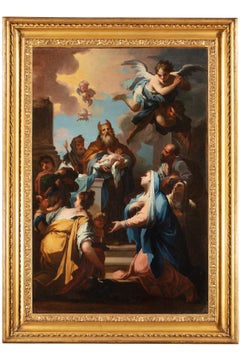
18th Century by Matteo Bonechi Presentation of Jesus Painting Oil on Canvas
Located in Milano, Lombardia
Matteo Bonechi (Florence, Italy, 1669 - Florence, Italy, 1756)
Title: Presentation of Jesus
Medium: Oil on canvas
Dimensions: without frame 75 x 49 cm – with frame 89.5 x 65 cm
Shaped, carved and gilded wooden box frame
Not signed
Expertise by Sandro Bellesi, Professor and art historian
Fairs: The International Biennial of Antiques in Florence 2022 (BIAF, Biennale Internazionale dell’Antiquariato di Firenze)
Publications: Bozzetti, modelletti, sketches: dalla collezione di Giorgio Baratti (From the Giorgio Baratti Collection) curated by Anna Orlando, Agnese Marengo and Annalisa Scarpa, Genova, 2022, pp. 20, 21.
The present painting is a very interesting testimony of the creative process of Matteo Bonechi, one of the leading artists on the Tuscan art scene in the early 18th century. The canvas in question is in fact the last preparatory model made by Bonechi before he executed an altarpiece for the church of San Filippo Neri in Cortona in 1716. The scene presented here is that of the Presentation of Jesus, when, forty days after his birth, the child is ransomed through an offering in the temple and placed in the hands of Simeon, who prophesies his future: the coming of the Messiah...
Category
Old Masters Early 18th Century Art
Materials
Canvas, Oil
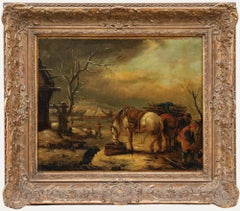
Framed 18th Century Oil - Horses in a Winter Landscape
Located in Corsham, GB
Several figures load firewood onto horses in a snow-covered landscape. Beautifully presented in an ornate gilt-effect frame. Unsigned. On canvas on stretchers.
Category
Early 18th Century Art
Materials
Oil
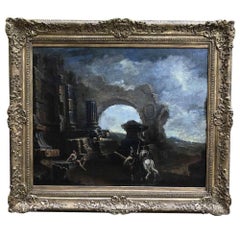
Large Landscape with Ruins Capriccio of Italian School Early 18th Century
Located in Milano, IT
Baroque capriccio with architectural ruins and figures, an early 18th century Italian painting showing an imaginary landscape with Roman ruins and figures, an early Italian oil-on-ca...
Category
Baroque Early 18th Century Art
Materials
Canvas, Wood, Oil
Two Angels - Ink and Watercolor Drawing by A. Brustolon - Early 1700
By Andrea Brustolon
Located in Roma, IT
Due Angeli is an original artwork realized by Andrea Brustolon.
Mixed media, ink and watercolor.
The artwork rapresents two baroque angels, study realized by Brostolon for a sculpt...
Category
Baroque Early 18th Century Art
Materials
Ink, Watercolor

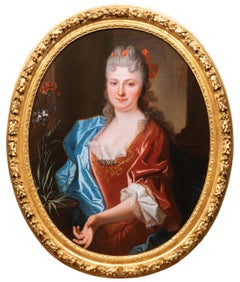
18th c. French Portrait of a Lady by Jean Ranc (1674 - 1735), Paris circa 1700
Located in PARIS, FR
Portrait of a Lady with carnations
By Jean Ranc (Montpellier 1674 - Madrid 1735), circa 1700
Oil on canvas in oval shape,
Dimensions: h. 35.82, w. 28.34 in.
Period Louis XIV giltwood and carved frame with laurel leaves.
Framed dimensions: h. 42.52 in, w. 33.85 in.
Provenance: Collection of the Marquis de Bailleul at the Château d'Angerville-Bailleul (before 1942).
To be included in the catalog raisonné of the artist by Stephane Perreau
Important portrait of a young woman depicted half-length turned three-quarters, her face looking at the viewer.
Dressed in a brick red velvet dress, an elegant blue scarf envelops her figure.
Hair styled “a la Fontange”, her powdered hair is raised and tied at the back with a red ribbon, several curly locks escape from her bun and fall on her back and shoulders.
The perfectly oval face with regular features dominated by her straight nose is softened by her gray eyes with slightly lowered lids. The red tinged skin tones on the cheeks and cheekbones color the face and make the portrait come alive.
The young woman is portrayed standing near a pot of carnations. Her strongly lighted figure stands out against an architectural background of columns.
The artist's palette is made of contrasts opposing warm to cold hues. The icy electric blue contrasts with the fiery brick red, the hair powdered with white accentuates even more the flush of the cheeks.
The left arm bent at the elbow, extending the open hand with slightly bent fingers in the foreground brings depth to the composition.
Our portrait, an interesting testimony in the corpus of works of the painter, is part of his youthful period, around 1700-1705.
The former belonging of this portrait to the Marquis de Bailleul reinforces the remarkable character of our painting.
The portrait has been examined by Stéphane Perreau, specialist of Jean Ranc and will be included in the catalog raisonné currently being written, under number P. 43. The notice edited by Mr Perreau is below:
"Painted around 1700-1705, this portrait of a woman is directly inherited from Hyacinthe Rigaud, the master of Jean Ranc (the hand turned over the front, in a watch...
Category
Old Masters Early 18th Century Art
Materials
Canvas, Oil
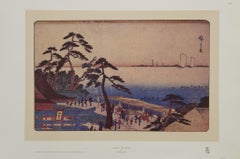
Kameya - Tea House
Located in Chesterfield, MI
Kameya - Tea House Lithography by Utagawa Hiroshige (Ando Hiroshige)
Print in Good Condition
Measures 12.5 in x 19 in
Category
Early 18th Century Art
Materials
Lithograph
$120 Sale Price
20% Off
John Harris After Thomas Badeslade - 18th Century Engraving, Deane House
Located in Corsham, GB
A delightful bird's eye view of Deane House Kent, engraved by John Harris after an original drawing by British illustrator Thomas Badeslade. The engraving shows a detailed view of th...
Category
Early 18th Century Art
Materials
Engraving
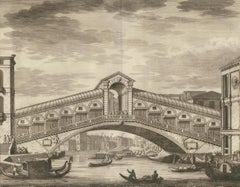
View of Rialto Bridge in Venice
Located in New York, NY
Engraving of Veduta della Piazza, verso la Chiesa di S Marco by Pierre van der Aa. Printed in 1722. Unsigned. Unframed. Image size, 13.5"L x 10.5"H. Has the original center crease an...
Category
Early 18th Century Art
Materials
Paper
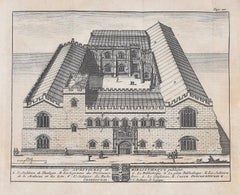
Library View, Cambridge engraving Pieter van der Aa after David Loggan
Located in London, GB
Pieter van der Aa (1659 - 1733), after David Loggan (1634 - 1692)
The Auditoriums & Public Library, Cambridge
Engraving
12 x 16 cm
An eighteenth-century view of the auditoriums and ...
Category
Realist Early 18th Century Art
Materials
Engraving
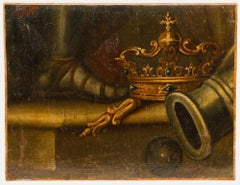
Spanish School 18th Century Oil - The Crown
Located in Corsham, GB
This richly detailed 18th-century still life depicts symbols of royal authority and power, featuring an ornate golden crown alongside armour, a ceremonial key and a cannon ball on a ...
Category
Early 18th Century Art
Materials
Oil
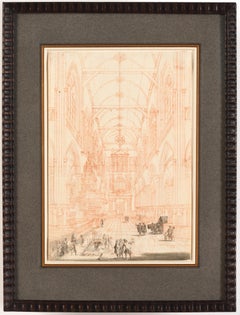
Interior of the Nieuwe Kerk, Amsterdam
Located in Paris, Île-de-France
Jan Goeree (Middelburg 1670 – Amsterdam 1731)
Interior of the Nieuwe Kerk, Amsterdam (c. 1724)
Red chalk for the architecture, pen and black ink, grey wash on paper
Composition reversed in preparation for engraving
25 × 17.5 cm
Watermark: Hunting horn, Churchill 318 (dated 1724)
Unsigned
Provenance
Private collection, France
Context & Attribution
Trained in the studio of Gérard de Lairesse, Jan Goeree was among the finest Dutch engravers of the early eighteenth century, celebrated for his architectural views of Amsterdam. This drawing is a preparatory study for an engraving of the same subject now preserved in a major public collection. The final print—slightly larger—closely follows the reversed composition of this sheet.
Subject
In the center of the Gothic nave, five bearers carry a catafalque toward a freshly dug grave—a tribute to the naval heroes often buried in the Nieuwe Kerk. This funerary motif, familiar from Dutch painting (e.g. Emanuel de Witte, 1657), evokes the vanitas theme and the transience of earthly life.
Technical Analysis
Goeree’s use of red chalk for the architecture and ink for the figures reveals his working method: the chalk lines could be used to produce a counterproof restoring the correct orientation of the architecture, while the inked figures remained adjustable before the design was transferred to the copper plate.
Place within the Oeuvre
Drawings of church...
Category
Old Masters Early 18th Century Art
Materials
Chalk, Ink
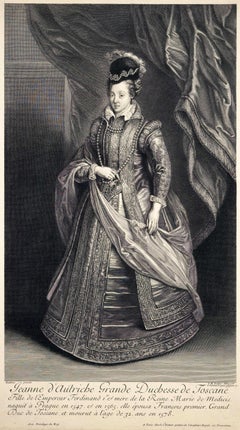
Joan of Austria / - The luminosity of the print -
Located in Berlin, DE
Gérard Edelinck (1640 Antwerp - 1707 Paris), Joan of Austria, 1707. Copperplate engraving, 51.2 cm x 29.8 cm, inscribed below the image: "Jeanne d'Autriche Grande Duchesse de Toscane...
Category
Realist Early 18th Century Art
Materials
Paper
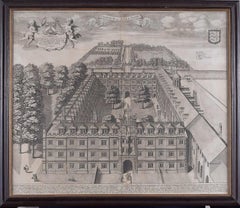
Clare College, Cambridge (aerial view) by David Loggan
Located in London, GB
David Loggan (1634 - 1692)
Clare College, Cambridge
Engraving
36 x 42 cm
An eighteenth-century view of Clare College, Cambridge, engraved by David Loggan, the noted engraver, draugh...
Category
Realist Early 18th Century Art
Materials
Engraving
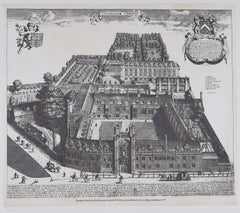
Christ's College, Cambridge, engraving after David Loggan
Located in London, GB
After David Loggan (1634 - 1692)
Christ's College, Cambridge
Engraving
40 x 46 cm
An eighteenth-century view of Clare College, Cambridge, engraved by David Loggan, the noted engrave...
Category
Realist Early 18th Century Art
Materials
Engraving
18th Century French Rococò Painting
By Jean Raoux
Located in Roma, IT
18th Century French Rococò Painting
An oil on panel painting attributed to the great French artist of the eighth century, Jean Ra...
Category
Rococo Early 18th Century Art
Materials
Wood, Canvas, Oil
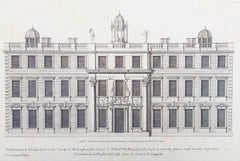
Thorsby House in the County of Nottingham /// "Vitruvius Britannicus" Engraving
Located in Saint Augustine, FL
Artist: Colen Campbell (Scottish, 1676-1729)
Title: "Thorsby House in the County of Nottingham" (Vol. 1, Plate 91)
Portfolio: Vitruvius Britannicus; or The British Architect, Contain...
Category
Old Masters Early 18th Century Art
Materials
Laid Paper, Engraving, Etching, Intaglio
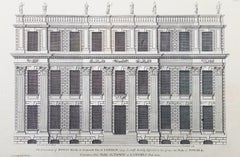
Powis House in Ormond Street London /// "Vitruvius Britannicus" Engraving
Located in Saint Augustine, FL
Artist: Colen Campbell (Scottish, 1676-1729)
Title: "Powis House in Ormond Street London" (Vol. 1, Plate 42)
Portfolio: Vitruvius Britannicus; or The British Architect, Containing th...
Category
Old Masters Early 18th Century Art
Materials
Laid Paper, Engraving, Etching, Intaglio
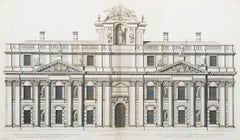
Royal Hospital att Greenwich to the River /// "Vitruvius Britannicus" Engraving
Located in Saint Augustine, FL
Artist: Colen Campbell (Scottish, 1676-1729)
Title: "Royal Hospital att Greenwich to the River" (Vol. 1, Plates 86, 87)
Portfolio: Vitruvius Britannicus; or The British Architect, Co...
Category
Old Masters Early 18th Century Art
Materials
Laid Paper, Engraving, Intaglio, Etching
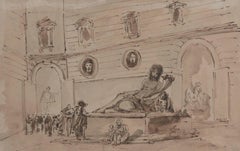
18th Century Roman School , A Palazzo with antiques, drawing
Located in Paris, FR
18th Century Roman School
A Palazzo with antiques
Brown ink and pen, brown ink wash on paper
12.5 x 20 cm
Framed : 28,5 x 35.5
This nice drawing represents a genre scene, with a nobleman, priests, a mother and her children...
Category
Old Masters Early 18th Century Art
Materials
Ink
$640 Sale Price
20% Off
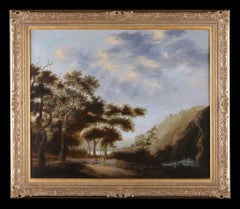
'A Woodland Pathway' Follower of Meindert Hobbema. Framed antique oil painting
Located in St. Albans, GB
Follower of Meindert Hobbema
Dutch 1638 - 1709
No signature is visible
Framed Oil on Canvas
Picture Size: 35 x 43" (89 x 109cm)
Outside Frame Size: 43 x 51" (110 x 130cm)
Meindert Hobbema, viewed today as one of the most characteristic and highly valued Dutch landscape painters of the seventeenth century, is not mentioned in a single seventeenth-century literary source. The earliest reference to his work occurs in Johan van Gool...
Category
Dutch School Early 18th Century Art
Materials
Oil
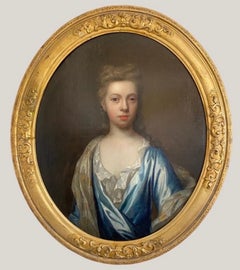
English 18th century portrait of a lady, Circle of Thomas Murray (1663-1735)
Located in Bath, Somerset
An early 18th century portrait of a young lady, half length, wearing a blue silk gown with white chemise and gold trimmed cloak draped across her arm and shoulders. Her sensitively observed soft expression and skilfully painted youthful 'dewy' complexion are reminiscent of the portrait style of John Closterman whose work Murray would have been familiar with, being a close colleague of Murray's teacher, John Riley.
An old label on the reverse identifies the sitter as a young Princess Charlotte...
Category
Old Masters Early 18th Century Art
Materials
Canvas, Oil
$8,142 Sale Price
20% Off
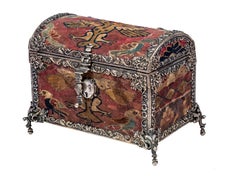
Silver and Transitional Andean Textile Casket
Located in New York, NY
Silver was the material of choice for both ecclesiastical and domestic vessels in the New World, not only for its status as a precious metal, but also because of its abundance and du...
Category
Early 18th Century Art
Materials
Silver
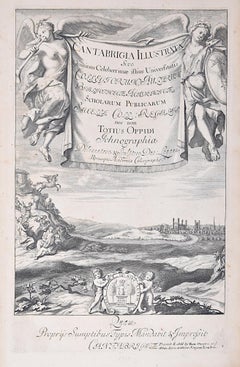
David Loggan Cambridge View Frontispiece Cantabrigia engraving 1715
By David Loggan
Located in London, GB
To see our other views of Oxford and Cambridge, scroll down to "More from this Seller" and below it click on "See all from this Seller" - or send us a message if you cannot find the ...
Category
Realist Early 18th Century Art
Materials
Engraving
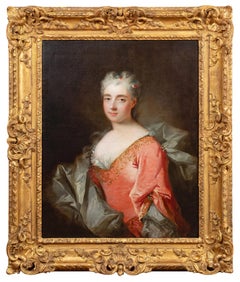
Portrait of a French lady by Robert Le Vrac Tournieres, circa 1725
Located in PARIS, FR
Portrait of a young Lady
Robert Le Vrac Tournières (1667-1752)
18th century French school, circa 1725
Oil on canvas
Dimensions: h. 81 cm, w. 65 cm
Important 18th century Régence per...
Category
Old Masters Early 18th Century Art
Materials
Canvas, Oil
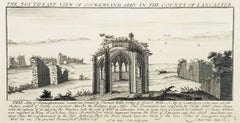
"Cockersand Abbey" from "Buck's Antiquities" /// British Old Master Engraving
Located in Saint Augustine, FL
Artist: Samuel and Nathaniel Buck (English, 1696-1779) and (?-1759/1774)
Title: "Cockersand Abbey" (Plate 148)
Portfolio: Buck's Antiquities or Venerable Remains of Above 400 Castles...
Category
Old Masters Early 18th Century Art
Materials
Laid Paper, Engraving, Intaglio
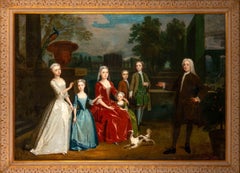
18th century painting of the Dalbiac family in the gardens of a country house
By Charles Philips
Located in Bath, Somerset
The painting depicts James (Jacques) Dalbiac, his wife Louise (ne de la Porte) and their five children, James, Charles, Louise, Marianne and Martha in the ornamental gardens of a grand country estate.
The extensive gardens extend into the distance with gardeners working in the background and figures strolling through the avenues of trees. A peacock and peahen can be seen on the wall to the left and a potted orange tree to the right. Louise Dalbiac holds an orange taken from the orange tree, aluding to the family's faith and their loyalty to the protestant King William of Orange and their adopted country.
The Dalbiacs were wealthy London silk and velvet merchants of French Huguenot origin who had fled France at the end of the 17th century to escape persecution for their protestant faith. England offered safe refuge and their skills and industriousness allowed them to establish one of the most successful businesses in London's Spitalfields which became a new centre of the silk trade, effectively leading to the collapse of the once dominant French silk industry. Both sons, James and Charles followed their father and Uncle into the family business, successfully growing the family's fortune and each going on to own their own country estates.
A conversation piece is a genre of painting used to describe group portraits of families and friends, often depicted with their servants and family pets and set within an elegantly furnished interior or the garden of a grand country house. They were a celebration of the intimacy of family relations as well as a sign of status, property and the power of succession. The informality of conversation pieces grew popular in 18th century England, allowing the sitters to present themselves in a more relaxed pose, perhaps engaged in intellectual conversation or showing their talents or interests. In this present portrait, the Dalbiacs are shown richly dressed and and at leisure in a grand country house setting, conveying their success and cultural and social aspirations.
Charles Philips (c.1703–1747) was an English artist known for painting a number of portraits and conversation pieces for noble and Royal patrons in the mid-eighteenth century. He was the son of portrait painter Richard Philips...
Category
Old Masters Early 18th Century Art
Materials
Canvas, Oil