Late 19th Century Prints and Multiples

to
164
2,785
566
180
42
84
Overall Width
to
Overall Height
to
1,512
168
136
56
31
7
7
6
4
2
73
62
44
41
39
4,820
10,525
57,577
24,981
716
973
2,284
2,321
2,437
4,988
7,753
13,522
8,024
4,237
3,984
2,489
1,157
9
2,014
1,093
767
666
638
547
464
398
386
245
219
212
210
190
188
175
147
127
110
100
1,842
1,193
433
408
170
288
1,819
1,551
1,205
Period: Late 19th Century
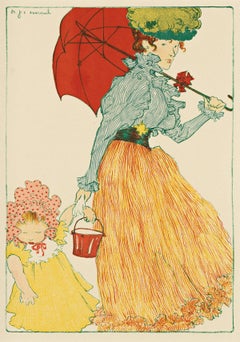
Au Square
Located in New York, NY
A very good impression of this color lithograph. Edition of 2000. Published by "L'Estampe Moderne," Paris, with the blind stamp (Lugt 2790, lower right).
Category

Fauvist Late 19th Century Prints and Multiples

Materials

Color, Lithograph

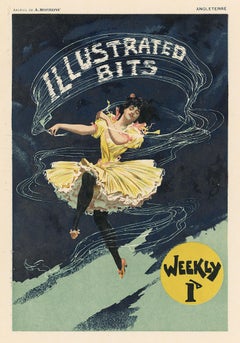
Albert Morrow's Illustrated Bits, 1897 Art Nouveau lithograph on Japon paper
Located in Chicago, IL
Stone lithograph of Albert Morrow’s Illustrated Bits, printed by Imprimerie Chaix (Ateliers Chéret), Paris in 1897. This world-class example of lithography captures superior resoluti...
Category

Art Nouveau Late 19th Century Prints and Multiples

Materials

Lithograph

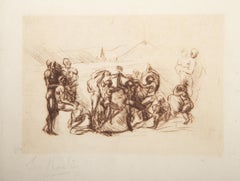
La Ronde, Old Masters Drypoint by Auguste Rodin
Located in Long Island City, NY
Auguste Rodin, French (1840 - 1917) - La Ronde, Year: 1883, Medium: Drypoint, signed in pencil, Image Size: 4 x 5.75 inches, Size: 13.25 x 9.5 in. (33.66 x 24.13 cm), Reference: Del...
Category

Old Masters Late 19th Century Prints and Multiples

Materials

Drypoint

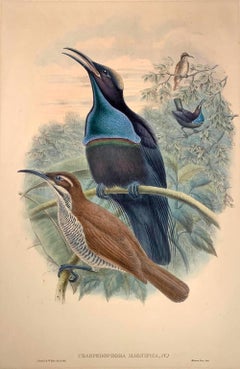
Superb Craspedophora Magnifica Bird lithographed by the ornithologists Gould
Located in Milan, IT
This plate is unique because of the bird species' unmistakable beauty and the great scientific and artistic skill with which Elisabeth and Jhon Gould rendered it. The price quoted h...
Category

Naturalistic Late 19th Century Prints and Multiples

Materials

Lithograph

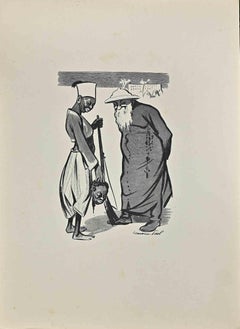
Colonialism- Lithograph by Hermann Paul - 1903
Located in Roma, IT
L'Inspecteur Général "Revizor" is a Lithograph realized by Hermann Paul, in 1903. Signed on Plate. Good condition. René Georges Hermann-Paul (27 Decemb...
Category

Modern Late 19th Century Prints and Multiples

Materials

Paper, Lithograph

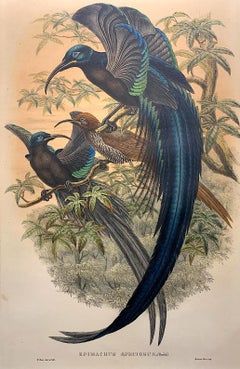
Superb Epimachus Speciosus Bird lithographed by the ornithologists Gould
Located in Milan, IT
This plate is unique because of the bird species' unmistakable beauty and the great scientific and artistic skill with which Elisabeth and Jhon Gould rendered it. The price quoted h...
Category

Naturalistic Late 19th Century Prints and Multiples

Materials

Lithograph

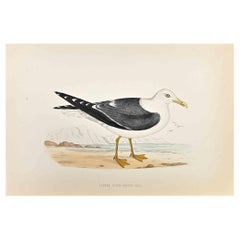
Lesser Black-Backed Gull - Woodcut Print by Alexander Francis Lydon - 1870
Located in Roma, IT
Lesser Black-Backed Gull is a modern artwork realized in 1870 by the British artist Alexander Francis Lydon (1836-1917) . Woodcut print, hand colored, published by London, Bell & S...
Category

Modern Late 19th Century Prints and Multiples

Materials

Woodcut

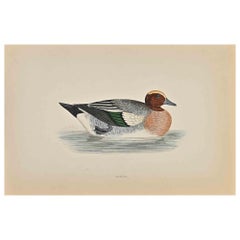
Wigeon- Woodcut Print by Alexander Francis Lydon - 1870
Located in Roma, IT
Wigeon is a modern artwork realized in 1870 by the British artist Alexander Francis Lydon (1836-1917). Woodcut print on ivory-colored paper. Hand-colored, published by London, Bell...
Category

Modern Late 19th Century Prints and Multiples

Materials

Woodcut

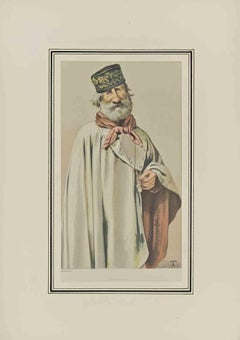
Revolution (Portrait of G. Garibaldi) - Lithograph by Vincent Brooks - 1878
Located in Roma, IT
Revolution is an artwork realized by the lithographer Vincent Brooks Day & Son, on june 15th 1878 published in  the magazine Vanity Fair. Lithograph on paper. Signed, titled on ...
Category

Modern Late 19th Century Prints and Multiples

Materials

Lithograph

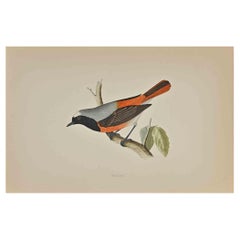
Redstart - Woodcut Print by Alexander Francis Lydon - 1870
Located in Roma, IT
Redstart is a modern artwork realized in 1870 by the British artist Alexander Francis Lydon (1836-1917) . Woodcut print, hand colored, published by London, Bell & Sons, 1870. Name...
Category

Modern Late 19th Century Prints and Multiples

Materials

Woodcut

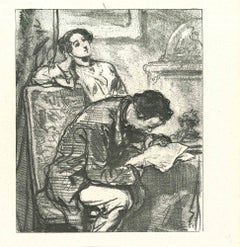
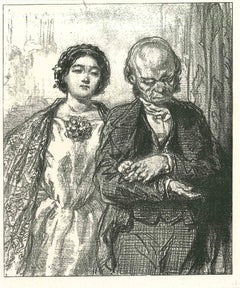
Reading the News - Original Lithograph by Paul Gavarni - 1881
Located in Roma, IT
Reading the news is an original lithograph artwork on ivory-colored paper, realized by the French draftsman Paul Gavarni (after) (alias Guillaume Sulpice Chevalier Gavarni, 1804-1866...
Category

Modern Late 19th Century Prints and Multiples

Materials

Paper, Lithograph

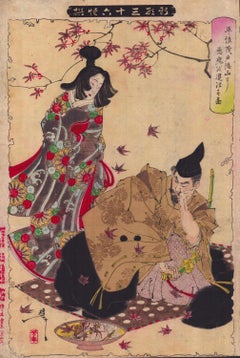
Yoshitoshi: Taira no Koremochi Vanquishing the Demon of Mount Togakushi
Located in BRUCE, ACT
Tsukioka Yoshitoshi Taira no Koremochi Vanquishing the Demon of Mount Togakushi From Series: “New Forms of Thirty-six Ghosts” 「新形三十六怪撰」 「平惟茂戸隠山に悪鬼を退治す図」 C. 1890 Size: Oban Ex...
Category

Late 19th Century Prints and Multiples

Materials

Woodcut

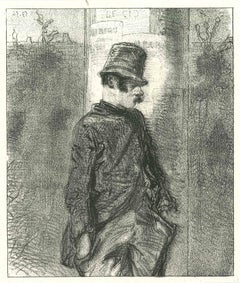
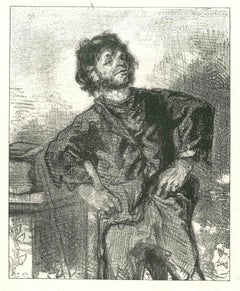
A Standing Man - Original Lithograph by Paul Gavarni - 1881
Located in Roma, IT
A Standing Man is an original lithograph artwork on ivory-colored paper, realized by the French draftsman Paul Gavarni (after) (alias Guillaume Sulpice Chevalier Gavarni, 1804-1866) ...
Category

Modern Late 19th Century Prints and Multiples

Materials

Lithograph

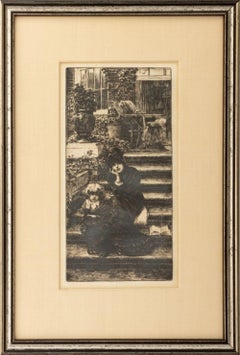
"Reverie"
Located in Astoria, NY
James Jacques Joseph Tissot (French, 1839-1906), "Reverie", Etching and Drypoint on Laid Paper, 1889, silvered wood frame. Image: 9" H x 4.5" W; frame: 14.75" H x 10" W. Provenance: ...
Category

Late 19th Century Prints and Multiples

Materials

Laid Paper, Drypoint, Etching

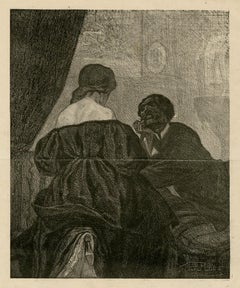
Conversation d'étudiant
Located in Middletown, NY
Brussels: Uylenspiegel, 1859. Lithograph on lightweight cream wove paper, 13 7/8 x 10 1/2 inches (352 x 265 mm), the full sheet. In good condition with a soft horizontal fold, and s...
Category

French School Late 19th Century Prints and Multiples

Materials

Laid Paper, Lithograph

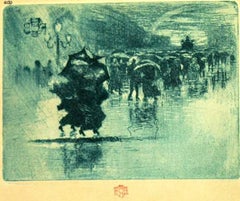
LE PETIT ENTERREMENT (The Small Funeral)
Located in Portland, ME
Buhot, Felix. LE PETIT ENTERREMENT (The Small Funeral). B/G 154. Second state of two. Etching, roulette, aquatint and drypoint printed in blue on tan wove paper, 1880. 3 3/8 x 4 1/2 inches; 86 x 115 mm., (sheet 8 3/8 x 10 3/8 inches; 215 x 264 mm.). Signed with the red owl...
Category

Late 19th Century Prints and Multiples

Materials

Drypoint, Etching

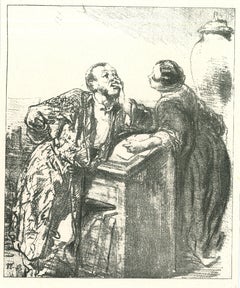
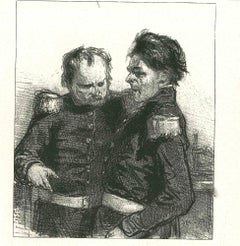
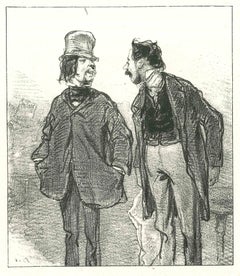
The Conversation - Original Lithograph by Paul Gavarni - 1881
Located in Roma, IT
The Conversation is an original lithograph artwork on ivory-colored paper, realized by the French draftsman Paul Gavarni (after) (alias Guillaume Sulpice Chevalier Gavarni, 1804-1866...
Category

Modern Late 19th Century Prints and Multiples

Materials

Lithograph

A Drunk Man - Original Lithograph by Paul Gavarni - 1881
Located in Roma, IT
A Drunk Man is an original lithograph artwork on ivory-colored paper, realized by the French draftsman Paul Gavarni (after) (alias Guillaume Sulpice Chevalie...
Category

Modern Late 19th Century Prints and Multiples

Materials

Lithograph

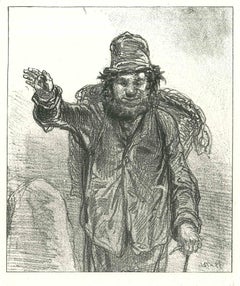
The Misery - Original Lithograph by Paul Gavarni - 1881
Located in Roma, IT
The Misery is an original lithograph artwork on ivory-colored paper, realized by the French draftsman Paul Gavarni (after) (alias Guillaume Sulpice Chevalier Gavarni, 1804-1866) in P...
Category

Modern Late 19th Century Prints and Multiples

Materials

Lithograph

The Accompanying - Original Lithograph by Paul Gavarni - 1881
Located in Roma, IT
The Accompanying is an original lithograph artwork on ivory-colored paper, realized by the French draftsman Paul Gavarni (after) (alias Guillaume Sulpice Chevalier Gavarni, 1804-1866...
Category

Modern Late 19th Century Prints and Multiples

Materials

Lithograph

The Rest - Original Lithograph by Paul Gavarni - 1881
Located in Roma, IT
The rest is an original lithograph on ivory-colored paper, realized by the French draftsman Paul Gavarni (after) (alias Guillaume Sulpice Chevalier Gavarni, 1804-1866) in Paris, 1881...
Category

Modern Late 19th Century Prints and Multiples

Materials

Paper, Lithograph

The Companionship - Original Lithograph by Paul Gavarni - 1881
Located in Roma, IT
The companionship is an original lithograph on ivory-colored paper, realized by the French draftsman Paul Gavarni (after) (alias Guillaume Sulpice Chevalier Gavarni, 1804-1866) in Pa...
Category

Modern Late 19th Century Prints and Multiples

Materials

Paper, Lithograph

The Affection - Original Lithograph by Paul Gavarni - 1881
Located in Roma, IT
The affection is an original lithograph artwork on ivory-colored paper, realized by the French draftsman Paul Gavarni (after) (alias Guillaume Sulpice Chevalier Gavarni, 1804-1866) i...
Category

Modern Late 19th Century Prints and Multiples

Materials

Paper, Lithograph

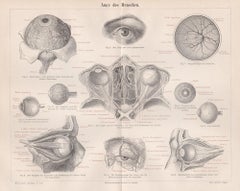
Human Eye, German antique medical anatomy wood-engraving print
Located in Melbourne, Victoria
'Auge des Menschen' (Human Eye) German wood-engraving, circa 1895. Central vertical fold as issued. 240mm by 305mm (sheet)
Category

Naturalistic Late 19th Century Prints and Multiples

Materials

Engraving

The Conversation - Original Lithograph by Paul Gavarni - 1881
Located in Roma, IT
The conversation is an original lithograph artwork on ivory-colored paper, realized by the French draftsman Paul Gavarni (after) (alias Guillaume Sulpice Chevalier Gavarni, 1804-1866...
Category

Modern Late 19th Century Prints and Multiples

Materials

Paper, Lithograph

The Honor - Original Lithograph by Paul Gavarni - 1881
Located in Roma, IT
The honor is an original lithograph artwork on ivory-colored paper, realized by the French draftsman Paul Gavarni (after) (alias Guillaume Sulpice Chevalier Gavarni, 1804-1866) in Pa...
Category

Modern Late 19th Century Prints and Multiples

Materials

Paper, Lithograph

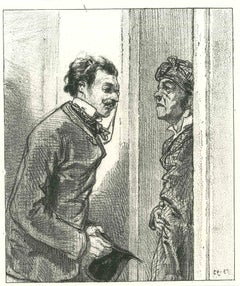
The Conversation - Original Lithograph by Paul Gavarni - 1881
Located in Roma, IT
The conversation is an original lithograph artwork on ivory-colored paper, realized by the French draftsman Paul Gavarni (after) (alias Guillaume Sulpice Chevalier Gavarni, 1804-1866...
Category

Modern Late 19th Century Prints and Multiples

Materials

Paper, Lithograph

The Gentle Request - Original Lithograph after Paul Gavarni - 1881
Located in Roma, IT
The Gentle Request is an original lithograph artwork on ivory-colored paper, realized by the French draftsman Paul Gavarni (after) (alias Guillaume Sulpice Chevalier Gavarni, 1804-18...
Category

Modern Late 19th Century Prints and Multiples

Materials

Paper, Lithograph

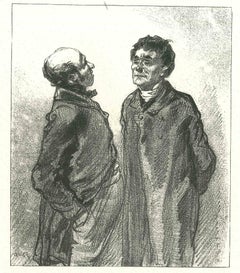
Gentelmen - Original Lithograph after Paul Gavarni - 1881
Located in Roma, IT
Gentleman is an original lithograph artwork on ivory-colored paper, realized by the French draftsman Paul Gavarni (after) (alias Guillaume Sulpice Chevalier Gavarni, 1804-1866) in Pa...
Category

Modern Late 19th Century Prints and Multiples

Materials

Paper, Lithograph

Mountaineer - Original Lithograph after Paul Gavarni - 1881
Located in Roma, IT
Mountaineers is an original lithograph artwork on ivory-colored paper, realized by the French draftsman Paul Gavarni (after) (alias Guillaume Sulpice Chevalier Gavarni, 1804-1866) in...
Category

Modern Late 19th Century Prints and Multiples

Materials

Paper, Lithograph

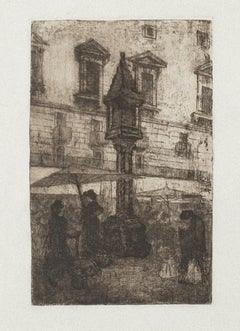
Street Lamp - Original Etching on Paper - 1880
Located in Roma, IT
Street Lamp is an original Etching artwork on paper realized. by an anonymous artist of the 19th century. The State of preservation is very good. Passepartout included 32.5 x 24 c...
Category

Modern Late 19th Century Prints and Multiples

Materials

Etching

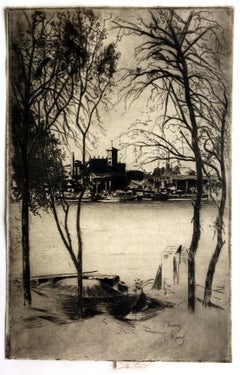
Laburnums and Battersea
Located in New York, NY
Theodore Roussel, Laburnums and Battersea, etching and drypoint, 1889/1890 and 1898; signed in the plate lower right, and signed in pencil on the tab, with the inscription IMP. Hausb...
Category

Realist Late 19th Century Prints and Multiples

Materials

Drypoint, Etching

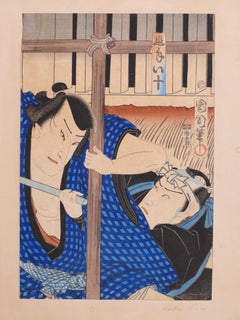
Two Samurai Fighting with a Stick - Woodcut by Kunichika Toyohara
Located in Roma, IT
Two Samurai Fighting with a Stick is a Japanese multi-colored print realized around the end of the XIX Century by Toyohara Kunichika (Edo period, 1835 - 1900). Original Woodcut on p...
Category

Late 19th Century Prints and Multiples

Materials

Woodcut

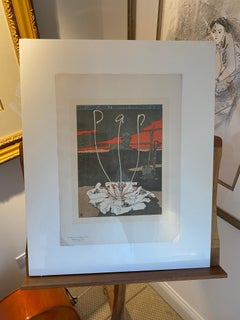
"Pan" from Les Maitres de l'Affiche by Joseph Sattler
Located in Hinsdale, IL
SATTLER, JOSEPH (1867 - 1931) "Pan" Original lithograph from “Les Maitres de L’Affiche” series Printed by Imprimerie Chaix, Paris Bearing MDL stamp lower right, from issue #17, 1897...
Category

Art Nouveau Late 19th Century Prints and Multiples

Materials

Lithograph

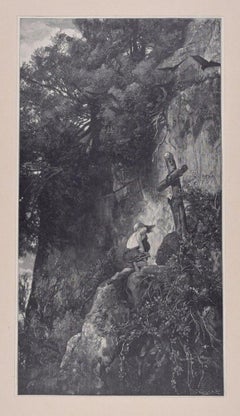
Der Büsser - Original Woodcut by J.J. Weber - 1898
Located in Roma, IT
Image dimensions: 34 x 19 cm. Der Büsser is an original print, realized in 1898. Black and white xylograph on applied Japon paper. Good conditions except for yellowing of paper (especially along the margins), and little stains on lower margin. The print was realized by Johann Jacob Weber and it's part of the series Meisterwerke der Holzschneidekunst (original title: SECHZEHN HOLZSCHNITTE NACH GEMÄLDEN ARNOLD BÖCKLIN...
Category

Symbolist Late 19th Century Prints and Multiples

Materials

Woodcut

"Circus, " Original Lithograph signed by Henri-Gabriel Ibels
Located in Milwaukee, WI
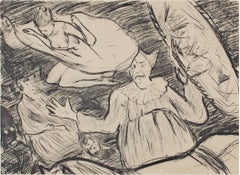
"Circus" is an original lithograph by Henri-Gabriel Ibels. The artist signed the piece lower right and wrote the edition number (12 out of 100) in the lower left. This piece depicts a few disconcerted circus performers. 17 1/2" x 20 1/2" art 19 1/2" x 22 1/2" frame Henri-Gabriel Ibels (30 November 1867 Paris – February 1936 Paris), was a French illustrator, printmaker, painter and author. He studied at the Académie Julian with Pierre Bonnard and Édouard Vuillard and was a member of Les Nabis...
Category

Modern Late 19th Century Prints and Multiples

Materials

Lithograph

Tsukioka Yoshitoshi -- Looks Slovenly', Mannerisms of a Kyoto Geisha
Located in BRUCE, ACT
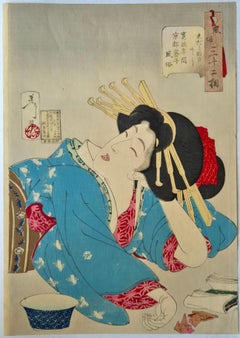
Tsukioka Yoshitoshi Looks Slovenly', Mannerisms of a Kyoto Geisha from the Kansei Period from Thirty-Two Daily Scenes (風俗三十二相), 1888 Woodblock print Oban The image depicts a geisha...
Category

Late 19th Century Prints and Multiples

Materials

Woodcut

Alphonse Mucha JOB Original Poster, 1898
Located in Dallas, TX
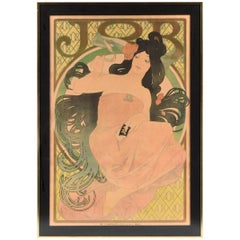
Alphonse Mucha 1898 "JOB" poster. Printed by: “Imp. F Champenois 66 Boul, St Michel, Paris” in 1898 Very good (A-) condition with toning throughout and less under matting. Linen b...
Category

Art Nouveau Late 19th Century Prints and Multiples

Materials

Paper

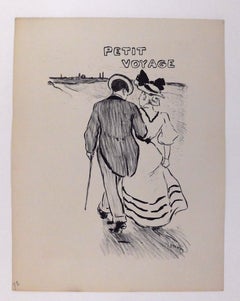
Theophile Alexandre Steinlen Original Stone Lithograph, 1894 - Petit Voyage
Located in Phoenix, AZ
Original Lithograph by Theophile Steinlen - Swiss born French Artist (1859-1923). Titled: “Petit Voyage” (Little Journey). Signed “Steinlen” in the stone lower left. The work is in ...
Category

Late 19th Century Prints and Multiples

Materials

Lithograph

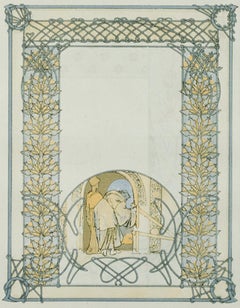
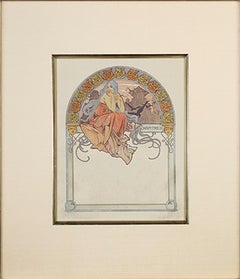
Late 19th century color lithograph art nouveau ornate bookplate figures
Located in Milwaukee, WI
"Student and Teacher" and "Jaufre in Nature" are two sides of one double-sided original lithograph by Art Nouveau master Alphonse Mucha. These illustrations were pages 13 & 14 of "Il...
Category

Art Nouveau Late 19th Century Prints and Multiples

Materials

Lithograph

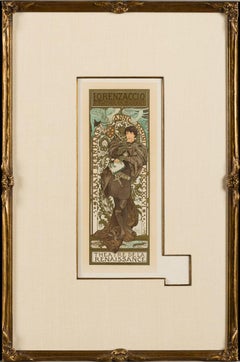
"Lorenzaccio" by Alphonse Mucha from Les Maitres de l'Affiche
Located in Hinsdale, IL
Alphonse Mucha "Lorenzaccio, a play in five acts and an epilogue by Alfred de Museet" Plate #114 Image Size: 15" x 11" 1896 Alphonse Mucha was born in Southern Moravia on July 24, 1860. At the age of seventeen the artist left his home, to work as a painter of stage decorations...
Category

Art Nouveau Late 19th Century Prints and Multiples

Materials

Lithograph

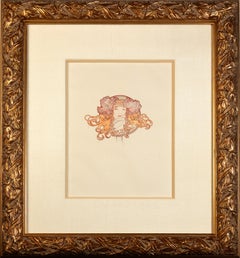
Late 19th century color lithograph art nouveau ornate bookplate female subject
Located in Milwaukee, WI
In 1897, Alphonse Mucha created illustrations for "Ilsee, Princesse de Tripoli." This double-sided print is a rare proof of an original color lithograph before any text from the story was added. This is a special edition print from edition 252 and is 12/35 on Chinese paper. 4.25" x 5.0625" image 20.75" x 17.5" frame Alphonse Mucha was born in 1860 in what is now the Czech Republic. His career began in decorative painting for theater scenery...
Category

Art Nouveau Late 19th Century Prints and Multiples

Materials

Lithograph

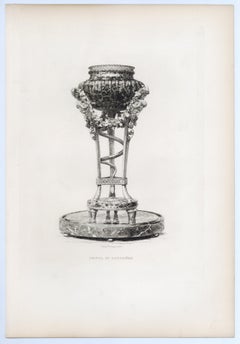
"Tripod by Gouthiere" original etching
Located in Henderson, NV
Medium: original etching. This impression on heavy cream wove paper is from the Sylvester R. Koehler portfolio of etchings, published in 1885 by Cassell & Company. Plate size: 11 1/4...
Category

Late 19th Century Prints and Multiples

Materials

Etching

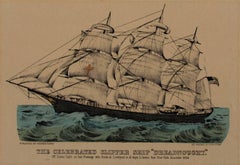
19th century color lithograph seascape boat ship waves maritime landscape
Located in Milwaukee, WI
"The Celebrated Clipper Ship Dreadnought" is an original hand-colored lithograph by Currier & Ives. It depicts a sailing ship. 13 1/4" x 17 1/2" art 19" x 23 1/2" frame Nathaniel Currier was a tall introspective man with a melancholy nature. He could captivate people with his piercing stare or charm them with his sparkling blue eyes. Nathaniel was born in Roxbury, Massachusetts on March 27th, 1813, the second of four children. His parents, Nathaniel and Hannah Currier, were distant cousins who lived a humble yet spartan life. When Nathaniel was eight years old, tragedy struck. Nathaniel’s father unexpectedly passed away leaving Nathaniel and his eleven-year-old brother Lorenzo to provide for the family. In addition to their mother, Nathaniel and Lorenzo had to care for six-year-old sister Elizabeth and two-year-old brother Charles. Nathaniel worked a series of odd jobs to support the family, and at fifteen, he started what would become a life-long career when he apprenticed in the Boston lithography shop of William and John Pendleton. A Bavarian gentleman named Alois Senefelder invented lithography just 30 years prior to young Nat Currier’s apprenticeship. While under the employ of the brothers Pendleton, Nat was taught the art of lithography by the firm’s chief printer, a French national named Dubois, who brought the lithography trade to America. Lithography involves grinding a piece of limestone flat and smooth then drawing in mirror image on the stone with a special grease pencil. After the image is completed, the stone is etched with a solution of aqua fortis leaving the greased areas in slight relief. Water is then used to wet the stone and greased-ink is rolled onto the raised areas. Since grease and water do not mix, the greased-ink is repelled by the moisture on the stone and clings to the original grease pencil lines. The stone is then placed in a press and used as a printing block to impart black on white images to paper. In 1833, now twenty-years old and an accomplished lithographer, Nat Currier left Boston and moved to Philadelphia to do contract work for M.E.D. Brown, a noted engraver and printer. With the promise of good money, Currier hired on to help Brown prepare lithographic stones of scientific images for the American Journal of Sciences and Arts. When Nat completed the contract work in 1834, he traveled to New York City to work once again for his mentor John Pendleton, who was now operating his own shop located at 137 Broadway. Soon after the reunion, Pendleton expressed an interest in returning to Boston and offered to sell his print shop to Currier. Young Nat did not have the financial resources to buy the shop, but being the resourceful type he found another local printer by the name of Stodart. Together they bought Pendleton’s business. The firm ‘Currier & Stodart’ specialized in "job" printing. They produced many different types of printed items, most notably music manuscripts for local publishers. By 1835, Stodart was frustrated that the business was not making enough money and he ended the partnership, taking his investment with him. With little more than some lithographic stones, and a talent for his trade, twenty-two year old Nat Currier set up shop in a temporary office at 1 Wall Street in New York City. He named his new enterprise ‘N. Currier, Lithographer’ Nathaniel continued as a job printer and duplicated everything from music sheets to architectural plans. He experimented with portraits, disaster scenes and memorial prints, and any thing that he could sell to the public from tables in front of his shop. During 1835 he produced a disaster print Ruins of the Planter's Hotel, New Orleans, which fell at two O’clock on the Morning of the 15th of May 1835, burying 50 persons, 40 of whom Escaped with their Lives. The public had a thirst for newsworthy events, and newspapers of the day did not include pictures. By producing this print, Nat gave the public a new way to “see” the news. The print sold reasonably well, an important fact that was not lost on Currier. Nat met and married Eliza Farnsworth in 1840. He also produced a print that same year titled Awful Conflagration of the Steamboat Lexington in Long Island Sound on Monday Evening, January 18, 1840, by which melancholy occurrence over One Hundred Persons Perished. This print sold out very quickly, and Currier was approached by an enterprising publication who contracted him to print a single sheet addition of their paper, the New York Sun. This single page paper is presumed to be the first illustrated newspaper ever published. The success of the Lexington print launched his career nationally and put him in a position to finally lift his family up. In 1841, Nat and Eliza had their first child, a son they named Edward West Currier. That same year Nat hired his twenty-one year old brother Charles and taught him the lithography trade, he also hired his artistically inclined brother Lorenzo to travel out west and make sketches of the new frontier as material for future prints. Charles worked for the firm on and off over the years, and invented a new type of lithographic crayon which he patented and named the Crayola. Lorenzo continued selling sketches to Nat for the next few years. In 1843, Nat and Eliza had a daughter, Eliza West Currier, but tragedy struck in early 1847 when their young daughter died from a prolonged illness. Nat and Eliza were grief stricken, and Eliza, driven by despair, gave up on life and passed away just four months after her daughter’s death. The subject of Nat Currier’s artwork changed following the death of his wife and daughter, and he produced many memorial prints and sentimental prints during the late 1840s. The memorial prints generally depicted grief stricken families posed by gravestones (the stones were left blank so the purchasers could fill in the names of the dearly departed). The sentimental prints usually depicted idealized portraits of women and children, titled with popular Christian names of the day. Late in 1847, Nat Currier married Lura Ormsbee, a friend of the family. Lura was a self-sufficient woman, and she immediately set out to help Nat raise six-year-old Edward and get their house in order. In 1849, Lura delivered a son, Walter Black Currier, but fate dealt them a blow when young Walter died one year later. While Nat and Lura were grieving the loss of their new son, word came from San Francisco that Nat’s brother Lorenzo had also passed away from a brief illness. Nat sank deeper into his natural quiet melancholy. Friends stopped by to console the couple, and Lura began to set an extra place at their table for these unexpected guests. She continued this tradition throughout their lives. In 1852, Charles introduced a friend, James Merritt Ives, to Nat and suggested he hire him as a bookkeeper. Jim Ives was a native New Yorker born in 1824 and raised on the grounds of Bellevue Hospital where his father was employed as superintendent. Jim was a self-trained artist and professional bookkeeper. He was also a plump and jovial man, presenting the exact opposite image of his new boss. Jim Ives met Charles Currier through Caroline Clark, the object of Jim’s affection. Caroline’s sister Elizabeth was married to Charles, and Caroline was a close friend of the Currier family. Jim eventually proposed marriage to Caroline and solicited an introduction to Nat Currier, through Charles, in hopes of securing a more stable income to support his future wife. Ives quickly set out to improve and modernize his new employer’s bookkeeping methods. He reorganized the firm’s sizable inventory, and used his artistic skills to streamline the firm’s production methods. By 1857, Nathaniel had become so dependent on Jims’ skills and initiative that he offered him a full partnership in the firm and appointed him general manager. The two men chose the name ‘Currier & Ives’ for the new partnership, and became close friends. Currier & Ives produced their prints in a building at 33 Spruce Street where they occupied the third, fourth and fifth floors. The third floor was devoted to the hand operated printing presses that were built by Nat's cousin, Cyrus Currier, at his shop Cyrus Currier & Sons in Newark, NJ. The fourth floor found the artists, lithographers and the stone grinders at work. The fifth floor housed the coloring department, and was one of the earliest production lines in the country. The colorists were generally immigrant girls, mostly German, who came to America with some formal artistic training. Each colorist was responsible for adding a single color to a print. As a colorist finished applying their color, the print was passed down the line to the next colorist to add their color. The colorists worked from a master print displayed above their table, which showed where the proper colors were to be placed. At the end of the table was a touch up artist who checked the prints for quality, touching-in areas that may have been missed as it passed down the line. During the Civil War, demand for prints became so great that coloring stencils were developed to speed up production. Although most Currier & Ives prints were colored in house, some were sent out to contract artists. The rate Currier & Ives paid these artists for coloring work was one dollar per one hundred small folios (a penny a print) and one dollar per one dozen large folios. Currier & Ives also offered uncolored prints to dealers, with instructions (included on the price list) on how to 'prepare the prints for coloring.' In addition, schools could order uncolored prints from the firm’s catalogue to use in their painting classes. Nathaniel Currier and James Merritt Ives attracted a wide circle of friends during their years in business. Some of their more famous acquaintances included Horace Greeley, Phineas T. Barnum, and the outspoken abolitionists Rev. Henry Ward, and John Greenleaf Whittier (the latter being a cousin of Mr. Currier). Nat Currier and Jim Ives described their business as "Publishers of Cheap and Popular Pictures" and produced many categories of prints. These included Disaster Scenes, Sentimental Images, Sports, Humor, Hunting Scenes, Politics, Religion, City and Rural Scenes, Trains, Ships, Fire Fighters, Famous Race Horses, Historical Portraits, and just about any other topic that satisfied the general public's taste. In all, the firm produced in excess of 7500 different titles, totaling over one million prints produced from 1835 to 1907. Nat Currier retired in 1880, and signed over his share of the firm to his son Edward. Nat died eight years later at his summer home 'Lion’s Gate' in Amesbury, Massachusetts. Jim Ives remained active in the firm until his death in 1895, when his share of the firm passed to his eldest son, Chauncey. In 1902, faced will failing health from the ravages of Tuberculosis, Edward Currier sold his share of the firm to Chauncey Ives...
Category

Other Art Style Late 19th Century Prints and Multiples

Materials

Lithograph

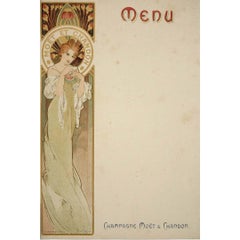
Original 1899 illustrated menu for Champagne Moët & Chandon by Mucha
Located in PARIS, FR
This original 1899 illustrated menu for Champagne Moët & Chandon captures the refined beauty of the Belle Époque, brought to life by the unmistakable hand of Alphonse Mucha, mast...
Category

Late 19th Century Prints and Multiples

Materials

Paper, Lithograph

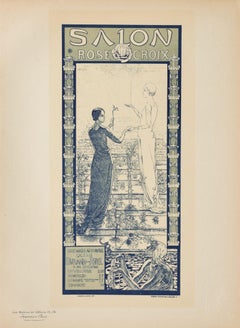
Exhibition of the Rose (Plate 74)
Located in Greenwich, CT
Exhibition of the Rose (Plate 74) is an 1887 lithograph of Carlos Schwabe's poster, printed at Imprimerie Chaix by Jules Chéret and included in the fame...
Category

Art Nouveau Late 19th Century Prints and Multiples

Materials

Paper, Lithograph

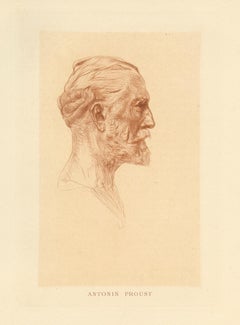
"Antonin Proust" original drypoint
Located in Henderson, NV
Medium: original etching and drypoint. Catalogue reference: Delteil 10. Published in Paris in 1899 by H. Floury for Auguste Rodin "Statuaire" by Lon Maillard. This impression is prin...
Category

Late 19th Century Prints and Multiples

Materials

Drypoint, Etching

Late 19th century color lithograph art nouveau owl border woman figure
Located in Milwaukee, WI
"From: Ilsée, Princesse de Tripoli Recto: "Blaye Castle" Verso: "Reflecting Pool" is an original color lithograph by Alphonse Mucha. Exquisite double-s...
Category

Art Nouveau Late 19th Century Prints and Multiples

Materials

Lithograph

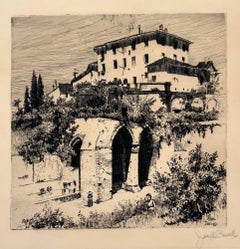
Fonte Nuova, Siena
Located in Middletown, NY
Etching with drypoint on lightweight Japon paper, 9 3/4 x 9 7/8 inches ( 247 x 250 mm); sheet 14 x 12 3/4 inches (355 x 324 mm), full margins. Signed in pencil in the lower margin. I...
Category

American Modern Late 19th Century Prints and Multiples

Materials

Handmade Paper, Drypoint, Etching

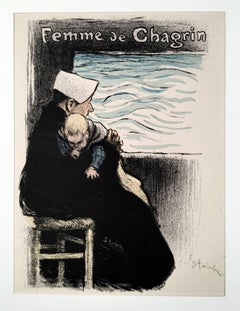
Femme de Chagrin
Located in New York, NY
Theophile Alexandre Steinlen (1859-1923), Femme de Chagrin, 1894, lithograph, signed in pencil lower right [also signed in the plate lower center]. Reference: Crauzat 454, first stat...
Category

Post-Impressionist Late 19th Century Prints and Multiples

Materials

Color Pencil, Lithograph

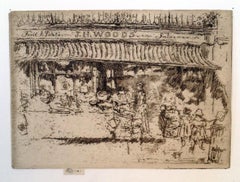
J.H. Woods’ Fruit Shop, Chelsea
Located in New York, NY
James Whistler (1834-1903), J.H. Woods’ Fruit Shop, Chelsea, etching and drypoint, 1887-88. Signed with the butterfly on the tab and annotated “imp,” also signed with the butterfly in pencil verso and numbered “1”. References: Kennedy 265 second state (of 2), Glasgow 327 second state (of 4). Trimmed by the artist around the plate mark except for the tab, in excellent condition. Printed in black ink on ivory laid paper, 3 3/4 x 5 1/8 inches. A fine impression of this great rarity; the print was never published. Glasgow accounts for four impressions. watermark: partial arms of Amsterdam(cf. Spink/Stratis/Tedeschi, watermark nos. 12ff.) This is before the third state in which heavy shading was added around the woman at the center, and the heads of figures at right and left of the figure are defined. In Glasgow’s fourth state the shading and the figure were removed; no impression is known of this state, but the state is inferred from the cancelled plate. According to Glasgow “Joseph Henry Wood had a greengrocer’s shop at 1 Park Walk...
Category

Impressionist Late 19th Century Prints and Multiples

Materials

Drypoint, Etching

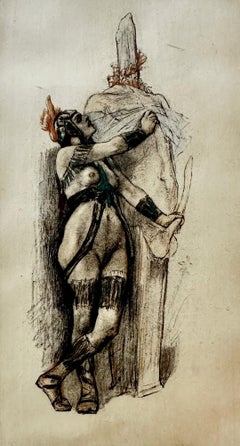
Prêtresse antique (Ancient Priestess)
Located in Middletown, NY
Heliogravure by Félicien Rops (1833 – 1898), a Belgian artist, known primarily as a printmaker in etching and aquatint. He is noted for his drawings depicting erotic and Satanic them...
Category

Symbolist Late 19th Century Prints and Multiples

Materials

Handmade Paper, Photogravure, Stencil

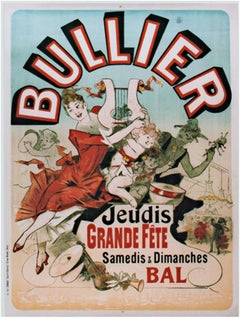
late 19th century color lithograph poster dancers figures carnival scene text
Located in Milwaukee, WI
"Bullier" is a giclee print on paper after the 1888 original lithograph poster by Jules Cheret. A groups of happy people are centered around a harp being played by a woman in a red d...
Category

Modern Late 19th Century Prints and Multiples

Materials

Paper, Giclée

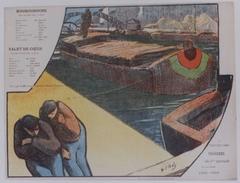
Program for Theatre Libre Boubouroche Valet De Coeur.
Located in New York, NY
Program for Theatre Libre Boubouroche Valet De Coeur. Sixth program for Le Theatre Libre, four-color lithograph, 1892-1893. Ref: The Color Revolution 101: Artistes et Theatre d' Ava...
Category

Art Nouveau Late 19th Century Prints and Multiples

Materials

Lithograph

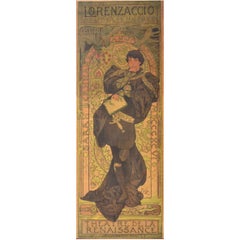
Alphonse Mucha 1896 Lorenzaccio Theatre De La Renaissance Lithograph Poster
Located in Dallas, TX
Alphonse Mucha (Czech, 1860-1939) Lorenzaccio Theatre De La Renaissance. Printed: 1896 Printed By: F. Champenois, Paris Signed in plate; Mucha, F. Champenois, Paris Lithograph paper ...
Category

Art Nouveau Late 19th Century Prints and Multiples

Materials

Archival Paper, Lithograph

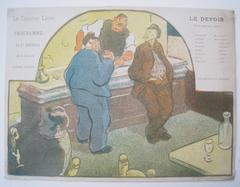
Le Devoir
Located in New York, NY
Ibels, Henri-Gabriel.."Le Devoir", fouth programme for Le Theatre Libre. four-color lithograph, 1892-1893. 9 1/2 x 12 1/2". Ref: Artistes et Theatre d' Avant-Gardes, Programmes ...
Category

Art Nouveau Late 19th Century Prints and Multiples

Materials

Lithograph

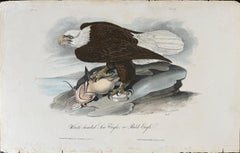
Bald Eagle Bird: A 1st Edition 19th C. Audubon Hand-colored Bird Lithograph
Located in Alamo, CA
This is an original 1st edition John James Audubon hand-colored lithograph entitled "White-headed Sea Eagle or Bald Eagle", No. 3, Plate 14 from Audubon's "Birds of America, lithogra...
Category

Naturalistic Late 19th Century Prints and Multiples

Materials

Lithograph

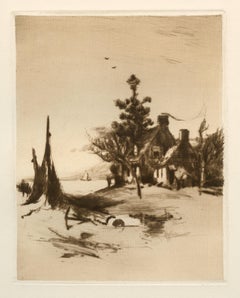
"The Fisherman's Home" original etching
Located in Henderson, NV
Medium: original etching and drypoint. This rich, dark impression on heavy cream wove paper is from the Sylvester R. Koehler portfolio of etchings, published in 1885 by Cassell & Com...
Category

Late 19th Century Prints and Multiples

Materials

Etching

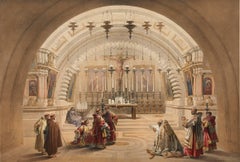
Calvary of the Holy Sepulchre
Located in London, GB
David Roberts R.A. 1796 - 1864 CALVARY - HOLY SEPULCHRE First Edition lithograph Full plate: 26 Presented in a acid free mount Modern hand-coloured lithograph for the first editi...
Category

Victorian Late 19th Century Prints and Multiples

Materials

Lithograph

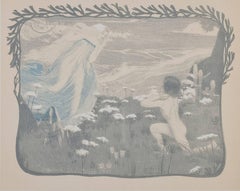
"H. L'Illusion (L'Estampe Moderne I), " Color Lithograph
Located in Milwaukee, WI
"H. L'Illusion (L'Estampe Moderne I)" is an original color lithograph by Henri Bellery-Desfontaines. This piece depicts a nude child before a dream-like woman in a blue translucent robe. This piece was published in the French Art Nouveau publication L'Estampe Moderne. Signed in plate. 15 3/4" x 12" art Henri Bellery-Desfontaines , born with Paris in 1867 and dead the October 6th 1909, is a French Noveau artist Jack-of-All- Trades, who produced tables, illustrations, posters, lithographies, drawings of carpet, pieces of furniture and banknotes, and even dabbled with decoration & architecture. In the 1900s, Paris was the perfect place for a group of young artists influenced by artistic currents like neogothic style or symbolism. Most of them started as painters and they switched later to decorative arts, attracted by the idea of an ever-present art, a lifeless art, a total art. Henri Bellery-Desfontaines was a member of this group and he started as as painter in Pierre-Victor Galland’s atelier. He entrusted him the decorative motifs which would frame Panthéon de Paris' drawings: Maillot, Bonnat, Humbert and specially Jean-Paul Laurens, who proposed him to join his atelier in l’École des Beaux-Arts de Paris. With him, he decorated l'Hôtel de Ville de Paris or Le Salon Lobau, Henri Bellery-Desfontaines is thought to have Luc-Olivier Merson (1846-1920) as a teacher. During his years as a student, he started to illustrate magazines and books of tales and in 1895, Bellery-Desfontaines opted rapidly for illustration, probably due to financial problems, and he participated in magazines such as L’Image, L’Estampe Moderne or L’Almanach des Bibliophiles. This year, the Salon des Artistes Français hosted one of his design of tapestry. From 1900 on, he gradually evolved toward an ambitious decorative artist, making tapestries and furniture for rich leaders and patrons. Bellery-Desfontaines was an important artist of his epoch, and he took part in numerous events like Bal de...
Category

Art Nouveau Late 19th Century Prints and Multiples

Materials

Lithograph

Still Thinking About These?

All Recently Viewed