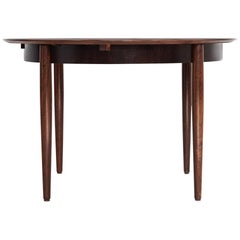
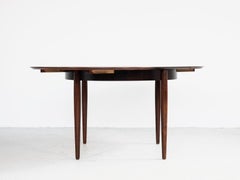
Midcentury Round Dining Table in Rosewood by Lübke, 1960s
By Lübke
Located in Beveren, BE
Midcentury table manufactured by Lübke in Germany in the 1960s.
Category
Mid-20th Century German Mid-Century Modern Dining Room Tables
Materials
Rosewood
Midcentury Round Dining Table in Rosewood by Lübke, 1960s
By Lübke
Located in Beveren, BE
Midcentury table manufactured by Lübke in Germany in the 1960s.
Rosewood
Unavailable
H 29.14 in W 53.55 in D 35.44 in
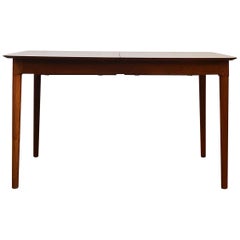
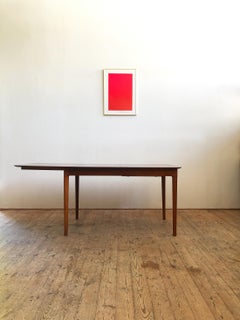
Extendable Midcentury Rosewood Dining Table with Fold-Out Leaves by Lübke
By Lübke
Located in Munich, Bavaria
This large, elegant dining table is made out of rosewood veneer and was manufactured by Lübke in Germany.
Rosewood
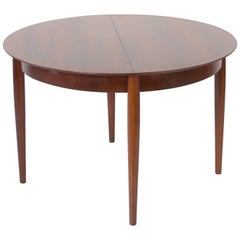
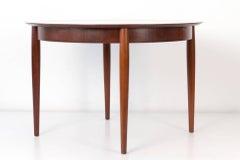
Extendable Rosewood Table by Lübke, Germany, 1960
By Lübke
Located in Berlin, DE
Few usage traces. The round dining table can be extended to the oval by a recessed mechanism.
Unavailable
H 29.14 in W 111.03 in D 55.91 in
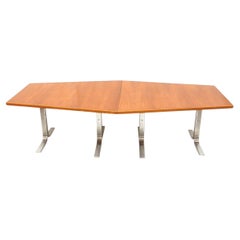
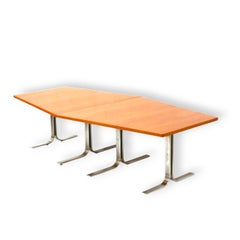
Large vintage conference table / dining table by Lübke from the 70s. The table h
By Lübke
Located in Breda, NB
Large vintage conference table / dining table by Lübke from the 70s. The table has only minor signs of use.
Wood
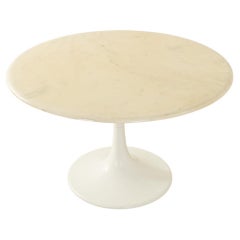
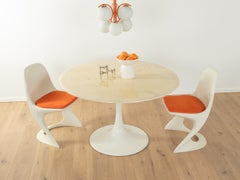
Unique Tulip dining table, Lübke
By Lübke
Located in Neuss, NW
Unique Tulip dining table from the 1960s. Marble table top in cream white with an aluminium base in white.
Marble, Aluminum
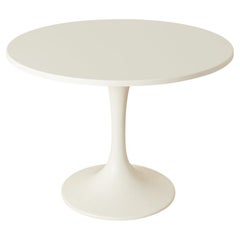
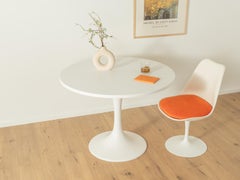
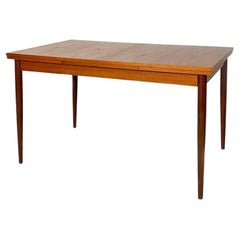
Unique Tulip dining table, Lübke
By Lübke
Located in Neuss, NW
Unique Tulip dining table from the 1960s. Plastic table top and an aluminum base in white.
Aluminum

Sold
H 28.75 in W 47.25 in D 30.32 in
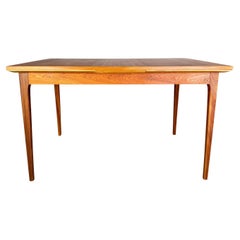
Danish Mid Century Wooden Dining Table with Side Extensions by Lubke, 1960s
By Lübke
Located in MIlano, IT
Danish mid-century modern wooden rectangular dining table with side extensions by Lubke, 1960s Dining table with structure entirely in wood, rectangular top and extensions that can ...
Wood
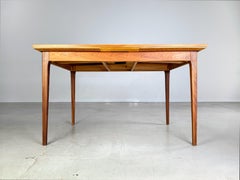
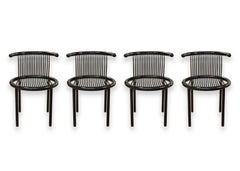
Original Midcentury Esstisch Lübke Teak 1960er ausziehbar Tisch
By Lübke
Located in Berlin, DE
Wir bieten einen wunderschönen Teak Esstisch vom renommierten deutschen Hersteller "Lübke" aus den 1960er Jahren zum Verkauf an. Der Tisch lässt sich über zwei Platten links und rech...
Teak
Sold
H 28.75 in Dm 42 in
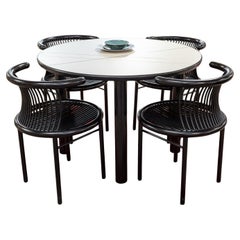
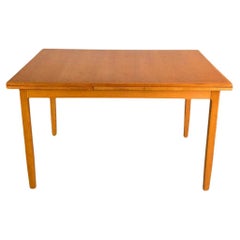
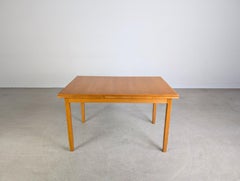
Set of 4 Lubke Herbert Ohl Circo Chairs and Peterson Design Table Dinette Set
By Lübke
Located in Keego Harbor, MI
A wonderous post modern dinette set featuring a set of four Lubke chairs and a round Peterson Design dinette table. The set of four chairs are designed by award winning Herbert Ohl f...
Wood
Sold
H 29.53 in W 49.22 in D 33.47 in
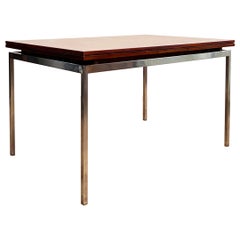
Original Midcentury Esstisch Lübke Eiche ausziehbar Vintage Tisch
By Lübke
Located in Berlin, DE
Wir bieten einen äußerst seltenen, ausziehbaren Vintage Esstisch vom deutschen Traditionshersteller Lübke aus den 1960er/ 70er Jahren zum Verkauf an. Bei der Holzart handelt es sich ...
Oak

Sold
H 29.14 in W 49.22 in D 33.47 in
Mid-Century Modern German Extendable Dining Table in Rosewood with Chrome Frame
By Lübke
Located in München, BY
Dimensions: 125 / 173 / 221 x 84,5 x 74 cm (Length / + extensions x Width x Height) This large, elegant dining table is made out of rosewood veneer and was manufactured by Lübke i...
Steel, Chrome
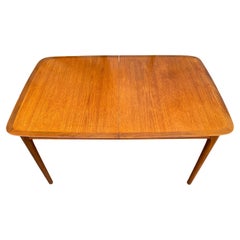

Mid-Century Modern German Teak Dining Table with 4 Leaves by Lübke
By Lübke
Located in BROOKLYN, NY
Mid-Century Modern German teak dining table with 4 leaves by LÜBKE. Very high quality Dining table with 4 Leaves that store underneath table.
Rosewood, Teak
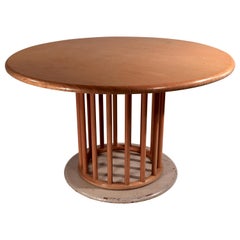

Round Pedestal Dining Table by Helmut Lubke
By Helmut Lübke & Co.
Located in New York, NY
Chic, stylish, and sophisticated dining table made in Germany, designed by Helmut Lubke.
Iron

Sold
H 28.5 in W 43.25 in D 52.75 in
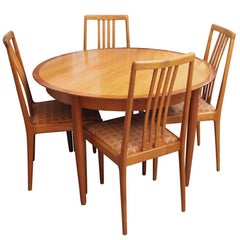
1960s Mid-Century Modern Extendable Round Table Set with Five Chairs
By Lübke
Located in New York, NY
Mid-Century Modern extendable wooden table set with five dining chairs with dotted fabric on the seat.
Wood
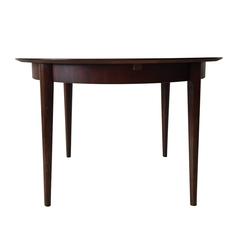

Round or Oval Extendable Dining Table by Lubke, 1960s
By Lübke
Located in Schagen, NL
This wonderful extendable dining table was designed and manufactured by Lubke in Germany during the 1960s.
Wood
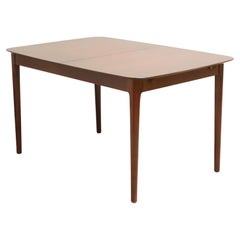

LUBKE Germany Mahogany Mid 20th Century Modern Dining Table
By Lübke
Located in Charlotte, NC
A rectangular shaped dining table in the Mid 20th Century Modern style by Lubke.
Metal
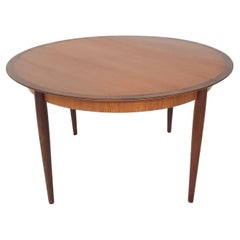

Round Teak Extendable Dining Table by Lubke, Germany, 1960's
By Lübke
Located in Amsterdam, NL
Round dining table model " Eitting" can be extended from 125 to 190 cm The top has been refinished.
Teak
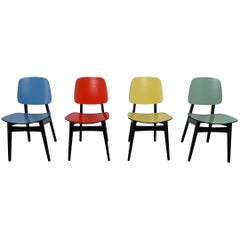

Set of Four Dining Table Chairs from Lübke, Germany, 1950s
By Lübke
Located in Berlin, DE
This set of four colorful chairs was produced by the German manufacturer Lübke in the 1950s. The seat shell and the backrest are Formica-coated in yellow, green, red and blue and the...
Formica, Wood
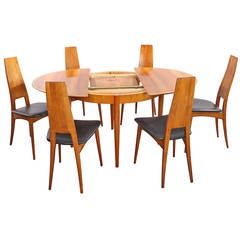
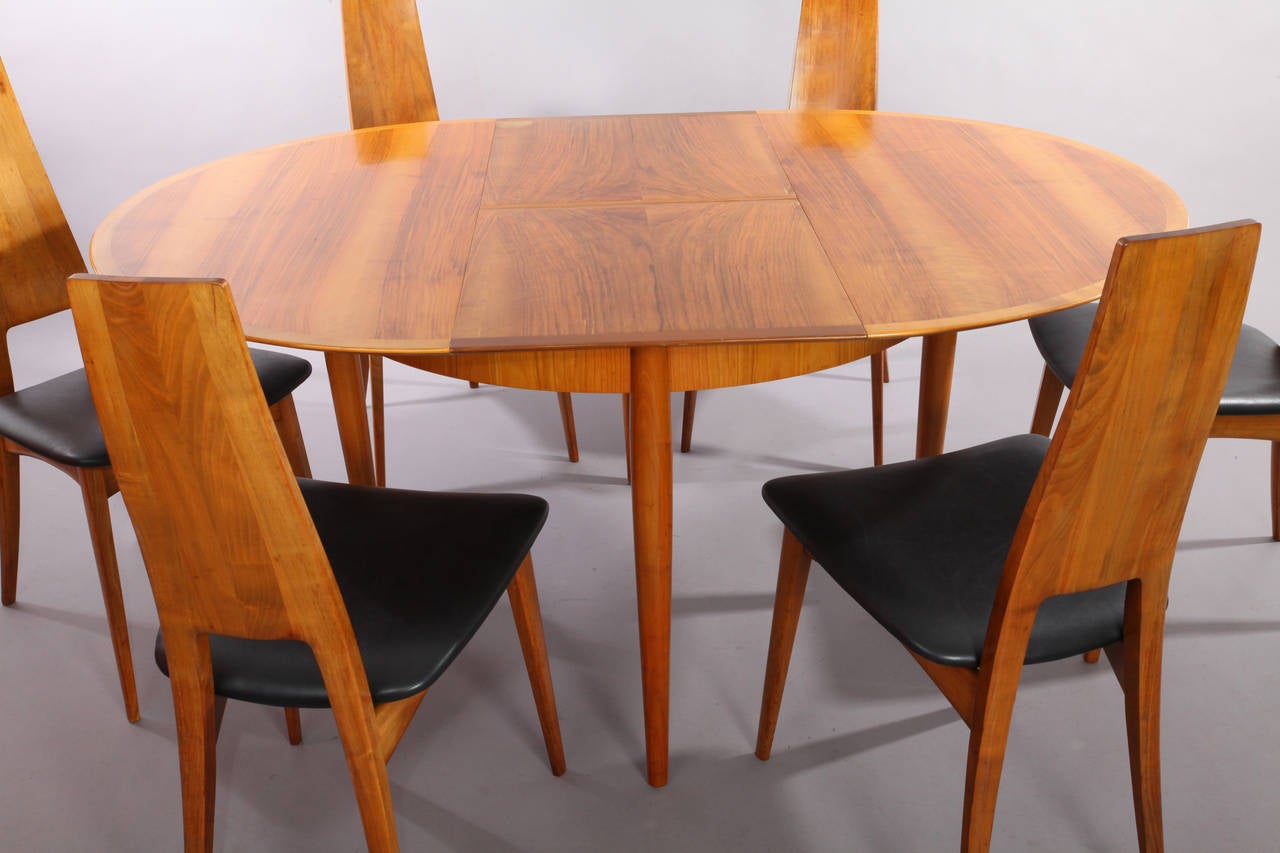
Extendable Dining Table with Six Chairs, Solid Cherry, Production Lübke
By Helmut Lübke & Co.
Located in Vienna, Vienna
Dining table set with six chairs, extendable table, designed by Ernst Martin Dettinger, production Lübke, Germany, 1960.
Cherry, Wood
Cor is Latin for heart, and COR furniture exemplifies the qualities at the heart of exceptional design: practicality, comfort and style. The company, which is owned and operated by the Lübke family, created in the postwar years a range of sofas, lounge chairs and coffee tables that capture the essence of the best of mid-century modernism. Simple silhouettes, quality materials and function-first designs ensure that vintage COR furniture is still in high demand with collectors all over the world.
COR was founded in Rheda-Wiedenbrück, Germany, in 1954 by Leo Lübke — in the name of his son, Helmut — and the Prince of Bentheim-Tecklenburg, a northern German county. Nearly a couple of decades prior, in 1937, a manufacturer of bedroom furniture called Interlübke was established by Leo and his brother Hans. The latter’s son Horst, who was managing partner from 1972, retired during the 1990s and his son Helmut Lübke joined Interlübke and shifted the brand’s focus toward modular furniture systems. During the 1980s, the Prince of Bentheim-Tecklenburg left COR and the Lübke family became its sole owner. In 2006, COR-Interlübke retail locations opened their doors.
COR made its mark in 1959 with a sleek modular seating system consisting of five parts called Quinta, which was created by designer Michael Bayer. The upholstered line boasted clean, angular contours and appealed to the day's ever-broadening flexible interior design sensibilities. It remained in production until 1978. The success of the Quinta was followed by the 1964 Conseta system, which featured a sofa and other pieces of seating designed by Friedrich Wilhelm Möller.
The following decades saw more successful collaborations with designers like Peter Maly and Luigi Colani. The latter, a German industrial designer born Lutz Colani, created a range of gorgeous organically shaped Space Age seating for BASF and Fritz Hansen, serveware for Rosenthal and worked on automobile designs for Fiat. Colani designed the popular Orbis line for COR during the 1970s.
In 2000, the Arthe sofa by Wulf Schneider was awarded the prestigious Red Dot Award from the North Rhine-Westphalia Design Centre.
COR is still owned and operated by the Lübke family’s parent company Gebrüder Lübke GmbH & Co. KG and continues to produce furniture at the Rheda-Wiedenbrück factory, sourcing leather from southern Germany and upholstery from Italy. The company partnered with Jehs+Laub, a renowned Stuttgart-based studio, in 2010.
Find a collection of vintage Lübke furniture on 1stDibs.
Organically shaped, clean-lined and elegantly simple are three terms that well describe vintage mid-century modern furniture. The style, which emerged primarily in the years following World War II, is characterized by pieces that were conceived and made in an energetic, optimistic spirit by creators who believed that good design was an essential part of good living.
ORIGINS OF MID-CENTURY MODERN FURNITURE DESIGN
CHARACTERISTICS OF MID-CENTURY MODERN FURNITURE DESIGN
MID-CENTURY MODERN FURNITURE DESIGNERS TO KNOW
ICONIC MID-CENTURY MODERN FURNITURE DESIGNS
VINTAGE MID-CENTURY MODERN FURNITURE ON 1STDIBS
The mid-century modern era saw leagues of postwar American architects and designers animated by new ideas and new technology. The lean, functionalist International-style architecture of Le Corbusier and Bauhaus eminences Ludwig Mies van der Rohe and Walter Gropius had been promoted in the United States during the 1930s by Philip Johnson and others. New building techniques, such as “post-and-beam” construction, allowed the International-style schemes to be realized on a small scale in open-plan houses with long walls of glass.
Materials developed for wartime use became available for domestic goods and were incorporated into mid-century modern furniture designs. Charles and Ray Eames and Eero Saarinen, who had experimented extensively with molded plywood, eagerly embraced fiberglass for pieces such as the La Chaise and the Womb chair, respectively.
Architect, writer and designer George Nelson created with his team shades for the Bubble lamp using a new translucent polymer skin and, as design director at Herman Miller, recruited the Eameses, Alexander Girard and others for projects at the legendary Michigan furniture manufacturer.
Harry Bertoia and Isamu Noguchi devised chairs and tables built of wire mesh and wire struts. Materials were repurposed too: The Danish-born designer Jens Risom created a line of chairs using surplus parachute straps for webbed seats and backrests.
The Risom lounge chair was among the first pieces of furniture commissioned and produced by celebrated manufacturer Knoll, a chief influencer in the rise of modern design in the United States, thanks to the work of Florence Knoll, the pioneering architect and designer who made the firm a leader in its field. The seating that Knoll created for office spaces — as well as pieces designed by Florence initially for commercial clients — soon became desirable for the home.
As the demand for casual, uncluttered furnishings grew, more mid-century furniture designers caught the spirit.
Classically oriented creators such as Edward Wormley, house designer for Dunbar Inc., offered such pieces as the sinuous Listen to Me chaise; the British expatriate T.H. Robsjohn-Gibbings switched gears, creating items such as the tiered, biomorphic Mesa table. There were Young Turks such as Paul McCobb, who designed holistic groups of sleek, blond wood furniture, and Milo Baughman, who espoused a West Coast aesthetic in minimalist teak dining tables and lushly upholstered chairs and sofas with angular steel frames.
Generations turn over, and mid-century modern remains arguably the most popular style going. As the collection of vintage mid-century modern chairs, dressers, coffee tables and other furniture for the living room, dining room, bedroom and elsewhere on 1stDibs demonstrates, this period saw one of the most delightful and dramatic flowerings of creativity in design history.
The right vintage, new or antique tables can help make any space in your home stand out.
Over the years, the variety of tables available to us, as well as our specific needs for said tables, has broadened. Today, with all manner of these must-have furnishings differing in shape, material and style, any dining room table can shine just as brightly as the guests who gather around it.
Remember, when shopping for a dining table, it must fit your dining area, and you need to account for space around the table too — think outside the box, as an oval dining table may work for tighter spaces. Alternatively, if you’ve got the room, a Regency-style dining table can elevate any formal occasion at mealtime.
Innovative furniture makers and designers have also redefined what a table can be. Whether it’s an unconventional Ping-Pong table, a brass side table to display your treasured collectibles or a Louis Vuitton steamer trunk to add an air of nostalgia to your loft, your table can say a lot about you.
The visionary work of French designer Xavier Lavergne, for example, includes tables that draw on the forms of celestial bodies as often as they do aquatic creatures or fossils. Elsewhere, Italian architect Gae Aulenti, who looked to Roman architecture in crafting her stately Jumbo coffee table, created clever glass-topped mobile coffee tables that move on bicycle tires or sculpted wood wheels for Fontana Arte.
Coffee and cocktail tables can serve as a room’s centerpiece with attention-grabbing details and colors. Glass varieties will keep your hardwood flooring and dazzling area rugs on display, while a marble or stone coffee table in a modern interior can showcase your prized art books and decorative objects. A unique vintage desk or writing table can bring sophistication and even a bit of spice to your work life.
No matter your desired form or function, a quality table for your living space is a sound investment. On 1stDibs, browse a collection of vintage, new and antique bedside tables, mid-century end tables and more .