By Alexander Calder
Located in Fairfield, CT
Artist: Alexander Calder (1898–1976)
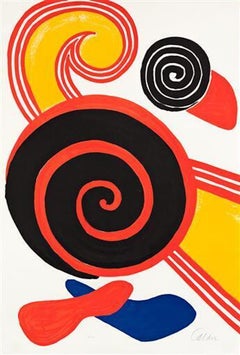
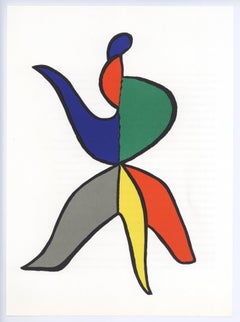
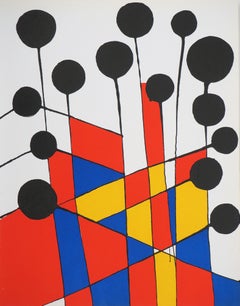
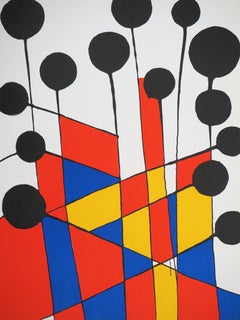
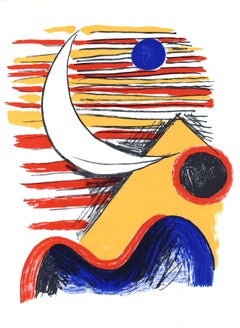
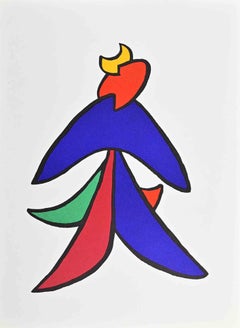
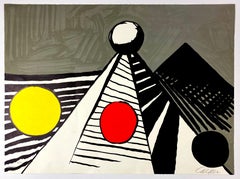
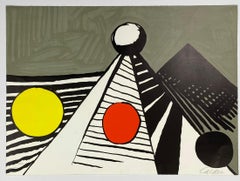
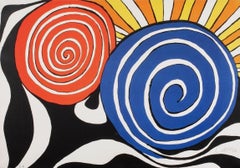
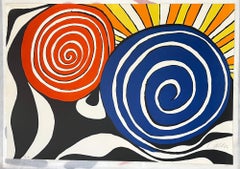
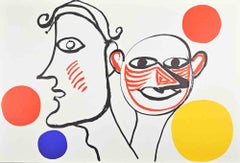
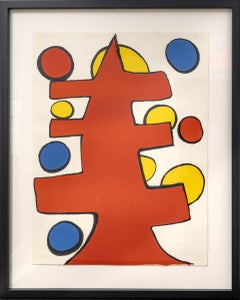
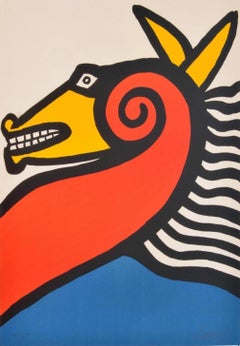
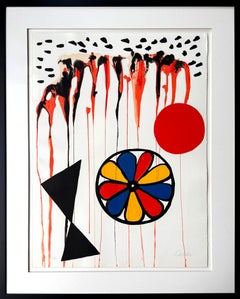
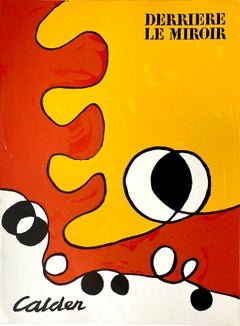
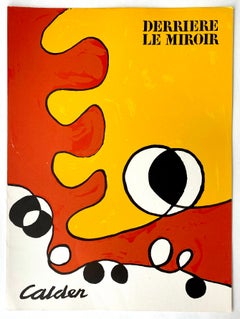
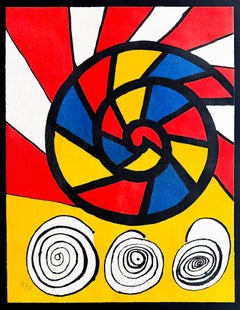
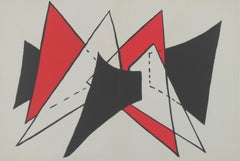
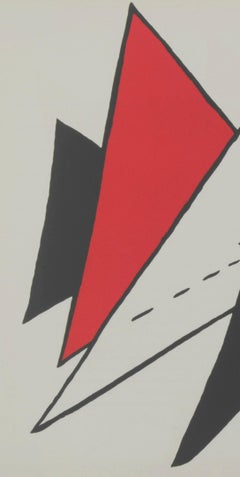
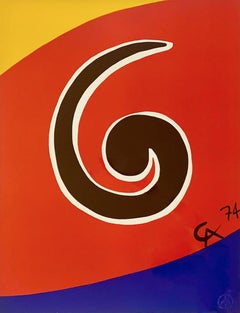
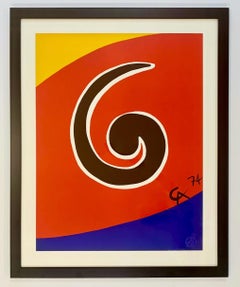
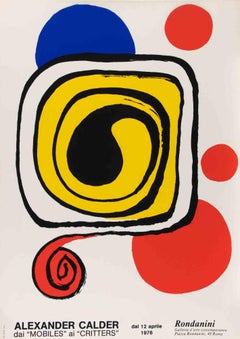
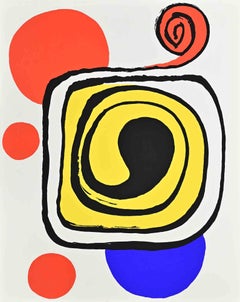
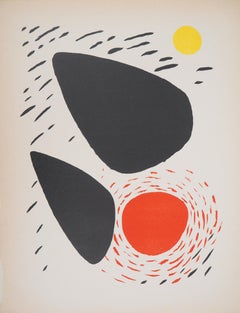
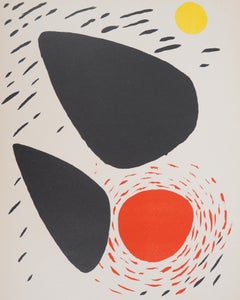
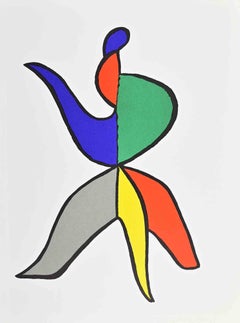
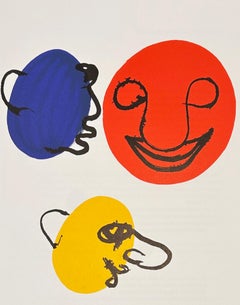
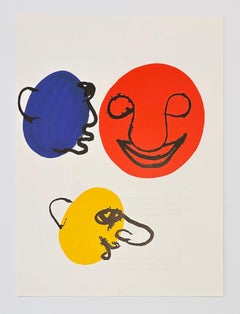
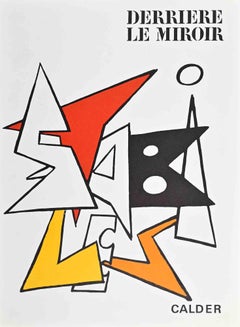
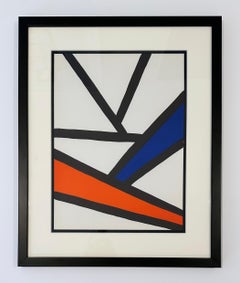
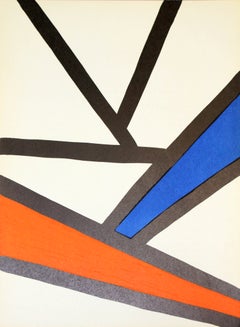
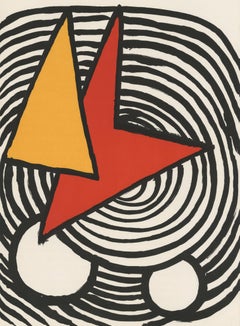
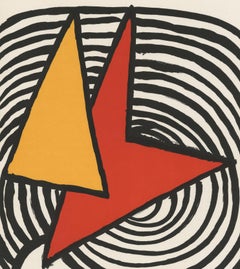
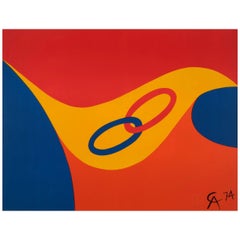
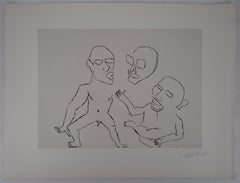
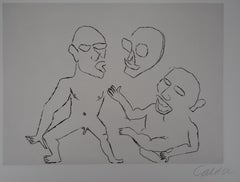
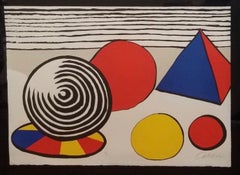
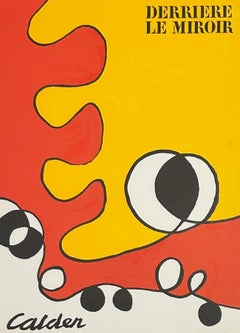
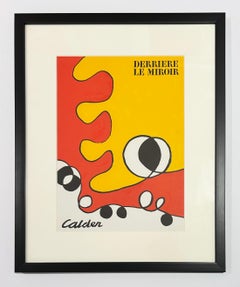
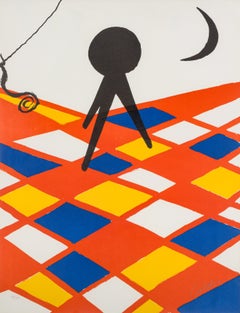
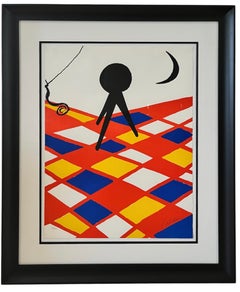
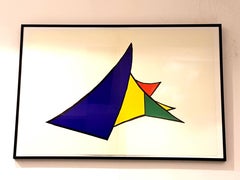
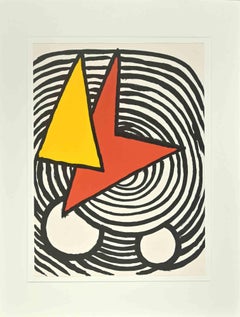
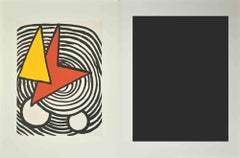
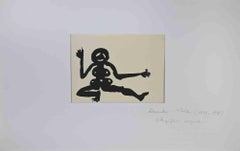
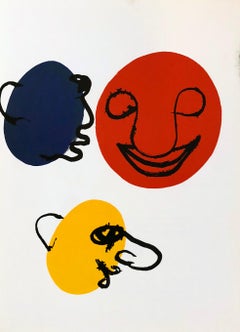
Title: Celebrations (Fêtes)
Year: December 1971
Medium: Lithograph on velin paper
Paper Size: 15 x 11 inches (38.1 x 27.94 cm)
Condition: Well preserved, consistent with age and medium
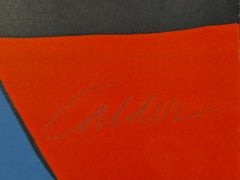
Inscription: Unsigned and unnumbered, as issued
Publisher: Maeght Editeur, Paris
Printer: Imprimerie Arte, Paris
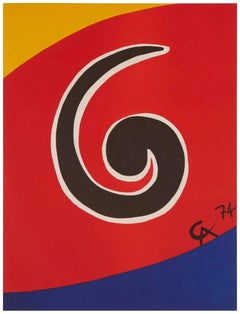
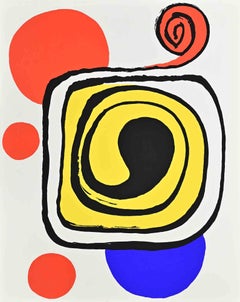
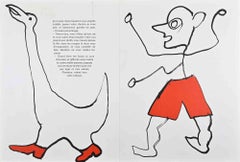
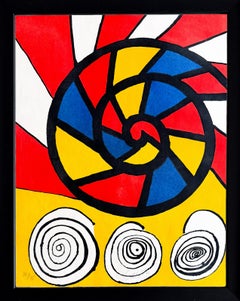
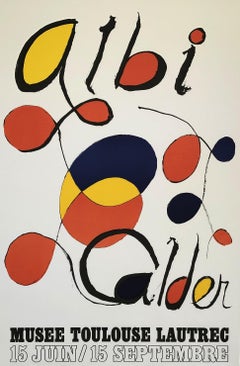
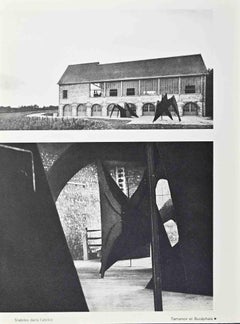
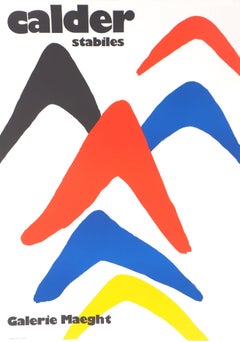
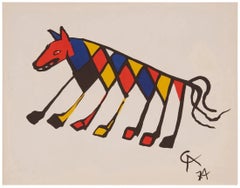
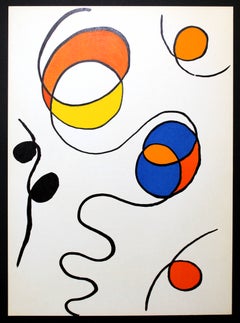
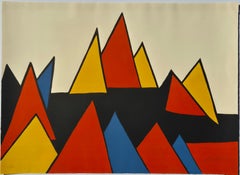
Notes: This exquisite lithograph by Alexander Calder (1898–1976), titled Fêtes (Celebrations), originates from the December 1971 folio Derriere le Miroir, published by Maeght Editeur, Paris, under the direction of Aime Maeght, and printed by Imprimerie Arte, Paris, 1971. The composition exemplifies Calder’s distinctive exploration of movement, balance, rhythm, and abstraction, translating into the graphic medium the dynamic visual language that transformed twentieth-century sculpture. Through an economy of line, shape, and color, Calder creates a composition animated by a sense of buoyancy and spontaneous movement, demonstrating how the principles underlying his celebrated mobiles and stabiles could be reimagined within the two-dimensional space of the printed image. Derriere le Miroir (translated as "Behind the Mirror") was an iconic French art periodical published from 1946 to 1982 by Maeght Editeur, one of the most influential art publishers of the twentieth century. Founded by Aime Maeght in Paris, the publication was conceived as a visual and literary collaboration between leading modern artists, poets, and critics. Each issue functioned simultaneously as an exhibition catalogue and as an autonomous work of art, featuring original lithographs printed directly from the artists stones or plates alongside essays, poems, and critical texts. Over more than three decades, Derriere le Miroir produced over 250 issues and presented an extraordinary range of artists including Henri Matisse, Marc Chagall, Georges Braque, Alexander Calder, Fernand Leger, Pierre Bonnard, Alberto Giacometti, Eduardo Chillida, Ellsworth Kelly, Francis Bacon, Antoni Tapies, Pierre Alechinsky, Pol Bury, Bram van Velde, and many others. Printed by master ateliers such as Mourlot and Arte, the series established new standards of excellence in modern lithography and graphic design. Closely linked to exhibitions at Galerie Maeght, each issue served as a lasting document of postwar modernism, uniting image, text, and philosophy into a uniquely influential publication that remains among the most important and collectible achievements in twentieth century art publishing.
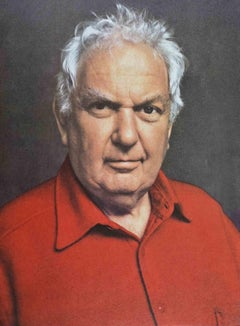
ALEXANDER CALDER (1898–1976) was an American sculptor, painter, and printmaker whose pioneering innovations in kinetic art revolutionized modern sculpture and transformed visual language. Born in Lawnton, Pennsylvania, into a family of artists, he trained as a mechanical engineer before moving into art, a combination that shaped his lifelong engagement with balance, structure, and motion. After relocating to Paris in 1926, he entered the avant-garde circle and formed friendships with Pablo Picasso, Alberto Giacometti, Joan Miro, Wassily Kandinsky, Salvador Dali, Marcel Duchamp, and Man Ray, whose influences helped shape his vision. Calder’s Cirque Calder introduced performance, humor, and engineering into sculpture, and he later invented the mobile, named by Duchamp, as well as its stationary counterpart, the stabile. His delicately balanced moving works and monumental public sculptures redefined the possibilities of abstraction and spatial experience, influencing artists such as Jean Tinguely, George Rickey, Donald Judd, Ellsworth Kelly, Richard Serra, and Olafur Eliasson. His gouaches, prints, and jewelry extended his vocabulary of rhythm and color across media. Represented in every major modern museum including MoMA, the Guggenheim, the Tate, and the Centre Pompidou, he stands alongside Picasso, Giacometti, Dali, Miro, Kandinsky, Duchamp, and Man Ray as one of the defining voices of modern art. Calder’s highest auction record was achieved by Poisson Volant (Flying Fish) (1957), which sold for 25.9 million USD at Christie’s, New York, on May 15, 2014, affirming his enduring influence and collectibility.
Alexander Calder Fêtes (Celebrations), Calder Derriere le Miroir, Calder Maeght Editeur Paris, Calder Imprimerie Arte, Calder 1971...
Category
1970s Modern Alexander Calder Art