Toyohara Kunichika Art

to
3
6
3
12
7
2
2
1
1
1
1
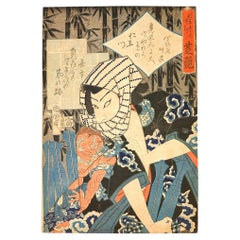
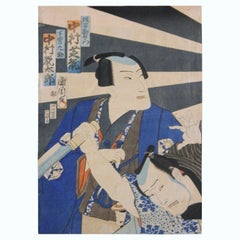
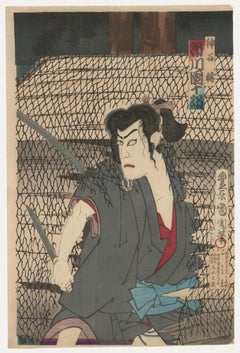
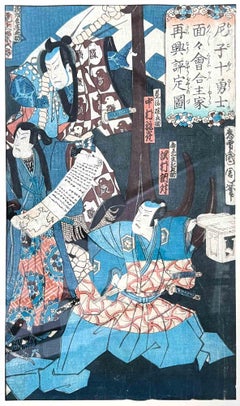
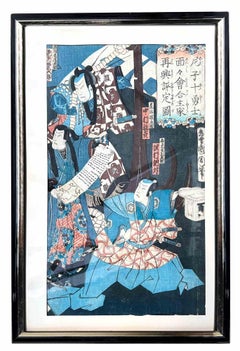
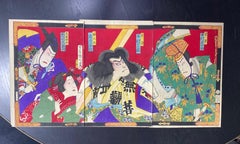
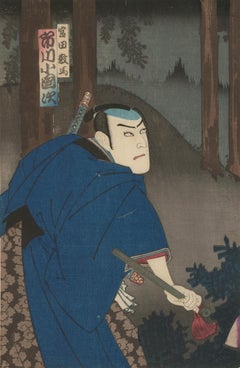
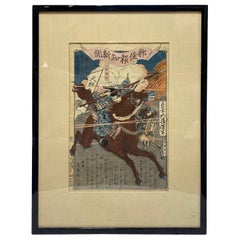
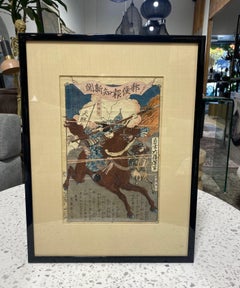
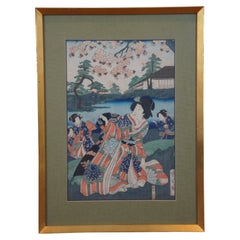
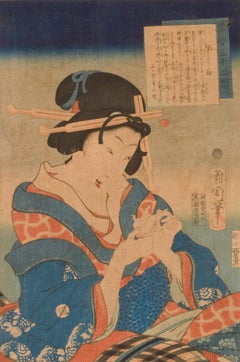
Authentic 1867 Toyohara Kunichika Woodblock Print Ukiyo-e

Authentic 1867 Toyohara Kunichika Woodblock Print Ukiyo-e

By Toyohara Kunichika

Located in TORQUAY, AU

A captivating, intense gaze from the final days of feudal Japan. This is not merely a portrait; it is a time capsule, capturing a moment of profound cultural transformation. This au...

Category

1860s Japanese Edo Antique Toyohara Kunichika Art

Materials

Wood, Paper

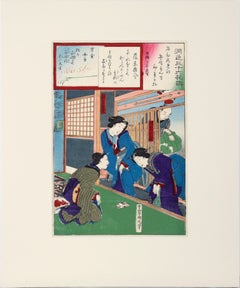
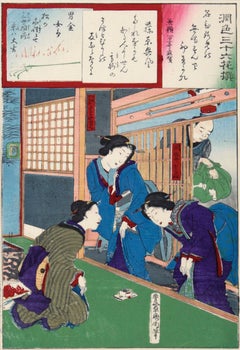
"Enshoku Sanju-roku Kasen" (Thirty-six Enchanting Flowers) Woodblock on paper

"Enshoku Sanju-roku Kasen" (Thirty-six Enchanting Flowers) Woodblock on paper

By Toyohara Kunichika

Located in Soquel, CA

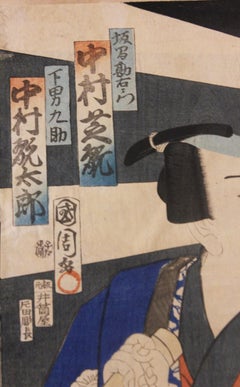
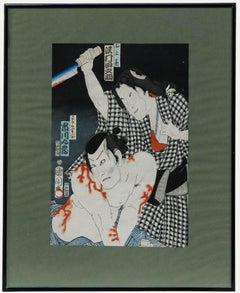
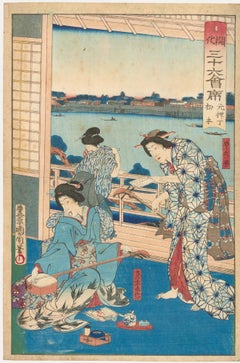
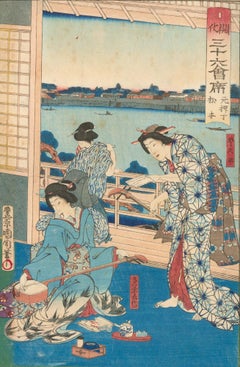
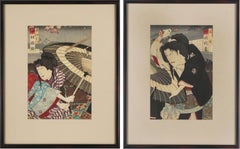
"Enshoku Sanju-roku Kasen" (Thirty-six Enchanting Flowers) Woodblock on paper Elegant woodblock print by Toyohara Kunuchika (Japanese, 1835-1900). Three women are in talking with each other inside, while a man waits outside holding a bag of some kind. The colors in this piece are rich and saturated, primarily blues, greens, and purple. Mat size: 16"H x 20"W Paper size: 14.75"H x 9.88"W Born in 1835, Toyohara Kunichika grew up in the Kyobashi district of Edo in the midst of merchants and artisans. In 1848, at age 13, he was accepted as an apprentice into the studio of Utagawa Kunisada I...

Category

1880s Edo Toyohara Kunichika Art

Materials

Ink, Rice Paper, Woodcut

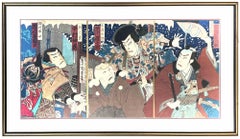
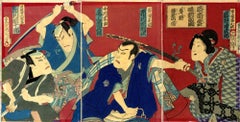
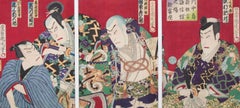
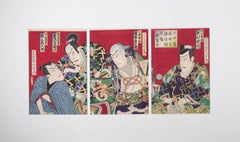
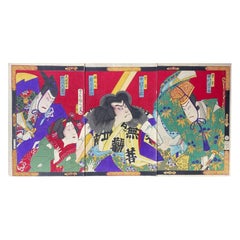
Toyohara Kunichika Japanese Triptych Woodblock Print of Kabuki Theater Actors

Toyohara Kunichika Japanese Triptych Woodblock Print of Kabuki Theater Actors

By Toyohara Kunichika

Located in Studio City, CA

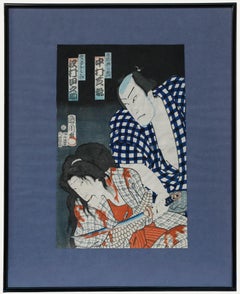
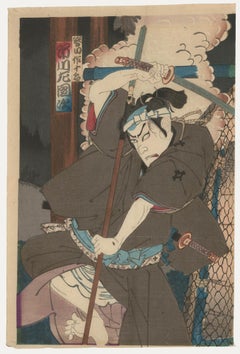
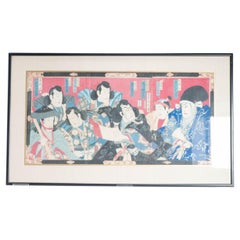
A wonderfully composed, beautifully, and richly colored triptych woodblock print by famed Japanese artist Toyohara Kunichika featuring four dramatic and quite intense Kabuki theatre ...

Category

Early 20th Century Japanese Meiji Toyohara Kunichika Art

Materials

Paper

Kabuki Scene-  Woodcut by Toyohara Kunichika - The Late 19th Century

Kabuki Scene- Woodcut by Toyohara Kunichika - The Late 19th Century

By Toyohara Kunichika

Located in Roma, IT

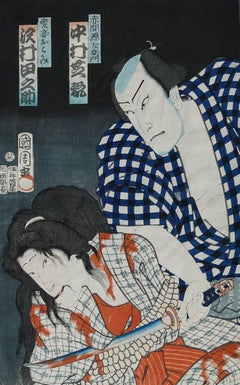
Kabuki Scene is a Japanese multi-colored woodcut tryptich realized around the end of the 19th century by Toyohara Kunichika (1835 - 1900). Original woodcut on paper. The artwork is ...

Category

19th Century Modern Toyohara Kunichika Art

Materials

Woodcut

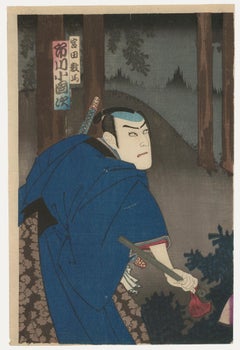
Antique Woodblock Print by Toyohara Kunichika, Kabuki Actor Nagayoshi Hokoma

Antique Woodblock Print by Toyohara Kunichika, Kabuki Actor Nagayoshi Hokoma

By Toyohara Kunichika

Located in Amsterdam, Noord Holland

Toyohara Kunichika (1835 – 1900) Additional information: Material: Paper Region of Origin: Japan Period: 19th century Decoration Type / Colour:Polychrome Condition: Good Condition D...

Category

19th Century Japanese Antique Toyohara Kunichika Art

Materials

Paper

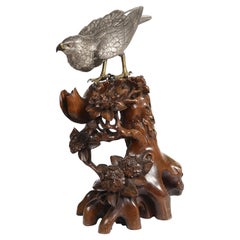
Japanese Silvered Bronze Model of a Goshawk, circa 1890

Japanese Silvered Bronze Model of a Goshawk, circa 1890

By Toyohara Kunichika

Located in Brighton, Sussex

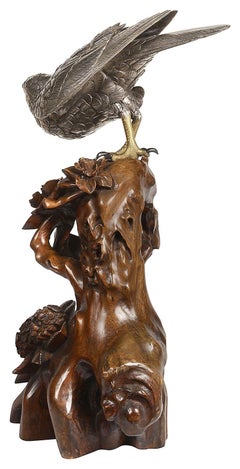
A SILVERED-BRONZE MODEL OF A GOSHAWK By Kunichika, Meiji era (1868-1912), late 19th/early 20th century Naturalistically rendered, standing alert with its head lowered, its wings ...

Category

Late 19th Century Japanese Antique Toyohara Kunichika Art

Materials

Bronze, Silver Leaf

Related Items
Tugs on the Hudson
Tugs on the Hudson

Tugs on the Hudson

By Charles Frederick William Mielatz

Located in Middletown, NY

Drypoint etching with engraving printed in black ink on Japanese mulberry paper, 4 1/2 x 3 3/8 inches (113 x 84 mm), full margins. In superb condition. A beautiful New York City river...

Category

Early 20th Century American Modern Toyohara Kunichika Art

Materials

Handmade Paper, Drypoint, Etching

Italian Boat at Sunrise

Italian Boat at Sunrise

By Sidney Mackenzie Litten

Located in Middletown, NY

A nostalgic image of a bucolic farmyard and thatched cottage, hearkening to a bygone era. Etching with drypoint on laid watercolor paper, 9 7/8 x 11 3/4 inches, (251 x 229 mm), full...

Category

Early 20th Century English School Toyohara Kunichika Art

Materials

Handmade Paper, Etching, Drypoint

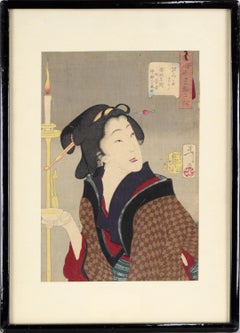
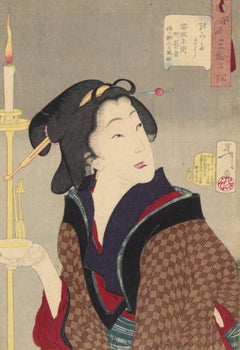
"Thirsty: the appearance of a town geisha in the Ansei era" - Woodblock on Paper

"Thirsty: the appearance of a town geisha in the Ansei era" - Woodblock on Paper

By Tsukioka Yoshitoshi

Located in Soquel, CA

"Thirsty: the appearance of a town geisha in the Ansei era" - Woodblock on Paper From the series "Thirty-two Aspects of Customs and Manners" (Fuzoku sanjuniso) Lively woodblock of a...

Category

1880s Edo Toyohara Kunichika Art

Materials

Paper, Ink, Woodcut

Utagawa Ando Hiroshige Japanese Woodblock Print Yoroi Ferry at Koami-Cho

Utagawa Ando Hiroshige Japanese Woodblock Print Yoroi Ferry at Koami-Cho

By Utagawa Hiroshige (Ando Hiroshige)

Located in Studio City, CA

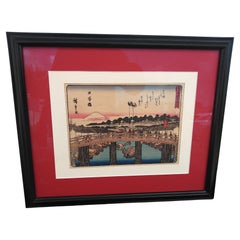
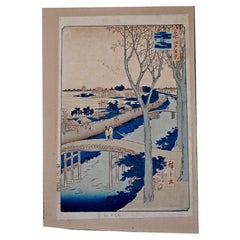
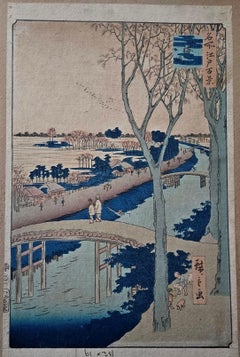
A wonderful Japanese woodblock print by famed Japanese artist Utagawa Hiroshige (Ando Hiroshige) (1797-1858) tilted "Yoroi Ferry at Koami-cho (Yoroi no ...

Category

Mid-19th Century Japanese Edo Antique Toyohara Kunichika Art

Materials

Paper

Ando Hiroshige woodblock print

Ando Hiroshige woodblock print

$880Sale Price|20% Off

H 7.5 in W 10 in D 1 in

Ando Hiroshige woodblock print

By Utagawa Hiroshige (Ando Hiroshige)

Located in Pasadena, TX

Ando (Utagawa) Hiroshige was the master of the landscape. He thrived in the early part of the 19th century. His works of art are highly sought out. This is a very good addition to co...

Category

Late 19th Century Japanese Antique Toyohara Kunichika Art

Materials

Paper

The Flight into Egypt

The Flight into Egypt

By Hans Lautensack

Located in Middletown, NY

Etching on handmade cream laid paper with a deckle edge, and an elaborate and large watermark of a crowned figure with a harp, and letters A S, 11 3/4 x 8 inches (298 x 204 mm); shee...

Category

16th Century Old Masters Toyohara Kunichika Art

Materials

Handmade Paper, Laid Paper, Etching

Japanese Edo 19th Century Signed Utagawa Kuniyoshi Diptych Woodblock Print

Japanese Edo 19th Century Signed Utagawa Kuniyoshi Diptych Woodblock Print

Located in Yonkers, NY

An antique Japanese Edo period diptych woodblock print from the early to mid 19th century, signed by Utagawa Kuniyoshi. Immerse yourself in the Japanese Edo period artistry with this antique 19th-century diptych woodblock print. Signed by the artist, this captivating piece is a striking depiction of a tranquil interior scene, rendered in a soothing color palette of blue, pink, and black tones. This print comprises two panels, assembled under glass in a custom frame to form a cohesive narrative. The scene captures a specific moment in time, presenting a man surrounded by four women and a child, beautifully adorned in traditional Japanese garments. The intricate details of their clothing are a testament to the artisan's skill, bringing an element of authenticity and depth to the scene. On the left, three women sit in a state of relaxed conversation, while another stands, graciously offering a tray. Adding intrigue, two additional women can be spotted peeking through a slightly open window, one cleverly concealing her face behind a fan. A child, smaller in stature, sits attentively in front of the man, further enhancing the scene's narrative quality. A signature from the artist adds an additional layer of authenticity, making this piece a must-have for collectors of antique Japanese art...

Category

19th Century Japanese Edo Antique Toyohara Kunichika Art

Materials

Glass, Paint, Paper

Rare 1922 German Jewish Judaica Zion Woodcut Woodblock Print Hermann Fechenbach

Rare 1922 German Jewish Judaica Zion Woodcut Woodblock Print Hermann Fechenbach

By Hermann Israel Fechenbach

Located in Surfside, FL

Title: Zion Subject: Various biblical images depicting Creation and prayer 1922 Medium: woodcut Frame: 14" x 18" Image: 12.5" x 16.75" Provenance: owned and signed verso by Peter Keil. Central panel shows the Jewish star over a crown, with inscription in Hebrew: "When God comforts Zion, He will comfort all its ruins and make its deserts look like Eden," and "You have sanctified the seventh day, the goal of creation of Heaven and Earth." This is flanked by a Palestinian farmer pioneer on the left and a Jew praying on the right. The lower tier shows six vignettes of the days of creation from Genesis. Hermann Fechenbach was born in 1897 in Württemberg, Germany. He grew up in Bad Mergentheim where his parents had an inn, which served as a meeting place for the local Jewish community. He left school early and through family connections with clothing retailers received training in window dressing. His skill with brush writing was quickly recognised by a big firm in Dortmund where he was responsible for the displays in 10 large windows. He received his conscription papers in 1916 and recalls “being as patriotic as any other fool”. In August 1917 he was involved in a grenade attack in which he was the sole survivor. With serious injuries to both legs he struggled to safety and was eventually transported to a front line “slaughterhouse” where the first of a series of amputations was performed which led to the loss of his left leg. As a result of his injuries his father dropped his opposition to him becoming an artist. His formal art education started in 1918 with training at a Stuttgart handcraft school for invalids. He attended the Academies in Stuttgart and Munich to learn painting and restoration for 3 years. He was influenced at this time by Max Liebermann. He has been compared to Kathe Kollwitz and was a contemporary of Jakob Steinhardt and hermann Struck. In 1923 he went to Florence for a year. While in Florence he started to produce a series of miniature wood engravings to illustrate the stories of Genesis. This was followed by periods in Pisa, Venice, Vienna and Amsterdam. In 1924 he returned to Stuttgart to paint in the contemporary style “Die Neue Sachlichkeit”. (The New Objectivity was a movement in German art that arose during the 1920s Weimar republic as a reaction against expressionism. The term was coined by Gustav Friedrich Hartlaub, the director of the Kunsthalle in Mannheim, who used it as the title of an art exhibition staged in 1925 to showcase artists who were working in a post-expressionist spirit. These artists—who included Max Beckmann, Otto Dix, George Grosz, Christian Schad, Rudolf Schlichter and Jeanne Mammen) Every spring and autumn he exhibited at the “Kunstgebit” which served as the showcase for all serious artists of the period. His professional status “Kunstmaler und Grafiker” was recognised by Berlin in 1926. Practically all his work from this period was sold following exhibition. In 1926 he collaborated with an architect friend to build a bungalow in Hohenheim, a non-Jewish area and a suburb of Stuttgart. Hermann alternately lived in his country bungalow and his town studio, producing portraits for sale or barter and wood engravings for his own pleasure. In 1930 he married a non-Jewish professional photographer – Greta Batze. They had a studio in Stuttgart, which was used to teach art to a group of 12 students. In 1933 the Nazi influence removed his name from the official state register together with the right to exhibit. By spending most of his time in his bungalow out of the Jewish quarter the Fechenbachs escaped being registered by the Nazis for some years. They were ostracised and abused by their non-Jewish neighbours. Hermann made weekly visits to friends in town to teach them the practical skills they would need assuming they were to escape from Germany. His energies were directed towards protection and survival. Ultimately the Nazi persecution forced the Fechenbachs to flee their homeland. They moved to Palestine for 3 months in 1938, but found the political and physical environment unsustainable. Greta arrived in England penniless in January 1939 to work as a domestic servant and to find a guarantor for her husband. Hermann arrived in May 1939. They moved to Blackheath a few months later. Hermann resumed his painting and engraving as a means of earning a living. He raised enough money to get his parents out of Germany to join his brothers in Argentina but was unable to save his twin sister Rosa who died in a Nazi concentration camp. In 1940 Hermann was interned in Bury as a suspect alien. He protested about his treatment by starting a hunger strike. Because of his persistence he was moved to a prison in Liverpool. From Liverpool he was moved to the Hutchinson Camp in the Isle of Man with fellow artist Kurt Schwitters. Arrangements were made for Greta to be accommodated near by. While interned he commenced work on “Refugee Impressions”, a series of linocut prints (no wood was available). In 1941 when released from internment the Fechenbachs came under the sponsorship of Dr. Bela Horovitz, the Austrian art publisher who in turn made an introduction to Professor Tancred Borenius. They were offered lodgings with a family in Oxford. Hermann had his first public exhibition for many years in a small gallery in Oxford in 1942. A second exhibition of oils, pencil drawings, coloured linocut and woodblock prints held later in the year was opened by the mayor of Oxford and critically acclaimed. In 1944 the first London exhibition took place at the Anglo-Palestinian club in Piccadilly. There were two exhibitions at the Ben Uri Art gallery during this period. In 1948 a second exhibition at the Anglo Palestinian club was inaugurated by a member of the Rothschild family and several members of Parliament. This was a great success. In 1944 the Fechenbachs moved to a top floor studio flat in Colet Gardens. Open exhibitions were held each Spring at the Embankment from 1946 to 1951. Movietone News produced a short feature on the artist, which was shown in cinemas in England and Germany. In 1969 he published the Genesis story in a hard back volume containing 137 prints. He started to research the fate of the entire Jewish community of Bad Mergentheim during the period of the second world war, liaising with historian Dr. Paul Sauer and Professor Max Miller, historian and theologian. In 1972 Kohlhammer published his partly autobiographical book “The last Jews of Mergentheim”. He exhibited at the Anglo-Palestinian Club & the Ben Uri Gallery in the 1940s. His works only came to prominence during the last year of his life when he exhibited at Blond Fine Art. Peter Keil part of the Junge Wilde. In 1978, the Junge Wilde painting style arose in the German-speaking world in opposition to established avant garde, minimal art and conceptual art. It was linked to the similar Transavanguardia movement in Italy, USA (neo-expressionism) and France (Figuration Libre). They were also known as the Neue Wilde. Artists included; Austria: Siegfried Anzinger, Erwin Bohatsch, Herbert Brandl, Gunter Damisch, Hubert Scheibl, Hubert Schmalix...

Category

1980s Impressionist Toyohara Kunichika Art

Materials

Woodcut

Antique view of Rome with an aqueduct spanning the Tiber

Antique view of Rome with an aqueduct spanning the Tiber

By Richard Earlom

Located in Middletown, NY

London: Boydell, 1810. Aquatint with engraving printed in sepia on cream wove paper with a partial 1805 watermark, 6 x 9 1/2 (153 x 242 mm); sheet 10 3/8 x 14 1/8 inches (264 x 360 ...

Category

Early 19th Century Modern Toyohara Kunichika Art

Materials

Handmade Paper, Etching, Aquatint

Edo Landscape Japanese Woodblock Print

Edo Landscape Japanese Woodblock Print

By Utagawa Hiroshige (Ando Hiroshige)

Located in Houston, TX

Edo Meisho woodblock print of a famous Japanese coastal dock. This woodblock is most likely apart of the series "One Hundred Famous Views of Edo." The woodblock print is printed on r...

Category

1850s Edo Toyohara Kunichika Art

Materials

Woodcut

"Dawn Inside the Yoshiwara" Utagawa Hiroshige, Japanese Landscape, Ukiyo-e

"Dawn Inside the Yoshiwara" Utagawa Hiroshige, Japanese Landscape, Ukiyo-e

By Utagawa Hiroshige

Located in New York, NY

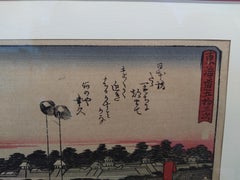
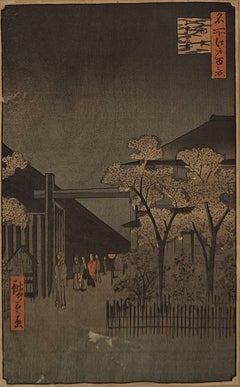
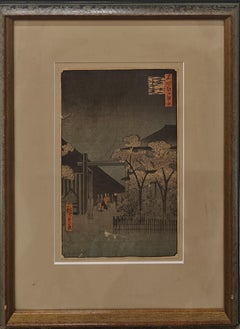
Utagawa Hiroshige Dawn Inside the Yoshiwara, circa 1857 Woodblock print 11 x 7 inches Utagawa Hiroshige is recognized as a master of the ukiyo-e woodblock printing tradition, havin...

Category

1850s Naturalistic Toyohara Kunichika Art

Materials

Paper, Ink, Woodcut

Previously Available Items
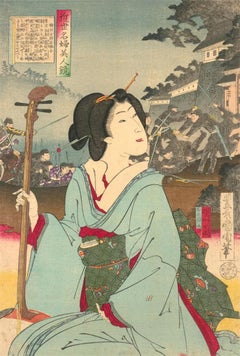
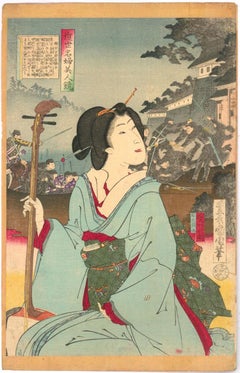
Toyohara Kunichika (1835-1900) - Japanese Woodblock, Song of the Samurai 91

Toyohara Kunichika (1835-1900) - Japanese Woodblock, Song of the Samurai 91

By Toyohara Kunichika

Located in Corsham, GB

A vibrant Japanese woodblock print depicting a bijinga playing a musical instrument before a scene from the Satsuma Rebellion. Signed and inscribed in characters. On paper.

Category

Late 19th Century Toyohara Kunichika Art

Materials

Woodcut

Japanese Ukiyoe Print by Toyohara Kunichika

Japanese Ukiyoe Print by Toyohara Kunichika

Sold

H 14.3 in W 1 in D 9.6 in

Japanese Ukiyoe Print by Toyohara Kunichika

By Toyohara Kunichika

Located in Fukuoka, JP

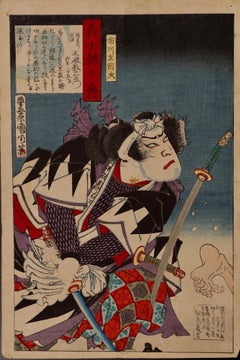
Japanese Ukiyoe print by Toyohara Kunichika ( 1835-1900 ) Printed on Meiji 28 (1895) Title: Gishi Meimeiden / Fuwa Kazuemon ( one of the 47 Ronin ) acted by Ichikawa Sadanji . Kunichika studied with Ukiyoe artist Chikanobu from whom he received his artist name . Then under Kunisada and began to produce actor prints...

Category

Mid-19th Century Japanese Antique Toyohara Kunichika Art

Materials

Paper

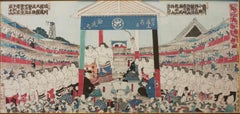
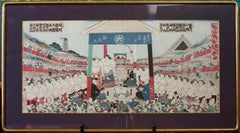
Sumo Wrestling Tournament

Sumo Wrestling Tournament

By Toyohara Kunichika

Located in Austin, TX

Toyohara Kunichika "Sumo Wrestling Tournament" Woodcut Print on Paper 13.5 x 28.5" Framed size 35 x 20" The print pictures an exciting scene featuring t...

Category

Late 19th Century Toyohara Kunichika Art

Materials

Rice Paper, Woodcut

"Yonde mitaso" - Geisha with Origami - Japanese Woodblock

"Yonde mitaso" - Geisha with Origami - Japanese Woodblock

By Toyohara Kunichika

Located in Soquel, CA

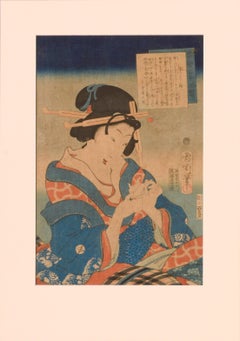
Depiction of a geisha holding origami by Toyohara Kunichika (Japanese, 1835-1900). Presented in a new cream mat with foamcore backing. No frame. Image size: 14"H x 19.5"W Toyohara Kunichika (Japanese 1835-1900) grew up in the Kyobashi district of Edo in the midst of merchants and artisans. Kunichika's work stands in contrast to that of many of his contemporaries as he persistently held onto the traditional style and subject matter of the classic Japanese woodcut, unaffected by new Western forms of art. His love of Kabuki inspired him to depict actors in their various roles and varying facial expressions. His skillful use of color and ability to translate the actor's depth of emotion onto the page makes his work some of the most dramatic ever produced. Later on in his career, Kunichika turned primarily to the triptych format as the increased size gave him the space to fully portray the drama and action of the characters represented. At around the age of eleven Kunichika first studied under the artist (Ichiosai) Toyohara Chikanobu. In 1848, he became an apprentice to the artist Utagawa Kunisada (Toyokuni III, 1786-1865). His first prints as an apprentice were published in the early 1850s. His apprenticeship was formative, as he remained grounded in the Utagawa style he was taught in Kunisada's studio, even after he achieved artistic independence during the mid 1860s-70s. The name Kunichika is a combination of the artist names of his two teachers, Toyohara Chikanobu and Utagawa Kunisada. Following tradition, he assumed the last character, kuni, from Kunisada's artist's name Toyokuni to which he added the character chika from Chikanobu. Kunichika's rise to prominence can be seen in his high ratings from the saikenki (a popular guide that rated ukiyo-e artists), in which he was rated #8 in 1865, #5 in 1867 and #4 in 1885. No other Meiji woodblock...

Category

Mid-19th Century Edo Toyohara Kunichika Art

Materials

Ink, Handmade Paper
Toyohara Kunichika art for sale on 1stDibs.

Find a wide variety of authentic Toyohara Kunichika art available for sale on 1stDibs. You can also browse by medium to find art by Toyohara Kunichika in woodcut print, paper, handmade paper and more. Much of the original work by this artist or collective was created during the 19th century and is mostly associated with the modern style. Not every interior allows for large Toyohara Kunichika art, so small editions measuring 10 inches across are available. Customers who are interested in this artist might also find the work of Kunichika Toyohara, Utagawa Yoshitora, and David Young Cameron. Toyohara Kunichika art prices can differ depending upon medium, time period and other attributes. On 1stDibs, the price for these items starts at $475 and tops out at $2,117, while the average work can sell for $657.
Artists Similar to Toyohara Kunichika

Tsukioka Yoshitoshi
Utagawa Kunisada III
Utagawa Hiroshige (Ando Hiroshige)