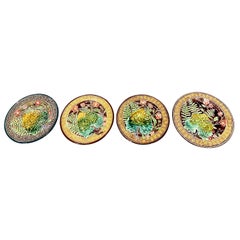
Art Nouveau Delft and Faience

ART NOUVEAU STYLE

In its sinuous lines and flamboyant curves inspired by the natural world, antique Art Nouveau furniture reflects a desire for freedom from the stuffy social and artistic strictures of the Victorian era. The Art Nouveau movement developed in the decorative arts in France and Britain in the early 1880s and quickly became a dominant aesthetic style in Western Europe and the United States.

ORIGINS OF ART NOUVEAU FURNITURE DESIGN

CHARACTERISTICS OF ART NOUVEAU FURNITURE DESIGN

  • Sinuous, organic and flowing lines
  • Forms that mimic flowers and plant life
  • Decorative inlays and ornate carvings of natural-world motifs such as insects and animals 
  • Use of hardwoods such as oak, mahogany and rosewood

ART NOUVEAU FURNITURE DESIGNERS TO KNOW

ANTIQUE ART NOUVEAU FURNITURE ON 1STDIBS

Art Nouveau — which spanned furniture, architecture, jewelry and graphic design — can be easily identified by its lush, flowing forms suggested by flowers and plants, as well as the lissome tendrils of sea life. Although Art Deco and Art Nouveau were both in the forefront of turn-of-the-20th-century design, they are very different styles — Art Deco is marked by bold, geometric shapes while Art Nouveau incorporates dreamlike, floral motifs. The latter’s signature motif is the "whiplash" curve — a deep, narrow, dynamic parabola that appears as an element in everything from chair arms to cabinetry and mirror frames.

The visual vocabulary of Art Nouveau was particularly influenced by the soft colors and abstract images of nature seen in Japanese art prints, which arrived in large numbers in the West after open trade was forced upon Japan in the 1860s. Impressionist artists were moved by the artistic tradition of Japanese woodblock printmaking, and Japonisme — a term used to describe the appetite for Japanese art and culture in Europe at the time — greatly informed Art Nouveau. 

The Art Nouveau style quickly reached a wide audience in Europe via advertising posters, book covers, illustrations and other work by such artists as Aubrey Beardsley, Henri de Toulouse-Lautrec and Alphonse Mucha. While all Art Nouveau designs share common formal elements, different countries and regions produced their own variants.

In Scotland, the architect Charles Rennie Mackintosh developed a singular, restrained look based on scale rather than ornament; a style best known from his narrow chairs with exceedingly tall backs, designed for Glasgow tea rooms. Meanwhile in France, Hector Guimard — whose iconic 1896 entry arches for the Paris Metro are still in use — and Louis Majorelle produced chairs, desks, bed frames and cabinets with sweeping lines and rich veneers. 

The Art Nouveau movement was known as Jugendstil ("Youth Style") in Germany, and in Austria the designers of the Vienna Secession group — notably Koloman Moser, Josef Hoffmann and Joseph Maria Olbrich — produced a relatively austere iteration of the Art Nouveau style, which mixed curving and geometric elements.

Art Nouveau revitalized all of the applied arts. Ceramists such as Ernest Chaplet and Edmond Lachenal created new forms covered in novel and rediscovered glazes that produced thick, foam-like finishes. Bold vases, bowls and lighting designs in acid-etched and marquetry cameo glass by Émile Gallé and the Daum Freres appeared in France, while in New York the glass workshop-cum-laboratory of Louis Comfort Tiffany — the core of what eventually became a multimedia decorative-arts manufactory called Tiffany Studios — brought out buoyant pieces in opalescent favrile glass. 

Jewelry design was revolutionized, as settings, for the first time, were emphasized as much as, or more than, gemstones. A favorite Art Nouveau jewelry motif was insects (think of Tiffany, in his famed Dragonflies glass lampshade).

Like a mayfly, Art Nouveau was short-lived. The sensuous, languorous style fell out of favor early in the 20th century, deemed perhaps too light and insubstantial for European tastes in the aftermath of World War I. But as the designs on 1stDibs demonstrate, Art Nouveau retains its power to fascinate and seduce.

There are ways to tastefully integrate a touch of Art Nouveau into even the most modern interior — browse an extraordinary collection of original antique Art Nouveau furniture on 1stDibs, which includes decorative objects, seating, tables, garden elements and more.

to
3
9
4
5
5
2
69
66
22
20
16
15
12
8
7
6
3
1
1
1
1
9
7
4
1
1
5
4
9
6
1
1
1
9
9
9
1
1
1
1
1
Style: Art Nouveau
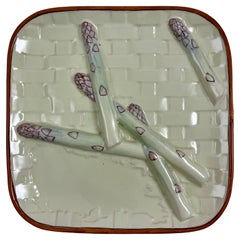
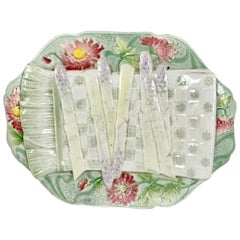
Émile Gallé St Clément Art Nouveau Trompe L'oeil French Asparagus Plate, 1870
Located in Philadelphia, PA
From St. Clément, Luneville and designed by Émile Gallé, a Barbotine square shaped, trompe l’oeil asparagus plate, circa 1870. Five raised asparagus spears are strewn across a bei...
Category

Late 19th Century French Antique Art Nouveau Delft and Faience

Materials

Earthenware

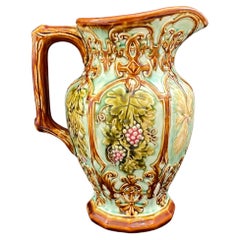
Late 19th Century French Majolica Pitcher, Art Nouveau, by Nimy Les Mons, Mouzin
Located in Andernach, DE
Fabulous French pitcher in beautifully combined colours and summer fruit by Nimy Les Mons. Caramel decoration and a light turquoise base are encompassing pink grapes, green grape vin...
Category

Early 1900s French Antique Art Nouveau Delft and Faience

Materials

Ceramic

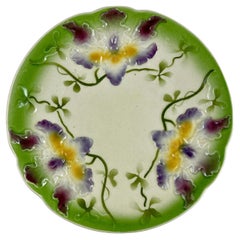
Sarreguemines Art Nouveau Barbotine Majolica Glazed Earthenware Orchid Plate
Located in Philadelphia, PA
A Sarreguemines French Barbotine faïence majolica plate showing a spray of three purple and yellow orchids on a cream colored ground. Raised, dimensional mold work with a shaped r...
Category

Early 1900s French Antique Art Nouveau Delft and Faience

Materials

Earthenware

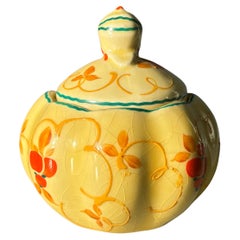
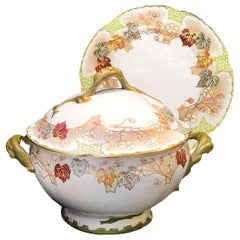
Ditmar Urbach Bohemian Floral Lid Bowl, 1930s
Located in Copenhagen, DK
Colorful bohemian art nouveau bowl with lid and small crevice for a spoon. Hand-painted berry decorations in bright orange over a warm yellow glaze and green and golden caramel organ...
Category

Early 20th Century Czech Art Nouveau Delft and Faience

Materials

Faience, Porcelain

Art Nouveau Italian Pair of Wall Brackets with Children Busts and Flowers 1920
Located in Milano, MI
Pair of 20th century Art Nouveau Italian wall brackets, two hand-modeled, hand painted ceramic brackets with a fine polychrome decoration with half-bust girl and boy figures and flowers. They are a Northern Italy manufacture, unmarked, dating back to the early 20th century in good condition, with minor chips consistent with age and use. A very charming pair of Italian ceramic brackets showing, in the lower part an unusual flower composition surmounted by two half-bust figures, girl and boy with a fine polychrome decoration. Ready to be hanged, this pair of antique wall brackets...
Category

Early 20th Century Italian Art Nouveau Delft and Faience

Materials

Ceramic

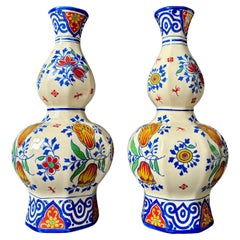
1 of 2 Antique 1920s Boch Fréres Keramis Art Nouveau Delft Faience Vase, Belgium
Located in Copenhagen, DK
One of two colorful 100 year old Belgian Art Nouveau delft faience knobble vase by Charles Catteau's Boch Fréres Keramis at La Louviére, Belgium in the 1920s. Hand painted flowers, l...
Category

Early 20th Century Belgian Art Nouveau Delft and Faience

Materials

Earthenware, Faience, Delft

Keller & Guerin St Clément Luneville Trompe L’Oeil Art Nouveau Asparagus Server
Located in Philadelphia, PA
An Aesthetic Movement French Faïence trompe l’oeil asparagus server, Keller & Guerin St. Clément, circa 1890-1900, in the Art Nouveau style. Molded to imitate a fringed and floral...
Category

Late 19th Century French Antique Art Nouveau Delft and Faience

Materials

Earthenware

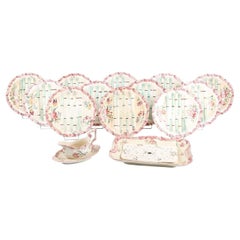
10 French Orchies Faience Majolica Asparagus and Artichoke Plates with Platter
Located in Birmingham, AL
A rare and exceptional 19th century set of 10 majolica glazed French faïence barbotine artichoke and asparagus plates complete with oval shaped master server or platter by Orchies, c...
Category

19th Century French Antique Art Nouveau Delft and Faience

Materials

Majolica, Ceramic, Earthenware, Faience
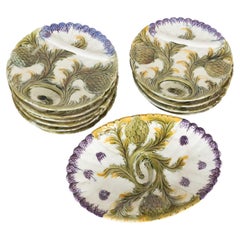
Art Nouveau Service Faïence Creil & Montereau Fontainebleau design 59 pcs 19th
Located in Paris, FR
This Faïence fine service "Fontainebleau", inspired by the atmosphere of the Fontainebleau castle, was manufactured by the French firm Creil & Montereau in the late 19th century. Fin...
Category

Late 19th Century French Antique Art Nouveau Delft and Faience

Materials

Faience

Related Items
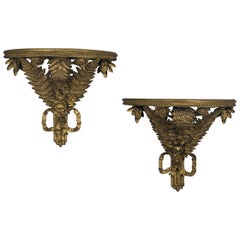
Pair of Fern Wall Brackets
Located in New York, NY
American, circa 1850-1880. Eastern white pine (Pinus strobus), with wire armature and composition ornament, gessoed and gilded. Measures: 14 1/8 in. high, 16 5/16 in. wide (at the sh...
Category

19th Century American Antique Art Nouveau Delft and Faience

Materials

Wood

Pair of Fern Wall Brackets
$55,000 / set
H 14.13 in W 16.32 in D 9.63 in
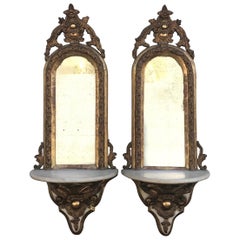
Pair of Antique Italian Mirrored Wall Brackets
Located in West Palm Beach, FL
Pair of Antique wall brackets with water gilding & mirrored back.
Category

Mid-19th Century Italian Antique Art Nouveau Delft and Faience

Materials

Giltwood

Pair of Antique Italian Mirrored Wall Brackets
$1,950 / set
H 26 in W 10 in D 6.5 in
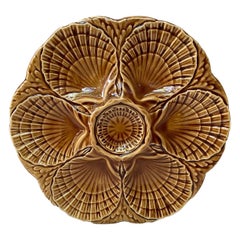
Majolica Oyster Plate Sarreguemines Circa 1950
Located in Austin, TX
Majolica oyster plate signed Sarreguemines, circa 1950.
Category

1950s French Vintage Art Nouveau Delft and Faience

Materials

Ceramic, Faience

Majolica Oyster Plate Sarreguemines Circa 1950
$148 Sale Price
20% Off
H 1 in Dm 9.4 in
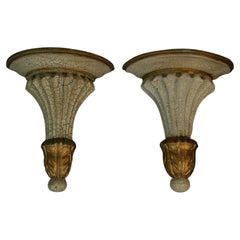
Pair Italian Painted Wood Wall Brackets
Located in Douglas Manor, NY
1550 Italian pair painted wood wall brackets with crackel and gilt finish
Category

1970s Vintage Art Nouveau Delft and Faience

Materials

Hardwood

Pair Italian  Painted Wood Wall Brackets
$675 Sale Price / set
30% Off
H 11 in W 9.75 in D 4.75 in
Large Antique Italian Blue and White Lidded Urn, 19th Century
Located in Dallas, TX
This stunning lidded urn might have once been found in a 19th century Italian apothecary. The front of the shaped urn body has the hand-painted phrase “C. Violaru”, which is the heavily abbreviated form of the Latin word for violet (violaceum). Up until the mid-1700’s, apothecaries would make syrups from violets and use it to treat kidney ailments. Above the Latin wording is a whimsical musical scene with a man blowing a horn leading a couple who is holding hands over rocky terrain lined with shrubbery. A large house and trees can be seen behind the trio with a pair of mountains in the distance. On the opposite side of the urn is a floral display with a bird perched on a rock. Beneath the bird is a geometric design, possibly a stylized sun with radiating beams of light. Both scenes are segmented by a pair of thin quarter round moldings that encircle the entire vase. Other hand-painted motifs include floral and foliate margents, geometric patterns, and Vitruvian waves that are infilled with horizontal fluting. The sides of the urn have a fish-scale background beneath two mustachioed mascarons. Both men have been styled in grotesque fashion, with a pair of spiraled horns emanating from their heads. In between the horns is a looping handle that is affixed to the body in similar tight spirals. The domed lid has three scrolled arms that merge in a geometric finial. The base color of the urn is white, with illustrations in a monochromatic cobalt oxide blue, reminiscent of Delft blue pottery...
Category

19th Century Italian Antique Art Nouveau Delft and Faience

Materials

Porcelain

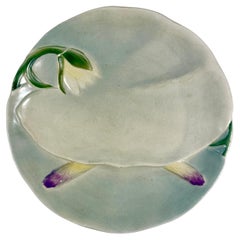
Majolica Water Lily Asparagus Plate Keller & Guerin Saint Clement
Located in Austin, TX
Majolica Art Nouveau asparagus plate unsigned Keller et Guerin Saint Clement Every important French manufactures produced at the end of the 19th century asparagus and artichoke sets...
Category

Early 1900s French Antique Art Nouveau Delft and Faience

Materials

Majolica

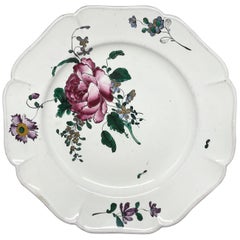
Strasbourg Faience Floral Plate
Located in New York, NY
Strasbourg faience floral plate. Antique faience plate with large floral bouquets and lobed rims with further floral sprays and insects; with blue u...
Category

Mid-18th Century French Antique Art Nouveau Delft and Faience

Materials

Faience

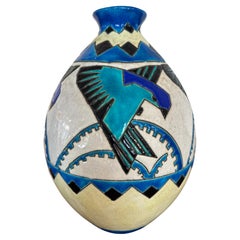
Charles Catteau Boch Freres Keramis Art Deco Pottery Vase
Located in Brescia, IT
Fine Art Deco vase by Charles Catteau Boch, La Louvier Gres Keramis Glazed ceramic Excellent condiction.  
Category

1920s Italian Vintage Art Nouveau Delft and Faience

Materials

Ceramic

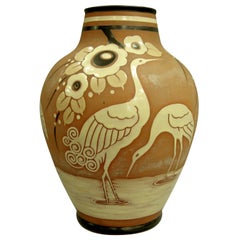
Belgian pottery vase with cranes Catteau Boch Freres Enameled circa 1939
Located in New York City, NY
Belgian Boch Freres Keramis faience art pottery vase "Grues" depicting cranes feeding in a marsh. Tri-colored with enameled decoration of cranes and flowers amidst a buff matte terra...
Category

20th Century Belgian Art Nouveau Delft and Faience

Materials

Pottery

Pair of 19th Century Italian Painted and Giltwood Wall Brackets
Located in Houston, TX
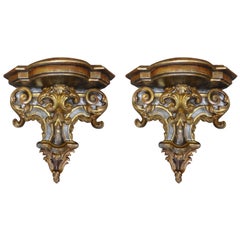
Pair of 19th Century Italian Painted and Gilt wood Wall Brackets. Stunning large pair of Italian Baroque style painted and gilt wood wall brackets, wall shelves or wall consoles to d...
Category

1870s Italian Antique Art Nouveau Delft and Faience

Materials

Giltwood

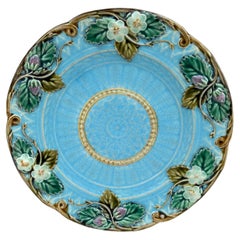
Majolica Strawberries Plate Sarreguemines, circa 1870
Located in Austin, TX
Majolica strawberries plate signed Sarreguemines Majolica, circa 1870.  
Category

1870s French Antique Art Nouveau Delft and Faience

Materials

Ceramic

Majolica Strawberries Plate Sarreguemines, circa 1870
$224 Sale Price
20% Off
H 0.5 in Dm 8 in
Charles Catteau for Boch Keramis Art Deco Vase with Stylized Swallows, Belgium
Located in Antwerp, BE
A beautiful rare Art Deco vase by Charles Catteau for Boch Frères Keramis. In very good condition. Decor D.3288, Signature Stamped. Depictive with a repetition offour flying swallows...
Category

1920s Belgian Vintage Art Nouveau Delft and Faience

Materials

Ceramic

Previously Available Items
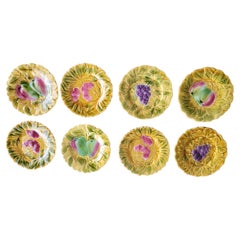
Assiettes Sarreguemines en faïence barbotine décor fruits Francaise Vintage (8)
Located in London, England
Lot de 8 assiettes à dessert anciennes décor très vintage Sarreguemines . En bon état avec des usures dues à leur grand âge. La barbotine est un mélange d’argile et d’eau utilisé pou...
Category

Mid-20th Century French Art Nouveau Delft and Faience

Materials

Faience

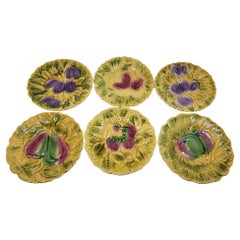
Assiettes Sarreguemines en faïence barbotine décor fruits Francaise Vintage
Located in London, England
Lot de 6 assiettes à dessert anciennes décor très vintage Sarreguemines . En bon état avec des usures dues à leur grand age. La barbotine est un mélange d’argile et d’eau utilisé pou...
Category

Mid-20th Century French Art Nouveau Delft and Faience

Materials

Faience

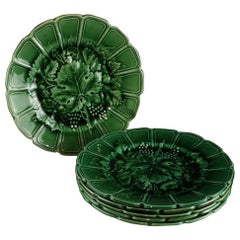
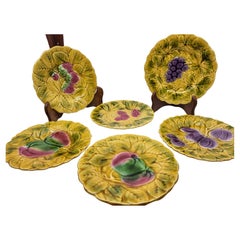
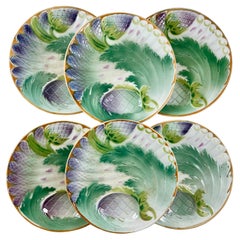
Green Grape Leaf Majolica Plates by Sarreguemines, France 1890s, set of 6
Located in Grythyttan, SE
This splendid set of six late 19th to early 20th-century french majolica plates comes from Sarreguemines, France. Each plate features beautifully scalloped rims and intricate designs...
Category

1890s French Antique Art Nouveau Delft and Faience

Materials

Earthenware, Majolica

Assiettes Sarreguemines en fayence barbotine décor fruits Francaise Vintage
Located in London, England
Lot de 6 assiettes à dessert Sarreguemines, en faïence barbotine anciennes décor très vintage Sarreguemines . En bon état avec des usures dues à leur grand âge. La barbotine est un m...
Category

Mid-20th Century French Art Nouveau Delft and Faience

Materials

Faience

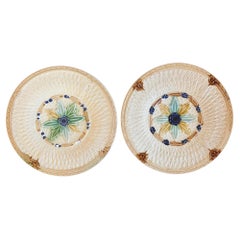
Antique Majolica Hand Painted Plates by Wasmuel -Set of 2
Located in Ross, CA
Late 19th century majolica plates made in Belgium by Wasmuel. Each plate has a layered feathering leading out toward the edge from the center flower.
Category

Late 19th Century Belgian Antique Art Nouveau Delft and Faience

Materials

Ceramic

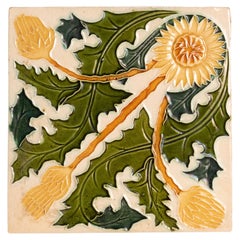
Ceramic Art Nouveau flower tile, made by La Majolique 'Emptinne, Belgium', 1900s
By La Majolique d'emptinne SA
Located in Oostende, BE
Beautiful Art Nouveau tile, showing a yellow flower and green leaves on a cream background. Made by Belgian manufacturer La Majolique, founded in 1896. Text on the back: "Société ...
Category

Early 1900s Belgian Antique Art Nouveau Delft and Faience

Materials

Ceramic

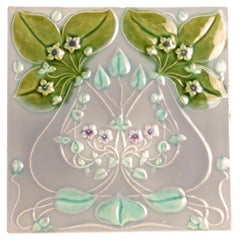
Ceramic Art Nouveau flower tile, made by Belgian Manufacturer '1900s'
Located in Oostende, BE
Ceramic Art Nouveau flower tile, made by Manufactures Céramiques d'Hemixem, Gilliot & Cie (Belgium), 1900s. Antique 1900s ceramic tile decorated in low relief with a striking des...
Category

Early 1900s Belgian Antique Art Nouveau Delft and Faience

Materials

Ceramic

Longchamp Majolica Asparagus Service Dish with Strainer Sauce Boat and 12 Plates
Located in Paris, FR
This charming set of French Longchamp Majolica Manufactory for asparagus is composed of 15 pièces. Beautifully embossed hand-painted asparagus creat...
Category

Early 1900s French Antique Art Nouveau Delft and Faience

Materials

Faience, Majolica

St. Amand Art Nouveau French Majolica Glazed Asparagus & Artichoke Plate
By St. Amand & Hamage Nord
Located in Philadelphia, PA
An Art Nouveau French porcelaneous plate showing aspects of both the asparagus and artichoke plants, circa 1900-1910. The plate is rimmed in a bittersweet orange-red, asparagus sp...
Category

Early 20th Century French Art Nouveau Delft and Faience

Materials

Earthenware

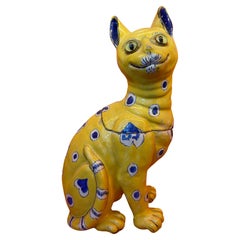
Enamelled Earthenware Tobacco Jar Representing a Cat by Emile Galle 19th Century
Located in Marcq-en-Barœul, Hauts-de-France
An enamelled earthenware tobacco jar representing a cat. French work by famous designer and maker Emile Galle. Circa 1880-1890.
Category

Late 19th Century French Antique Art Nouveau Delft and Faience

Materials

Ceramic, Earthenware, Faience

Keller & Guerin St Clément Luneville Art Nouveau Water Lily Asparagus Plate
Located in Philadelphia, PA
From the Keller and Guerin St. Clément faïencerie, a Water Lily themed Asparagus plate, France, circa 1900. Soft water color like glazing distinguishes this Art Nouveau period Water...
Category

Late 19th Century French Antique Art Nouveau Delft and Faience

Materials

Earthenware

Choisy-Le-Roi Majolica Plates, Set of Four
Located in Pasadena, CA
This is a great set of French Choisy-Le-Roi Majolica or faience plates in the "Leaf and Flower" pattern with the highly desirable "Greek Key" border. Two plates are 8.5" in diameter ...
Category

Late 19th Century French Antique Art Nouveau Delft and Faience

Materials

Faience

Art Nouveau delft and faience for sale on 1stDibs.

Find a broad range of unique Art Nouveau delft and faience for sale on 1stDibs. Many of these items were first offered in the Early 20th Century, but contemporary artisans have continued to produce works inspired by this style. If you’re looking to add vintage delft and faience created in this style to your space, the works available on 1stDibs include serveware, ceramics, silver and glass, decorative objects, wall decorations and other home furnishings, frequently crafted with ceramic, earthenware and other materials. If you’re shopping for used Art Nouveau delft and faience made in a specific country, there are Europe, France, and Denmark pieces for sale on 1stDibs. While there are many designers and brands associated with original delft and faience, popular names associated with this style include Aluminia, Emile Gallé, Saint Clément, and Boch Freres Keramis. It’s true that these talented designers have at times inspired knockoffs, but our experienced specialists have partnered with only top vetted sellers to offer authentic pieces that come with a buyer protection guarantee. Prices for delft and faience differ depending upon multiple factors, including designer, materials, construction methods, condition and provenance. On 1stDibs, the price for these items starts at $220 and tops out at $4,974 while the average work can sell for $505.

Recently Viewed

View All