Expressionist Art

EXPRESSIONIST STYLE

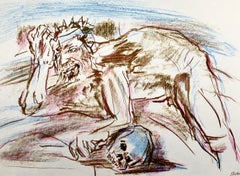
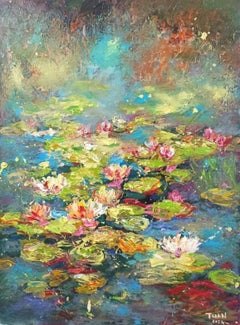
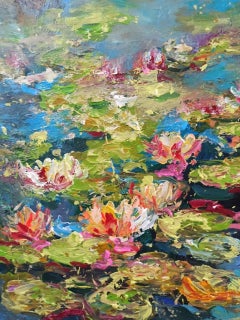
While “expressionist” is used to describe any art that avoids naturalism and instead employs a bold use of flattened forms and intense brushwork, Expressionist art formally describes early-20th-century work from Europe that drew on Symbolism and confronted issues such as urbanization and capitalism. Expressionist artists experimented in paintings and prints with skewed perspectives, abstraction and unconventional, bright colors to portray how isolating and anxious the world felt rather than how it appeared. 

Between 1905 and 1920, Austrian and German artists, in particular, were inspired by Postimpressionists such as Paul Gauguin and Vincent van Gogh in their efforts to strive for a new authenticity in their work. In its geometric patterns and decorative details, Expressionist art was also marked by eclectic sources like German and Russian folk art as well as tribal art from Africa and Oceania, which the movement’s practitioners witnessed at museums and world’s fairs.

Groups of artists came together to share and promote the themes now associated with Expressionism, such as Die Brücke (The Bridge) in Dresden, which included Erich Heckel, Ernst Ludwig Kirchner and Karl Schmidt-Rottluff and investigated alienation and the dissolution of society in vivid color. In Munich, Der Blaue Reiter (The Blue Rider), a group led by Wassily Kandinsky and Franz Marc, instilled Expressionism with a search for spiritual truths. In his iconic painting The Scream, prolific Norwegian painter Edvard Munch conveyed emotional turmoil through his depiction of environmental elements, such as the threatening sky.

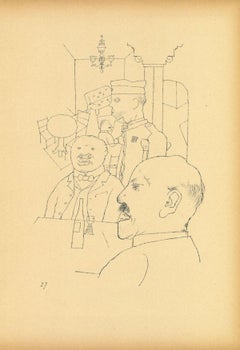
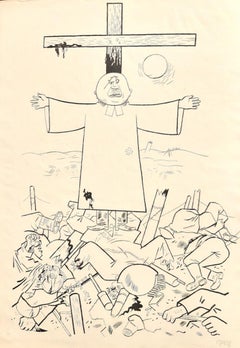
Expressionism shifted around the outbreak of World War I, with artists using more elements of the grotesque in reaction to the escalation of unrest and violence. Printmaking was especially popular, as it allowed artists to widely disseminate works that grappled with social and political issues amid this time of upheaval. Although the art movement ended with the rise of Nazi Germany, where Expressionist creators were labeled “degenerate,” the radical ideas of these artists would influence Neo-Expressionism that emerged in the late 1970s with painters like Jean-Michel Basquiat and Francesco Clemente.

​​Find a collection of authentic Expressionist paintings, sculptures, prints and more art on 1stDibs.

to
1,084
1,999
1,092
1,103
858
972
Overall Width
to
Overall Height
to
1
47
2,828
3,155
99
132
355
109
82
175
485
282
265
190
1
117,041
64,300
56,430
28,414
14,629
9,616
6,702
4,183
3,158
2,487
2,393
2,144
605
3,262
2,019
648
2,542
1,576
1,561
989
735
427
406
400
370
323
298
275
270
227
198
161
137
110
107
101
3,784
2,240
1,900
1,835
1,400
303
91
88
72
52
1,209
432
3,006
2,180
Style: Expressionist
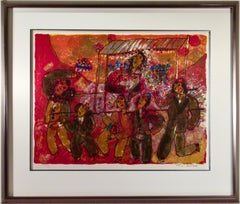
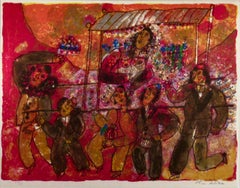
Nick's Coffee House in the Village - Rare Edition 1970s Modern Figurative Print

Nick's Coffee House in the Village - Rare Edition 1970s Modern Figurative Print

By Lenore SImon

Located in Soquel, CA

This bold screen print depicts a scene from the 1950s, set in a jazz coffee house in Greenwich Village called Nick's, which Simon patronized while in high school. The original stone ...

Category

Late 20th Century Expressionist Art

Materials

Archival Paper, Screen

20th Paris School Collage Cutout Artwork Wonderful Interior Design options!

20th Paris School Collage Cutout Artwork Wonderful Interior Design options!

By Bernard Herzog

Located in Cirencester, Gloucestershire

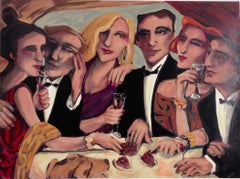
"Collage" by Bernard Herzog (French, b.1935) signed and stamped verso with catalogue number photo collage cut outs on paper, unframed overall paper: 25.5 x 20 inches Highly unique ...

Category

Mid-20th Century Expressionist Art
Materials

Photographic Film, Magazine Paper

Shadow Dance, Original

Shadow Dance, Original

By Eleanor Woolley

Located in Deddington, GB

Shadow Dance is an Original Oil painting by Eleanor Woolley. The artists inspiration for this painting is the play of light on figures in urban settings. The contrast of backlit figu...

Category

2010s Expressionist Art

Materials

Canvas, Oil

Dancers in the artists studio

Dancers in the artists studio

By Jean Jansem

Located in New York, NY

Jean Jansem (1920-2013) The artist was invited at this period of time by a French Ballerina to attend a rehearsal and this was the start of his Ballet series. This painting was in h...

Category

Late 20th Century Expressionist Art

Materials

Oil

Stagecoach Road
Stagecoach Road

Stagecoach Road

By James Hartman

Located in San Francisco, CA

Artist Comments
A cradled panel is laid with vintage sewing tissues as a mordant to adhere the beeswax. I did an underpainting in ink then used a prismatic palette to lead th...

Category

21st Century and Contemporary Expressionist Art

Materials

Encaustic

At Sunset
At Sunset

At Sunset

Located in Zofingen, AG

In crafting this painting, I poured my heart into capturing the serene companionship between two creatures at dusk. The strokes are a dance of naive warmth with pops of color that sp...

Category

2010s Expressionist Art

Materials

Canvas, Oil, Acrylic

Composition, Poems of Léopold Sédar Senghor, Lois Mailou Jones

Composition, Poems of Léopold Sédar Senghor, Lois Mailou Jones

By Lois Mailou Jones

Located in Southampton, NY

Silkscreen on vélin paper. Paper Size: 22 x 17 inches. Inscription: Unsigned and unnumbered, as issued. Notes: From the album, Poems of Léopold Sédar Senghor, 1996. Published by The Limited Editions Club, New York; printed by Studio Heinrici, Ltd., New York, under the direction of Alexander Heinrici, New York, 1996. Excerpted from the album, CC examples of this album have been printed by Daniel Keleher at Wild Carrot Letterpress. This edition was designed and set in Bodoni types by Dan Cart and Julia Ferrari at Golgonooza Letter Foundry. The silkscreen prints were made by Alexander Heinrici at Studio Heinrici. LOIS MAILOU JONES (1905-1998) was an African American artist and educator, often associated with the Harlem Renaissance. Jones was raised in Boston by working-class parents who emphasized the importance of education and hard work. After graduating from Boston’s School of the Museum of Fine Arts, Jones began designing textiles for several New York firms. She left in 1928 to take a teaching position at Palmer Memorial Institute in North Carolina. At Palmer, Jones founded the art department, coached basketball, taught folk dancing, and played the piano for Sunday services. Two years later, she was recruited by Howard University in Washington, D.C., to join its art department. From 1930–77, Jones trained several generations of African American artists, including David Driskell, Elizabeth Catlett, and Sylvia Snowden...

Category

1990s Expressionist Art

Materials

Screen

Rebirth 2 -21st Century, Contemporary, Figurative People, Expressionism, Women

Rebirth 2 -21st Century, Contemporary, Figurative People, Expressionism, Women

By Emmanuel Ojebola

Located in Ibadan, Oyo

Shipping Procedure Ships in a well-protected tube from Nigeria This work is unique, not a print or other type of copy. Accompanied by a Certificate of Authenticity About Artist Emma...

Category

21st Century and Contemporary Expressionist Art

Materials

Canvas, Coffee, Mixed Media

Kathe Kollwitz, Germany’s Children Are Starving, 1941 (after)

Kathe Kollwitz, Germany’s Children Are Starving, 1941 (after)

By Käthe Kollwitz

Located in Southampton, NY

This exquisite lithograph after Kathe Kollwitz (1867–1945), titled Deutschlands Kinder hungern (Germany’s Children Are Starving), from the folio Kathe Kollwitz, Ten Lithographs, originates from the 1941 edition published by Henry C. Kleemann, New York, and Curt Valentin, New York; printed by Duenewald Printing Corporation, New York. The composition reflects Kollwitz’s profound engagement with themes of hardship, deprivation, and human suffering, rendered with stark emotional intensity and a powerful graphic economy that underscores her enduring social message. Executed as a lithograph on velin paper, this work measures 19 x 16 inches (48.26 x 40.64 cm), overall; 15 x 13 inches (38.10 x 33.02 cm), image. Unsigned and unnumbered as issued. Artwork Details: Artist: After Kathe Kollwitz (1867–1945) Title: Deutschlands Kinder hungern (Germany’s Children Are Starving), from Kathe Kollwitz, Ten Lithographs Medium: Lithograph on velin paper Dimensions: 19 x 16 inches (48.26 x 40.64 cm), overall; 15 x 13 inches (38.10 x 33.02 cm), image Inscription: Unsigned and unnumbered as issued Date: 1941 Publisher: Henry C. Kleemann, New York, and Curt Valentin, New York Printer: Duenewald Printing Corporation, New York Condition: Well preserved, consistent with age and medium Provenance: From the folio Kathe Kollwitz, Ten Lithographs, 1941 About the Publication: Kathe Kollwitz, Ten Lithographs, published in New York in 1941 by Henry C. Kleemann in collaboration with Curt Valentin, represents an important early American presentation of Kollwitz’s graphic work at a time when her reputation was expanding internationally. Issued during the turbulence of the Second World War and following the suppression of her work in Germany under the Nazi regime, the folio played a crucial role in introducing her imagery to a broader audience outside Europe. The publication gathers a selection of her most powerful lithographic compositions, emphasizing her mastery of tonal contrast, expressive line, and psychological depth. Produced with careful attention to print quality by Duenewald Printing Corporation, the edition reflects the continued transmission of European modernist printmaking traditions into the American context, serving both as a document of artistic excellence and as a vehicle for the preservation and dissemination of Kollwitz’s humanistic vision. About the Artist: Kathe Kollwitz (1867–1945) was a German draughtsman, printmaker, and sculptor whose profoundly moving imagery, exceptional technical mastery, and unwavering social conscience established her as one of the most important and influential artists of the twentieth century, widely recognized as a master of modern printmaking and one of the most powerful visual chroniclers of human suffering, war, and social injustice. Born in Konigsberg, East Prussia, into a progressive and intellectually engaged family, Kollwitz was encouraged from an early age to pursue art and developed a deep awareness of social inequality that would shape her entire career, studying in Berlin and Munich at a time when women were largely excluded from formal academies while mastering drawing and graphic techniques with extraordinary discipline. Her breakthrough came with the monumental graphic cycle A Weavers’ Revolt (1893–1897), followed by The Peasants’ War (1901–1908), works that combined complex narrative structure with extraordinary technical command in etching, aquatint, and lithography, establishing her reputation as one of Europe’s leading graphic artists. Throughout her career, Kollwitz remained committed to portraying the lives of workers, mothers, and victims of poverty and conflict with unflinching honesty, creating compositions defined by bold, sculptural line, dense shadow, and unparalleled psychological depth that conveyed grief, resilience, and dignity. Working during a period transformed by the radical innovations of Pablo Picasso, Alexander Calder, Alberto Giacometti, Salvador Dali, Joan Miro, Wassily Kandinsky, Marcel Duchamp, and Man Ray, Kollwitz maintained a resolutely figurative and human-centered approach, aligning more closely with German Expressionism and artists such as Ernst Barlach, Max Liebermann, and Edvard Munch, whose emotional intensity and symbolic treatment of the human figure profoundly shaped her artistic language. Her later work, particularly the woodcut cycle War (1922–1923), stands among the most powerful anti-war statements in the history of art, reflecting both personal tragedy, including the death of her son in World War I, and a universal condemnation of violence and loss. In addition to her prints, Kollwitz created deeply moving sculptures that extended her exploration of grief and maternal protection into three dimensions, reinforcing her status as a multidisciplinary artist of exceptional range. She achieved significant recognition during her lifetime, becoming the first woman elected to the Prussian Academy of Arts, though her work was later condemned by the Nazi regime as degenerate, leading to her forced resignation and the removal of her works from public collections, yet her reputation expanded internationally after World War II and she is now regarded as a central figure in modern art. Her influence has been profound and far-reaching, shaping later artists including Francis Bacon, Anselm Kiefer, Leon Golub, Kiki Smith, and numerous contemporary figurative and socially engaged artists who continue to explore themes of trauma, memory, and human vulnerability. Today her works are held in major museum collections worldwide, including the Kathe Kollwitz Museum in Berlin, the Museum of Modern Art in New York, the British Museum in London, and the Art Institute of Chicago, and remain highly sought after by collectors for their emotional intensity and historical significance. The highest auction record for a work by Kathe Kollwitz is held by her sculpture Mutter mit totem Sohn (Mother with Dead Son), which achieved approximately 1.2 million EUR at auction, confirming her enduring importance. Kathe Kollwitz Deutschlands Kinder hungern 1941 lithograph German Expressionism social realism print.

Category

1940s Expressionist Art

Materials

Lithograph

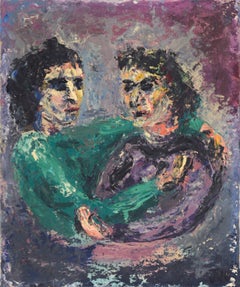
'Camille IV', Fauve Figural of Young Woman, California Post Impressionist Oil

'Camille IV', Fauve Figural of Young Woman, California Post Impressionist Oil

By Anthony McNaught

Located in Santa Cruz, CA

Signed verso, 'Ant McNaught', (American, 1952-2026), titled 'Camille VI', and dated 2020. A substantial and vibrant, Fauve study of the head of a young woman, composed in scumbled shades of coral, jade, azure and pink. and contrasted against a terracotta background. This California Post-Impressionist and Abstract Expressionist artist studied at the Esalen Institute with Erin Gafill and Tom Birmingham...

Category

2010s Expressionist Art

Materials

Canvas, Oil, Acrylic

Infants of the Choir

Jean JansemInfants of the Choir

$54,400Sale Price|20% Off

Infants of the Choir

By Jean Jansem

Located in New York, NY

Tis painting is included in the exhibition catalogue of 1986.

Category

Late 20th Century Expressionist Art

Materials

Paint

Old Port Town, Original Painting

Old Port Town, Original Painting

By Judy Mudd

Located in San Francisco, CA

Artist Comments
This watercolor painting captures the charm and vitality of Portland’s historic Old Port district. City life hums with a balance of energy and ease—building...

Category

21st Century and Contemporary Expressionist Art

Materials

Watercolor

Last Light, Original Painting

Last Light, Original Painting

By Crystal DiPietro

Located in San Francisco, CA

Artist Comments
The day fades into a warm orange glow that gently kisses the peaks of the desert mountains. Cool purple, blue, and green shadows sweep across the hills and fi...

Category

21st Century and Contemporary Expressionist Art

Materials

Mixed Media

La soupière bleue, 1990, original lithograph by Jean Jansem, handsigned numbered

La soupière bleue, 1990, original lithograph by Jean Jansem, handsigned numbered

By Jean Jansem

Located in Les Acacias GE, GE

Jean Jansem (1920-2013) La soupière bleue, 1990, Lithographie sur papier Japon Signée en bas à droite et justifiée en bas à gauche 50 x 65 cm / 54 x 76 cm Edition à 120 exemplaires sur Arches plus 30 épreuves d'artiste. Ce rare exemplaire d'une édition à 30 épreuves sur papier Japon numérotées en chiffre romain. Bibliographie: Imprimeur: Mourlot, Paris Editeur: Galerie 10, Paris Bibliographie: Jansem Lithographe, 1984-1993, Flora Jansem, Paris, n. 50, reproduit p. 56, référencé p. 109. "Ma première lithographie date de 1954. Elle représente un enfant en haillons portant deux seaux d'eau, d'après un croquis rapporté de Cordoue lors de mon voyage en Espagne en 1952. Je l'exécutai sur pierre, au pinceau et à l'encre lithographique. Je fus déçu du résultat et n'en tirai qu'un essai et une épreuve. Quatre ans plus tard, je réalisai une dizaine de nouvelles lithographies, toujours sur pierre, la plupart en noir. Au lieu d'employer l'encre et le crayon...

Category

Late 20th Century Expressionist Art

Materials

Lithograph

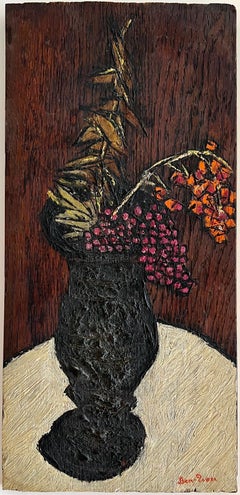
Purim Holiday Scene Judaica Aquatint Etching American Modernist WPA Artist

Purim Holiday Scene Judaica Aquatint Etching American Modernist WPA Artist

By Ben-Zion Weinman

Located in Surfside, FL

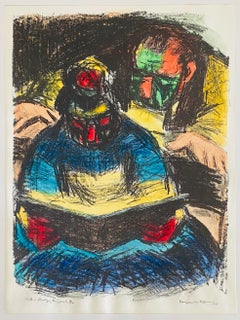
Born in 1897, Ben-Zion Weinman celebrated his European Jewish heritage in his visual works as a sculptor, painter, and printmaker. Influenced by Spinoza, Knut Hamsun, and Wladyslaw Reymont, as well as Hebrew literature, Ben-Zion wrote poetry and essays that, like his visual work, attempt to reveal the deep “connection between man and the divine, and between man and earth.” An emigrant from the Ukraine, he came to the US in 1920. He wrote fairy tales and poems in Hebrew under the name Benzion Weinman, but when he began painting he dropped his last name and hyphenated his first, saying an artist needed only one name. Ben-Zion was a founding member of “The Ten: An Independent Group” The Ten” a 1930’s avant-garde group, Painted on anything handy. Ben-Zion often used cabinet...

Category

Mid-20th Century Expressionist Art

Materials

Etching

Ballet Class
Ballet Class

Ballet Class

By Elena Lukina

Located in Zofingen, AG

In crafting this piece, I aimed to capture the ephemeral beauty and grace of a ballet dancer in motion. Employing oils, I layered vibrant colors and soft textures to celebrate the po...

Category

2010s Expressionist Art

Materials

Canvas, Oil

Dancing with Friends, Original Painting

Dancing with Friends, Original Painting

By Diana Elena Chelaru

Located in San Francisco, CA

Artist Comments
This painting shows a happy moment between friends dancing with each other. They close their eyes and lift their hands, fully immersing themselves in the expe...

Category

21st Century and Contemporary Expressionist Art

Materials

Acrylic

Kitties
Kitties

Kitties

Located in Zofingen, AG

Nude The beauty of a naked body is simply incredible! When I paint a picture with a naked woman, I have the feeling that I am painting space, the universe. I never cease to admire th...

Category

Early 2000s Expressionist Art

Materials

Acrylic, Archival Paper

Pre War European Hasidic Rabbi Kiddush Levana (Moon) German Judaica Oil Painting

Pre War European Hasidic Rabbi Kiddush Levana (Moon) German Judaica Oil Painting

Located in Surfside, FL

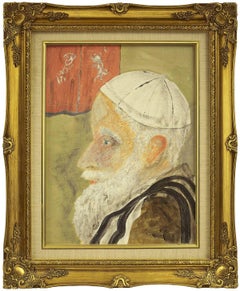
Kiddush Levanah oil painting Hand signed A. Gruenstein. It is not dated or titled. Pre War European Chasidic Rabbis Kiddush Levana (Blessing on seeing the new moon) German Judaica ...

Category

20th Century Expressionist Art

Materials

Canvas, Oil

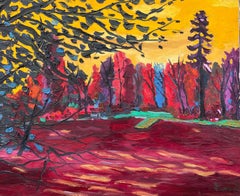
Autumn Foliage, Oil Painting

Autumn Foliage, Oil Painting

By George Peebles

Located in San Francisco, CA

Artist Comments
The painting portrays a tree with colorful foliage in the middle of a vast field. The leaves are painted yellow and red, with a hint of purple. The wind gentl...

Category

21st Century and Contemporary Expressionist Art

Materials

Oil

Mère et enfant, 1986, original lithograph by Jean Jansem, handsigned

Mère et enfant, 1986, original lithograph by Jean Jansem, handsigned

By Jean Jansem

Located in Les Acacias GE, GE

Jean Jansem (1920-2013) Mère et enfant, 1986, état noir Lithographie sur papier Arches Signée en bas à droite et justifiée en bas à gauche 67,5 x 51 cm / 76 x 54 cm Très rare exemplaire D'une édition à 30 exemplaires sur Arches de l'état noir. Bibliographie: Imprimeur: Mourlot, Paris Editeur: Galerie Matignon, Paris Bibliographie: Jansem Lithographe, 1984-1993, Flora Jansem, Paris, n. 50, reproduit p. 56, référencé p. 109. "Ma première lithographie date de 1954. Elle représente un enfant en haillons portant deux seaux d'eau, d'après un croquis rapporté de Cordoue lors de mon voyage en Espagne en 1952. Je l'exécutai sur pierre, au pinceau et à l'encre lithographique. Je fus déçu du résultat et n'en tirai qu'un essai et une épreuve. Quatre ans plus tard, je réalisai une dizaine de nouvelles lithographies, toujours sur pierre, la plupart en noir. Au lieu d'employer l'encre et le crayon...

Category

Late 20th Century Expressionist Art

Materials

Lithograph

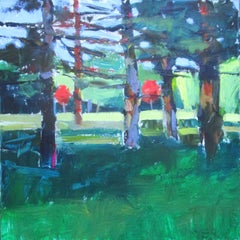
Through the Trees, Oil Painting

Through the Trees, Oil Painting

By James Hartman

Located in San Francisco, CA

Artist Comments
Artist James Hartman began this painting by creating texture with homemade tools. He envisioned standing at the edge of the woods, looking through to an indistinct light. The oil colors were allowed to drip and settle into the textured surface, enhancing depth and movement, while his tools helped define the landscape in a way that captures shifting light.


About the Artist
When James Hartman was in art school, he became fascinated with the Society of Six, a group of artists who painted en plein air (outdoors) and exhibited together in the San Francisco Bay Area during the early 20th Century. James's paintings of the Northern California landscape pay tribute to some of the great Bay Area artists of the past. His expressive scenes feel alive through his vibrant use of color and his painterly brushwork. James’s paintings have an immediate visual impact from a distance, yet up close, dissolve into a series of confident marks and strokes. There is a simultaneous complexity and steadiness in his flattened, color-blocked planes. Knowledge and observation are essential elements of James’s working practice. To this end, he spends a large proportion of his time painting on location. His body of work captures the fresh and sunlit essence of the coastal California hills.


Words that describe this painting: trees, texture, bright, woods, sunlight, panoramic, forest...

Category

21st Century and Contemporary Expressionist Art

Materials

Oil

Life Lessons by Rachael Dalzell.   Acrylic on canvas with tray frame

Life Lessons by Rachael Dalzell. Acrylic on canvas with tray frame

By Rachael Dalzell

Located in Coltishall, GB

Young Buddhist monks awaiting lessons. Rachael’s free, expressive use of paint give energy and life to her work. She spent time in Ladakh in the Indian Himalaya and produced a serie...

Category

21st Century and Contemporary Expressionist Art

Materials

Canvas, Acrylic

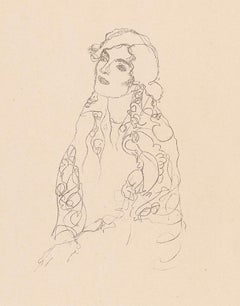
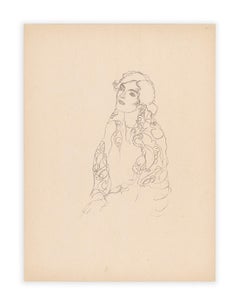
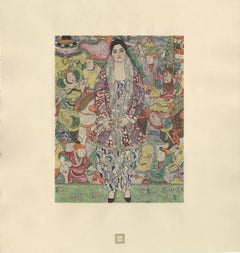
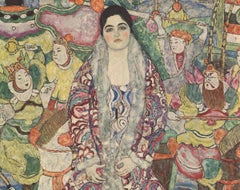
Max Eisler Eine Nachlese folio “Portrait of Baroness Bachofen-Echt” collotype

Max Eisler Eine Nachlese folio “Portrait of Baroness Bachofen-Echt” collotype

By (after) Gustav Klimt

Located in Palm Beach, FL

After Gustav Klimt, Max Eisler #22, Bildnis Baronin Bachofen-Echt; multi-color collotype after 1914-1916 painting in oil on canvas. GUSTAV KLIMT EINE NACHLESE (GUSTAV KLIMT AN AFTERMATH), a portfolio of 30 collotypes prints, 15 are multi-color and 15 are monochrome, on chine colle paper laid down on heavy cream-wove paper with deckled edges; Max Eisler, Editor-Publisher; Osterreichischer Staatsdruckerei (Austrian State Printing Office), Printer; in a limited edition of 500 numbered examples of which: 200 were printed in German, 150 were printed in French and 150 were printed in English; Vienna, 1931. 2018 marks the 100th anniversary of Gustav Klimt’s death. It is a fitting time to reflect upon the enduring legacy and deep impact of his art. Recognizing this need for posterity with uncanny foresight, the publication of Gustav Klimt: An Aftermath (Eine Nachlese) provides a rare collection of work after Klimt which has proven to be an indispensable tool for Klimt scholarship as well as a source for pure visual delight. Approximately 25 percent of the original works featured in the Aftermath portfolio have since been lost. Of those 30, six were destroyed by fire on 8 May 1945. On that fateful final day of WWII, the retreating Feldherrnhalle, a tank division of the German Army, set fire to the Schloss Immendorf which was a 16th century castle in Lower Austria used between 1942-1945 to store objects of art. All three of Klimt’s Faculty Paintings: Philosophy, Medicine and Jurisprudence (1900-1907), originally created for the University of Vienna, were on premises at that time. Also among the inventory of Klimt paintings in storage there was art which had been confiscated by the Nazis. One of the most significant confiscated collections was the Lederer collection which featured many works by Gustav Klimt such as Girlfriends II and Garden Path with Chickens...

Category

1930s Expressionist Art

Materials

Archival Paper

Morning light on snowy peaks

Morning light on snowy peaks

By Elena Lukina

Located in Zofingen, AG

"In this painting, I've captured the serene beauty of dawn as it kisses the snowy peaks with warm hues of pink and purple, contrasting the cool blues and whites of the snow. It's a d...

Category

2010s Expressionist Art

Materials

Canvas, Oil

Adoration of the Magi / - The Rider of the Sun -

Adoration of the Magi / - The Rider of the Sun -

Located in Berlin, DE

Walter Helbig (1878 Falkenstein - 1968 Ascona), Adoration of the Magi, 1918. Hand-colored linocut, 30 cm x 22.5 cm (depiction), 50 cm x 35 cm (sheet size), signed “W.[alter] Helbig” in pencil lower right, inscribed “Adoration of the Magi” lower left and dated “1918”. Below this a handwritten dedication “with heartfelt Christmas greetings”. - Paper somewhat darkened and with slight creases, thumbtack holes in the corners - The Rider of the Sun - The 'apocalypse' of World War I brought about a return to sacred art. Walter Helbig belonged to the circle of the 'Brücke' and the 'Blauer Reiter'. With his reinterpretation of religious themes in an expressionist formal language, Helbig shaped an avant-garde neo-sacred art. This is symbolically expressed in the silhouette of the rider against the sun-like yellow background. It refers to the awakening initiated by the Blue Riding, which is now linked back to the sacred. The rider and horse "look" at Mary and the Christ Child, who occupy the entire field. Opposite them are the three kings, the eldest of whom kneels before Christ and offers him a gold-filled casket. The expressionist lines give rise to a tower that rises into the "sun", so that the gift has become a Gothic church, expressing the hope that the fallen world will be resurrected in the name of Christ. This dimension of meaning is emphasized by the magical effect of the color scheme. About the artist In 1895, Walter Helbig began studying at the Dresden Academy of Art, where he became friends with the future Brücke artist Otto Müller, with whom he lived in Dresden from 1903 to 1905. While studying in Italy from 1897 to 1899, he met Arnold Böcklin and Adolf von Hildebrand. After completing his studies, he first worked for Otto Gussmann, painting churches. From 1905 to 1909 he worked as a freelance painter in Hamburg. In 1909, through the mediation of Otto Müller, Helbig made the acquaintance of artists from the 'Brücke'. In 1910 he exhibited at the founding exhibition of the Berlin 'Neue Sezession'. In the same year, he moved to Switzerland, where, together with Hans Arp and Oscar Lüthy, he founded the 'Moderne Bund' in Weggis, to which Cuno Amiet and Giovanni Giacometti also belonged. At the second exhibition of the 'Moderne Bund' in Zurich in 1911, Henri Matisse and Robert Delaunay were represented alongside artists from the 'Blauer Reiter'. In 1913, Helbig traveled to Paris with Arp and Lüthy. After the dissolution of the 'Moderne Bund', Helbig was represented at the first Dada exhibition in Zurich in 1914. In 1919, he joined the Berlin 'Novembergruppe'. After the devastation of World War I, Helbig turned increasingly to religious themes in his work. In 1924, like many other artists of his time, he moved to Ascona for financial reasons, where he became a naturalized citizen in 1938. There he founded the artists' association "The Great Bear", to which Marianne von Werefkin...

Category

1910s Expressionist Art

Materials

Paper

Composition, Everything That Rises Must Converge

Composition, Everything That Rises Must Converge

By Benny Andrews

Located in Southampton, NY

Etching on vélin de Rives BFK paper. Paper Size: 22 x 17 inches. Inscription: Unsigned and unnumbered, as issued. Notes: From the folio, Everything That Rises Must Converge, 2005. Published by The Limited Editions Club, New York; printed by Wingate Studio, Hinsdale, under the direction of Peter Pettengill, Hinsdale, 2005. Excerpted from the folio, This edition of CCC examples of Everything That Rises Must Converge was printed on BFK Rives. Dan Carr and Julia Ferrari designed the typography, cast the Kis-Janson type in metal, set the type by hand and printed the text at Golgonooza Letter Foundry & Press, Ashuelot, New Hampshire. The six color etchings were printed by hand on BFK Rives by Peter Pettengill at Wingate Studio in Hinsdale, New Hampshire. BENNY ANDREWS (1930-2006) was an African-American artist, activist and educator. He is known for his expressive, figurative paintings that often incorporated collaged fabric and other material. Andrews helped found the Black Emergency Cultural Coalition, which agitated for greater representation of African-American artists and curators in New York’s major art museums in the late 1960s and 70s. He also led the group in founding an arts education program in prisons and detention centers. Andrews taught art at Queens College for three decades, and from 1982 to 1984, served as the Director of the Visual Arts Program for the National Endowment for the Arts. He received many awards, including the John Hay Whitney...

Category

Early 2000s Expressionist Art

Materials

Etching

Max Eisler Eine Nachlese folio "Houses in Unterach on Lake Attersee" collotype

Max Eisler Eine Nachlese folio "Houses in Unterach on Lake Attersee" collotype

By (after) Gustav Klimt

Located in Palm Beach, FL

After Gustav Klimt, Max Eisler Plate #29, Am Attersee; brown-toned monochrome collotype after the 1915-16 painting in oil on canvas. GUSTAV KLIMT EINE NACHLESE (GUSTAV KLIMT AN AFTERMATH), a portfolio of 30 collotypes prints, 15 are multi-color and 15 are monochrome, on chine colle paper laid down on heavy cream-wove paper with deckled edges; Max Eisler, Editor-Publisher; Osterreichischer Staatsdruckerei (Austrian State Printing Office), Printer; in a limited edition of 500 numbered examples of which: 200 were printed in German, 150 were printed in French and 150 were printed in English; Vienna, 1931. 2018 marks the 100th anniversary of Gustav Klimt’s death. It is a fitting time to reflect upon the enduring legacy and deep impact of his art. Recognizing this need for posterity with uncanny foresight, the publication of Gustav Klimt: An Aftermath (Eine Nachlese) provides a rare collection of work after Klimt which has proven to be an indispensable tool for Klimt scholarship as well as a source for pure visual delight. Approximately 25 percent of the original works featured in the Aftermath portfolio have since been lost. Of those 30, six were destroyed by fire on 8 May 1945. On that fateful final day of WWII, the retreating Feldherrnhalle, a tank division of the German Army, set fire to the Schloss Immendorf which was a 16th century castle in Lower Austria used between 1942-1945 to store objects of art. All three of Klimt’s Faculty Paintings: Philosophy, Medicine and Jurisprudence (1900-1907), originally created for the University of Vienna, were on premises at that time. Also among the inventory of Klimt paintings in storage there was art which had been confiscated by the Nazis. One of the most significant confiscated collections was the Lederer collection which featured many works by Gustav Klimt such as Girlfriends II and Garden Path with Chickens. In many instances, Aftermath is our only link to these lost treasures. Max Eisler (1881-1937), the publisher of the 1931 Aftermath portfolio, was an art historian at Vienna University specializing in modern and contemporary arts and crafts whose 1920 book on Klimt was the first Klimt monograph. He saw An Aftermath as filling-in important gaps left by the earlier print portfolios which had only featured Klimt up to 1913 and which had glossed over major art projects such as the Tree of Life frieze for the Palais Stoclet. And whereas only 10 of the 50 prints from the earlier portfolios published by H.O. Miethke were made in intricate multi-color images, Eisler augmented the earlier format by featuring half of the 30 images in stunning multi-colored collotypes. Understanding the fragile nature of the collotype printing process also reinforces this project’s distinctive and exceptional characteristics. Fragile collotype plates can not be reused. As such, this necessitates the completion of a run on the first go and also dictates a limited production number. Printed by hand, the collotypes required deft handling by the printer, Osterreichische Staatsdruckerei. A complicated and lengthy process involving gelatin colloids mixed with dichromates, the creation of 16 color separation thin glass filters to achieve the light-sensitive internegative images which could faithfully capture all of the painting’s tonal gradations and colors, exposure to actinic light, and delicate chine collie papers which allowed for greater color saturation, the printer’s collaborative role in capturing and transmitting Klimt’s nuanced paint strokes is nothing short of remarkable. The Österreichische Staatsdruckerei (Austrian State Printing Office), was the successor to the KK Hof -und Staatsdruckerei which was founded by Emperor Franz I in 1804 and whose collotype printing innovations of Klimt’s art...

Category

1930s Expressionist Art

Materials

Archival Paper

Stéphanie au collant à damier, 1989, original lithograph by Jean Jansem, signed

Stéphanie au collant à damier, 1989, original lithograph by Jean Jansem, signed

By Jean Jansem

Located in Les Acacias GE, GE

Jean Jansem (1920-2013) Stéphanie au collant à damier, 1989 Lithographie sur papier Arches Signée en bas à droite et justifiée en bas à gauche 50 x 65 cm / 54 x 76 cm Bibliographi...

Category

Late 20th Century Expressionist Art

Materials

Lithograph

Man with Yellow Tie

Man with Yellow Tie

Located in Los Angeles, CA

ALEXANDER KREISEL "MAN WITH YELLOW TIE" OIL ON CANVAS BOARD, SIGNED RUSSIAN-AMERICAN, C.1935 26 X 19.5 INCHES FRAMED 29.5 X 23.5 INCHES Alexander Krei...

Category

1930s Expressionist Art

Materials

Canvas, Oil

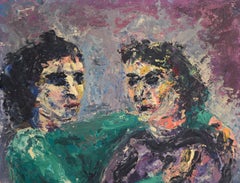
'Camille VI', Fauve Figural of Young Woman, California Post Impressionist Oil

'Camille VI', Fauve Figural of Young Woman, California Post Impressionist Oil

By Anthony McNaught

Located in Santa Cruz, CA

Signed verso, 'Ant McNaught', (American, 1952-2026), titled 'Camille VI', and dated 2018-2020. This California Post-Impressionist and Abstract Expressionist artist has studied at the Esalen Institute with Erin Gafill and Tom Birmingham...

Category

2010s Expressionist Art

Materials

Canvas, Oil, Acrylic

"Erste Beruhrung" First Stirrings

"Erste Beruhrung" First Stirrings

By Ernst Neuschul

Located in Brecon, Powys

Oil on canvas, signed and dated 'EN [19]63' lower right, titled and dated to stretcher, numbered 33 and with paper label 34 to stretcher, From the family of the artist by direct des...

Category

1960s Expressionist Art

Materials

Oil, Canvas

Art Nouveau Poster "Marmorhouse (Der Teufel und Die Circe) by Josef Fenneker

Art Nouveau Poster "Marmorhouse (Der Teufel und Die Circe) by Josef Fenneker

By Josef Fenneker

Located in Palm Beach, FL

The painter, graphic artist, production and set designer, Josef Fenneker, is one of the most important representatives of artistic film posters of the 1910s and 1920s. He was commissioned primarily by Berlin’s Marmorhaus cinema, which was located on Kurfürstendamm and known for its first releases, as well as by Berlin film production...

Category

1920s Expressionist Art

Materials

Lithograph

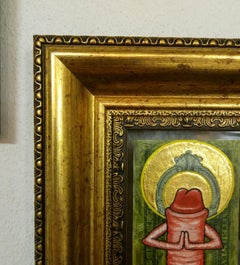
"Planetary phallus"
"Planetary phallus"

"Planetary phallus"

By Kyrylo Bondarenko

Located in Edinburgh, GB

A painting as a prophetic thought. A philosophical view on the sum of humanity's actions and the future of the entire race. My images in my paintings come true in our real lives; it'...

Category

21st Century and Contemporary Expressionist Art

Materials

Oil, Paper

Mid Century Modern Clown print, hand signed 144/250 Russian born American artist

Mid Century Modern Clown print, hand signed 144/250 Russian born American artist

By Nahum Tschacbasov

Located in New York, NY

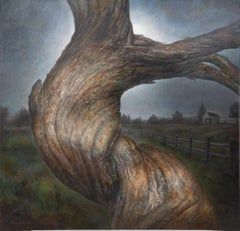
Nahum Tschacbasov Mid Century Modern Clown, 1956 Lithograph Signed, dated and numbered 144/250 in graphite on the front 34 x 27.5 inches Unframed, affixed to matting Published by American Color Slide Co, Ltd., New York Terrific uncommon vintage signed, numbered and dated mid Century modern lithograph from this interesting and distinctive -and undervalued Russian American artist. Highly collectible clown...

Category

Mid-20th Century Expressionist Art
Materials

Lithograph

Embracing Self -21st Century Contemporary, Figurative, Portrait, Modern, Women

Embracing Self -21st Century Contemporary, Figurative, Portrait, Modern, Women

By Olaniyi Timothy

Located in Ibadan, Oyo

Made of layers, memories, lessons, scars, and hopes. Some parts are soft, some messy, some still taking shape, but all of them matter. You are texture, movement, and story. You don’t...

Category

21st Century and Contemporary Expressionist Art

Materials

Canvas, Acrylic

'Woman in Blue', Nuremberg, Nahuel Huapi region, Argentina

'Woman in Blue', Nuremberg, Nahuel Huapi region, Argentina

Located in Santa Cruz, CA

Signed lower right, 'H. Lauer' for Hans Lauer, (Argentine-German, 1902-1989) and dated 1965. Hans Lauer emerges as a sympathetic chronicler of Patagonian light, a German-born landscapist who made Argentina his country and Bariloche his enduring motif. Born in Nuremberg in 1902, he emigrated to Argentina in 1920 and fixed his practice in the Nahuel Huapi region, painting the blue-white atmospheres of the lake basin and the sheltering stands of native forest with a direct, self-taught hand; he remained rooted there until his death in Bariloche in 1989. Contemporary reports place him working across northern Patagonia—San Martín de los Andes among his circuits—where he translated the temperate Andean palette into sober oils and watercolors keyed to weather and season rather than to metropolitan fashions. Autodidact by formation, he belongs to that émigré cohort who stitched European discipline to local terrain, and by the 1950s–60s his production reflects an assured, observational plein-air habit that privileges structure over effect. While Bariloche provided the studio and the subject, his name also circulates in Buenos Aires contexts through collectors and dealers who sought Patagonian views during the mid-century tourism boom, an afterlife that helped keep his vistas in the market even as he remained geographically anchored to the south. Within the regional history of Argentine painting...

Category

1960s Expressionist Art

Materials

Canvas, Oil

Old and Young Woman - Lithograph Poster - Los Angeles County Museum #Mourlot

Old and Young Woman - Lithograph Poster - Los Angeles County Museum #Mourlot

By Edvard Munch

Located in Paris, IDF

Edvard Munch (1863 - 1944) (after) Young and Old Woman Poster printed in offset lithograph (from Munch's original woodcut "Women on the Shore" of 1898) Printed in Mourlot workshop, Paris 76 x 53 cm (30 x 21") INFORMATION : Realised for the exhibition in the Los Angeles County Museum...

Category

1960s Expressionist Art

Materials

Offset

“Sabine”, Expressionist Portrait of a Young Woman, Oil on Canvas, framed, N°187

“Sabine”, Expressionist Portrait of a Young Woman, Oil on Canvas, framed, N°187

By Jean Ducommun

Located in Genève, GE

A captivating portrait of a young woman titled “Sabine”, painted by Swiss artist Jean Ducommun. Although unsigned on the front, the work bears the artist's reference and title on the...

Category

Mid-20th Century Expressionist Art
Materials

Oil, Canvas

'Arms Crossed' Figurative Expressionist Painting

'Arms Crossed' Figurative Expressionist Painting

By La Ba Quan

Located in Rye, NY

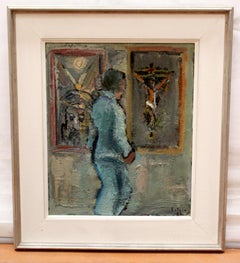
‘Arms Crossed’ is a medium size vertical expressionist figurative oil on canvas painting created by Vietnamese artist La Ba Quan in 2011. Featuring a palette made of grey, soft blue, green and pink, the painting brings to mind the fascinating aura of a Chaim Soutine. This expressionist painting is dominated by the tortuous lines of the man’s silhouette...

Category

21st Century and Contemporary Expressionist Art
Materials

Canvas, Oil

Chagall, Sans titre, Le Dur Désir de Durer (after)

Chagall, Sans titre, Le Dur Désir de Durer (after)

By Marc Chagall

Located in Southampton, NY

Lithograph on vélin bouffant d'Alfa paper. Inscription: unsigned and unnumbered, as issued. Good condition. Notes: From the volume, Le Dur Désir de Durer, illustré par Marc Chagall, ...

Category

1950s Expressionist Art
Materials

Lithograph

Expressionist art for sale on 1stDibs.
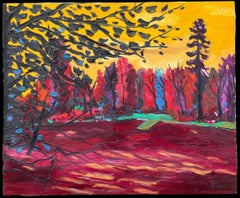
Find a wide variety of authentic Expressionist art available for sale on 1stDibs. Works in this style were very popular during the 21st Century and Contemporary, but contemporary artists have continued to produce works inspired by this movement. If you’re looking to add art created in this style to introduce contrast in an otherwise neutral space in your home, the works available on 1stDibs include elements of orange, blue, purple, green and other colors. Many Pop art paintings were created by popular artists on 1stDibs, including Iryna Kastsova, George Grosz, Stephen Basso, and Marc Chagall. Frequently made by artists working with Paint, and Oil Paint and other materials, all of these pieces for sale are unique and have attracted attention over the years. Not every interior allows for large Expressionist art, so small editions measuring 1 inches across are also available.