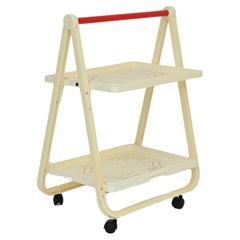
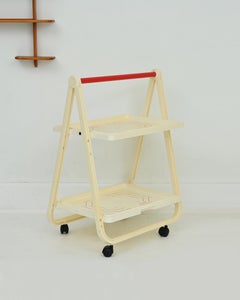
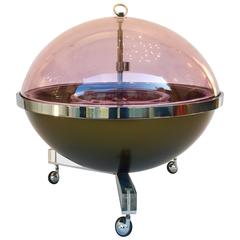
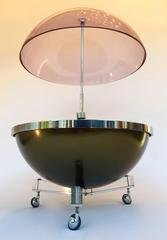
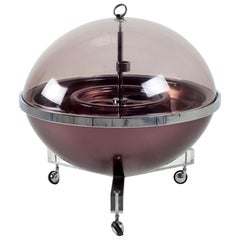
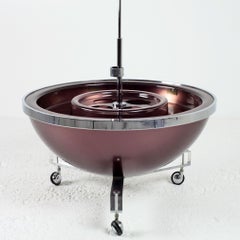
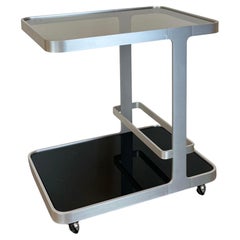
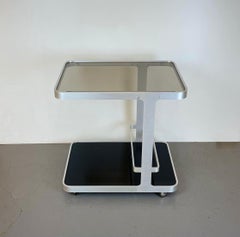
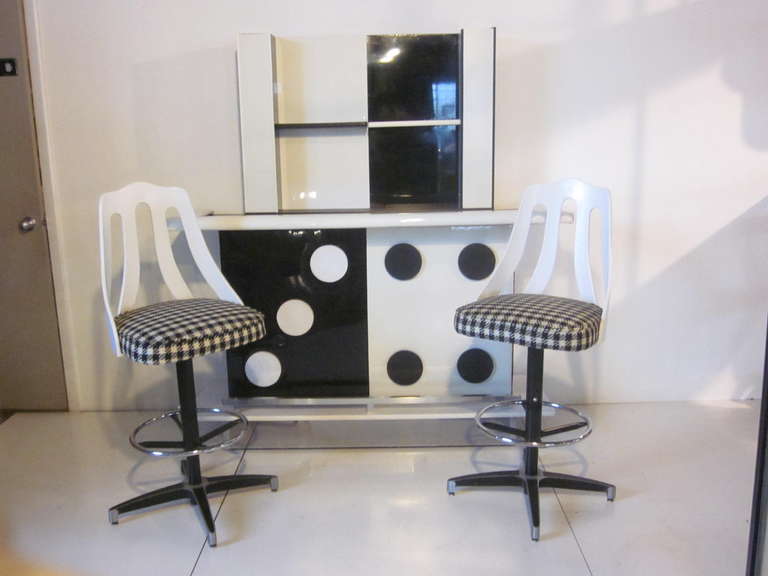
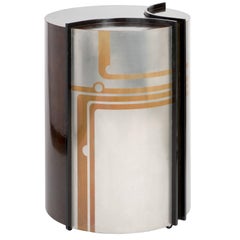
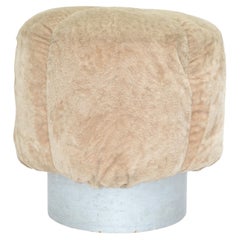
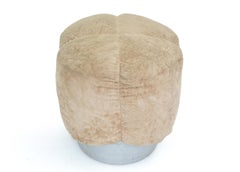
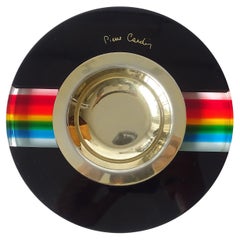
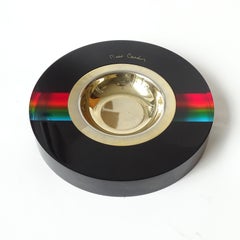
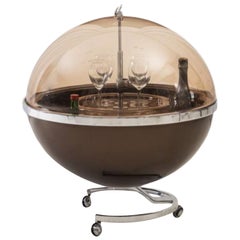
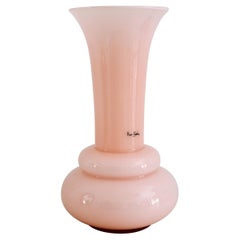
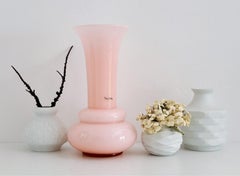
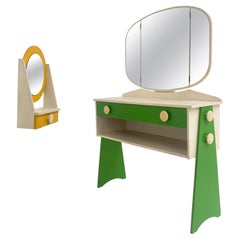
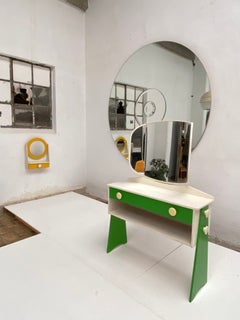
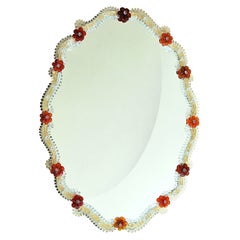
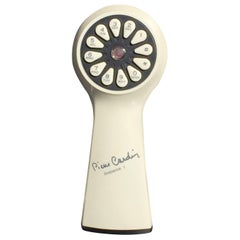
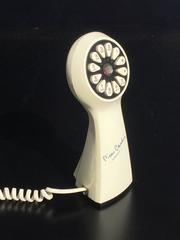
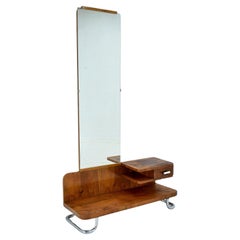
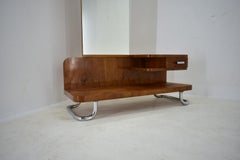
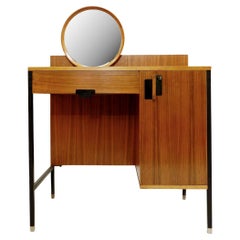
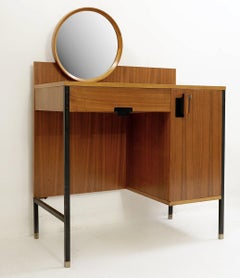
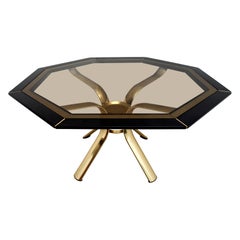
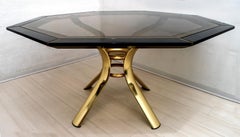
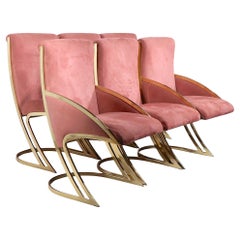
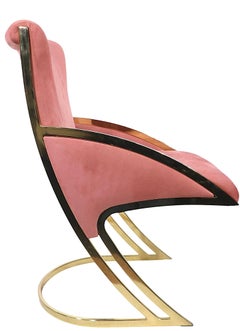
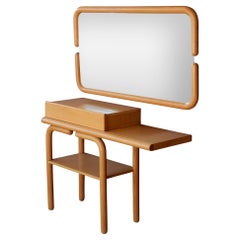
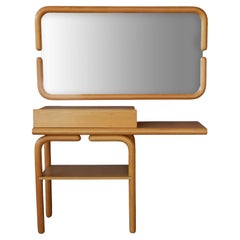
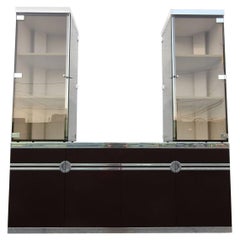
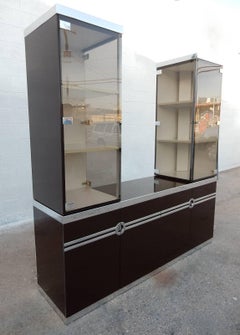
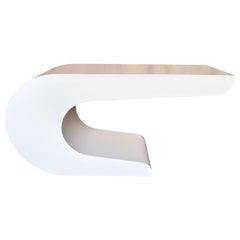
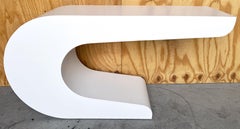
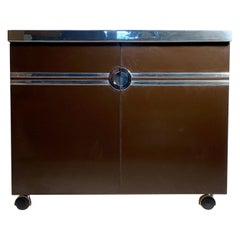
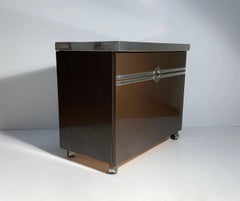
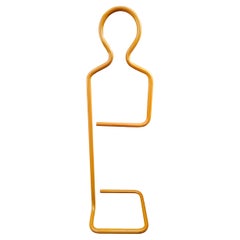
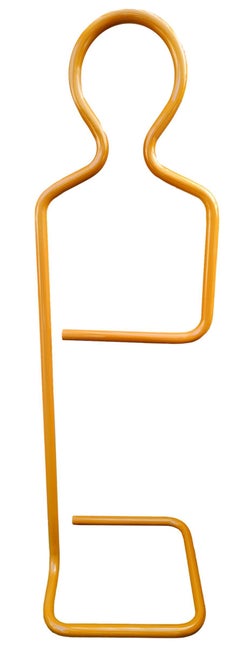
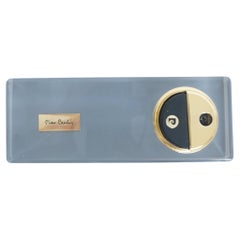
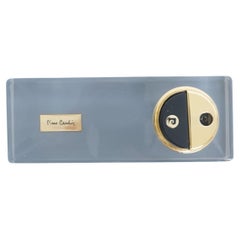
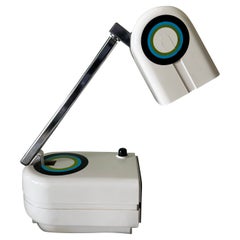
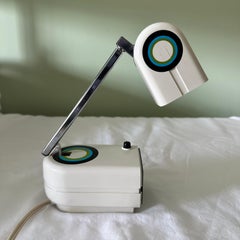
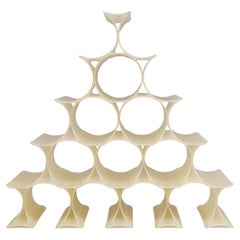
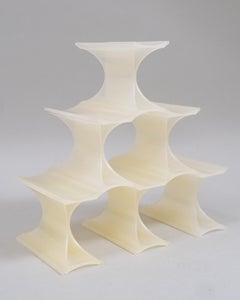
Best known for creating groundbreaking fashion designs from the 1950s onward, Pierre Cardin enjoyed great success in other design fields, most notably furniture. Cardin’s chairs, cabinets, tables and other pieces share many of the keynotes of his clothing designs. They are simple, geometric, elegant and cool.
Cardin was born in a village near Venice, Italy, and raised in central France. Always interested in fashion, he left home at age 17 to train with a Vichy tailor. After the end of World War II, Cardin moved to Paris and worked for a succession of couture houses, before taking a job with Christian Dior in 1946. Cardin went solo in 1950, and quickly won attention for his novel style.
Unlike Dior’s famous New Look, Cardin’s clothes de-emphasized a woman’s curves; his breakthrough pieces like the Bubble dress had, instead, a sculptural quality. In the following decade, Cardin introduced bright tunic dresses and shifts, marketed as the Space Age look and accessorized with vinyl hats and visors.
In the 1970s Cardin expanded his design work into furniture, jewelry and automobiles. (Later, licensing agreements would put Cardin’s name on goods ranging from perfume to sunglasses.) Cardin’s furniture pieces — inspired, perhaps, by the rediscovery of Art Deco design in that decade — feature simple, symmetrical forms, lacquer and figured veneer finishes, and accents in metals such as aluminum and brass.
Whether you are looking for a vintage cocktail dress or a chest of drawers to keep it in, as you will see on 1stDibs, Pierre Cardin offers an option in either that is timelessly chic.
Vintage Space Age furniture captured post–World War II optimism with swooping shapes, bowed lines and experimentation with new materials including plastic and fiberglass.
From the launch of the Sputnik 1 satellite in 1957 to the landing of Apollo 11 astronauts on the moon in 1969, the space race between the Soviet Union and the United States propelled advancements in technology that transformed culture. Space Age design encompassed fashion, architecture, cars, furniture and objects for the home, bringing wonder and hope for the future into everyday life.
Coinciding with Pop art, Space Age style featured bold colors and forms. Eero Aarnio’s Ball chair, which debuted in 1966, used molded fiberglass for a capsule-like space while Verner Panton’s 1959 Panton chair was a single piece of molded plastic for a gravity-defying S shape. Red versions of Olivier Mourgue’s 1964 Djinn chair were futuristic enough to appear on the space station in Stanley Kubrick’s 1968 film 2001: A Space Odyssey. Today, Joe Colombo is revered as a master of modern Italian design thanks to the provocative modular furniture pieces he created, such as the Tube chair and the Elda armchair, both of which embody the future-forward spirit of the Space Age.
The Space Age spirit extended to home building too. The futuristic Case Study Houses, which were designed by the likes of Pierre Koenig, Charles and Ray Eames, Richard Neutra and Whitney R. Smith, are considered a high point of modernism and the Southern California lifestyle.
Sometimes the nods to space exploration were more literal, like moon and star motifs or the 1965 Eclisse lamp by Vico Magistretti that saw the mid-century Italian designer integrating a movable inner shade to “eclipse” the light source. Alongside the pioneering moon missions, JVC manufactured the Videosphere portable television reminiscent of the Apollo 11 space helmets.
Although the style faded in the 1970s — with the 1975 joining of the Apollo and Soyuz spacecrafts signaling a new era of cooperation and the global oil crisis impacting the availability of plastics — the era’s innovations influenced designers into the 21st century such as Zaha Hadid and Djivan Schapira.
Find a collection of vintage Space Age seating, tables, lighting and other furniture on 1stDibs.