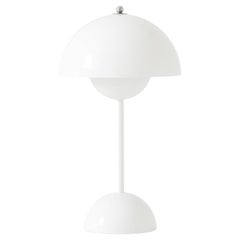
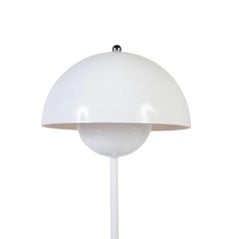
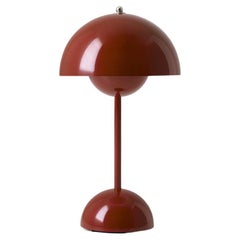
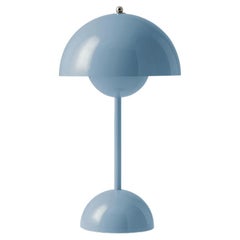
Flowerpot Vp9 For Sale on 1stDibs
Choose from an assortment of styles, material and more with respect to the flowerpot vp9 you’re looking for at 1stDibs. Frequently made of
metal,
steel and
enamel, every flowerpot vp9 was constructed with great care. There are 10 variations of the antique or vintage flowerpot vp9 you’re looking for, while we also have 5 modern editions of this piece to choose from as well. There are many kinds of the flowerpot vp9 you’re looking for, from those produced as long ago as the 20th Century to those made as recently as the 21st Century. A flowerpot vp9 is a generally popular piece of furniture, but those created in
Scandinavian Modern and
Mid-Century Modern styles are sought with frequency.
How Much is a Flowerpot Vp9?
A flowerpot vp9 can differ in price owing to various characteristics — the average selling price 1stDibs is $561, while the lowest priced sells for $195 and the highest can go for as much as $1,468.
Verner Panton for sale on 1stDibs
Verner Panton introduced the word “groovy” — or at least its Danish equivalent — into the Scandinavian modern design lexicon. He developed fantastical, futuristic forms and embraced bright colors and new materials such as plastic, fabric-covered polyurethane foam and steel-wire framing for the creation of his chairs, sofas, floor lamps and other furnishings. And Panton’s ebullient Pop art sensibility made him an international design star of the 1960s and ’70s. This radical departure from classic Danish modernism, however, actually stemmed from his training under the greats of that design style.
Born on the largely rural Danish island of Funen, Panton studied architecture and engineering at Copenhagen’s Royal Danish Academy of Fine Arts, where the lighting designer Poul Henningsen was one of his teachers. After graduating, in 1951, Panton worked in the architectural office of Arne Jacobsen, and he became a close friend of Hans Wegner's.
Henningsen taught a scientific approach to design; Jacobsen was forever researching new materials; and Wegner, the leader in modern furniture design using traditional woodworking and joinery, encouraged experimental form.
Panton opened his own design office in 1955, issuing tubular steel chairs with woven seating. His iconoclastic aesthetic was announced with his 1958 Cone chair, modified a year later as the Heart Cone chair. Made of upholstered sheet metal and with a conical base in place of legs, the design shocked visitors to a furniture trade show in Copenhagen.
Panton went on to successive bravura technical feats. His curving, stackable Panton chair, his most popular design, was the first chair to be made from a single piece of molded plastic.
Panton had been experimenting with ideas for chairs made of a single material since the late 1950s. He debuted his plastic seat for the public in the design magazine Mobilia in 1967 and then at the 1968 Cologne Furniture Fair. The designer’s S-Chair models 275 and 276, manufactured during the mid-1960s by August Sommer and distributed by the bentwood specialists at Gebrüder Thonet, were the first legless chairs crafted from a single piece of plywood.
Panton would spend the latter half of the 1960s and early ’70s developing all-encompassing room environments composed of sinuous and fluid-formed modular seating made of foam and metal wire. He also created a series of remarkable lighting designs, most notably his Fun chandeliers — introduced in 1964 and composed of scores of shimmering capiz-shell disks — and the Space Age VP Globe pendant light of 1969.
Panton’s designs are made to stand out and put an eye-catching exclamation point on even the most modern decor.
Find vintage Verner Panton chairs, magazine racks, rugs, table lamps and other furniture on 1stDibs.
A Close Look at Scandinavian-modern Furniture
Scandinavian modernism is perhaps the warmest and most organic iteration of modernist design. The work of the designers associated with vintage Scandinavian modern furniture was founded on centuries-old beliefs in both quality craftsmanship and the ideal that beauty should enhance even the humblest accessories of daily life.
ORIGINS OF SCANDINAVIAN MODERN FURNITURE DESIGN
CHARACTERISTICS OF SCANDINAVIAN MODERN FURNITURE DESIGN
- Bold, clean lines and simple, sturdy symmetries
- Use of natural materials — native woods such as pine, ash and beech
- Open, airy spaces
- Promotion of functionality
- Emphasis on craftsmanship; rooted in cabinetry profession and traditional construction techniques
- Minimal ornamentation (little to no embellishment)
- A neutral or light color palette owing to prominence of light woods
SCANDINAVIAN MODERN FURNITURE DESIGNERS TO KNOW
ICONIC SCANDINAVIAN MODERN FURNITURE DESIGNS
VINTAGE SCANDINAVIAN MODERN FURNITURE ON 1STDIBS
The gentle, organic contours that are typical of Scandinavian design appear in the furnishings and decor created by Danish, Finnish and Swedish designers not as a stylistic gesture, but rather as a practical, ergonomic — and, as importantly, elegant — response to the human form.
Each nation produced exceptional talents in all areas of the applied arts, yet each had its forté. Sweden was home to Greta Magnusson Grossman and Bruno Mathsson — creators of the classic Grasshopper lighting series and Berlin daybed, respectively — but the country excelled most notably at ceramics. In the 1920s at the great Gustavsberg porcelain manufactory, Wilhelm Kåge introduced pieces in the Scandinavian style based on influences from folklore to Cubism; his skills were passed on to his versatile and inspired pupils Berndt Friberg and Stig Lindberg.
Likewise, Finland produced a truly ingenious Scandinavian modern furniture designer in the architect Alvar Aalto, a master at melding function and artistic form in works like the Paimio chair, created in collaboration with his first wife, Aino. Yet Finnish glassware was pre-eminent, crafted in expressive, sculptural designs by Tapio Wirkkala and Timo Sarpaneva.
The Danes excelled at chairs. Hans Wegner and Arne Jacobsen were exemplars of the country’s facility with wood, particularly teak.
Wegner created such iconic pieces as the Round chair and the Wishbone chair; Jacobsen — while the revolutionary architect and furniture innovator produced the best-selling plywood Ant chair — designed two classic upholstered pieces of the 1950s: the Swan chair and Egg chair. The list of great Danes could go on and on, including Finn Juhl, a stylistic maverick and maker of the bold Chieftain chair; Poul Kjaerholm, with his lean metal-and-rattan aesthetic; and Verner Panton, who introduced a vibrant Pop note into international design.
Today, decades after their heyday, the prolific, ever-evolving Scandinavian modernists continue to amaze and delight, and interior designers all over the world use their pieces to bring warmth to any given space.
On 1stDibs, you will note both instantly recognizable vintage Scandinavian modern chairs, sofas, rugs and tables — those that have earned iconic status over time — and many new discoveries.
Finding the Right Table-lamps for You
Antique table lamps became a category of their own once electricity moved light off the wall and onto furniture. The form split quickly: task-driven designs like the Anglepoise on one side, decorative ceramic and glass on the other.
Styles to Know
Base material shapes the light as much as the shade does: ceramic and glass diffuse a softer glow, while brass and metal read more directional. Layer the look with a mid-century modern floor lamp for ambient light, or set a pair on a mid-century modern nightstand for a bedroom.
How to Choose the Right Vintage Table Lamp
Buying individually rather than as a pair allows more flexibility when mixing eras across a room. For those shopping by name rather than by shape, the history of the Anglepoise lamp is worth a read. Each piece comes from a vetted 1stDibs seller, with era, designer and condition detailed, and the 1stDibs Promise stands behind every purchase.