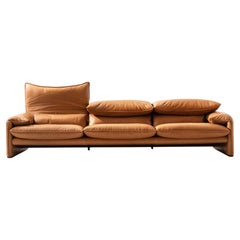
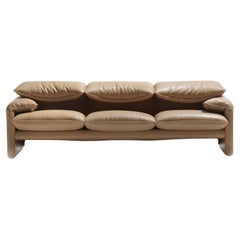
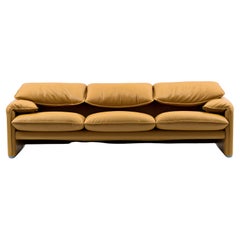
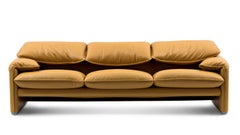
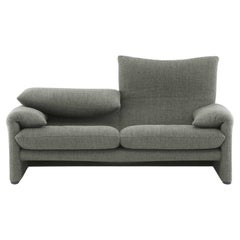
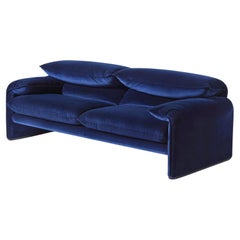
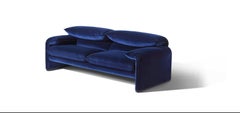
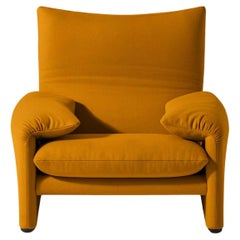
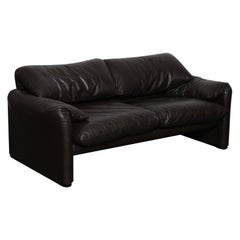
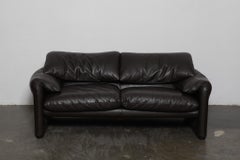
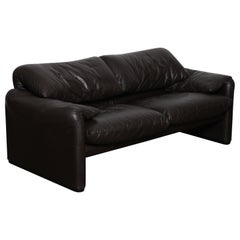
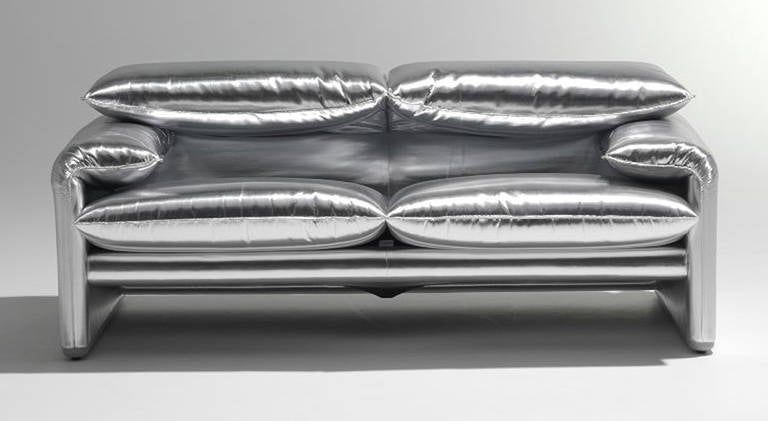
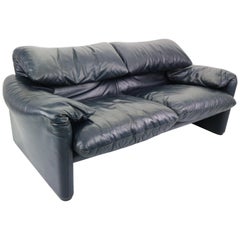
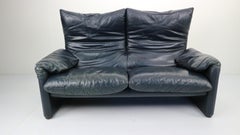
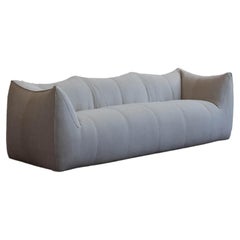
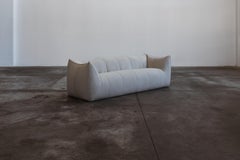
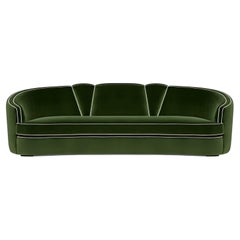
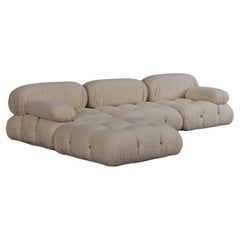
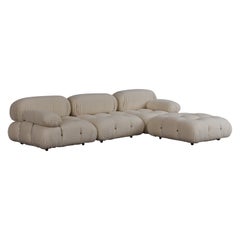
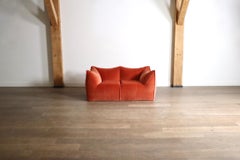
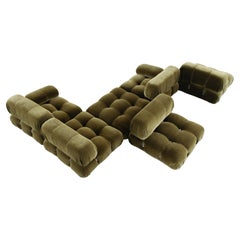
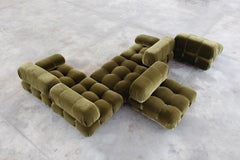
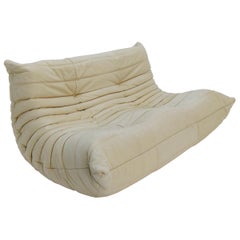
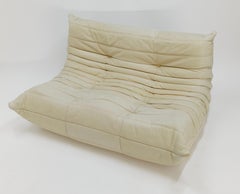
Maralunga 40 For Sale on 1stDibs
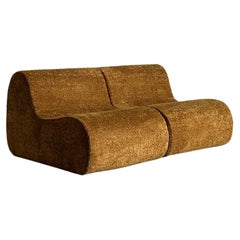
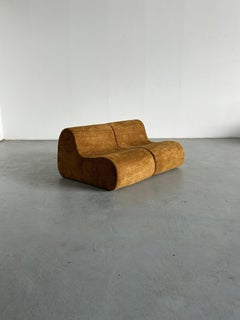
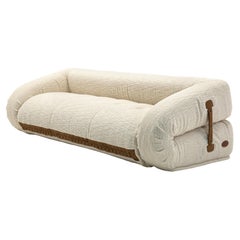
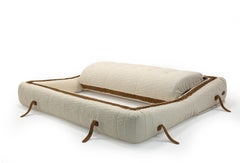
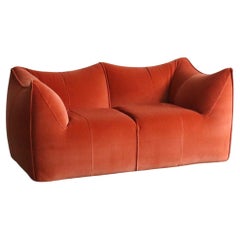
Choose from an assortment of styles, material and more with respect to the maralunga 40 you’re looking for at 1stDibs. A maralunga 40 — often made from
fabric,
velvet and
animal skin — can elevate any home. Find 9 options for an antique or vintage maralunga 40 now, or shop our selection of 1 modern versions for a more contemporary example of this long-cherished piece. There are many kinds of the maralunga 40 you’re looking for, from those produced as long ago as the 20th Century to those made as recently as the 21st Century. A maralunga 40 is a generally popular piece of furniture, but those created in
mid-century modern styles are sought with frequency.
How Much is a Maralunga 40?
Prices for a maralunga 40 start at $2,011 and top out at $8,816 with the average selling for $3,550.
Vico Magistretti for sale on 1stDibs
As one of the founding fathers of modern Italian design, prolific architect and industrial designer Ludovico Magistretti (known by his nickname Vico) was guided by his philosophy, “There is no excuse for bad design.” His architectural projects are widely revered, and an ingenious meld of form and function can be found in his stylish and deceptively simple table lamps, sofas, armchairs and other mid-century furnishings.
Born in Milan, Magistretti followed in the footsteps of his father and grandfather (both architects) to study architecture at the Polytechnic University of Milan. At the outbreak of World War II, he fled to Switzerland, and it was there he met his role model and mentor, renowned humanist architect Ernesto Nathan Rogers. Magistretti was inspired by Rogers’s vision to revive postwar Italy, and they collaborated on several reconstruction projects. Among Magistretti’s first architectural designs is a “poetic” round church, which he created for the QT8, an experimental Milanese neighborhood.
When Magistretti returned to Milan in 1945, he worked at his father’s architectural firm. It wasn’t until the early 1950s that he expanded his talents into design while working with furniture artisans.
In the 1960s, Magistretti began his 30-year working relationship with famed entrepreneur Cesare Cassina of the Cassina furniture manufacturing company. In their design approach, the two men shared a vision of the relationship between modernity and tradition and enjoyed a close bond (Magistretti designed Cassina’s luxurious villa in 1965). However, their friendship was not without contention.
Legend has it that upon seeing the prototype for Magistretti’s Maralunga sofa, Cassina hated it so much that he punched it, breaking the back of the sofa, which crumpled into itself.
“Right, great, it looks perfect to me like that,” an unfazed Magistretti allegedly responded, and the Maralunga’s slumped, adjustable-height backrest was born. Incidentally, the Maralunga sofa won Italy’s Compasso d’Oro award as did his Eclisse lamp for Artemide and his Atollo lamp for Oluce.
Magistretti died in 2006, but his designs live on in galleries, museums and private residences and offices around the world.
Find a range of vintage Vico Magistretti furniture and lighting on 1stDibs.
A Close Look at Mid-century-modern Furniture
Organically shaped, clean-lined and elegantly simple are three terms that well describe vintage mid-century modern furniture. The style, which emerged primarily in the years following World War II, is characterized by pieces that were conceived and made in an energetic, optimistic spirit by creators who believed that good design was an essential part of good living.
ORIGINS OF MID-CENTURY MODERN FURNITURE DESIGN
CHARACTERISTICS OF MID-CENTURY MODERN FURNITURE DESIGN
MID-CENTURY MODERN FURNITURE DESIGNERS TO KNOW
ICONIC MID-CENTURY MODERN FURNITURE DESIGNS
VINTAGE MID-CENTURY MODERN FURNITURE ON 1STDIBS
The mid-century modern era saw leagues of postwar American architects and designers animated by new ideas and new technology. The lean, functionalist International-style architecture of Le Corbusier and Bauhaus eminences Ludwig Mies van der Rohe and Walter Gropius had been promoted in the United States during the 1930s by Philip Johnson and others. New building techniques, such as “post-and-beam” construction, allowed the International-style schemes to be realized on a small scale in open-plan houses with long walls of glass.
Materials developed for wartime use became available for domestic goods and were incorporated into mid-century modern furniture designs. Charles and Ray Eames and Eero Saarinen, who had experimented extensively with molded plywood, eagerly embraced fiberglass for pieces such as the La Chaise and the Womb chair, respectively.
Architect, writer and designer George Nelson created with his team shades for the Bubble lamp using a new translucent polymer skin and, as design director at Herman Miller, recruited the Eameses, Alexander Girard and others for projects at the legendary Michigan furniture manufacturer.
Harry Bertoia and Isamu Noguchi devised chairs and tables built of wire mesh and wire struts. Materials were repurposed too: The Danish-born designer Jens Risom created a line of chairs using surplus parachute straps for webbed seats and backrests.
The Risom lounge chair was among the first pieces of furniture commissioned and produced by celebrated manufacturer Knoll, a chief influencer in the rise of modern design in the United States, thanks to the work of Florence Knoll, the pioneering architect and designer who made the firm a leader in its field. The seating that Knoll created for office spaces — as well as pieces designed by Florence initially for commercial clients — soon became desirable for the home.
As the demand for casual, uncluttered furnishings grew, more mid-century furniture designers caught the spirit.
Classically oriented creators such as Edward Wormley, house designer for Dunbar Inc., offered such pieces as the sinuous Listen to Me chaise; the British expatriate T.H. Robsjohn-Gibbings switched gears, creating items such as the tiered, biomorphic Mesa table. There were Young Turks such as Paul McCobb, who designed holistic groups of sleek, blond wood furniture, and Milo Baughman, who espoused a West Coast aesthetic in minimalist teak dining tables and lushly upholstered chairs and sofas with angular steel frames.
Generations turn over, and mid-century modern remains arguably the most popular style going. As the collection of vintage mid-century modern chairs, dressers, coffee tables and other furniture for the living room, dining room, bedroom and elsewhere on 1stDibs demonstrates, this period saw one of the most delightful and dramatic flowerings of creativity in design history.
Finding the Right Sofas for You
Black leather, silk velvet cushions, breathable bouclé fabric — when shopping for antique or vintage sofas, today’s couch connoisseurs have much to choose from in terms of style and shape. But it wasn’t always thus.
The sofa is typically defined as a long upholstered seat that features a back and arms and is intended for two or more people. While the term “couch” comes from the Old French couche, meaning to lie down, and sofa has Eastern origins, both are forms of divan, a Turkish word that means an elongated cushioned seat. Bench-like seating in Ancient Greece, which was padded with soft blankets, was called klinai. No matter how you spell it, sofa just means comfort, at least it does today.
In the early days of sofa design, upholstery consisted of horsehair or dried moss. Sofas that originated in countries such as France during the 17th century were more integral to decor than they were to comfort. Like most Baroque furnishings from the region, they frequently comprised heavy, gilded mahogany frames and were upholstered in floral Beauvais tapestry. Today, options abound when it comes to style and material, with authentic leather offerings and classy steel settees. Plush, velvet chesterfields represent the platonic ideal of coziness.
Vladimir Kagan’s iconic sofa designs, such as the Crescent and the Serpentine — which, like the sectional sofas of the 1960s created by furniture makers such as Harvey Probber, are quite popular among mid-century modern furniture enthusiasts — showcase the spectrum of style available to modern consumers. Those looking to make a statement can turn to Studio 65’s lip-shaped Bocca sofa, which was inspired by the work of Salvador Dalí. Elsewhere, the furniture of the 1970s evokes an era when experimentation ruled, or at least provided a reason to break the rules. Just about every area of society felt a sudden urge to be wayward, to push boundaries — and buttons. Vintage leather sofas of that decade are characterized by a rare blending of the showy and organic.
With so many options, it’s important to explore and find the perfect furniture for your space. Paying attention to the lines of the cushions as well as the flow from the backrest into the arms is crucial to identifying a cohesive new piece for your home or office.
Fortunately, with styles from every era — and even round sofas — there’s a luxurious piece for every space. Deck out your living room with an Art Deco lounge or go retro with a nostalgic '80s design. No matter your sitting vision, the right piece is waiting for you in the expansive collection of unique sofas on 1stDibs.