Paulistana Chair

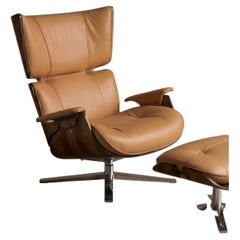
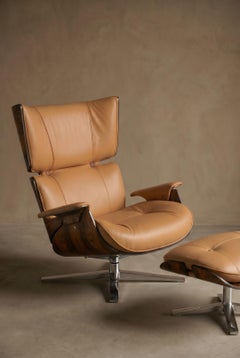
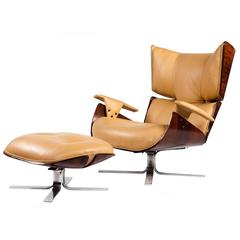
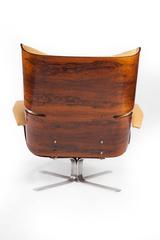
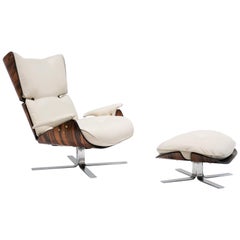
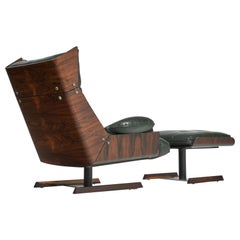
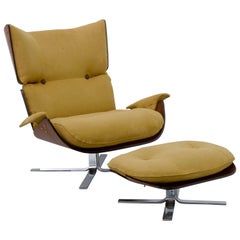
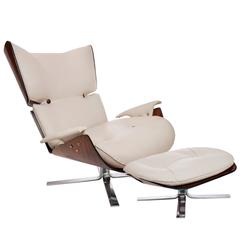
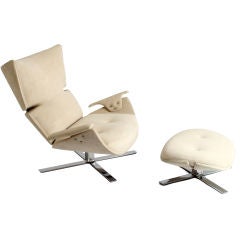
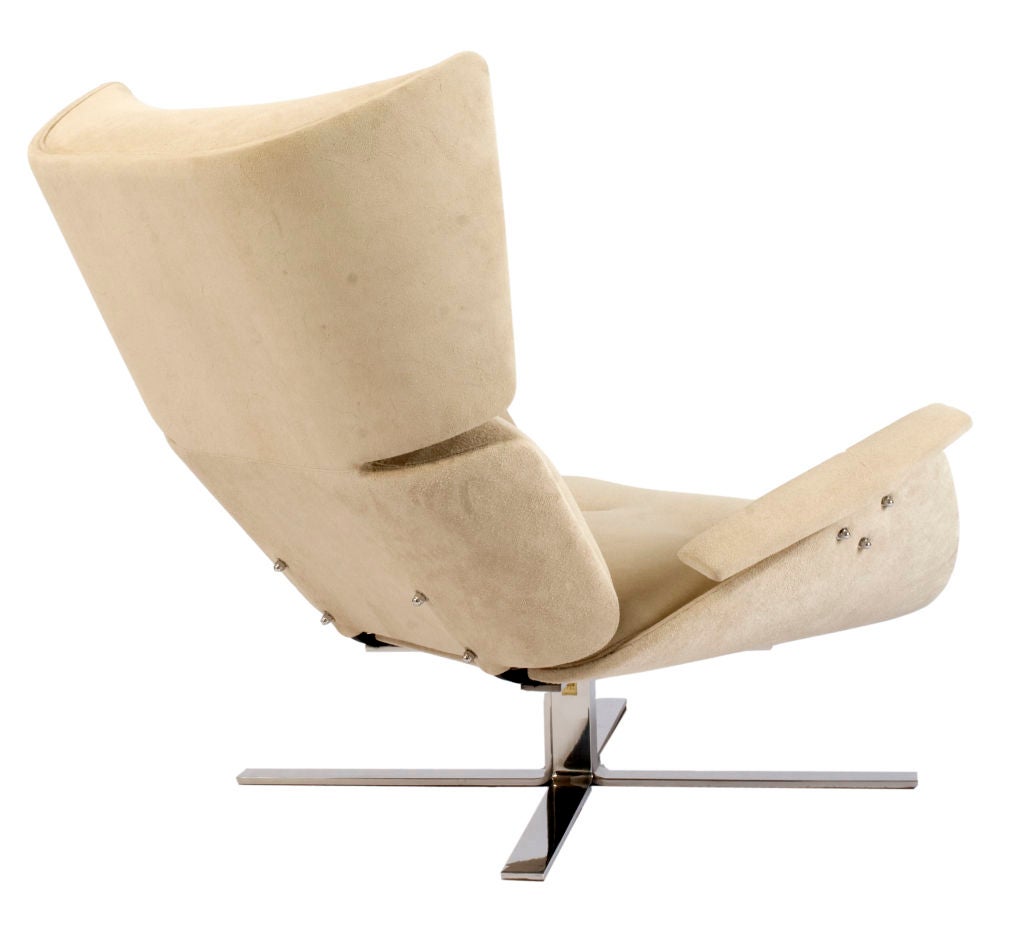
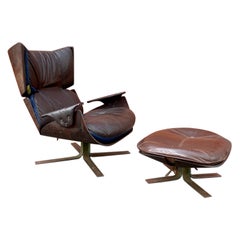
Paulistana Lounge Chair by Jorge Zalszupin, Rosewood Shell and Leather, Brazil

Paulistana Lounge Chair by Jorge Zalszupin, Rosewood Shell and Leather, Brazil

By Jorge Zalszupin

Located in Lisboa, PT

Paulistana lounge chair and ottoman designed by Jorge Zalszupin and produced by L'Atelier circa 1965, a swivel lounge chair with a moulded rosewood shell, leather cushions and an alu...

Category

Vintage 1960s Brazilian Mid-Century Modern Ottomans and Poufs

Materials

Metal

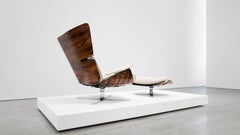
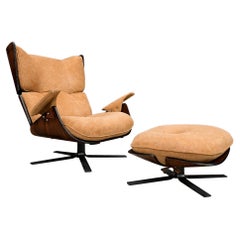
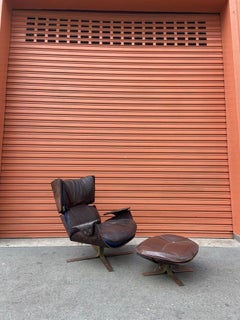
Brazilian Modern "Paulistana" Armchair with Ottoman by Jorge Zalszupin, c. 1959

Brazilian Modern "Paulistana" Armchair with Ottoman by Jorge Zalszupin, c. 1959

By Jorge Zalszupin

Located in New York, NY

Designed in 1959 by Jorge Zalszupin and produced by his firm L’Atelier, the Paulistana lounge chair and ottoman stand among the most emblematic works of Brazilian modernism.

Category

Mid-20th Century Brazilian Mid-Century Modern Armchairs

Materials

Metal

Recent Sales

"Paulistana" Mid-Century Modern Lounge Chair and Ottoman by Jorge Zalszupin

"Paulistana" Mid-Century Modern Lounge Chair and Ottoman by Jorge Zalszupin

By Jorge Zalszupin

Located in Beverly Hills, CA

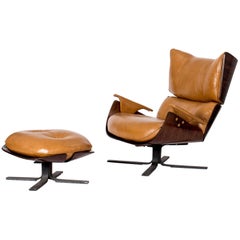
"Paulistana" Brazilian modern rosewood (Jacaranda) and leather lounge chair and ottoman designed by Jorge Zalszupin.

Category

Vintage 1960s Brazilian Mid-Century Modern Lounge Chairs

Materials

Jacaranda

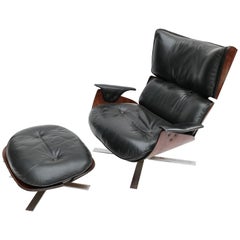
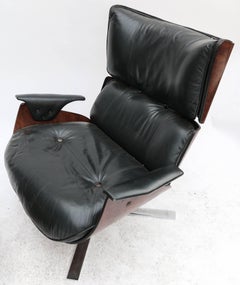
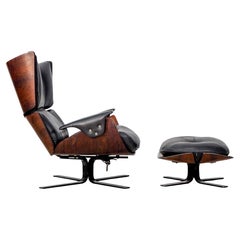
Zalszupin 1960s Brazilian Jacaranda Paulistana Chair and Ottoman

Zalszupin 1960s Brazilian Jacaranda Paulistana Chair and Ottoman

By Jorge Zalszupin

Located in Los Angeles, CA

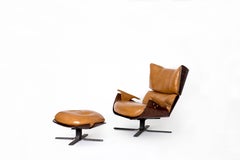
1960s Brazilian jacaranda Paulistana chair and ottoman by Jorge Zalszupin with black leather upholstery Ottoman dimensions: 29in wide, 21.5in deep, 12.75in high.

Category

Vintage 1960s Brazilian Mid-Century Modern Lounge Chairs

Materials

Metal

Jorge Zalszupin, Paulistana Lounge Chair and Ottoman, 1956-1965

Jorge Zalszupin, Paulistana Lounge Chair and Ottoman, 1956-1965

By Jorge Zalszupin

Located in LAGUNA BEACH, CA

Polish-Brazilian, 1922–2012, based in Sao Paulo, Brazil. The Polish born Jorge Zalszupin moved to Brazil after World War II, where he found an opportunity to develop his extremel...

Category

Vintage 1950s Brazilian Mid-Century Modern Lounge Chairs

Materials

Iron

Jorge Zalszupin Paulistana Lounge Chair, Owned by Oscar Niemeyer, Brazil, 1960s

Jorge Zalszupin Paulistana Lounge Chair, Owned by Oscar Niemeyer, Brazil, 1960s

By L'Atelier San Paulo, Jorge Zalszupin

Located in Utrecht, NL

Paulistana lounge chair and ottoman designed by Jorge Zalszupin.

Category

Vintage 1960s Brazilian Mid-Century Modern Lounge Chairs

Materials

Leather, Wood

Novo Rumo Lounge Chair and Ottoman Brazil, 1960

Novo Rumo Lounge Chair and Ottoman Brazil, 1960

Sold

H 35.83 in W 37.41 in D 35.44 in

Novo Rumo Lounge Chair and Ottoman Brazil, 1960

By Novo Rumo

Located in Roosendaal, Noord Brabant

This lounge chair is unique in its kind, although you could say it was inspired by the Paulistana chair from Jorge Zalszupin, it also has similarities to the iconic lounge chair by C...

Category

Vintage 1960s Brazilian Mid-Century Modern Chaise Longues

Materials

Faux Leather, Rosewood

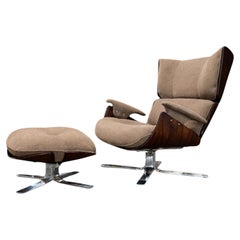
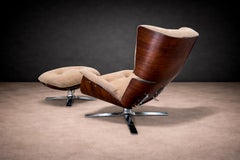
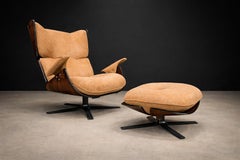
“Paulistana” Lounge Chair and Ottoman by Jorge Zalszupin, Rosewood & Suede, 1959

“Paulistana” Lounge Chair and Ottoman by Jorge Zalszupin, Rosewood & Suede, 1959

By Jorge Zalszupin

Located in New York, NY

A foundational work in the evolution of Brazilian Modern design, the “Paulistana” lounge chair and ottoman by Jorge Zalszupin embodies the technical innovation and material sophistic...

Category

Mid-20th Century Brazilian Mid-Century Modern Armchairs

Materials

Metal

Jorge Zalszupin “Paulistana” Armchair with Ottoman, Rare Collectible

Jorge Zalszupin “Paulistana” Armchair with Ottoman, Rare Collectible

By Jorge Zalszupin

Located in Curitiba, PR

A striking and sculptural example of Brazilian modernism, the Paulistana lounge chair by Jorge Zalszupin embodies the innovative spirit of 1960s São Paulo design.

Category

Vintage 1960s Brazilian Mid-Century Modern Armchairs

Materials

Metal

Brazilian Midcentury Lounge Chair by Jorge Zalszupin in Jacaranda Rosewood

Brazilian Midcentury Lounge Chair by Jorge Zalszupin in Jacaranda Rosewood

By Jorge Zalszupin

Located in Sao Paulo, SP

The Paulistana lounge chair, made in the midcentury style, is one of the most recognized pieces created by Jorge Zalszupin.

Category

Mid-20th Century Brazilian Mid-Century Modern Armchairs

Materials

Jacaranda, Rosewood

Jorge Zalszupin 'Paulistana' Lounge Chair and Footstool

Jorge Zalszupin 'Paulistana' Lounge Chair and Footstool

By Jorge Zalszupin

Located in Astoria, NY

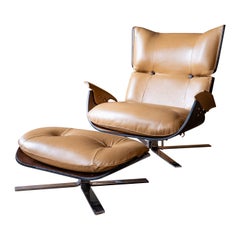
A 'Paulistana' lounge chair and footstool by architect and designer Jorge Zalszupin, manufactured circa 1960s, each with matching, button tufted ivory toned leather, against curved j...

Category

Vintage 1960s Brazilian Mid-Century Modern Lounge Chairs

Materials

Jacaranda, Leather

Paulistana Armchair by Jorge Zalszupin

Paulistana Armchair by Jorge Zalszupin

Sold

H 40 in W 35 in D 37 in

Paulistana Armchair by Jorge Zalszupin

Located in New York, NY

"Paulistana" armchair and ottoman in chrome steel with upholstery. Option of swiveling or stationary armchair. Produced by Etel, in Brazil.

Category

Vintage 1960s Brazilian Lounge Chairs

Materials

Chrome, Steel

Jorge Zalszupin Paulistana Lounge Chair with original Ottoman

Jorge Zalszupin Paulistana Lounge Chair with original Ottoman

By Jorge Zalszupin

Located in Barra Funda, SP

Paulistana Armchair with ottoman in jacaranda. Original leather upholstery. Original screws, original jacaranda buttons, original metal parts. We decided not to restore this unique...

Category

Vintage 1950s Brazilian Mid-Century Modern Armchairs

Materials

Metal

Mid-Century Modern Lounge Chair with Ottoman by Jorge Zalszupin, Brazil 1960s

Mid-Century Modern Lounge Chair with Ottoman by Jorge Zalszupin, Brazil 1960s

By Jorge Zalszupin

Located in Vienna, AT

Iconic Lounge Chair and Ottoman Paulistana designed by the famous brazilian designer Jorge Zalszupin in the 60s and produced by L’Atelier Moveis (original label at the bottom).

Category

Vintage 1960s Brazilian Mid-Century Modern Lounge Chairs

Materials

Leather, Jacaranda

Get Updated with New Arrivals
Save "Paulistana Chair", and we’ll notify you when there are new listings in this category.

Jorge Zalszupin for sale on 1stDibs

Just as emigrant Europeans — from Kem Weber and Paul Frankl to Marcel Breuer and Ludwig Mies van der Rohe — helped establish modernist design and architecture in the United States, so too did many of their peers foster the new design aesthetic in Brazil in the middle decades of the 20th century. Along with architect Lina Bo Bardi (from Italy) and Joaquim Tenreiro (from Portugal) — both of whom helped popularize Brazilian modern design and influenced today's generation of Brazilian designers — there was Jorge Zalszupin, who arrived from Poland in 1949 and created consistently sleek and elegant chairs, tables and case pieces using the South American country’s vibrantly grained tropical hardwoods.

Zalszupin was born in Warsaw (his given first name is Jerzy) and went on to study architecture at the École des Beaux Arts in Bucharest, Romania, graduating in 1945. Zalszupin moved to Paris but found few opportunities in the postwar City of Light. He was impressed by articles on the work of Brazilian architect Oscar Niemeyer that he saw in the André Bloc–edited magazine L’Architecture d’Aujourd’hui (Architecture Today). And after sailing to South America, Zalszupin went to work with his fellow Pole and architect Luciano Korngold in São Paulo. Zalszupin began designing furniture as part of his architectural commissions and created several pieces for Niemeyer for use in the new capital city, Brasília. He opened his own design and manufacturing firm, L’Atelier, in 1959.

While Zalszupin cannot be said to have had a signature style, his furniture designs all share a characteristic simplicity and purity of line and form. His work is often compared to that of Danish designers, most especially in their shared commitment to quality construction. He was a master of many materials: travertine marble for tabletops, slung leather for seating, man-made fabrics for upholstery and — his forte — highly figured woods such as jacaranda and rosewood. The latter plays prominently in two of Zalszupin’s best-known lounge chairs: the Brasiliana, with its austere, angular wood frame, and the Presidencial, with its curved seating shell and slatted backrest. Both chairs feature deep cushions and generous proportions in deference to the Brazilian proclivity for long and languid conversations. Yet both pieces — like all Zalszupin designs — possess a striking, tailored grace that would be perfect in any environment.

Find vintage Jorge Zalszupin furniture on 1stDibs.

A Close Look at Mid-century-modern Furniture

Organically shaped, clean-lined and elegantly simple are three terms that well describe vintage mid-century modern furniture. The style, which emerged primarily in the years following World War II, is characterized by pieces that were conceived and made in an energetic, optimistic spirit by creators who believed that good design was an essential part of good living.

ORIGINS OF MID-CENTURY MODERN FURNITURE DESIGN

CHARACTERISTICS OF MID-CENTURY MODERN FURNITURE DESIGN

MID-CENTURY MODERN FURNITURE DESIGNERS TO KNOW

ICONIC MID-CENTURY MODERN FURNITURE DESIGNS

VINTAGE MID-CENTURY MODERN FURNITURE ON 1STDIBS

The mid-century modern era saw leagues of postwar American architects and designers animated by new ideas and new technology. The lean, functionalist International-style architecture of Le Corbusier and Bauhaus eminences Ludwig Mies van der Rohe and Walter Gropius had been promoted in the United States during the 1930s by Philip Johnson and others. New building techniques, such as “post-and-beam” construction, allowed the International-style schemes to be realized on a small scale in open-plan houses with long walls of glass.

Materials developed for wartime use became available for domestic goods and were incorporated into mid-century modern furniture designs. Charles and Ray Eames and Eero Saarinen, who had experimented extensively with molded plywood, eagerly embraced fiberglass for pieces such as the La Chaise and the Womb chair, respectively. 

Architect, writer and designer George Nelson created with his team shades for the Bubble lamp using a new translucent polymer skin and, as design director at Herman Miller, recruited the Eameses, Alexander Girard and others for projects at the legendary Michigan furniture manufacturer

Harry Bertoia and Isamu Noguchi devised chairs and tables built of wire mesh and wire struts. Materials were repurposed too: The Danish-born designer Jens Risom created a line of chairs using surplus parachute straps for webbed seats and backrests.

The Risom lounge chair was among the first pieces of furniture commissioned and produced by celebrated manufacturer Knoll, a chief influencer in the rise of modern design in the United States, thanks to the work of Florence Knoll, the pioneering architect and designer who made the firm a leader in its field. The seating that Knoll created for office spaces — as well as pieces designed by Florence initially for commercial clients — soon became desirable for the home.

As the demand for casual, uncluttered furnishings grew, more mid-century furniture designers caught the spirit.

Classically oriented creators such as Edward Wormley, house designer for Dunbar Inc., offered such pieces as the sinuous Listen to Me chaise; the British expatriate T.H. Robsjohn-Gibbings switched gears, creating items such as the tiered, biomorphic Mesa table. There were Young Turks such as Paul McCobb, who designed holistic groups of sleek, blond wood furniture, and Milo Baughman, who espoused a West Coast aesthetic in minimalist teak dining tables and lushly upholstered chairs and sofas with angular steel frames.

Generations turn over, and mid-century modern remains arguably the most popular style going. As the collection of vintage mid-century modern chairs, dressers, coffee tables and other furniture for the living room, dining room, bedroom and elsewhere on 1stDibs demonstrates, this period saw one of the most delightful and dramatic flowerings of creativity in design history.

On the Origins of Brazilian

More often than not, vintage mid-century Brazilian furniture designs, with their gleaming wood, soft leathers and inviting shapes, share a sensuous, unique quality that distinguishes them from the more rectilinear output of American and Scandinavian makers of the same era.

Commencing in the 1940s and '50s, a group of architects and designers transformed the local cultural landscape in Brazil, merging the modernist vernacular popular in Europe and the United States with the South American country's traditional techniques and indigenous materials.

Key mid-century influencers on Brazilian furniture design include natives Oscar NiemeyerSergio Rodrigues and José Zanine Caldas as well as such European immigrants as Joaquim TenreiroJean Gillon and Jorge Zalszupin. These creators frequently collaborated; for instance, Niemeyer, an internationally acclaimed architect, commissioned many of them to furnish his residential and institutional buildings.

The popularity of Brazilian modern furniture has made household names of these designers and other greats. Their particular brand of modernism is characterized by an émigré point of view (some were Lithuanian, German, Polish, Ukrainian, Portuguese, and Italian), a preference for highly figured indigenous Brazilian woods, a reverence for nature as an inspiration and an atelier or small-production mentality.

Hallmarks of Brazilian mid-century design include smooth, sculptural forms and the use of native woods like rosewoodjacaranda and pequi. The work of designers today exhibits many of the same qualities, though with a marked interest in exploring new materials (witness the Campana Brothers' stuffed-animal chairs) and an emphasis on looking inward rather than to other countries for inspiration.

Find a collection of vintage Brazilian furniture on 1stDibs that includes chairssofastables and more.

Finding the Right Seating for You

With entire areas of our homes reserved for “sitting rooms,” the value of quality antique and vintage seating cannot be overstated.

Fortunately, the design of side chairs, armchairs and other lounge furniture — since what were, quite literally, the early perches of our ancestors — has evolved considerably.

Among the earliest standard seating furniture were stools. Egyptian stools, for example, designed for one person with no seat back, were x-shaped and typically folded to be tucked away. These rudimentary chairs informed the design of Greek and Roman stools, all of which were a long way from Sori Yanagi's Butterfly stool or Alvar Aalto's Stool 60. In the 18th century and earlier, seats with backs and armrests were largely reserved for high nobility.

The seating of today is more inclusive but the style and placement of chairs can still make a statement. Antique desk chairs and armchairs designed in the style of Louis XV, which eventually included painted furniture and were often made of rare woods, feature prominently curved legs as well as Chinese themes and varied ornaments. Much like the thrones of fairy tales and the regency, elegant lounges crafted in the Louis XV style convey wealth and prestige. In the kitchen, the dining chair placed at the head of the table is typically reserved for the head of the household or a revered guest.

Of course, with luxurious vintage or antique furnishings, every chair can seem like the best seat in the house. Whether your preference is stretching out on a plush sofa, such as the Serpentine, designed by Vladimir Kagan, or cozying up in a vintage wingback chair, there is likely to be a comfy classic or contemporary gem for you on 1stDibs.

With respect to the latest obsessions in design, cane seating has been cropping up everywhere, from sleek armchairs to lounge chairs, while bouclé fabric, a staple of modern furniture design, can be seen in mid-century modern, Scandinavian modern and Hollywood Regency furniture styles.

Admirers of the sophisticated craftsmanship and dark woods frequently associated with mid-century modern seating can find timeless furnishings in our expansive collection of lounge chairs, dining chairs and other items — whether they’re vintage editions or alluring official reproductions of iconic designs from the likes of Hans Wegner or from Charles and Ray Eames. Shop our inventory of Egg chairs, designed in 1958 by Arne Jacobsen, the Florence Knoll lounge chair and more.

No matter your style, the collection of unique chairs, sofas and other seating on 1stDibs is surely worthy of a standing ovation.