Aesthetic Movement Decorative Objects

AESTHETIC MOVEMENT

In 1880, polymath designer William Morris declared: “If you want a golden rule that will fit everybody, this is it: Have nothing in your houses that you do not know to be useful or believe to be beautiful.” His words encapsulated the Aesthetic Movement, which prized beauty above all and blurred the lines between fine art and the decorative arts, particularly through lavishly crafted furniture pieces.

The Aesthetic Movement, whose major proponents included author Oscar Wilde, flourished from the 1860s to the 1880s and was mostly popular in England and the United States. Design expositions like the 1876 Centennial International Exhibition in Philadelphia, as well as the publishing of how-to books for interior design, helped disseminate Aesthetic Movement bedroom furniture, serveware, coffee tables and other items, especially to the middle class.

The establishment of new art museums, art clubs and a rising passion for collecting at the time contributed to a growing appreciation for art. Morris’s founding of Morris & Co. in 1862 and the commercializing of this “cult of beauty” by the Liberty store in London, starting in the late 19th century, further disseminated the idea of a domestic space that was thoughtfully and floridly designed.

Leading Aesthetic Movement furniture designers included E.W. Godwin, who drew on Japanese influences and whose work reflected a wider enthusiasm for imported East Asian art. British designer Christopher Dresser created textiles, ceramics and more that were also inspired by Japanese decorative art but were representative of additional diverse design sources that ranged from Egypt to Mexico.

The Aesthetic Movement’s eclecticism resulted in dazzling interiors. Japanese fans were positioned on Renaissance-inspired cabinets with brass hardware, while mantels made of rich walnut or finely carved ebonized wood and adorned with painted Minton tiles mingled with cast-iron chairs against a backdrop of floral wallpaper. In 1881, in New York City, stenciled checkerboard motifs and painted floral murals could be found under an opalescent glass chandelier in a luxurious dressing room designed by German émigré cabinetmaker-decorator George Alfred Schastey. Amid the rise of the industrial age, the style’s promotion of art in everyday life would inform the Arts and Crafts Movement and Art Nouveau.

Find a collection of antique Aesthetic Movement seating, tables, decorative objects and other furniture and antiques on 1stDibs.

to
32
258
5
3
174
84
8
38
13
23
11
3
3
2
2
1
2
6
3
2
27,244
14,527
9,569
5,694
4,079
3,132
2,352
1,692
1,537
1,420
1,272
1,262
1,072
915
899
674
644
625
125
93
42
32
31
174
83
210
86
77
63
31
Height
to
Width
to
266
266
266
8
7
5
5
4
Style: Aesthetic Movement
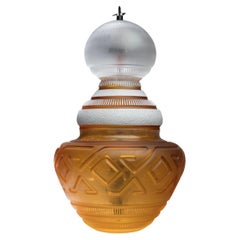
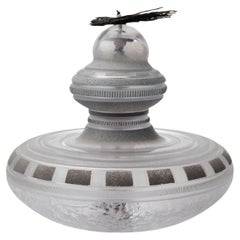
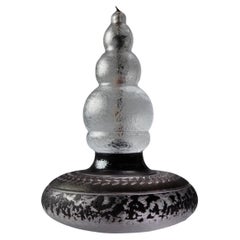
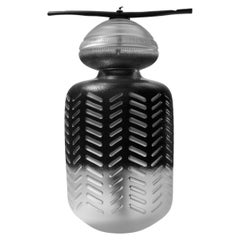
Gérald Vatrin 'Madjo' Hand-Crafted Blown Glass Sculpture, France 2020

Gérald Vatrin 'Madjo' Hand-Crafted Blown Glass Sculpture, France 2020

By Gerald Vatrin

Located in Paris, FR

Madjo is an exceptional unique piece from the Flacon collection. Its structure is composed of two elements of hand-blown white translucent glass, forming a precious, oversized bottle...

Category

21st Century and Contemporary French Aesthetic Movement Decorative Objects

Materials

Glass, Blown Glass

John Tuska Lidded Stoneware Vessel

John Tuska Lidded Stoneware Vessel

$1,760Sale Price|20% Off

John Tuska Lidded Stoneware Vessel

By John Tuska

Located in Palm Springs, CA

John Tuska lidded stoneware vessel in a striking green glaze. John Tuska, full name John Regis Tuska, (1931–1998) was an American artist and educator. H...

Category

20th Century American Aesthetic Movement Decorative Objects

Materials

Terracotta

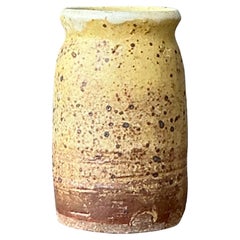
Vintage Original Studio Pottery Coil Vase

Vintage Original Studio Pottery Coil Vase

Located in West Palm Beach, FL

This remarkable studio pottery vase is a masterclass in Brutalist texture and organic form, epitomizing the raw, expressive energy of the 1970s artisanal movement. Expertly hand-buil...

Category

Late 20th Century American Aesthetic Movement Decorative Objects

Materials

Pottery

Three-Piece French Enamelled Glass Garniture, Attributed to Baccarat

Three-Piece French Enamelled Glass Garniture, Attributed to Baccarat

Located in Montreal, QC

This garniture is painted with birds and flowers on a pale blue ground. The oblong footed bowl has a shaped gilt rim ,with white jewelling and centering palmettes. The flanking vases...

Category

1880s French Antique Aesthetic Movement Decorative Objects

Materials

Opaline Glass

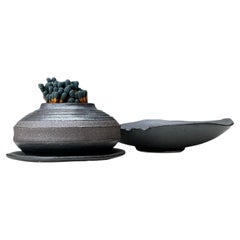
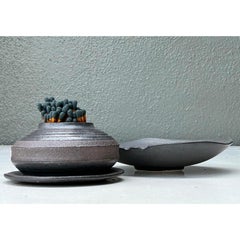
Vintage Original Studio Pottery Match Strike Set

Vintage Original Studio Pottery Match Strike Set

Located in West Palm Beach, FL

This exceptional two-piece studio pottery set is a masterclass in Brutalist texture and functional design, celebrating the raw beauty of hand-thrown ceramics. The set features a dist...

Category

21st Century and Contemporary American Aesthetic Movement Decorative Objects

Materials

Pottery

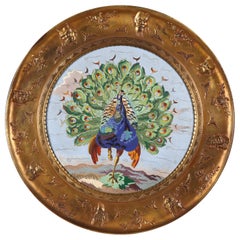
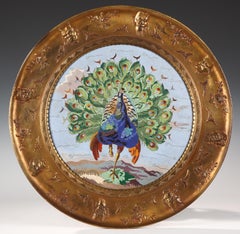
Aesthetic Movement Enameled Plate Attributed to Elkington and A. Willms, c. 1875

Aesthetic Movement Enameled Plate Attributed to Elkington and A. Willms, c. 1875

By W. Albert Willms, Elkington & Co.

Located in PARIS, FR

Important tray made in gilded bronze and “cloisonné” enamel attributed to Elkington and Willms. Ornamented with a centering polychrome enameled peacock plaque, made of very high standard quality, mounted on a gilt-bronze dish, decorated in relief with Japanese Nô theater masks. The great Birmingham firm of Elkingtons, was largely the creation of George Richards Elkington (1800-1865), who worked from 1824 in Birmingham as a manufacturer of silver-mounted scent bottles. By 1829 the business had expanded sufficiently for a branch to have been established in London. In the late 1830s the Elkingtons began making experiments to apply the principles of electro-metallurgy to gilding and plating with silver and in 1840 the patent was at last taken out. Elkingtons owed their rise to a position amongst the most important silversmiths of the country to their exploitation of this new process and the two of the most famous designers then employed, both of them French, Albert Wilms (1827-1899) and Morel-Ladeuil (1820-1888), who helped to make Elkingtons’ reputation with their elaborate exhibition pieces. Albert Willms was apprenticed as modeler and engraver to Klagman, Dieterle and Constant in Paris before working for Morel & Co. in London in 1848. On his return to Paris he was employed by the great Parisian silversmiths including Christofle and Froment-Meurice, for whom he designed pieces to be presented at the 1855 Universal Exhibition in Paris. It was during this period that he joined the firm of Elkington in London as head decorator. Elkington was soon to become one of the first to produce refined pieces in “champlevé” enamel in the Chinese and Japanese styles, which were presented with great success at the London Universal Exhibition in 1862 (see Masterpieces of Industrial Art & Sculpture at the International Exhibition 1862, J.B. Waring, London, 1863, III, pl. 211). Willms’ “champlevé” enamels could not be compared, however, with the delicate “cloisonné” enamels exhibited by Japan at the Universal Exhibition in Paris in 1867. This explains why Elkington adapted the ancient Japanese technique to produce pieces according to European taste and custom. Followings the 1867 Exhibition all the major European artists rivaled in ingenuity for the 1873 Universal Exhibition in Vienna. In London Albert Willms presented his luxurious vases and cups in “cloisonné” enamel for Elkington (see Illustrations of Art Manufacturers in the Precious Metals exhibited by Elkington & Co., Inventors, Patentees and Manufactures of electroplate, 1873), whilst in Paris, Ferdinand Thesmar (1843-1912) produced in the workshops of Ferdinand Barbedienne (1810-1892) a tray decorated with a golden pheasant in “cloisonné” enamel on copper...

Category

1870s English Antique Aesthetic Movement Decorative Objects
Materials

Enamel, Bronze

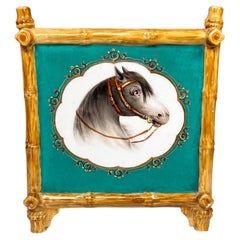
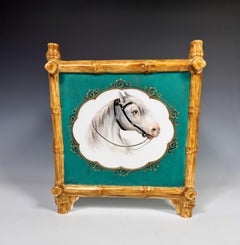
19th c Old Paris Hand Painted Porcelain Planter with Portraits of Horses

19th c Old Paris Hand Painted Porcelain Planter with Portraits of Horses

By Manufacture Le Vieux Paris

Located in Great Barrington, MA

This large square hand painted porcelain planter was made in France ca. 1880's or earlier. It features two hand painted "portraits" of horses heads alternating with 2 sides of hand p...

Category

1880s French Antique Aesthetic Movement Decorative Objects
Materials

Porcelain

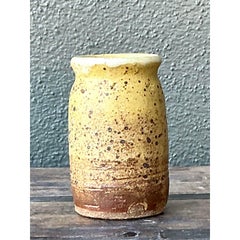
Vintage Original Studio Pottery Vase

Vintage Original Studio Pottery Vase

Located in West Palm Beach, FL

This striking vintage studio pottery vase is a masterclass in organic modernism and sculptural form. Characterized by its tactile, hand-built construction, the vessel features an exp...

Category

Late 20th Century American Aesthetic Movement Decorative Objects
Materials

Clay, Pottery, Stoneware

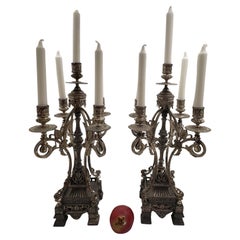
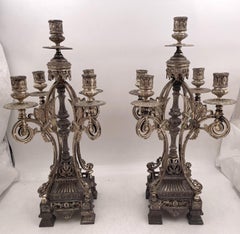
Ansonia Pair of Silver 5-Light Candelabra from Aesthetic Movement 19th Century

Ansonia Pair of Silver 5-Light Candelabra from Aesthetic Movement 19th Century

By Ansonia Clock Company

Located in New York, NY

Pair of Ansonia silver-plated 5-light candelabra in a style reminiscent of the Aesthetic Movement and from the 19th century. They measure 20'' in height by 11 1/2'' from arm to arm and appear to be unmarked. The Ansonia Clock Company was a clock manufacturing business founded in Ansonia, Connecticut, in 1851, as a subsidiary of the Ansonia Brass Company by Phelps and two Bristol, Connecticut, clockmakers, Theodore Terry and Franklin C. Andrews. Terry & Andrews were the largest clock manufacturers in Bristol, with more than 50 employees using 58 tons of brass in the production of about 25,000 clocks in 1849. The company has produced hundreds of different clock models, including Gingerbread, Porcelain, and Crystal Regulator styles. Ansonia clocks were exhibited at the U.S. Centennial exhibition in Philadelphia in 1876. In 1877 the clock company purchased a factory in New York and moved most of its production there after being spun off from the brass company. Henry J. Davies of Brooklyn, himself a clockmaker, inventor and case designer, joined the newly reconstituted company as one of its founders. As President, he is thought to have been largely responsible for the figurine clocks, swing clocks...

Category

19th Century American Antique Aesthetic Movement Decorative Objects
Materials

Silver, Silver Plate

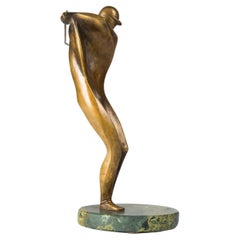
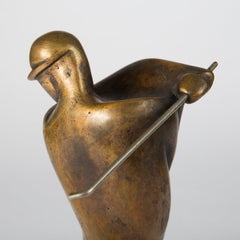
Bronze sculpture " Golfer" on green marble base. Levan Vardosanidze. 1990s.

Bronze sculpture " Golfer" on green marble base. Levan Vardosanidze. 1990s.

Located in Köln, NW

Elegant and abstract Bronze sculpture "Golfer" on a green marble base by Levan Vardosanidze, Georgia 1999. The georgian sculptor, born 1957 in Tiflis studied at the Academy there. He...

Category

1990s Baltic Aesthetic Movement Decorative Objects
Materials

Marble, Bronze

Letter Rack or Stationery Rack in Leather from the 19th Century, France

Letter Rack or Stationery Rack in Leather from the 19th Century, France

Located in Brussels, Brussels

Elegant 19th centuryletter rack or stationery rack from France It is unusual to find them with their original key. Very nice interior beautiful pati...

Category

19th Century French Antique Aesthetic Movement Decorative Objects
Materials

Leather

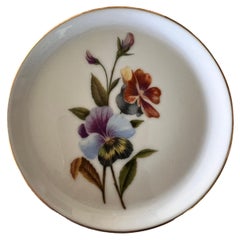
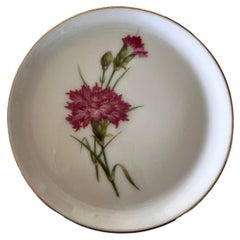
Ceramic Decorative Flower and Vegetation Chinese Plate Signed WL, 1896

Ceramic Decorative Flower and Vegetation Chinese Plate Signed WL, 1896

By Furstenberg Porcelain

Located in Neguri, Vizcaya

Ceramic decorative flower and vegetation chinese plate signed Perfect gift for your special someone. Dimensions: Diameter 20 cm (37.86 inches) A series of three make the matchin...

Category

Late 20th Century German Aesthetic Movement Decorative Objects
Materials

Ceramic

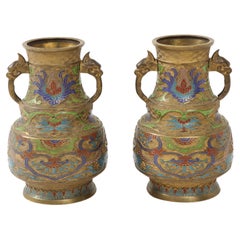
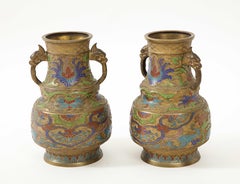
Chinese Cloisonné Vessels, Bronze & Glass, Aesthetic Movement, 1890s

Chinese Cloisonné Vessels, Bronze & Glass, Aesthetic Movement, 1890s

Located in New York, NY

Pair of Chinese export late 19th century cloisonne vessels. Vessels feature hand chased glass stylized floral patterns in Victorian era colors of red/...

Category

19th Century Chinese Antique Aesthetic Movement Decorative Objects
Materials

Bronze

Aesthetic Period & Design English Sterling Silver Bowl, London 1879

Aesthetic Period & Design English Sterling Silver Bowl, London 1879

By Martin, Hall & Co. Ltd.

Located in London, London

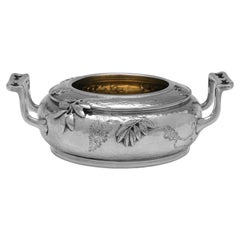
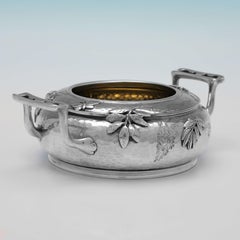
Hallmarked in London in 1879 by Martin, Hall & Co., this stunning, Antique Sterling Silver Bowl, is in the Aesthetic taste, featuring cast and applied floral and butterfly detailing,...

Category

1870s English Antique Aesthetic Movement Decorative Objects
Materials

Sterling Silver

Antique Aesthetic Movement Bronze Basket, Bird Design, France, 1880

Antique Aesthetic Movement Bronze Basket, Bird Design, France, 1880

Located in Montreal, QC

An American Aesthetic Movement Basket, naturalistically modeled as a bird perched on a a leafy twig, above a shallow dish simulating cloth, decorated with gilt and silvered leaves an...

Category

Late 19th Century French Antique Aesthetic Movement Decorative Objects
Materials

Bronze

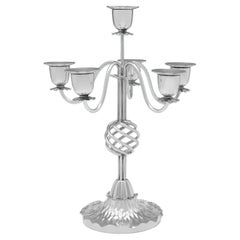
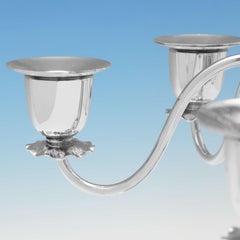
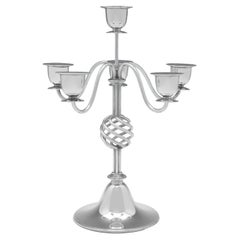
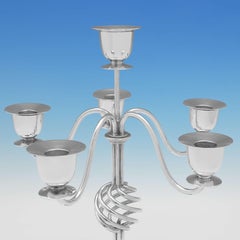
Aesthetic Period Antique Silver Plate Candelabrum by Hukin & Heath, Circa 1880

Aesthetic Period Antique Silver Plate Candelabrum by Hukin & Heath, Circa 1880

By Hukin & Heath

Located in London, London

Made circa 1880 by Hukin & Heath, this stylish, Victorian, antique silver plated candelabrum, is a fine example of the Aesthetic Movement, featuring a textured base, and will hold 6 ...

Category

1880s English Antique Aesthetic Movement Decorative Objects
Materials

Silver Plate

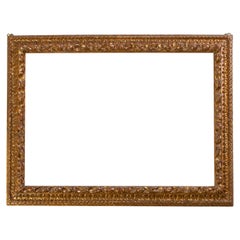
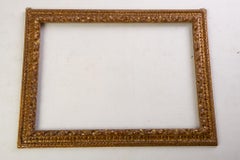
Large Hand-Carved Giltwood Frame with Pomegranates, France, Circa 1880

Large Hand-Carved Giltwood Frame with Pomegranates, France, Circa 1880

Located in Alessandria, Piemonte

O/5734 - Large giltwood frame with pomegranates carved in relief: very fine ! It can be vertical or orizonthal, for a mirror or for a picture. I h...

Category

Late 19th Century French Antique Aesthetic Movement Decorative Objects
Materials

Fruitwood

Aesthetic Period, Antique Silver Plate Candelabrum, Hukin & Heath, Circa 1880

Aesthetic Period, Antique Silver Plate Candelabrum, Hukin & Heath, Circa 1880

By Hukin & Heath

Located in London, London

Made circa 1880 by Hukin & Heath, this stylish, Victorian, antique silver plated candelabrum, is a fine example of the Aesthetic Movement, featuring a plain base, and will hold 6 can...

Category

1880s English Antique Aesthetic Movement Decorative Objects
Materials

Silver Plate

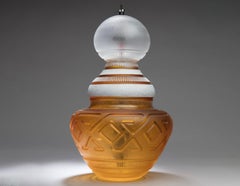
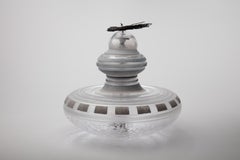
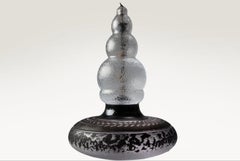
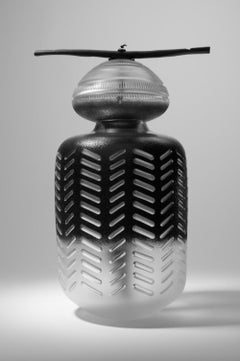
Gérald Vatrin "Mojo" Blown Glass Sculpture, Hand-Crafted, France, 2020

Gérald Vatrin "Mojo" Blown Glass Sculpture, Hand-Crafted, France, 2020

By Gerald Vatrin

Located in Paris, FR

Mojo is an exceptional unique piece from the Flacon collection. Its structure is composed of two elements of hand-blown white translucent glass, forming a precious, oversized bottle....

Category

21st Century and Contemporary French Aesthetic Movement Decorative Objects
Materials

Glass, Blown Glass

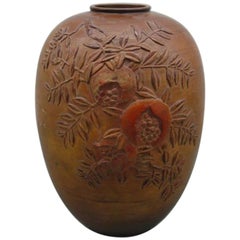
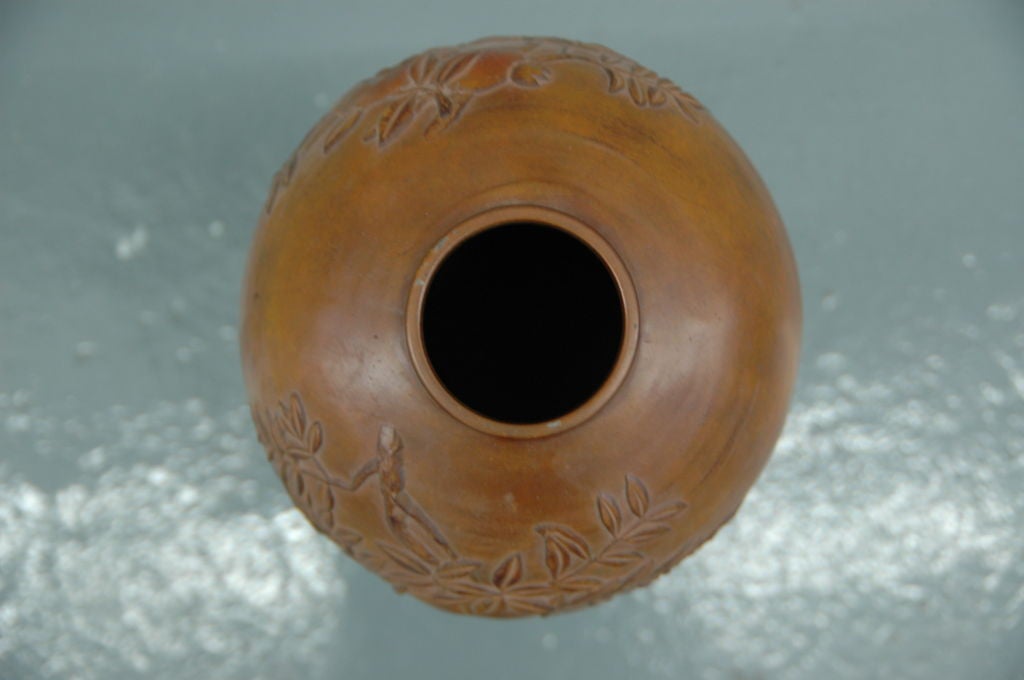
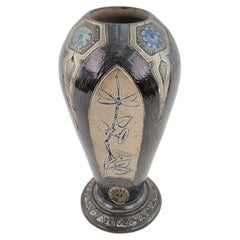
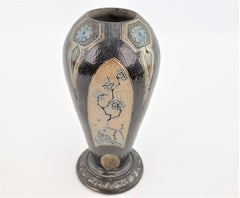
Dripglaze Heavily Potted Floral Vase

Dripglaze Heavily Potted Floral Vase

Located in NYC, NY

A beautifully potted vase with raised delicate floral decoration with a burnt orange flower in a subtle Japanese aesthetic typical of aesthetic movement po...

Category

Early 20th Century European Aesthetic Movement Decorative Objects
Materials

Pottery

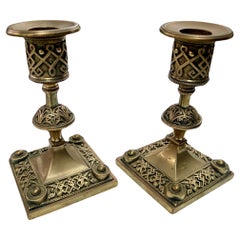
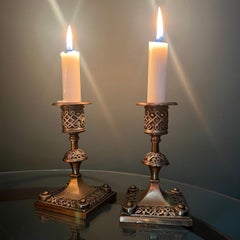
A Pair Of  Late Victorian Aesthetic Brass Candlesticks

A Pair Of Late Victorian Aesthetic Brass Candlesticks

Located in London, GB

A Beautiful Pair of Late Victorian Aesthetic Brass Candlesticks (Circa 1880–1900) This exquisite pair of brass candlesticks exemplifies the refined craftsmanship and decorative flai...

Category

Late 19th Century English Antique Aesthetic Movement Decorative Objects
Materials

Brass

Pair Late 19th Century French Tole Painted Bronze Urn & Flower Form Candelabra

Pair Late 19th Century French Tole Painted Bronze Urn & Flower Form Candelabra

Located in Hudson, NY

This pair of candelabra made in the form of urns holding floral arrangements are French and were cast in bronze in the 1870s. It’s possible that at one time they were gilded but they...

Category

Late 19th Century French Antique Aesthetic Movement Decorative Objects
Materials

Bronze

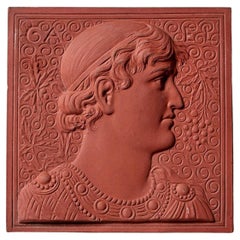
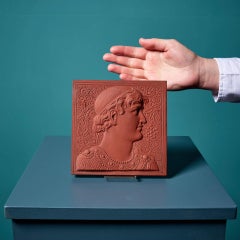
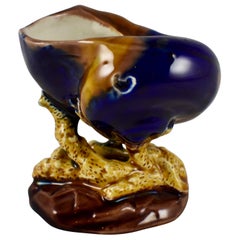
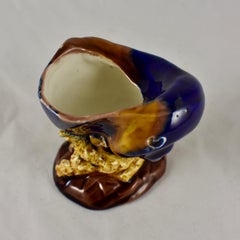
Minton Hollins 6-Inch Terracotta Profile Portrait Tile

Minton Hollins 6-Inch Terracotta Profile Portrait Tile

By Minton

Located in Wormelow, Herefordshire

A superb antique 6-inch dust-pressed terracotta tile by Minton Hollins & Co. (stamped) depicting a profile portrait in the aesthetic movement style. Such is this tiles beauty, that the back is equally as interesting as the front, showcasing how the portrait profile is pressed into the terracotta to bring life and shape to the relief figure at the front. Dating from the mid-late 19th century, the figure is carved with ornate Celtic style dress before a plentiful scrolling background impressed with the name ‘GAEL’ to the top. Ex British collection, this original Minton Hollins tile...

Category

Mid-19th Century English Antique Aesthetic Movement Decorative Objects
Materials

Clay, Terracotta

Aesthetic Movement decorative objects for sale on 1stDibs.
Find a broad range of unique Aesthetic Movement decorative objects for sale on 1stDibs. Many of these items were first offered in the 21st Century and Contemporary, but contemporary artisans have continued to produce works inspired by this style. If you’re looking to add vintage decorative objects created in this style to your space, the works available on 1stDibs include decorative objects, serveware, ceramics, silver and glass, more furniture and collectibles and other home furnishings, frequently crafted with ceramic, metal and other materials. If you’re shopping for used Aesthetic Movement decorative objects made in a specific country, there are Europe, United Kingdom, and England pieces for sale on 1stDibs. While there are many designers and brands associated with original decorative objects, popular names associated with this style include Doulton Lambeth, Royal Worcester, Delphin Massier, and Minton. It’s true that these talented designers have at times inspired knockoffs, but our experienced specialists have partnered with only top vetted sellers to offer authentic pieces that come with a buyer protection guarantee. Prices for decorative objects differ depending upon multiple factors, including designer, materials, construction methods, condition and provenance. On 1stDibs, the price for these items starts at $138 and tops out at $35,000 while the average work can sell for $1,362.