Small Sculptures

to
295
9,948
2,698
1,527
4,491
Overall Width
to
Overall Height
to
35
128
643
2,593
18
8
22
19
18
20
37
69
78
97
13
1,505
489
227
120
61
26
23
19
15
4
3
2
2
894
511
508
409
375
332
176
175
174
137
87
75
74
73
68
66
59
57
51
46
1,759
1,071
510
502
402
37
33
29
28
24
21
73
2,103
991
Size: Small
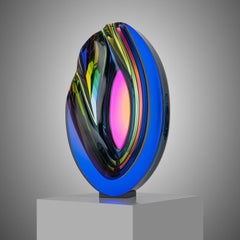
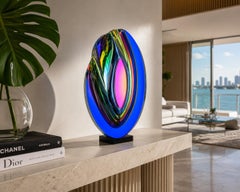
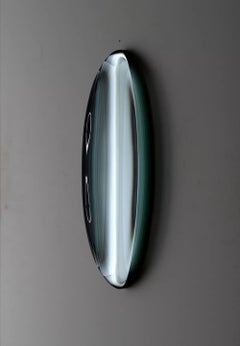
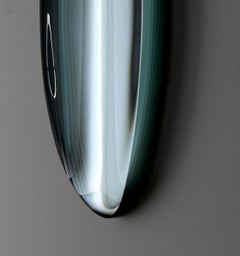
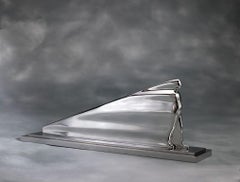
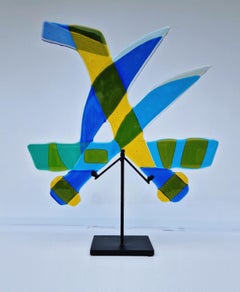
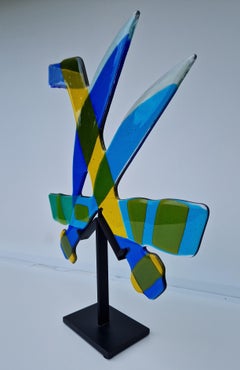
Abstract Cast Glass Sculpture, 'Maina', 2013 by David Ruth

Abstract Cast Glass Sculpture, 'Maina', 2013 by David Ruth

By David Ruth

Located in Oakland, CA

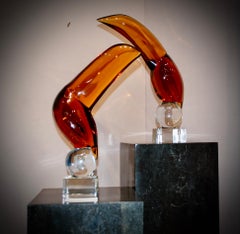
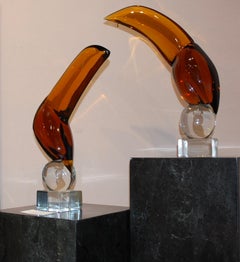
'Maina' is a contemporary abstract cast glass sculpture by David Ruth from his Internal Space series. It features painterly brushstroke formations in glass called trails. Trails are created through rolling molten glass into various forms and shapes. They are then placed within clear glass and fused into one large piece through kiln casting. This technique creates a layered, suspended, and vibrant three-dimensional space within. About the Internal Space Series: David’s experiments with sheet glass and fusing led him to try to make the glass thicker to see more interior space. It was during this time a professor pointed out that he was working with a metaphor, for which the internal space of the glass was the equivalent to the internal life of the mind. This became his operating mantra but also forced him to come to terms with the casting of thick sections. “Creating those internal spaces came with some problems. Other than telescope mirrors, I did not know that anyone annealed glass in a kiln for more than a day or two. When pieces cracked after five...

Category

2010s Abstract Expressionist Abstract Sculptures

Materials

Stainless Steel

Leafy Leaf Mixed Media Sculpture: Digital Print on Lucite

Leafy Leaf Mixed Media Sculpture: Digital Print on Lucite

By Roxana Azar

Located in Philadelphia, PA

This Mixed Media piece titled "Leafy Leaf" is an original artwork by Roxana Azar made of a digital print on acrylic. The piece measures approx. 21”h x 15”w x 1”d. Roxana Azar’s wor...

Category

21st Century and Contemporary Contemporary Abstract Sculptures

Materials

Digital, Lucite, Pigment

Effervescence V - small, geometric, abstract, powder coated steel sculpture

Effervescence V - small, geometric, abstract, powder coated steel sculpture

By Claude Millette

Located in Bloomfield, ON

At once contemporary and minimalist, Claude Millette’s dynamic tabletop sculptures exude energy. This piece, one of a series, recalls the form of tumbling dice—individual cubes are stacked at precarious angles, one on top of the other. The bright, glossy red finish enlivens and accentuates the modern form. The Quebec artist...

Category

21st Century and Contemporary Contemporary Abstract Sculptures

Materials

Steel

Dom Perignon Balloon Venus Sculpture, Contemporary, Resin, 2010+

Dom Perignon Balloon Venus Sculpture, Contemporary, Resin, 2010+

By Jeff Koons

Located in New York, NY

One of Jeff Koon's most well-known, and well collected, motifs is the balloon shape—a structure that Koons has recreated in steel, porcelain and resin over the years. This Balloon Ve...

Category

2010s Contemporary Sculptures

Materials

Polyurethane, Resin

Cloned Schnauzer with water bottle

Cloned Schnauzer with water bottle

By William Sweetlove

Located in Östermalm, Stockholms län

Edition of 200 ex. Free shipment worldwide. Acquired directly from the artist. Recycled plastic. William Sweetlove, born in Ostend, Belgium, in 1949, unites dadaism with surrealism ...

Category

2010s Pop Art Figurative Sculptures

Materials

Plastic

Large Hardwood Sculpture of Crèche Camel, Neapolitan, 19th Century

Large Hardwood Sculpture of Crèche Camel, Neapolitan, 19th Century

Located in Cotignac, FR

Large, Neapolitan, late 19th Century hardwood sculpture of a camel. Artist unknown. A beautifully patinated hardwood sculpture. The sculpture is extremely charming and having been handled for over a century has a lovely warm and tactile patina. It is particularly nice too see the work of the craftsperson in the adze and chisel marks along the body of the sculpture. The Italians and most notably the area around Naples has a long and storied tradition in the creation of sculptures for Nativity Scenes. This camel is both an endearing item and a piece of social history. A wonderful addition in its own right to the traditional Christmas scene, by tradition this sculpture was used as a maquette for the production of papier-maché models used in Christmas Creches which have such a long tradition in Italy and throughout the world. Wonderfully carved this piece was used to create hollow models out of papier-maché which were more affordable for this Christmas tradition. Hundreds of strips of papier-maché would be layered onto the figure in all directions. Then using a sharp tool the papier-maché was pushed into all the crevices of the sculpture to give it crisp detail. Once the layers of paper were dry the papier-maché was cut at certain points and lifted off the sculpture. Then finally the resulting body parts were glued back together, painted and patinated ready to be placed in the crèche scene. In the Christian tradition, a nativity scene (also known as a manger scene...

Category

Late 19th Century Art Nouveau Figurative Sculptures

Materials

Wood

The Wave by Yann Guillon - Contemporary Bronze Sculpture

The Wave by Yann Guillon - Contemporary Bronze Sculpture

By Yann Guillon

Located in Paris, FR

Limited edition of 8 + 4 artist's proofs. Each cast is signed and numbered. Sold with a wooden base. Dimensions of the bronze sculpture: 10 H x 55 L x 15 D cm Dimensions of the base...

Category

2010s Contemporary Figurative Sculptures

Materials

Bronze

Geometric Composition #3 (3D Art, Op-Art, Red, Stripes, ~74% OFF LIST PRICE)

Geometric Composition #3 (3D Art, Op-Art, Red, Stripes, ~74% OFF LIST PRICE)

By Eduard Diem

Located in Kansas City, MO

Eduard Diem Geometric Composition #3 (3D-construction, Op Art, Lyonel Feininger) 3D-Construction Year: 2020 Signed and numbered by hand Edition: 25 Size: 23.0 × 20.8 on 23.8 × 18.5 ...

Category

2010s Abstract Geometric Prints and Multiples

Materials

Archival Paper, Screen

Deconstruccion V: Contemporary Bronze and Iron Sculpture from 2000s

Deconstruccion V: Contemporary Bronze and Iron Sculpture from 2000s

By Amancio Gonzalez Morera

Located in CORAL GABLES - MIAMI, FL

" Deconstruccion V " original bronze iron original sculpture Sculpture by the Spanish artist AMANCIO GONZALEZ Artist well known for his large format works on the street. Iron and bro...

Category

Early 2000s Contemporary Figurative Sculptures

Materials

Bronze, Iron

Golden Fleece
Golden Fleece

Golden Fleece

By Erté

Located in Greenwich, CT

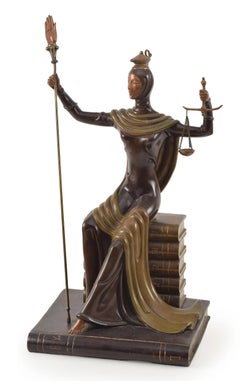
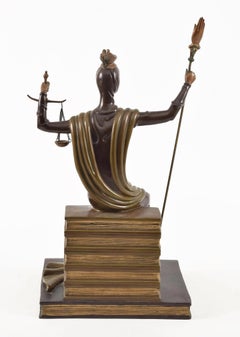
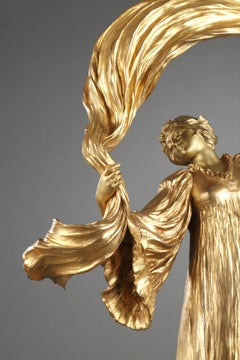
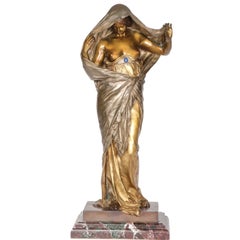
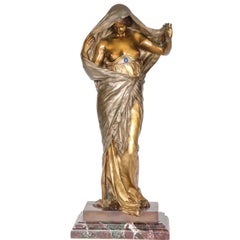
Erté designed Golden Fleece for a Folies-Bergére scene entirtled "The Golden Fleece" and a 1926 George White's Scandals scene entitled "La Toison d'or." Erté, whose artistic style was influenced in part by a childhood admiration of classic Greek art, was always drawn to a good story with a sense of drama – typified by Greek tragedy. Catalogue - Erté: The Last Works (Dutton, pgs. 115, 207). From the total edition of 462; numbered 207/375 (there were also 50 Roman and 37 AP). Referring to the legend of Jason and the Argonauts, the Golden Fleece sculpture depicts an elegant woman in a classic Greek garment. The curled horns of the ram style her headdress, elegant in appearance and yet fierce in battle. Descending from these horns is the golden fleece itself, its curly mane covering the woman to her toes. Her gown, a gracefully draped toga, is designed to leave one breast bared, in the folkloric tradition of the Amazon tribe of women warriors...

Category

20th Century Art Deco Sculptures

Materials

Bronze

Venus de Milo (Aphrodite) Bust /// Jack Graves Greek Myth Painting Sculpture Art
Venus de Milo (Aphrodite) Bust /// Jack Graves Greek Myth Painting Sculpture Art
By Jack Graves III

Located in Saint Augustine, FL

Artist: Jack Graves III (American, 1988-) Title: "Venus de Milo (Aphrodite) Bust" Series: Sculpture *Signed, titled, and dated by Graves on bottom Year: 2026 Medium: Original Acrylic...

Category

2010s Contemporary Nude Sculptures

Materials

Cast Stone, Marble, Enamel

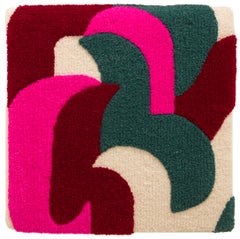
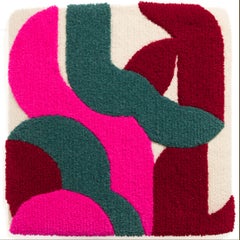
Mid March Bloom, pink, orange, green, textile, floral, texture

Mid March Bloom, pink, orange, green, textile, floral, texture

Located in New York, NY

Silk, wool, and thread Padma Rajendran was born in Klang, Malaysia. She studied at Bryn Mawr College and received her M.F.A. from Rhode Island School of Design. She has exhibited at...

Category

2010s Abstract Abstract Sculptures

Materials

Textile

Sunrise Rincon PR David E. Peterson, Contemporary Dramatic Wooden Wall Sculpture

Sunrise Rincon PR David E. Peterson, Contemporary Dramatic Wooden Wall Sculpture

By David E. Peterson

Located in Dallas, TX

David E. Peterson Sunrise, Rincon, Puerto Rico, 2011 Acrylic, mdf and uv resin 24h x 18w x 2.50d in 60.96h x 45.72w x 6.35d cm DAVID E. PETERSON (b. 1979, USA) An abstract painter ...

Category

2010s Contemporary Abstract Sculptures

Materials

Resin, Wood, Acrylic

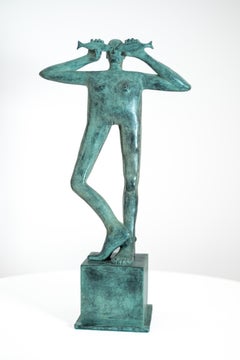
Flowing Man

Flowing Man

By Ernest Trova

Located in Boca Raton, FL

Edition 37/99

Category

21st Century and Contemporary Contemporary Figurative Sculptures

Materials

Stainless Steel

Pair of Baroque putti or triumphant angels in carved wood

Pair of Baroque putti or triumphant angels in carved wood

Located in Valladolid, ES

Pair of Gorgeous Putti or triumphant angels, carved wood, 18th century. Traditionally associated with the Italian or French Baroque. With curly hair and expressive arms and legs, T...

Category

1790s Baroque Figurative Sculptures

Materials

Wood

Orson Wells by Mario Napoli - Bronze 60x50x28 cm

Orson Wells by Mario Napoli - Bronze 60x50x28 cm

By Mario Napoli

Located in Geneva, CH

Bronze sculpture by Mario Napoli, Swiss artist from XXth century. His works was sold 12 times in auctions since 2022. Work signed in the bronze. Edition ...

Category

21st Century and Contemporary Academic Figurative Sculptures

Materials

Bronze

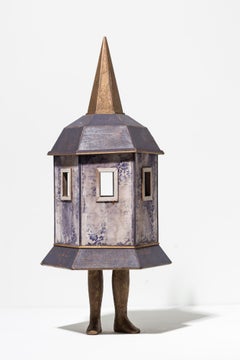
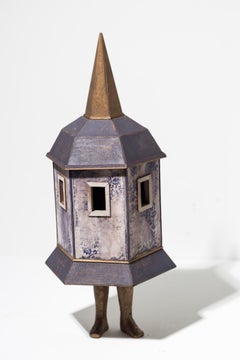
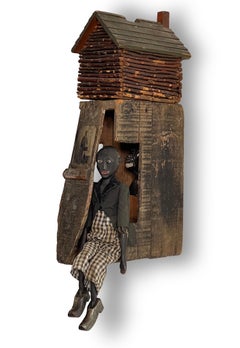
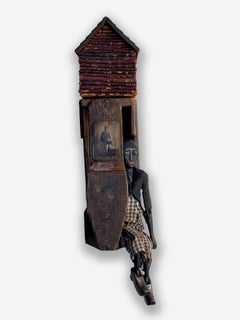
"Neighborling Maquette 24" Patterned and Distressed Building Turret Sculpture

"Neighborling Maquette 24" Patterned and Distressed Building Turret Sculpture

By Seth Clark

Located in Philadelphia, PA

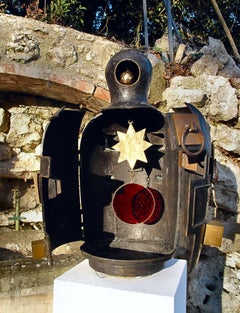
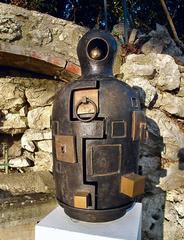
is an original free-standing sculpture by Seth Clark as part of his newest solo exhibition, "Passing Through". Clark's deteriorating structures have evolved into imaginative composit...

Category

21st Century and Contemporary Contemporary Figurative Sculptures

Materials

Wood, Paper, Acrylic, Resin

Bathing woman
Bathing woman

Bathing woman

Located in Wien, 9

“Bathing Woman” (1925) by Harriet Frishmuth is a striking bronze sculpture that captures the grace and vitality of the female form. Beautifully rendered with fluid lines and a natura...

Category

1920s Modern Nude Sculptures

Materials

Bronze

Scandal - Modern White Minimalist 3-D Abstract Wall Sculpture Painting

Scandal - Modern White Minimalist 3-D Abstract Wall Sculpture Painting

By Len Klikunas

Located in Los Angeles, CA

Artist Len Klikunas paints to modify experienced reality through visual perception. His art is a mix of art and architecture, hovering between painting and sculpture. It employs shiz...

Category

21st Century and Contemporary Minimalist Abstract Sculptures

Materials

Gesso, Canvas, Mixed Media, Wood

Pause 2/3 - desktop bronze, sculpture

Pause 2/3 - desktop bronze, sculpture

By P. Roch Smith

Located in Bloomfield, ON

The legendary canoeist and Canadian filmmaker Bill Mason once said, “First God made the canoe then he created a country to go with it.” Sculptor Roch Smith has embraced the iconic i...

Category

2010s Contemporary Figurative Sculptures

Materials

Bronze

Golf Bug
Golf Bug

Golf Bug

By Andrea Wilkinson

Located in Colorado Springs, CO

Original bronze sculpture by Andrea Wilkinson. Edition #6/30. Signed on bronze sculpture

Category

21st Century and Contemporary Realist Sculptures

Materials

Bronze

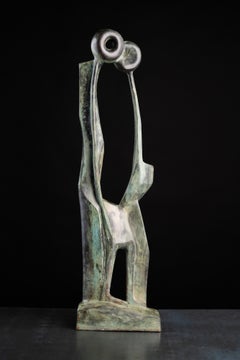
Latin American Sculpture by Raúl Valdivieso

Latin American Sculpture by Raúl Valdivieso

By Raúl Valdivieso

Located in Washington, DC

Bronze sculpture by Latin American sculptor Raúl Valdivieso (Chilean, 1931-1993). Valdivieso is known for his reinterpretation of the classic organic forms and human figures. Raúl Valdiveso was born September 9, 1931 in Santiago, Chile. In 1952 he began his studies at the School of Fine Arts at the University of Chile. There he took to sculpture and studied under professors like Marta Colvin...

Category

1960s Abstract Abstract Sculptures

Materials

Bronze

Spring and Autumn
Spring and Autumn

Spring and Autumn

By Doug Hyde

Located in Colorado Springs, CO

Signed/inscribed by the Artist on the bronze base of the sculpture with an edition number. 6/15

Category

21st Century and Contemporary Tribal Sculptures

Materials

Bronze

Joel Urruty - Goltz, Sculpture

Joel Urruty - Goltz, Sculpture

By Joel Urruty

Located in Greenwich, CT

Medium: Bronze, granite As an artist I strive to create elegant sculptures that capture the true essence of the subject matter. Form, line and surface are used as the visual langua...

Category

2010s Contemporary Abstract Sculptures

Materials

Metal

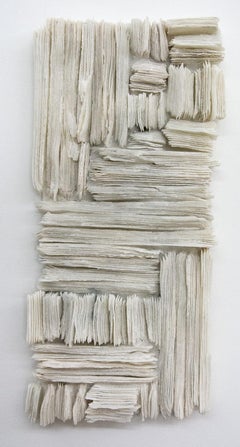
Organic Abstract Cast Paper Sculpture Relief Painting Suzanne Anker

Organic Abstract Cast Paper Sculpture Relief Painting Suzanne Anker

By Suzanne Anker

Located in Surfside, FL

"Cocoon (1990)" by Suzanne Anker Suzanne Anker (born August 6, 1946) is an American visual artist and theorist. Considered a pioneer in Bio Art. She has been working at the relationship of art and the biological sciences for more than twenty five years. Her practice investigates the ways in which nature is being altered in the 21st century. Concerned with genetics, climate change, species extinction and toxic degradation, she calls attention to the beauty of life and the "necessity for enlightened thinking about nature’s 'tangled bank'.” Anker frequently works with "pre-defined and found materials"botanical specimens, medical museum artifacts, laboratory apparatus, microscopic images and geological specimens. Suzanne Anker was born in Brooklyn, New York on August 6, 1946. She earned a B.A. in Art from Brooklyn College of the City of New York and an M.F.A. from the University of Colorado in Boulder (1976). She also completed independent Studies with Ad Reinhardt (1966-1967) and studied at the Brooklyn Museum Art School (1968). She lives with the artist Frank Gillette in Manhattan and East Hampton, NY. During the mid 70s to the mid 80s, Anker worked almost exclusively on sculptural handmade paper reliefs. She started papermaking in 1974 on the basis of reading Dard Hunter's and Claire Romano's books. In 1975 she worked with Garner Tullis at the Institute of Experimental Printmaking in Santa Cruz, California. The paper reliefs produced at his institute were exhibited at the Martha Jackson Gallery in New York City in 1976.[ The same year, she participated in the North American Hand Papermaking exhibition organized by Richard Minsky at the Center for Book Arts in New York City. From a background as a printmaker, Anker initially worked with cast paper, made in latex molds. Subsequently, she incorporated limestone and fossils in her experiment with combinations of paper and stone. For her 1979 solo exhibition at the Walker Art Center, Anker installed large limestone planks that extended from the interior to the exterior of the gallery. The same year, she presented an installation of limestone and its residual chalk dust at P.S. 1’s "A Great Big Drawing Show" curated by Alanna Heiss with artists Vito Acconci, Alice Aycock, Frank Gillette, Sol LeWitt, Robert Morris, Bruce Nauman, Dennis Oppenheim, Richard Serra, and others. Suzanne Anker is considered "one of the pioneers in the broader field of art, science, and technology", particularly in the burgeoning field of Bio Art. In 1994, Suzanne Anker curated Gene Culture: Molecular Metaphor in Visual Art – one of the first art exhibitions on the subject of art and genetics – at Fordham University’s Lincoln Center Campus in New York. The exhibition investigated "the ways in which genetic imaging operates as aesthetic signs". From 2004 to 2006, Suzanne Anker hosted twenty episodes of the Bio-Blurb Show, a 30-minute-long internet radio program originally broadcast on WPS1 Art Radio, in collaboration with MoMA. The show focused on the intersection of art and the biological sciences, and the ethical and aesthetic dimensions therein. It is currently archived on Alanna Heiss’ Clocktower Productions. In 2006, Anker co-curated the exhibition Neuroculture: Visual Art and the Brain, at the Westport Arts Center with Giovanni Frazzetto. The exhibition presented an investigation of aspects of the human brain, and its attendant representations. Suzanne Anker is the Chair of the School of Visual Arts (SVA)'s BFA Fine Arts Department in New York City (2005-present). She previously chaired the SVA BFA Art History Department (2000-2005). In 2011, Anker founded the SVA Bio Art Lab, the first Bio Art laboratory in a Fine Arts Department in the United States. The SVA Bio Art Lab is located in Chelsea, New York City and has been conceived as a place where "scientific tools and techniques become methodologies in art practice". Anker has participated in lectures and symposia in prominent institutions around the world, including Harvard University, Boston; University of Cambridge, Cambridge, UK; Yale University, New Haven; Art-Sci UCLA, Los Angeles; Maryland Institute College of Art (MICA), Baltimore; Rensselaer Polytechnic Institute, New York; Museum of Arts and Design, New York; Nanyang Technological University, Singapore; London School of Economics, London; European Molecular Biology Laboratory- EMBL, Monterotondo, Italy; Max Planck Institute of Molecular Cell Biology and Genetics, Dresden; Leiden University, NL; Hamburger Bahnhof, Berlin; Dundee Contemporary Arts, Dundee; Courtauld Institute of Art, London; Banff Art Center, Alberta; The National Academies of Sciences, Engineering, and Medicine, Washington, D.C.; Berlin-Brandenburg Academy of Sciences and Humanities, Berlin;[ University of Amsterdam, NL; New York Academy of Sciences, Institute for the Humanities, New York University; DLD, Munich. Selected artworks Gene Pool Anker’s interests in the natural world extended her investigation into the microscopic domain of chromosomes and genes. Appropriating scientific images, she created Gene Pool in 1991, a body of work that includes suspended pigment on large vellum sheets and expansive sculptural arrays employing metallic fibers of stainless steel, copper, aluminum and bronze. Other works that reflect scientific representations of chromosomes include Chromosome Chart of Suzanne Anker –a presentation of her own DNA sequence as a self-portrait– and Cellular Script, in which she displays chromosome patterns as a kind of calligraphy. Biota (2011) is a sculptural installation by Suzanne Anker composed of porcelain sculptures and silver-leaf figurines. The porcelain objects are fabricated by immersing natural sea sponges into a mixture of kaolin, feldspar, and quartz. "The organic material of the sponge burns away in the process, leaving behind only the perfect replica of nature". Exhibitions Selected one-person exhibitions "The Biosphere Blues Mending an Unhinged Earth", O'NewWall, Seoul, Korea (2017). “Culturing Life”, Sam Francis Gallery...
Category

1990s Abstract Sculptures

Materials

Mixed Media

Florentine singer / - The Renaissance of the Renaissance -

Florentine singer / - The Renaissance of the Renaissance -

By Paul Dubois

Located in Berlin, DE

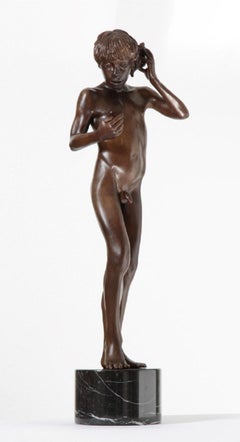
Paul Dubois (1829 Nogent-sur-Seine - 1905 Paris), Florentine singer, 1865. Light brown patinated bronze with cast round plinth mounted on a square marble base (3.5 cm high). Total height 53 cm. Bronze dimensions: 49.5 cm (height) x 20 cm (length) x 10 cm (width), weight 5.6 kg. Inscribed on the plinth "P.[aul] DUBOIS", dated "1865", with the foundry's mark "F. BARBEDIENNE FONDEUR" and the signet "REDUCTION MECANIQUE A. COLLAS". - Patina very occasionally darkened, lute with loss of one tuning peg, otherwise in excellent condition. - The renaissance of the Renaissance - The bronze is a precisely executed and masterfully cast contemporary reduction of Paul Dubois 155 cm tall masterpiece "Florentine Singer", which is exhibited in the Musée d'Orsay and for which the artist was awarded the Medal of Honor at the Paris Salon in 1865. The work acted as a beacon, and was followed by a plethora of depictions of juveniles. Inspired by Donatello and Luca della Robbia, but also by painters such as Piero della Francesca, Benozzo Gozzoli, and Pinturicchio, the "Florentine Singer" is not an epigonal work that pays homage to a vanished era, but a successful attempt to draw vitality from the art of the past and thus give it new life. The effect of vitality is the core of Italian Renaissance art theory. In order to fulfill itself as art, art had to appear like nature. This naturalism also characterizes the "Florentine Singer". The young man appears to have been taken from life, which is reinforced by the momentary nature of his action. He has just struck a now fading chord. In addition, the natural appearance is enhanced by the detailed shaping of the figurative details, such as the laces with the slightly curved leather of the shoes, the belt buckle, or the ornamentation on the body of the lute. Even the fingernails are clearly defined. Unlike the Renaissance, however, the effect of liveliness here is not based on the "discovery" of nature and the human body, but primarily on the rediscovery of the art of the Quattrocento. The liveliness of the artwork is therefore at the same time a revitalization of this art, so that we can speak of a Renaissance of the Renaissance, just as the Pre-Raphaelites in England at the same time transferred the Quattrocento to contemporary art. Dubois takes on the most difficult of all subjects, the depiction of singing through silent sculpture. He was preceded in this by Luca della Robbia and Donatello with their pulpits of singers created in the 1430s in the Museo dell'Opera del Duomo in Florence. Compared to these works, the physiognomy of Dubois singer is far less animated, yet he also depicts singing in a convincing manner. He uses the whole body. He takes the ancient contrapposto, which was essential to Renaissance sculpture, and transforms the standing leg-playing posture into a late medieval S-swing, giving the body an elegant beauty and at the same time setting it in melodic motion. In the equally elegant finger position, the music is expressed in a much more literal way with the beating of the lute. Finally, the musicality of the sculpture culminates in the face with the mouth open to sing. Through the act of singing, which is a great challenge to the artistic will to depict perfect beauty, the gracefulness of the classical face is not diminished, but enhanced. Starting from the face with the singing mouth and the gaze absorbed by the sounds, the inner vitality spreads, giving the bronze sculpture an intense aura, enhanced by the music. Dubois transfers the beauty of the Renaissance to the musical, sublimating the visible sculpture to the invisible of music. He took up the challenge of transcending the Renaissance with the Renaissance, thus responding to the Querelle des Anciens et des Modernes, which arose at the end of the 17th century around the French Academy and remained virulent into the 19th century, in which antiquity was regarded either as an unattainable ideal or as a standard to be surpassed. With his work, Dubois proved that the Renaissance, which had championed the art of the ancients, could lead to a new renaissance of art. About the artist Paul Dubois' great-uncle was the famous French Baroque sculptor Jean-Baptiste Pigalle, in whose footsteps the talented great-nephew followed. When he debuted at the Paris Salon in 1858, he signed his work "Dubois-Pigalle". At his father's request, however, he first studied law before devoting himself to sculpture under the tutelage of François Christophe Armand Toussaint in 1856 and entering the École des Beaux-Arts in 1858. From 1859 to 1863, he lived in Rome and traveled to Naples and Florence. Inspired by Florentine art of the quattrocento, Dubois initiated a school-forming neo-Florentine style that combined the elegantly simple forms of youthful grace with a precise wealth of detail.Two purchases by the French state (“envois de Rome”) were made during his stay in Rome, which brought him recognition in Paris. After his return there, he quickly became an internationally sought-after artist. Dubois was also active as a creator of monuments. His most famous work is the equestrian statue of Joan of Arc (1896) on the forecourt of Reims Cathedral. He was also a sought-after portraitist who produced around 50 busts and - Dubois was also a passionate painter - around 100 portraits in oil. From 1873 to 1878 he was curator of the Museum du Luxembourg, in 1876 he became a member of the Institut de France and from 1878 to 1905 he was director of the École des Beaux-Arts. In 1865, Dubois was awarded the Paris Salon Medal of Honor for his “Florentine Singer”. In 1867 he became Chevalier, in 1874 Officier, in 1886 Commandeur of the Légion d'honneur, which awarded Dubois the Grande Croix in 1896. Selected Bibliography Stole, Elmar: Paul Dubois. In: Saur. Allgemeines Künstlerlexikon, vol. 30, Munich - Leipzig 2001, pp. 677-678. GERMAN VERSION Paul Dubois (1829 Nogent-sur-Seine - 1905 Paris), Florentinischer Sänger, 1865. Hellbraun patinierte Bronze mit gegossener runder Plinthe auf quadratischem Marmorsockel montiert (3,5 cm Höhe). Gesamthöhe 53 cm. Maße der Bronze: 49,5 cm (Höhe) x 20 cm (Länge) x 10 cm (Breite), Gewicht 5,6 kg. Auf der Plinthe mit „P.[aul] DUBOIS“ bezeichnet, auf „1865“ datiert, mit dem Gießereistempel „F. BARBEDIENNE FONDEUR“ und dem Signet „REDUCTION MECANIQUE A. COLLAS“ versehen. - Patina sehr vereinzelt nachgedunkelt, Laute mit Verlust eines Stimmwirbels, ansonsten ausgezeichnet erhalten. - Die Renaissance...

Category

1860s Realist Figurative Sculptures

Materials

Bronze

Read More

At Hosfelt Gallery, Bertoia Masterworks Complement Dynamic Contemporary Art

For nearly three decades, San Francisco–based Todd Hosfelt has curated against the grain — with a show on the legendary modernist Harry Bertoia the latest case in point.

This Weathered-Steel Sculpture Distills a Form of Protest into a Minimalist Monument

Part of Alejandro Vega Beuvrin’s “Barricada” series, the work is a subversive tribute to the street smarts of citizen activists.

How the Chunky, Funky Ceramics of 5 Mid-Century American Artists Balanced Out Slick Modernism

Get to know the innovators behind the pottery countercultural revolution.

Art Brings the Drama in These Intriguing 1stDibs 50 Spaces

The world’s top designers explain how they display art to elicit the natural (and supernatural) energy of home interiors.

Chryssa’s 1962 Neon Sculpture Was Way ahead of the Art-World Curve

By working with lettering, neon and Pop imagery, Chryssa pioneered several postmodern themes at a time when most male artists detested commercial mediums.

How to Spot a Fake KAWS Figure

KAWS art toys have developed an avid audience in recent decades, and as in any robust collectible market, counterfeiters have followed the mania. Of course, you don’t have to worry about that on 1stDibs, where all our sellers are highly vetted.

A Giant Wedding Cake Has Us Looking at Portuguese Tiles in a New Light

At Waddesdon Manor, artist Joana Vasconcelos has installed a three-tiered patisserie inspired by the narrative tile work of her homeland. We take a look at the cake sculpture and how Portuguese tiles have been used in architecture from the 17th century to today.

These Soft Sculptures Are Childhood Imaginary Friends Come to Life

Miami artist and designer Gabriela Noelle’s fantastical creations appeal to the Peter Pan in all of us.