Baroque Art

to
170
175
100
108
112
131
Overall Width
to
Overall Height
to
292
74
101
159
2
3
4
3
34
1
5
1
3
4
91
114,413
65,015
55,041
27,214
14,695
9,487
6,541
5,782
4,199
3,062
2,593
2,338
2,222
653
314
218
21
379
225
150
138
99
60
60
48
36
25
22
18
17
16
12
12
11
10
9
8
363
326
190
187
75
55
16
10
9
9
263
75
342
267
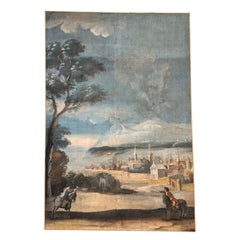
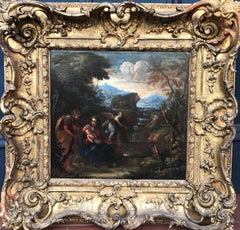
Style: Baroque
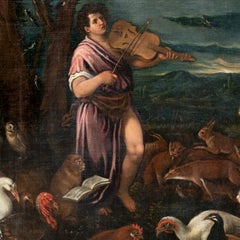
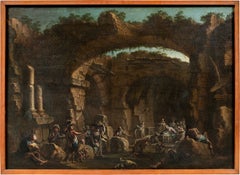
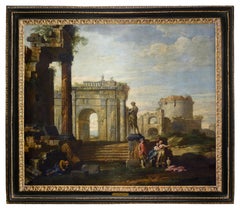
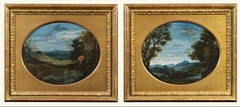
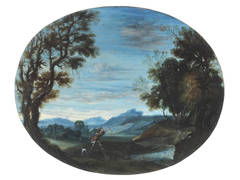
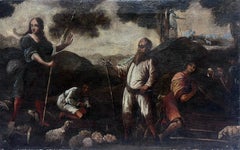
"Arcian fantasy landscape"
Located in Edinburgh, GB
Baroque "Arcadian Fantasy Landscape" – Oil on Canvas (circa 1700) A mesmerizing early 18th-century Baroque landscape, capturing an idealized Arcadian vision of nature, architecture, ...
Category

Early 18th Century Baroque Art

Materials

Canvas, Oil

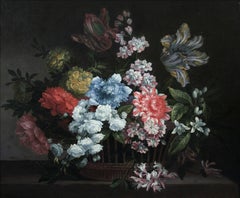
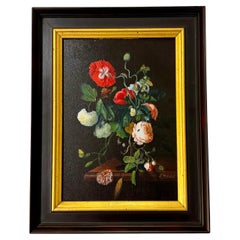
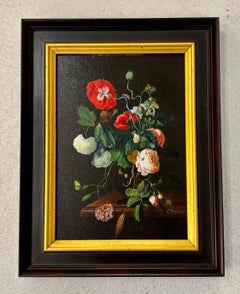
Vivid Flower Bouquet, Wild Flowers Combination, Baroque Still Life Style 2022
Located in Barcelona, ES
This is an exclusive limited edition color Giclée print, printed on matte photographic paper. This exquisite still life photo, shows a classy bouquet beautifully lit with soft light...
Category

2010s Baroque Art

Materials

Photographic Paper, C Print, Giclée

PHILOSOPHER - Dutch, Flemish, Baroque - Figurative Oil on Canvas Painting
Located in Napoli, IT
Philosopher - Ciro De Rosa Italia 2008 - Oil on canvas cm. 26x26 Gold leaf gilded wooden frame available on requestThe evocative portrait of Ciro De Rosa portrays an elderly man with...
Category

Early 2000s Baroque Art

Materials

Canvas, Oil

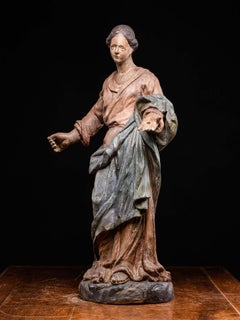
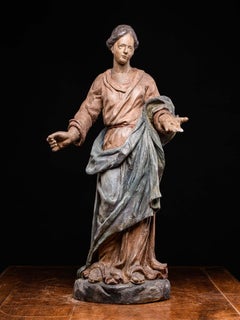
Mary, Mother of God, Italian Master circa 1780, Carved Wood, slightly damaged
Located in Eltville am Rhein, DE
Madonna, Mary Mother of God Italy, circa 1780 Linden wood, painted/gilded Dimensions: 80 x 32 x 24 cm Painting/gilding damaged in places Authenticity guaranteed in writing
Category

1760s Baroque Art

Materials

Wood

Vieillard au Bonnet Fendu (B265), Heliogravure by Rembrandt van Rijn
Located in Long Island City, NY
Rembrandt van Rijn, After by Amand Durand, Dutch (1606 - 1669) - Vieillard au Bonnet Fendu (B265). Year: 1878 (of original 1640), Medium: Heliogravure, Size: 6 x 5.5 in. (15.24 x ...
Category

Late 19th Century Baroque Art

Materials

Etching

Baroque Roman sculptor - 17th century bronze sculpture - Mars Warrior
Located in Varmo, IT
Gilded bronze sculpture - Mars, god of War. Rome, 17th century. 9 x 9 x h 31 cm. Entirely in cast, chiseled and gilded bronze, resting on an ebonized wooden pedestal decorated with...
Category

Mid-17th Century Baroque Art

Materials

Bronze

Judith Beheading Holoferne - Oil painting by G.R. Badaracco - Late 17th Century
Located in Roma, IT
Judith Beheading Holoferne is an oil painting made by Giovanni Raffaele Badaracco, mid-17th Century. Oil on canvas, cm. 102x75.. Very good condition. Prov. Sotheby's, Amsterdam,...
Category

Late 17th Century Baroque Art

Materials

Oil

Old baroque oil painting on canvas "Cupid" after Sir Anthony van Dyck
Located in Gavere, BE
Oil on canvas "Cupid" circa 1900 after Anthony van Dyck ** Sold without the frame ** additional info: Title: cupid Style: baroque Medium: oil on canvas Signature: unsigned Provenan...
Category

1890s Baroque Art

Materials

Canvas, Oil

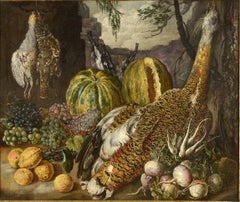
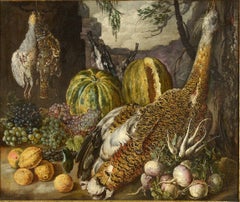
Gottfried Libalt, Still Life with Birds, Fruits and Vegetables Landscape, signed
Located in Greven, DE
Stilllife with dead Birds, Fruits and Vegetables Oil on Canvas, 101 x 84 cm signed (upper left) „G Libald “ (G and L ligated) Provenance: Private Collection, Brussels; Private Coll...
Category

17th Century Baroque Art

Materials

Canvas, Oil

Défaite de la cavalerie Turque (1st State)
Located in Chicago, IL
Defeat of the Turkish Cavalry (1st State) From: The Life of Ferdinando de'Medici Engraving 224 x 300 mm.; 8 7/8 x 11 7/8 inches Reference: Lieure No. 154 Meaume No. 541 Ru...
Category

17th Century Baroque Art

Materials

Engraving

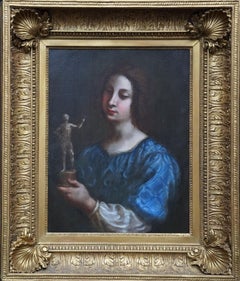
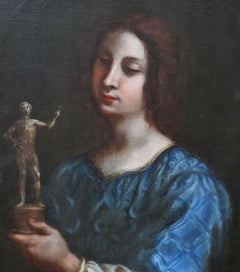
Portrait of a Lady Holding Statuette - Italian Baroque Old Master oil painting
Located in Hagley, England
This fantastic Italian Baroque 17th century Old Master portrait oil painting is attributed to circle of Carlo Dolci. Painted circa 1685, the composition is a waist length portrait of...
Category

17th Century Baroque Art

Materials

Oil

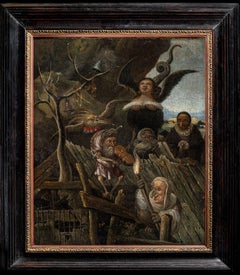
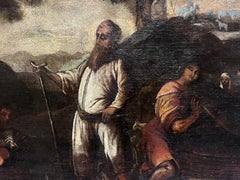
'The Departure of the Israelites from Egypt' by Frans Francken the Younger
Located in Knokke, BE
Frans Francken the Younger 1581 - Antwerp - 1642 Flemish Painter 'The Departure of the Israelites from Egypt – The Exodus', c. 1610 - 1620 Medium: pen in sepia on paper Dimensions: mage size 26 x 34,5 cm, frame size 55 x 65,5 cm Biography: Frans Francken the Younger, born in Antwerp in 1581 and passing away on May 6, 1642, also in Antwerp, was a distinguished Flemish painter. He is recognized as the most prominent and productive member of the renowned Francken family of artists. Francken explored a wide range of subjects, creating large altarpieces for churches and producing smaller works depicting historical, mythological, and allegorical scenes. Notably, his depictions of collectors’ cabinets established a popular new genre of art during his era. He was known for collaborating with other artists, enriching their works with his skilled renderings of figures and narrative elements, complementing specialists in landscape, architectural scenes, and floral still-life painting. Francken was born to Frans Francken the Elder and Elisabeth Mertens. His father was a pupil of Antwerp’s leading history painter, Frans Floris, and a significant creator of altarpieces in Flanders during his time. Francken received his artistic training under the guidance of his father. Additionally, it is possible that Frans and his brother, Hieronymus Francken II, received further instruction in the workshop of their uncle, Hieronymus Francken I, in Paris. A versatile artist, Francken made significant contributions to various genres within Flemish art, introducing new themes and subjects. Many of his works comprised small-scale historical, allegorical, and biblical cabinet paintings, often emphasizing figures. He is credited with either inventing or popularizing several novel themes that gained popularity in Flemish painting, including genre scenes featuring monkeys (also known as singeries) and Kunstkammer or gallery paintings, presenting a plethora of natural and artistic treasures against a neutral wall. Francken introduced various other unconventional themes that later gained traction, such as the ‘Triumphal Procession of Amphitrite’ and ‘Croesus and Solon.’ He also produced a series of paintings depicting witches and witchcraft, including portrayals of witches’ sabbats. His remarkable paintings are held in the collections of numerous major museums throughout Europe. Francken specialized in rendering the human figure, as evidenced by etched and engraved portraits of the artist by Anthony van Dyck (after Peter Paul Rubens), identifying him with the Latin inscription: ‘ANTVERIÆ PICTOR HVMANARVM FIGVRARVM’ (Figure painter of Antwerp). He was frequently invited to contribute figures to compositions by other esteemed artists, including landscape artists such as Tobias Verhaecht, Abraham Govaerts, and Joos de Momper...
Category

Early 17th Century Baroque Art

Materials

Paper, Pen

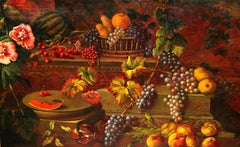
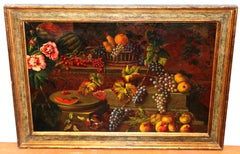
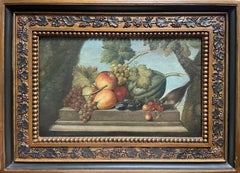
"Still life with fruits and bird"
Located in Edinburgh, GB
18th-Century Still Life Painting – Classical Fruit Composition Artist: Unidentified Period: 18th Century Medium: Oil on Canvas Dimensions: Framed: 54 x 74 cm Artwork: 35 x 54 cm Sty...
Category

18th Century Baroque Art

Materials

Canvas, Oil

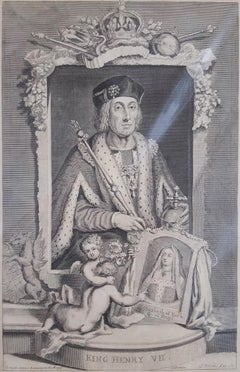
King Richard II /// Old Masters British Royal Family Portrait Engraving Art
Located in Saint Augustine, FL
Artist: George Vertue (English, 1684-1756) Title: "King Richard II" Portfolio: The Heads of the Kings of England, Proper for Mr. Rapin's History *Issued unsigned, though signed by Ve...
Category

1730s Baroque Art

Materials

Laid Paper, Engraving, Intaglio

The Rape of Sabine Iconic Bronze Sculpture 1930
Located in Rome, IT
Fine Group of Sculptures in Bronze after Jean de Boulogne (Giambologna) The torturously twisting Rape of the Sabine Women is one of the finest and most technically difficult sculpt...
Category

1920s Baroque Art

Materials

Bronze

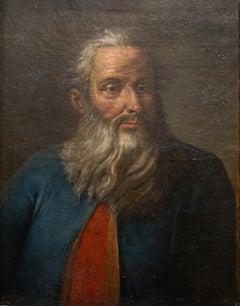
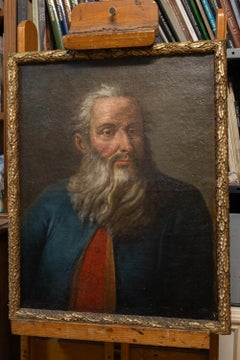
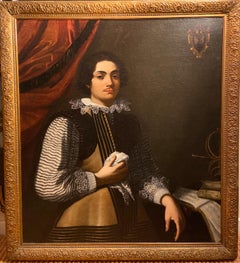
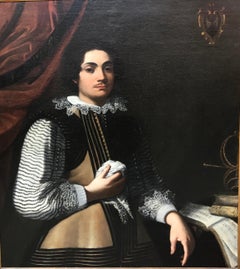
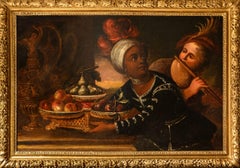
Portrait of a Levantine Merchant, 18th Century. Italian school.
Located in Firenze, IT
Portrait of a Levantine Merchant, 18th Century Italian school. Oil on canvas. Circle of Giuseppe Nogari (1699-1763) Dimensions with frame cm 71 x 5...
Category

18th Century Baroque Art

Materials

Canvas, Oil

Rembrandt, Composition, Rembrandt, Drawings from the Bible (after)
Located in Fairfield, CT
Medium: Lithograph on vélin Hamilton Kilmory paper Year: 1947 Paper Size: 9.5 x 12.5 inches Inscription: Unsigned and unnumbered, as issued Notes: From the folio, Rembrandt, Drawings...
Category

1940s Baroque Art

Materials

Lithograph

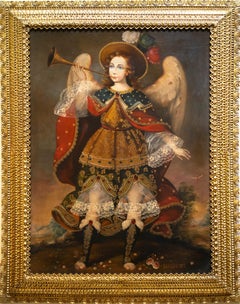
"Ofaniel Dei" Cusco School Style Catholic Angel Iconography by Martha Ochoa
Located in Austin, TX
By Martha Ochoa Oil on Canvas Canvas Size: 57.5" x 34.5" Framed Size: 65.5" x 42.75" This lovely painting by Martha Ochoa is from the Cusco tradition. The Cusco School was an artistic tradition that first emerged in the 16th and 17th centuries in Cusco, Peru, blending indigenous and European artistic styles. It is renowned for its catholic iconography, which often feature vibrant colors, elaborate ornamentation, and blended elements combining Catholic and native symbolism. This painting portrays the angel Ofaniel Dei playing a drum in ornate blue, red, and yellow clothing...
Category

21st Century and Contemporary Baroque Art

Materials

Canvas, Oil

A late 17th Italian carved limewood figure of Mermaid, circle of Filippo Parodi
Located in PARIS, FR
A late 17th c. Italian carved figure of Mermaid, Circle of Filippo Parodi (Genoa, 1630 – July 22, 1702) Dimensions: h. 29.13 in, w. 30.31 in, p. 18.9 in (at the base) Magnificent Italian Baroque sculpture depicting a mermaid seated on the rock. All the virtuosity of the sculptor unfolds in this carved group. The fantastic creature is featured seated, the upper part of the body darting forward, the head looking upwards. Sophisticated hairstyle with rows of pearls intertwined in her hair, her loose locks fly in the wind and bring movement to the whole sculpture. The wide-open eyes with hollowed-out pupils make it possible to follow the mermaid's gaze, towards the sky. The half-open mouth further magnifies this bewitching and seductive attitude. Its long double tail ending in fins wraps on either side of a rocky mound strewn with objects evoking the underwater world: seashells and shells, branches of coral. The ornamental richness combined with the great care taken in its execution make it a work in which the splendor of Italian Baroque art unfolds in such characteristic scenic movement. The composition betrays a strong influence from Filippo Parodi, the leader of Genoese Baroque sculpture, and points to an artist from his circle. Our sculpture was probably part of a decorative monumental palace. The iconographic theme evoking the marine world finds its application in the numerous fountains and artificial grottos, designed in Italian palaces at the turn of the 17th and 18th centuries. Giacomo Filippo Parodi (Genoa 1630 – July 22, 1702) was an Italian Baroque sculptor of the Genoese school, who introduced Bernini's aesthetic to Genoa. In his youth fathers a first apprenticeship with a carpenter, he went to Rome where he became a pupil of Bernini. He had the opportunity to admire in person the works and style of the French sculptor Pierre Puget...
Category

Late 17th Century Baroque Art

Materials

Wood

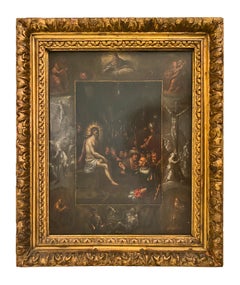
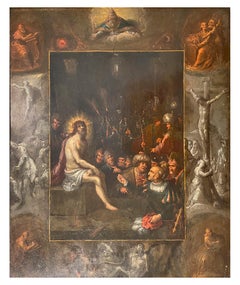
The Flagellation of Christ, Old Master, Flemish School, Oil on copper
Located in Knokke, BE
The Flagellation of Christ Old Master Flemish School 17th century Medium: Oil on copper Dimensions: Image size 22 x 17 cm, frame size 39 x 31 cm
Category

17th Century Baroque Art

Materials

Copper

"Zaamael Dei" Peruvian Cusco Style Depiction of an Angel by Martha Ochoa
Located in Austin, TX
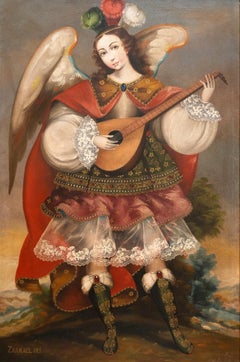
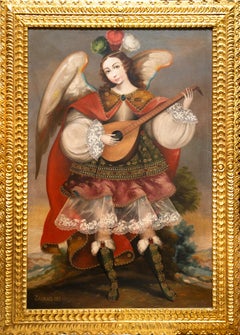
By Martha Ochoa Oil on Canvas Canvas Size: 59" x 39" Framed Size: 70.5" x 50.5" This lovely painting by Martha Ochoa is from the Cusco tradition. The Cusco School was an artistic tradition that first emerged in the 16th and 17th centuries in Cusco, Peru, blending indigenous and European baroque artistic styles. It is renowned for its catholic iconography, which often feature vibrant colors, elaborate ornamentation, and blended elements combining Catholic and native symbolism. This painting portrays the angel Zaamael playing a lute in ornate red, green, yellow, and pink clothing. About the Artist: Martha Ochoa, born in Cusco, Peru, studied at Santa Ana School, the Cusco School of Fine Arts, and San Antonio Abad University, focusing on design, architecture, and restoration. She is the granddaughter of renowned Peruvian artists Francisco Olazo, a founder of the Cusco School of Fine Arts, and Ernesto Olazo, a famous sculptor. Influenced by the Cusco School, she transformed religious themes into decorative renditions of Archangels and Madonnas with Peruvian colonial...
Category

21st Century and Contemporary Baroque Art

Materials

Canvas, Oil

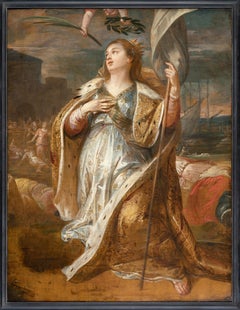
17th Century Onorio Marinari Italian Religious Painting
By Onorio Marinari
Located in Roma, IT
A very important painting by the great artist of the Florentine school, Onorio Marinari. Dr. Silvia Benassai has confirmed Marinari’s authorship of the Saint Margaret of Antioch; ava...
Category

Mid-17th Century Baroque Art

Materials

Canvas, Oil

Tuscan Mannerist bronze Mortaretto d'allegrezza from the 17th century
Located in Florence, IT
Decorated with a cartouche on which the family coat of arms was probably engraved, this interesting small bronze object is a "cheer mortar" (also called a "mascolo" or "mastio" of ch...
Category

17th Century Baroque Art

Materials

Bronze

Pair of pastels on paper, Sleeping girl and Crying girl
Located in New York, NY
Provenance:HOLZBORN, DE WÜRZBURG
Category

18th Century Baroque Art

Materials

Oil Pastel

Circle Teniers, Flemish Art, Peasants smoking and drinking in a Tavern Interior
By David Teniers the Younger
Located in Greven, DE
Circle or Follower of David Teniers, Peasant in a Tavern Inn, drinking and smoking. Oil on canvas, Framed: 39 x 47 cm. Typical Flemish Baroque Interior...
Category

17th Century Baroque Art

Materials

Canvas, Oil

Rembrandt, Composition, Rembrandt, Drawings from the Bible (after)
Located in Fairfield, CT
Medium: Lithograph on vélin Hamilton Kilmory paper Year: 1947 Paper Size: 12.5 x 9.5 inches Inscription: Unsigned and unnumbered, as issued Notes: From the folio, Rembrandt, Drawings...
Category

1940s Baroque Art

Materials

Lithograph

Oil On Canvas Self Portrait of the artist Sir Anthony Van Dyck 18Th c
Located in Gavere, BE
"Oil On Canvas Self Portrait After Sir Anthony Van Dyck" Follower of Sir Anthony van Dyck (Flemish painter, 1599-1641), Self portrait Oil on canvas (doubled), Probably end 18th centu...
Category

Late 18th Century Baroque Art

Materials

Gold Leaf

Austrian Old Master Baroque Oil Canvas Painting Architecture Allegory Cherubs
Located in Portland, OR
An important & large oil on canvas Baroque painting by the Bohemian Old Master artist, Franz Xaver Karl Palko (1724-1767), an allegory of architecture, circa 1750. The painting depic...
Category

1750s Baroque Art

Materials

Canvas, Oil

'Rebekah at the Well', Follower of Luca Giordano, Early 19th Century Figural Oil
Located in Santa Cruz, CA
An early 19th century, figural oil of a young woman with chestnut hair, shown wearing a headscarf and glancing towards the viewers left. Unsigned. A detail from a copy of 'Rebeca at ...
Category

19th Century Baroque Art

Materials

Canvas, Masonite, Oil

Flemish Old Master, Study of Donkey Carriage, 17th Century, Sanguine Drawing
Located in Greven, DE
This drawing shows several studies of a donkey with a carriage. Its style is close to Flemish 17th century artists. On the passepartout one reads "Mathias Scheyer/ Jacob Weyer", both...
Category

17th Century Baroque Art

Materials

Chalk, Handmade Paper

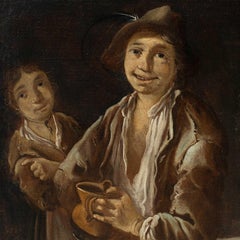
The Knight - Oil on Board by Pietro della Vecchia - 17th Century
By Pietro della Vecchia
Located in Roma, IT
The Knight is an original painting realized by Pietro della Vecchia during the XVII century. Oil on board. Original title: Ritratto di giovane cavaliere con cappello piumato. Includ...
Category

Mid-17th Century Baroque Art

Materials

Oil

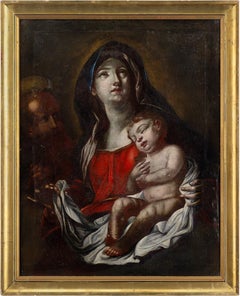
Holy Family, by the bolgonese master.
By Giuseppe Maria Crespi, Lo Spagnuolo
Located in New York, NY
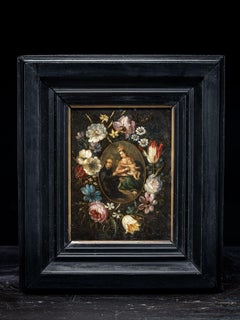
This exquisite painting, resembling a precious jewel, serves as an exceptional illustration of the devotional cabinet paintings created by Giuseppe Maria Crespi, a highly original Bolognese artist during the late 17th and early 18th centuries. Crespi's distinctiveness extended beyond his unique style and technique to the subjects he chose to portray. While his portraits and genre paintings often displayed a light-hearted and even irreverent tone, his treatment of religious themes resonated with deep emotion, even in its most inventive forms. This recently uncovered work by Crespi is a typical representation, invoking the tender connection between mother and child, and the Child's destiny, all within a compact and intimate format. Executed on a small scale, the painting showcases Crespi's remarkable sensitivity and mastery of paint, especially evident in the expressive brushwork of the drapery. The restrained and focused composition of the Holy Family allows for contemplation of the figures. Mary cradles the Christ child gently, seemingly presenting him to the viewer, her gaze knowing as the infant holds a diminutive cross, symbolizing his future crucifixion. Joseph appears in the background, emerging from the left side of the frame, gazing upward with folded hands in prayer. Individual motifs from this painting reappear in other works by Crespi, suggesting a synthesis of familiar elements into a vibrant composition. The artist's revisitation of designs throughout his career is evident, and this painting on copper likely belongs to a later period, reflecting stylistic ties to other works and Crespi's increased production of smaller devotional pieces. Distinguished by its cool palette, bold coloration, and the expressive force of the artist's hand, this Holy Family painting...
Category

Early 1700s Baroque Art

Materials

Copper

Large Beautiful Early 17th Century Painting of St Peter
Located in London, GB
17th Century Italian School St Peter Oil on Canvas 55 1/2 x 41 inches This large and tender rendering of Saint Peter was painted by the hand of great Italian painter of the 17th Cen...
Category

Early 17th Century Baroque Art

Materials

Oil

"Laylahel Dei" Cusco School Style Depiction of an Angel by Martha Ochoa
Located in Austin, TX
By Martha Ochoa Oil on Canvas Canvas Size: 48" x 36" Framed Size: 58.75" x 47" This lovely painting by Martha Ochoa is from the Cusco tradition. The Cusco School was an artistic tra...
Category

21st Century and Contemporary Baroque Art

Materials

Canvas, Oil

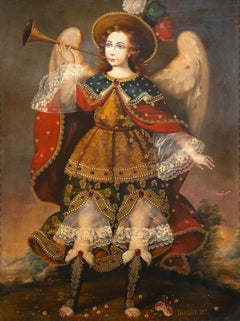
Roman 18th century terracotta model for the sculpture of San Camillo de Lellis
Located in London, GB
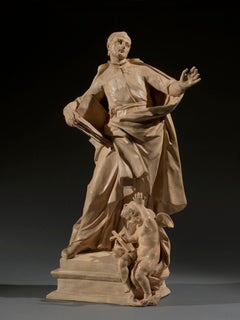
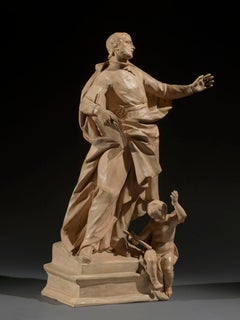
This remarkably fluid terracotta bozetto was made in preparation for Pietro Pacilli’s most important public commission, a large-scale marble statue of San Camillo de Lellis for the nave of St Peter’s Basilica in Rome. Expressively modelled, this terracotta sculpture is a rare and significant work made by a major Roman sculptor at a transformative moment of European sculpture. Pacilli began his working life on the great Baroque decorative projects initiated in the seventeenth century, but he found success as a restorer of ancient sculpture working to finish antiquities for a tourist market, becoming an important figure in the emergence of an archaeologically minded Neoclassicism. Pacilli trained Vincenzo Pacetti and provided important decorative work for the Museo Pio-Clementino, at the same time he is recorded restoring some of the most celebrated antiquities excavated and exported during the period. Pacilli was born into a family of Roman craftsmen, his father Carlo was a wood carver, and Pacilli is recorded working with him on the Corsini Chapel in San Giovanni Laternao as early as 1735. In 1738 his terracotta model of Joseph and Potiphar’s Wife won the first prize in the second class of the sculpture concorso at the Accademia di San Luca, this is particularly notable as Bartolomeo Cavaceppi came third. He worked as a carver and stuccoist completing works for the churches of San Marco and SS. Trinita dei Domeniciani Spagnoli. Pacilli operated as a sculptor and restorer of antiquities from his studio at the top of the Spanish Steps, close to Santa Trinita dei Monti, where he is listed as a potential vendor to the Museo Pio-Clementino in 1770. In 1763 Pacilli completed a silver figure of San Venanzio for the treasury of San Venanzio. He is recorded as Pacetti’s first master and it was evidently through Pacilli that he began to acquire his facility as a restorer of ancient sculpture. Pacilli, at his studio ‘poco prima dell’Arco della Regina alla Trinita dei Monti,’ exercised, what the nineteenth-century scholar, Adolf Michaelis called ‘rejuvenating arts’ on several important pieces of classical sculpture, including in 1760 the group of a Satyr with a Flute for the natural brother of George III, General Wallmoden, Hanovarian minister at Vienna. In 1765, Dallaway and Michaelis record that Pacilli was responsible for the restorations, including the addition of a new head, to the Barberini Venus which he had acquired from Gavin Hamilton. The Venus was then sold to Thomas Jenkins, who in turn passed it on to William Weddell at Newby Hall. In 1767 Pacilli exported a series of ancient busts ‘al naturale’ including portraits of Antinous, Julius Ceaser and Marus Aurelius, also a statue of a Muse and a Venus. As early as 1756 Pacilli seems to have been operating as an antiquarian, helping to disperse the collection of the Villa Borrioni. Pacilli supplied sculpture to notable British collectors, including Charles Townley, who on his first trip to Italy purchased the Palazzo Giustiniani statue of Hecate from Pacilli. Pacilli was involved with the Museo Pio Clementino from its conception, supplying busts of Julius Ceaser and a Roman Woman as well as completing stucco putti surmounting the arms of Pope Bendedict XIV to signal the entrance to the new Museo Critiano. In 1750 Il Diario Ordinario del Chracas announced that Pacilli had begun work on a sculpture of San Camillo de Lellis for St Peter’s. Camillo de Lellis founded his congregation, the Camillians, with their distinctive red felt crosses stitched on black habits in 1591. Having served as a soldier in the Venetian army, Camillo de Lellis became a novitiate of the Capuchin friars, he moved to Rome and established a religious community for the purpose of caring for the sick. In 1586 Pope Sixtus V formerly recognised the Camillians and assigned them to the Church of Santa Maria Maddalena in Rome. Camillo de Lellis died in 1614 and was entombed at Santa Maria Maddalena, he was canonised by Benedict XIV on June 26, 1746. It was an occasion that prompted the Camillians to make a number of significant artistic commissions, including two canvases by Pierre Subleyras showing episodes from San Camillo’s life which they presented to Benedict XIV. In 1750 Pacilli was commissioned to fill one of the large niches on the north wall of the nave with a sculpture of San Camillo. The present terracotta bozetto presumably had two important functions, to enable Pacilli to work out his ideas for the finished sculpture and at the same time to show his design to the various commissioning bodies. In this case it would have been Cardinal Alessandro Albani and Monsignor Giovan Francesco Olivieri, the ‘economo’ or treasurer of the fabric of St Peter’s. Previously unrecorded, this terracotta relates to a smaller, less finished model which has recently been identified as being Pacilli’s first idea for his statue of San Camillo. Preserved in Palazzo Venezia, in Rome, the terracotta shows San Camillo with his left hand clutching his vestments to his breast; the pose and action more deliberate and contained than the finished sculpture. In producing the present terracotta Pacilli has expanded and energised the figure. San Camillo is shown with his left hand extended, his head turned to the right, apparently in an attempt to look east down the nave of St Peter’s. The model shows Pacilli experimenting with San Camillo’s costume; prominently on his breast is the red cross of his order, whilst a sense of animation is injected into the figure through the billowing cloak which is pulled across the saint’s projecting right leg. The power of the restrained, axial contrapposto of bent right leg and outstretched left arm, is diminished in the final sculpture where a baroque fussiness is introduced to the drapery. What Pacilli’s terracotta demonstrates, is that he conceived the figure of San Camillo very much in line with the immediate tradition of depicting single figures in St Peter’s; the rhetorical gesture of dynamic saint, arm outstretched, book in hand, head pointed upwards was perhaps borrowed from Camillo Rusconi’s 1733 sculpture of St. Ignatius...
Category

18th Century Baroque Art
Materials

Terracotta

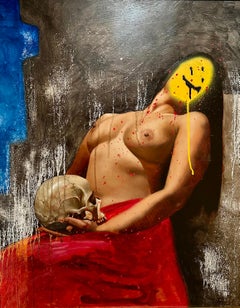
"Untitled 5" Figurative Painting 40" x 30" inch by Isaac Pelayo
Located in Culver City, CA
"Untitled 5" Figurative Painting 40" x 30" inch by Isaac Pelayo Medium: Oil, oil stick, acrylic, aerosol on wood "Urban Symphony" series The "Urban Symphony" series by Isaac Pelay...
Category

21st Century and Contemporary Baroque Art

Materials

Wood, Oil, Spray Paint, Acrylic

Frans Wouters, Adoration of The Herders, Christmas Scene, Christ, Flemish School
Located in Greven, DE
Frans Wouters was a Flemish Baroque painter who mainly created smaller cabinet pieces. He was initially apprenticed to Pieter van Avont in Antwerp, but then moved to Rubens‘ worksho...
Category

17th Century Baroque Art

Materials

Oak, Oil

Rembrandt, Composition, Rembrandt, Drawings from the Bible (after)
Located in Fairfield, CT
Medium: Lithograph on vélin Hamilton Kilmory paper Year: 1947 Paper Size: 9.5 x 12.5 inches Inscription: Unsigned and unnumbered, as issued Notes: From the folio, Rembrandt, Drawings...
Category

1940s Baroque Art

Materials

Lithograph

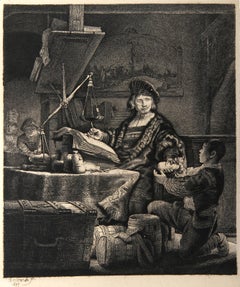
Portrait du Bourgmestre Jan Six, Heliogravure Etching by Rembrandt van Rijn
Located in Long Island City, NY
Rembrandt van Rijn, After by Amand Durand, Dutch (1606 - 1669) - Portrait du Bourgmestre Jan Six (B285). Year: 1878 (of original 1647), Medium: Heliogravure, Size: 9.5 x 7.5 in. (2...
Category

Late 19th Century Baroque Art

Materials

Etching

Fenzoni, Painting AND preparatorial Drawing, John the Baptist, Italy Renaissance
By Ferrau Fenzoni
Located in Greven, DE
The painting and the preparatory drawing are offered together. Provenance Private collection, Germany, Trier, c. 1980- 2013 Saint John the Baptist Brown ink and wash over red chalk on oatmeal paper 31 x 20.5 cm Inscribed: „Ferrau Fenzonio da Faenza invt. esque … imp. da Fran. Villamena …“. bears the collector's mark of Henry Scipio Reitlinger (1882-1950; Lugt 2274a) on a tiny label glued to the verso On the reverse is a partial drawing of a Pieta, pricked for transfer. Provenance New York, Doyle, 14. October 2015, No. 6 The painting and the preparatory drawing resemble the composition of an engraving after Ferraù Fenzoni by Francesco Villamena. Drawing, engraving and painting are almost identical, except for minor differences. Even the measurements nearly correspond: painting (32 x 25,5 cm), drawing (30 x 20,5 cm), engraving (31,1 x 23,5 cm). Dr. Guiseppe Scavizzi confirmed the attribution of the present panting to Fenzoni and he dates it to c. 1590. The inscription on the drawing reads “Ferrau Fenzonio da Faenza invt. esque. . . imp. da Fran: Villamena . . .”. The engraving’s inscription also lists place and date “Ferra Fensionius inventor/F. Villamoena sculpsit Rome/Aspectu fruitur… antra puer/cum Privilegio… 1613”. Interestingly, the engraving is not mirrored as it is in most printing processes. Painting, drawing and engraving are not reversed but the same. It is remarkable to note that there are further paintings by Fenzoni which were engraved in the same order and not reverted. They also show strong parallels regarding the compositions and the measurements (see for example “Deposition of Christ” ). Ferraù Fenzoni was an Italian painter mainly active in Todi. He is also called Il Faenzone after his birthplace (Faenza). He apprenticed in Rome during the papacy of Gregory XIII and contributed to numerous fresco cycles under pope Sixtus V, such as the Loggia della Benedizioni in the Lateran Palace, the frescoes on the walls and vaults of the Scala Santa of the adjacent Basilica of San Giovanni in Laterano, and the decoration in the Sistine library. His expressive canvases straddle the styles of Mannerism and Baroque. In 1594, he moved to Todi. A “Last Judgement” by him is housed in the cathedral of Todi. He returned to Faenza in 1599, where he decorated chapels in the cathedral from 1612 to 1616. In 1622, he completed a “Deposition”, now in the local Pinacoteca. In 1640, Fenzoni was named “cavaliere dello speron d’oro” by Cardinal Colonna and, on 25th April 1634, he was nominated vicar and “castellano of Granarolo”. Fenzoni‘s style is characterized by a mixture of the Mannerism of the Northern Netherlands and the Italian Baroque. Saint John the Baptist, Old Master, 17th Century, By Fenzoni, Religious Scene, Rome Art...
Category

16th Century Baroque Art

Materials

Canvas, Oil, Handmade Paper

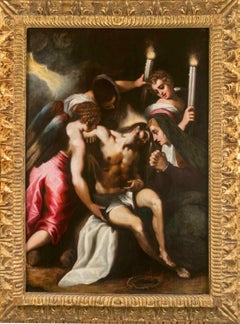
Dipinto religioso cristiano manierista Venezia del XVII secolo con cornice
Located in Florence, IT
Le misure senza la cornice in legno intagliata e dorata sono 97 x 72 cm. Il compianto su Cristo morto è uno dei temi più diffusi dell'arte cristiano cattolica, dove il corpo stesso ...
Category

Early 17th Century Baroque Art

Materials

Oil, Wood Panel

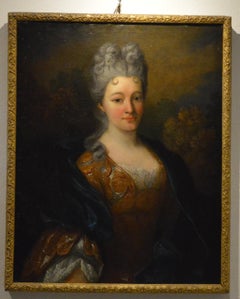
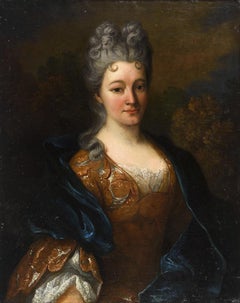
Attributed to MILLOT, Henri Portrait of a Lady
Located in Berlin, DE
Attributed to MILLOT, Henri. Portrait of a Lady. Oil on canvas. Unsigned, inscribed Millot on the reverse. 18th century. 85 x 69 cm. Framed. 85 x 69 cm. Portrait of a young woman in ...
Category

1720s Baroque Art

Materials

Oil

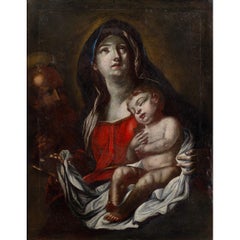
Felice Boselli (Baroque) - 18th century figure painting - Still life Sheperds
By Felice Boselli
Located in Varmo, IT
Felice Boselli (Piacenza 1650 - Parma 1732) - Shepherd with flock and game. 155 x 112 cm without frame, 170 x 126 cm with frame. Ancient oil painting on canvas, in a wooden frame lacquered in faux marble. The painting has stylistic affinities with "Game with children playing with a dog" (Parma, Galleria Nazionale) and with the pair of paintings "Old man and girl...
Category

Early 18th Century Baroque Art
Materials

Canvas, Oil

"Tavern Gathering" by David Teniers the Younger original oil painting from 1646
By David Teniers the Younger
Located in Dallas, TX
This Flemish Baroque art by David Teniers the Younger’s is a captivating masterpiece, “Tavern Gathering,” painted in 1646. Renowned as the preeminent Flemish genre painter of his tim...
Category

1640s Baroque Art

Materials

Oil, Panel

Scultura Barocca di Angelo in Terracotta Policroma Italia XVIII secolo
Located in Pistoia, IT
Scultura in terracotta policroma raffigurante un angelo alato, Italia, XVIII secolo. L'angelo è plasmato con grande maestria, dalle forme rotonde tipiche del Barocco italiano. Gli ...
Category

1730s Baroque Art

Materials

Terracotta

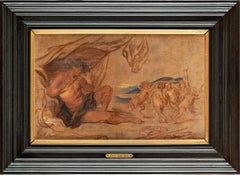
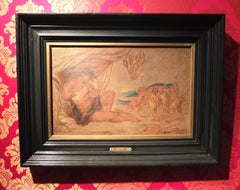
The Infant Jupiter Nursing from the She-Goat Amaltheia (The Birth of Jupiter)
By Luigi Quaini
Located in Fairlawn, OH
The Infant Jupiter Nursing from the She-Goat Amaltheia (The Birth of Jupiter) Red chalk and wash on off-white paper, c. 1700 Unsigned Attribuuted to Quaini by Dwight Miller, the sch...
Category

18th Century and Earlier Baroque Art

Materials

Chalk

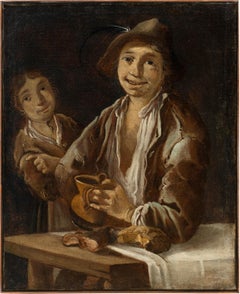
Baroque Arcimboldo follower - 18th century figure - Allegory of Autumn
Located in Varmo, IT
Follower of Giuseppe Arcimboldo (Milan 1527 - Milan 1593) - Allegory of Autumn. 96.5 x 74.5 cm. Oil on canvas, unframed (not signed). Condition report: Lined canvas. The painted s...
Category

Early 18th Century Baroque Art
Materials

Canvas, Oil

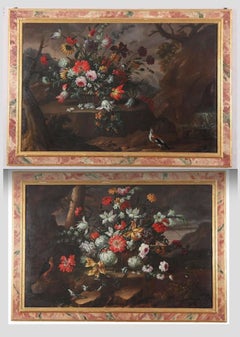
Pair of Nature Deaths of Flowers Fruits and Birds Italian School 17th Century
Located in Milano, IT
Pair of 1600s Nature Morte di Fiori by 17th-century Italian school, unframed. Oil paintings on canvas with a dark background and finely defined flowers these Baroque still lifes of t...
Category

Mid-17th Century Baroque Art

Materials

Canvas, Oil

Seven Scenes from the Life of Apollo
By Jacopo Guarana
Located in New York, NY
Attributed to Jacopo Guarana (Verona 1720 – 1808 Venice) Canvas, unsigned The Deeds of Apollo Provenance: Suida-Manning Collection These seven scenes are brilliant evocations o...
Category

18th Century and Earlier Baroque Art

Materials

Oil

Gaspare Lopez, attrib. Still Life with Fountain, Obelisk and Cascade of Flowers
Located in Firenze, IT
Gaspare Lopez, attrib. Still Life with Fountain, Obelisk and Cascade of Flowers in a Garden, Naples, c. 1720 Painting is not signed. Oil on canvas, 36 × 45.2 cm Giltwood frame of later date, 48 × 57.4 cm Inscription on reverse: “H. C. Veit – 1A Chesham Mews SW1 – 16 June 1957” This painting, one of a pair of Neapolitan still lifes from the early eighteenth century, displays a refined architectural setting combined with a rich cascade of flowers—features closely associated with the work of Gaspare Lopez, one of the leading Italian flower painters of the period. At the centre stands a fountain with a putto, its stream rendered in fine, silvery strokes that recall Lopez’s characteristic way of enlivening his compositions with water. To the left rises a slender obelisk, a motif that appears in several of his more elaborate garden scenes and contributes to the noble, decorative tone of the setting. The cascade of flowers is constructed with the inventive spirit typical of his floral capricci: roses, tulips, peonies, carnations and his distinctive blue bellflowers, painted with a clear, bright touch. The colours are luminous, joyful and decorative, expressing the Neapolitan vitality that marks Lopez’s mature style. Already in his lifetime he was known as “Gaspare dei fiori” for his spectacular and often deliberately exuberant floral arrangements. The background features an Italianate garden with cypresses, terraces and stone structures. This repertoire closely parallels the still lifes with garden terraces preserved at the Kunsthistorisches Museum in Vienna (inv. GG 1658, 1662, 1664), all attributed to Lopez. Despite its smaller size, the present painting shares the same horizontal layout, bright skies with soft clouds and the interplay of architecture and abundant floral masses, offering strong arguments for the attribution. Lopez trained under Andrea Belvedere, the foremost Neapolitan flower painter of the late Baroque. From him he inherited a refined botanical vocabulary, brilliant colour and a taste for scenographic compositions, which he later developed in a more decorative and international direction while active between Naples, Rome and Florence. Condition: old varnish and stable craquelure. Provenance A handwritten label on the reverse, dated 16 June 1957 and bearing the London address 1A Chesham Mews, SW1, identifies former ownership by Henri C. “Harry” Veit (1925–2012): American citizen, engineer trained at Princeton, US Navy veteran and grandson of the French Orientalist painter Maurice Bompard...
Category

Early 18th Century Baroque Art
Materials

Oil, Canvas

Madonna With Child and St. John 17th century Italian Lombard School
Located in Milano, IT
Italian religious painting of the Lombard School Madonna and Child with St. John ca. 1650 with a good balanced and harmonious composition in the center of which is the Child with hi...
Category

Mid-17th Century Baroque Art

Materials

Gold Leaf

Two Angels - Ink and Watercolor Drawing by A. Brustolon - Early 1700
By Andrea Brustolon
Located in Roma, IT
Due Angeli is an original artwork realized by Andrea Brustolon. Mixed media, ink and watercolor. The artwork rapresents two baroque angels, study realized by Brostolon for a sculpt...
Category

Early 18th Century Baroque Art
Materials

Ink, Watercolor

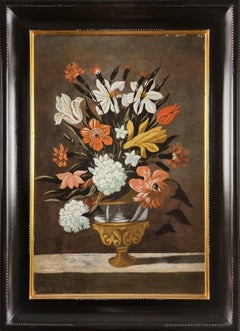
Pair of Large Baroque Style Floral Still Life Oil Paintings
Located in London, GB
Pair of large Baroque style floral still life oil paintings Continental, 19th Century Canvas: Height 144cm, width 104cm Frame: Height 170cm, width 112cm, depth 4cm This dazzling d...
Category

19th Century Baroque Art
Materials

Canvas, Oil

Late 18th Century Italian Baroque Allegorical Mythical Nudes VIRTUE OF VICE o/c
Located in Rancho Santa Fe, CA
This painting is likely to be from the late 18th or early 19th century, and is likely inspired by Antonio Correggio's "Virtue of Vice" circa 1531. Frame dimensions: 30 x 49 inches. This painting has been in a private California collection for over 40 years. It was acquired from a high end antique...
Category

19th Century Baroque Art
Materials

Canvas, Oil

The Painter and His Muse
Located in Wiscasett, ME
Oil on panel signed in the lower right corner and presented in a period frame measuring 21" x 18.5". Provenance: Private Collection Bradbury Art and Antiques, Wiscasset, ME Benj...
Category

19th Century Baroque Art
Materials

Oil

Van der Bent, Southern Landscape with woman animals, Dutch Old Master, Berchem
Located in Greven, DE
17th Century Old Master, Figurative and Landscape Painting by Jan Van der Bent So far, little is known about the life and work of Jan van der Bent. He was...
Category

17th Century Baroque Art
Materials

Canvas, Oil

Pair of Antique French Paintings With Cherubs
By (After) Francois Boucher
Located in Lake Worth Beach, FL
Pair of Antique Paintings With Cherubs After Francois Boucher (1703-1770) Boucher is known for his idyllic and voluptuous paintings on classical themes, decorative allegories, and pastoral scenes. Pair of charming late 18th or early 19th Century oil paintings with Putti playing with bow and arrow...
Category

Late 18th Century Baroque Art
Materials

Cotton Canvas, Oil

Portrait de Jean Corneille Sylvius (B280), Heliogravure by Rembrandt van Rijn
Located in Long Island City, NY
Rembrandt van Rijn, After by Amand Durand, Dutch (1606 - 1669) - Portrait de Jean Corneille Sylvius (B280). Year: 1878 (of original 1633), Medium: Heliogravure, Size: 11 x 7.5 in. ...
Category

Late 19th Century Baroque Art
Materials

Etching

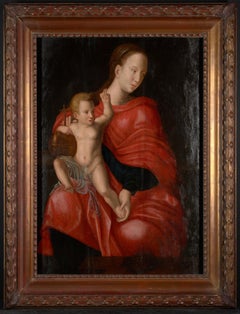
English 17th century portrait of a lady in an ivory silk gown on a terrace
Located in Bath, Somerset
Portrait of a 17th century lady, three-quarter length, in an ivory silk gown standing on a garden terrace. The lady, painted circa 1670, gestures with her hand towards the gardens and land beyond off her country estate, wearing a sumptuous ivory silk gown adorned with pearls and precious stones and pearl earrings and necklace, signaling her wealth and status. She wears a ring on her left hand, which combined with her pale gown possibly alludes to her recent marriage. There are traces of a signature in ligature 'JG' in a lower fold of the sitter's right hand sleeve. John Greenhill...
Category

17th Century Baroque Art
Materials

Canvas, Oil

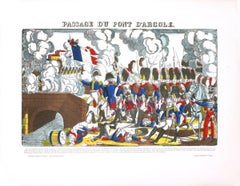
Oil On Canvas Early 19th century Italian School
Located in Gavere, BE
"the Madonna Of Justice" Oil On Canvas Work From The Early 19th Italian School" the history: No doubt painted for the ducal palace of Genoa Genoa, ducal palace, Sala dei Sindacatori...
Category

1880s Baroque Art
Materials

Canvas, Oil

Baroque art for sale on 1stDibs.

Find a wide variety of authentic Baroque art available for sale on 1stDibs. Works in this style were very popular during the 21st Century and Contemporary, but contemporary artists have continued to produce works inspired by this movement. If you’re looking to add art created in this style to introduce contrast in an otherwise neutral space in your home, the works available on 1stDibs include elements of blue, orange, purple and other colors. Many Pop art paintings were created by popular artists on 1stDibs, including Suzi Fadel Nassif, Kind of Cyan, Agent X, and Melanie Sherman. Frequently made by artists working with Paint, and Oil Paint and other materials, all of these pieces for sale are unique and have attracted attention over the years. Not every interior allows for large Baroque art, so small editions measuring 2.38 inches across are also available. Prices for art made by famous or emerging artists can differ depending on medium, time period and other attributes. On 1stDibs, the price for these items starts at $77 and tops out at $345,000, while the average work sells for $5,900.
Still Thinking About These?

All Recently Viewed